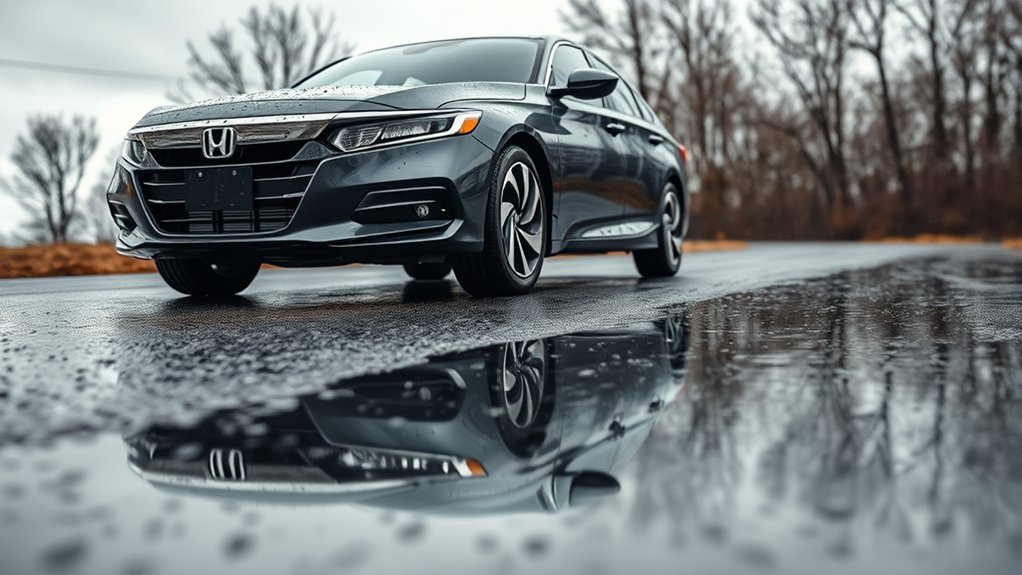
Summer tires can feel sharp and responsive on a Honda Accord in warm weather, but cold rain changes the equation fast. As temperatures fall, the rubber compound loses flexibility, wet grip drops, and shallow performance-oriented tread grooves may struggle to move water away from the contact patch. That combination can mean longer stops, easier wheelspin, and a higher chance of hydroplaning.
Quick Answer
Summer tires are not the safe choice for a Honda Accord in cold rain once temperatures are consistently near or below 45°F. Their rubber can stiffen, wet traction drops, and hydroplaning risk rises. Use all-season tires for mild climates, 3PMSF all-weather tires for occasional winter weather, or dedicated winter tires for regular snow, ice, or freezing rain.
Key Takeaways
- Summer tires work best on warm dry or wet roads, but they lose grip as temperatures drop.
- Cold rain is risky because stiff rubber and standing water can reduce traction at the same time.
- Check your Accord’s cold tire pressure from the driver-door label, not the tire sidewall.
- If your area sees frequent temperatures below 45°F, freezing rain, snow, or ice, switch before the first cold-weather event.
- For winter driving, mount the same type of tire on all four wheels for predictable braking and handling.
At a Glance
| Time Required | 10–15 minutes to check pressure, tread, and tire markings; longer if you need a tire shop to swap tires. |
| Difficulty | Easy inspection; professional installation recommended for seasonal tire changes. |
| Tools Needed | Tire pressure gauge, tread-depth gauge or penny/quarter check, flashlight, and your Accord’s driver-door tire label. |
| Cost | Inspection is usually free at home; tire replacement or seasonal installation cost depends on tire size, shop labor, and whether you use a second wheel set. |
Why Summer Tires Struggle in Cold Rain
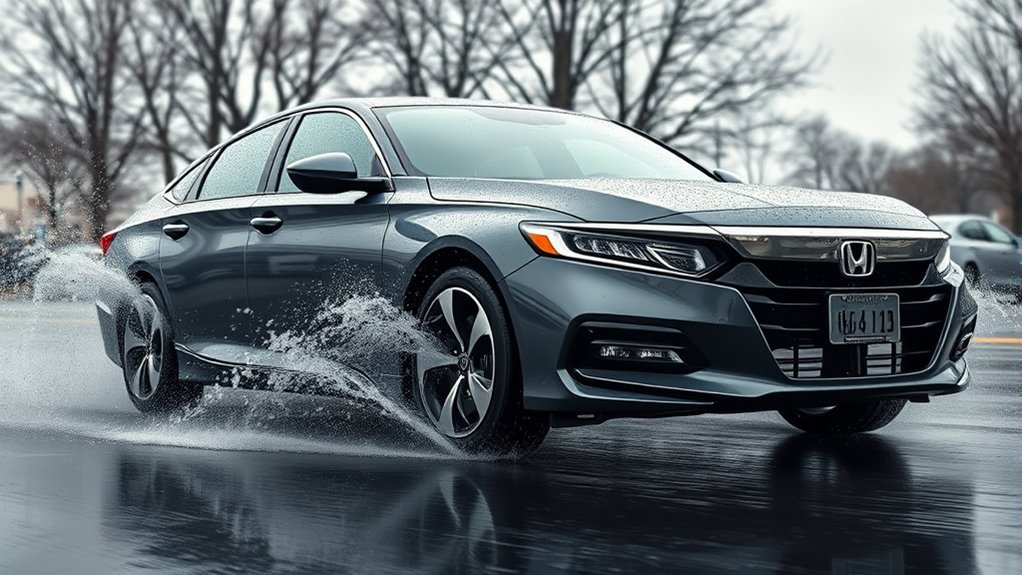
Summer tires are built for warm pavement. Their tread rubber is designed to stay responsive in heat and provide strong dry and wet grip when temperatures are in their intended range. When the weather turns cold, that same compound can become firmer, reducing the tire’s ability to conform to the road surface.
That matters on a Honda Accord because traction is what lets the car brake, steer, and accelerate cleanly. In cold rain, your tires must do two jobs at once: stay flexible enough to grip cold pavement and move water away from the contact patch. Summer tires are weaker at both jobs once temperatures fall.
Michelin explains that summer tires are designed for warm dry or wet roads and that their rubber hardens in cold temperatures. NHTSA also notes that summer tires are warm-weather tires and are not designed for below-freezing temperatures or snow and ice.
Warning: Do not treat “cold rain” as harmless just because there is no snow on the road. Cold wet pavement can still expose the biggest weakness of summer tires: reduced grip when the rubber stiffens.
How Temperature Changes Affect Tire Performance
Temperature affects tire performance in two important ways: rubber flexibility and air pressure. Both can change how your Accord feels in cold rain.
Rubber Flexibility
As temperatures drop, summer-tire rubber becomes less pliable. A tire that felt sharp and planted at 70°F can feel nervous or less predictable in the 40s, especially during braking or quick steering inputs. The lower the temperature and the wetter the road, the less margin you have.
The common tire-change guideline is to stop relying on summer tires when average daily temperatures are consistently around 45°F or lower. This is not a magic line where every tire instantly becomes unsafe, but it is a practical threshold because winter tires and many all-weather tires are engineered to stay flexible in that range.
Air Pressure and Grip
Cold weather also lowers tire pressure. As a practical rule, many tire makers advise that tire pressure can drop about 1 PSI for every 10°F decrease in temperature, with some situations varying closer to 1–2 PSI per 10°F. Underinflation can reduce steering response, increase tire heat, and make the tread less effective at clearing water.
For your Honda Accord, use the cold tire pressure listed on the driver-door tire and loading label. Honda states that this label includes the original tire sizes and the proper cold tire pressure for the front, rear, and spare tires. Do not inflate based on the maximum PSI molded into the tire sidewall; that is not the vehicle’s recommended operating pressure.
Pro Tip: Check pressure before driving, when the tires are cold. NHTSA defines cold tire pressure as a reading taken after the vehicle has not been driven for at least three hours.
How Cold Affects Rubber Tire Compounds
Summer tires rely on a compound that favors warm-weather grip. In colder weather, that compound can move toward a harder, less elastic state. Tire Rack describes this as a “glass transition,” where a summer performance tire’s tread compound can change from pliable to much less flexible as temperatures drop into the 40s.
Rubber Hardening Process
When rubber hardens, it cannot press into tiny road-surface textures as effectively. That reduces mechanical grip. On a dry road, you may notice a firmer ride and less responsive handling. On a wet road, the loss is more serious because the tire also has to push water out of the way.
Extreme cold can also damage some performance summer tires. Tire Rack warns that exposure to near- or below-freezing temperatures can lead to tread compound cracking or tread block chipping on certain summer performance tires. Always check the tire manufacturer’s warnings for your exact model.
Grip Reduction Factors
Grip loss in cold rain usually comes from several factors working together:
- Stiffer rubber that cannot conform to the road as well.
- Lower tire pressure after a temperature drop.
- Shallow or performance-focused grooves that may evacuate less standing water than winter or all-weather tread designs.
- Reduced tread depth from wear.
- Driver inputs that are too abrupt for the available traction.
This is why a summer tire can feel acceptable during a light drizzle at 60°F but feel slippery in steady rain at 38°F. The road is wetter, the rubber is colder, and the tire has less usable grip.
Why Tread Patterns Matter When It Rains
Tread patterns matter because they move water away from the tire’s contact patch. When water builds between the tire and the road, the tire can ride on top of the water instead of gripping the pavement. That is hydroplaning.
Many summer tires have wide shoulder blocks and fewer small biting edges because they are optimized for warm-road handling. That can be excellent in the right season, but in cold rain the design may not give you the same water evacuation, slush control, or cold-surface bite as a winter or 3PMSF all-weather tire.
Tread depth is just as important as tread design. AAA reports that lower tread depth increases the likelihood of hydroplaning in wet conditions. If your tires are already worn, cold rain becomes more dangerous even before you reach freezing temperatures.
Note: The legal minimum tread depth is not the same as “best for wet safety.” If your Accord regularly sees heavy rain, replace tires before they are badly worn, especially before the cold season.
Hydroplaning Risks With Summer Tires in Cold Rain
Hydroplaning happens when the tire cannot move water away fast enough and loses direct contact with the road. Cold rain raises the risk because summer tires may already have reduced grip before they hit standing water.
AAA advises drivers to slow down in wet weather, avoid cruise control, increase following distance, and avoid hard braking or sharp turns. AAA also notes that with as little as 1/12 inch of water on the road, tires have to displace a large amount of water to keep rubber on the road.
If your Accord starts to hydroplane, stay calm. Ease off the accelerator, keep your steering smooth, and point the car where you want it to go. Do not slam the brakes. Abrupt braking or steering can make the skid worse.
Cold rain is risky because it combines two traction problems: less flexible tire rubber and less road contact when water builds under the tread.
What Are the Safety Implications of Using Summer Tires in Winter?
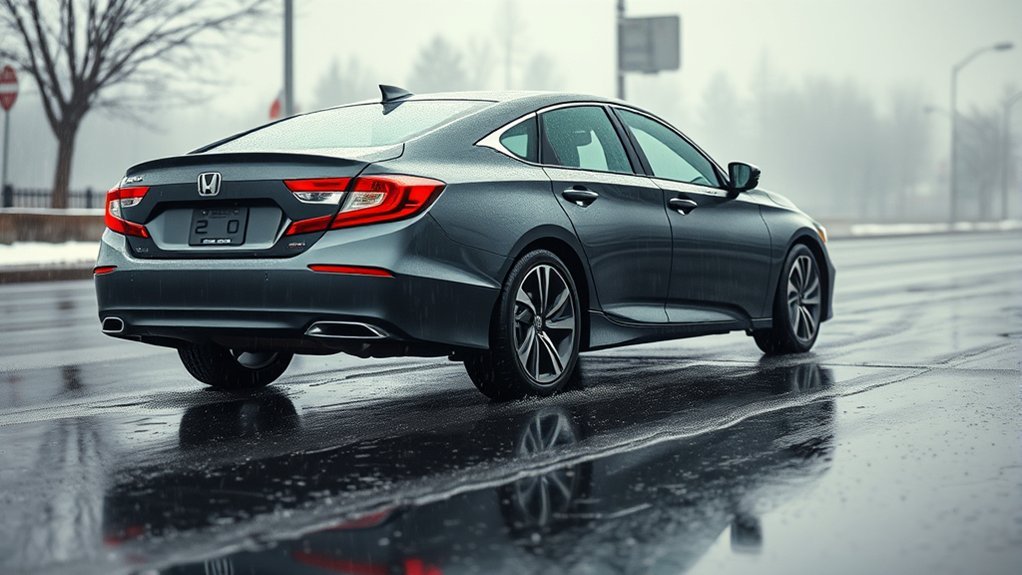
Using summer tires through winter can reduce braking control, steering precision, and acceleration grip. The danger is highest on snow, ice, freezing rain, or below-freezing pavement, but it can begin earlier during cold wet weather.
In Tire Rack ice testing, a vehicle on summer tires needed about 47 feet to stop from 10 mph on ice. The same test showed all-season tires stopping in about 39 feet 10 inches, while studless winter/snow tires stopped in about 21 feet 2 inches. That specific test was on ice, so it should not be treated as a universal number for every road, tire, or vehicle, but it clearly shows how much tire type can matter when traction is limited.
Honda’s Accord winter-driving guidance says that if you are driving on snowy or frozen roads, you should mount all-season tires marked M+S, snow tires, or tire chains where necessary or required by law, reduce speed, and maintain enough distance from other vehicles. For winter tires, Honda also advises choosing the same size and load range as the original tires and mounting them on all four wheels.
Warning: Do not mix summer tires with winter or all-season tires on different axles. Mixed tire types can create unpredictable handling during braking, cornering, or emergency maneuvers.
When to Switch Summer Tires for Seasonal Changes
Switch out of summer tires before cold weather becomes consistent. A good rule is to schedule the change when average daily temperatures are repeatedly near or below 45°F, not after the first ice storm. Waiting until the first freeze can leave you driving to the tire shop on the wrong tires.
Use this simple timing checklist:
- Watch the 7- to 10-day forecast for repeated lows and daily averages near 45°F.
- Switch earlier if you commute before sunrise, when pavement is colder.
- Switch immediately if snow, sleet, or freezing rain is forecast.
- Check your Accord’s cold PSI after the first major temperature drop.
- Inspect tread depth before the rainy season, not after the car starts sliding.
If your region has mild winters and rarely sees freezing temperatures, a high-quality all-season tire may be enough. If your area sees regular snow, ice, freezing rain, or long stretches below 45°F, dedicated winter tires are safer. If you want one set for year-round use and only face occasional winter weather, a 3PMSF-rated all-weather tire may be a practical compromise.
[Products Worth Considering]

Milton S-921 pencil tire pressure gauge helps you maintain optimal tire pressure for passenger cars with accurate readings in PSI and kPa. It features a built-in deflator valve for convenient pressure adjustments, plus a single chuck head and nylon indicator bar for easy use on the go. Built from durable plated brass and designed for reliable performance, it’s a practical road trip and cold-weather maintenance tool.

The SAFELIFE dial tire tread depth gauge measures tread depth in 1/32 inch increments with clear, easy-to-read 2-inch dial face. Color zones using a traffic light system help you quickly judge whether tread is low, marginal, or ample for safer driving. Built with a durable zinc cast body and a metal detect probe for precise, comfortable use across cars, motorcycles, trucks, and buses.

Measure tire tread depth quickly and accurately with this LUMITECO dial gauge that reads in 1/32" increments up to 14/32". The color-coded green/yellow/red zones make it easy to judge tire wear and know when replacement is needed. A rugged, compact design with a protective pouch helps keep the gauge ready for use on cars, trucks, motorcycles, and more.
Best Alternatives to Summer Tires for Cold Rain
The best replacement depends on your climate and how often your Accord sees winter weather. Do not choose only by brand name. Match the tire category to your driving conditions.
[Products Worth Considering]

Monitor tire tread wear with a smart, color-coded depth gauge that shows clear condition ranges at a glance. The bar is range marked for fast, easy readings, helping you maintain safer traction and performance. Each gauge is portable with a pocket clip, and the set includes 20 units for daily use and sharing.
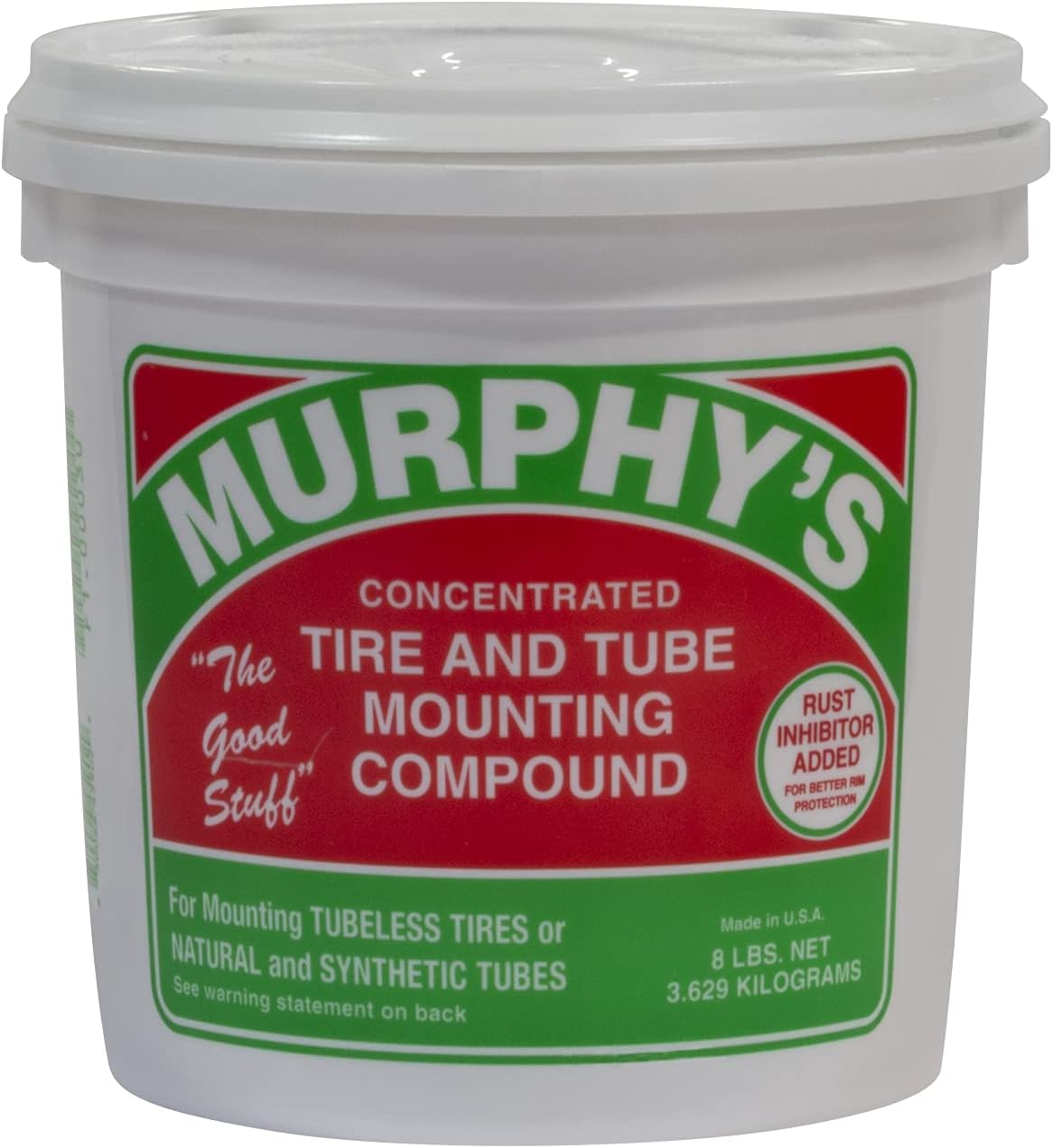
A concentrated tire and tube mounting compound designed to help simplify mounting rubber tires and tubes on passenger, semi truck, construction, and OTR applications. Its ultra-thick formula packs beads effectively and includes rust inhibitors to help protect against corrosion during use.

Add style while helping protect your tire valve stems with handmade crystal rhinestone caps and a durable plastic insert. These caps resist corrosion and help keep out rain, snow, and muddy water, extending tire life. Textured non-slip design makes them easy to grip for quick install and removal when checking tire pressure.
Dedicated Winter Tires
Choose dedicated winter tires if you regularly drive in snow, ice, freezing rain, or below-freezing temperatures. Winter tires use cold-weather compounds and tread designs with more biting edges for snow and slush. Look for the Three-Peak Mountain Snowflake (3PMSF) symbol, which identifies tires that meet severe-snow traction requirements.
3PMSF All-Weather Tires
Choose 3PMSF all-weather tires if you want one set of tires year-round and your winter conditions are occasional or moderate. For example, Michelin describes the CrossClimate2 as an all-season tire with 3PMSF marking that is suitable for occasional winter conditions, while still noting that dedicated winter tires may be the better solution for frequent snow-covered and icy roads.
Standard All-Season Tires
Choose standard all-season tires if your area has mostly mild weather, light rain, and only rare cold snaps. They are more versatile than summer tires in cooler temperatures, but they are not the same as dedicated winter tires. An M+S marking can indicate mud-and-snow tread characteristics, but it is not the same as 3PMSF winter certification.
What to Avoid
- Do not use summer tires on snow or ice.
- Do not use badly worn tires as a “one more season” solution for winter rain.
- Do not mount winter tires on only two wheels.
- Do not choose a different size, speed rating, or load range without confirming it fits your Accord and local requirements.
Honda Accord Tire Checklist Before Cold Rain
Before cold rainy weather arrives, give your Accord a quick tire check:
- Check cold PSI: Use the driver-door tire and loading label for the correct pressure.
- Check all four tires: Front and rear pressure may differ on some vehicles, so follow the label.
- Inspect tread depth: More tread helps move water and lowers hydroplaning risk.
- Look for cracks or cuts: Cold weather can make existing damage more serious.
- Confirm tire markings: Identify whether your tires are summer, all-season, M+S, 3PMSF all-weather, or winter tires.
- Use matched tires: Keep the same tire type on all four wheels for stable handling.
If your tire pressure warning light comes on after a cold night, do not ignore it. Check pressure cold and inflate to the door-label PSI. If the light returns soon after inflation, inspect for a leak or have the tire checked.
[Products Worth Considering]

Accurately measure tire tread depth with a calibrated gauge marked from 0 to 1 inch in 1/32 inch increments. The color-coded bar helps you quickly identify tread condition ranges, supporting safe driving for trucks, motorcycles, automobiles, and passenger vehicles.

Steelman white tire marking crayons provide high-contrast, semi-permanent marks for repairing and inspecting tires and equipment. They write on wet or dry, smooth or coarse surfaces including rubber, metal, glass, and wood, making them ideal for puncture location and damage outlining. The lead- and zinc-free crayons resist weather and fading yet wipe away when you no longer need the marks.

These aluminum alloy tire valve stem caps protect the valve core from corrosion and help prevent air leakage for more stable tire pressure. The rubber ring design helps support a secure, safe seal while adding a stylish look to your Honda wheels. Easy to install by hand, these caps are ideal for everyday driving and weather exposure.
Year-Round Tire Maintenance Tips
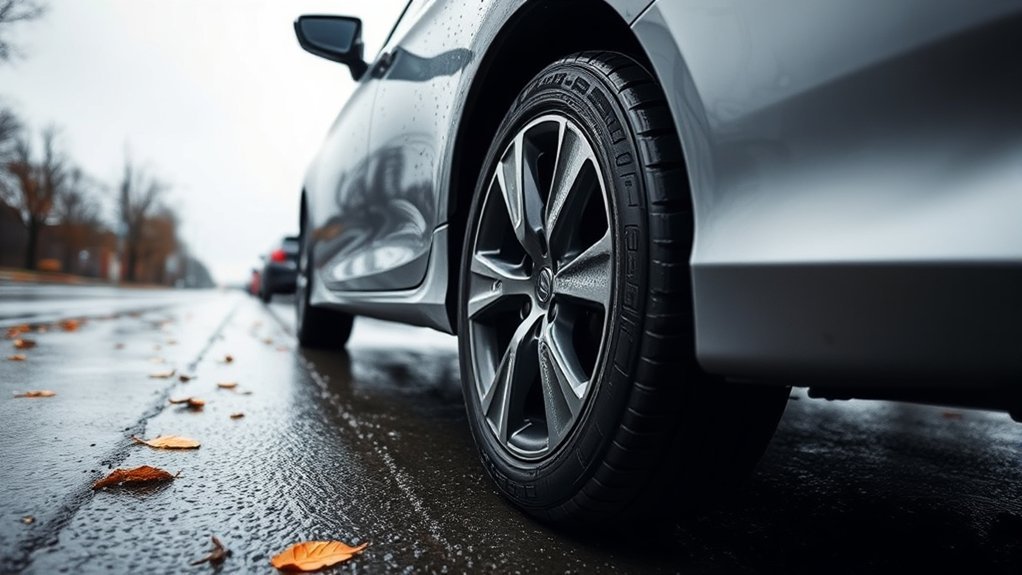
Good tire maintenance helps in every season, but it becomes especially important before cold rain. Follow these habits:
- Check tire pressure monthly and after large temperature swings.
- Measure pressure when tires are cold for the most accurate reading.
- Rotate tires according to your Accord’s maintenance schedule or your tire shop’s guidance.
- Inspect tread depth before rainy and winter seasons.
- Look for sidewall cracks, bulges, punctures, uneven wear, and exposed cords.
- Have alignment checked if the car pulls, the steering wheel is off-center, or the tires wear unevenly.
- Store off-season tires in a cool, dry place away from sunlight, heat, and ozone sources.
Maintenance cannot turn a summer tire into a winter tire, but it can prevent avoidable problems like underinflation, uneven wear, and reduced wet-weather control.
Frequently Asked Questions
Are summer tires bad in cold weather?
Yes, summer tires are a poor choice once temperatures are consistently cold, especially near or below 45°F. Their rubber can stiffen, which reduces grip and makes braking and steering less predictable. They are especially unsuitable for below-freezing roads, snow, and ice.
Can you drive on summer tires in the rain?
You can drive on summer tires in warm rain if the tires have enough tread and are properly inflated. Cold rain is different. When temperatures drop, summer-tire rubber loses flexibility, wet grip drops, and hydroplaning risk increases.
How long can you drive with summer tires in the winter?
Do not plan to drive on summer tires through winter. Switch before sustained cold weather, freezing rain, snow, or ice arrives. If you are caught in winter weather on summer tires, reduce speed, increase following distance, avoid sudden inputs, and replace them as soon as possible.
What tires should I use on a Honda Accord for cold rain?
For mild climates, quality all-season tires may be enough. For occasional cold rain and light winter weather, consider 3PMSF all-weather tires. For regular snow, ice, freezing rain, or long cold seasons, dedicated winter tires are the safest choice.
Should winter tires go on all four wheels?
Yes. For predictable braking, steering, and stability, winter tires should be mounted on all four wheels. Honda’s winter-tire guidance also says to mount winter tires to all four wheels and choose the same size and load range as the original tires.
Conclusion
Summer tires are the wrong tool for a Honda Accord in cold rain. They are excellent in warm weather, but colder temperatures can stiffen the rubber and reduce wet traction. Add standing water, worn tread, or low tire pressure, and the risk of longer stops or hydroplaning goes up quickly.
Switch before cold weather becomes consistent. Use all-season tires for mild climates, 3PMSF all-weather tires for occasional winter conditions, and dedicated winter tires for regular snow, ice, or freezing rain. Most importantly, check your Accord’s cold tire pressure from the driver-door label and keep enough tread on all four tires before the weather turns.
Sources
- NHTSA TireWise — tire safety, cold tire pressure, tire types, and tire maintenance guidance.
- Honda Accord Winter Tires Owner Information — Honda guidance for snowy or frozen roads and winter tire mounting.
- Honda Accord Tire and Loading Information Label — doorjamb tire size and proper cold tire pressure guidance.
- Michelin Summer vs. Winter vs. All-Season Tires — tire-type differences, 45°F switching guidance, and 3PMSF explanation.
- AAA Wet Weather Driving Tips — hydroplaning prevention and wet-road driving behavior.
- Tire Rack Ice Testing: Winter/Snow vs. All-Season vs. Summer Tires — controlled ice stopping-distance comparison by tire type.