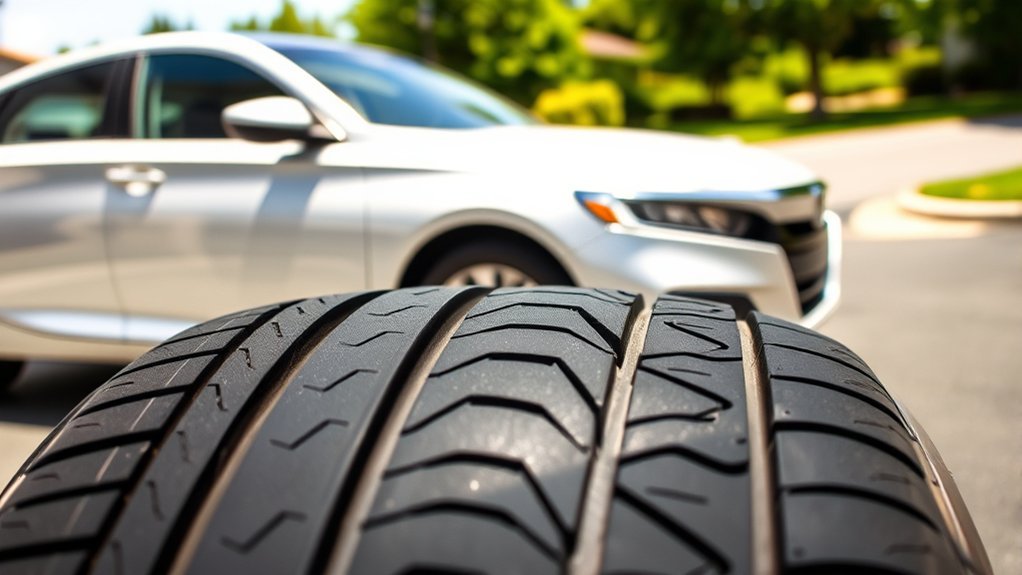
Choosing the right tires for your Honda Accord is not just about brand or price. The safest choice depends on your exact tire size, local weather, driving style, load rating, speed rating, and how well you maintain the tires after installation. Use this guide to compare tire types, check replacement signs, avoid common fitment mistakes, and choose a set that fits your Accord and your roads.
Quick Answer
For most Honda Accord drivers, a quality grand touring all-season tire is the best everyday choice. Choose all-weather or winter tires if you drive in regular snow or ice. Always match the tire size, load index, speed rating, and cold tire pressure listed on your driver-door tire placard or owner’s manual.
Key Takeaways
- Check the driver-door Tire and Loading Information Label before buying tires. Do not guess based only on model year.
- All-season tires suit mild climates, all-weather tires add stronger winter capability, and winter tires are best for regular snow and ice.
- Replace tires at 2/32 inch tread depth at the latest, and consider replacing sooner if you drive often in rain or snow.
- Check cold tire pressure monthly, even if your Accord has TPMS.
- Budget for the installed price, including mounting, balancing, valve stems or TPMS service, disposal fees, and alignment if needed.
Understanding Tire Types for Your Honda Accord

The Honda Accord is usually used as a daily commuter, family sedan, highway cruiser, or rideshare car. That means most drivers need tires that balance comfort, wet grip, tread life, and quiet road manners. The right tire type depends on your climate.
All-season tires are the default choice for many Accord owners. They handle dry roads, rain, and light cold-weather driving well. They are best for areas with mild winters and little snow.
All-weather tires are different from standard all-season tires. Many all-weather tires carry the Three Peak Mountain Snowflake marking, often called 3PMSF. That marking means the tire meets a snow-traction performance standard. All-weather tires can be a smart choice if you want one set year-round but still face occasional snow.
Winter tires are the safer pick if your roads are often snowy, icy, or below freezing for long stretches. The National Highway Traffic Safety Administration explains that winter tires are more effective than all-season tires in deep snow, while summer tires are not designed for below-freezing temperatures, snow, or ice.
Summer tires give strong dry and wet grip in warm weather. They are not ideal for most year-round Accord drivers unless you live in a warm climate or use a second set for cold months.
Honda Accord Tire Choice at a Glance
| Mild climate, mostly dry roads | Grand touring all-season tires |
| Rainy commute or highway use | All-season tires with strong wet braking and hydroplaning resistance |
| Occasional snow, one set all year | All-weather tires with 3PMSF marking |
| Frequent snow or icy roads | Dedicated winter tires during the cold season |
| Sportier driving in warm weather | Performance all-season or summer tires, depending on climate |
[Products Worth Considering]

Keep your tires properly inflated with this analog VONDIOR tire pressure gauge, designed for fast, easy readings without batteries. The swiveling, two-axis hose and large glow dial help you measure at any tire angle with instant visibility. Built with a protective rubber shield, it supports durable, low-maintenance use for cars and trucks.

Milton S-921 pencil tire pressure gauge helps you maintain optimal tire pressure for passenger cars with accurate readings in PSI and kPa. It features a built-in deflator valve for convenient pressure adjustments, plus a single chuck head and nylon indicator bar for easy use on the go. Built from durable plated brass and designed for reliable performance, it’s a practical road trip and cold-weather maintenance tool.

Accurately measure tire tread depth with a calibrated gauge marked from 0 to 1 inch in 1/32 inch increments. The color-coded bar helps you quickly identify tread condition ranges, supporting safe driving for trucks, motorcycles, automobiles, and passenger vehicles.
Essential Features for Selecting Honda Accord Tires
Good Accord tires should fit correctly, grip predictably, ride quietly, and last long enough to justify the price. Before comparing brands, confirm the technical details that keep the tire compatible with your car.
[Products Worth Considering]

Measure tyre tread depth precisely with a digital gauge that reads in both MM and inches, helping you monitor safe driving conditions. The large LCD screen is easy to operate, and the compact tool fits for cars, trucks, and motorcycles. It provides high accuracy with a 0-25.4mm range and includes a 1-year warranty for added peace of mind.

Measure tire tread depth quickly and accurately with this LUMITECO dial gauge that reads in 1/32" increments up to 14/32". The color-coded green/yellow/red zones make it easy to judge tire wear and know when replacement is needed. A rugged, compact design with a protective pouch helps keep the gauge ready for use on cars, trucks, motorcycles, and more.

Add style while helping protect your tire valve stems with handmade crystal rhinestone caps and a durable plastic insert. These caps resist corrosion and help keep out rain, snow, and muddy water, extending tire life. Textured non-slip design makes them easy to grip for quick install and removal when checking tire pressure.
Correct Size, Load Index, and Speed Rating
Start with the tire size on your driver-door Tire and Loading Information Label or in your owner’s manual. A Honda Accord may use different tire sizes depending on year, trim, wheel size, and whether it is a hybrid or gas model. Common examples can include 17-inch, 18-inch, or 19-inch wheel packages, but your own placard is the final guide.
The tire must also meet the correct load index and speed rating. The load index shows how much weight the tire can carry. The speed rating affects heat resistance and high-speed capability. Do not choose a lower rating unless a tire professional confirms it is safe and appropriate for your vehicle and driving needs.
Warning: Do not use the tire sidewall’s maximum PSI as your normal inflation target. Use the cold tire pressure listed on your Accord’s driver-door placard or owner’s manual. The sidewall number is a maximum limit, not the recommended daily pressure.
Tire Performance Ratings
Performance ratings help you compare tires, but they do not tell the whole story. The Uniform Tire Quality Grading system, or UTQG, gives treadwear, traction, and temperature grades on many passenger tires sold in the United States. A higher treadwear number can suggest longer wear, but real tire life still depends on alignment, pressure, road surface, driving habits, and rotation.
For a Honda Accord, most drivers should focus on these traits:
- Wet braking: Important for rain, highway driving, and emergency stops.
- Ride comfort: Touring tires usually feel smoother than aggressive performance tires.
- Noise control: A quiet tire matters on long commutes.
- Rolling resistance: Lower rolling resistance can help fuel economy, especially for hybrid Accord models.
- Treadwear warranty: Useful for comparison, but always read the warranty terms.
All-Weather Versatility
If you want one set of tires for the full year and your winters are only moderate, look for an all-weather tire with the 3PMSF symbol. The Michelin CrossClimate2, for example, is listed by Michelin as an all-season tire with 3PMSF marking and a 60,000-mile warranty. It can be a strong choice for drivers who see rain, cold weather, and occasional snow but do not want to swap tires twice a year.
If you drive often on packed snow, ice, steep winter roads, or unplowed routes, a dedicated winter tire is still the safer choice.
Longevity and Durability
Tread life depends on more than the tire model. A premium tire can wear quickly if it is underinflated, misaligned, overloaded, or not rotated. A budget tire can also become expensive if it wears out early or performs poorly in wet braking.
The Michelin Defender2 is a common long-wear touring option and Michelin lists an 80,000-mile warranty on most sizes. The Continental TrueContact Tour is another touring all-season tire, and Continental lists it with an up to 80,000-mile limited warranty. Always confirm the warranty for your exact size before buying.
Pro Tip: Compare the installed price, not just the tire price. A cheaper tire may cost less upfront, but mounting, balancing, alignment, road hazard coverage, and shorter tread life can change the real value.
Top Recommended Tires for Honda Accord Drivers
The best tire depends on your Accord’s size and your climate, but these categories are a good starting point when comparing current options.
- Best long-life touring choice: Michelin Defender2. This tire suits drivers who want quiet road manners, long tread life, and daily comfort. It is a strong fit for commuting and family use when winter weather is light.
- Best balanced all-season value: Continental TrueContact Tour. This tire focuses on long tread life, wet braking, low road noise, and light-snow traction. It is a practical choice for many Accord drivers in mild to moderate climates.
- Best one-set winter-capable option: Michelin CrossClimate2. This all-weather-style tire is best for drivers who want year-round use with stronger snow capability than a basic all-season tire. It is not a full replacement for dedicated winter tires in severe winter areas.
- Best sporty option: performance all-season tires from major brands. If your Accord has larger wheels or you prefer sharper steering, compare performance all-season tires that match your exact size, load index, and speed rating. Expect shorter tread life and a firmer ride than a grand touring tire.
- Best severe-winter option: dedicated winter tires. If winter roads are a regular part of your drive, choose a true winter tire on a second wheel set when possible. This can improve grip and reduce seasonal mounting costs over time.
Before buying, ask the tire shop to confirm that the tire is approved for your Accord’s wheel size, load rating, speed rating, and TPMS setup.
[Products Worth Considering]

Vigorder rubber cement glue delivers superior adhesion and cures quickly within about 30 seconds for seamless rubber bonding. Once cured, it helps provide a strong, durable, waterproof seal that holds up to vehicle weight, pressure, and heat. Suitable for cars, motorcycles, trucks, bicycles, and off-road tires, it’s designed for emergency patch and maintenance repairs.

Monitor tire tread wear with a smart, color-coded depth gauge that shows clear condition ranges at a glance. The bar is range marked for fast, easy readings, helping you maintain safer traction and performance. Each gauge is portable with a pocket clip, and the set includes 20 units for daily use and sharing.

This 100-piece set of snap-in tubeless tire valve stems is designed for standard 0.453 in (11.5 mm) rim holes and helps maintain reliable, steady tire pressure. Made with ozone-resistant rubber and brass cores, the valves are built for durability and long-term use. Easy to install by hand, they support safe driving and are suitable for cars, light trucks, trailers, and more.
How Weather Affects Tire Choice for Your Accord

Weather should shape your tire decision. A tire that works well in dry heat may feel weak in cold rain. A snow-friendly tire may wear faster if you use it through a hot summer.
For mild climates, a good all-season touring tire is usually enough. Look for strong wet braking, low noise, and a treadwear warranty that matches your driving volume.
For heavy rain, focus on wet traction and hydroplaning resistance. Deep, well-designed grooves help move water away from the contact patch, but worn tread reduces that benefit.
For snow and ice, choose either a 3PMSF all-weather tire for occasional winter driving or a dedicated winter tire for frequent snow, freezing roads, and mountain areas.
For hot climates, tire pressure and age matter. Heat can speed tire aging, and underinflation can raise tire temperature. Check pressure monthly when the tires are cold, and inspect for cracks, bulges, or sidewall damage.
NHTSA reported 511 traffic fatalities in tire-related crashes in 2024, which is a reminder that tire choice and tire maintenance are real safety issues, not just ownership chores.
How to Choose the Right Tire Size and Pressure for Your Honda Accord
Do this before you shop, even if you already know your Accord’s model year.
- Open the driver door and read the tire placard. Look for the tire size, load information, and recommended cold tire pressure.
- Match the tire size exactly unless a professional confirms an approved alternate size. Changing size can affect clearance, ride quality, speedometer reading, and handling.
- Check the load index and speed rating. The replacement tire should meet or exceed the required rating for your Accord.
- Set pressure when tires are cold. Cold means the car has not been driven for at least three hours or has only been driven a very short distance at low speed.
- Do not rely only on TPMS. TPMS warns when pressure is significantly low, but it does not replace monthly checks with a gauge.
Note: If your Accord has different front and rear tire sizes, follow the owner’s manual and do not rotate tires in a normal front-to-back pattern. Most Accord setups use the same size on all four wheels, but you should still verify your exact car.
Signs You Need to Replace Your Honda Accord Tires
Replacing tires at the right time protects braking, steering, ride quality, and wet-weather control. Do not wait for a tire to look completely bald before taking action.
Tread Depth Inspection
Tread gives your Accord grip, especially when the road is wet. NHTSA says tires are not safe and should be replaced when the tread is worn down to 2/32 inch. You can use the penny test as a quick screen: place a penny into the tread with Lincoln’s head upside down. If you can see the top of Lincoln’s head, replace the tire.
For rain or snow, many drivers replace earlier because shallow tread has less room to move water or slush away from the tire. If your Accord feels less stable in rain, get the tread checked even if it is above the legal minimum.
Visual Damage Check
Inspect the sidewalls and tread for cuts, cracks, bulges, exposed cords, nails, or bubbles. A bulge can mean internal tire damage and should be inspected right away. Do not keep driving on a tire that looks swollen or deformed.
Vibration and Noise Issues
New vibration, shaking, pulling, or humming can point to tire imbalance, uneven wear, a bent wheel, alignment trouble, or tire damage. If the steering wheel shakes at highway speed, schedule a tire and wheel inspection. Balancing may fix the issue, but a damaged tire may need replacement.
Tire Age and DOT Date Code
Tires age even when the tread looks usable. Sunlight, heat, storage, and low annual mileage can all affect rubber. NHTSA notes that some vehicle and tire manufacturers recommend replacing tires that are six to 10 years old regardless of treadwear.
To check age, find the DOT Tire Identification Number on the sidewall. The last four digits show the week and year the tire was made. For example, 2324 means the tire was made in the 23rd week of 2024.
Why Regular Tire Maintenance Matters for Your Accord
Regular tire care helps your Honda Accord stop, steer, and ride the way it should. It can also save money. NHTSA says properly inflating tires can save as much as 11 cents per gallon on fuel and can extend average tire life by 4,700 miles.
- Check pressure monthly. Use an accurate tire gauge and check when the tires are cold.
- Rotate on schedule. Follow your Honda manual. If the manufacturer recommends it, NHTSA suggests rotating every 5,000 to 8,000 miles or sooner if uneven wear appears.
- Balance new tires. New tires should be balanced when installed to reduce vibration.
- Check alignment. Get an alignment if the car pulls, the steering wheel is off-center, or tread wear is uneven.
- Inspect after impacts. A pothole or curb hit can damage a tire, wheel, or alignment.
Cost Considerations When Buying Tires for Your Accord
Tires are a major ownership cost, so compare the total installed price instead of the tire price alone. A set of four Honda Accord tires can vary widely based on size, brand, warranty, speed rating, and seasonal type.
Include these costs in your budget:
- Tire price: Larger wheels and premium models usually cost more.
- Mounting and balancing: Most shops charge per tire.
- Valve stems or TPMS service: Some installations include service kits, while others charge separately.
- Disposal fees: Many shops charge to recycle old tires.
- Alignment: Not always required, but smart if you have uneven wear, pulling, or recent suspension work.
- Road hazard coverage: Optional, but useful if you drive on rough roads or construction zones.
Premium tires can make sense if you drive many miles each year, want quieter highway manners, or need stronger wet-weather confidence. Budget tires may be fine for low-mileage use, but avoid unknown brands with weak wet-braking data or poor warranty support.
How to Maximize Tire Longevity for Your Honda Accord
Good tires last longer when they are treated well. Use this routine to protect your investment.
- Keep the right pressure. Check monthly and before long trips.
- Rotate regularly. Even wear helps all four tires last longer.
- Fix alignment problems early. Feathering, cupping, or one-edge wear can ruin tires quickly.
- Avoid overloading. Extra weight increases heat and stress.
- Drive smoothly. Hard braking, fast cornering, and aggressive acceleration wear tread faster.
- Store seasonal tires correctly. Keep them clean, cool, dry, and away from direct sunlight and chemicals.
- Replace damaged tires quickly. A tire with sidewall bulges, exposed cords, or repeated pressure loss is not worth the risk.
Frequently Asked Questions
How often should I check my Honda Accord tire pressure?
Check tire pressure at least once a month and before long trips. Measure pressure when the tires are cold, then inflate to the PSI listed on the driver-door tire placard or owner’s manual.
Can I mix different tire brands on my Honda Accord?
It is best to use four matching tires with the same size, type, load index, speed rating, and similar tread depth. At minimum, do not mix different tire types or very different tread depths on the same axle unless a tire professional confirms it is safe.
What is the ideal tire pressure for my Honda Accord?
The ideal pressure is the cold tire pressure on your Accord’s driver-door Tire and Loading Information Label or in the owner’s manual. Do not use a generic PSI range or the maximum PSI printed on the tire sidewall as your daily setting.
How do I know if my tires are properly balanced?
A properly balanced tire should roll smoothly without shaking the steering wheel, seat, or floor at normal speeds. If you feel vibration after new tires are installed, ask the shop to rebalance them and inspect the wheels for bends or damage.
Are run-flat tires suitable for a Honda Accord?
Run-flat tires may fit some Accord wheel sizes, but they are not the default choice for most drivers. They can ride firmer, cost more, and may have limited repair options. Use them only if the size, load rating, speed rating, and TPMS setup are correct.
Are all-weather tires better than all-season tires for an Accord?
All-weather tires can be better if you drive in occasional snow or cold rain and want one set for the full year. Standard all-season tires may ride quieter and last well in mild climates, but they usually do not match all-weather tires in snow traction.
Should I replace two tires or all four tires?
Four matching tires are best. If you replace only two, the new tires are often installed on the rear axle to help reduce oversteer on wet roads, but you should follow the tire shop’s guidance and your owner’s manual.
When should I use winter tires on my Honda Accord?
Use winter tires if you regularly drive on snow, ice, freezing rain, steep winter roads, or unplowed routes. All-season tires are fine for mild climates, but dedicated winter tires give better cold-weather traction in severe winter conditions.
Conclusion
The best tires for your Honda Accord are the tires that match your exact size, load rating, speed rating, weather, and driving habits. For most drivers, a quiet grand touring all-season tire is the best everyday choice. If winter weather is part of your routine, compare 3PMSF all-weather tires or use dedicated winter tires.
Before you buy, check the driver-door tire placard, compare the installed price, and choose a tire with proven wet grip and warranty support. After installation, protect your investment with monthly pressure checks, regular rotation, alignment when needed, and quick replacement when tread, age, or damage becomes a safety concern.
Sources
- NHTSA TireWise — tire types, tire size labels, pressure checks, tread depth, rotation, TPMS, tire aging, and tire-related crash data.
- Michelin Defender2 — Defender2 warranty and product positioning.
- Continental TrueContact Tour — TrueContact Tour features and current limited warranty information.
- Michelin CrossClimate2 — 3PMSF marking, all-season positioning, and warranty information.