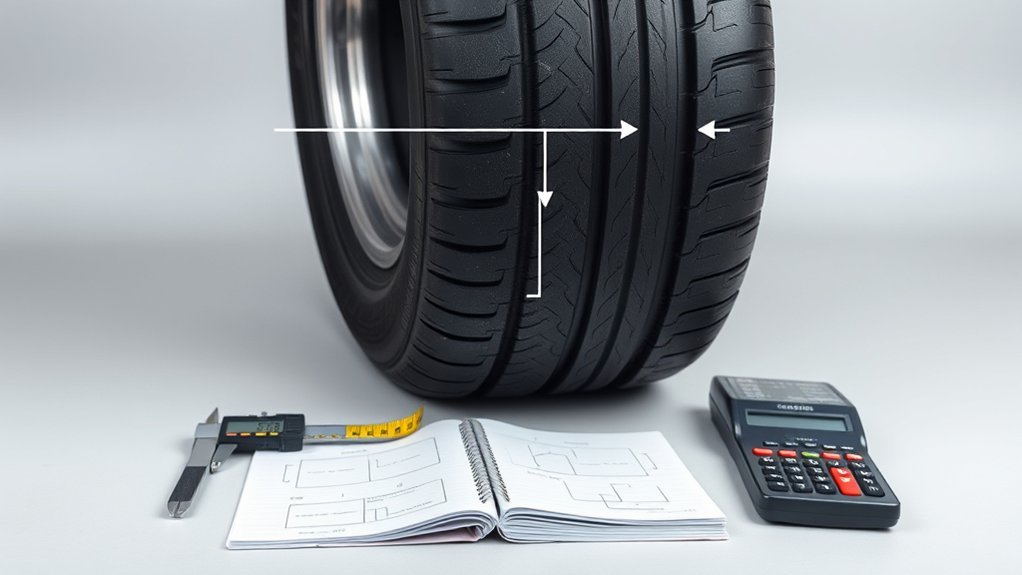
Calculating tire height is simple once you know how to read the tire size code on the sidewall. A size like 225/70R15 gives you the tire width, sidewall ratio, and wheel diameter. With those three numbers, you can estimate the tire’s total outside diameter and compare sizes before you buy.
Quick Answer
To calculate tire height, multiply the section width by the aspect ratio to find one sidewall, double that sidewall, then add the wheel diameter in the same unit. For 225/70R15, the height is 696 mm, or about 27.4 inches.
Key Takeaways
- Use this formula: tire height = two sidewalls + wheel diameter.
- In a size like 225/70R15, 225 is width in millimeters, 70 is the aspect ratio, and 15 is the wheel diameter in inches.
- Always convert the wheel diameter to millimeters before adding it to millimeter sidewalls.
- Calculated tire height is a nominal estimate. Actual tire size can vary by brand, tread design, load, pressure, and rim width.
- Before changing tire size, check your owner’s manual, Tire and Loading Information Label, load index, speed rating, and physical clearance.
At a Glance
| Time Required | 2 to 5 minutes per tire size |
| Difficulty | Easy |
| Tools Needed | Tire size code, calculator, and your vehicle’s tire placard or owner’s manual |
| Cost | Free |
How to Calculate Tire Height
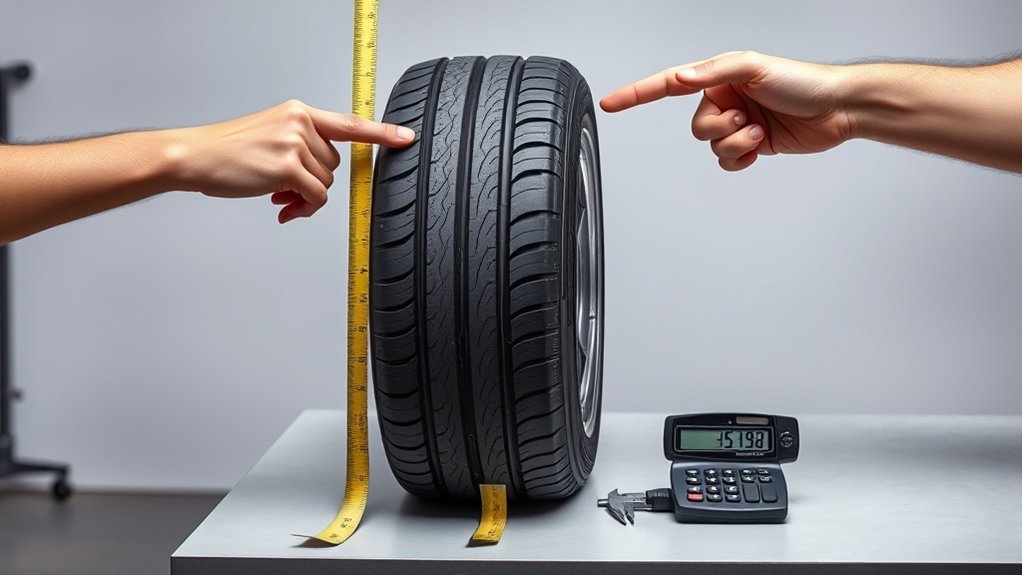
To calculate tire height, use one of these formulas:
Metric formula: tire height in mm = (section width × aspect ratio × 2) + wheel diameter in mm.
For most passenger and light-truck metric tire sizes, the first number is the section width in millimeters, the second number is the aspect ratio, and the final number is the wheel diameter in inches. Tire Rack explains the same method: convert the wheel diameter to millimeters, double the sidewall height, then add the wheel diameter to estimate overall tire diameter.
Here is the same formula in a cleaner step-by-step format:
- Find the section width. In 225/70R15, the width is 225 mm.
- Convert the aspect ratio to a decimal. A 70 aspect ratio becomes 0.70.
- Calculate one sidewall. 225 × 0.70 = 157.5 mm.
- Double the sidewall. 157.5 × 2 = 315 mm.
- Convert the wheel diameter to millimeters. 15 × 25.4 = 381 mm.
- Add both parts. 315 + 381 = 696 mm.
- Convert to inches if needed. 696 ÷ 25.4 = 27.4 inches.
Note: This calculation gives a nominal tire height. Actual mounted height can vary by tire model, tread depth, inflation pressure, load, and rim width. For close-clearance fitment, use the tire manufacturer’s published specs.
If you are comparing sizes for performance, comfort, gearing, or performance all-season tires, use the calculated height as a planning number, not as the final safety approval.
Read the Tire Size Code
You can read a tire size code as width / aspect ratio / construction / wheel diameter. In 225/70R15, the code breaks down like this:
| Code Part | Meaning | How It Affects Height |
|---|---|---|
| 225 | Section width in millimeters | Sets the base number used to calculate sidewall height |
| 70 | Aspect ratio | Means the sidewall is 70% of the tire width |
| R | Radial construction | Does not change the height formula |
| 15 | Wheel diameter in inches | Must be converted to millimeters before adding to sidewall height |
Some sidewalls include extra letters or numbers, such as P, LT, load index, and speed rating. For example, P225/70R15 100T tells you more than height. The P means passenger tire, 100 is the load index, and T is the speed rating. These details matter because the right tire must match both size and capacity. Understanding tire specifications helps you compare options without guessing.
Warning: Do not choose tires by height alone. The correct replacement size should come from your owner’s manual, the Tire and Loading Information Label on the driver’s door area, or another size approved by the vehicle manufacturer.
Find Tire Width and Aspect Ratio
To find tire height, start with the first two numbers in the tire code. In 225/70R15, the tire width is 225 mm and the aspect ratio is 70%.
The aspect ratio tells you how tall one sidewall is compared with the tire’s width. A 70 aspect ratio means the sidewall is 70% of 225 mm:
225 × 0.70 = 157.5 mm
A higher aspect ratio usually creates a taller sidewall. That can improve ride comfort and add some clearance, but it may soften steering response. A lower aspect ratio usually creates a shorter sidewall. That can sharpen steering feel, but it leaves less rubber between the wheel and the road.
This is also why two tires with the same width can have different total heights. A 225/70R15 is taller than a 225/65R15 because 70% of 225 is more than 65% of 225. The same logic helps when evaluating tread depth, ride height, and overall tire performance.
[Products Worth Considering]
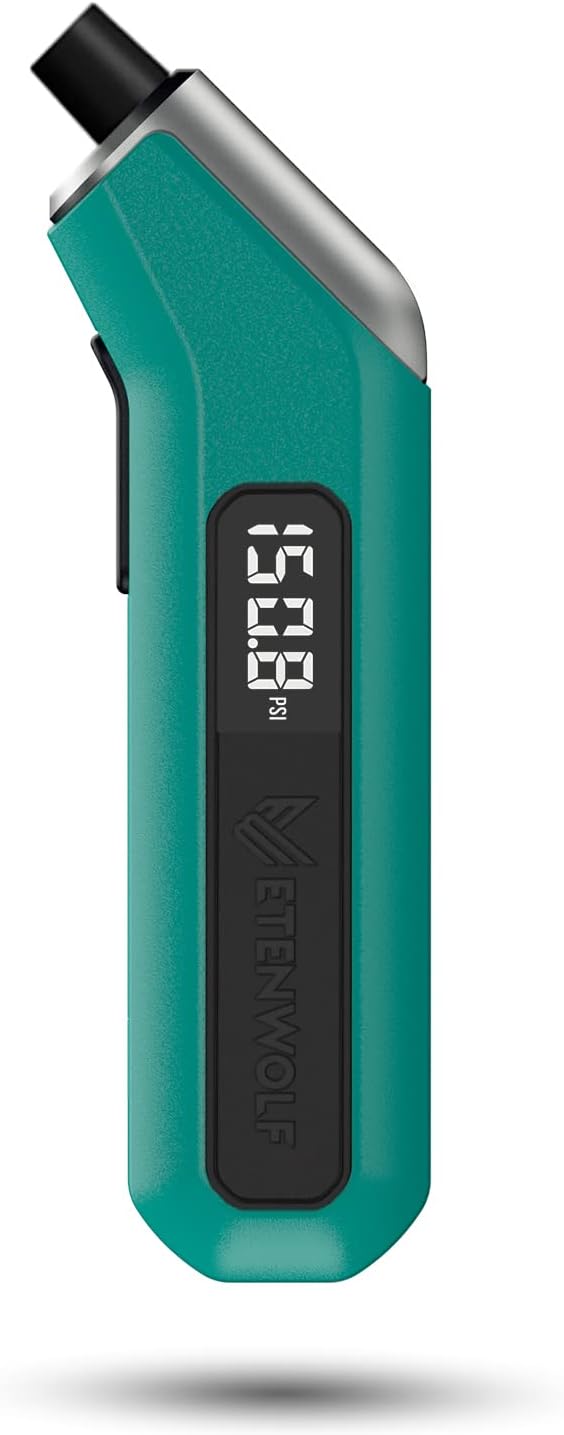
ETENWOLF T300 is a calibrated digital tire pressure gauge designed for reliable readings across low and high pressure ranges. It includes thermal compensation for stable performance in extreme cold or heat, an LED light for visibility, and an auto shut-off to help preserve battery life. Ideal for pickups, RVs, and heavy-duty vehicles, it delivers accurate PSI measurements with sturdy durability.

Measure tyre tread depth precisely with a digital gauge that reads in both MM and inches, helping you monitor safe driving conditions. The large LCD screen is easy to operate, and the compact tool fits for cars, trucks, and motorcycles. It provides high accuracy with a 0-25.4mm range and includes a 1-year warranty for added peace of mind.

The SAFELIFE dial tire tread depth gauge measures tread depth in 1/32 inch increments with clear, easy-to-read 2-inch dial face. Color zones using a traffic light system help you quickly judge whether tread is low, marginal, or ample for safer driving. Built with a durable zinc cast body and a metal detect probe for precise, comfortable use across cars, motorcycles, trucks, and buses.
Convert Wheel Diameter to Inches
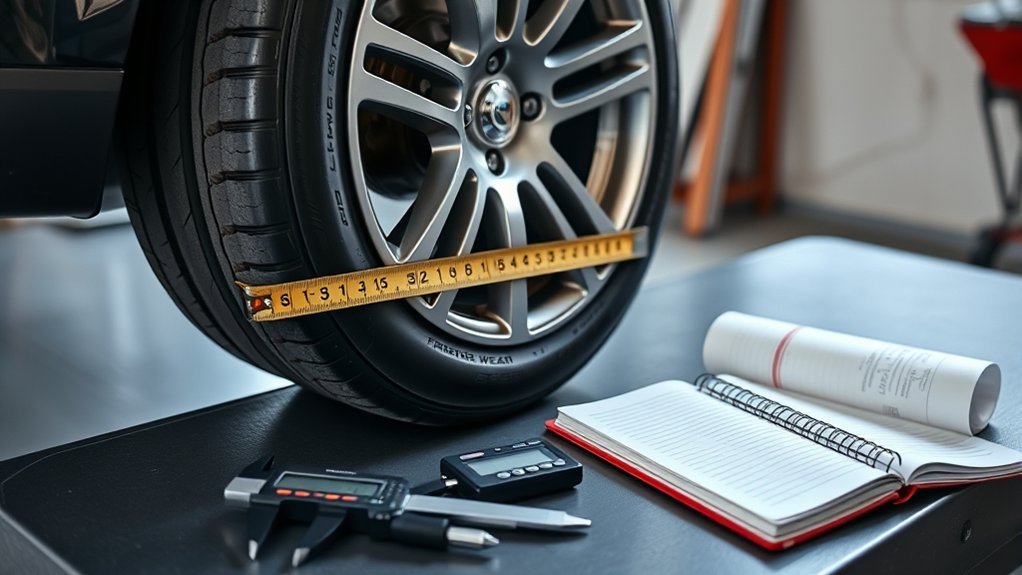
The last number in a tire size code is the wheel diameter. It is usually written in inches. In 225/70R15, the wheel diameter is 15 inches.
Because the sidewall height is calculated in millimeters, you must convert the wheel diameter to millimeters before adding:
15 inches × 25.4 = 381 mm
If you prefer to work in inches, you can convert the sidewall height instead:
157.5 mm ÷ 25.4 = 6.20 inches
Then use the inch formula:
6.20 + 6.20 + 15 = 27.4 inches
Pro Tip: Use one unit system from start to finish. Mixing millimeters and inches in the same line is the most common tire-height calculation mistake.
Accurate wheel diameter matters for tire fitment, clearance, steering, and speedometer accuracy.
[Products Worth Considering]

Accurately measure tire tread depth with a calibrated gauge marked from 0 to 1 inch in 1/32 inch increments. The color-coded bar helps you quickly identify tread condition ranges, supporting safe driving for trucks, motorcycles, automobiles, and passenger vehicles.

This 3-piece wheel and tire brush set makes it easy to clean light, medium, and heavy dirt from wheels, rims, tires, and exterior surfaces. It includes both soft and stiff bristle options for gentle scrubbing and tough grime removal, helping lift brake dust and road buildup. The long-handle design supports comfortable cleaning across cars, trucks, SUVs, RVs, motorcycles, and more, with simple care instructions to restore brush shape.

Measure tire tread depth quickly and accurately with this LUMITECO dial gauge that reads in 1/32" increments up to 14/32". The color-coded green/yellow/red zones make it easy to judge tire wear and know when replacement is needed. A rugged, compact design with a protective pouch helps keep the gauge ready for use on cars, trucks, motorcycles, and more.
Calculate Tire Height Step by Step
Here is the full 225/70R15 example in one clean calculation:
| Step | Calculation | Result |
|---|---|---|
| One sidewall | 225 × 0.70 | 157.5 mm |
| Two sidewalls | 157.5 × 2 | 315 mm |
| Wheel diameter | 15 × 25.4 | 381 mm |
| Total tire height | 315 + 381 | 696 mm |
| Convert to inches | 696 ÷ 25.4 | 27.4 inches |
So a 225/70R15 tire has a calculated height of about 696 mm, or 27.4 inches. That number reflects the tire’s overall diameter, not just the wheel.
When choosing a tire for daily driving, off-road use, towing, or all-season tire performance, compare this height against the original size and the vehicle manufacturer’s approved range.
See Tire Height Examples
Once you know the formula, you can calculate almost any metric tire size. The table below shows common examples.
| Tire Size | Sidewall Height | Calculated Total Height |
|---|---|---|
| 225/70R15 | 157.5 mm | 696 mm / 27.4 in |
| 225/65R15 | 146.25 mm | 673.5 mm / 26.5 in |
| 235/60R18 | 141 mm | 739.2 mm / 29.1 in |
| 275/70R16 | 192.5 mm | 791.4 mm / 31.2 in |
You can apply the same method to your original tire and your new tire. Then compare the two heights to see how much the outside diameter changes. This is helpful when reviewing tire size specifications for a specific vehicle.
How Tire Height Changes Affect Fitment
Tire height changes more than the look of the vehicle. It can affect wheel-well clearance, steering response, braking feel, gearing, odometer readings, and speedometer accuracy. Larger tires usually travel farther per rotation, so the speedometer may read lower than your actual speed. Smaller tires do the opposite.
Use this quick estimate for speedometer change:
Actual speed ≈ indicated speed × new tire diameter ÷ original tire diameter.
For example, if your original tire is 27.4 inches tall and your new tire is 28.2 inches tall, your actual speed at an indicated 60 mph is about:
60 × 28.2 ÷ 27.4 = 61.8 mph
That may sound small, but larger changes can affect speed-dependent systems. Tire Rack notes that large changes in overall tire diameter can affect speedometer accuracy and systems such as ABS, traction control, and stability control.
Warning: The common “within 3%” tire-diameter guideline is only a planning rule. It does not override your vehicle manufacturer’s approved tire sizes, load requirements, speed rating, rim width limits, or local inspection rules.
Taller sidewalls can improve ground clearance and help on rough surfaces. Too much extra height can cause rubbing at full steering lock, during suspension compression, or when the vehicle is loaded. Choosing tires with aggressive tread blocks can also change real-world clearance because tread shape adds bulk beyond the simple size code.
[Products Worth Considering]

This manual duck head tire changer kit makes tire installation and removal simpler by letting you embed the duck head into the tire with applied pressure. The integrated design and durable steel construction help reduce friction and improve efficiency and safety during use. Suitable for 16–21 inch wheels, it’s convenient for cars, trucks, SUVs, and ATV tires, with 24-hour after-sales support.

Monitor tire tread wear with a smart, color-coded depth gauge that shows clear condition ranges at a glance. The bar is range marked for fast, easy readings, helping you maintain safer traction and performance. Each gauge is portable with a pocket clip, and the set includes 20 units for daily use and sharing.

The Big Rig Defense Tire Thumper is a truck tire pressure checker that lets you quickly check multiple tires by giving them a firm whack. Listen for a reassuring thump and feel the stick bounce when a tire is fully inflated, helping you get back on the road safely. It features a comfortable, glove-friendly handle and a secure wrist strap for confident use on busy routes.
Common Tire Size Mistakes to Avoid
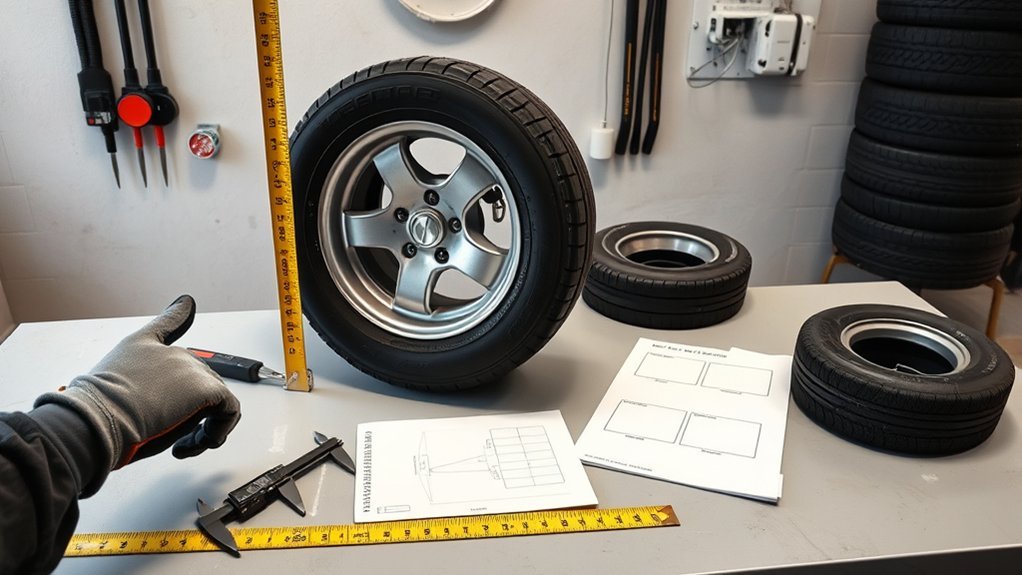
The biggest mistake is treating one number as the whole tire size. Width, aspect ratio, wheel diameter, load index, speed rating, rim width, and vehicle clearance all work together.
- Do not ignore the aspect ratio. A higher aspect ratio creates a taller sidewall when width stays the same.
- Do not mix units. Convert the wheel diameter before adding it to millimeter sidewalls.
- Do not assume calculated height is exact. Actual dimensions vary by tire model and measuring conditions.
- Do not choose by height alone. Check load index, speed rating, rim width range, and inflation requirements.
- Do not skip clearance checks. Check fenders, struts, suspension arms, brake parts, mud flaps, and full-lock steering clearance.
- Do not rely only on a calculator. Verify the size with your owner’s manual, tire placard, manufacturer specs, or a tire professional.
If you are changing size for winter traction, remember that dedicated winter tires may have different tread patterns and real-world dimensions even when the printed size looks similar.
Frequently Asked Questions
How do you calculate tire height?
Calculate one sidewall by multiplying tire width by the aspect ratio as a decimal. Double that sidewall, then add the wheel diameter in the same unit. For 225/70R15, the math is 225 × 0.70 × 2 + 381 = 696 mm, or about 27.4 inches.
What is the 3% rule for tires?
The 3% rule is a common fitment guideline that suggests keeping the new tire diameter within about 3% of the original diameter. Treat it as a starting point, not final approval. Always check your owner’s manual, tire placard, load rating, speed rating, rim width, and clearance.
How much taller is a 70 tire than a 65?
It depends on tire width. With the same 225 mm width, a 70-series sidewall is 157.5 mm and a 65-series sidewall is 146.25 mm. That is 11.25 mm, or about 0.44 inch, more sidewall. Because a tire has two sidewalls, total diameter increases by about 0.89 inch.
How tall is a 275 tire in inches?
A 275 tire is not one fixed height. You also need the aspect ratio and wheel size. For 275/70R16, one sidewall is 275 × 0.70 = 192.5 mm. Add two sidewalls to the 16-inch wheel: 192.5 + 192.5 + 406.4 = 791.4 mm, or about 31.2 inches.
Why is my calculated tire height different from the manufacturer’s specs?
The formula gives a nominal size based on the sidewall code. Real measured height can vary because of tread depth, tire design, air pressure, load, rim width, and manufacturing differences. For tight fitment, use the tire maker’s published overall diameter for the exact model.
Conclusion
Tire height comes from three numbers: width, aspect ratio, and wheel diameter. Multiply width by aspect ratio to find one sidewall, double it, then add the wheel diameter after converting units. That gives you a reliable estimate for comparing tire sizes, checking clearance, and understanding speedometer changes.
Before buying a different size, compare it with your original tire, check the vehicle placard or owner’s manual, and confirm load index, speed rating, rim width, and clearance. The formula helps you make a smarter choice, but final fitment should always match the vehicle and tire manufacturer’s guidance.
Sources
- Tire Rack: How Do I Calculate Tire Dimensions? — backs up the tire-height formula, width/aspect/wheel code explanation, and nominal-dimension warning.
- Tire Rack: What Are Plus Size Wheels & Tires? — backs up the warning that large tire-diameter changes can affect speedometer accuracy and vehicle systems.
- NHTSA TireWise — backs up tire-size, tire placard, tire pressure, tire maintenance, and safety guidance.
- NIST SI Units — supports use of consistent metric units and measurement standards.