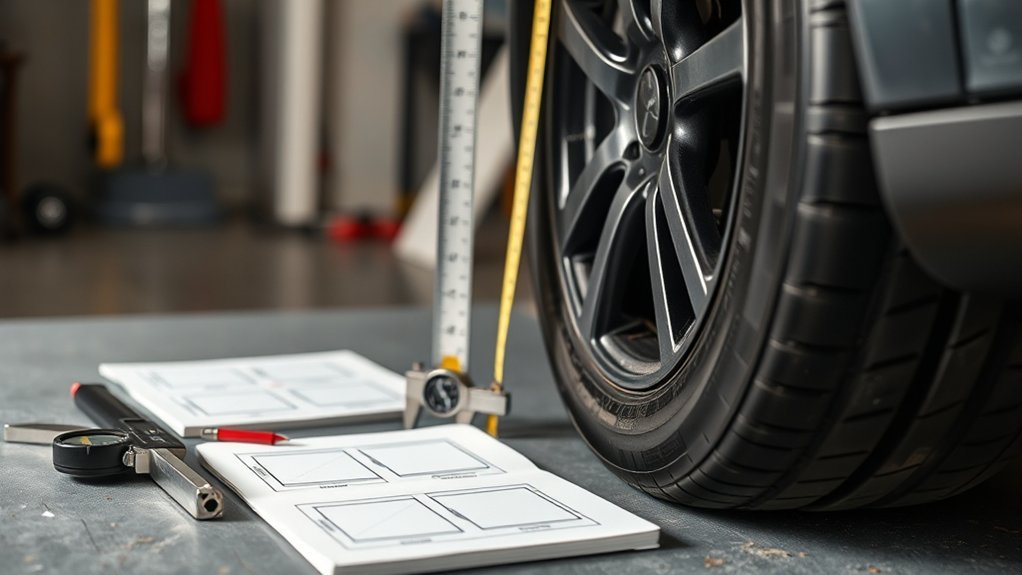
You can determine tire diameter from the size code molded into the tire sidewall, such as 225/50R17. The key is to calculate the sidewall height, double it, and add the wheel diameter. Once you know the overall diameter, you can compare replacement tires, estimate speedometer error, and avoid fitment problems before you buy.
Quick Answer
To determine tire diameter, multiply the tire width by the aspect ratio to get one sidewall height, double that number, then add the wheel diameter. For 225/50R17, the diameter is about 25.9 inches. Always compare that result with your original tire size before changing tires.
Key Takeaways
- Use this formula: overall tire diameter = sidewall height × 2 + wheel diameter.
- Find sidewall height by multiplying section width by the aspect ratio.
- In a size like 225/50R17, 225 is width in millimeters, 50 is aspect ratio, R means radial, and 17 is wheel diameter in inches.
- To convert millimeters to inches, divide by 25.4.
- Use the vehicle tire placard, owner’s manual, load rating, speed rating, and clearance checks before choosing a replacement size.
At a Glance
| Time Required | 2–5 minutes per tire size |
| Difficulty | Easy |
| Tools Needed | Tire sidewall size, calculator, optional tape measure |
| Cost | Free |
How Tire Diameter Is Calculated
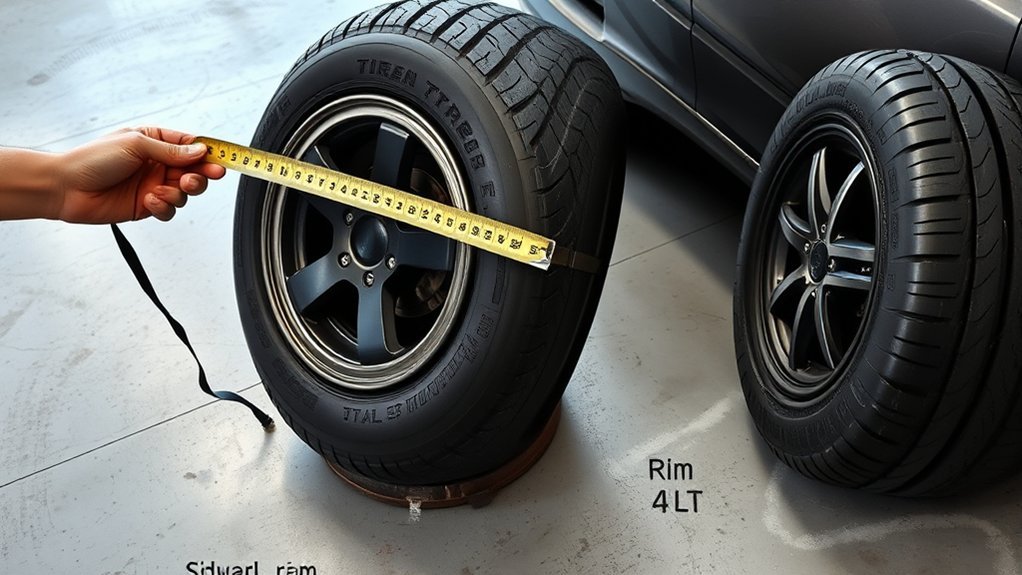
Tire diameter is the total height of the tire from the ground to the top of the tread when the tire is mounted and inflated. For a metric tire size, you calculate it from three numbers: section width, aspect ratio, and wheel diameter.
Basic formula:
Tire diameter = (sidewall height × 2) + wheel diameter
Because most tire widths are listed in millimeters and wheel diameters are listed in inches, convert the sidewall height to inches before adding it to the wheel diameter.
Inch shortcut formula:
Tire diameter in inches = (section width × aspect ratio ÷ 2540 × 2) + wheel diameter
For example, with a 225/50R17 tire:
- Section width = 225 mm.
- Aspect ratio = 50%, or 0.50.
- Sidewall height = 225 × 0.50 = 112.5 mm.
- Convert sidewall height to inches: 112.5 ÷ 25.4 = 4.43 inches.
- Double the sidewall: 4.43 × 2 = 8.86 inches.
- Add the 17-inch wheel: 8.86 + 17 = 25.86 inches.
So a 225/50R17 tire has an estimated overall diameter of about 25.9 inches, or 656.8 mm.
Note: Calculated diameter is an estimate. Real mounted dimensions can vary slightly by brand, tread design, tread wear, inflation pressure, vehicle load, and measuring rim width.
Read Tire Size From the Sidewall
You can find the tire size code on the tire sidewall. It usually looks like 205/60R16, 225/50R17, or P235/65R17. Each part tells you something different about the tire.
Sidewall Size Code
In 225/50R17, the code breaks down like this:
| Code Part | Meaning |
| 225 | Section width in millimeters |
| 50 | Aspect ratio, or sidewall height as a percentage of width |
| R | Radial construction |
| 17 | Wheel diameter in inches |
Some tires also include a prefix such as P for passenger vehicle tires or LT for light-truck tires. The letters and numbers after the size, such as 94V or 102H, show load index and speed rating. Do not ignore them when choosing replacements.
Decode Tire Markings
The fastest way to decode a tire is to read it from left to right. The first number gives the width, the second number gives the sidewall percentage, the letter tells you the construction type, and the final number tells you the wheel size. This is why the last number in 225/50R17 is not the total tire diameter; it is only the wheel diameter.
Pro Tip: Take a photo of the sidewall size and the driver-side door-jamb tire placard before shopping. That gives you the current tire size and the manufacturer’s recommended size in one place.
Break Down Width, Sidewall, and Rim Size
To calculate overall tire diameter, separate the size code into width, sidewall, and wheel diameter. The tire width and aspect ratio work together to create the sidewall height. The wheel diameter is then added after both sidewalls are counted.
| Code Part | Meaning | Example |
|---|---|---|
| Width | Tire section width in millimeters | 225 mm |
| Aspect ratio | Sidewall height as a percentage of width | 50% |
| Wheel diameter | Diameter of the wheel the tire fits | 17 inches |
| Sidewall height | Width × aspect ratio | 225 × 0.50 = 112.5 mm |
| Overall diameter | Two sidewalls + wheel diameter | About 25.9 inches |
This breakdown helps you avoid a common mistake: confusing wheel diameter with total tire diameter. A 17-inch wheel does not mean the tire is 17 inches tall. The sidewalls add several more inches to the total height.
Convert Tire Measurements to Inches
Most tire sizes mix metric and inch measurements. The section width is listed in millimeters, while the wheel diameter is listed in inches. To combine them correctly, convert the sidewall height from millimeters to inches.
Convert Millimeters To Inches
Use this conversion:
inches = millimeters ÷ 25.4
Examples:
- 225 mm ÷ 25.4 = 8.86 inches
- 112.5 mm ÷ 25.4 = 4.43 inches
- 656.8 mm ÷ 25.4 = 25.86 inches
You do not need to convert the wheel diameter if it is already listed in inches, such as the 17 in 225/50R17.
Read Tire Size Codes
Here is a quick calculation using 225/45R17:
- Width = 225 mm.
- Aspect ratio = 45%, or 0.45.
- Sidewall height = 225 × 0.45 = 101.25 mm.
- Sidewall height in inches = 101.25 ÷ 25.4 = 3.99 inches.
- Overall diameter = 17 + (3.99 × 2) = 24.98 inches.
This same process works for most common metric passenger tire sizes.
Compare Stock Vs. Replacement Tire Diameter
Before buying a replacement size, calculate both the stock tire diameter and the new tire diameter. Then compare the difference as a percentage.
Percentage difference = (new diameter − stock diameter) ÷ stock diameter × 100
Example comparison:
- Stock tire: 205/60R16 = about 25.69 inches tall.
- Replacement tire: 225/50R17 = about 25.86 inches tall.
- Difference: about 0.66% larger.
That small difference is usually easier to work with than a large diameter jump, but diameter is not the only fitment factor. You still need to check width, wheel size, wheel offset, suspension clearance, brake clearance, load index, speed rating, and manufacturer recommendations.
Warning: A tire that is close in diameter can still be unsafe or unsuitable if the load rating is too low, the wheel width is wrong, the tire rubs the body or suspension, or the size is not approved for your vehicle.
[Products Worth Considering]

The SAFELIFE dial tire tread depth gauge measures tread depth in 1/32 inch increments with clear, easy-to-read 2-inch dial face. Color zones using a traffic light system help you quickly judge whether tread is low, marginal, or ample for safer driving. Built with a durable zinc cast body and a metal detect probe for precise, comfortable use across cars, motorcycles, trucks, and buses.

Measure tire tread depth quickly and accurately with this LUMITECO dial gauge that reads in 1/32" increments up to 14/32". The color-coded green/yellow/red zones make it easy to judge tire wear and know when replacement is needed. A rugged, compact design with a protective pouch helps keep the gauge ready for use on cars, trucks, motorcycles, and more.

This manual duck head tire changer kit makes tire installation and removal simpler by letting you embed the duck head into the tire with applied pressure. The integrated design and durable steel construction help reduce friction and improve efficiency and safety during use. Suitable for 16–21 inch wheels, it’s convenient for cars, trucks, SUVs, and ATV tires, with 24-hour after-sales support.
Check the 3% Tire Size Rule
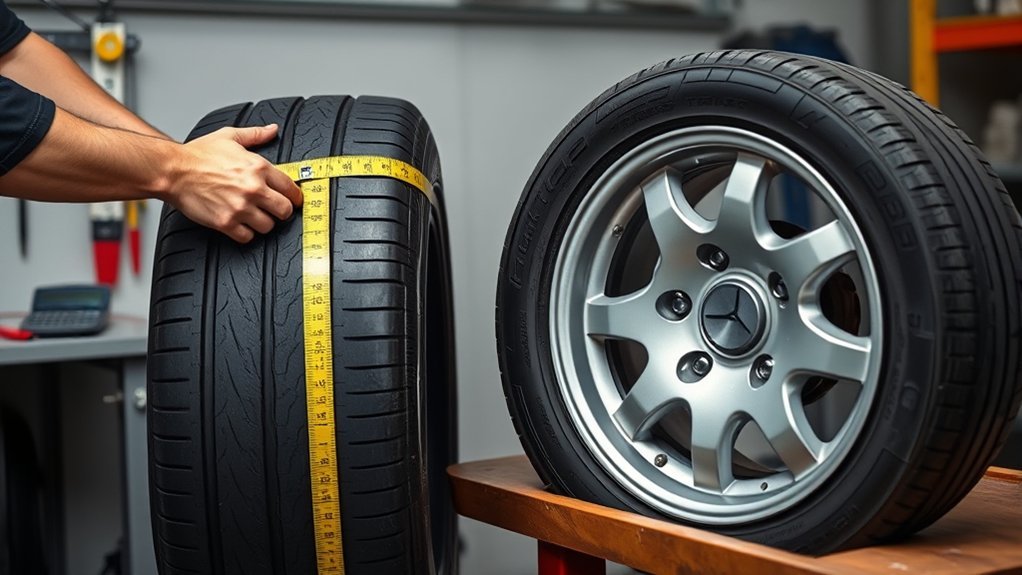
The 3% tire size rule is a common comparison guideline. It means the replacement tire’s overall diameter should usually stay within about 3% of the original tire diameter. This can help limit changes to speedometer readings, odometer readings, gearing, ground clearance, and driver-assistance system behavior.
Use it as an early check, not as final approval. The safer order is:
- Check the tire placard on the driver-side door edge or door jamb.
- Check the owner’s manual for approved tire sizes and inflation pressures.
- Calculate the diameter difference.
- Confirm load index and speed rating meet or exceed the vehicle requirement.
- Verify wheel width, offset, brake clearance, fender clearance, and suspension clearance.
- Ask a qualified tire professional if you are changing tire type, wheel size, or overall diameter.
The 3% rule helps you screen tire sizes, but the vehicle manufacturer’s approved size, load rating, and fitment requirements should guide the final choice.
See How Tire Diameter Affects Speedometer Readings
Your vehicle’s speedometer is calibrated around the original tire size. When tire diameter changes, the distance traveled per wheel revolution changes too.
- Larger tire diameter: the tire travels farther per revolution, so the speedometer may read lower than your actual speed.
- Smaller tire diameter: the tire travels less distance per revolution, so the speedometer may read higher than your actual speed.
Use this formula to estimate the change:
Actual speed ≈ indicated speed × new tire diameter ÷ original tire diameter
Example: If your speedometer shows 60 mph, your original tire is 25.0 inches tall, and your new tire is 25.75 inches tall:
60 × 25.75 ÷ 25.0 = 61.8 mph actual speed
In that example, the vehicle is moving about 1.8 mph faster than the speedometer shows. The same ratio also affects odometer readings.
Note: If you make a major size change, some vehicles may need recalibration. This is especially important on vehicles with ABS, traction control, stability control, all-wheel drive, or advanced driver-assistance systems.
Pick the Right Tire Size for Your Vehicle
To pick the right tire size, start with the manufacturer’s recommended size. You can usually find it on the driver-side tire placard and in the owner’s manual. The sidewall of the tire already on the vehicle is useful, but it may not be the original or approved size if a previous owner changed it.
Check these items before choosing a replacement:
- Overall diameter: compare it with the original tire size.
- Section width: confirm the tire will not rub the fender, strut, control arm, liner, or suspension parts.
- Wheel diameter: match the tire to the wheel size.
- Wheel width range: confirm the tire is approved for your wheel width.
- Load index: choose a tire that meets or exceeds the vehicle requirement.
- Speed rating: choose a rating that meets or exceeds the manufacturer’s requirement.
- Tire type: do not swap P-metric, LT-metric, XL, run-flat, or specialty OE-marked tires without checking compatibility.
- Drivetrain: on many AWD and 4WD vehicles, mismatched tire diameters can stress drivetrain parts.
If you are staying with the exact original size, replacement is usually simpler. If you are changing wheel diameter, tire width, or aspect ratio, treat it as a fitment change and verify everything before installation.
[Products Worth Considering]

This 3-piece wheel and tire brush set makes it easy to clean light, medium, and heavy dirt from wheels, rims, tires, and exterior surfaces. It includes both soft and stiff bristle options for gentle scrubbing and tough grime removal, helping lift brake dust and road buildup. The long-handle design supports comfortable cleaning across cars, trucks, SUVs, RVs, motorcycles, and more, with simple care instructions to restore brush shape.

This tire inflator with pressure gauge delivers long-lasting performance with a durable rubber-protected gauge and sturdy build. The longer hose and 360 swivel air chuck help you seal the valve securely and keep your hands free while measuring, inflating, or deflating. It’s battery-free for reliable use and provides ±2 PSI accuracy in the mid-range for most typical tires, with universal compatibility for 1/4 NPT compressor outputs.

Monitor tire tread wear with a smart, color-coded depth gauge that shows clear condition ranges at a glance. The bar is range marked for fast, easy readings, helping you maintain safer traction and performance. Each gauge is portable with a pocket clip, and the set includes 20 units for daily use and sharing.
Measure Tire Diameter By Hand
You can also measure tire diameter directly. This is useful when checking worn tires, unusual sizes, or tires that do not match the sidewall estimate exactly.
- Park on level ground.
- Inflate the tire to the vehicle manufacturer’s recommended cold pressure.
- Hold a tape measure vertically from the ground to the highest point of the tire tread.
- Keep the tape straight through the centerline of the wheel.
- Record the measurement in inches.
This gives you the tire’s loaded standing height, which may be slightly different from the calculated unloaded diameter. For tire shopping, use the sidewall calculation and manufacturer specifications. For clearance checks, measuring the mounted tire can still be helpful.
[Products Worth Considering]

This wheel brush kit delivers pro-level cleaning at home, lifting dirt, grime, and brake dust to help restore wheel appearance. It includes multiple brush styles and applicator pads for tackling different wheel surfaces, with gentle, metal-free bristles designed to reduce scratching risk. The flat and double-ended brushes are built for comfort and reach, making wheel care easier for cars, trucks, and RVs.
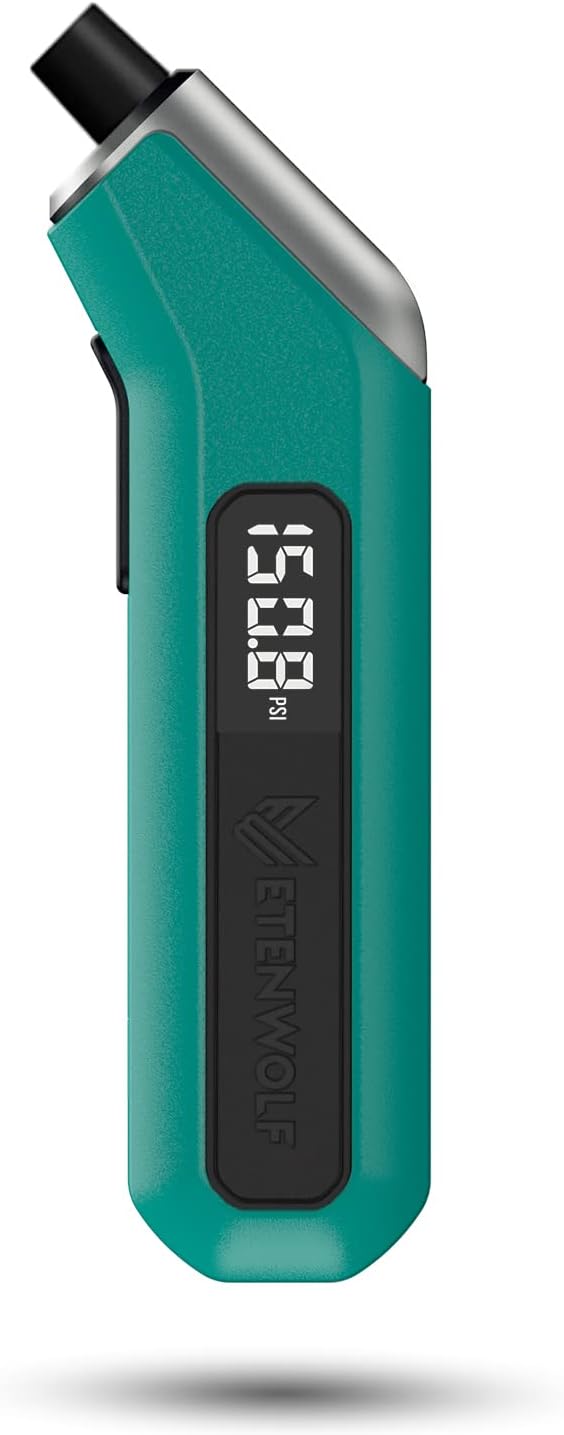
ETENWOLF T300 is a calibrated digital tire pressure gauge designed for reliable readings across low and high pressure ranges. It includes thermal compensation for stable performance in extreme cold or heat, an LED light for visibility, and an auto shut-off to help preserve battery life. Ideal for pickups, RVs, and heavy-duty vehicles, it delivers accurate PSI measurements with sturdy durability.

This 13-inch flat-free wheelbarrow tire uses solid polyurethane foam construction with steel rims, so it will not puncture, rot, or go flat. The anti-skid tread improves stability and maneuverability across garden, lawn, and mixed terrain. It includes pre-installed 5/8-inch bearings plus extra 3/4-inch bearings and a versatile adapter kit to fit compatible wheel sizes and cart hubs.
Worked Examples
Example: 225/50R17
- Width: 225 mm
- Aspect ratio: 50%
- Sidewall height: 225 × 0.50 = 112.5 mm
- Sidewall height in inches: 112.5 ÷ 25.4 = 4.43 inches
- Overall diameter: 17 + (4.43 × 2) = 25.86 inches
Result: 225/50R17 is about 25.9 inches tall.
Example: 235/35R20
- Width: 235 mm
- Aspect ratio: 35%
- Sidewall height: 235 × 0.35 = 82.25 mm
- Sidewall height in inches: 82.25 ÷ 25.4 = 3.24 inches
- Overall diameter: 20 + (3.24 × 2) = 26.48 inches
Result: 235/35R20 is about 26.5 inches tall, or about 672.5 mm.
Frequently Asked Questions
What is the formula for tire diameter?
The formula for tire diameter is (2 × sidewall height) + wheel diameter. For metric tire sizes, calculate sidewall height by multiplying section width by aspect ratio, then divide by 25.4 to convert millimeters to inches before adding the wheel diameter.
What is the diameter of 235/35R20?
A 235/35R20 tire has an estimated diameter of about 26.5 inches, or about 672.5 mm. The sidewall height is 235 × 0.35 = 82.25 mm per side. Convert that to inches, double it, and add the 20-inch wheel diameter.
What is the 3% rule for tires?
The 3% rule is a common guideline that says replacement tire diameter should stay within about 3% of the original tire diameter. It helps limit speedometer, odometer, gearing, and clearance changes, but it does not replace the vehicle placard, owner’s manual, or professional fitment advice.
How can I tell what diameter my tires are?
Read the tire size on the sidewall, calculate the sidewall height from the width and aspect ratio, double it, and add the wheel diameter. You can also measure from the ground to the top of the mounted tire, but calculated diameter is better for comparing tire sizes before buying.
Is tire diameter the same as rim diameter?
No. Rim diameter is the wheel size the tire fits, such as 17 inches in 225/50R17. Tire diameter is the full height of the mounted tire, including the wheel plus the upper and lower sidewalls.
Will changing tire diameter affect my speedometer?
Yes. A larger tire travels farther per revolution, so your actual speed may be higher than the speedometer shows. A smaller tire travels less distance per revolution, so your actual speed may be lower than the speedometer shows.
Conclusion
To determine tire diameter, read the sidewall size, calculate one sidewall height, double it, and add the wheel diameter. The math is simple, but the buying decision needs more than one number. Compare the new diameter with the stock size, check the vehicle placard and owner’s manual, confirm load and speed ratings, and verify clearance before installing a different size. That keeps your tire choice accurate, safe, and matched to your vehicle.
Sources
- Michelin — Tire Markings Explained — supports sidewall code, width, aspect ratio, wheel diameter, load rating, and speed rating guidance.
- Tire Industry Association — Reading a Tire Sidewall — supports tire width, aspect ratio, radial construction, and rim diameter definitions.
- NHTSA TireWise — Tire Safety Ratings and Awareness — supports checking the owner’s manual or Tire and Loading Information Label for correct tire size.
- NHTSA Tire Safety Brochure — supports choosing the same size as original or another manufacturer-recommended size.
- Tire Rack — How Do I Check Speedometer Accuracy? — supports how tire diameter changes affect speedometer readings.
- Tire Rack — Plus Size Wheels & Tires — supports maintaining overall diameter when changing wheel and tire sizes.