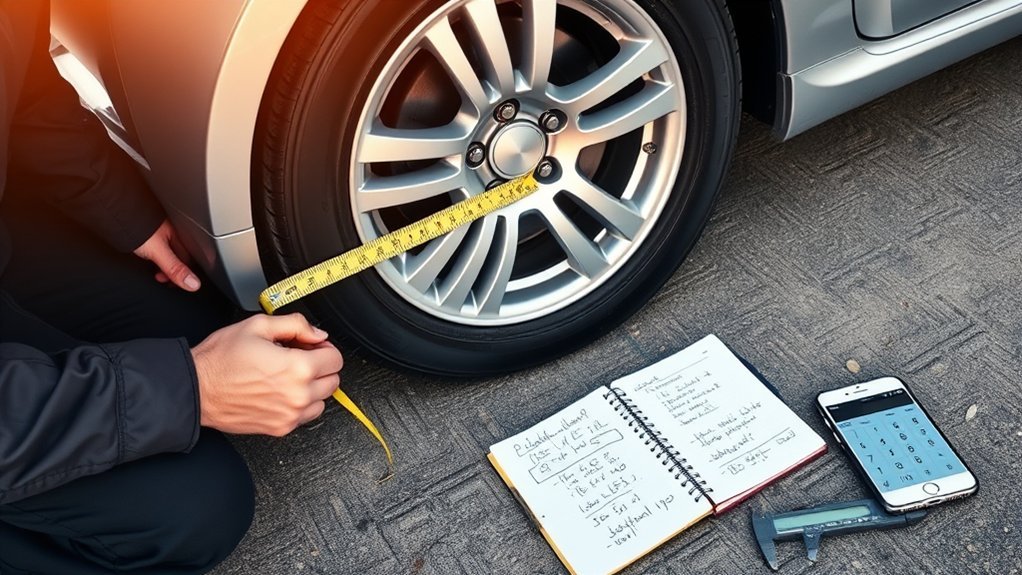
Changing tire size can make your speedometer and odometer read incorrectly because the tire travels a different distance with each revolution. The fix is simple: compare the new tire’s diameter or rolling circumference with the original tire’s size, then multiply the speedometer reading by that ratio to estimate your actual speed.
Quick Answer
To correct your speedometer after upsizing tires, calculate the ratio: new tire diameter ÷ original tire diameter. Then use: actual speed = speedometer reading × ratio. If the ratio is 1.04 and your speedometer reads 60 mph, your actual speed is about 62.4 mph.
Key Takeaways
- Larger tires usually make the speedometer read slower than your actual road speed.
- Smaller tires usually make the speedometer read faster than your actual road speed.
- Do not double a ground-to-top tire measurement; ground-to-top is already the loaded tire height.
- For the best estimate, compare rolling circumference or manufacturer-listed revolutions per mile.
- Check load rating, speed rating, wheel clearance, TPMS, ABS, and vehicle manufacturer guidance before changing size.
At a Glance
| Time Required | 10–20 minutes |
| Difficulty | Easy for calculation; moderate if recalibration is needed |
| Tools Needed | Tire size codes, calculator, tape measure or chalk for rollout test, tire pressure gauge, GPS speed app or device |
| Cost | Free for calculation; possible shop or scan-tool cost for calibration |
Find the Original Tire Size First
Before measuring the new tire, find the original tire size your vehicle was designed to use. Check the driver-side door placard, the Tire and Loading Information Label, or your owner’s manual. NHTSA recommends using the vehicle manufacturer’s tire size information and consulting a tire dealer if you are unsure about a replacement size.
Warning: Do not choose a tire only because the diameter seems close. Confirm load index, speed rating, rim width, brake clearance, suspension clearance, fender clearance, and manufacturer guidance. A size change can also affect ABS, traction control, stability control, TPMS behavior, gearing, and odometer readings.
Measuring Tire Diameter: A Step-by-Step Guide
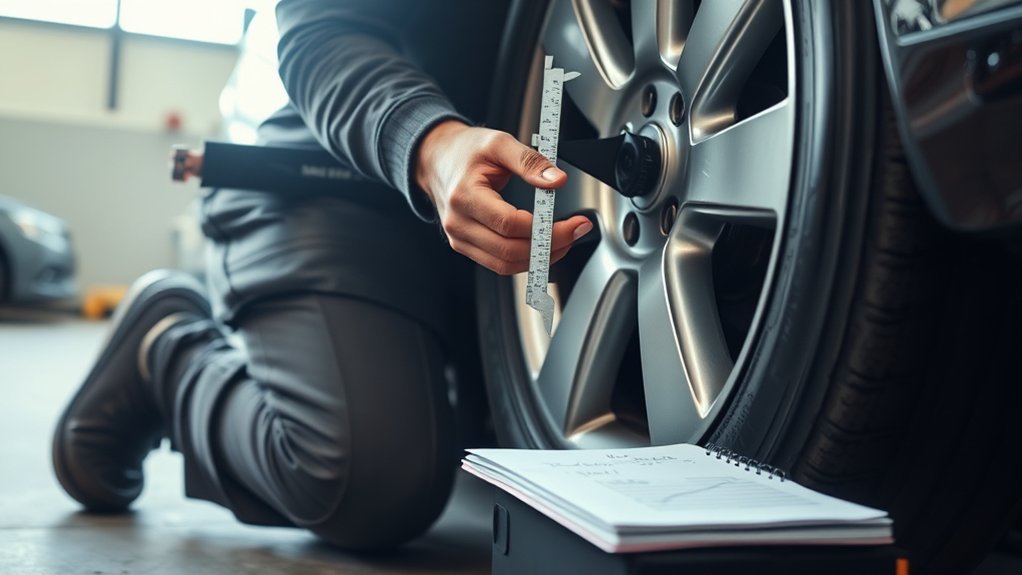
There are three practical ways to estimate tire diameter for speedometer correction: calculate it from the tire size code, measure the loaded tire height, or measure rolling circumference. For most speedometer work, the tire-size formula is quick, while rolling circumference is often the most realistic road-use check.
[Products Worth Considering]

Accurately measure tire tread depth with a calibrated gauge marked from 0 to 1 inch in 1/32 inch increments. The color-coded bar helps you quickly identify tread condition ranges, supporting safe driving for trucks, motorcycles, automobiles, and passenger vehicles.

Measure tire tread depth quickly and accurately with this LUMITECO dial gauge that reads in 1/32" increments up to 14/32". The color-coded green/yellow/red zones make it easy to judge tire wear and know when replacement is needed. A rugged, compact design with a protective pouch helps keep the gauge ready for use on cars, trucks, motorcycles, and more.

Monitor tire tread wear with a smart, color-coded depth gauge that shows clear condition ranges at a glance. The bar is range marked for fast, easy readings, helping you maintain safer traction and performance. Each gauge is portable with a pocket clip, and the set includes 20 units for daily use and sharing.
Method 1: Calculate Diameter From the Tire Size Code
For a metric tire size such as 205/55R16, the first number is section width in millimeters, the second is aspect ratio, and the last number is wheel diameter in inches. Tire Rack explains this tire-dimension formula as two sidewalls plus the wheel diameter.
Formula:
Tire diameter = (section width × aspect ratio × 2 ÷ 25.4) + wheel diameter
Example for 205/55R16:
(205 × 0.55 × 2 ÷ 25.4) + 16 = 24.88 inches
Note: This gives a nominal diameter. Actual mounted tire size can vary by tire model, wheel width, load, pressure, tread depth, and manufacturing tolerance. Use the tire manufacturer’s specs when fitment is tight.
Method 2: Measure the Loaded Tire Height
Park on a flat surface and inflate the tires to the cold pressure listed on the door placard or owner’s manual. Then measure from the ground to the highest point of the tire. That number is the tire’s loaded height, so do not double it.
If you measure from the ground to the wheel center or axle center, that is the loaded radius. In that case, double the number to estimate loaded diameter.
- Ground to top of tire: already equals loaded tire height.
- Ground to axle center: loaded radius; multiply by 2.
- Sidewall formula: best quick estimate from the tire size code.
Method 3: Measure Rolling Circumference
Rolling circumference can be more useful than static diameter because the speedometer responds to how far the tire travels per revolution.
- Set tire pressure cold.
- Mark the tire and the ground at the same point with chalk.
- Roll the vehicle forward exactly one full tire revolution.
- Mark the ground again.
- Measure the distance between the two ground marks.
You can compare the original and new rolling circumference directly, or divide circumference by π to estimate diameter.
Pro Tip: If you can find the tire manufacturer’s published revolutions per mile for both tire models, use that data. It often reflects the tire’s real rolling behavior better than a simple sidewall calculation.
How Tire Circumference Affects Your Speedometer
Your speedometer estimates speed from wheel rotation. When tire circumference changes, each revolution covers a different distance.
- Larger tires travel farther per revolution, so the wheel turns fewer times per mile. Your speedometer may read lower than your actual speed.
- Smaller tires travel less distance per revolution, so the wheel turns more times per mile. Your speedometer may read higher than your actual speed.
- Odometer readings are affected the same way because the vehicle is also counting wheel rotations for distance.
A 4% larger tire can make an indicated 60 mph closer to 62.4 mph in real road speed.
Calculating the Ratio: New vs. Original Tire Diameter
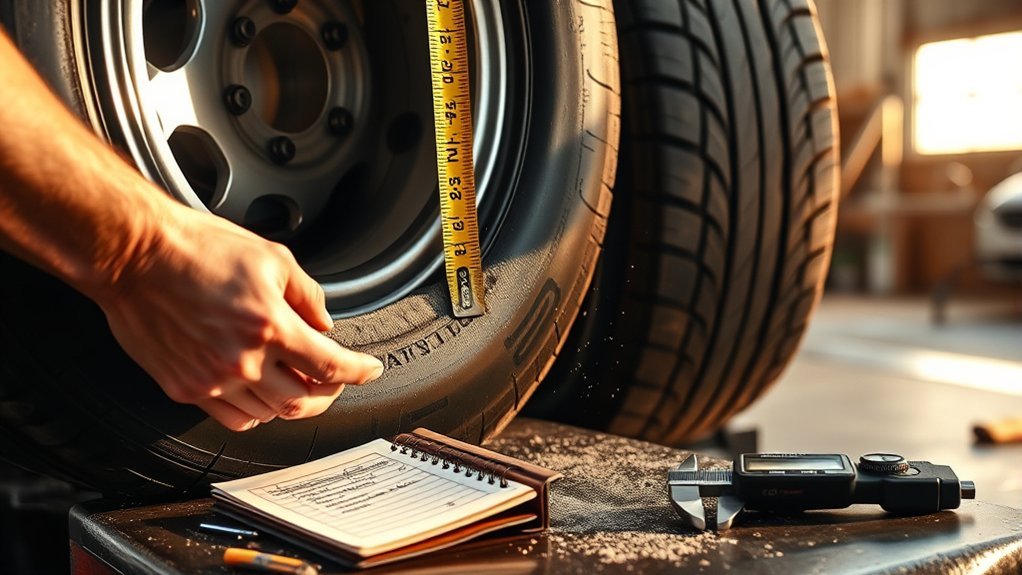
The most important number is the ratio between the new and original tire diameter or circumference.
Ratio formula:
Ratio = new tire diameter ÷ original tire diameter
You can also use circumference:
Ratio = new tire rolling circumference ÷ original tire rolling circumference
Speed correction formula:
Actual speed = speedometer reading × ratio
Odometer correction formula:
Actual distance = displayed distance × ratio
Speedometer error percentage:
Error % = (ratio - 1) × 100
| Original Diameter | New Diameter | Ratio | When Speedometer Reads 60 mph |
|---|---|---|---|
| 24 in | 26 in | 1.083 | Actual speed is about 65.0 mph |
| 25 in | 27 in | 1.080 | Actual speed is about 64.8 mph |
| 26 in | 28 in | 1.077 | Actual speed is about 64.6 mph |
| 27 in | 29 in | 1.074 | Actual speed is about 64.4 mph |
| 28 in | 30 in | 1.071 | Actual speed is about 64.3 mph |
Using the Speedometer Error Formula for Tire Size Corrections
Here is the full correction process in a simple sequence:
- Write down the original tire size from the placard or owner’s manual.
- Write down the new tire size.
- Calculate both tire diameters with the tire-size formula, or measure rolling circumference for both.
- Divide the new size by the original size to get the ratio.
- Multiply your speedometer reading by the ratio.
Example: upsizing from 24 inches to 26 inches
Ratio = 26 ÷ 24 = 1.083
Actual speed at indicated 60 mph = 60 × 1.083 = 65.0 mph
This means the vehicle is traveling about 5 mph faster than the speedometer shows.
Example: downsizing from 27.40 inches to 24.98 inches
Ratio = 24.98 ÷ 27.40 = 0.912
Actual speed at indicated 60 mph = 60 × 0.912 = 54.7 mph
This means the speedometer reads higher than your actual speed.
Impact of Common Tire Size Changes on Speedometer Accuracy
A small tire change may only create a small speedometer error. A large diameter change can create a noticeable difference at highway speed.
Larger Tire Effects
When you upsize tires, the tire covers more ground with each revolution. That usually means:
- Your speedometer reads lower than your actual speed.
- Your odometer may record fewer miles than you actually drive.
- Acceleration and shift behavior may feel different.
- Clearance problems may appear during turns, bumps, or heavy loads.
- Some vehicles may need electronic speedometer calibration.
Smaller Tire Effects
When you install a smaller tire, the tire covers less distance per revolution. That usually means:
- Your speedometer reads higher than your actual speed.
- Your odometer may record more miles than you actually drive.
- Engine rpm may be slightly higher at the same road speed.
- Ride height and ground clearance may decrease.
Why Accurate Speedometer Readings Matter for Safety
Accurate speed readings help you obey posted speed limits, judge stopping distance, and understand how fast the vehicle is actually moving. They also help keep mileage records more accurate.
Legal Compliance Necessity
Your actual road speed matters, even if your speedometer is wrong. For commercial buses, trucks, and truck-tractors in the United States, 49 CFR §393.82 requires the speedometer to be accurate within plus or minus 5 mph at 50 mph. Passenger-vehicle inspection rules vary by location, so check your local requirements if you have made a major tire-size change.
Collision Risk Reduction
A speedometer that reads too low can make you drive faster than intended. A speedometer that reads too high can make traffic around you close in faster than expected. Either way, the safest approach is to correct the speed reading and verify it with GPS on a safe, steady road.
Tools for Measuring Tire Diameter Accurately
You do not need special tools for a basic tire diameter calculation, but the right tools improve accuracy.
- Tire size codes: Use the original and new tire sizes printed on the sidewall.
- Calculator: Use it for diameter, ratio, speed, and odometer correction.
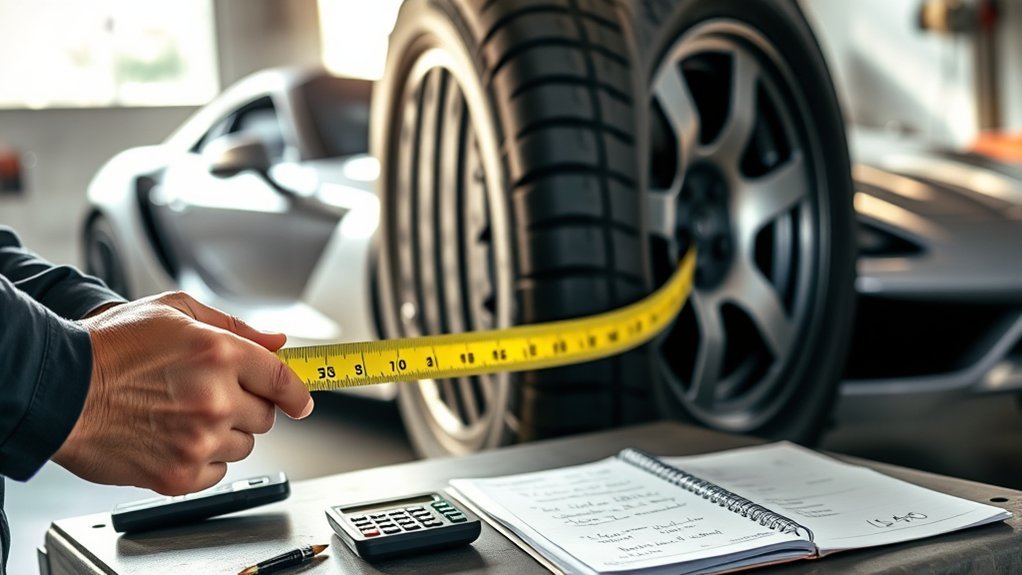
- Tape measure: Use it for loaded height or rollout distance.
- Chalk or tape: Mark one full tire revolution during a rollout test.
- Tire pressure gauge: Set pressure cold before measuring.
- GPS speed app or device: Verify real-world speed after installation.
NHTSA recommends checking tire pressure at least once a month when tires are cold, meaning the vehicle has not been driven for at least three hours. Correct pressure affects safety, tire life, and fuel consumption.
[Products Worth Considering]

The SAFELIFE dial tire tread depth gauge measures tread depth in 1/32 inch increments with clear, easy-to-read 2-inch dial face. Color zones using a traffic light system help you quickly judge whether tread is low, marginal, or ample for safer driving. Built with a durable zinc cast body and a metal detect probe for precise, comfortable use across cars, motorcycles, trucks, and buses.

Measure tyre tread depth precisely with a digital gauge that reads in both MM and inches, helping you monitor safe driving conditions. The large LCD screen is easy to operate, and the compact tool fits for cars, trucks, and motorcycles. It provides high accuracy with a 0-25.4mm range and includes a 1-year warranty for added peace of mind.
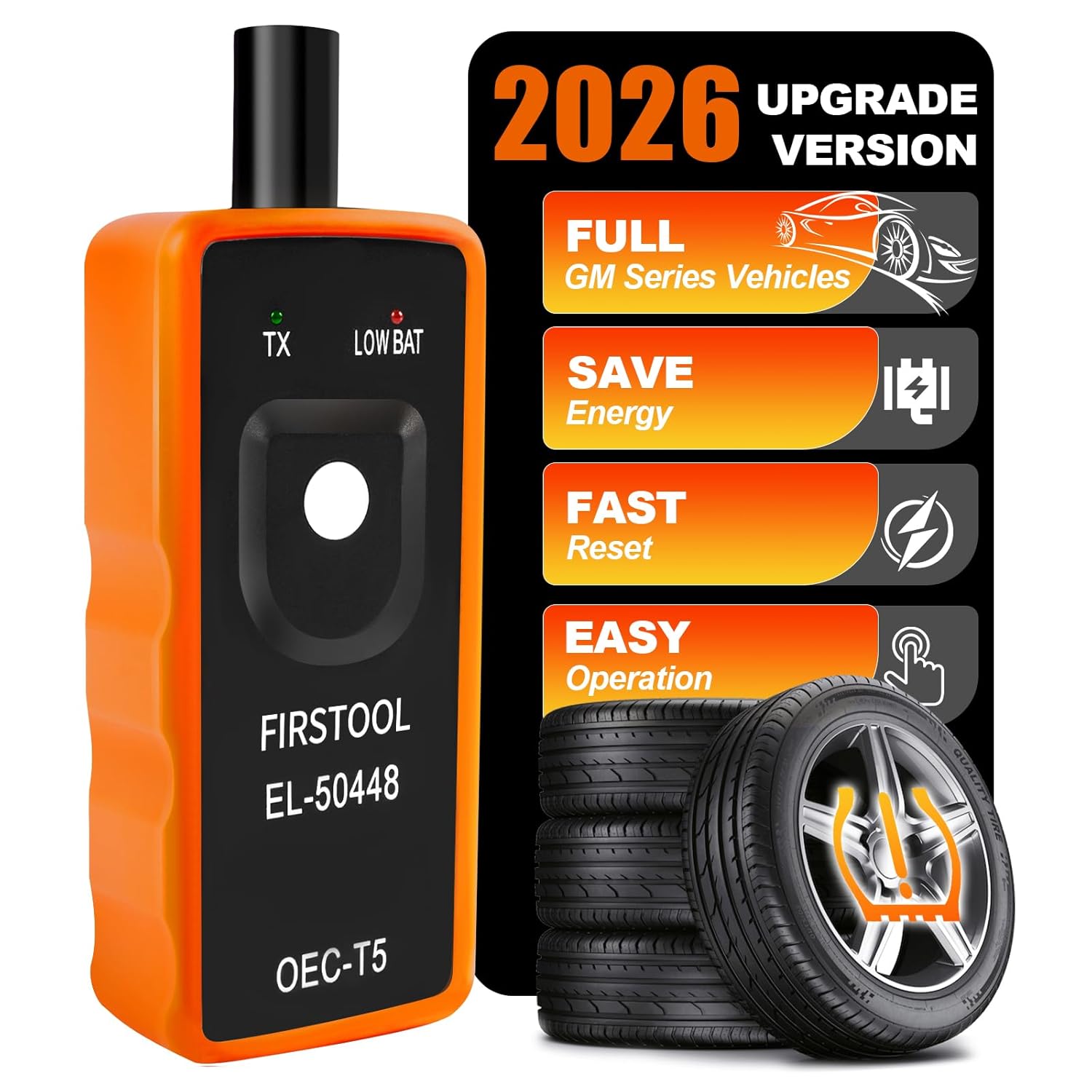
This TPMS relearn tool helps you quickly activate, match, and reset GM tire pressure sensors to keep the vehicle monitoring system working properly. It clears tire pressure alarms and dashboard warning lights after sensor replacement or tire rotation, and supports learning for common 315/433 MHz TPMS sensors. Designed for simple one-button operation, it can help you avoid unnecessary trips to repair shops.
Troubleshoot Speedometer Errors After Upsizing
If your speedometer still seems wrong after calculating the correction, work through these checks.
| Problem | Likely Cause | Fix |
|---|---|---|
| Speedometer reads low | New tires are larger than original | Apply the ratio formula or recalibrate the vehicle |
| Speedometer reads high | New tires are smaller than original | Recalculate using the smaller tire ratio |
| GPS and formula do not match | Pressure, tread depth, tire model, load, or measurement error | Set cold pressure, repeat rollout test, and compare manufacturer specs |
| TPMS warning appears | Pressure issue, sensor issue, or indirect TPMS learning issue | Check pressure cold, inspect sensors, and follow the vehicle relearn procedure |
| Rubbing or vibration occurs | Fitment, clearance, balance, or alignment problem | Stop and have the tire/wheel setup inspected by a qualified technician |
Modern vehicles may need speedometer calibration through a dealer scan tool, aftermarket calibration module, tuner, or vehicle-specific software. The correct method depends on the vehicle, drivetrain, sensors, and tire-size change.
[Products Worth Considering]

Keep your tires properly inflated with this analog VONDIOR tire pressure gauge, designed for fast, easy readings without batteries. The swiveling, two-axis hose and large glow dial help you measure at any tire angle with instant visibility. Built with a protective rubber shield, it supports durable, low-maintenance use for cars and trucks.

This heavy duty dual head tire pressure gauge helps you quickly check Schrader valve tires with clear ABS bar markings for both PSI and Bar readings. The straight and 30° reverse chuck designs make it easier to reach inner and outer wheels, while the zinc alloy/brass construction supports reliable use in tough conditions. No battery is required, making it a dependable tool for cars, trucks, RVs, and more.

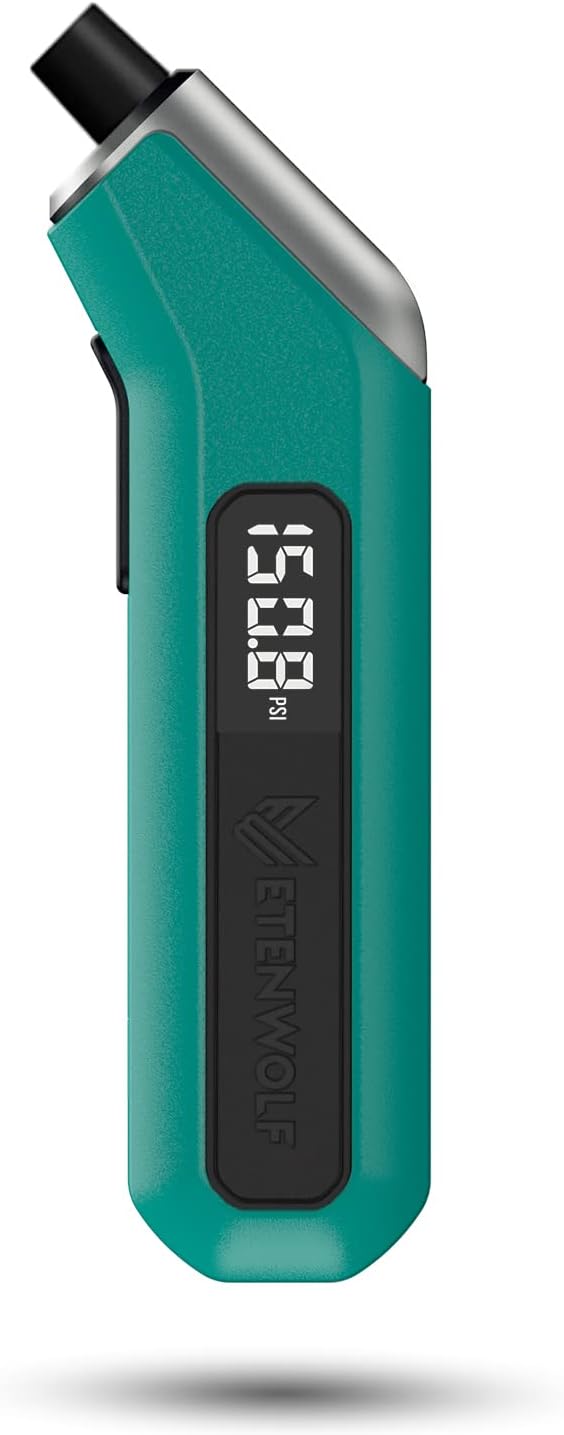
ETENWOLF T300 is a calibrated digital tire pressure gauge for accurate readings from 3 to 200 PSI across light and heavy-duty vehicles. It includes thermal compensation for reliable performance in extreme cold or heat, with an auto shut-off to extend battery life and an LED for easier reading. The sturdy design supports rugged everyday use, making it ideal for pickups, RVs, and industrial applications.
Tips for Keeping Tire Measurements Accurate
- Use cold tire pressure: Measure after the vehicle has been parked for at least three hours.
- Use the same method for both tires: Compare formula-to-formula or rollout-to-rollout, not one of each.
- Measure on level ground: Sloped or uneven pavement can distort a loaded measurement.
- Account for worn tread: A worn tire is smaller than the same model when new.
- Check after installation: Verify speed with GPS once the new tires are mounted and inflated correctly.
- Confirm fitment: Make sure the tire clears at full steering lock and during suspension movement.
Frequently Asked Questions
Can I use a tape measure to check tire diameter?
Yes. You can measure from the ground to the top of the tire for loaded height, or from the ground to the wheel center and double that number. Do not double the ground-to-top measurement because it is already the tire’s loaded height.
Is rolling circumference better than tire diameter?
Often, yes. Rolling circumference shows how far the tire actually travels in one revolution under load. For speedometer correction, comparing original and new rolling circumference can be more realistic than comparing unloaded diameter alone.
How often should I recalibrate my speedometer after upsizing tires?
Recalibrate or verify the speedometer whenever tire diameter changes enough to create a noticeable error. Also recheck after switching tire models, changing wheel size, replacing heavily worn tires, or making drivetrain changes that affect speed sensing.
Does tire pressure affect the measured diameter?
Yes. Tire pressure affects loaded radius and rolling circumference. Check pressure cold and use the vehicle manufacturer’s recommended pressure from the door placard or owner’s manual before measuring.
Are there specific tools for measuring tire diameter?
A tape measure, tire pressure gauge, chalk, and calculator are enough for most checks. For higher accuracy, use the tire manufacturer’s published dimensions or revolutions-per-mile data, then verify speed with GPS.
What are the consequences of inaccurate speedometer readings?
An inaccurate speedometer can make you drive faster or slower than you think, affect odometer mileage, complicate fuel-economy tracking, and create safety or legal problems. Larger tires usually make actual speed higher than indicated; smaller tires usually make actual speed lower than indicated.
Will changing tire size affect my odometer too?
Yes. The odometer counts wheel rotations just like the speedometer. Use the same ratio: actual distance = displayed distance × new tire diameter ÷ original tire diameter.
Conclusion
To calculate tire diameter for speedometer correction, start with the original tire size, calculate or measure the new size, then compare the two with a simple ratio. Multiply the speedometer reading by that ratio to estimate actual speed. For the most reliable result, use manufacturer specs or rolling circumference, check tire pressure cold, verify with GPS, and recalibrate the vehicle if the error is significant.
Sources
- Tire Rack: How Do I Calculate Tire Dimensions? — supports tire size decoding, sidewall height, and overall diameter calculation.
- NHTSA TireWise: Tire Safety Ratings and Awareness — supports tire pressure, tire size, TPMS, and tire maintenance guidance.
- U.S. Tire Manufacturers Association Tire Care and Safety Guide — supports tire size, load capacity, inflation, inspection, and safety considerations.
- 49 CFR §393.82 Speedometer — supports the U.S. commercial vehicle speedometer accuracy reference.