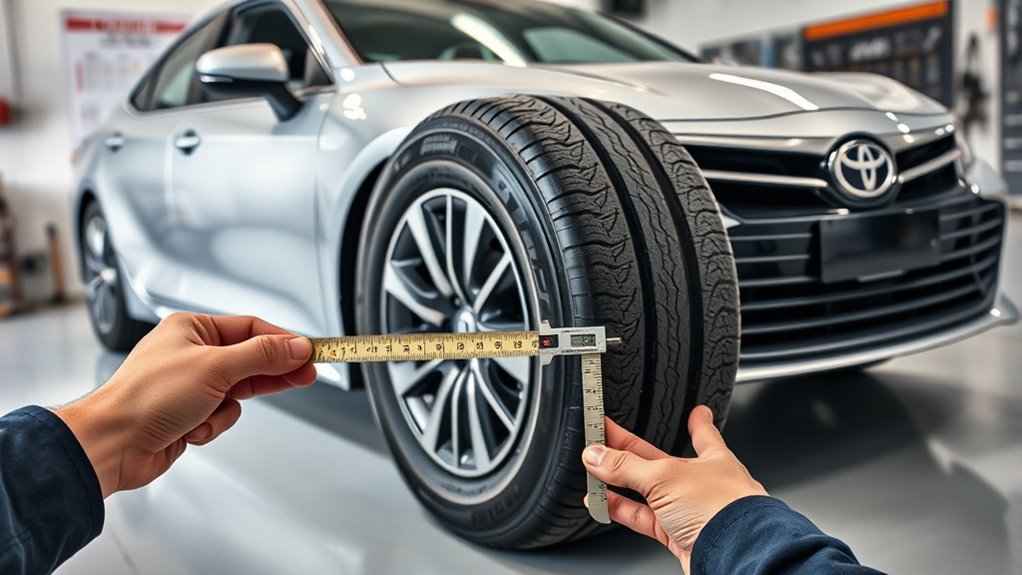
Bigger tires can make a Toyota Camry’s speedometer and odometer read low, but the size of the error depends on the change in overall rolling diameter—not simply whether the wheel is 16, 18, or 19 inches. A correctly planned plus-size setup may use a larger wheel with a shorter tire sidewall and keep the overall diameter almost unchanged. Before changing sizes, verify the factory specification for your Camry’s model year, trim, drivetrain, and VIN.
Quick Answer
A larger overall tire diameter makes a Camry travel farther per wheel revolution, so the speedometer and odometer usually read lower than the vehicle’s true speed and distance. The error is approximately proportional to the diameter change. Check the driver-door tire placard, calculate the new-to-stock diameter ratio, verify it on a measured route, and confirm fitment with a qualified tire professional.
Key Takeaways
- Compare overall tire diameter or revolutions per mile, not wheel diameter alone.
- Larger overall diameter normally makes indicated speed and mileage read low; smaller diameter normally makes them read high.
- The common 3% rule is only a screening guideline—not proof that a tire is approved or safe for your Camry.
- Load index, speed rating, wheel width, clearance, inflation pressure, and driver-assistance systems matter as much as diameter.
- A TPMS reset does not recalibrate the speedometer or odometer.
At a Glance
| Time Required | 10–15 minutes to calculate and road-check the error |
| Difficulty | Easy calculation; professional fitment verification recommended |
| Tools Needed | Driver-door tire placard, calculator, tire specifications, and GPS or a measured route |
| Cost | $0 for checking; any calibration or fitment work varies by vehicle and shop |
How Do Bigger Tires Affect Camry Odometer Accuracy?
A Camry’s speed and distance calculations are calibrated around an expected tire rolling circumference. When the installed tire has a larger circumference, each revolution moves the car farther than the calibration expects. The car therefore counts fewer revolutions over a real mile, and the displayed mileage normally falls behind the actual distance.
The relationship is close to proportional:
- 2% larger overall diameter: actual speed and distance are about 2% higher than indicated.
- 2% smaller overall diameter: actual speed and distance are about 2% lower than indicated.
- No meaningful diameter change: moving to a larger wheel alone may create little or no instrument error if the tire sidewall becomes shorter by the right amount.
Nominal tire-size math is an estimate. Actual rolling circumference also varies with tire design, tread depth, load, pressure, and measuring rim width. When available, compare the tire manufacturer’s published revolutions-per-mile figures for the exact products being considered.
[Products Worth Considering]

These aluminum alloy tire valve stem caps with an O-ring seal help protect valve stems from corrosion while adding a clean, stylish look to your vehicle. The universal fit works across cars, trucks, motorcycles, bicycles, and more, making them an easy upgrade for everyday driving and off-road use. Installation is quick, and the included four-pack keeps all your tires dressed and protected.

The VEHLIVE SU-50448 II TPMS relearn tool provides a fast activation reset to restore accurate tire pressure monitoring after sensor replacement or tire rotation. It supports 315 MHz and 433 MHz GM series sensors and helps clear dashboard pressure warnings. With simple two-button operation and horn-confirmed relearning order, you can reprogram sensors conveniently at home.

A concentrated tire and tube mounting compound designed to help simplify mounting rubber tires and tubes on passenger, semi truck, construction, and OTR applications. Its ultra-thick formula packs beads effectively and includes rust inhibitors to help protect against corrosion during use.
Verify Your Camry’s Original Tire Size First
Toyota Camry tire sizes vary by model year, trim, wheel package, and drivetrain. Do not assume that a size listed for one Camry applies to another. Start with the Tire and Loading Information label on the driver-side door jamb, then confirm the specification in the owner’s manual or Toyota’s vehicle information for your exact model. The current Toyota Camry specifications show that tire and wheel equipment differs by grade and configuration.
The National Highway Traffic Safety Administration recommends replacing tires with the same size as the original tires or another size recommended by the vehicle manufacturer. The door placard is more reliable than copying the size currently mounted on a used vehicle, because a previous owner may already have changed it.
Note: The wheel number in a tire code—such as the “18” in 235/45R18—is the wheel’s bead-seat diameter, not the tire’s complete outside diameter.
Why Bigger Camry Tires Change Speed Readings
The speedometer and odometer depend on the same basic relationship between wheel rotation and road travel. Change the tire’s rolling circumference, and both readings can shift in the same direction.
[Products Worth Considering]

The SAFELIFE dial tire tread depth gauge measures tread depth in 1/32 inch increments with clear, easy-to-read 2-inch dial face. Color zones using a traffic light system help you quickly judge whether tread is low, marginal, or ample for safer driving. Built with a durable zinc cast body and a metal detect probe for precise, comfortable use across cars, motorcycles, trucks, and buses.

Keep your tires properly inflated with this analog VONDIOR tire pressure gauge, designed for fast, easy readings without batteries. The swiveling, two-axis hose and large glow dial help you measure at any tire angle with instant visibility. Built with a protective rubber shield, it supports durable, low-maintenance use for cars and trucks.

Malco tire mounting and demounting lubricant is a ready-to-use tire lube formulated to reduce friction during tire installation for passenger cars, light trucks, farm tires, and heavy-duty equipment. It provides rust-inhibiting protection to help reduce corrosion on rims and wheels, and helps support proper tire bead seating during inflation to reduce air leakage. The silicone-free, soap-free formula is whitewall safe to help prevent discoloration on whitewall tires and sensitive sidewall markings.
Tire Circumference Change
Circumference equals diameter multiplied by pi. A tire that is 2% larger in diameter is also about 2% larger in circumference, so it travels about 2% farther with each complete turn. This is why percentage diameter change is a useful first estimate of speedometer and odometer error.
Revolutions Per Mile
A larger tire completes fewer revolutions per mile. A smaller tire completes more. Published revolutions-per-mile data can be more useful than a nominal calculator because it reflects the manufacturer’s measured tire dimensions under specified test conditions.
Speedometer Calibration Shift
The error is not a fixed “3% to 5% per inch.” It depends on the percentage difference between the original and replacement tire diameters. Adding one inch to a 26-inch overall diameter is about a 3.8% change; adding one inch to a 30-inch diameter is about a 3.3% change. More importantly, changing from a 16-inch wheel to an 18-inch wheel may produce almost no change if the replacement tire has a properly reduced sidewall.
How a Camry Odometer Tracks Miles
Modern Camrys use electronic vehicle-speed information and programmed calibration to convert rotation into indicated speed and accumulated distance. The exact system varies by generation, but tire rolling circumference remains part of the measurement relationship.
Camry Odometer Basics
The odometer does not directly measure the painted length of the road. It estimates distance from vehicle-speed data using the calibration built into the car. If the installed tires roll farther or less far per revolution than expected, the displayed mileage can drift from actual travel.
Wheel Revolutions Count
With a larger overall diameter, the vehicle needs fewer wheel revolutions to cover the same real distance. The displayed trip meter and odometer therefore tend to underreport. With a smaller overall diameter, the opposite occurs.
Tire Size Effects
Incorrect overall diameter can affect more than the dash display. It may influence ABS, traction control, stability control, adaptive cruise functions, shift behavior on some vehicles, and the accuracy of maintenance and fuel records. Michelin’s plus-sizing guidance also warns that diameter changes can affect gearing, braking, stability systems, and speedometer readings.
How to Calculate Camry Tire-Size Error
Use the following formulas for a useful nominal estimate. Enter width in millimeters and wheel diameter in inches.
- Sidewall height in inches = tire width × aspect ratio ÷ 100 ÷ 25.4
- Overall diameter = wheel diameter + (2 × sidewall height)
- Diameter change = (new diameter − original diameter) ÷ original diameter × 100
- Actual speed = indicated speed × new diameter ÷ original diameter
- Actual distance = indicated distance × new diameter ÷ original diameter
Worked Example: 205/65R16 to 215/65R16
For illustration, suppose a Camry is calibrated for 205/65R16 tires and is changed to 215/65R16 tires. Always verify that the proposed size is otherwise suitable; this example demonstrates only the diameter math.
| Measurement | 205/65R16 | 215/65R16 |
|---|---|---|
| Nominal diameter | 26.49 inches | 27.00 inches |
| Diameter change | Baseline | About +1.93% |
| Actual speed at indicated 60 mph | About 60 mph | About 61.2 mph |
| Actual distance at indicated 100 miles | About 100 miles | About 101.9 miles |
A larger wheel does not automatically mean a larger tire. For example, a shorter-sidewall 18-inch package can have nearly the same outside diameter as a 16-inch package.
How Much Tire Size Difference Is Too Much?
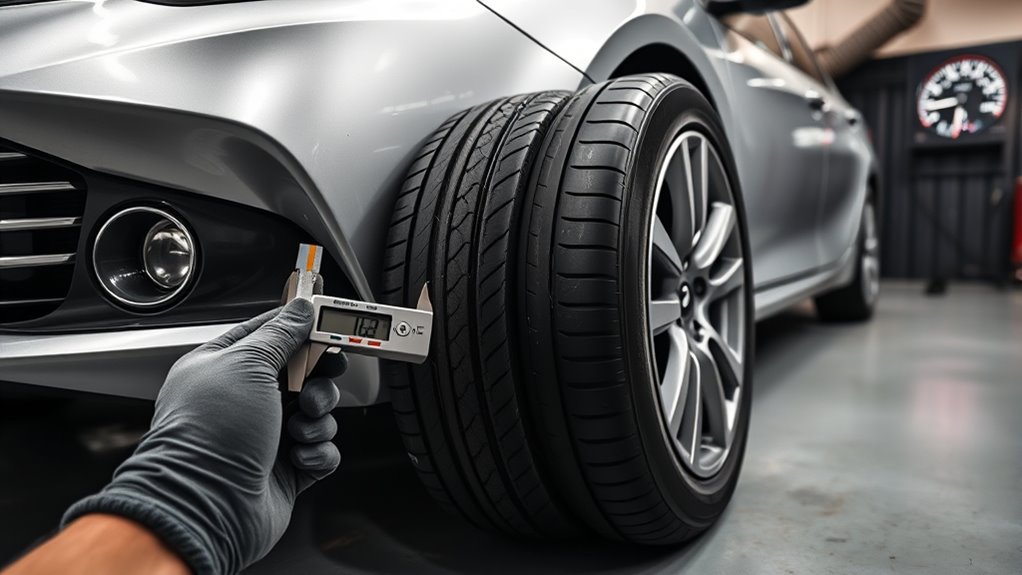
The often-cited ±3% rule is a common aftermarket screening guideline, not a Toyota approval standard and not a guarantee of safe fitment. A 3% diameter change produces roughly a 3% speed-and-distance shift, which is already noticeable. Staying much closer to the original rolling diameter is preferable when possible.
Diameter is only one part of the decision. Before approving a replacement size, verify all of the following:
- The size is recommended by Toyota or confirmed by a qualified tire professional for the exact Camry.
- The tire’s load index meets or exceeds the vehicle requirement.
- The speed rating is appropriate for the vehicle and intended use.
- The wheel width and diameter are approved for the tire.
- There is adequate clearance at full steering lock and through suspension travel.
- The tire does not contact the strut, spring seat, liner, fender, brake components, or body.
- All four tires have compatible dimensions, especially on AWD models.
- Cold inflation pressure is set according to an approved fitment specification—not simply the maximum pressure printed on the tire.
Warning: Do not install a tire merely because its diameter is within 3%. An incorrect load rating, wheel match, clearance, or pressure can cause poor handling, rubbing, tire damage, or loss of control. Tire mounting and final clearance checks should be performed by a qualified professional.
Stock Camry Tires vs. Upsized Tires
A stock-size replacement preserves the fitment Toyota validated for that exact configuration. A properly engineered plus-size package uses a larger wheel and a lower-profile tire while keeping the outside diameter close to stock. An oversized package increases the outside diameter and creates a measurable instrument error.
| Tire setup | Likely effect |
|---|---|
| Toyota-specified size | Best baseline for instrument accuracy, clearance, load capacity, and system compatibility |
| Larger wheel with matched lower-profile tire | May keep overall diameter and speedometer error close to stock |
| Larger overall tire diameter | Speedometer and odometer usually read low |
| Smaller overall tire diameter | Speedometer and odometer usually read high |
For example, comparing 225/65R17 with 215/60R16 gives a nominal diameter difference of about 9%, but that does not make it a normal or approved Camry swap. The original article’s comparison was therefore useful as arithmetic but misleading as fitment guidance. Always compare the proposed tire with the size specified for the exact vehicle.
[Products Worth Considering]

Monitor tire tread wear with a smart, color-coded depth gauge that shows clear condition ranges at a glance. The bar is range marked for fast, easy readings, helping you maintain safer traction and performance. Each gauge is portable with a pocket clip, and the set includes 20 units for daily use and sharing.

The Trivd Frol 1/2" air impact wrench delivers high performance torque up to 1500 ft-lbs with a twin hammer impact mechanism for strong, balanced blows. It features an ergonomic grip, compact lightweight design, and quick-stop control with 3 forward speeds up to 8000 RPM plus a reverse speed. Built for demanding automotive repair and tire shop work, the rear exhaust helps keep debris away from the surface.

Measure tire tread depth quickly and accurately with this LUMITECO dial gauge that reads in 1/32" increments up to 14/32". The color-coded green/yellow/red zones make it easy to judge tire wear and know when replacement is needed. A rugged, compact design with a protective pouch helps keep the gauge ready for use on cars, trucks, motorcycles, and more.
Other Effects of Upsizing Camry Tires
Load, Speed, and Wheel Compatibility
A wider or larger tire is not automatically stronger. Check the complete service description, including load index and speed rating. The wheel must fall within the tire manufacturer’s approved rim-width range, and the package must retain suitable load capacity at the approved cold pressure.
ABS, Stability Control, TPMS, and AWD
Large diameter changes can alter the wheel-speed relationship expected by ABS, traction control, stability control, and driver-assistance features. Mixing materially different rolling circumferences from front to rear or side to side can also create system problems. Keep tire sizes and wear levels properly matched, particularly on an AWD Camry.
TPMS monitors tire pressure; it does not determine the tire’s outside diameter. Registering sensors or initializing the TPMS after tire service does not correct speedometer or odometer calibration.
Clearance, Ride, and Handling
Wider tires and different wheel offsets can rub even when overall diameter is close to stock. Lower-profile tires may sharpen response but can reduce impact cushioning and increase the risk of wheel damage on potholes. Heavier wheel-and-tire assemblies can also affect acceleration, braking, ride quality, and suspension response.
How Bigger Tires Affect Camry Fuel Economy
Tire size alone does not determine MPG. Fuel use can change because of tire construction, rolling resistance, width, tread, pressure, aerodynamic effects, and wheel-and-tire mass. The U.S. Environmental Protection Agency explains that tire flex consumes energy and that low-rolling-resistance tire designs can improve efficiency.
Upsizing often adds width or mass, which can reduce efficiency, but a blanket MPG penalty cannot be predicted from diameter alone. Test over several tanks under similar conditions.
Also correct the distance before calculating MPG. If larger tires make the odometer read low, odometer-based MPG also reads lower than true MPG—not higher. Use:
Corrected MPG = displayed trip miles × (new diameter ÷ original diameter) ÷ gallons used
Keep the tires at the approved cold pressure. The EPA also recommends proper inflation as part of maintaining real-world fuel economy.
Signs Your Camry Odometer Is Reading Low

Common signs include:
- The car recently received tires with a larger outside diameter.
- GPS speed is consistently higher than the dashboard speed at a steady pace.
- A measured 100-mile route adds less than 100 miles to the trip meter.
- Maintenance intervals arrive later than expected based on actual driving.
- Fuel-economy calculations change immediately after the tire swap without a matching change in fuel use.
Do not diagnose tire-size error from one short GPS reading. GPS speed can fluctuate near tall buildings, trees, hills, tunnels, or poor satellite coverage. Use a steady speed on a safe, open road and compare over a longer measured distance.
How to Check Your Camry’s True Mileage
You can estimate the error with tire specifications and then verify it on the road.
1. Check the Size and Calculate
- Read the original tire size from the driver-door placard.
- Record the exact replacement tire size and, preferably, its published revolutions per mile.
- Calculate the diameter ratio: new diameter ÷ original diameter.
- Multiply the indicated speed and distance by that ratio.
2. Verify With GPS or a Measured Route
- Confirm that the tires are cold and set to the approved pressure.
- Reset the trip meter at the start of a reliably measured route.
- Drive far enough to reduce rounding error—20 to 100 miles is more useful than one mile.
- Record the GPS or known-route distance and the trip-meter distance.
- Calculate the correction factor: actual distance ÷ indicated distance.
- Calculate percentage error: (actual distance − indicated distance) ÷ actual distance × 100.
3. Apply the Correction
If a 100-mile measured route produces a 98-mile trip-meter reading, the correction factor is 100 ÷ 98 = 1.0204. Multiply future indicated mileage by 1.0204 to estimate actual travel. At an indicated 60 mph, the same factor suggests an actual speed of about 61.2 mph.
Pro Tip: Photograph the door placard, tire sidewalls, odometer, and tire invoice. Keep the calculated correction factor with your maintenance records so oil changes, rotations, and inspections are based on estimated actual mileage.
When to Recalibrate or Tell the Dealer
Do not assume that every Camry has a user-accessible or dealer-supported tire-size calibration setting. Availability depends on model year, control modules, software, and approved service procedures. Ask a Toyota dealer or qualified automotive electronics specialist whether correction is supported for your exact VIN before buying a substantially different tire package.
| Situation | Recommended action |
|---|---|
| Replacement is the exact Toyota-specified size | No tire-size recalibration should be needed; complete normal TPMS and service procedures |
| Plus-size package keeps rolling diameter close to stock | Verify load, clearance, wheel fit, and road-test accuracy |
| Measured speed or distance error is meaningful | Ask whether VIN-specific recalibration is supported; otherwise use the correction factor or return to an approved size |
| Warning lights, rubbing, vibration, or abnormal handling appear | Stop using the setup until a qualified professional checks it |
| Vehicle will be sold and mileage is known to be inaccurate | Review applicable odometer-disclosure requirements and disclose known inaccuracy accurately |
Tire rotation does not change tire size, so it does not normally require speedometer recalibration. Replacement may change the rolling radius slightly as worn tires are exchanged for new ones, but that normal difference is not the same as installing a different nominal size.
If you know the odometer does not reflect actual mileage, keep clear records. NHTSA’s odometer guidance explains that sellers must address known mileage inaccuracy when ownership is transferred; state procedures may also apply.
Frequently Asked Questions
What Is the 3% Tire Rule?
It is a common aftermarket guideline that keeps the replacement tire’s overall diameter within about 3% of the original. It is not a Toyota approval and does not check load rating, wheel width, clearance, pressure, or system compatibility. NHTSA’s safer baseline is the original size or another size recommended by the vehicle manufacturer.
Does Tire Size Affect Speedometer Accuracy?
Yes. A larger overall rolling diameter normally makes the speedometer read low, while a smaller diameter normally makes it read high. The approximate error equals the percentage change in rolling diameter, though real tires vary slightly from nominal calculations.
Can a Camry Use 35-Inch Tires, and How Much Would They Affect the Speedometer?
A 35-inch tire is not a normal Camry fitment and would require extreme vehicle modifications. It should not be treated as a practical tire swap. Mathematically, the error depends on the Camry’s original tire diameter. Compared with a roughly 26.5-inch original diameter, a 35-inch tire would be about 32% larger, so an indicated 60 mph would correspond to roughly 79 mph. That example shows why the original-size baseline must be used.
Does Tire Size Affect Car Mileage and MPG?
Yes in two ways. First, changed rolling diameter can make the odometer report the wrong distance. Second, tire mass, width, pressure, tread, and rolling resistance can change actual fuel use. Correct the distance before calculating MPG.
Does Changing From 16-Inch to 18-Inch Wheels Cause an Error?
Not necessarily. A proper plus-size package combines the larger wheel with a shorter tire sidewall so the complete tire diameter stays close to the original. Compare full tire sizes or published revolutions per mile, not wheel diameter alone.
Will Resetting TPMS Correct the Speedometer?
No. TPMS registration or initialization deals with tire-pressure monitoring. It does not change the programmed relationship used to calculate speed and distance.
Conclusion
Bigger overall-diameter tires can make a Toyota Camry’s speedometer and odometer read low, but a bigger wheel does not automatically create that problem. Start with the exact door-placard size for your model year, trim, drivetrain, and VIN. Compare full tire diameters or revolutions per mile, verify load and clearance, and road-check the result. When a meaningful error remains, ask whether VIN-specific calibration is supported or return to an approved size.
Sources
- Toyota — Current Camry Specifications — confirms that wheel and tire equipment varies by grade and configuration.
- NHTSA TireWise — supports using the original tire size or another size recommended by the vehicle manufacturer and following the door-placard pressure.
- Michelin — Choosing the Right Tire Size — explains tire-size codes and why the door placard is the authoritative starting point.
- Michelin — Performance Upgrade and Plus Sizing — supports maintaining overall diameter and checking effects on braking, gearing, stability systems, and speedometer readings.
- U.S. EPA — Advanced Gasoline and Diesel Vehicles — supports the relationship between tire rolling resistance and fuel efficiency.
- NHTSA — Odometer Fraud and Disclosure — supports accurate disclosure when known mileage differs from the odometer reading.