
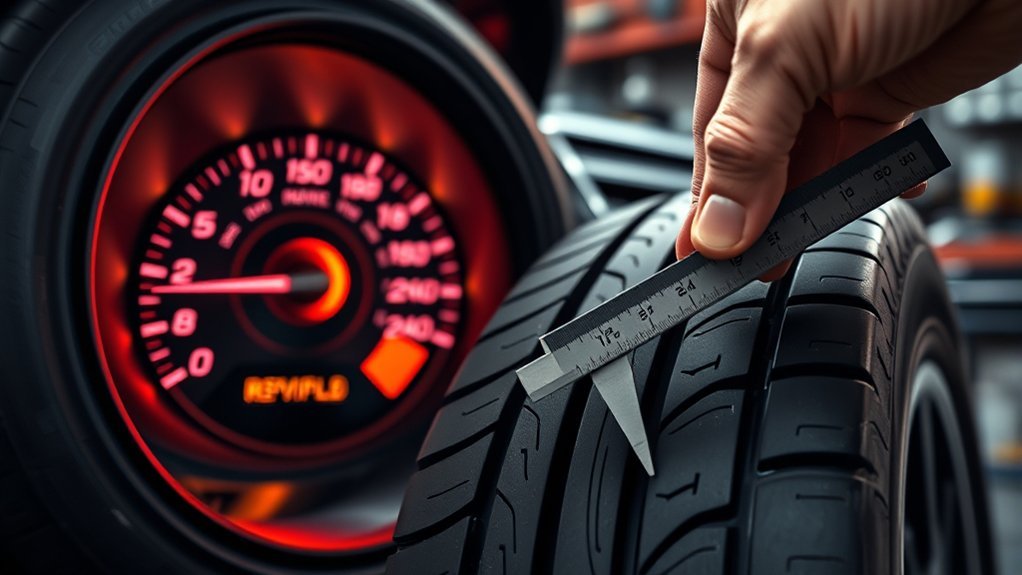
Yes, bigger tires can affect your speedometer because the speedometer is calibrated around the vehicle’s original rolling tire diameter. When the tire’s overall diameter grows, each wheel revolution covers more road. The dash still assumes the stock tire size, so it usually shows a slower speed than you are actually driving.
Quick Answer
Bigger tires usually make your speedometer read low. If the new tire is 3% taller than stock, a displayed 60 mph is about 61.8 mph. If the diameter change is large, recalibrate the vehicle or verify the reading with GPS and a measured-mile test.
Key Takeaways
- Larger overall tire diameter makes the speedometer read slower than your real road speed.
- Smaller overall tire diameter does the opposite and makes the speedometer read faster than your real speed.
- A wheel upgrade does not automatically create an error; the key number is the tire’s overall rolling diameter.
- A diameter change around 3% is worth checking; a change near or above 5% should usually be recalibrated.
- Bigger tires can also make the odometer undercount miles, which can affect maintenance records.
At a Glance
| Time Required | 10–20 minutes to check accuracy; 30–60 minutes for many shop recalibrations |
| Difficulty | Easy to check; moderate if recalibration requires a scan tool or programmer |
| Tools Needed | Stock tire size, new tire size, tire-size calculator, GPS app or device, measured mile, and a calibration tool or shop service if needed |
| Cost | Free to check; calibration cost varies by vehicle, shop, and whether an aftermarket programmer is needed |
Do Bigger Tires Affect Your Speedometer?
Yes. Bigger tires affect your speedometer when they increase the vehicle’s overall tire diameter or rolling circumference. The speedometer is calibrated to a certain number of wheel, axle, transmission, or sensor pulses for a given road speed. Change the tire’s rolling distance, and the same number of revolutions no longer equals the same road speed.
With taller tires, each revolution moves the vehicle farther. The wheel turns fewer times per mile, so the speedometer usually underreports your actual speed. With shorter tires, each revolution covers less distance, so the speedometer usually overreports your speed.
Warning: Do not choose a tire size based only on appearance. Check the vehicle owner’s manual or Tire and Loading Information Label, confirm load index and speed rating, and verify wheel-well clearance before installing a different size.
Why Larger Tires Read Slower on the Dash
The speedometer does not directly “see” the pavement. It estimates road speed from rotation data. Older vehicles may use mechanical speedometer gearing. Modern vehicles often use transmission, output-shaft, wheel-speed, or ABS-related signals. Either way, the system assumes the tire diameter it was calibrated for.
Tire Circumference Increase
A tire’s circumference is the distance it travels in one full revolution. A taller tire has a larger circumference, so it travels farther with every turn. If the speedometer still assumes the original tire size, it sees fewer revolutions per mile and displays a lower speed than the vehicle is actually traveling.
Fewer Revolutions Per Mile
Revolutions per mile drop as tire diameter increases. That is why a lifted truck or SUV with taller tires can be moving faster than the dash suggests. The same logic also affects the odometer because the vehicle is counting fewer revolutions for each actual mile traveled.
Dash Reads Lower Speed
If your speedometer was calibrated for a 28-inch tire and you install a 32-inch tire without recalibration, the tire is about 14.3% taller. At a displayed 60 mph, your actual speed is about 68.6 mph. That is not a small drift; it can change how you judge speed limits, braking distance, and maintenance intervals.
Speedometer error follows the tire diameter ratio: actual speed = indicated speed × new tire diameter ÷ original tire diameter.
How to Calculate Speedometer Error
Use this simple formula when comparing the original tire diameter to the new tire diameter:
Actual speed = displayed speed × new tire diameter ÷ original tire diameter
| Tire Change | Displayed Speed | Approx. Actual Speed | What It Means |
|---|---|---|---|
| 3% taller tire | 60 mph | 61.8 mph | Small but noticeable error |
| 5% taller tire | 60 mph | 63.0 mph | Recalibration strongly recommended |
| 28-inch to 32-inch tire | 60 mph | 68.6 mph | Major error; recalibrate before relying on the dash |
| 26-inch to 30-inch tire | 60 mph | 69.2 mph | About 15.4% taller; odometer also undercounts |
[Products Worth Considering]
Black Magic Intense Foam Wheel & Tire Cleaner uses a high-foaming action to lift away dirt, grime, and brake dust without scrubbing. The color-changing formula helps show contaminants being dissolved as foam turns from white to brown. Safe for all wheel types and even wheel wells, it leaves a like-new, slick finish with a fresh cherry scent.

Replace your worn or missing TPMS sensors with pre-programmed, direct-fit sensors for compatible Ford, Lincoln, and select Mazda models. Each sensor comes ready to activate with a scan tool, helping restore accurate tire pressure monitoring and trouble-free installation. Built with a long-life CR2032 battery and tested before factory release, this set provides dependable performance with a one-year warranty.

The VEHLIVE SU-50448 II TPMS relearn tool provides a fast activation reset to restore accurate tire pressure monitoring after sensor replacement or tire rotation. It supports 315 MHz and 433 MHz GM series sensors and helps clear dashboard pressure warnings. With simple two-button operation and horn-confirmed relearning order, you can reprogram sensors conveniently at home.
Wheel Size vs. Tire Size: What Actually Matters?
The speedometer is affected by the outside diameter of the tire, not the wheel diameter by itself. You can install a larger wheel and a lower-profile tire while keeping the total outside diameter close to stock. In that case, the speedometer change can be very small.
For example, moving from a 17-inch wheel to an 18-inch wheel does not automatically create a speedometer problem. The problem appears when the finished tire-and-wheel package is taller or shorter than the original package.
How Much Tire Size Change Affects Accuracy?
A diameter change under about 3% is usually considered a small variation, but it can still show up on the dash. A change between 3% and 5% should be checked carefully, especially if you drive at highway speeds. A change around 5% or more should usually be recalibrated because the speed and mileage error becomes hard to ignore.
These percentages are practical guidelines, not a universal legal rule. The safest approach is to check your original tire size in the owner’s manual or Tire and Loading Information Label. The National Highway Traffic Safety Administration advises choosing the original tire size or another size recommended by the vehicle manufacturer.
Note: Tire diameter also changes slightly with tread wear, inflation pressure, load, and tire model. Two tires with the same printed size can have slightly different measured diameters.
How Plus Sizing Keeps Speedometer Accuracy
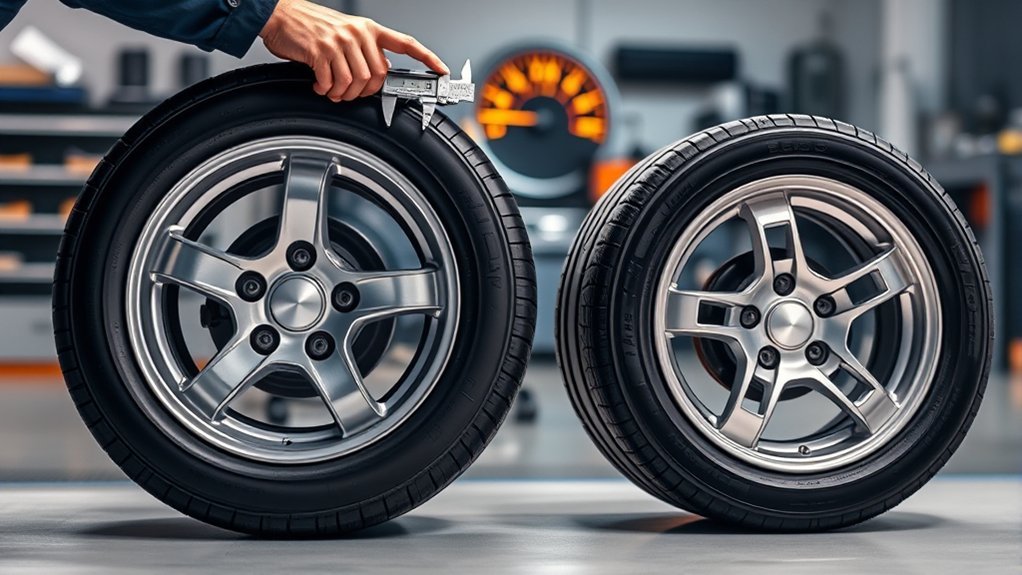
Plus sizing means using a larger wheel with a tire that has a shorter sidewall so the overall tire diameter stays close to the original size. Done correctly, it can improve stance and steering response without creating a major speedometer error.
For example, if you increase wheel diameter by one inch but choose a lower-profile tire that keeps total tire height nearly the same, the speedometer remains close to its factory calibration. If the new tire is much taller, however, the speedometer still needs to be checked or recalibrated.
Pro Tip: Compare the old and new tire sizes before buying. Look at overall diameter and revolutions per mile, not just width, wheel diameter, or sidewall style.
How to Recalibrate Your Speedometer
Recalibration tells the vehicle to calculate speed using the new tire size. The right method depends on the vehicle.
- Find the original tire size. Check the owner’s manual or the Tire and Loading Information Label on the driver’s door area.
- Find the new tire’s actual diameter. Use the tire manufacturer’s specs when available, because real measured diameter can vary by model.
- Calculate the percentage difference. Divide the new diameter by the old diameter, then subtract 1 and convert to a percentage.
- Choose the recalibration method. Some vehicles allow tire-size changes through onboard settings. Others require a dealer scan tool, aftermarket programmer, speedometer calibrator, or mechanical speedometer gear change.
- Recheck the reading. After calibration, compare the dash with GPS or a measured mile at a steady speed.
Some newer vehicles use wheel-speed data for ABS, traction control, stability control, transmission shifting, cruise control, and driver-assist systems. If your tire change is large, a professional calibration is the cleaner move.
[Products Worth Considering]

This manual duck head tire changer kit makes tire installation and removal simpler by letting you embed the duck head into the tire with applied pressure. The integrated design and durable steel construction help reduce friction and improve efficiency and safety during use. Suitable for 16–21 inch wheels, it’s convenient for cars, trucks, SUVs, and ATV tires, with 24-hour after-sales support.

Upgrade your 2024-2026 Tesla Model 3 Highland with REEVAA all-weather mud flaps designed for seamless fit along the original body lines. The set of four delivers strong splash protection against mud, gravel, and road debris while using OEM-grade durable materials. Installation is non-destructive with original hole positions and snap-in clips, and the aerodynamic design helps minimize impact on efficiency.

The Trivd Frol 1/2" air impact wrench delivers high performance torque up to 1500 ft-lbs with a twin hammer impact mechanism for strong, balanced blows. It features an ergonomic grip, compact lightweight design, and quick-stop control with 3 forward speeds up to 8000 RPM plus a reverse speed. Built for demanding automotive repair and tire shop work, the rear exhaust helps keep debris away from the surface.
How to Test Speedometer Accuracy at Home
You can check speedometer accuracy without special shop equipment. Use two reference methods if possible.
[Products Worth Considering]

This TPMS relearn tool helps you quickly activate, match, and reset GM tire pressure sensors to keep the vehicle monitoring system working properly. It clears tire pressure alarms and dashboard warning lights after sensor replacement or tire rotation, and supports learning for common 315/433 MHz TPMS sensors. Designed for simple one-button operation, it can help you avoid unnecessary trips to repair shops.

Masoll M13 TPMS monitors tire pressure across RV and trailer applications and helps protect safety on the road. Set your reference pressure for auto alarm triggers, while the system automatically calibrates as you inflate or deflate. Solar charging with intelligent sleep/wake keeps operation efficient, and the color LCD provides clear readings in day or night driving.

The Big Rig Defense Tire Thumper is a truck tire pressure checker that lets you quickly check multiple tires by giving them a firm whack. Listen for a reassuring thump and feel the stick bounce when a tire is fully inflated, helping you get back on the road safely. It features a comfortable, glove-friendly handle and a secure wrist strap for confident use on busy routes.
Method 1: GPS Cross-Check
Drive at a steady highway speed on a safe, straight road and compare the dash reading with a GPS device or navigation app. GPS is useful because it estimates movement from satellite-based positioning rather than wheel revolutions. GPS.gov notes that GPS supports vehicle navigation and position-based transportation uses, but real-world accuracy still depends on signal quality, device behavior, and road conditions.
Method 2: Measured-Mile Test
Use mile markers on a highway where you can drive safely and steadily. Hold the speedometer at 60 mph and time how long it takes to travel one measured mile. If the mile takes exactly 60 seconds, your actual speed is 60 mph. If it takes less than 60 seconds, you are traveling faster than the dash says. If it takes more than 60 seconds, you are traveling slower.
Repeat the test several times and average the results. Traffic, hills, tire pressure, and speed fluctuations can all affect a single run.
What Bigger Tires Do to Your Odometer
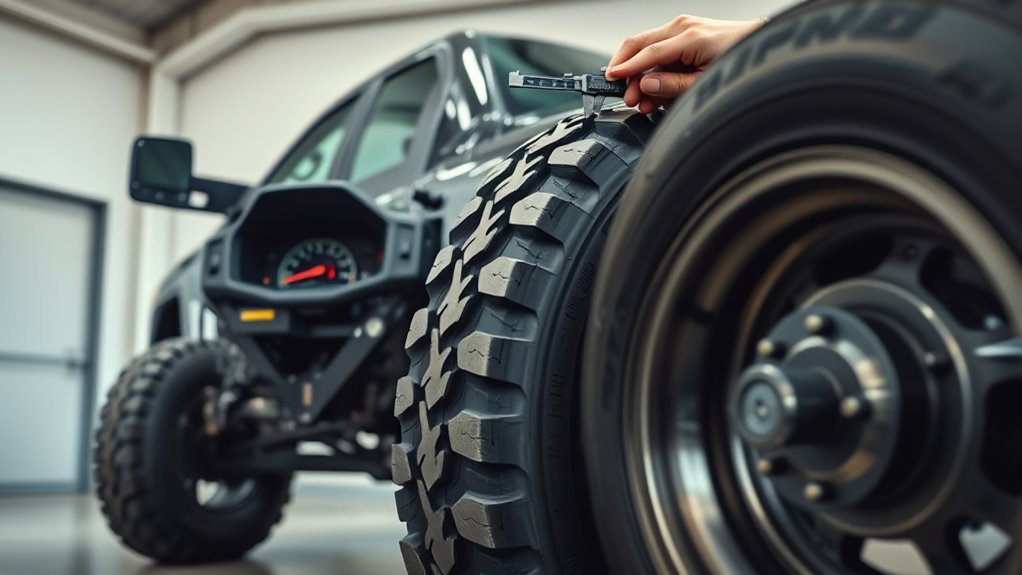
Bigger tires can make the odometer undercount distance. The reason is the same as the speedometer error: the tire travels farther per revolution, but the vehicle still counts revolutions as if the original tire were installed.
If your tires are 5% taller than stock, the odometer can record about 5% fewer miles than the vehicle actually travels. Over time, that can affect oil-change timing, tire rotation, lease mileage, resale records, and maintenance planning.
Other Systems That Can Be Affected
Speedometer and odometer error are the most obvious changes, but tire size can also affect other systems:
- ABS and traction control: Large size differences can change wheel-speed readings.
- Transmission shifting: Some automatic transmissions use vehicle-speed data for shift timing.
- Cruise control: The vehicle may hold a different true road speed than the dash suggests.
- TPMS: Sensor compatibility and tire pressure settings may need attention after a wheel/tire change.
- Clearance and rubbing: Taller or wider tires can contact fenders, liners, suspension parts, or mud flaps.
- Load capacity: The new tire must meet or exceed the vehicle’s required load rating.
Common Tire Size Swap Questions
Width changes such as 235 to 225 or 265 to 275 do not tell the whole story by themselves. You also need the aspect ratio and wheel diameter. A 235/60R18 and a 225/60R18 are not the same height because the sidewall height is a percentage of width. A 275 tire can be taller, shorter, or nearly identical to a 265 tire depending on the full size code.
Before swapping, compare the complete size: width / aspect ratio / wheel diameter. Then verify load rating, speed rating, rim-width range, and physical clearance.
Frequently Asked Questions
Can I go from 235 to 225 tires?
Yes, sometimes, but only after checking the complete tire size. Going from 235 to 225 changes width, and it may also change overall diameter if the aspect ratio and wheel diameter stay the same. Confirm the new tire’s load rating, speed rating, rim-width range, and clearance before installing it.
What is the 3% tire rule?
The 3% tire rule is a common fitment guideline that says the new tire’s overall diameter should stay within about 3% of the original tire diameter. It helps limit speedometer error, odometer error, rubbing, and possible ABS or traction-control issues. It is a guideline, not a guarantee for every vehicle.
Can I use 275 tires instead of 265?
Often, yes, but the answer depends on the full tire size and your wheel width. A 275 tire is 10 mm wider than a 265 tire, but the final diameter depends on the aspect ratio and wheel diameter. Check suspension clearance, fender clearance, rim-width range, load rating, and speedometer error before buying.
How do I fix my speedometer after getting bigger tires?
Recalibrate it for the new tire diameter. Depending on the vehicle, that may mean changing a tire-size setting, using a scan tool, installing an aftermarket speedometer calibrator, using a tuner, visiting a dealer, or changing a mechanical speedometer gear. Afterward, verify the reading with GPS or a measured-mile test.
Do bigger tires always make the speedometer read slow?
If the bigger tires increase overall diameter, yes, they usually make the speedometer read slow. If you only install larger wheels with lower-profile tires and the final tire diameter stays close to stock, the speedometer change may be very small.
Will bigger tires affect my odometer?
Yes. Taller tires can make the odometer undercount mileage because each revolution travels farther than the factory calibration expects. Shorter tires can make the odometer overcount. The percentage error is usually close to the percentage change in tire diameter.
Conclusion
Bigger tires can absolutely affect your speedometer, but the real issue is overall tire diameter, not wheel size alone. Taller tires make the dash read low and make the odometer undercount miles. Smaller tires do the opposite. Use the diameter ratio formula, check the result with GPS or a measured mile, and recalibrate when the change is large enough to matter. That way, you can upgrade your tires without guessing what speed you are actually driving.
Sources
- NHTSA TireWise: Tires — backs tire-size selection, tire-pressure guidance, tire maintenance, and safety context.
- UNECE Regulation No. 39 via EUR-Lex — backs speedometer equipment requirements and the relationship between tire size and speedometer approval.
- GPS.gov: Driving with GPS — backs GPS as a practical position/navigation reference for vehicle use.

