
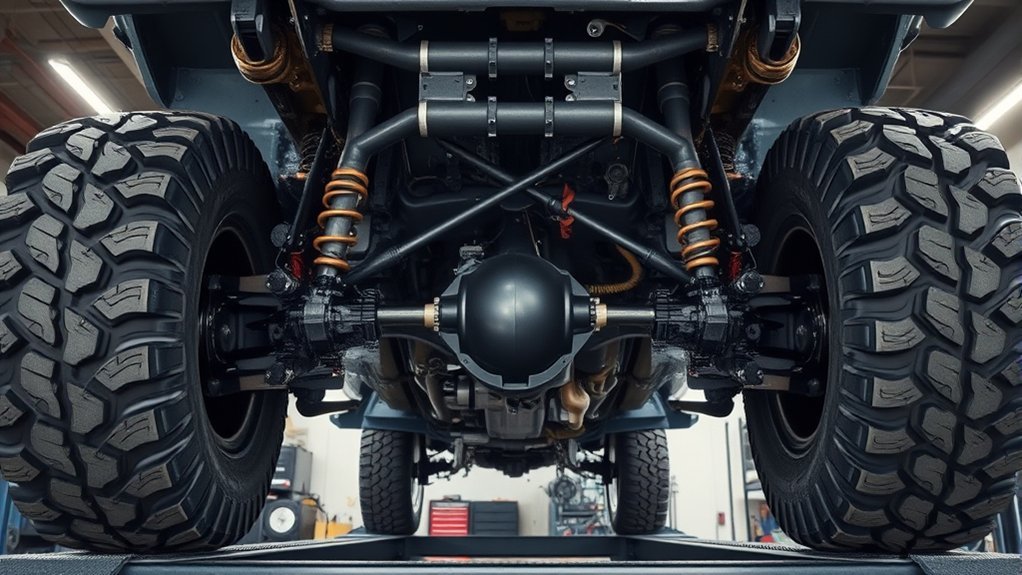
Oversized tires can affect your transmission, but the size change does not automatically mean transmission damage. The main issue is overall tire diameter: a taller tire acts like taller gearing, reducing mechanical leverage at the wheels. Extra tire and wheel weight can also make acceleration harder. The result may be slower response, more downshifting, gear hunting, or extra heat under heavy load. The safest approach is to check the complete tire size, recalibrate the vehicle when supported, and consider axle gearing only when the size change and driving conditions justify it.
Quick Answer
Oversized tires can make a transmission work harder because a larger overall tire diameter effectively makes the drivetrain gearing taller. They may also change speedometer accuracy and shift behavior. Recalibration fixes electronic speed data, while regearing restores mechanical leverage. Whether you need either one depends on the vehicle, tire-size change, load, and driving conditions.
Key Takeaways
- Overall tire diameter matters more than wheel diameter alone.
- A taller tire reduces the effective axle ratio and mechanical leverage at the wheels.
- Heavy tire-and-wheel assemblies add rotational inertia, especially during acceleration and braking.
- Recalibration corrects speed-related data; regearing changes the mechanical ratio. They solve different problems.
- There is no universal “two-inch rule” that tells every vehicle when it must be regeared.
- Use manufacturer-approved tire sizes, load ratings, inflation guidance, transmission fluid, and service procedures whenever possible.
How Oversized Tires Affect Transmission
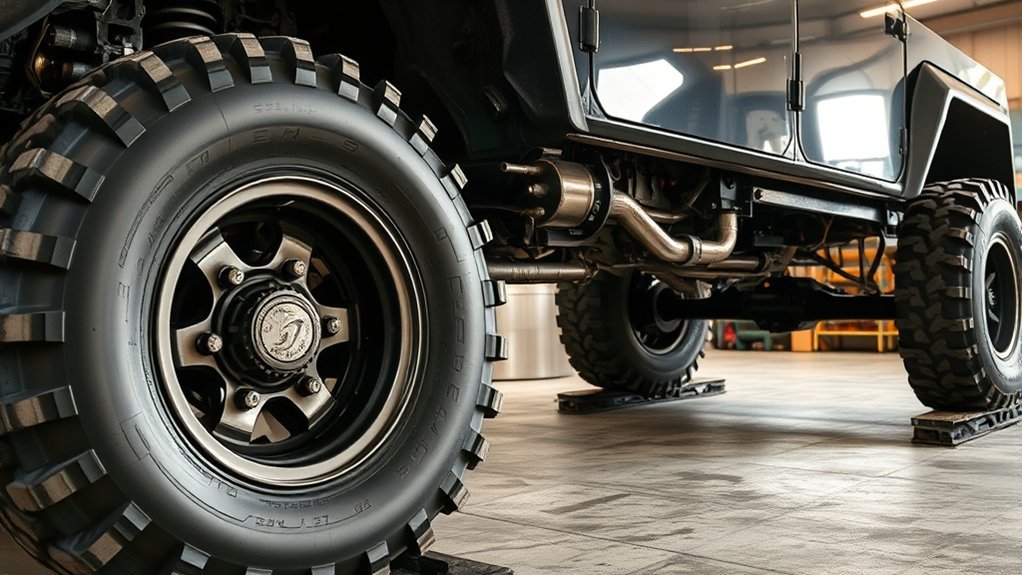
A taller tire travels farther with each revolution. That effectively makes the final drive taller, so the drivetrain has less mechanical advantage at the road. You may feel the change as slower acceleration, more throttle needed on hills, or more frequent downshifts.
Automatic transmissions can respond to the added load by holding lower gears longer or shifting more often. Under demanding conditions, such as towing or climbing a long grade, the torque converter may also spend more time unlocked or slipping before lockup. That can create additional heat.
However, an oversized tire does not automatically make a healthy transmission slip or fail. The actual effect depends on the percentage change in tire diameter, tire-and-wheel weight, axle ratio, engine torque, transmission programming, vehicle weight, terrain, and how you drive.
Note: A transmission that suddenly slips, overheats, or shifts harshly after a tire change still deserves a proper diagnosis. Oversized tires may increase load, but they are not proof that the tires caused every transmission symptom.
Why Bigger Tires Change Gear Ratios
Your axle ratio tells you how many driveshaft revolutions occur for each wheel revolution. When the tire becomes taller, each wheel revolution covers more road. The vehicle therefore travels farther for the same number of driveshaft revolutions.
The result is a numerically lower effective final-drive ratio. You can estimate it with this formula:
Effective ratio after the tire change = stock axle ratio × (old tire diameter ÷ new tire diameter)
For example, a vehicle with a 3.42:1 axle ratio and 31.6-inch tires has an effective ratio of about 3.09:1 after installing nominal 35-inch tires:
3.42 × 31.6 ÷ 35 = 3.09
A taller tire behaves like taller gearing: road speed rises for each wheel revolution while mechanical leverage at the tire decreases.
- Larger overall diameter reduces the effective axle ratio.
- Engine RPM at a given road speed may drop if the transmission stays in the same gear.
- Acceleration may feel weaker because wheel torque multiplication is reduced.
- The transmission may downshift more often when extra power is needed.
- Regearing can restore much of the original mechanical relationship.
How Heavier Tires Stress the Transmission
Tire diameter and tire weight are separate issues. A taller tire changes effective gearing. A heavier tire-and-wheel assembly adds rotational inertia.
That extra inertia matters most when you accelerate or slow the rotating assembly. More energy is needed to bring a heavier assembly up to speed. At a steady speed on a flat road, rotational mass by itself does not continuously create the same acceleration load, although tire construction, tread, pressure, and rolling resistance can still affect the power needed to maintain speed.
Extra Rotational Mass
Heavy off-road tires and wheels can make a vehicle feel slower even when their overall diameter is close to stock. The drivetrain must accelerate both the vehicle and the rotating wheel-and-tire assemblies.
- Acceleration may become slower.
- More throttle may be needed when starting or climbing.
- Braking components also have more rotating energy to control.
- Fuel economy may change depending on weight, rolling resistance, gearing, and driving conditions.
- Regearing can improve mechanical leverage, but it does not remove the added rotating mass.
Heat And Slip
An automatic transmission creates heat whenever energy is lost through hydraulic and friction processes. A torque converter can generate additional heat while it is operating with a speed difference between the engine and transmission input.
A large tire change can make this more noticeable if the vehicle needs frequent downshifts, holds a lower gear longer, or spends more time with the converter unlocked under load. Towing, mountain driving, soft terrain, and hot weather can add even more demand.
Do not judge transmission health by a universal temperature number from the internet. Normal and warning temperatures vary by transmission and vehicle. Compare scan-tool data or dashboard temperature information with the limits and procedures specified by the manufacturer.
Regear For Protection
Regearing means changing the axle ring-and-pinion ratio to restore mechanical leverage that was lost when tire diameter increased. It can improve acceleration, reduce unnecessary hunting, and bring engine RPM closer to the original range.
It is not automatically required after every tire change. A modest change that stays close to a manufacturer-approved overall diameter may need little or no mechanical correction. A large change used for towing, steep terrain, or heavy off-road driving deserves much closer evaluation.
Pro Tip: Compare the percentage change in actual tire diameter rather than judging the modification only by labels such as “33-inch” or “35-inch.” Nominal tire sizes can differ from their measured diameter when mounted and loaded.
Common Transmission Symptoms After Bigger Tires
If a tire upgrade significantly changes gearing or load, you may notice drivability changes such as:
- slower acceleration from a stop;
- more frequent downshifts on hills;
- gear hunting at highway speed;
- different torque-converter lockup behavior;
- higher transmission temperature during demanding use; or
- a speedometer that no longer agrees with actual road speed.
These symptoms do not prove the transmission is damaged. Low fluid, incorrect fluid, worn clutches, a failing torque converter, a sensor fault, cooling-system problems, software issues, and other mechanical problems can create similar symptoms.
Warning: Stop treating a tire change as the only explanation if the transmission slips badly, produces a warning light, enters a protection mode, smells burnt, leaks fluid, or runs above the vehicle manufacturer’s specified temperature range. Have the vehicle diagnosed before continued heavy use.
Wheel Diameter vs. Overall Tire Diameter
A larger wheel does not automatically mean taller gearing. What matters to the gear ratio and speedometer is the overall rolling diameter of the tire, not simply whether the wheel is 17, 18, 20, 22, or 24 inches.
Manufacturers regularly use larger wheels with lower-profile tires to keep total tire diameter close to the original size. For example, GM lists 20-, 22-, and 24-inch wheel packages for the 2025 Yukon with tire sizes that remain close to the same overall diameter. That allows wheel diameter to change without creating the large gearing change you would get from a truly taller tire.
| Change | Transmission / drivetrain effect |
|---|---|
| Larger wheel, similar overall tire diameter | Little gearing change, although wheel/tire mass and sidewall characteristics can still change. |
| Larger overall tire diameter | Taller effective gearing and possible speedometer/odometer error. |
| Heavier tire or wheel | More rotational inertia during acceleration and braking. |
When to Regear Your Truck
There is no single tire-diameter increase that requires every truck to be regeared. Instead, look at the complete setup.
| What to check | Why it matters |
|---|---|
| Percentage increase in tire diameter | A larger percentage change creates a larger change in effective gearing. |
| Factory axle ratio | A vehicle that already has tall highway gearing may feel the change more than one with deeper factory gears. |
| Towing and payload | Heavy loads increase the need for usable wheel torque and cooling capacity. |
| Terrain | Mountains, sand, mud, and slow off-road work can require more torque than flat highway driving. |
| Shift behavior and temperature | Frequent hunting or abnormal heat under normal use can show that the combination needs attention. |
| Available factory or aftermarket ratios | The mathematically ideal ratio may not be an available ring-and-pinion ratio. |
A 31.6-inch-to-35-inch change is about a 10.8% increase in nominal diameter, which is large enough that gearing, calibration, clearance, braking, load capacity, and drivetrain behavior should all be evaluated rather than assumed to remain stock-like.
[Products Worth Considering]

The TYAMATE TM8 solar-powered wireless TPMS delivers real-time tire pressure and temperature monitoring with six alarm modes for safer driving. A vibrant color LCD display shows readings clearly while windshield mounting keeps it hands-free and easy to read. With a wide 0–87 PSI range, strong 433.92 MHz signal transmission, and quick sensor pairing, it’s ideal for RV, sedan, SUV, MPV, and truck use.
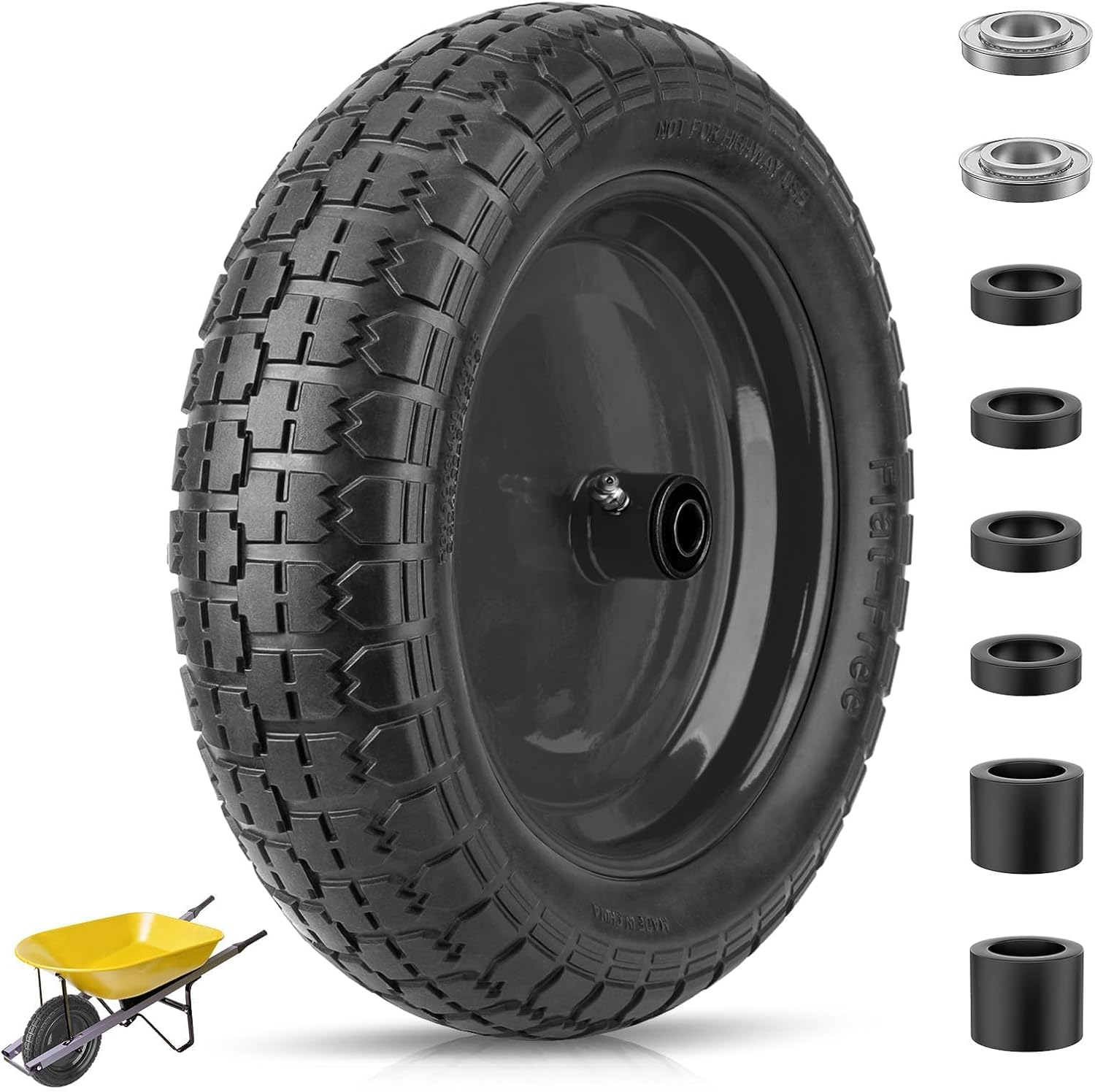
This flat-free TICONN wheelbarrow tire features durable polyurethane foam construction that never needs inflation, helping prevent punctures and reducing maintenance on rough outdoor terrain. With a 300 lb max load capacity and stable steel rim design, it supports safer transport for yard work and hauling tasks. An adapter kit with ball bearings and nylon spacers is included for easier fit and customization across common wheelbarrow and cart axle setups.

Replace your worn or missing TPMS sensors with pre-programmed, direct-fit sensors for compatible Ford, Lincoln, and select Mazda models. Each sensor comes ready to activate with a scan tool, helping restore accurate tire pressure monitoring and trouble-free installation. Built with a long-life CR2032 battery and tested before factory release, this set provides dependable performance with a one-year warranty.
How to Calculate the Right Gear Ratio
To estimate the axle ratio that would restore the original relationship between tire diameter and gearing, use:
Target axle ratio = stock axle ratio × (new tire diameter ÷ old tire diameter)
For a vehicle with 31.6-inch tires and 3.42:1 gears moving to nominal 35-inch tires:
3.42 × 35 ÷ 31.6 = 3.79
So about 3.79:1 is the mathematical ratio that reproduces the original gearing relationship. In the real world, ring-and-pinion gears are sold in specific ratios, so you would select an appropriate available ratio based on the vehicle, engine, transmission, intended use, and manufacturer or axle-builder guidance.
This calculation is a starting point, not an automatic prescription. Some drivers intentionally choose slightly deeper gearing for towing or off-road performance, while others may prefer a ratio closer to stock highway RPM.
Regear 4X4 vs. RWD Vehicles
On a rear-wheel-drive vehicle with one driven axle, an axle-ratio change normally involves the rear differential.
On a selectable 4X4 with driven front and rear axles, the front and rear axle ratios must remain matched. Mismatched ratios can cause severe driveline bind and component damage when four-wheel drive is engaged.
- RWD: the driven rear axle is the main axle-ratio change.
- 4X4: front and rear axle ratios must match.
- AWD: tire circumference and drivetrain requirements can be especially sensitive; follow the vehicle manufacturer’s tire-size and matching requirements.
- All systems: recalibration and mechanical regearing are separate jobs.
Do not assume an AWD vehicle can be treated like a conventional RWD truck. Many AWD systems require closely matched tire circumference across all four positions.
How Oversized Tires Affect Your Speedometer
A taller tire travels farther during each revolution. If the vehicle remains calibrated for the original tire size, the displayed road speed can be lower than the actual road speed.
Ford’s owner guidance specifically warns that changing tire diameter from the factory size can make the speedometer inaccurate and, on applicable vehicles, may require reprogramming.
Tire Diameter Changes
A simple way to estimate actual speed is:
Actual speed ≈ indicated speed × (new tire diameter ÷ old tire diameter)
For a change from 31.6-inch tires to nominal 35-inch tires:
60 mph indicated × 35 ÷ 31.6 ≈ 66.5 mph actual
At an indicated 65 mph, the same nominal-diameter calculation gives roughly 72 mph actual.
Real tires may measure differently from their advertised size, and loaded rolling radius changes slightly with inflation, load, tread wear, and tire construction. Use actual vehicle-specific calibration procedures whenever available.
Odometer Accuracy
The odometer can be affected for the same reason. With the vehicle still calibrated for the smaller tire, fewer wheel revolutions occur over a given true distance.
| Example | Result |
|---|---|
| Original tire | 31.6 in nominal diameter |
| New tire | 35 in nominal diameter |
| True distance traveled | 100 miles |
| Approximate uncorrected odometer distance | About 90.3 miles |
This can affect mileage records, trip calculations, and maintenance tracking until the calibration is corrected.
Speedometer Recalibration
Recalibration tells the vehicle’s electronic systems the correct tire circumference or revolutions-per-distance value. The exact method depends on the vehicle.
- Check whether the manufacturer supports a different tire-size calibration.
- Use the manufacturer’s dealer procedure or an appropriate approved programming method.
- Verify the new tire’s actual size instead of assuming its advertised diameter is exact.
- After programming, compare indicated road speed with a reliable reference.
- Remember that recalibration does not restore the lost mechanical leverage of taller gearing.
Note: Recalibration and regearing solve different problems. Recalibration corrects electronic speed-related calculations. Regearing changes the mechanical relationship between driveshaft speed and wheel speed.
Before You Install Oversized Tires
Transmission load is only one part of a safe tire upgrade. Check the complete vehicle before changing to a substantially different size.
- Approved size: Check the owner’s manual, tire placard, and manufacturer guidance.
- Load capacity: Make sure the replacement tire has adequate load capacity for the vehicle and its intended payload.
- Speed rating: Use a tire with an appropriate speed capability.
- Inflation: Determine the correct inflation requirements for the tire and vehicle combination rather than guessing from the sidewall maximum.
- Clearance: Check fenders, suspension, brake components, bodywork, and steering clearance through the full range of travel.
- TPMS: Confirm that the tire-pressure monitoring system continues to operate correctly.
- Braking and handling: Larger or heavier assemblies can change steering response and braking behavior.
- Spare tire: Make sure the spare and drivetrain strategy are appropriate for the new setup.
Ram’s replacement-tire guidance warns that unapproved tire and wheel combinations can change steering, handling, and braking characteristics. NHTSA also recommends regular pressure, tread, and TPMS checks.
How to Reduce Heat and Wear
If you run larger tires, use a system-wide approach rather than relying on one modification.
- Correct the calibration when the vehicle supports it. Accurate tire-size data helps keep the speedometer and other speed-related calculations aligned with the new setup.
- Consider gearing when the effective-ratio change is large. Regearing can restore useful mechanical leverage.
- Use the exact transmission fluid specification required by the manufacturer. Do not substitute a generic “synthetic ATF” simply because it is marketed for high heat. Transmission manufacturers such as Allison publish specific approved-fluid standards.
- Keep the transmission cooling system healthy. Inspect factory coolers, lines, thermostatic controls, airflow, and fluid level before assuming an auxiliary cooler is required.
- Add cooling only when appropriate. Towing or severe-duty use may justify additional cooling on some vehicles, but installation should match the manufacturer’s thermal-management requirements.
- Monitor real behavior. Watch transmission temperature, shift quality, converter lockup, and warning messages during the type of driving you actually do.
- Drive for the load. Avoid unnecessary hard launches and use manufacturer-provided tow/haul or off-road modes when appropriate.
[Products Worth Considering]

This manual duck head tire changer kit makes tire installation and removal simpler by letting you embed the duck head into the tire with applied pressure. The integrated design and durable steel construction help reduce friction and improve efficiency and safety during use. Suitable for 16–21 inch wheels, it’s convenient for cars, trucks, SUVs, and ATV tires, with 24-hour after-sales support.

The Tymate TM12 RV TPMS delivers real-time tire pressure and temperature monitoring with a stable 433Hz display for safer long-distance driving. It supports simultaneous monitoring across vehicle and trailer zones, includes six alarm modes for pressure, temperature, leakage, battery, and signal loss, and features easy DIY installation with auto calibration. Power is supplied via USB-C charging or solar recharging, with a wide 0–144 PSI range and up to 50 ft signal coverage for RVs and towable trailers.

This professional wheel and rim brush kit makes it easy to lift brake dust, grime, and dirt from wheels and tires without scratching finishes. The brushes feature soft, metal-free wool heads and a flexible 360-degree rim brush design for reaching hard-to-clean areas. Includes multiple brush types plus accessories for thorough car, motorcycle, and general vehicle detailing.
Towing, Hills, and Heavy Loads
Towing and steep terrain make gearing more important because the drivetrain needs more wheel torque for longer periods. A tire size that feels acceptable during empty highway driving may cause more hunting or heat when the same vehicle pulls a trailer uphill.
If you regularly tow, compare your modified setup with the manufacturer’s towing guidance. Pay attention to transmission-temperature data, recommended drive modes, axle ratios, gross vehicle and axle ratings, and any limits related to non-standard tires.
Do not assume a transmission cooler alone fixes an unsuitable gear ratio. Likewise, regearing does not correct an inaccurate speedometer unless the vehicle’s electronic calibration is also updated.
[Products Worth Considering]

These pre-assembled 15x6.00-6 front tire and wheel assemblies are designed for quick replacement on riding lawn mowers and lawn tractors. Built with natural rubber pneumatic tires and turf-friendly tread for solid traction and improved shock absorption. A thickened welded rim and 3/4" sintered iron bushing help provide stable, heavy-duty support for everyday mowing use.

This metal-free wheel and tire cleaning brush uses dense, fluffy synthetic wool to safely clean rims, spokes, fenders, and engine areas without worrying about damaging surfaces. Its flexible, comfortable design helps you reach detailed areas while maintaining durability, and the extra absorbent fibers work well with wheel spray cleaners for faster cleanup. Reusable and washable performance helps prevent grime and build-up for cleaner vehicles and easier maintenance at home.

Replace worn or malfunctioning GM TPMS sensors with this 433MHz pre-programmed sensor set designed for compatibility with many Chevrolet, Buick, GMC, and Cadillac models. It includes guidance for proper OBDII relearning/pairing after installation and supports reliable long-term operation with a high-performance CR2032 battery. Quality tested for durability and performance to help restore accurate tire pressure monitoring.
Frequently Asked Questions
How Much MPG Will I Lose With Bigger Tires?
There is no reliable universal MPG loss. Fuel economy can change because of tire weight, rolling resistance, tread design, inflation, overall diameter, gearing, aerodynamics, speed, terrain, and driving style. A taller or heavier off-road tire may reduce fuel economy, but a fixed 1–3 MPG estimate does not apply to every vehicle.
Will 20 Inch Rims Mess up Transmission?
Not simply because they are 20-inch wheels. What matters most for gearing is the overall tire diameter. A 20-inch wheel with a lower-profile tire can have nearly the same overall diameter as the factory setup. Weight, load rating, offset, clearance, and total tire diameter still need to be correct.
What Can Ruin Your Transmission?
Low or incorrect fluid, overheating, heavy loads, neglected service, worn internal parts, cooling-system problems, and driving with an unresolved fault can damage a transmission. Oversized tires can add load when the gearing and vehicle setup are not appropriate, but they are only one possible factor.
Can Tires Mess up the Transmission?
A major increase in overall tire diameter can change effective gearing and may alter acceleration, shift behavior, and transmission load. Heavy tires can also add rotational inertia. Whether that causes a meaningful problem depends on the vehicle, gearing, calibration, tire weight, terrain, load, and driving conditions.
Does Speedometer Recalibration Fix the Gear Ratio?
No. Recalibration corrects the electronic tire-size or vehicle-speed calculation. It does not change mechanical leverage. Regearing changes the axle ratio and is the modification that restores the mechanical relationship between engine speed, driveshaft speed, and tire diameter.
Do I Need to Regear After Installing Bigger Tires?
Not always. Consider the percentage increase in overall tire diameter, your factory axle ratio, engine and transmission, towing load, terrain, shift behavior, and available gear ratios. A small diameter change may not justify axle work, while a major change used under heavy load may benefit greatly from regearing.
Should I Use Synthetic Transmission Fluid With Oversized Tires?
Use only a fluid that meets the exact specification required for your transmission. Some approved fluids are synthetic, but “synthetic” alone does not prove compatibility. Check the owner’s manual, manufacturer service information, or an approved-fluid list before changing ATF.
Conclusion
Oversized tires can change much more than the way a truck or SUV looks. A taller overall tire diameter reduces effective gearing, while a heavier tire-and-wheel package adds rotational inertia. Those changes can affect acceleration, shift behavior, speedometer accuracy, and transmission temperature under demanding conditions.
The solution is not automatically “regear everything.” Start by comparing the new overall tire diameter with stock, verify the tire’s load and fitment requirements, correct the vehicle’s calibration when supported, and watch how the drivetrain behaves under your real driving conditions. If the tire change is large and the vehicle hunts for gears, struggles under load, or operates outside its intended RPM range, a properly selected axle ratio may restore much of the original drivability.
Most importantly, treat the tire, axle ratio, transmission, brakes, cooling system, and electronic calibration as one system. A well-planned upgrade protects performance far better than choosing a tire size first and trying to correct problems afterward.
Sources
- Ford Owner’s Manual — Wheels and Tires — supports guidance about tire-diameter changes, speedometer accuracy, approved tire sizes, and reprogramming.
- Ram 2500/3500 Owner’s Manual — Replacement Tires — supports tire-size, load-rating, handling, braking, speedometer, and odometer safety guidance.
- NHTSA TireWise — supports tire-pressure, tread, TPMS, and general tire-safety guidance.
- Allison Transmission — Approved Fluids — supports using transmission fluid that meets the transmission manufacturer’s required specification.
- SAE International — Influence of Tyre Rolling Resistance and Operational Parameters on Vehicle Fuel Efficiency — supports the relationship between tire characteristics, rolling resistance, operating conditions, and fuel efficiency.

