

Yes—if you install tires with a larger overall rolling diameter and do not recalibrate the vehicle, your odometer will usually underreport distance. Each revolution carries the vehicle farther than the factory calibration expects, so the system counts fewer revolutions over the same road distance. Your speedometer can read low for the same reason.
Quick Answer
Bigger tires affect an odometer when their overall rolling diameter is larger than the factory tire. Without recalibration, both mileage and speed are usually reported too low. A 30-inch to 32-inch change, for example, makes the odometer record about 93.75 miles for every 100 miles actually traveled.
Key Takeaways
Key Takeaways
- A larger overall tire diameter usually makes an uncorrected odometer record fewer miles than you actually drive.
- Your speedometer normally reads low by a similar proportion because the vehicle sees fewer wheel revolutions for a given road speed.
- A 30-inch to 32-inch change causes about 6.25% odometer underreporting; a 30-inch to 35-inch change causes about 14.3%.
- Changing from a 17-inch wheel to an 18-inch wheel does not automatically create an error if the tire sidewall changes enough to preserve the original overall diameter.
- Recalibration procedures vary by vehicle, and tire size must also remain compatible with the manufacturer’s load, clearance, braking, and safety-system requirements.
How Bigger Tires Change Odometer Readings
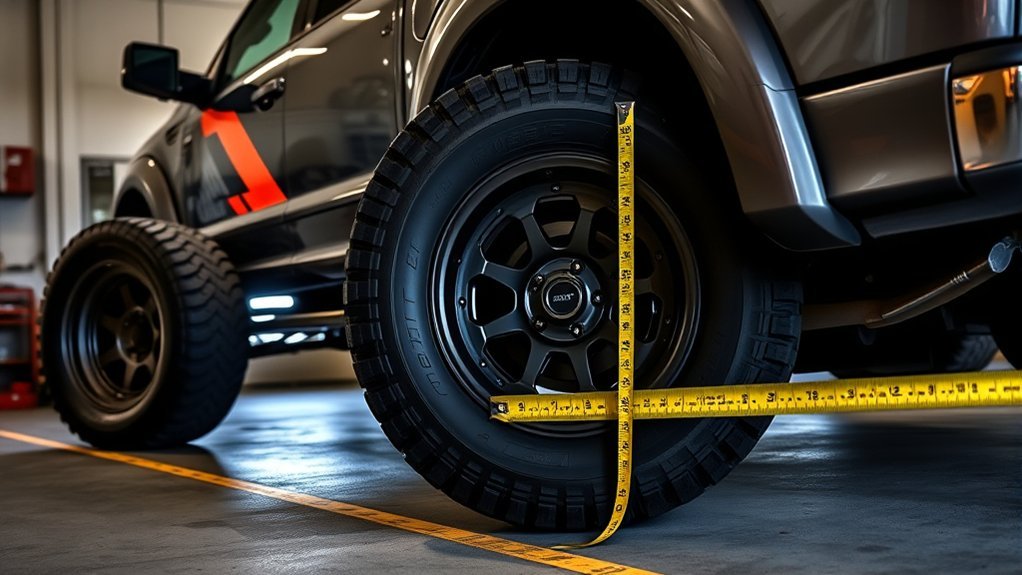
When you install tires with a larger overall diameter, each rotation covers more ground than the factory tire. If the vehicle still calculates distance using the original tire calibration, the odometer records fewer miles than you actually travel.
A taller tire travels farther with every revolution, so an odometer calibrated for the smaller factory tire counts too little distance.
The useful relationship is the ratio between the original and new rolling circumference. Because circumference is proportional to diameter, nominal tire diameter can also be used for a quick estimate.
For example, moving from a 30-inch tire to a 35-inch tire is a large change. Without recalibration, the odometer would record about 85.7 miles while the vehicle actually travels 100 miles. That equals approximately 14.3% underreporting.
Over time, that difference can distort mileage-based maintenance tracking. If your odometer is underreporting by 10%, a service scheduled every 5,000 displayed miles would occur after roughly 5,500 actual miles.
Because the vehicle was calibrated around its original rolling diameter, proper vehicle-specific recalibration is the best way to restore accurate speed and distance readings when an approved tire-size change meaningfully alters circumference.
Bigger Tires vs. Bigger Wheels: They Are Not the Same Thing
A larger wheel does not necessarily mean a larger overall tire. This distinction matters because the speedometer and odometer respond mainly to the tire’s overall rolling circumference, not simply the wheel’s rim diameter.
For example, a vehicle can move from a 17-inch wheel to an 18-inch wheel while using a tire with a shorter sidewall. When the new wheel-and-tire combination keeps nearly the same overall diameter, speedometer and odometer changes can be negligible. This approach is commonly called plus sizing.
Note: Compare the complete tire sizes or their overall diameters—not just “17-inch” versus “18-inch” wheels. Michelin notes that proper plus sizing increases wheel diameter while reducing tire sidewall height so the overall tire diameter remains essentially unchanged.
Michelin’s tire-upgrade guidance also warns that changing tire/wheel diameter can affect gearing, braking, traction and stability systems, and speedometer readings.
[Products Worth Considering]

This metal-free wheel and tire cleaning brush uses dense, fluffy synthetic wool to safely clean rims, spokes, fenders, and engine areas without worrying about damaging surfaces. Its flexible, comfortable design helps you reach detailed areas while maintaining durability, and the extra absorbent fibers work well with wheel spray cleaners for faster cleanup. Reusable and washable performance helps prevent grime and build-up for cleaner vehicles and easier maintenance at home.

This professional wheel and rim brush kit makes it easy to lift brake dust, grime, and dirt from wheels and tires without scratching finishes. The brushes feature soft, metal-free wool heads and a flexible 360-degree rim brush design for reaching hard-to-clean areas. Includes multiple brush types plus accessories for thorough car, motorcycle, and general vehicle detailing.

Keep your tires properly inflated with this analog VONDIOR tire pressure gauge, designed for fast, easy readings without batteries. The swiveling, two-axis hose and large glow dial help you measure at any tire angle with instant visibility. Built with a protective rubber shield, it supports durable, low-maintenance use for cars and trucks.
Why Bigger Tires Make Speedometers Read Low
A tire with a larger circumference travels farther during each wheel revolution. If the vehicle still assumes the original tire size, it interprets those slower wheel revolutions as a lower road speed.
The relationship is straightforward:
Actual speed = indicated speed × (new tire diameter ÷ original tire diameter)
Suppose you replace a 28-inch tire with a 32-inch tire. If the speedometer shows 50 mph:
50 × (32 ÷ 28) = about 57.1 mph actual speed.
At an indicated 70 mph with that same 28-to-32-inch change:
70 × (32 ÷ 28) = 80 mph actual speed.
That is a 10-mph difference, which shows why even a seemingly simple tire change can become important at highway speeds.
Warning: Do not rely on mental speed corrections as a substitute for proper fitment and calibration. A tire-size change can affect more than the speedometer. Follow the vehicle manufacturer’s approved tire sizes and procedures, especially when braking, ABS, traction control, stability control, or drivetrain operation may be affected.
How Much Tire Size Change Affects Accuracy
The amount of odometer and speedometer error depends on the percentage change in overall rolling diameter. For an estimate based on nominal diameter, use these formulas:
Actual distance = displayed odometer distance × (new diameter ÷ original diameter)
Odometer underreporting % = [1 − (original diameter ÷ new diameter)] × 100
A 1% increase in diameter produces approximately a 1% error, although the exact result is slightly less because the relationship is a ratio. For a 1% increase, the exact underreporting is about 0.99%.
| Tire change | Miles shown per 100 actual miles | Odometer underreporting |
|---|---|---|
| 28″ to 32″ | 87.5 miles | 12.5% |
| 30″ to 32″ | 93.75 miles | 6.25% |
| 30″ to 35″ | 85.71 miles | 14.29% |
| 33″ to 35″ | 94.29 miles | 5.71% |
These figures are theoretical estimates based on nominal diameter. Actual tire dimensions and revolutions per mile can vary somewhat with tire model, tread depth, inflation pressure, load, and operating conditions.
Pro Tip: For a quick estimate, compare the manufacturer’s listed revolutions per mile or rolling circumference when available. That can be more useful than assuming the size printed on the sidewall equals the tire’s exact real-world diameter.
How to Recalibrate Your Odometer and Speedometer
After an approved tire-size change that alters overall rolling circumference, recalibration can restore accurate speed and distance calculations. The exact procedure depends on the vehicle.
At a Glance
| Time Required | A few minutes to calculate or verify the error; actual recalibration time varies by vehicle. |
| Difficulty | Easy to verify; recalibration ranges from simple to technician-level depending on the vehicle. |
| Tools Needed | Vehicle manual, new tire specifications, a reliable GPS or measured road distance for verification, and any vehicle-specific programming equipment required by the manufacturer. |
| Cost | Verification can cost nothing; programming or professional calibration cost varies by vehicle and method. |
Start by confirming the original tire size and the approved replacement size. Check your owner’s manual and the Tire and Loading Information label. NHTSA recommends using the original size or another size recommended by the vehicle manufacturer.
NHTSA TireWise explains that the manufacturer’s recommended tire size and cold inflation information can be found in the owner’s manual or on the Tire and Loading Information label.
Next, compare the original and new tire’s rolling diameter, circumference, or revolutions per mile. This tells you approximately how much the indicated speed and mileage will differ.
Measure or verify the new tire’s rolling size before calibration so the vehicle can interpret wheel rotation correctly.
Then check the manufacturer’s approved calibration procedure. Depending on the vehicle, correction may require a factory diagnostic procedure, compatible programming equipment, an approved aftermarket calibrator, or professional service. Do not assume that every modern vehicle provides a user-accessible tire-size menu.
After calibration, verify the reading at a steady, legal road speed using a reliable GPS speed reference or a measured road distance. If the displayed speed or accumulated distance still differs significantly, have the setup checked again.
Correct calibration helps keep mileage-based maintenance intervals and vehicle records aligned with the distance you actually travel.
[Products Worth Considering]

Measure tire tread depth quickly and accurately with this LUMITECO dial gauge that reads in 1/32" increments up to 14/32". The color-coded green/yellow/red zones make it easy to judge tire wear and know when replacement is needed. A rugged, compact design with a protective pouch helps keep the gauge ready for use on cars, trucks, motorcycles, and more.

This 15-inch tire spoons kit makes tire removal and installation easier with added leverage, reducing time and effort for everyday repairs. It includes tire spoons, rim protectors, a valve tool, and valve cores/caps, helping protect rims and streamline deflation and re-sealing. Built with durable hardened steel and a non-slip ergonomic grip for confident use on motorcycles, dirt bikes, ATVs, and lawn equipment.

The SAFELIFE dial tire tread depth gauge measures tread depth in 1/32 inch increments with clear, easy-to-read 2-inch dial face. Color zones using a traffic light system help you quickly judge whether tread is low, marginal, or ample for safer driving. Built with a durable zinc cast body and a metal detect probe for precise, comfortable use across cars, motorcycles, trucks, and buses.
Tire Fitment and Safety Systems Matter Too
Correcting the speedometer does not automatically make an oversized tire safe or compatible. Overall diameter is only one part of tire fitment.
Before changing sizes, verify:
- Manufacturer approval: Use a size permitted or recommended for the vehicle.
- Load capacity: The replacement tire must safely support the required vehicle load.
- Speed rating: Follow the vehicle and tire manufacturer’s requirements.
- Wheel compatibility: Tire and wheel dimensions must match correctly.
- Clearance: Check the wheel well, suspension, steering, and brake components throughout steering and suspension travel.
- Inflation pressure: A different tire size or load specification may require reassessment of the correct pressure.
- Electronic systems: ABS, traction control, stability control, and some TPMS designs can be affected by changes in tire dimensions or configuration.
Continental’s tire-size guidance recommends following manufacturer-approved size, load-index, and speed-rating specifications and notes that tire-size changes can influence safety systems, braking, fuel use, pressure requirements, and speedometer readings.
[Products Worth Considering]

This ecocstm ratchet wrench is designed to make emergency and routine tire changes faster with a 360° rotating head and quick forward/reverse switching. The extended handle provides extra leverage to reduce effort and hand fatigue, while the adapter helps fit many scissor jacks on cars, SUVs, trucks, and vans. Built for reliable performance with durable construction, it’s a practical travel essential for on-the-road preparedness.
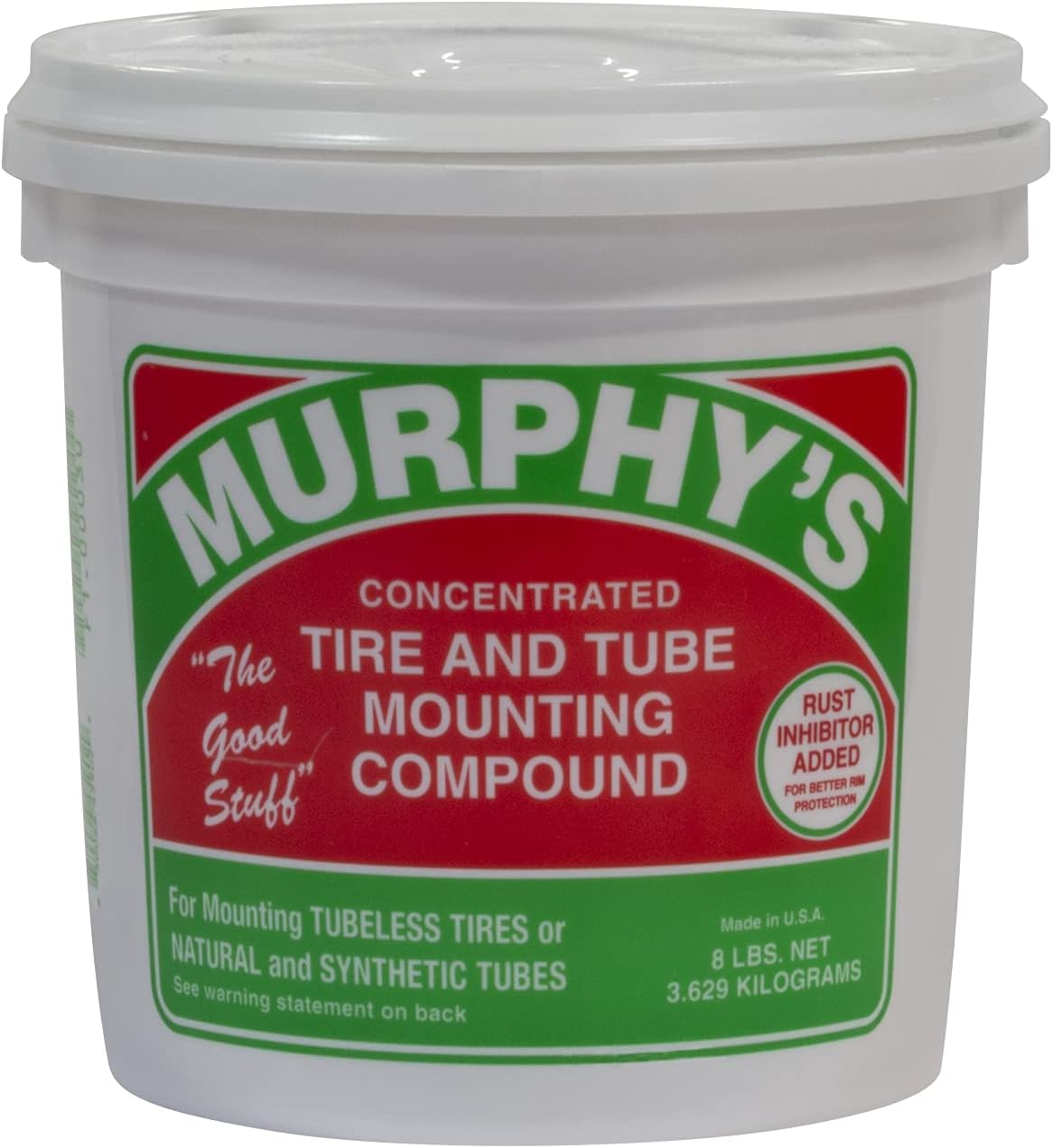
A concentrated tire and tube mounting compound designed to help simplify mounting rubber tires and tubes on passenger, semi truck, construction, and OTR applications. Its ultra-thick formula packs beads effectively and includes rust inhibitors to help protect against corrosion during use.

Protect your spare wheel with a waterproof, dustproof tire cover made to resist sun and harsh weather. The elastic band design makes it easy to install and remove without tools, while reinforced stitching helps it keep its shape. Available in multiple sizes, it fits common RV, trailer, Jeep, SUV, and truck spare tires.
Fuel Economy and Wear Tradeoffs With Bigger Tires
Changing tire size can affect fuel economy, but diameter alone does not determine the result. Tire width, mass, tread pattern, compound, inflation pressure, aerodynamic exposure, and rolling resistance all matter.
Many oversized truck and SUV setups use heavier wheels and tires, wider tread, or aggressive all-terrain and mud-terrain patterns. Those changes can require more energy during acceleration and can increase rolling or aerodynamic losses. A taller tire also changes the vehicle’s effective gearing, which can affect acceleration and engine operating speed.
However, it is too broad to say that every larger-diameter tire automatically creates the same fuel-economy penalty. Tire construction and rolling-resistance characteristics vary significantly between products.
The U.S. Environmental Protection Agency notes that tire materials, construction, and tread design influence rolling resistance and that reducing rolling resistance can improve fuel efficiency.
Keep the tires properly inflated and balanced, and maintain correct wheel alignment. Improper pressure, imbalance, or alignment can increase wear and reduce efficiency regardless of tire diameter.
Larger or more aggressive tires may improve performance for a particular off-road application, but size by itself does not guarantee better traction. Tread design, compound, width, surface conditions, vehicle setup, and inflation pressure all influence grip.
Frequently Asked Questions
How Much Do 35 Inch Tires Affect the Speedometer?
You cannot calculate the error from “35 inches” alone; you also need the original tire diameter. Going from 33-inch to 35-inch tires makes the speedometer read about 5.7% low relative to actual speed, while moving from 30-inch to 35-inch tires creates about 14.3% underreporting.
Is It Better to Get 17 Inch or 18 Inch Tires?
Neither size is automatically better. The 17 or 18 inches normally refers to the wheel diameter. An 18-inch wheel can use a lower-profile tire that keeps nearly the same overall diameter as a 17-inch setup. Compare the complete approved tire sizes, ride characteristics, load rating, cost, handling, and manufacturer recommendations.
Do You Get Better Mileage With Bigger Tires?
Not necessarily. Heavier, wider, or more aggressive tires can reduce fuel economy because of added mass, rolling resistance, and aerodynamic effects. A taller tire also changes effective gearing. The final result depends on the complete tire-and-wheel setup, vehicle, pressure, tread design, and driving conditions.
How Much Will My Speedometer Be off With Bigger Tires?
Use the formula: actual speed = indicated speed × new diameter ÷ original diameter. If the original tire is 30 inches and the new tire is 32 inches, an indicated 50 mph equals about 53.3 mph actual speed. The speedometer is therefore reading about 6.25% low relative to actual speed.
Do Bigger Tires Make the Odometer Show More or Fewer Miles?
Larger overall-diameter tires normally make an uncorrected odometer show fewer miles than you actually travel. Smaller-diameter tires have the opposite effect and can make the vehicle accumulate indicated mileage faster.
Do Larger Wheels Always Change the Odometer?
No. A larger wheel can be paired with a lower-profile tire so the complete wheel-and-tire assembly keeps almost the same overall diameter. When rolling circumference stays close to the original specification, odometer and speedometer changes can be minimal.
Conclusion
So, do bigger tires affect your odometer reading? Yes—when “bigger” means a larger overall rolling diameter and the vehicle has not been recalibrated. Each rotation covers more road, causing the odometer and speedometer to read lower than actual.
The size of the error depends on the difference between the original and replacement tire diameters. A 30-inch to 32-inch change produces about 6.25% odometer underreporting, while a 30-inch to 35-inch change produces about 14.3%. Before upsizing, confirm that the new tire is approved for your vehicle and meets its load, clearance, pressure, braking, and safety-system requirements. Then use the correct vehicle-specific calibration procedure if the rolling circumference changes enough to affect accuracy.
Sources
- National Highway Traffic Safety Administration — TireWise — replacement tire sizing, manufacturer recommendations, inflation, and tire safety.
- Michelin USA — Tire Performance Upgrades — plus sizing and the effects of diameter changes on gearing, braking, stability systems, and speedometer readings.
- Continental Tires — Tire Size Guide — tire sizing, load index, speed rating, pressure, fitment, and vehicle-system considerations.
- U.S. Environmental Protection Agency — Green Vehicle Guide — tire rolling resistance and fuel-efficiency effects.
