

Firestone Complete Auto Care does not publish one chainwide time for replacing tires, so a “30 to 60 minute” promise is too specific. For a four-tire appointment, it is safer to reserve roughly 1 to 2 hours on your schedule and ask your local store for its current estimate. The actual visit can be shorter or longer depending on the store queue, your vehicle, tire availability, and any added services.
Quick Answer
Firestone does not list a universal tire-installation time. For planning, allow about 1 to 2 hours for a four-tire visit and confirm with your store. Added work can extend the appointment: Firestone says most alignments take about 60 minutes, while a standalone tire-balance service can take 45 minutes to two hours.
Key Takeaways
- Firestone does not publish a chainwide 30-to-60-minute tire-change guarantee.
- A single-tire job is usually simpler than replacing four, but store workload can matter more than the number of tires.
- Balancing is part of Firestone’s published new-tire installation process; a separate balancing appointment may take 45 minutes to two hours.
- Most Firestone wheel alignments take about 60 minutes, but extra repairs can make them longer.
- Booking ahead and confirming that your tire size is available can make the visit more predictable.
How Long Does a Firestone Tire Change Take?

There is no single official Firestone time for a tire change. Firestone’s current tire-installation guide explains what technicians do, but it does not promise a fixed completion time.
During a new-tire installation, Firestone says a technician removes the wheels and old tires, inspects the wheels, lug nuts, and valve stems, services the valve stems or TPMS kits as needed, mounts the new tires, inflates them to seat the bead, balances them, and puts the wheels back on the vehicle.
The most accurate answer is store-specific: Firestone publishes the installation steps, but not one chainwide tire-replacement time.
If you want a practical planning window, set aside about 1 to 2 hours for a four-tire appointment. Treat that as a buffer, not a Firestone guarantee. A quiet store with your tires ready may finish sooner; a busy location or a vehicle that needs extra work may take longer.
Firestone also offers lifetime tire rotations with qualifying tire purchases and says rotations are available on Bridgestone or Firestone tires regardless of purchase location; ask the local store for current terms.
Pro Tip: When you book, ask whether your exact tire size is in stock and whether the quoted appointment includes only installation or also alignment, TPMS work, inspection, or another service.
What Affects Tire Change Time at Firestone?
Your total visit includes more than hands-on installation time. The store may need to check you in, move your vehicle into a bay, inspect the wheels and tires, complete the work, perform any needed resets or checks, and finish paperwork.
The biggest variables are store workload, the number of tires being replaced, the vehicle and wheel setup, tire availability, and any additional work approved during the appointment.
Tire Type and Size
Tire type and size can affect how easy the job is to perform, but Firestone does not publish separate installation-time promises for standard all-season, run-flat, performance, low-profile, or larger tires.
Larger, heavier, stiffer, or lower-profile tire-and-wheel combinations may require more careful handling during mounting and balancing. Some vehicles also have special fitment, lug-torque, TPMS, or wheel requirements that technicians must follow.
Firestone states that its technicians install tires according to the vehicle manufacturer’s specifications. That is more important than trying to hit a fixed minute-by-minute target.
- Standard all-season tires may be straightforward to mount.
- Run-flat and low-profile tires can require specialized handling.
- Performance or specialty wheel setups can add complexity.
- Larger tire and wheel sizes can take more effort to handle.
Instead of assuming a particular tire type adds a set number of minutes, ask the store for an estimate based on your vehicle and exact tire size.
Store Load and Services
Even a straightforward tire installation can take longer when the store has several vehicles ahead of yours. An appointment helps the store plan, but it should not be treated as a guarantee that a technician will begin work the moment you arrive.
Extra services can also extend the visit. For example, a wheel alignment is a separate procedure, and a standalone or corrective balancing service has its own service time.
Firestone technicians may also identify worn steering or suspension parts, damaged wheels, TPMS issues, or other conditions that need your approval before additional work is performed.
Note: “Appointment time” and “hands-on tire installation time” are not the same thing. Your total stay can include check-in, bay availability, inspection, service approval, and checkout.
Does Tire Installation Take Longer?
Yes, installing new tires onto your existing wheels is more involved than simply swapping wheels that already have tires mounted on them.
Firestone’s installation process includes wheel removal, old-tire removal, wheel and hardware inspection, valve-stem or TPMS-kit attention when needed, mounting, bead seating, balancing, and wheel reinstallation. Because those steps are required, a full installation should not be compared with a quick roadside spare-tire change.
- Remove the wheels and old tires.
- Inspect the wheels, lug nuts, and valve stems.
- Service valve stems or TPMS kits when needed.
- Mount, inflate, and balance the new tires.
- Reinstall the wheels according to vehicle specifications.
Firestone does not publish a universal time for that complete process. Schedule enough time for the store to do the work correctly, and confirm the expected completion time when you check in.
[Products Worth Considering]

Replace worn or missing TPMS sensors with CARORAV pre-programmed GM-compatible sensors for a smoother installation experience. These 315MHz replacement sensors help monitor tire pressure in real time with long battery life, and they are designed to withstand harsh temperatures. Manual or OBDII relearn may be required to reset the system for proper recognition.

The Ziopetru adjustable magnetic wheel alignment tool helps you check and restore camber and caster positioning after removing and reinstalling undercarriage components. With a clear leveling/bubble measurement system and an easy zeroing adjustment knob, it supports precise horizontal angle checking. The strong magnetic base mounts to metal surfaces for convenient use at home on cars, motorcycles, trucks, vans, and SUVs.

This TPMS relearn tool helps you quickly activate, match, and reset GM tire pressure sensors to keep the vehicle monitoring system working properly. It clears tire pressure alarms and dashboard warning lights after sensor replacement or tire rotation, and supports learning for common 315/433 MHz TPMS sensors. Designed for simple one-button operation, it can help you avoid unnecessary trips to repair shops.
How Long for One Tire vs. Four Tires?
A one-tire replacement is mechanically less work than replacing four tires, but Firestone does not publish a chainwide “one tire takes X minutes” or “four tires take Y minutes” rule.
If only one tire is being replaced, the technician still needs to inspect the tire and wheel, confirm fitment, mount and balance the replacement, and reinstall the wheel. Your total visit can still be affected by the store queue.
With four new tires, the technician repeats the mounting and balancing process across the full set. For planning purposes, reserving about 1 to 2 hours is sensible, but your local Firestone should give you the best estimate for that day.
Do not assume a wheel alignment is automatically part of every four-tire installation. Firestone describes alignment as a separate service. It can be a good idea with new tires, especially if your vehicle has uneven wear, pulling, an off-center steering wheel, or other alignment symptoms.
| Service | What Firestone currently publishes |
|---|---|
| New-tire installation | No universal chainwide completion time published |
| Wheel alignment | Most services take about 60 minutes |
| Standalone tire balancing | Typically 45 minutes to two hours |
| Tire rotation | Typically no longer than an hour, often less |
When Should You Book a Firestone Appointment?
Book a Firestone appointment when your tires are worn, damaged, losing air, or showing uneven wear, or when you know you need replacement before a trip or difficult weather.
You can also book early when your schedule is tight. Firestone says pre-booking online can save time in the store, and the My Firestone App can be used to find a store and schedule an appointment.
Signs You Need Tires
According to NHTSA TireWise, tires should be replaced when tread is worn to 2/32 of an inch. Do not wait until the tread is below that point.
You should also have a tire inspected promptly if you notice:
- Sidewall bulges, bubbles, cuts, or deep cracks.
- Repeated pressure loss or a tire that will not stay inflated.
- Thumping, vibration, or another new tire-related noise.
- Uneven or irregular tread wear.
- Exposed cords, severe damage, or a tire that has been driven while flat.
Warning: A bulge, exposed cords, severe sidewall damage, or major pressure loss can signal an unsafe tire. Do not keep driving just to make an appointment if the tire cannot be driven safely; use roadside assistance or a spare when appropriate.
A professional inspection can determine whether the tire is repairable or needs replacement. Firestone notes that sidewall or shoulder damage and tires at 2/32-inch tread do not qualify for its puncture-repair service.
Book Before Busy Seasons
Firestone does not publish a nationwide rule saying you must book one week ahead in spring or fall. Availability varies by location and date.
Still, booking early is sensible before holiday travel, long trips, severe-weather periods, or any time local appointment slots are filling up. If you need a weekend appointment, check availability before the day you plan to go.
Use Firestone’s online scheduler or My Firestone App to compare available times instead of assuming one season or weekday is always faster.
Check Store Availability
Before you lock in a Firestone appointment, check the exact store’s availability and make sure your tires are available for your vehicle.
To plan efficiently:
- Use Firestone’s store locator or appointment scheduler.
- Schedule through the My Firestone App if you prefer.
- Call the local store if you need same-day service or have a strict deadline.
- Confirm the tire size, number of tires, and any extra services before arrival.
Do not rely on a generic “mid-morning” or “mid-afternoon” rule. The best time is the slot your chosen store can actually support.
What Happens During a Tire Change?
During a Firestone new-tire installation, technicians remove the wheels, remove the old tires, inspect the wheels and related hardware, address valve stems or TPMS kits when needed, mount and inflate the new tires, balance the assemblies, and reinstall the wheels. Firestone says the work is performed according to vehicle-manufacturer specifications.
| Step | What you can expect |
|---|---|
| Wheel removal | Technicians remove the wheels from the vehicle. |
| Old-tire removal and inspection | Old tires come off, and the wheels, lug nuts, and valve stems are inspected. |
| Valve stem / TPMS attention | Rubber valve stems or TPMS kits may be replaced as needed. |
| Mounting and inflation | New tires are mounted and inflated to seat the bead properly. |
| Balancing | Each tire-and-wheel assembly is balanced. |
| Reinstallation | The wheels with new tires are installed back on the vehicle. |
| Follow-up maintenance | Lifetime rotation benefits may apply depending on the tire and purchase terms. |
After service, ask when your next rotation should be. Firestone generally advises rotation around every 5,000 miles and no more than 7,500 miles, while also telling drivers to follow the vehicle owner’s manual when it specifies a different interval.
How Alignment and Balancing Add Time
Alignment and balancing should not be lumped together as one automatic add-on. They are different services, and balancing is already part of Firestone’s published new-tire installation process.
A separate wheel alignment can extend the appointment. Firestone currently says most alignment services take about 60 minutes, though extra repairs can make the service longer.
A separate or corrective tire-balance service can take longer than the 15-to-30-minute estimate often repeated online. Firestone’s current tire-balancing guide says balancing typically takes 45 minutes to two hours.
[Products Worth Considering]

This tire inflator with pressure gauge delivers long-lasting performance with a durable rubber-protected gauge and sturdy build. The longer hose and 360 swivel air chuck help you seal the valve securely and keep your hands free while measuring, inflating, or deflating. It’s battery-free for reliable use and provides ±2 PSI accuracy in the mid-range for most typical tires, with universal compatibility for 1/4 NPT compressor outputs.

Malco tire mounting and demounting lubricant is a ready-to-use tire lube formulated to reduce friction during tire installation for passenger cars, light trucks, farm tires, and heavy-duty equipment. It provides rust-inhibiting protection to help reduce corrosion on rims and wheels, and helps support proper tire bead seating during inflation to reduce air leakage. The silicone-free, soap-free formula is whitewall safe to help prevent discoloration on whitewall tires and sensitive sidewall markings.

This manual duck head tire changer kit makes tire installation and removal simpler by letting you embed the duck head into the tire with applied pressure. The integrated design and durable steel construction help reduce friction and improve efficiency and safety during use. Suitable for 16–21 inch wheels, it’s convenient for cars, trucks, SUVs, and ATV tires, with 24-hour after-sales support.
Alignment Checks
A wheel alignment changes wheel angles such as camber, caster, and toe when they are adjustable. It is not the same as balancing.
Firestone’s current alignment service page says most alignments are completed in about 60 minutes. It also says worn or damaged steering or suspension components may need repair before the alignment can be completed.
- Alignment addresses wheel angles and tire contact with the road.
- Signs of a problem include pulling, off-center steering, and uneven tire wear.
- Firestone recommends checking alignment around every 6,000 miles and when you notice handling changes or install new tires.
- Damage or worn suspension parts can make the appointment longer.
New tires do not automatically mean an alignment is required, but checking alignment can help protect the new tread if the vehicle shows signs of misalignment.
Balancing Process
Balancing corrects uneven weight distribution in the tire-and-wheel assembly. During a balance service, the assembly is mounted on a balancing machine, spun to measure imbalance, and corrected with wheel weights.
Firestone says standalone balancing typically takes 45 minutes to two hours. The time can vary with the tire condition and the reason balancing is needed.
Because balancing is listed as part of Firestone’s new-tire installation procedure, do not automatically add another 45 minutes to two hours to every new-tire appointment. That published range is most useful when discussing a separate balance service.
Extra Service Time
Extra service time depends on what the technician finds and what you approve. A wheel alignment, steering or suspension repair, TPMS service, or other work can make the visit longer than a basic tire installation.
- Alignment corrects wheel angles.
- Balancing corrects tire-and-wheel weight distribution.
- Vehicle condition can uncover work that must happen before alignment.
- Store workload and parts availability can affect the total appointment time.
Instead of assuming every installation-plus-alignment visit will fit into one fixed 1.5-to-2-hour window, ask for the store’s estimate after it knows the exact services your vehicle needs.
Can You Wait While Firestone Changes Tires?
You can ask to wait on-site while Firestone changes your tires, but do not assume every location has the same waiting-room setup or amenities.
Waiting-room features vary by store, so confirm with your location if Wi-Fi, seating, refreshments, or workspace access matters to you.
Your actual wait depends on the job and the queue ahead of you. If your appointment adds alignment, repairs, or diagnostics, staying in the lobby may be less convenient than arranging a ride or drop-off.
Call the store before your visit if you must remain on-site or need the vehicle back by a specific time. That is more reliable than assuming every Firestone has the same customer amenities.
How to Speed Up Your Firestone Visit
To reduce avoidable delays, schedule your visit online or through the My Firestone App and make sure the appointment reflects the work you actually want done.
You can also use the store locator to choose a location with an appointment time that fits your day.
Before arrival, have your vehicle details ready and confirm your tire size or vehicle fitment. If you already chose a tire model, make sure the store has the correct quantity available.
- Schedule an appointment before you leave home.
- Confirm the tire size, quantity, and selected tire model.
- Tell the store in advance if you also want alignment, TPMS work, or another service.
- If cost matters, review current Firestone offers or financing terms before check-in so you can make payment decisions without delaying approval.
Preparation cannot eliminate a busy shop, unexpected repairs, or parts delays, but it can reduce back-and-forth at the counter.
What Services Can You Add to a Tire Change?
When you schedule a tire change at Firestone, you may be able to combine it with other tire or vehicle services if the store has time and your vehicle needs them.
A tire rotation can help distribute wear more evenly. Firestone says tires purchased there include lifetime rotation service, and rotations are also performed on Bridgestone or Firestone tires regardless of purchase location; ask your store for details and terms.
If the TPMS warning light is on or tire-pressure components need attention, Firestone also offers tire pressure monitoring system service.
If you have a puncture, flat-tire repair may be possible only when the damage meets repair criteria. Firestone says sidewall or shoulder damage, large or irregular gashes, and tires at 2/32-inch tread require replacement rather than its standard puncture repair.
A wheel alignment can be added when needed to correct wheel angles and help address pulling or uneven wear. Firestone says most alignment services take about 60 minutes.
Firestone also advertises a lifetime balance option. Ask your store what it covers, what it costs, and how it applies to the tires you are buying.
These services can often be coordinated during the same visit, but each additional task can affect the completion time.
[Products Worth Considering]

This 100-piece set of snap-in tubeless tire valve stems is designed for standard 0.453 in (11.5 mm) rim holes and helps maintain reliable, steady tire pressure. Made with ozone-resistant rubber and brass cores, the valves are built for durability and long-term use. Easy to install by hand, they support safe driving and are suitable for cars, light trucks, trailers, and more.
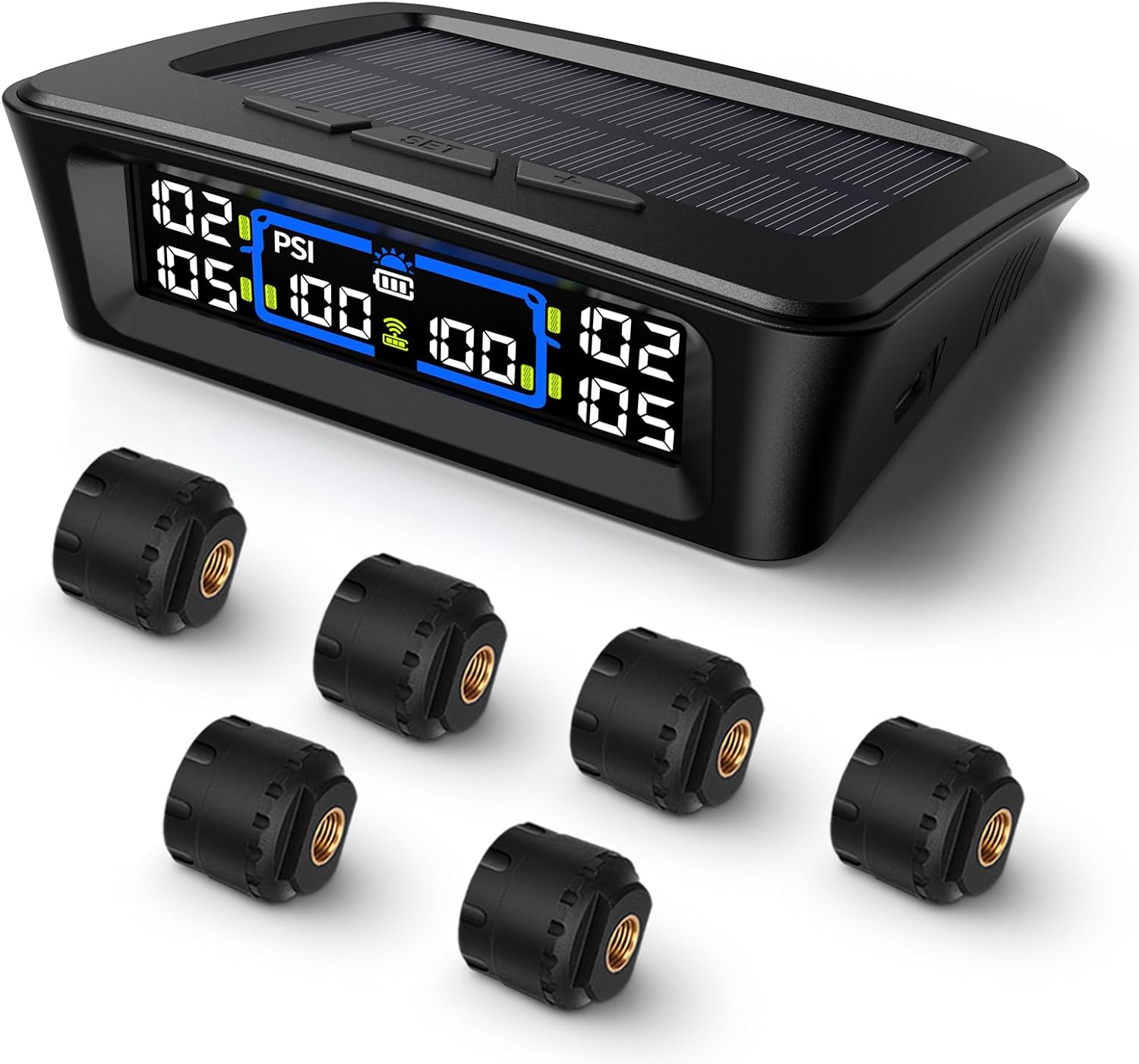
The Tymate TM12 RV TPMS delivers real-time tire pressure and temperature monitoring with a stable 433Hz display for safer long-distance driving. It supports simultaneous monitoring across vehicle and trailer zones, includes six alarm modes for pressure, temperature, leakage, battery, and signal loss, and features easy DIY installation with auto calibration. Power is supplied via USB-C charging or solar recharging, with a wide 0–144 PSI range and up to 50 ft signal coverage for RVs and towable trailers.
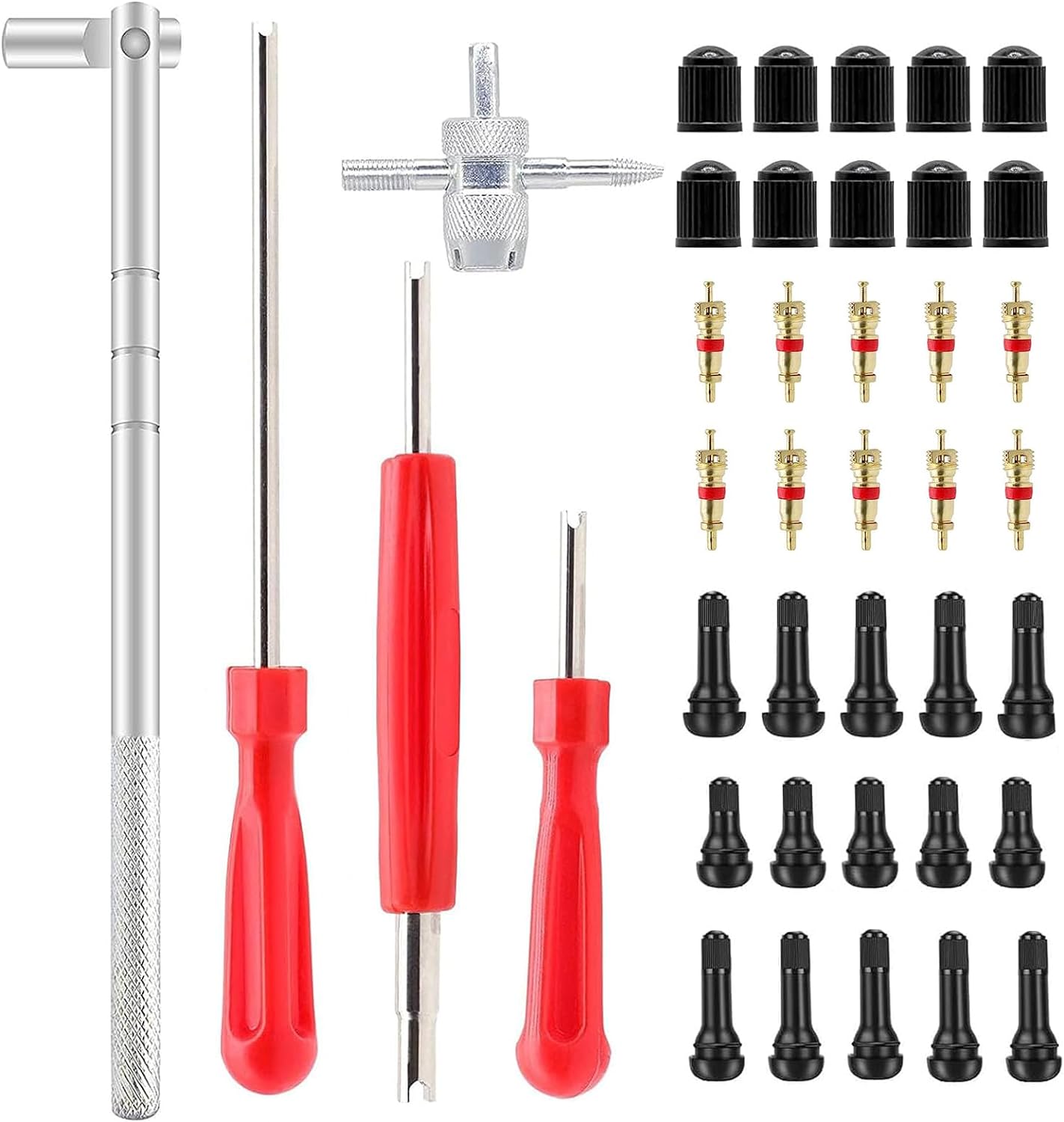
This ZHSMS valve stem puller and installer tool set makes it easy to remove and install tire valve stems without damaging wheels or valves. It uses a leverage design to save effort and includes valve stem tools plus removable valve core functionality for quick tire repairs. Compatible with tubeless tires for passenger cars, motorcycles, ATVs, off-road vehicles, and trucks.
Frequently Asked Questions
How Long Does It Take to Get a Tire Replaced at Firestone?
Firestone does not publish one chainwide replacement time. A single tire is less work than a full set, but your total visit still depends on store workload, wheel condition, TPMS needs, and other approved services. Ask your store for a same-day estimate when you check in.
How Long Does It Usually Take to Change Your Tires?
For planning, reserving about 1 to 2 hours for a four-tire shop appointment is sensible, but that is not a Firestone guarantee. The hands-on work may be quicker, while waiting for a bay or adding alignment, repairs, or TPMS service can extend the visit.
Is $600 for 4 Tires Good?
It can be reasonable for some tire sizes and models, but price alone is not enough to judge the deal. Compare the exact tire model, size, tread warranty, installation charges, taxes, disposal or service fees, road-hazard coverage, and any included rotation or balance benefits before deciding.
How Long Does a Tire Swap Usually Take?
A wheel swap with tires already mounted is usually simpler than removing old tires from the wheels and mounting new ones. Firestone does not publish one universal swap time, so confirm what “tire swap” means for your appointment and ask the store for its expected completion time.
Does Firestone Balance New Tires During Installation?
Yes. Firestone’s tire-installation page lists balancing each tire as part of the installation process. A separate balancing appointment is different and may take 45 minutes to two hours.
Do You Need an Alignment With New Tires?
Not automatically. Alignment is a separate service. It is worth checking if your vehicle pulls, has an off-center steering wheel, shows uneven tire wear, recently hit a curb or pothole, or has had suspension work. Firestone says most alignment services take about 60 minutes.
Conclusion
Overall, do not rely on a universal 30-to-60-minute Firestone tire-change promise, because Firestone does not currently publish one. For a four-tire visit, reserving about 1 to 2 hours is a practical planning buffer, then confirm the estimate with your store. If you add a wheel alignment, Firestone says most alignments take about 60 minutes; separate tire balancing can take 45 minutes to two hours. Booking ahead and confirming the tires and services you need will make the appointment more predictable.
Sources
- Firestone Complete Auto Care — Tire Installation Services — installation steps, manufacturer-specification handling, free-rotation language, and lifetime-balance option.
- Firestone Complete Auto Care — Tire Balancing — balancing process and published 45-minute-to-two-hour service range.
- Firestone Complete Auto Care — Wheel Alignment Services — alignment procedure, typical 60-minute service time, and inspection interval.
- Firestone Complete Auto Care — Tire Rotation — lifetime rotation terms, suggested interval, and rotation service timing.
- NHTSA TireWise — 2/32-inch replacement threshold and tire-safety guidance.
- Firestone Complete Auto Care — My Firestone App — appointment scheduling and service-history features.

