

Firestone does not publish one nationwide flat rate for tire installation, so the amount you pay depends on the tires, vehicle, location, and services on your final quote. Current Firestone tire listings advertise free tire mounting with the tire purchase, while balancing, valve or TPMS service, old-tire disposal, taxes, and optional work can affect the total. The smartest comparison is therefore the complete out-the-door price, not one advertised installation number.
Quick Answer
Firestone does not list one national tire-installation rate. Current Firestone tire pages advertise free tire mounting with the tire purchase, but your invoice can still include balancing-related options, valve or TPMS parts, tire disposal, taxes, and added services. A local itemized quote is the best way to know your exact cost.
Key Takeaways
- Firestone does not publish a single nationwide tire-installation price for every vehicle and location.
- Current Firestone tire listings advertise free tire mounting with qualifying tire purchases.
- Firestone’s installation process includes mounting, initial balancing, wheel and valve-stem inspection, and rubber valve-stem or TPMS-kit service as needed.
- A free alignment check is not the same as a wheel alignment adjustment, which can be a separate service.
- Disposal charges, TPMS parts, taxes, specialty fitments, optional protection, and other services can change your final bill.
- Always compare the complete installed price for the same tire model, size, and services rather than comparing only the advertised tire price.
How Much Does Firestone Tire Installation Cost?

There is no single Firestone installation price that applies to every store, tire, and vehicle. Firestone’s current tire pages tell shoppers to enter vehicle and location information for an exact quote, and many listings advertise tire mounting as free with the tire purchase.
That does not mean every installation-related line item is always free. The complete price can depend on balancing options, rubber valve stems or TPMS service kits, disposal of the old tires, taxes, wheel condition, and any additional work you approve.
For a broader market comparison, Consumer Reports reported that among surveyed tire buyers who paid an installation charge, the median was $31 per tire. More than half reported receiving installation at no separate charge. That figure is a retail-market benchmark, not a Firestone national rate.
Note: “Free mounting” and “free installation” are not always interchangeable. Mounting is one part of the job. Check whether your quote separately lists balancing options, TPMS parts, disposal, taxes, alignment, road-hazard coverage, or other services.
Firestone Installation Cost Breakdown
| Item | What to Expect |
| Tire mounting | Advertised as free with many current Firestone tire purchases; check the exact tire and store terms. |
| Initial balancing | Firestone lists balancing as part of its expert installation process. A lifetime balance option is also offered separately. |
| Rubber valve stem or TPMS kit | Firestone services these during new-tire installation as appropriate; hardware or sensor-related charges can depend on the vehicle and quote. |
| Old-tire disposal | May appear as a separate local or state-related charge. |
| Alignment check | Advertised free with many current tire purchases. An actual alignment adjustment is a separate service if needed. |
| Tire rotation | Firestone advertises lifetime rotations with many tire purchases and specifically lists free rotations on sets of Bridgestone or Firestone tires; terms apply. |
| Customer-supplied tires | Pricing and acceptance can vary by participating store, so confirm before bringing or shipping tires to the location. |
What Does Firestone Tire Installation Include?
According to Firestone Complete Auto Care’s tire-installation information, technicians perform several steps when installing a new tire.
- Remove the wheels from the vehicle.
- Remove the old tires from the wheels.
- Inspect the wheels, lug nuts, and valve stems.
- Replace the appropriate rubber valve stems or TPMS service kits.
- Mount the new tires.
- Inflate them so the beads seat correctly on the wheels.
- Balance each tire and wheel assembly.
- Reinstall the wheels on the vehicle.
A proper tire installation is more than sliding a new tire onto a wheel: fitment, valve or TPMS service, bead seating, balancing, inflation, and correct wheel installation all matter.
Your vehicle may also require a TPMS relearn, sensor diagnosis, or other vehicle-specific step. Firestone’s service process addresses TPMS equipment where needed, but the exact procedure depends on the vehicle and its monitoring system.
After installation, check your tire pressures regularly. NHTSA recommends checking tire pressure at least once a month when the tires are cold and using the vehicle manufacturer’s pressure listed on the door placard or in the owner’s manual.
What Fees Increase the Total Cost?
Your final Firestone tire bill can be higher than the advertised tire price even when mounting is included. The exact charges depend on your vehicle, selected tires, local requirements, and any optional services you approve.
[Products Worth Considering]

Malco tire mounting and demounting lubricant is a ready-to-use tire lube formulated to reduce friction during tire installation for passenger cars, light trucks, farm tires, and heavy-duty equipment. It provides rust-inhibiting protection to help reduce corrosion on rims and wheels, and helps support proper tire bead seating during inflation to reduce air leakage. The silicone-free, soap-free formula is whitewall safe to help prevent discoloration on whitewall tires and sensitive sidewall markings.

Replace worn or missing TPMS sensors with a pre-programmed 4-pack designed for compatible GM vehicles. These 315MHz sensors provide real-time tire pressure monitoring and alert you if pressure is too high, too low, or if a rapid air leak occurs. Most installations are ready with minimal relearn effort after mounting, helping improve safety and driving confidence.

The VEHLIVE SU-50448 II TPMS relearn tool provides a fast activation reset to restore accurate tire pressure monitoring after sensor replacement or tire rotation. It supports 315 MHz and 433 MHz GM series sensors and helps clear dashboard pressure warnings. With simple two-button operation and horn-confirmed relearning order, you can reprogram sensors conveniently at home.
Labor and Mounting
If you buy eligible tires through Firestone, current listings commonly advertise tire mounting at no additional charge. That makes the original assumption of a universal mounting fee misleading.
If you bring tires purchased elsewhere, however, do not assume the same offer applies. Participating Firestone locations can serve as third-party tire installers, but pricing and eligibility can be different. Ask the selected store for the mounting-and-balancing price for customer-supplied tires before you arrive.
Wheel condition can also change the work required. Corrosion, damaged wheels, unusual aftermarket fitments, or other problems may need attention before a new tire can seal and operate correctly.
Disposal and Valve Fees
Old-tire disposal can be another line item. Used-tire rules vary by state and locality, and the U.S. Environmental Protection Agency notes that tire retailers and recycling programs handle used tires under local requirements.
Valve and TPMS expenses can also vary. Firestone states that technicians replace rubber valve stems or appropriate TPMS service kits during new-tire installation. A simple rubber stem is different from a complete electronic TPMS sensor, so the cost can change significantly if a sensor itself is faulty and needs replacement.
Warning: Do not decline necessary TPMS or wheel repairs simply to lower the invoice. A damaged valve, malfunctioning sensor, badly corroded wheel, or unsafe wheel/tire combination should be addressed before the vehicle returns to normal service.
Balancing and Alignment
Balancing and alignment are different services. Balancing corrects weight variation in the rotating tire-and-wheel assembly. Alignment adjusts suspension angles so the wheels meet the road correctly.
Firestone lists initial balancing as part of its installation process and also offers a lifetime balance option. Current tire listings commonly advertise a free alignment check, but that does not mean a full wheel alignment adjustment is free.
If the inspection shows that your vehicle is out of alignment, ask what an alignment would cost before approving the work.
How Tire Type Affects Installation Price
Tire and wheel design can affect how complicated the service is, but there is no reliable Firestone rule saying every winter, performance, low-profile, or run-flat tire automatically carries a particular surcharge.
Run-flat tires are the clearest example of a tire that can require special service procedures. The U.S. Tire Manufacturers Association explains that run-flat tires can have product-specific mounting, demounting, repair, wheel, and TPMS requirements.
Bridgestone’s run-flat guidance also states that properly trained retailers use equipment intended for these tires because unsuitable equipment can damage them.
Other factors that may change the work required include:
- Very large or heavy tire-and-wheel assemblies.
- Low-profile tires with stiff sidewalls.
- Aftermarket wheels or unusual fitments.
- Direct TPMS sensors mounted at the valve.
- Damaged or corroded wheel bead surfaces.
- Staggered front and rear tire sizes.
Instead of assuming that one of these automatically means a surcharge, enter your exact vehicle and tire information or ask the store for an itemized price.
[Products Worth Considering]

Replace worn or malfunctioning GM TPMS sensors with this 433MHz pre-programmed sensor set designed for compatibility with many Chevrolet, Buick, GMC, and Cadillac models. It includes guidance for proper OBDII relearning/pairing after installation and supports reliable long-term operation with a high-performance CR2032 battery. Quality tested for durability and performance to help restore accurate tire pressure monitoring.
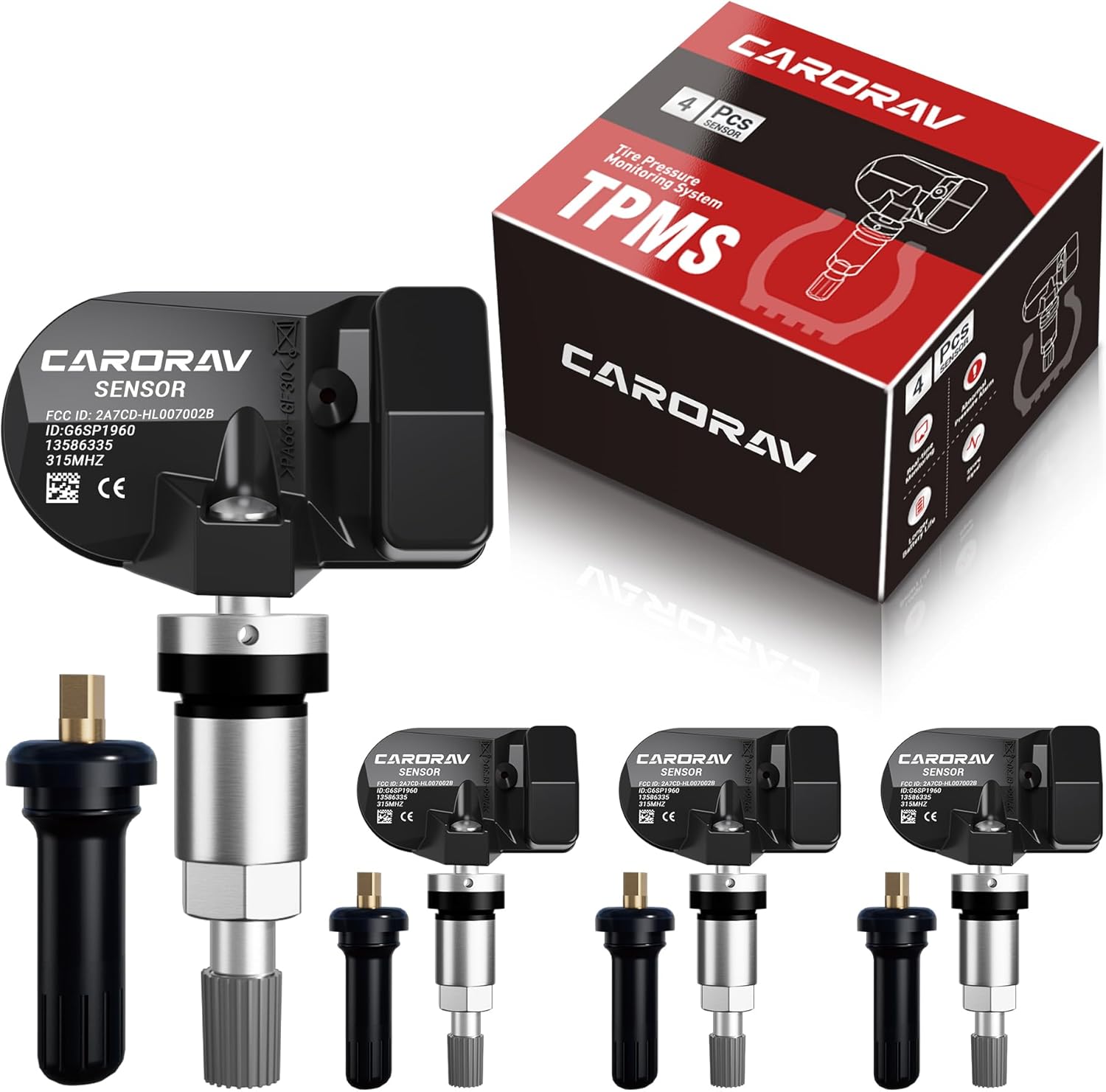
Replace worn or missing TPMS sensors with CARORAV pre-programmed GM-compatible sensors for a smoother installation experience. These 315MHz replacement sensors help monitor tire pressure in real time with long battery life, and they are designed to withstand harsh temperatures. Manual or OBDII relearn may be required to reset the system for proper recognition.

These M14x1.5 closed-end chrome lug nuts are a one-piece replacement designed for secure fitment on compatible GM, Ford, and select Chrysler/Dodge models. Featuring a 60-degree conical seat and anti-rust chrome plating, they help resist corrosion and maintain a bright look for everyday driving. Built for long-term durability, they include OEM-style part references and are backed by 12 months of support.
Buying Tires From Firestone vs. Bringing Your Own
The price structure can be different depending on where the tires come from.
If you purchase tires through Firestone, current tire pages may include benefits such as mounting, an alignment check, and lifetime tire rotation. Firestone’s tire-installation page also notes free rotations on sets of Bridgestone or Firestone tires, subject to the applicable terms.
If you already bought tires elsewhere, some Firestone Complete Auto Care stores install third-party tires, including through installer networks such as Tire Rack. However, that should be treated as a participating-location service, not an automatic nationwide promise.
Before buying tires elsewhere and shipping them to a Firestone location, confirm:
- The store accepts customer-supplied tires.
- The exact mounting and balancing charge.
- Whether disposal is included.
- Whether rubber valve stems or TPMS kits cost extra.
- Whether the tire size and load/speed specification are acceptable for your vehicle.
- Whether any Firestone tire-purchase benefits no longer apply.
[Products Worth Considering]

This manual duck head tire changer kit makes tire installation and removal simpler by letting you embed the duck head into the tire with applied pressure. The integrated design and durable steel construction help reduce friction and improve efficiency and safety during use. Suitable for 16–21 inch wheels, it’s convenient for cars, trucks, SUVs, and ATV tires, with 24-hour after-sales support.

Masoll Gen 2 external TPMS sensors are a DIY replacement set of 4 for select GM vehicles made after 2006, helping you shut off the TPMS warning light quickly. Simply screw the sensors onto the tire valves and sync to your car ECU using the included EL-50448 relearn tool. Dual-frequency 315/433 MHz design provides OEM-level performance with accurate readings and replaceable batteries for about two years.

Autel MX TPMS sensors combine 315MHz and 433MHz in a single easy-to-install press-in design for faster tire service. They support wireless programming with strong signal performance, and the sensors are clone-able for streamlined replacement. Built for reliability and tested to SAE standards, each sensor includes a series number for quality control.
How to Save on Firestone Tire Installation
The best way to save is to compare the complete installed price, not just the tire’s advertised unit price.
- Enter your exact vehicle and ZIP code. Firestone’s tire prices and availability can depend on vehicle, tire size, and location.
- Check current offers. Tire rebates and service promotions change, so use the active offers shown when you request your quote.
- Confirm what is already free. Do not pay for a service elsewhere merely because you overlooked mounting, rotation, or alignment-check benefits tied to your Firestone tire purchase.
- Separate required work from optional upgrades. Ask which charges are needed for safe installation and which are optional products such as additional protection or lifetime service packages.
- Compare the same tire. A cheaper quote is not meaningful if it covers a different tire model, warranty, service package, or set of fees.
- Keep the receipt. Your purchase and service records can matter for warranty claims and future maintenance.
Pro Tip: Ask for two numbers: the price for the four tires themselves and the final out-the-door price after installation, parts, disposal, taxes, and any optional services. That makes quotes from different retailers much easier to compare.
How to Get an Accurate Firestone Quote
Because there is no single nationwide installation fee, your local quote is more useful than a generic per-tire estimate.
When requesting a price, give Firestone your vehicle year, make, model, trim, tire size, ZIP code, and whether you are purchasing the tires from Firestone or bringing your own.
Then ask whether the quote includes:
- Tire mounting.
- Initial balancing.
- Rubber valve stems or TPMS service kits.
- TPMS relearn or programming if required.
- Old-tire disposal.
- Shop or environmental charges, where applicable.
- Taxes.
- Alignment check.
- Any recommended alignment adjustment.
- Any optional lifetime balance or protection plan.
You can also use Firestone’s online appointment system to choose a location, date, and available service time.
Is Firestone Tire Installation Worth It?
Firestone tire installation can make sense if you value one-stop service and the benefits included with your tire purchase. Firestone can sell the tires, install and balance them, inspect alignment, service valve or TPMS components, and provide other vehicle services at the same location.
Firestone also backs its automotive services with its Triple Promise. Under the “Fixed Right” portion, Firestone says improperly performed service will be re-performed at no additional charge during the established warranty period, subject to its terms.
That protection is different from a tire manufacturer’s treadwear warranty, Firestone’s 90-Day Buy & Try program for eligible tires, or optional road-hazard coverage.
Firestone may be a particularly convenient choice when:
- You are buying tires directly from Firestone and can use the included services.
- You want tire installation and an alignment check during the same visit.
- You prefer a national service chain for future support.
- You value online scheduling and one-store vehicle service.
Another installer may still offer a lower final price. Compare the same tire and the same services before deciding.
Frequently Asked Questions
Do Firestone installation prices vary by location?
Yes. Firestone does not publish one national installation rate for every store, vehicle, and tire. Local taxes, tire and wheel requirements, disposal rules, parts, promotions, and additional services can change the final price. Use your vehicle and ZIP code or contact the selected store for an itemized quote.
Can I bring my own tires to Firestone?
Some Firestone Complete Auto Care locations install customer-supplied tires and participate in third-party installer networks. Policies, prices, tire-size limits, and included services can differ, so confirm with the specific store before buying or shipping tires there.
How long does Firestone tire installation take?
There is no universal Firestone installation time. The appointment length depends on store workload, tire and wheel design, TPMS needs, wheel condition, and any added services such as an alignment. Check the estimated service time shown for your selected appointment or ask the store directly.
Does Firestone offer a warranty on tire installation?
Firestone backs its automotive services with its Triple Promise. Under the Fixed Right promise, Firestone says that if a covered service was performed improperly, it will re-perform the service at no additional charge during the established warranty period. Restrictions and warranty terms apply.
Can I schedule Firestone tire installation online?
Yes. Firestone’s online appointment system lets you choose a location, available date, and time slot and provide your vehicle and contact information. Availability depends on the selected store.
Is tire mounting free when I buy tires from Firestone?
Current Firestone tire listings commonly advertise tire mounting as free with the tire purchase. Other installation-related charges can still apply, so check the complete quote for balancing options, TPMS or valve parts, disposal, taxes, and additional services.
Does Firestone include a wheel alignment with new tires?
Current Firestone tire listings commonly include an alignment check, but a check is not the same as a full alignment adjustment. If the inspection shows that the vehicle is out of alignment, ask for the price before approving the alignment service.
Conclusion
Firestone tire installation does not have one nationwide $20-to-$30-per-tire price. Current Firestone tire listings commonly advertise free tire mounting with the tire purchase, while the complete installed bill can still change because of TPMS or valve parts, disposal, taxes, balancing options, alignment work, specialty fitments, and other approved services.
Start with the exact tire and vehicle, check what Firestone already includes, and compare the out-the-door total. That gives you a much more accurate answer than relying on a generic per-tire installation figure.
Sources
- Firestone Complete Auto Care — Tire Installation Services — installation steps, balancing, valve/TPMS service, and rotation information.
- Firestone Complete Auto Care — Current Tire Purchase Benefits — free mounting, lifetime tire rotation, alignment check, and location-dependent pricing.
- Firestone Complete Auto Care — Triple Promise — service workmanship and pricing promises.
- Consumer Reports — How to Save Money When Buying Tires — current market installation-cost benchmark and free-installation survey findings.
- National Highway Traffic Safety Administration — TireWise — tire-pressure, TPMS, and maintenance guidance.
- U.S. Environmental Protection Agency — Tire Recycling Guidance — used-tire recycling and disposal information.

