
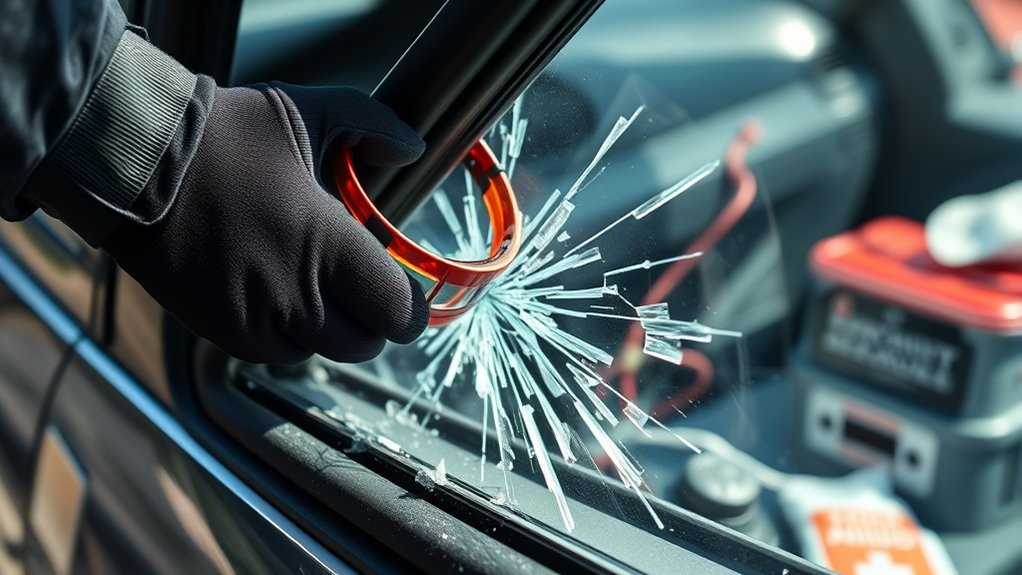
Only break a car window when an immediate threat to life or safety makes a normal exit or entry impossible. First try an unlocked door, an operable window, or the vehicle’s mechanical emergency door release. If you must break glass, identify a tempered side window and use a purpose-built spring-loaded escape tool. Do not assume every side window will shatter: many newer vehicles use laminated side glass that ordinary escape tools cannot penetrate.
Quick Answer
In a true emergency, try the door or normal window controls first. If you are trapped and must break glass, use a spring-loaded escape tool on a known tempered side window, preferably near a lower corner. Standard escape tools generally will not penetrate laminated glass, so know your vehicle’s glass and alternate exits before an emergency.
Key Takeaways
- Break a window only when an immediate emergency makes waiting or using a normal exit unsafe.
- Try an operable door, power window, mechanical door release, hatch, or other normal opening before breaking glass.
- Use a purpose-built spring-loaded breaker only on glass you know is tempered; ordinary consumer escape tools may crack laminated glass without creating an opening.
- In a sinking vehicle, remove seat belts, open a window immediately, get out, and help children out before adults.
- For a hot-car child emergency, call 911 immediately. Pet-rescue laws vary by state, so follow dispatcher instructions whenever circumstances allow.
- Keep an escape tool secured within reach and learn where your vehicle’s mechanical door releases and tempered windows are before you need them.
At a Glance
| Time Required | Act immediately when fire, submersion, heat illness, or another life-threatening condition makes escape urgent. |
| Difficulty | Moderate to high under stress; preparation greatly improves your options. |
| Tools Needed | Normal window or door controls first; a spring-loaded escape tool and seat-belt cutter are useful backups when compatible with the vehicle’s glass. |
| Cost | No cost if a normal exit works; dedicated emergency escape tools are optional preparedness equipment. |
Warning: This guidance is for genuine emergencies involving an immediate threat to life or serious injury. Do not damage someone else’s vehicle merely to gain access. For a child or pet trapped in a parked vehicle, call 911 or local emergency services immediately when circumstances allow; legal protections for forcible entry vary, especially for animal rescues.
When To Break A Car Window

Breaking glass should be an emergency exit or rescue measure, not your first choice. Use it when a fire, submersion, severe heat exposure, crash damage, or another immediate danger makes staying in the vehicle more dangerous than getting out.
First try the simplest safe option available. Test an unlocked door, lower a window, use the vehicle’s mechanical emergency door release if the normal electronic handle does not work, or use another operable opening. If those options fail and the threat is immediate, move to an emergency escape window.
If a vehicle is burning, the U.S. Fire Administration advises getting everyone out, never returning to the burning vehicle, moving at least 100 feet away and out of traffic, and calling 911.
If you see a child alone in a locked vehicle during dangerous heat, NHTSA advises acting immediately and calling 911. A child who is unresponsive or showing heat-related distress needs to be removed as quickly as possible. If forcible entry becomes necessary, choose an opening away from the child whenever possible to reduce exposure to broken glass.
Pet-rescue rules are different. State laws vary on who may forcibly enter a vehicle and what steps must be taken first. The Animal Legal & Historical Center maintains a state-by-state summary. Many laws require contacting police, fire, animal control, or 911 and using no more force than necessary.
Choose The Safest Car Window
If you must break glass, identify a tempered side window that gives you a usable path out. Do not rely on the old rule that every side window is tempered. Modern vehicles may use laminated glass in one or more side-window positions.
Look at the permanent marking or “bug” near the lower edge of the glass. It may identify the window as tempered or laminated. You can also check the owner’s manual or ask the manufacturer or dealer before an emergency. Different windows on the same vehicle may use different glazing.
The windshield is laminated safety glass and is not a practical target for an ordinary emergency window punch. Sunroof construction varies, so do not assume a sunroof will shatter either. If a sunroof, hatch, or door can simply be opened, however, it may provide a safer alternate exit.
AAA testing found consumer escape tools effective against tempered side glass but unable to penetrate laminated glass. That makes knowing your vehicle’s glass type part of emergency preparation, not a detail to discover while trapped.
Pro Tip: Before your next trip, sit in each occupied seating position and identify the mechanical door release, an operable exit, the window-glass markings, and where your escape tool can be reached while belted in.
[Products Worth Considering]

The Trivd Frol 1/2" air impact wrench delivers high performance torque up to 1500 ft-lbs with a twin hammer impact mechanism for strong, balanced blows. It features an ergonomic grip, compact lightweight design, and quick-stop control with 3 forward speeds up to 8000 RPM plus a reverse speed. Built for demanding automotive repair and tire shop work, the rear exhaust helps keep debris away from the surface.

This 1/2-inch drive breaker bar delivers powerful leverage for loosening and tightening stubborn lug nuts and automotive fasteners. The 180-degree flex head helps you reach tight spaces at the angle you need, making tire and brake jobs easier. A spring-loaded ball detent design holds 1/2-inch sockets securely while the chrome-moly head provides durable strength for everyday use.

This car emergency kit keeps essential roadside tools organized in a durable, portable bag so you can respond quickly during common driving emergencies. It includes battery jumper cables, a bright LED headlight, first aid supplies, a tire pressure gauge, and safety essentials like gloves and an emergency poncho. Designed for trunk or storage use, it helps you be prepared for dead batteries, minor malfunctions, and unexpected roadside issues.
Pick The Best Glass Breaker
A spring-loaded emergency window punch is a practical choice when your vehicle has tempered glass. AAA tested spring-loaded and hammer-style escape tools and found the spring-loaded designs generally more successful on tempered windows.
- Choose a purpose-built tool designed for automotive tempered glass.
- A recessed seat-belt cutter is useful if a buckle becomes jammed.
- Secure the tool where the driver can reach it after a collision; do not bury it in the trunk or under loose cargo.
- Confirm beforehand that your planned escape window is tempered.
Do not test the breaker on your vehicle glass. AAA recommends checking a spring-loaded mechanism against a softer material, such as soft wood, to confirm that its tip fires and leaves an indentation.
An escape tool is useful only if you can reach it and the window you plan to use is actually breakable tempered glass.
[Products Worth Considering]

Steelman white tire marking crayons provide high-contrast, semi-permanent marks for repairing and inspecting tires and equipment. They write on wet or dry, smooth or coarse surfaces including rubber, metal, glass, and wood, making them ideal for puncture location and damage outlining. The lead- and zinc-free crayons resist weather and fading yet wipe away when you no longer need the marks.
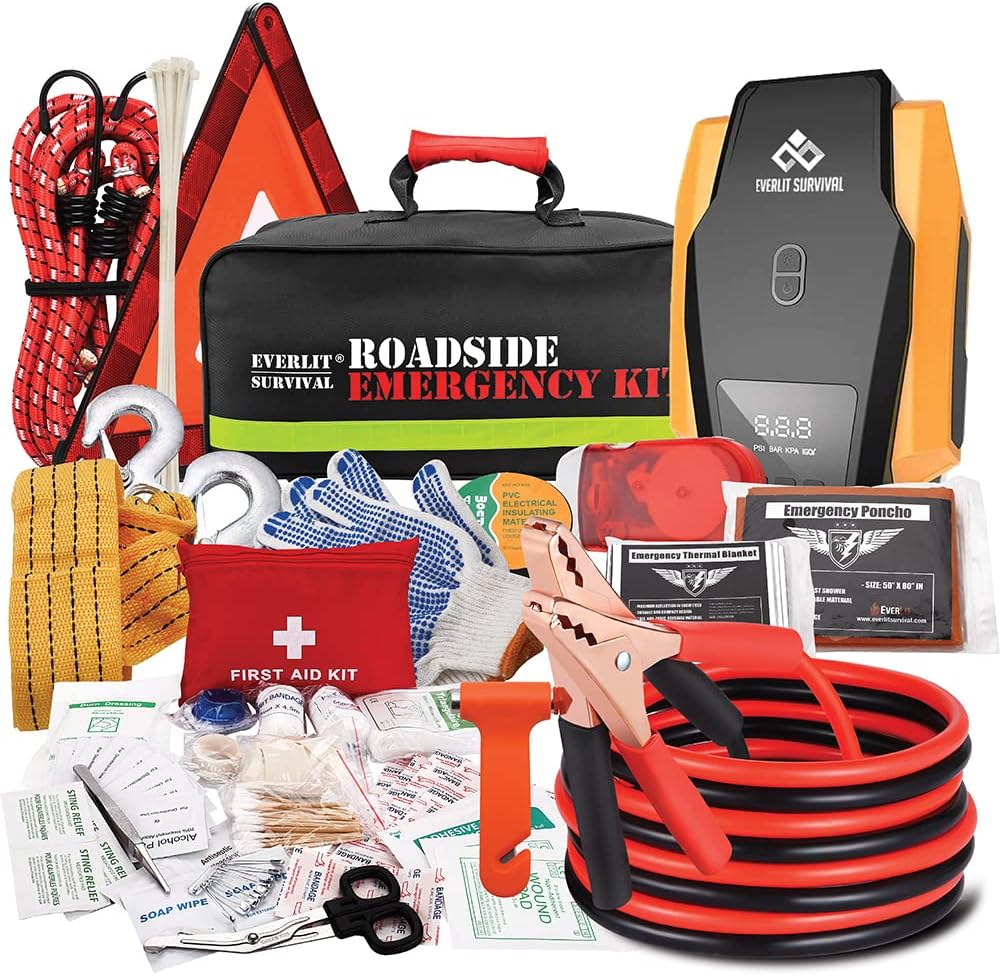
The Everlit Road Guardian emergency kit is designed for roadside breakdowns, combining essential safety gear and roadside tools in one compact bag. It includes a digital 12V auto tire inflator with preset and auto shutoff, plus 12-foot 8-gauge jumper cables to get you moving again. You also get a full 108-piece first aid kit, reflective warning tools, safety gloves, and emergency convenience items for safer travel.

This 22-piece car wash and detailing kit includes a collapsible 20L bucket, lint-free wash mitt, microfiber sponge, super-absorbent drying towels, and specialized tools for wheels, tires, and windows. Soft, scratch-free accessories help protect paint and glass while tackling grime both inside and out. It’s a complete interior and exterior care set for cars, motorcycles, RVs, and home cleaning tasks like windows and mirrors.
Break The Window At The Corner
If a known tempered side window will not lower and you must create an emergency opening, concentrate the purpose-built breaker near a lower corner rather than repeatedly hitting the center. Fire-rescue training guidance uses a lower corner when breaking tempered automotive glazing because concentrated force near the edge is more effective.
| Target | What To Expect | Use |
|---|---|---|
| Lower corner of known tempered side glass | Best target for a concentrated emergency-tool impact | Preferred breaking location |
| Center of tempered glass | May require more effort | Avoid wasting time here |
| Laminated glass | May crack but remain held together | Switch to another exit |
Protect your eyes and exposed skin as much as circumstances allow. Tempered glass is designed to fragment differently from ordinary plate glass, but the pieces can still cut you. If you are breaking a window from outside to reach another person, choose the window farthest from that person when you have a safe choice.
Free Seat Belts And Exit Fast
Once you have an exit, remove restraints that prevent movement and get everyone to safety. If a buckle operates normally, use it. Use a seat-belt cutter only when a belt is jammed or cannot be released quickly.
Unbuckle All Seat Belts
In a sinking vehicle, remove seat belts immediately so occupants can move toward the exit. If children are restrained, an adult should be prepared to release them rapidly after creating or opening the escape window.
Do not waste time retrieving phones, bags, wallets, or other belongings. Those items can be replaced; the opportunity to escape may disappear quickly.
Free Passengers First
Help passengers who cannot escape on their own, especially children. In a vehicle entering water, current drowning guidance uses the sequence Seatbelts, Window, Out, Children first. Older children who can follow instructions may be sent through the opening first, allowing an adult to focus on younger children who need more help.
In other emergencies, use the safest workable order for the situation. Keep instructions short: unbuckle, move to the exit, get out, and move to a safe location away from traffic, fire, water, or unstable wreckage.
Exit Before Water Rises
If your vehicle enters water, act during the initial floating phase. Research and the 2024 Wilderness Medical Society drowning guideline recommend immediate self-rescue rather than waiting for the cabin to fill.
- Remove seat belts.
- Lower a window immediately while the electrical system still works, or break a known tempered window if necessary.
- Get occupants out through the opening.
- Help children out before adults leave.
Do not make a phone call before attempting escape from a sinking vehicle. Once everyone is safely out, call 911 as soon as possible.
Warning: Do not intentionally wait for a sinking vehicle to fill with water so a door will become easier to open. Pressure equalization may eventually occur, but survival chances fall sharply as the vehicle submerges. Treat that as a last-resort circumstance, not an escape plan.
What To Do If The Window Is Laminated?
If the window is laminated, an ordinary emergency punch or safety hammer may crack the outer glass without creating an opening. Do not spend critical time repeatedly striking a window that is staying together.
Immediately look for another route: an operable window, a known tempered window elsewhere in the vehicle, the mechanical door release, an operable hatch, or another opening designed to be used normally.
[Products Worth Considering]

A concentrated tire and tube mounting compound designed to help simplify mounting rubber tires and tubes on passenger, semi truck, construction, and OTR applications. Its ultra-thick formula packs beads effectively and includes rust inhibitors to help protect against corrosion during use.

This VEVOR tire bead breaker uses a slide-hammer impact and wedge tip to separate tire beads from rims quickly and efficiently without damaging hub surfaces. The long handle and sturdy steel construction help reduce user strain while providing reliable, portable tire changing for cars, trucks, and more. Ideal for home mechanics and repair shops handling multiple vehicle tire sizes.
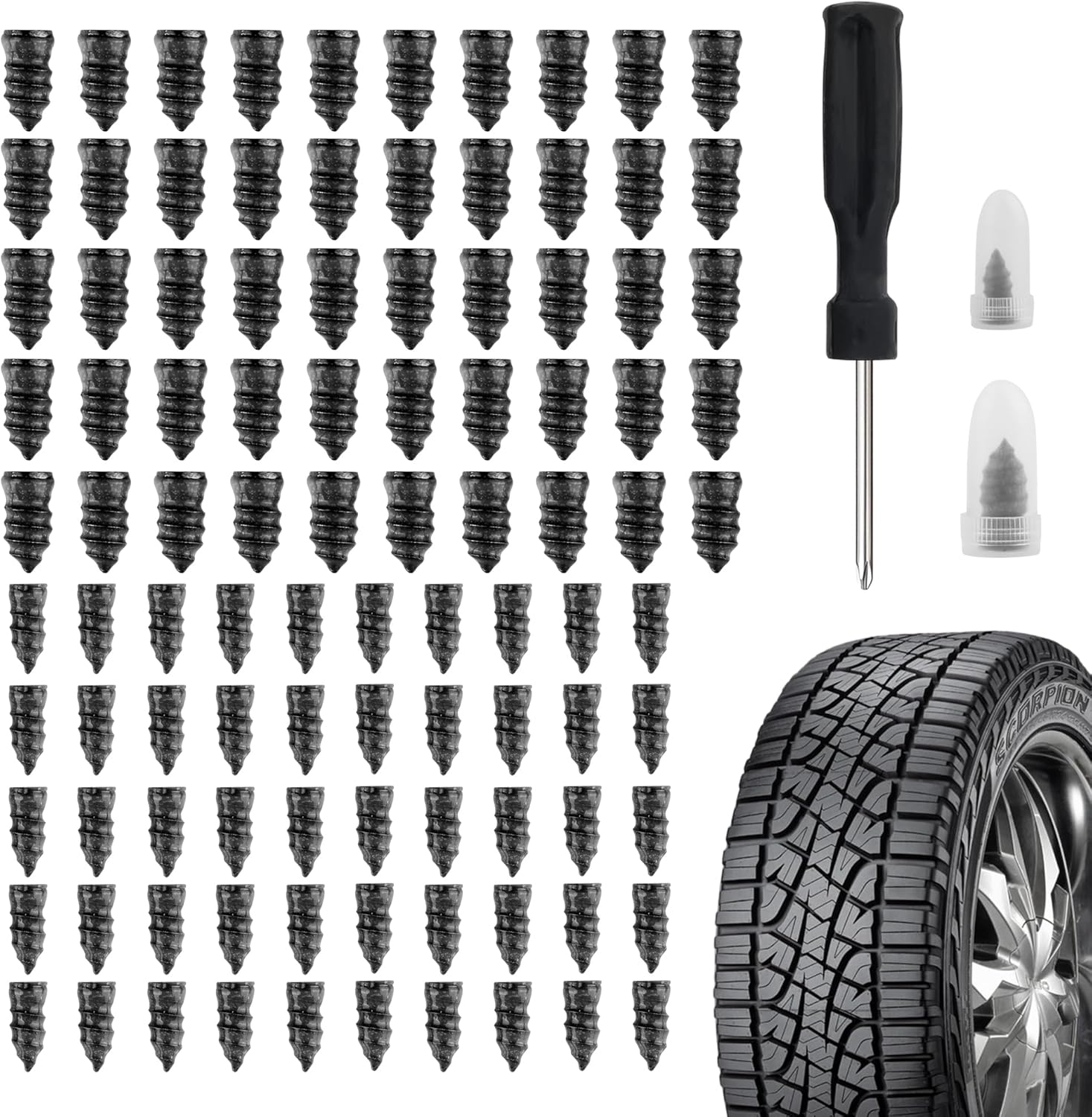
Salior’s tire plug kit provides a fast, reliable self-service fix for punctured or leaking tires without the need for flaring tools. Choose the correct plug size, then screw the nail into the puncture using the included screwdriver for an enhanced seal. The set is durable and convenient for on-the-go maintenance across multiple vehicle types.
Laminated Glass Limits
Laminated automotive glass contains a bonding layer that holds cracked glass together. Windshields use laminated glazing, and laminated side windows are also found on many vehicles.
AAA’s vehicle escape-tool evaluation tested six consumer tools. None penetrated laminated glass sufficiently to create an escape opening, although some cracked it.
- Do not assume a side window is tempered simply because it is not the windshield.
- Identify your vehicle’s glass markings before an emergency.
- If one window is laminated, check another available window because vehicles can use different glass types in different positions.
Escape Tool Options
For ordinary drivers, a spring-loaded breaker should be viewed as a tempered-glass escape tool, not as a universal glass cutter. Professional rescue crews may have specialized extrication equipment, but that equipment is not a realistic substitute for a planned consumer escape route.
If all reachable windows are laminated, your preparation should center on knowing the vehicle’s mechanical releases and alternative openings instead of assuming repeated hammering will solve the problem.
Alternate Exit Routes
Try each practical normal exit that remains usable. A mechanical door release may work even when an electronic door button or powered handle has failed. Your owner’s manual identifies these vehicle-specific releases.
A hatch or sunroof may also be useful if it can be opened normally. Do not assume its glass can be broken with an escape punch; glazing varies by vehicle and location.
Note: Different windows in the same car can use different glazing. A front side window may be laminated while a rear side window is tempered, or vice versa. Check your specific vehicle rather than relying on a general rule.
Break A Car Window Without A Tool
There is no dependable tool-free technique that you should count on for breaking modern automotive glass. Your first moves should be to lower the window, use a mechanical door release, try another door, or move to another operable opening.
A removable headrest is sometimes described as an improvised glass-breaking device, but it is not a standardized emergency tool. Some headrests cannot be removed quickly, their posts may be too blunt, and using one in a confined space can be difficult. Do not make a headrest your primary escape plan.
If you are trapped in an immediate life-threatening emergency, have confirmed that a reachable window is tempered, and have no purpose-built tool, a hard pointed metal object may sometimes concentrate enough force to break the glass. Avoid using your hands, elbows, head, or bare feet because they expose you to serious injury without reliably breaking the window.
The safer preparation is simple: identify a tempered escape window in advance and keep a purpose-built tool securely within reach.
Avoid These Escape Mistakes
The biggest mistakes are the ones that waste your short escape window or depend on an exit that may not work.
- Do not assume every side window is tempered. Check the glass marking before an emergency.
- Do not keep hammering laminated glass with a normal escape punch. Move to another exit.
- Do not focus on the windshield. It is laminated and designed to remain together after impact.
- Do not rely on your headrest as your planned escape tool.
- Do not use your hands, head, elbows, or bare feet to strike glass.
- Do not stop for belongings.
- Do not delay a sinking-car escape to call someone. Get out first and call 911 once safe.
- Do not return to a burning vehicle. Move at least 100 feet away and stay clear of traffic.
- Do not break a rescue window next to a trapped child or pet if another safe window is available.
AAA summarizes its emergency escape approach as S-U-R-E: stay calm, unbuckle, roll down or break an appropriate window, and exit the vehicle quickly.
Frequently Asked Questions
What Can Break a Car Window in an Emergency?
A purpose-built spring-loaded window punch or automotive safety hammer can break compatible tempered glass. Spring-loaded designs performed better than hammer-style tools in AAA testing. Standard consumer escape tools should not be relied on to penetrate laminated glass.
What Device Shatters a Car Window?
A spring-loaded automotive escape punch is designed to concentrate force into tempered vehicle glass. It works only when the glass is compatible; laminated glass may crack while remaining bonded together.
What Shatters a Car Window?
Tempered automotive glass can shatter when a purpose-built pointed escape tool applies concentrated force. Laminated glass behaves differently because an internal bonding layer holds the cracked glass together.
What Tool Do Police Use to Break Car Windows?
Police, firefighters, and rescue crews may use spring-loaded window punches, specialized hand tools, or powered extrication equipment depending on the glass and situation. There is no single universal police window-breaking tool.
Can a Window Breaker Break Laminated Glass?
Do not count on it. AAA tested several consumer escape tools and none penetrated laminated automotive glass enough to make an escape opening. Identify a tempered window or another normal exit instead.
Can You Use a Headrest to Break a Car Window?
You should not rely on a headrest as your planned escape method. Headrests and their mounting posts vary, some do not remove quickly, and the posts are not standardized as glass-breaking tools. A dedicated escape punch is a more dependable choice for known tempered glass.
What Should You Do First If a Car Is Sinking?
Remove seat belts and open a window immediately during the initial floating phase. Get occupants out through the window and help children out before adults. Do not delay escape to make a phone call.
Can You Legally Break a Window to Rescue a Child or Pet?
For a child alone in a dangerous hot vehicle, call 911 immediately; NHTSA says a distressed child should be removed quickly, even when entry requires breaking a window. Pet-rescue laws vary by state and may require specific steps before forcible entry, so follow emergency-dispatch or local-authority instructions whenever circumstances allow.
Conclusion
Breaking a car window should be an emergency measure, not the automatic first step. Try a normal exit or mechanical release first. If glass must be broken, use a purpose-built escape tool on a window you know is tempered and move quickly through the opening.
Modern laminated side glass changes the old advice that any side window is easy to shatter. Know your vehicle before an emergency: locate the manual door releases, identify tempered windows, and keep an escape tool securely within reach. In a sinking car, use the evidence-based sequence of seat belts off, window open, out immediately, and children first. After escaping, move to safety and call 911.
Sources
- AAA — Vehicle Escape Tools Are a Lifesaver in the Right Situation — tempered versus laminated glass and consumer escape-tool testing.
- National Highway Traffic Safety Administration — Child Heatstroke Prevention — emergency response when a child is trapped in a hot vehicle.
- U.S. Fire Administration — Vehicle Fire Safety — evacuation, stand-off distance, and 911 guidance.
- Wilderness Medical Society Clinical Practice Guidelines for Drowning, 2024 Update — current sinking-vehicle escape sequence.
- 49 CFR § 571.205 — Glazing Materials — federal motor-vehicle glazing requirements.
- Animal Legal & Historical Center — State Laws Protecting Animals in Parked Vehicles — state-by-state pet-rescue requirements and immunity rules.
