
Why Toyota Tacoma Speedometer Reads Wrong With Bigger Tires
Installing larger tires on your Toyota Tacoma changes the tire’s overall diameter, which changes how far the truck travels with each wheel rotation. When the new tire is taller than the original tire size, your Tacoma usually travels faster and farther than the speedometer and odometer suggest. The fix starts with comparing the new tire size against the factory size listed on your driver-door tire label, owner’s manual, or official Toyota specification source.
Quick Answer
Larger tires make a Toyota Tacoma speedometer read slower than actual speed because each tire rotation covers more distance. If tire diameter increases by 5%, your real speed is about 5% higher than indicated. Use GPS to confirm the error, then recalibrate with a compatible tool or qualified shop.
Key Takeaways
- Larger tires increase circumference, so your Tacoma covers more ground per wheel rotation.
- A taller tire usually makes the speedometer and odometer read lower than actual speed and distance.
- Percent error is roughly the percent change between original and new tire diameter.
- GPS speed is useful for checking error, but it does not correct the truck’s speedometer or odometer.
- Calibration depends on Tacoma year, trim, tire size, gear ratio, and available tool support.
At a Glance
| Time Required | 10–20 minutes to compare tire sizes and verify speed with GPS |
| Difficulty | Easy for checking error; moderate if using a compatible calibration device |
| Tools Needed | Factory tire size, new tire size, tire calculator, GPS speed display, and a compatible calibrator or qualified shop if correction is needed |
| Cost | Free to check; varies if you buy a calibrator or pay a shop for programming |
Why Larger Tires Affect Speedometer Accuracy
Your Tacoma’s speedometer is based on a programmed tire-size assumption. When the tire’s overall diameter increases, the tire also has a larger rolling circumference. That means each rotation moves the truck farther than the computer expects.
The result is simple: your speedometer usually reads low. If the dash shows 60 mph after a larger tire upgrade, your actual road speed may be several miles per hour higher. The exact difference depends on the original tire size, the new tire size, tread design, inflation pressure, load, and actual rolling radius.
The National Highway Traffic Safety Administration advises choosing replacement tires that match the original tire size or another size recommended by the vehicle manufacturer. For a Tacoma, always verify the tire and loading label on the driver’s doorjamb before assuming a “stock” size.
Note: A tire-size calculator gives a strong estimate, but real rolling circumference can vary because tires flex under vehicle load. Tire makers often publish revolutions-per-mile data for more precise comparisons.
[Products Worth Considering]

Universal magnetic jack pad with aluminum grooved design to protect vehicle pinch welds during lifting. Durable nylon pad inserts are upgraded and secured with screws to resist damage and keep in place. Designed to fit most single vehicle pinpoint welds for safer, stable jacking when changing tires, repairs, or performing oil changes.

Camco Trailer Aid Plus tandem tire ramp lifts your trailer for quick, safe tire changes with ample clearance from its 5 1/2-inch lift. It helps you change a flat tire without unloading cargo, making roadside and routine maintenance more efficient. The heavy-duty, waterproof and rustproof polymer design supports up to 15,000 lb and is built for easy portability and storage.

This spare tire tool kit is designed for the 2004 to 2018 Ford F-150 to help you loosen and tighten wheel lug nuts and manage the spare tire and provided jack functions from underneath the vehicle. It includes the lug nut wrench and extension pieces plus a convenient storage carrying case for organized transport. The jack itself is not included.
How to Calculate Speedometer Error After Larger Tires
You can estimate speedometer error by comparing the original tire diameter to the new tire diameter. Use this basic formula for metric tire sizes:
Actual speed ≈ indicated speed × new tire diameter ÷ original tire diameter.
For tire diameter, use this formula:
Overall diameter in inches = wheel diameter + 2 × (section width × aspect ratio ÷ 25.4)
For example, a 245/75R16 tire is about 30.5 inches tall, while a 265/75R16 tire is about 31.6 inches tall. That is roughly a 3.9% increase, so 60 mph indicated becomes about 62.3 mph actual.
| Example Tire Change | Approx. Diameter Change | 60 mph Indicated | 70 mph Indicated |
| 245/75R16 to 265/75R16 | About +3.9% | About 62.3 mph actual | About 72.7 mph actual |
| 265/70R16 to 285/70R17 | About +6.9% | About 64.1 mph actual | About 74.8 mph actual |
| Any upgrade about 2 inches taller than stock | Often about +6% to +7% | About 64 mph actual | About 74–75 mph actual |
Use these examples as estimates only. Check the specific tire’s published specs when available, especially if you run heavy all-terrain or mud-terrain tires.
How Tire Size Changes Impact Speed and Mileage
The impact of tire size comes from a simple relationship: larger diameter equals fewer wheel rotations per mile. This affects speed readings, odometer tracking, and fuel-economy calculations.
If tire diameter increases by 5%, your Tacoma travels about 5% farther per rotation than the computer expects. Your odometer may undercount miles, and your hand-calculated MPG may look slightly better than it really is because the truck reports fewer miles than you actually drove.
The same change can also affect shift feel on some automatic trucks, especially when tire changes are combined with gear-ratio changes. Hypertech notes that vehicle computers calculate speed based on stock tire diameter, and tire or gear changes can affect speedometer readings and part-throttle shifting.
Speed Sensor and ECU Role in Accuracy
Your Tacoma uses vehicle speed data from wheel or drivetrain speed signals, depending on the generation and system. The ECU and related modules then use programmed assumptions to calculate road speed, distance, shifting behavior, and other functions.
When you install a taller tire, the hardware may still read rotations correctly, but the truck’s programmed tire-size assumption no longer matches the tire on the road. That mismatch creates the speedometer and odometer error.
Wiring issues, sensor faults, ABS faults, or mismatched aftermarket parts can also cause inaccurate readings. However, if the speedometer became wrong immediately after a tire upgrade, tire diameter is the first thing to check.
How to Check Your Tacoma’s Speedometer Error
- Find the original tire size. Check the tire and loading label on the driver’s doorjamb or your Tacoma owner’s manual.
- Confirm the new tire size. Read the sidewall size on the installed tires, such as 265/75R16 or 285/70R17.
- Use a tire calculator. Compare original and new diameter, circumference, and revolutions per mile.
- Check with GPS. On a safe, straight road, compare the dash speed with GPS at steady speeds such as 30, 60, and 70 mph.
- Write down the difference. A 1 mph difference may not matter much, but a 3–5 mph difference at highway speed is worth correcting.
Warning: Do not hold or operate your phone while checking GPS speed. Use a mounted display, a passenger, or a safe GPS device so your attention stays on the road.
Calibration Solutions for Larger Tires
There are three practical ways to handle speedometer error after installing larger tires on a Toyota Tacoma.
1. Plug-In or In-Line Calibration Devices
Vehicle-specific speedometer calibrators can correct speedometer and odometer readings by updating the tire-size or speed-signal calculation. Some tools also account for gear-ratio changes. Before buying one, confirm it supports your exact Tacoma year, engine, transmission, trim, and tire-size range.
2. Professional Programming or Tuning Shop
A qualified Toyota dealer, off-road shop, or tuning shop may be able to help, depending on your Tacoma generation and available software support. Ask whether the change affects speedometer output, odometer tracking, transmission behavior, warranty concerns, or emissions-related settings before approving the work.
3. GPS Speed Check as a Temporary Reference
GPS speed is helpful for confirming the error, but it does not fix the truck. Your dash, odometer, trip meter, and some calculated fuel-economy data may still be off until the system is calibrated.
Pro Tip: Recheck GPS speed after calibration. A successful correction should bring indicated speed and GPS speed much closer at steady highway speeds.
Choosing the Right Calibration Method
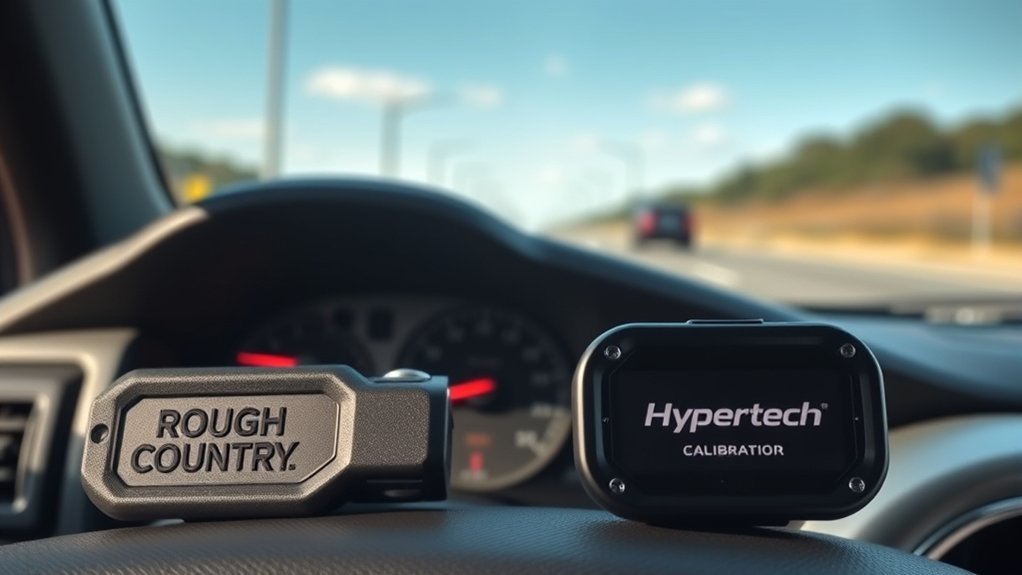
Choose the calibration method based on how large the error is and how you use your Tacoma. If the truck is only off by about 1 mph at highway speed, you may decide to monitor it with GPS. If it is off by 3 mph or more, calibration becomes more useful for speed awareness, trip tracking, and fuel-economy records.
For mild tire upgrades, a compatible calibrator is often the easiest route. For larger tires, gear changes, or complex builds, a qualified shop can check whether calibration, gearing, alignment, clearance, and load rating all work together.
Also check tire load index, speed rating, wheel width, offset, rubbing clearance, spare-tire fitment, and TPMS function. Speedometer correction is only one part of a safe tire upgrade.
Real-World Driving Experiences
Many Tacoma owners notice the difference most clearly at highway speeds. A small diameter increase may only show a 1–2 mph gap. A larger jump, such as moving into a much taller all-terrain setup, can create a 4–5 mph difference around typical highway speeds.
GPS comparison is the simplest way to confirm the error. If your Tacoma reads 70 mph but GPS shows 74 mph, the truck is under-reporting speed by about 5.7%. In that case, recalibration is strongly recommended.
Frequently Asked Questions
Do bigger tires always affect speedometer accuracy?
Yes, if the overall tire diameter changes from the programmed factory size. A taller tire usually makes the speedometer read lower than actual speed, while a shorter tire usually makes it read higher.
How much speed difference can larger tires cause?
The difference is roughly equal to the tire diameter increase. A 5% taller tire makes 60 mph indicated about 63 mph actual. The gap gets larger as speed increases.
Do I need calibration after every tire change?
You do not need calibration if the new tire has the same overall diameter as the original size. Calibration is worth considering when the diameter change creates a noticeable GPS speed difference, especially at highway speeds.
Will larger tires affect my Tacoma odometer?
Yes. If the tires are taller and the truck is not recalibrated, the odometer can undercount mileage because the truck travels farther per rotation than the computer expects.
Can I just use GPS speed instead of recalibrating?
GPS can help you drive at the correct speed, but it does not fix the Tacoma’s speedometer, odometer, trip meter, or calculated fuel-economy data. Calibration is the cleaner fix when the error is significant.
Can a Toyota dealer recalibrate a Tacoma for larger tires?
It depends on the model year, market, software access, and the size change. Some owners use aftermarket calibrators or specialty shops instead. Ask the dealer or shop whether your exact Tacoma supports the correction before scheduling work.
Conclusion
Upgrading to larger tires on your Toyota Tacoma can improve stance, clearance, and off-road capability, but it can also make the speedometer and odometer read low. The larger the tire diameter increase, the larger the error becomes at highway speeds.
Start by checking your original tire size, calculating the percent change, and comparing dash speed with GPS. If the difference is more than a small margin, use a compatible calibrator or qualified shop to bring the truck’s readings back in line with real driving conditions.
Sources
- National Highway Traffic Safety Administration TireWise — replacement tire size, tire label, pressure, tread, and tire safety guidance
- NHTSA FMVSS No. 110 Interpretation — tire placard and original tire size designation context
- Toyota Owner’s Manuals — official Toyota manual lookup for vehicle-specific information
- Discount Tire Tire Size Calculator — diameter, circumference, revolutions-per-mile, and estimated speed comparison
- Tire Rack Revolutions Per Mile Guide — rolling-radius and revolutions-per-mile explanation
- Hypertech Speedometer Calibrator — calibration context after tire-size and gear-ratio changes

Related Articles
How Tire Weight Affects Toyota Tacoma Performance
How does tire weight influence your Toyota Tacoma's performance and efficiency? Discover the surprising effects that could change your driving experience.
Read More
Tire Noise Levels by Tire Type on a Toyota Tacoma
A comprehensive look at how tire types affect noise levels in your Toyota Tacoma reveals surprising insights that could enhance your driving experience.
Read More
How To Choose Tires for a Dual Use Toyota Tacoma
Unlock the secrets to selecting the perfect tires for your dual-use Toyota Tacoma, ensuring optimal performance and comfort on every adventure. Discover more inside!
Read More