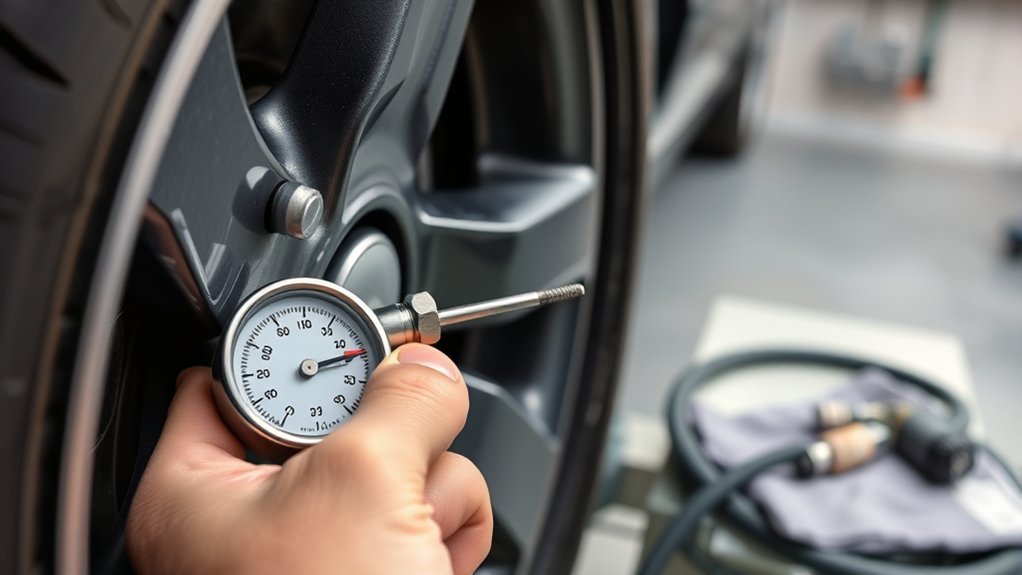
Resetting a tire gauge usually means getting it back to a trustworthy starting point, not magically fixing a worn-out tool. For a digital gauge, you may need to power-cycle it, check the battery, and confirm the unit setting. For an analog or stick gauge, you need to make sure it returns to zero and then compare it with a trusted gauge. Use these steps before you adjust tire pressure, especially before a long drive.
Quick Answer
To reset a tire gauge, clear or zero the gauge, confirm it is set to PSI, bar, or kPa, then test it on a cold tire against a known accurate gauge. If readings still differ by more than 1–2 PSI or keep changing, replace the gauge.
Key Takeaways
- A tire-gauge reset usually means zeroing, clearing, or verifying the gauge, not full professional calibration.
- Check tire pressure when tires are cold, ideally before driving or after the vehicle has been parked for at least three hours.
- Use the tire pressure listed on the driver-side door label or in the owner’s manual, not the maximum pressure on the tire sidewall.
- Compare your gauge with a trusted shop gauge or a second high-quality gauge before relying on it.
- Replace a gauge that has cracked parts, a weak seal, unstable digital readings, or repeated differences you cannot explain.
At a Glance
| Time Required | 5–10 minutes for a basic reset and comparison check |
| Difficulty | Easy |
| Tools Needed | Your tire gauge, a trusted comparison gauge, a clean cloth, and a fresh battery for digital models if needed |
| Cost | Usually free, unless you need a battery or a replacement gauge |
What Does It Mean to Reset a Tire Gauge?
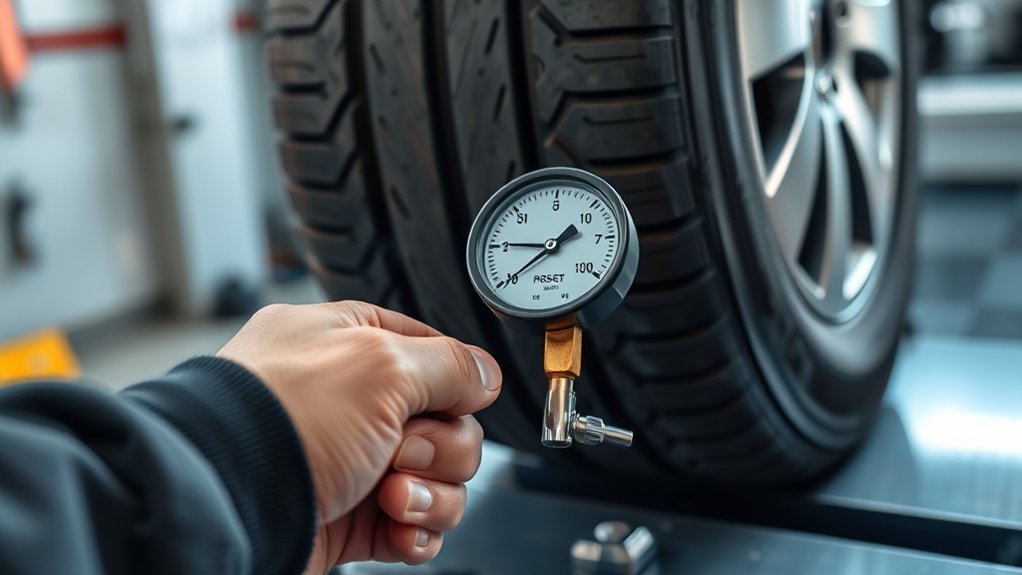
Resetting a tire gauge means returning it to a clean starting point before you measure tire pressure. On a digital tire gauge, that may mean turning it off and on, clearing a stored reading, selecting the right unit, or replacing a weak battery. On an analog dial gauge, it means confirming the needle rests at zero before you use it. On a stick gauge, it means sliding the measuring bar fully back into the body.
That is different from professional calibration. Calibration compares a tool against a known measurement standard and records or corrects the error. For everyday drivers, the practical goal is simpler: make sure your gauge starts at zero, seals tightly on the valve stem, and matches a trusted reference closely enough to guide safe tire inflation.
Note: Many consumer tire gauges do not have a true calibration adjustment. If your gauge cannot be zeroed or verified, replacement is usually safer than guessing.
Before You Reset Your Tire Gauge
Start with the basics so you do not blame the gauge for a bad test. Park on level ground, let the tires cool, and find the recommended pressure on the driver-side door label or in your owner’s manual. The National Highway Traffic Safety Administration recommends checking all tires, including the spare, at least once a month when tires are cold.
- Wipe dirt from the gauge nozzle.
- Check the valve stem for damage or debris.
- Confirm the gauge reads the unit you want, such as PSI, bar, or kPa.
- Keep the gauge straight on the valve stem to avoid air leaks.
- Test the same tire twice to see whether the reading repeats.
Warning: Do not use the maximum pressure printed on the tire sidewall as your target. Use the vehicle manufacturer’s recommended cold pressure from the door label or owner’s manual.
Check Your Tire Gauge Against a Trusted Source
The fastest way to judge gauge accuracy is to compare it with a known reliable gauge. Use a professional shop gauge, a calibrated inflator gauge, or a second high-quality gauge that you trust. Test the same tire under the same conditions, and take both readings back to back.
Compare to a Shop or Reference Gauge
Ask a tire shop or automotive service center to check one tire with its shop gauge, then measure the same tire with your gauge. A small difference can happen, but a repeated 1–2 PSI difference should make you cautious. A larger difference means you should stop relying on your gauge until you verify it again or replace it.
- Use the same tire for both readings.
- Measure when the tire is cold when possible.
- Keep the gauge straight on the valve stem.
- Write down the readings so you can spot drift over time.
- Replace the gauge if the error changes from test to test.
Use Door Jamb PSI
Your door label gives the vehicle manufacturer’s recommended cold tire pressure. FuelEconomy.gov also notes that the proper tire pressure is usually on a sticker in the driver-side door jamb, glove box, or owner’s manual, and that you should not use the maximum pressure printed on the tire sidewall.
Use that placard pressure as your target after you know the gauge is reliable. If the placard lists different front and rear pressures, follow those separate values instead of making all four tires match.
Check When Tires Are Cool
Check pressure before driving or after the vehicle has been parked long enough for the tires to cool. NHTSA defines cold tires as tires that have not been driven on for at least three hours. Warm tires can show higher pressure because driving builds heat, so a warm reading may mislead you.
Pro Tip: Keep a small notebook or phone note with your gauge comparison results. If the same gauge slowly drifts over months, you will catch the problem before it affects all four tires.
Clean and Inspect the Gauge First
Wipe the nozzle and body with a soft cloth before you reset or test the gauge. Dirt, road grit, moisture, or a damaged seal can cause air to escape while you measure. That leak can make a good tire look low or make the gauge seem inaccurate.
Inspect the casing, display, dial, hose, and valve interface. Replace the gauge if you see a cracked body, a bent stem, a sticky needle, missing seals, or a display that fades in and out. If the gauge was dropped hard, compare it with a trusted gauge before you use it again.
Reset and Check an Analog Tire Gauge
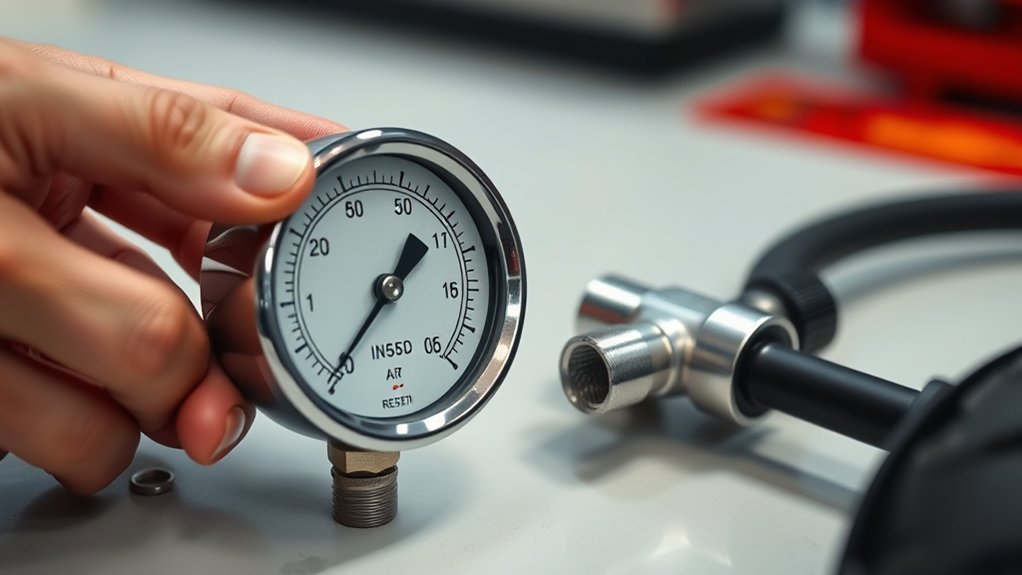
An analog dial gauge should rest at zero when it is not connected to a tire. If it does not, check whether your model has a zero-adjust screw or reset feature. Do not force or bend the needle unless the manufacturer specifically instructs you to do so.
Check Gauge Accuracy
Press the gauge firmly onto the valve stem and take two readings from the same cold tire. The readings should be close. Then compare your gauge with a trusted shop gauge or another known-good gauge. If your gauge is always off by the same small amount, you may be able to account for that offset temporarily, but replacement is still the better choice for routine use.
- Make sure the needle starts at zero.
- Listen for air leaks at the valve stem.
- Repeat the reading on the same tire.
- Compare with a trusted reference.
- Replace the gauge if readings jump around.
Zero the Needle Only If the Gauge Allows It
Some dial gauges include a small zero adjustment. If yours does, follow the manufacturer’s instructions and bring the needle back to zero before testing. If your gauge does not include an adjustment, do not pry open the case or bend the needle. That can damage the mechanism and make the tool less accurate.
Verify Against a Standard
After zeroing the gauge, verify it against a reliable standard. A professional shop gauge or a properly maintained reference gauge gives you a better comparison than a random gas-station inflator. Test at least one tire twice. If the analog gauge will not repeat the same reading, retire it.
Reset Digital Tire Gauges
Resetting a digital tire gauge usually starts with turning it off and back on. If your model has a reset, clear, or calibration button, follow the manual for that exact model. Digital gauges vary, so one button sequence may not work on another gauge.
Next, confirm the unit setting. A gauge set to bar or kPa can look wildly wrong if you expected PSI. Replace the battery if the screen is dim, slow, or inconsistent. Weak power can create unstable readings that look like a pressure problem.
- Turn the gauge off and back on.
- Clear any stored reading if your model saves one.
- Set the unit to PSI, bar, or kPa as needed.
- Install a fresh battery if readings flicker or drift.
- Compare the reading with a trusted gauge.
[Products Worth Considering]

The AICEL TPMS relearn tool helps you quickly reset or relearn tire pressure sensors after replacement, tire rotation, or resolving tire pressure alarms. It provides an activation reset function so your vehicle’s TPMS can operate optimally, saving time and money on frequent visits to an auto shop. Designed for easy use on most vehicles, it works by placing the tool near the valve stem and using the learn button.
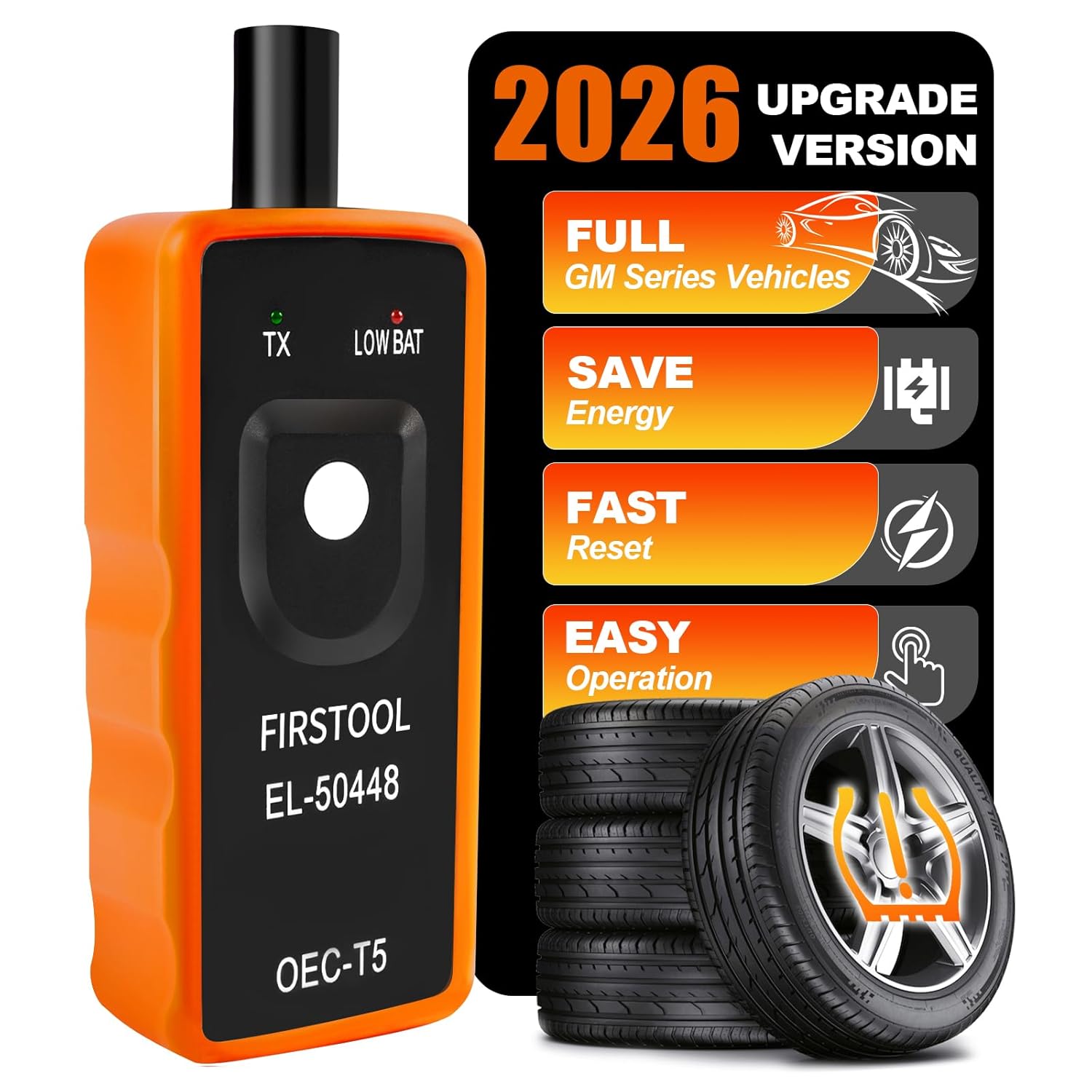
This TPMS relearn tool helps you quickly activate, match, and reset GM tire pressure sensors to keep the vehicle monitoring system working properly. It clears tire pressure alarms and dashboard warning lights after sensor replacement or tire rotation, and supports learning for common 315/433 MHz TPMS sensors. Designed for simple one-button operation, it can help you avoid unnecessary trips to repair shops.

AstroAI’s calibrated digital tire pressure gauge delivers precise readings across a 0–150 PSI range, with high clarity from a backlit LCD. Built for everyday road use, it features one-button operation, an anti-slip ergonomic grip, and support for multiple pressure units plus auto shutoff. Powered by AAA batteries, it’s an all-weather essential for checking tire health and TPMS warnings.
Reset a Stick or Pencil-Style Tire Gauge
A stick gauge has a sliding bar that pops out when air pressure pushes against it. To reset it, push the bar fully back into the gauge body before each reading. Make sure the bar moves smoothly and does not stick.
If the printed scale is worn, the bar bends, or the gauge gives different results each time, replace it. Stick gauges are inexpensive, but they can become unreliable after grit, impact, or long storage in a hot vehicle.
[Products Worth Considering]

The TYAMATE TM8 solar-powered wireless TPMS delivers real-time tire pressure and temperature monitoring with six alarm modes for safer driving. A vibrant color LCD display shows readings clearly while windshield mounting keeps it hands-free and easy to read. With a wide 0–87 PSI range, strong 433.92 MHz signal transmission, and quick sensor pairing, it’s ideal for RV, sedan, SUV, MPV, and truck use.

Keep your tires properly inflated with this analog VONDIOR tire pressure gauge, designed for fast, easy readings without batteries. The swiveling, two-axis hose and large glow dial help you measure at any tire angle with instant visibility. Built with a protective rubber shield, it supports durable, low-maintenance use for cars and trucks.

Milton S-921 pencil tire pressure gauge helps you maintain optimal tire pressure for passenger cars with accurate readings in PSI and kPa. It features a built-in deflator valve for convenient pressure adjustments, plus a single chuck head and nylon indicator bar for easy use on the go. Built from durable plated brass and designed for reliable performance, it’s a practical road trip and cold-weather maintenance tool.
When to Recheck Tire Gauge Accuracy
Recheck your gauge every few months, before long trips, after a hard drop, and after major temperature swings. You should also verify it anytime your reading does not match what you see, feel, or get from your vehicle’s TPMS display.
A tire-pressure gauge is only useful when it repeats the same reading and matches a trusted reference closely enough to guide safe inflation.
- Every few months: compare it with a trusted gauge.
- After a drop: inspect the body, nozzle, and display.
- Before a road trip: verify readings before setting all four tires.
- After weather changes: check cold pressure again.
- When TPMS alerts appear: measure each tire manually.
Signs Your Tire Gauge Is Off
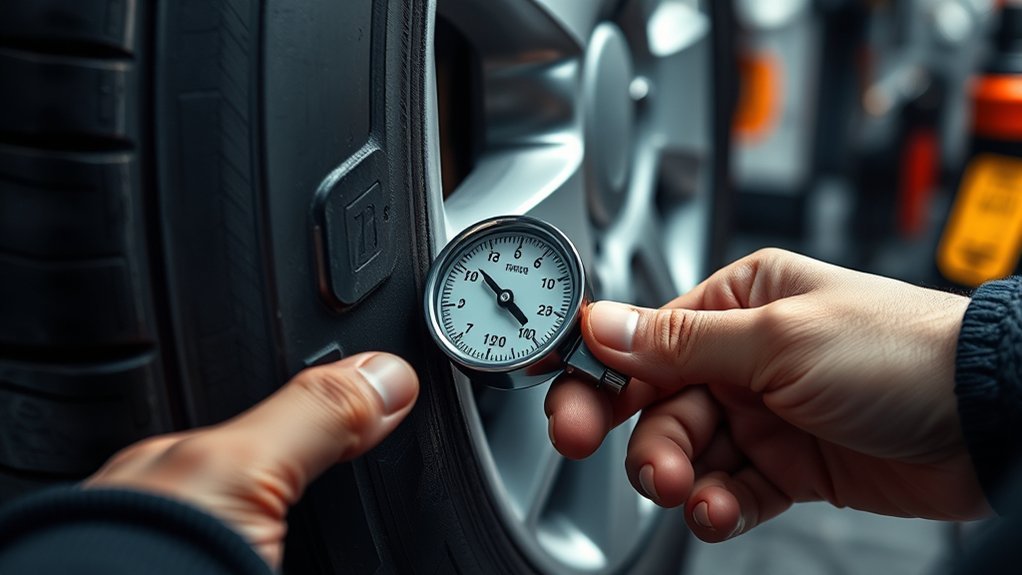
A bad gauge can make every tire check harder. Watch for readings that change each time you test the same tire, a needle that sticks, a digital display that flickers, or a nozzle that leaks air. These signs mean you should verify the gauge before you adjust tire pressure.
| Sign | What to check | Best fix |
|---|---|---|
| Inconsistent readings | Test the same tire two or three times | Compare with a trusted gauge |
| Needle does not return to zero | Look for a zero-adjust feature | Zero it if allowed or replace it |
| Digital display flickers | Battery and display contacts | Replace the battery |
| Air leaks during measurement | Nozzle angle, seal, and valve stem | Clean or replace the gauge |
| Large mismatch with TPMS or shop gauge | Gauge accuracy and tire temperature | Retest cold, then replace if needed |
How Temperature Affects Accuracy
Temperature affects tire pressure, so timing matters. Cold weather can lower pressure, while heat from driving can raise it. That is why NHTSA says the recommended pressure is a cold tire pressure and that you should measure when the tires have not been driven on for at least three hours.
If you check a tire right after driving, do not bleed air just because the pressure looks slightly above the placard number. The tire may simply be warm. Recheck when cold, then adjust to the recommended pressure.
Warning: If a tire looks very low, is damaged, or loses pressure quickly, do not rely on a gauge reset to solve the problem. Inspect for a puncture, valve leak, bead leak, or sidewall damage before driving.
Store Your Tire Gauge the Right Way
Store your tire gauge in a cool, dry place where it will not get crushed, soaked, or baked by direct sunlight. A glove box can work for convenience, but long-term heat and moisture can shorten the life of some gauges. A protective pouch or case helps keep dirt out of the nozzle and protects the display or dial.
Dry Storage
Moisture can corrode internal parts and damage digital contacts. Wipe the gauge before storage, especially if you used it in rain, snow, mud, or a dusty shop. Keep the nozzle covered when possible.
Protect the Dial or Display
Do not toss the gauge loose into a toolbox with heavy sockets or metal parts. Impact can bend an analog needle, crack a digital screen, or damage the valve fitting. Store it where it will not be hit or compressed.
Check Accuracy Regularly
Even with good storage, a gauge can drift. Compare it with a trusted gauge every few months. If you use it for towing, long trips, off-road driving, or repeated pressure changes, check it more often.
Replace Your Tire Gauge When Needed
Replace your tire gauge when you can no longer trust it. A small cost for a reliable gauge is better than setting all four tires from a bad reading. FuelEconomy.gov notes that properly inflated tires can improve gas mileage and that underinflated tires can reduce gas mileage, so accurate readings affect both safety and operating cost.
Replace the gauge if it has a cracked body, bent stem, sticky needle, weak seal, unreadable scale, flickering display, or readings that differ from a trusted gauge again and again. If your digital gauge needs new batteries constantly, replacement may also make sense.
[Products Worth Considering]
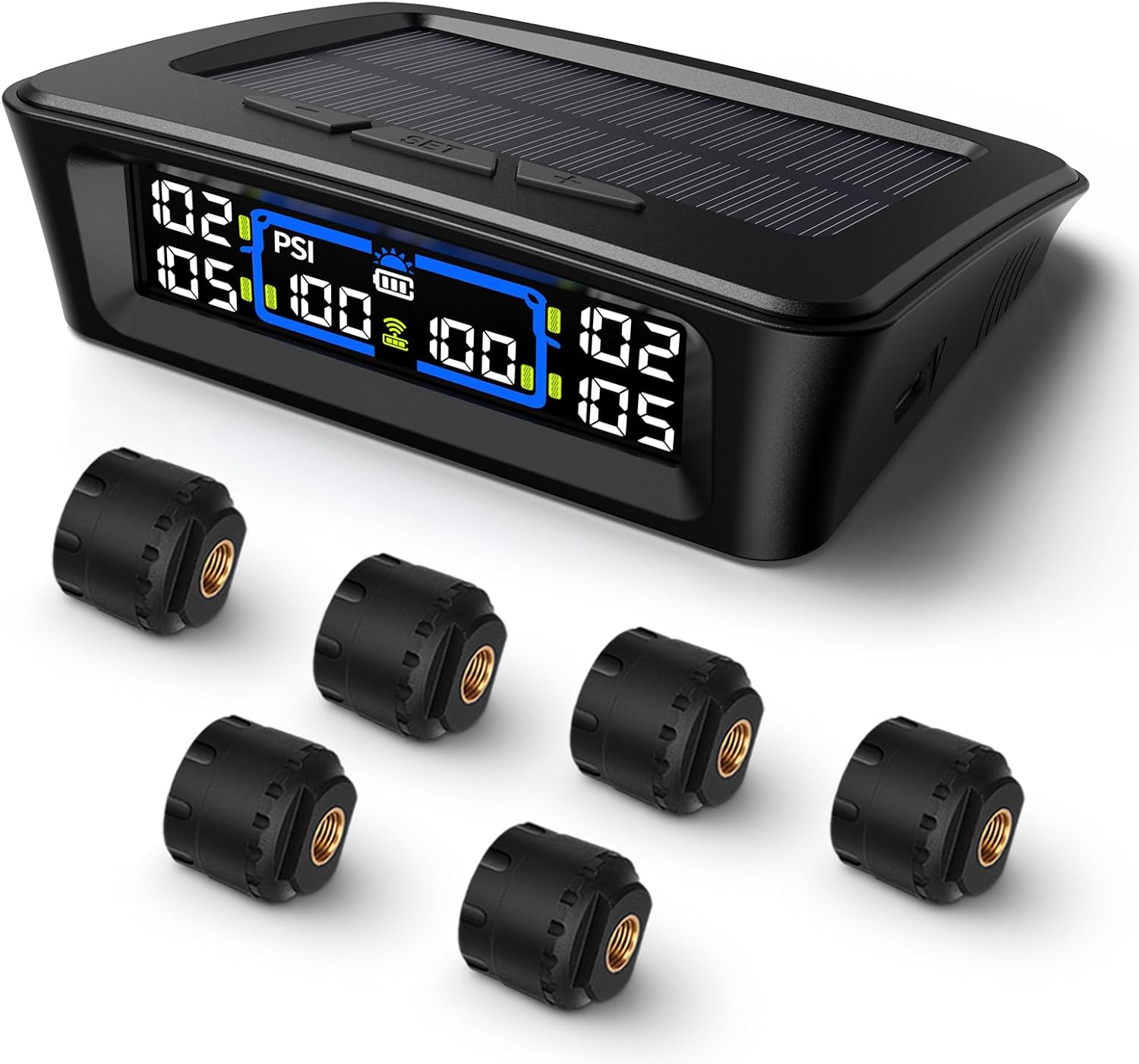
The Tymate TM12 RV TPMS delivers real-time tire pressure and temperature monitoring with a stable 433Hz display for safer long-distance driving. It supports simultaneous monitoring across vehicle and trailer zones, includes six alarm modes for pressure, temperature, leakage, battery, and signal loss, and features easy DIY installation with auto calibration. Power is supplied via USB-C charging or solar recharging, with a wide 0–144 PSI range and up to 50 ft signal coverage for RVs and towable trailers.

The UYYE TPMS relearn tool helps activate and relearn tire pressure monitor sensors quickly, typically in minutes. It supports TPMS learn mode resetting using a simple three-step process: enter learn mode, position the tool near the valve stem, and press the learn button. Designed for specific GM models, it streamlines sensor programming and reduces trips to dealers or tire shops.

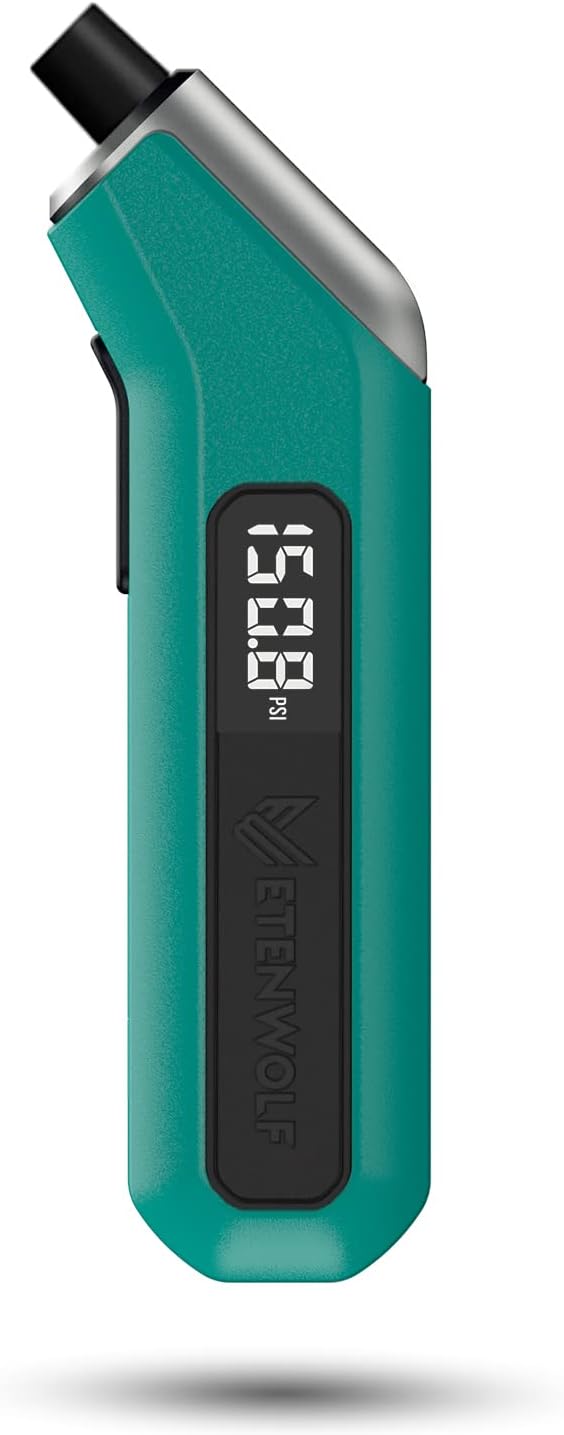
The ETENWOLF T500 digital tire pressure gauge with inflator delivers accurate readings across a wide 0–250 PSI range, calibrated to ANSI B40.7 Grade 2A. An all-in-one tool combines gauge, air chuck, hose, inflating and controlled bleed for checking, inflating, and deflating tires on many vehicle types. It’s built for reliable use in extreme temperatures and features an illuminated backlit display with replaceable AAA batteries for convenient operation.
Tire Gauge Reset vs. TPMS Reset
A tire gauge reset and a TPMS reset are not the same thing. A tire gauge is the handheld tool you use to measure air pressure. TPMS is the vehicle’s tire pressure monitoring system. Federal rules require TPMS to warn drivers when one or more tires become significantly underinflated, but TPMS is not a replacement for regular manual checks.
Some vehicles have a physical TPMS reset button. Others use an infotainment menu. Some systems reset only after you drive for a short period. Always follow the owner’s manual, because the wrong reset process can leave the warning light on or make the system learn the wrong baseline.
Frequently Asked Questions
Can AutoZone reset TPMS?
Some auto-parts stores may help check TPMS-related issues or sell TPMS tools, but reset help can vary by location, vehicle, and staff availability. Call your local store first. For sensor replacement, relearn procedures, or a flashing TPMS malfunction light, a tire shop or dealer is often the safer choice.
How do you calibrate a tire pressure gauge at home?
For most consumer gauges, you do not truly calibrate the gauge at home. You verify it. Check that it starts at zero, measure a cold tire, then compare the result with a trusted shop gauge or a second known-good gauge. If the readings do not repeat or the difference keeps changing, replace the gauge.
Why is my tire gauge reading wrong?
Your tire gauge may read wrong because the nozzle is leaking, the tire is warm, the unit setting is wrong, the battery is weak, the gauge was dropped, or the internal mechanism has worn out. Clean it, reset or zero it, check the units, and compare it with a trusted gauge.
Where is the TPMS reset button located?
The TPMS reset button is often under the dashboard, near the steering column, in the glove box, or inside the vehicle settings menu. Location and procedure vary by vehicle, so check the owner’s manual. If the warning light flashes for about a minute and then stays on, the system may have a malfunction.
Should I trust TPMS or my tire gauge?
Use both, but do not treat TPMS as a substitute for manual checks. TPMS warns you when pressure is significantly low or when the system detects a problem. A reliable handheld gauge helps you set each tire to the recommended cold pressure before the warning threshold is reached.
How far off can a tire gauge be before I replace it?
If your gauge is consistently more than 1–2 PSI away from a trusted gauge, or if the difference changes every time you test, replace it. A stable small offset is easier to spot, but an unpredictable gauge is not worth using for tire maintenance.
Conclusion
Resetting your tire gauge starts with a simple goal: make sure the tool gives repeatable, trustworthy pressure readings. Zero the gauge if your model allows it, clear or power-cycle a digital gauge, check the battery and unit setting, then compare it with a trusted reference.
If the gauge leaks, drifts, sticks, or disagrees with a reliable source, replace it. Accurate pressure checks help you set your tires to the vehicle’s recommended cold pressure, protect tire life, and avoid relying on guesswork.
Sources
- National Highway Traffic Safety Administration TireWise — supports cold tire-pressure checks, door-label pressure guidance, monthly inspection, TPMS limits, and tire safety context.
- 49 CFR 571.138, Tire Pressure Monitoring Systems — supports TPMS warning threshold, malfunction behavior, and owner-manual reset context.
- FuelEconomy.gov, Keeping Your Vehicle in Shape — supports proper inflation, fuel economy, tire life, and door-jamb pressure guidance.
- National Institute of Standards and Technology Calibrations — supports the distinction between casual gauge reset/verification and formal measurement calibration.