How to Use a Tire Pressure Gauge Correctly: Analog vs Digital Tips
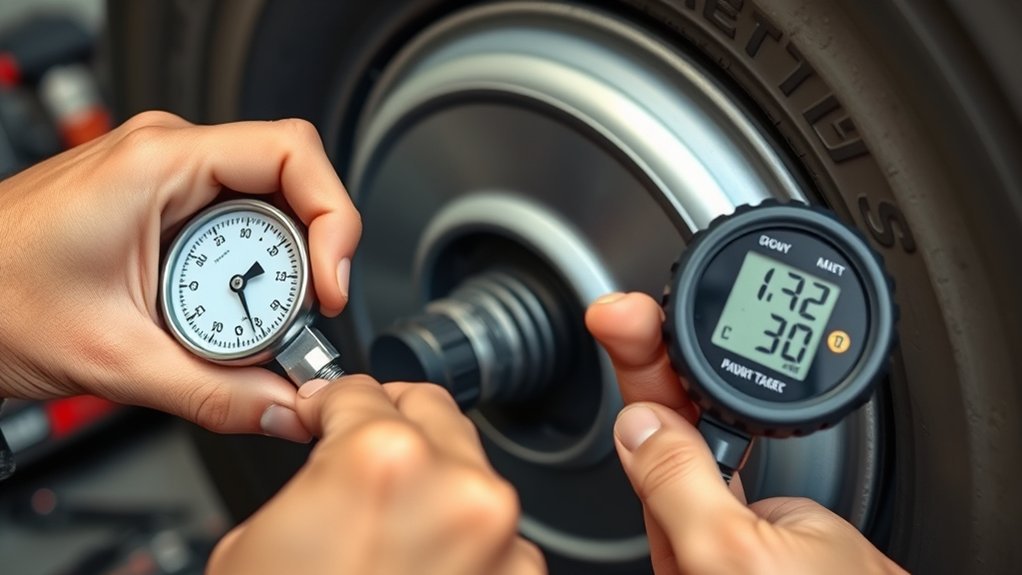
Using a tire pressure gauge is a simple maintenance habit that helps your tires wear evenly, supports fuel economy, and lowers the risk of driving on an underinflated tire. The key is to check pressure when the tires are cold, compare the reading with the vehicle manufacturer’s recommended PSI, and adjust each tire carefully.
Quick Answer
To use a tire pressure gauge correctly, check your tires when they are cold, remove the valve cap, press the gauge firmly onto the valve stem, read the PSI, and adjust the tire to the pressure listed on your driver-door placard or owner’s manual—not the maximum PSI printed on the tire sidewall.
Key Takeaways
- Use the vehicle manufacturer’s recommended cold tire pressure, usually found on the driver-side door placard or in the owner’s manual.
- Check tires when they are cold, ideally after the vehicle has been parked for at least three hours.
- Check every tire, including the spare if your vehicle has one.
- A tire pressure monitoring system is helpful, but it is not a replacement for routine checks with a gauge.
- If a tire keeps losing air, have it inspected for a puncture, valve leak, wheel damage, or tire damage.
At a Glance
| Time Required | 5–10 minutes |
| Difficulty | Easy |
| Tools Needed | Tire pressure gauge, air compressor or tire inflator, and the vehicle’s recommended PSI |
| Cost | Usually low cost for a basic gauge; air may be free or paid depending on the station |
Understanding the Importance of Tire Pressure for Vehicle Safety
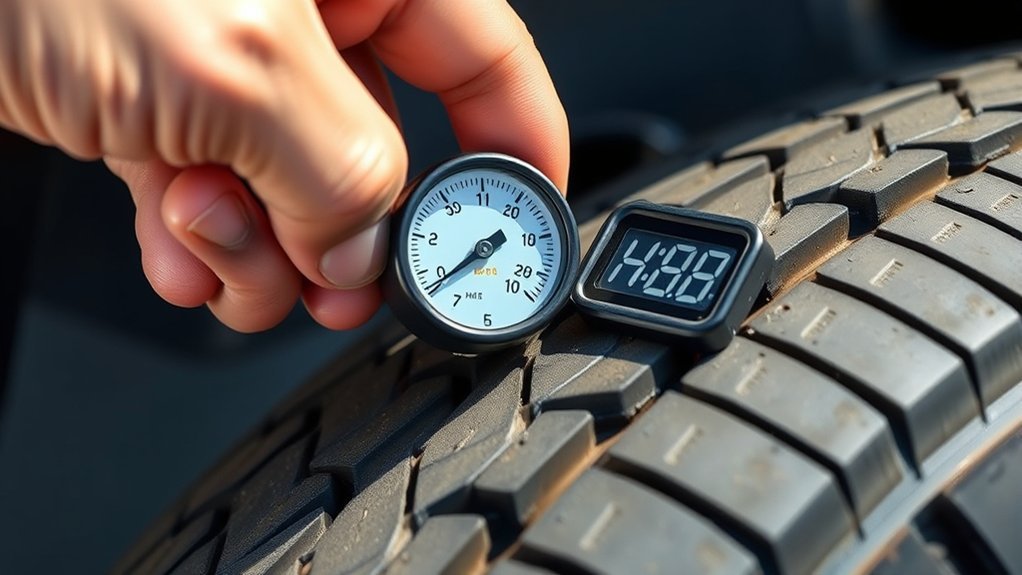
Tire pressure affects how your vehicle handles, brakes, rides, and wears its tires. According to the National Highway Traffic Safety Administration, proper tire pressure is one of the most important parts of tire maintenance because it affects safety, durability, and fuel consumption.
Underinflated tires can flex more than they should, build extra heat, wear unevenly, and reduce fuel economy. FuelEconomy.gov says underinflated tires can lower gas mileage by about 0.2% for every 1 PSI drop in the average pressure of all tires, while proper inflation can improve mileage by 0.6% on average and up to 3% in some cases.
A tire can look normal and still be underinflated. Use a gauge rather than judging pressure by appearance.
[Products Worth Considering]

EVOULTES heavy duty tire inflator with an integrated gauge delivers accurate pressure readings from 10–120 PSI, helping you inflate, deflate, and check tires in one tool. The 16.5-inch extended dual-head air chuck with swivel base reaches hard-to-access dual wheel valves on trucks and RVs. A brass trigger core and side-mounted air release valve make operation smooth, with standard 1/4" NPT threading and quick-connect compatibility for easy setup.

This portable cordless tire inflator delivers up to 160 PSI with fast 17 L/min airflow to help you quickly top up tires and get back on the road. It features dual power mode, running on a 21V rechargeable battery or a 12V DC adapter for convenient roadside use. An automatic shut-off with digital pressure gauge helps prevent overinflation, and a built-in LED light improves visibility in low-light conditions.

The JACO FlowPro Tire Inflator measures, inflates, and airs down tires up to 100 PSI with battery-free operation and ±2% accuracy after calibration. It features a glowing pressure dial for night visibility, a heavy-duty steel build with a hybrid hose, and a precision push-to-inflate thumb trigger. The patented Lightning Air Chuck locks on for a secure seal, and the kit includes quick-connect hardware for easy inline use with your air compressor.
Find the Correct Tire Pressure Before You Start
Before using a tire pressure gauge, find the correct PSI for your vehicle. The right number is the vehicle manufacturer’s recommended cold tire pressure, not the maximum pressure printed on the tire sidewall.
Look for the recommended PSI in these places:
- Driver-side door placard: Most vehicles list the correct front and rear tire pressure on a Tire and Loading Information Label near the driver-side door edge or B-pillar.
- Owner’s manual: The manual may include normal-load and full-load tire pressure information.
- Manufacturer support: For Toyota vehicles, Toyota tells owners to check the Specifications section of the owner’s manual or the Tire Information placard usually attached to the driver-side door post.
Warning: Do not inflate tires to the maximum PSI shown on the tire sidewall unless your vehicle manufacturer specifically instructs it. The sidewall number is a tire limit, not the normal operating pressure for your vehicle.
Analog vs. Digital Tire Pressure Gauges: What’s the Difference?
Analog and digital tire pressure gauges do the same job, but they display the reading differently. A third option, the stick or pencil-style gauge, is also common.
| Gauge Type | Best For | Watch Out For |
| Analog dial gauge | Battery-free use, clear dial readings, garage use | Needle can be harder to read in low light; accuracy depends on gauge quality and calibration |
| Digital gauge | Easy reading, low-light checks, quick PSI display | Needs batteries; very cold weather or weak batteries may affect operation |
| Stick or pencil gauge | Glove-box backup, simple emergency checks | Small scale can be harder to read precisely |
For routine car care, choose a gauge that is easy for you to read and use consistently. Gauge accuracy varies by model, scale, and construction. The ASME B40.100 pressure gauge standard covers dial and digital pressure gauge terminology, test procedures, and recommendations, but everyday buyers should also check the specific gauge manufacturer’s stated accuracy.
Using Your Analog Tire Pressure Gauge: A Step-by-Step Guide
Using your analog tire pressure gauge correctly is key to getting accurate readings. Start with cold tires, make a firm connection with the valve stem, and read the dial straight on.
Proper Gauge Handling Techniques
- Park safely: Park on a level surface, set the parking brake, and let the tires cool if you have been driving.
- Remove the valve cap: Keep the cap in your pocket or another safe spot so it does not roll away.
- Press the gauge straight onto the valve stem: A brief hiss can happen, but a continuing hiss means the seal is not tight. Re-seat the gauge and try again.
- Read the dial: Look straight at the needle to avoid reading the scale from an angle.
- Write down the PSI: Compare it with the pressure listed on the door placard or owner’s manual.
Ensuring Accurate Readings
For the most accurate reading, check tire pressure when the tires are cold. NHTSA defines cold tires as tires that have not been driven on for at least three hours. If you must check pressure after driving, use the reading only as a temporary guide and recheck when the tires are cold.
If the reading is below the recommended PSI, add air. If it is above the recommended PSI, release air by gently pressing the center pin inside the valve stem, then check again.
Pro Tip: Check pressure twice if the first reading seems unusual. A crooked gauge connection is one of the most common causes of a bad reading.
Maintaining Your Gauge
Maintaining your tire pressure gauge helps it deliver consistent readings. Keep it clean, dry, and protected from hard drops. For digital gauges, replace weak batteries promptly. For dial gauges, compare the reading against a trusted gauge occasionally, especially after rough handling.
Using a Digital Tire Pressure Gauge: Step-by-Step
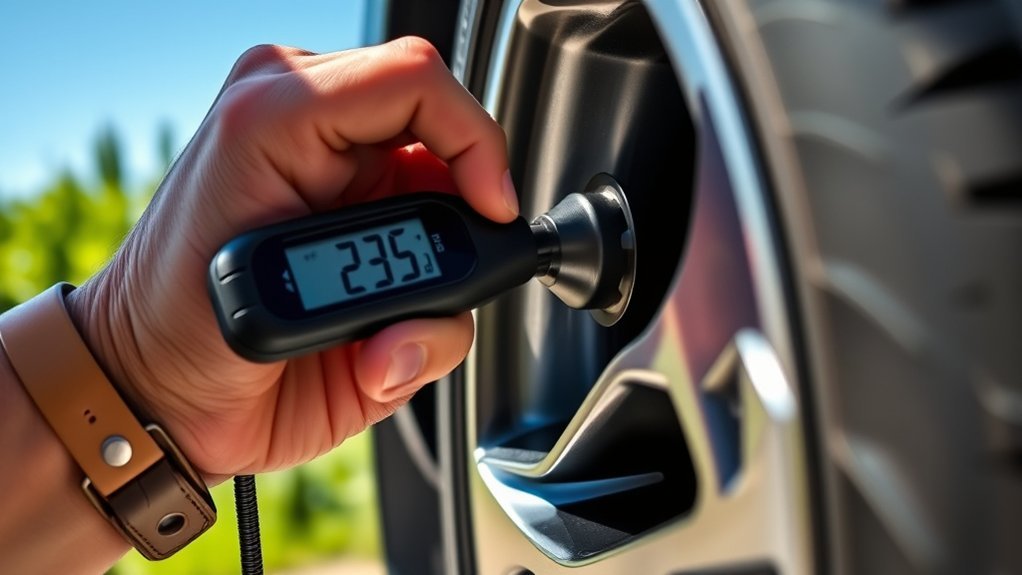
Using a digital tire pressure gauge is straightforward once you are prepared. Make sure the valve stem is clean, attach the gauge firmly, and wait for the display to stabilize.
Preparing For Measurement
- Find the recommended PSI: Check the driver-door placard or owner’s manual before measuring.
- Check when cold: Measure before driving or after the vehicle has been parked for at least three hours.
- Inspect the valve stem: Wipe away dirt so the gauge can seal correctly.
- Turn on the gauge: Make sure the display is active and set to PSI if your gauge has multiple units.
Operating The Gauge
- Remove the valve cap.
- Press the gauge firmly onto the valve stem. Keep it straight to prevent air leakage.
- Wait for the number to settle. Most digital gauges display the reading within a second or two.
- Compare the reading with the recommended PSI.
- Add or release air as needed.
- Recheck the pressure. Repeat until the tire matches the recommended cold pressure.
- Replace the valve cap. The cap helps keep dirt and moisture out of the valve.
How to Adjust Tire Pressure After Checking
After you measure the tire pressure, the next step is adjusting it correctly.
If the Pressure Is Too Low
- Note how many PSI the tire is below the recommended pressure.
- Add air in short bursts with an air compressor or tire inflator.
- Remove the inflator and recheck with your own gauge.
- Repeat until the tire reaches the recommended PSI.
If the Pressure Is Too High
- Use the gauge tip or a small valve tool to press the center pin inside the valve stem.
- Release air in short bursts.
- Recheck the pressure after each release.
- Stop when the tire matches the recommended PSI.
Note: Front and rear tires may require different PSI on some vehicles. Match each tire to the placard, not to the pressure of the tire beside it.
How Temperature Affects Tire Pressure
Tire pressure changes with temperature because air expands when heated and contracts when cooled. Tire Rack explains that cold inflation pressure should be checked before driving, before rising ambient temperatures, or before sun heat affects the tire.
As a practical rule, tire pressure often changes by about 1 PSI for every 10°F change in air temperature. That means a tire that was correct in warm weather may read low after a cold night.
If you inflate a warm tire because it is visibly low or unsafe to drive, set it to the recommended cold pressure as a temporary fix, then recheck and adjust when the tire is cold.
How to Keep Your Tire Pressure Gauge in Top Shape
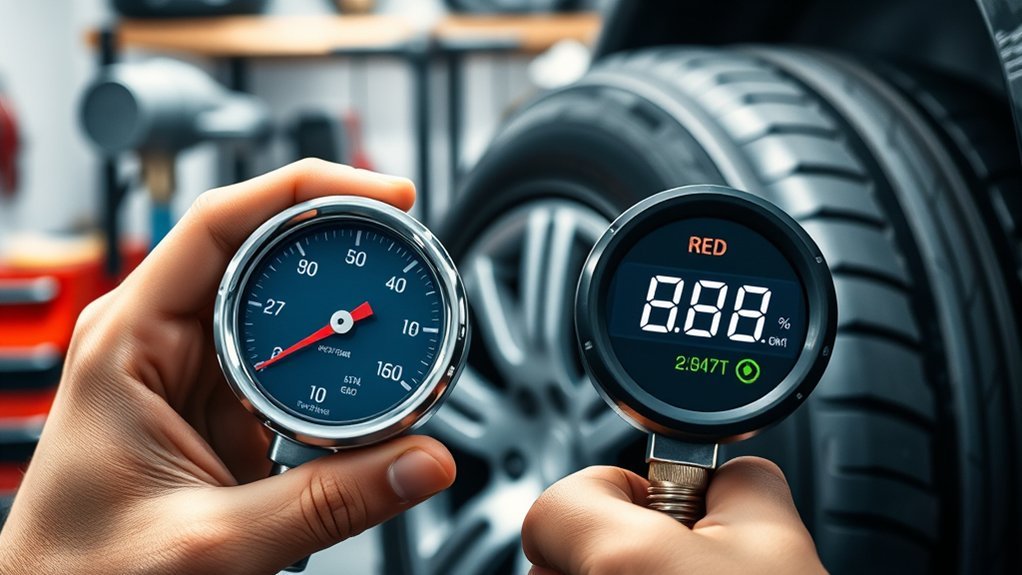
A well-maintained tire pressure gauge is essential for accurate readings and reliable tire care. To keep your gauge in top shape:
- Store it properly: Keep the gauge in a clean, dry place such as a glove box, tool drawer, or protective case.
- Keep the nozzle clean: Dirt in the nozzle can prevent a tight seal on the valve stem.
- Protect it from impact: Dropping a gauge can affect its accuracy.
- Check batteries: Replace digital gauge batteries when the display fades, flickers, or responds slowly.
- Compare readings occasionally: If your gauge suddenly reads several PSI different from a trusted gauge, replace or recalibrate it.
[Products Worth Considering]

The Fanttik X10 Pro is a cordless portable tire inflator that reaches up to 150 PSI and can inflate an R15 tire in about 35 seconds for quick roadside or home top-ups. With AccuInFlate auto-stop and smart start/stop controls, it helps maintain accurate pressure and frees your hands once the target is reached. A high-visibility digital display and preset modes make it easy to set and monitor inflation for cars, motorcycles, bikes, and balls.
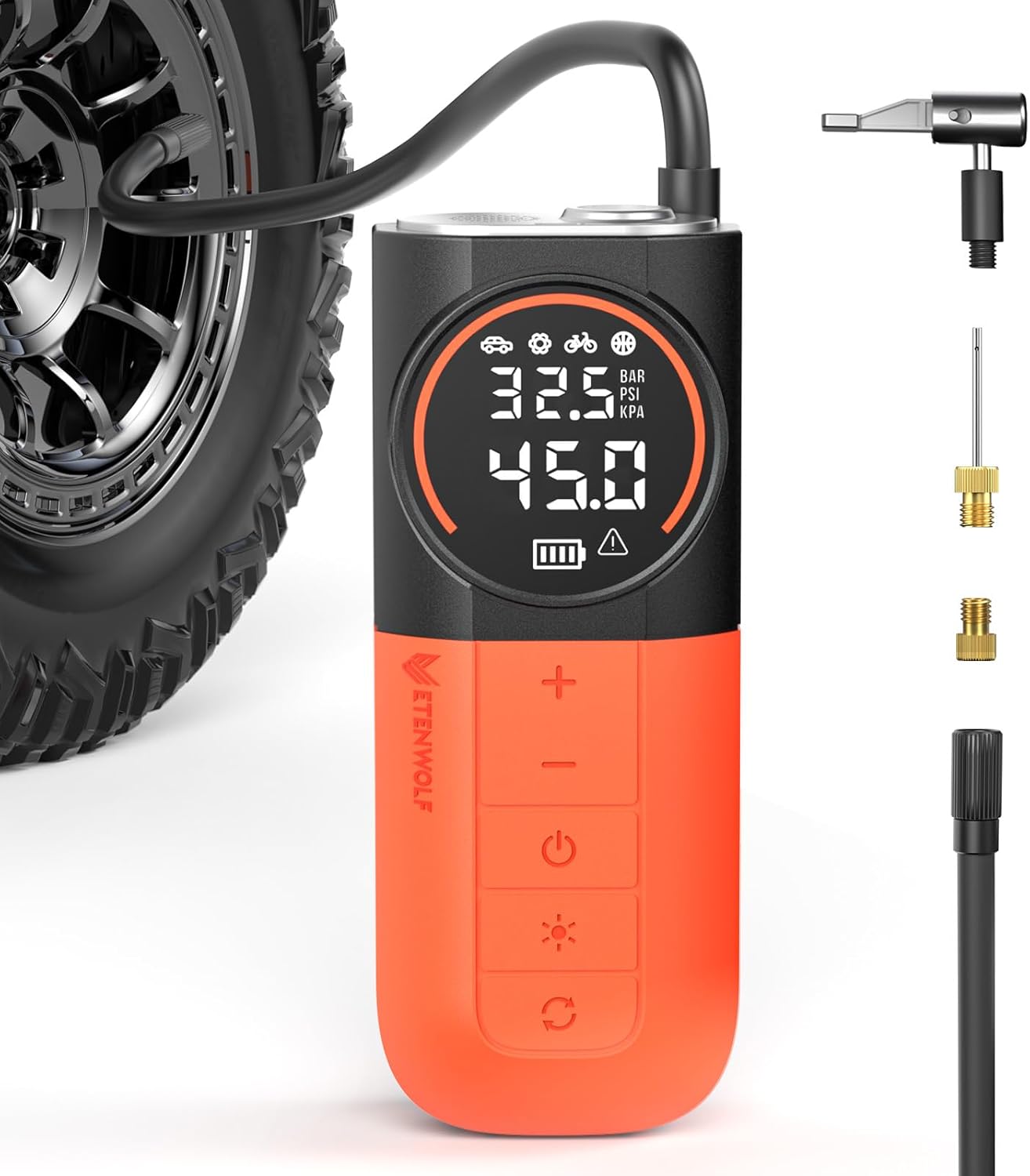
The ETENWOLF S1 cordless tire inflator delivers ultra-fast inflation with up to 160 PSI and a 20 L/min airflow for quicker tire top-offs. Its 5200mAh battery and cooling system support inflating many tires and sports balls on a single charge, while the digital pressure gauge and multi-unit display help you reach the right pressure accurately. With preset modes, pressure memory, an auto-stop feature, and an LED flashlight, it’s built for easy roadside and everyday use.
Troubleshooting Common Tire Pressure Gauge Issues
Even with proper care, tire pressure gauges can sometimes deliver misleading readings. Use this troubleshooting guide before assuming the tire itself is the problem.
| Problem | Likely Cause | Fix |
| Air hisses continuously | Gauge is not sealed straight on the valve stem | Remove it and press it straight onto the valve again |
| Digital display is blank or unstable | Weak battery or poor contact | Replace the battery and try again |
| Readings change every time | Crooked connection, damaged gauge, or dirty valve stem | Clean the valve, reseat the gauge, and compare with another gauge |
| One tire keeps losing pressure | Possible puncture, valve leak, bead leak, or wheel damage | Have the tire inspected by a qualified tire professional |
Warning: Do not ignore a tire that repeatedly loses air, shows sidewall bulges, has deep cuts, or looks severely underinflated. Inflate only if it is safe to do so and have the tire inspected.
When to Choose Analog Over Digital Tire Pressure Gauges?
Choose an analog gauge if you want a simple, battery-free tool that can live in a glove box or garage. Analog dial gauges are useful for drivers who prefer a physical needle and do not want to worry about batteries.
Choose a digital gauge if you want a fast, easy-to-read display. Digital gauges are especially helpful in low light, and many show readings in PSI, kPa, bar, or kg/cm².
For most drivers, the best gauge is the one you will actually use every month. A clear, consistent, well-kept gauge is better than a feature-heavy gauge that stays in a drawer.
Best Practices for Regular Tire Pressure Monitoring
Regular tire pressure monitoring is essential for safety, fuel economy, and tire life. Follow these best practices:
- Check at least once a month: NHTSA recommends checking all tires, including the spare, at least monthly when the tires are cold.
- Check before long trips: A quick PSI check before highway driving can help catch a slow leak early.
- Use the placard PSI: Match the pressure to the driver-door placard or owner’s manual.
- Do not rely only on TPMS: TPMS is a warning system, not a replacement for regular pressure checks.
- Replace valve caps: Caps help protect the valve from dirt and moisture.
- Check when seasons change: Cold weather can lower tire pressure.
Do You Still Need a Gauge if Your Car Has TPMS?
Yes. A tire pressure monitoring system is helpful, but you should still use a gauge. NHTSA explains that TPMS is not intended to replace regular tire maintenance. Many systems warn only when a tire is significantly underinflated.
Under Federal Motor Vehicle Safety Standard No. 138, covered vehicles must have a TPMS that warns the driver when one or more tires are significantly underinflated. That does not mean the tire pressure is ideal before the warning light appears.
If the TPMS light turns on, check all tires with a gauge as soon as it is safe. If the TPMS light flashes and then stays on, the system may have a malfunction and should be inspected.
Frequently Asked Questions
What is the recommended tire pressure for Toyota?
Toyota tire pressure depends on the model, tire size, load, and year. Check the Specifications section of your owner’s manual or the Tire Information placard usually attached to the driver-side door post. Do not use a generic PSI number if your Toyota’s placard gives a different front or rear tire pressure.
Should I check tire pressure before or after driving?
Check tire pressure before driving or after the vehicle has been parked for at least three hours. Driving warms the tires and can raise the pressure reading, which may make an underinflated tire look closer to normal than it really is.
Is the PSI on the tire sidewall the pressure I should use?
No. The PSI on the tire sidewall is usually the tire’s maximum pressure rating, not the recommended pressure for your vehicle. Use the vehicle placard or owner’s manual instead.
How often should I check tire pressure?
Check tire pressure at least once a month, before long trips, and when outdoor temperatures change sharply. Check all tires, including the spare if your vehicle has one.
Are digital tire pressure gauges better than analog gauges?
Digital gauges are usually easier to read, especially in low light. Analog gauges do not need batteries and can be very dependable. The best choice is a quality gauge with a clear display, good seal, and accuracy rating from the manufacturer.
Why do my tire pressure readings change in cold weather?
Air contracts when it gets colder, so tire pressure often drops as temperature falls. This is why a tire that was correct during warm weather may read low after a cold night.
What should I do if two gauges give different readings?
First, repeat the check and make sure each gauge is seated straight on the valve stem. If one gauge consistently reads several PSI higher or lower than another trusted gauge, replace or recalibrate the questionable gauge.
Conclusion
Using a tire pressure gauge correctly comes down to four habits: check cold tires, use the vehicle placard PSI, press the gauge firmly onto the valve stem, and recheck after adding or releasing air. Whether you choose an analog, digital, or stick-style gauge, regular pressure checks help protect your tires, fuel economy, and safety.
Sources
- National Highway Traffic Safety Administration — Tire Safety — cold tire checks, monthly pressure checks, placard PSI, spare tire checks, TPMS guidance.
- FuelEconomy.gov — Keeping Your Vehicle in Shape — fuel economy impact of underinflated tires.
- Toyota Support — Recommended Tire Pressure — where Toyota owners should find model-specific tire pressure.
- Tire Rack — Temperature and Tire Air Pressure — cold inflation pressure and temperature effects.
- eCFR — 49 CFR § 571.138 Tire Pressure Monitoring Systems — TPMS requirements and warning threshold framework.
- ASME B40.100 — Pressure Gauges and Gauge Attachments — pressure gauge standards covering dial and digital gauges.

Related Articles
Toyota Tundra Tire and Wheel Package: What to Consider Before Buying
Unlock the secrets to choosing the perfect tire and wheel package for your Toyota Tundra—essential tips await to enhance your ride.
Read More
Do Bigger Tires Void a Toyota Tundra Warranty? Magnuson-Moss Act Explained
Bigger tires might not void your Toyota Tundra warranty, but understanding the Magnuson-Moss Act is crucial—discover how to protect your investment effectively.
Read More
Toyota Tundra Tire Rack Setup: Garage Storage Ideas for Seasonal Sets
Better tire storage for your Toyota Tundra awaits—discover essential tips to maximize space and protect your seasonal sets in the garage!
Read More