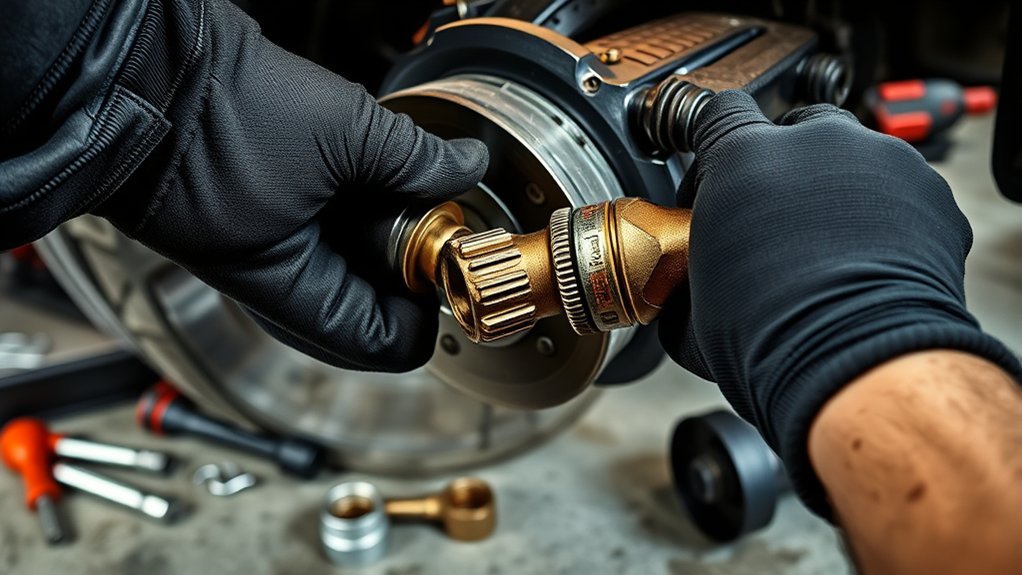
A stripped lug nut can turn a simple tire job into a stuck, frustrating repair. The safest way to remove it is to stabilize the vehicle first, use the least destructive method first, and stop before you damage the wheel, stud, hub, or brake parts.
Quick Answer
To remove a stripped lug nut, park on level ground, chock the wheels, and try a lug nut extractor or a slightly smaller impact socket driven on square. Use penetrating oil for rust, then loosen with a breaker bar or short impact-wrench bursts. Drill only as a last resort, then replace the nut and inspect the stud.
Key Takeaways
- Secure the vehicle before applying force. Use wheel chocks, the parking brake, eye protection, and a stable jack point.
- Start with a lug nut extractor socket or a slightly smaller impact socket before drilling.
- Use penetrating oil and patient, steady torque for rusted or seized lug nuts.
- Avoid using an impact wrench for final tightening. Finish with a torque wrench set to the vehicle manufacturer’s spec.
- Replace the damaged lug nut, inspect the stud threads, and do not drive if the stud is bent, stretched, or stripped.
At a Glance
| Time Required | 15 to 60 minutes for a basic removal; longer if drilling or replacing a wheel stud |
| Difficulty | Moderate; difficult if the lug nut is seized, rounded smooth, recessed, or a damaged locking lug |
| Tools Needed | Wheel chocks, safety glasses, gloves, lug nut extractor, impact-rated socket, hammer, breaker bar, penetrating oil, torque wrench, and a drill with metal bits for last-resort removal |
| Cost | About $10 to $70 for DIY tools and a new lug nut; more if a shop must drill, weld, or replace a stud |
Before You Start: Safety Check
Work on a flat, solid surface. Set the parking brake, chock the wheels that stay on the ground, and keep your body out of the path of the breaker bar. Wear safety glasses and gloves, especially if you are hammering a socket or drilling metal. OSHA’s personal protective equipment guidance explains why eye and hand protection matter around mechanical hazards.
Warning: Do not crawl under a vehicle supported only by a jack. If the wheel must come off and you need to work near the hub, support the vehicle with properly rated jack stands at approved lift points. If you are on a busy shoulder, the safest fix is roadside assistance.
Break the lug nut loose while the tire is still touching the ground if you can. That keeps the wheel from spinning and reduces how much the vehicle moves when you apply force. If the wheel is already off the ground, lower it enough for the tire to touch the ground before pulling hard on a breaker bar.
Use a Lug Nut Extractor First
A lug nut extractor socket is usually the cleanest first choice for a rounded or stripped lug nut. Its reverse spiral grooves bite into the damaged head as you turn counterclockwise. Match the extractor to the lug nut size, tap it on straight, and keep the tool square so it does not slip into the wheel face.
- Choose the extractor size that fits tightly over the stripped lug nut.
- Tap it on with controlled hammer strikes until it seats fully.
- Attach a breaker bar and pull with slow, steady pressure.
- If it moves, keep turning until the nut comes off the stud.
- Remove the damaged nut from the extractor with a punch or vise after it is off the vehicle.
Pro Tip: Use impact-rated sockets and extractors. Chrome hand-tool sockets can crack when hammered or used with an impact wrench.
[Products Worth Considering]

The 22800 wheel stud installer makes replacing wheel studs quick and secure, saving time and effort during tire service. It uses a ratchet or impact wrench to pull new studs firmly into place, helping when existing studs are too long. Compatible with most automotive wheels and light-duty truck wheel studs, it’s designed for easy, tool-assisted installation.

This 1/2-inch drive breaker bar delivers powerful leverage for loosening and tightening stubborn lug nuts and automotive fasteners. The 180-degree flex head helps you reach tight spaces at the angle you need, making tire and brake jobs easier. A spring-loaded ball detent design holds 1/2-inch sockets securely while the chrome-moly head provides durable strength for everyday use.

The Trivd Frol 1/2" air impact wrench delivers high performance torque up to 1500 ft-lbs with a twin hammer impact mechanism for strong, balanced blows. It features an ergonomic grip, compact lightweight design, and quick-stop control with 3 forward speeds up to 8000 RPM plus a reverse speed. Built for demanding automotive repair and tire shop work, the rear exhaust helps keep debris away from the surface.
Try a Smaller Socket and Breaker Bar
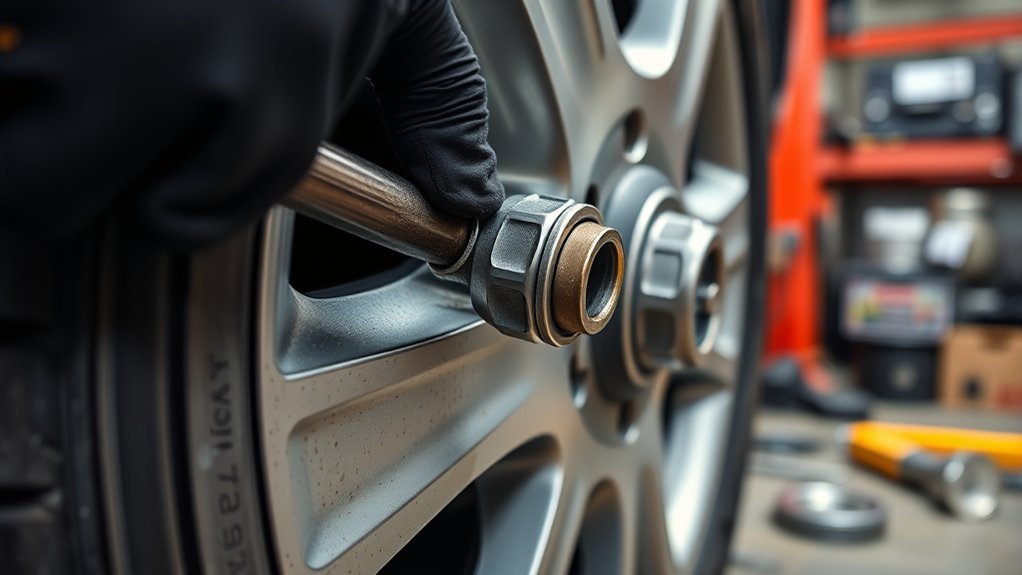
If you do not have a dedicated extractor, choose an impact-rated socket that is slightly smaller than the damaged lug nut. Tap it onto the stripped edges with a hammer until it seats firmly. You want a tight bite, not random force. If the socket feels loose, stop and choose a different size.
Attach a breaker bar and hold it square to the fastener. Apply smooth, increasing pressure instead of a sudden jerk. Sudden force can snap a tool, slip into the wheel, or damage the stud. A longer breaker bar gives you leverage, but do not add a pipe extension unless the tool manufacturer allows it.
After the nut moves, turn it a little at a time. If it tightens again or feels gritty, back up, add penetrant, and work it slowly. Once the lug nut is off, inspect the threads before installing replacement hardware. While the wheel is off, it is also a good time to check tire condition and treadwear ratings so you do not miss a separate tire-safety issue.
[Products Worth Considering]

This car D-wheel lock nut key provides an anti-theft solution for D-shaped wheel lock bolts, helping keep your wheels secure. It features a flower-shaped internal pattern that resists micro-adjustment theft while allowing removal and mounting of compatible locking nuts. Made for reliable performance under high torque, it’s easy to use with standard socket wrench turning for quick tire maintenance and emergency repairs.

These M14x1.5 closed-end chrome lug nuts are a one-piece replacement designed for secure fitment on compatible GM, Ford, and select Chrysler/Dodge models. Featuring a 60-degree conical seat and anti-rust chrome plating, they help resist corrosion and maintain a bright look for everyday driving. Built for long-term durability, they include OEM-style part references and are backed by 12 months of support.

Upgrade your wheels with MIKKUPPA closed-end lug nuts designed for reliable fit and corrosion resistance. The one-piece, cold-forged and heat-treated steel construction helps resist rust and stripping, while the integrated finish delivers a durable black appearance. Built to OEM standards with a conical 60-degree seat, these nuts provide a secure solution for compatible Ford, Honda, Jeep, and Chevrolet models.
Use Penetrating Oil and an Impact Wrench
Use penetrating oil when rust is part of the problem. Spray the base of the lug nut where it meets the wheel and give it time to wick into the threads. WD-40 Specialist Penetrant, for example, is made for stuck nuts, bolts, pipe threads, and rusted parts.
An impact wrench can help because it sends short bursts of torque into the fastener instead of one long pull. Use the correct impact socket, hold it straight, and start with the lowest useful setting. Increase only if needed. Let the impact work in short bursts, then pause and check that the socket is still seated.
Note: Use impact tools for removal, not final tightening. Final installation should be done by hand in stages and finished with a torque wrench.
If your vehicle uses run-flat tires, remember that tire type does not change the lug nut removal process. It can change your roadside plan, though. Understanding run-flat tire characteristics can help you decide whether to continue slowly to a safe service location or stop immediately.
Avoid These Common Mistakes
Most wheel damage happens when you rush. Avoid these mistakes before you move to drilling:
- Do not use a loose socket. It will round the lug nut even more.
- Do not bounce on the breaker bar. Use controlled force so the tool stays square.
- Do not heat the lug nut near the tire. Heat can damage the wheel finish, tire, valve stem, and nearby brake parts. Leave torch work to a professional.
- Do not reuse the damaged lug nut. Once the flats are stripped, it can fail again or damage the stud.
- Do not coat the new stud with oil before torquing. Wipe away excess penetrant and follow the vehicle manual for dry or lubricated torque requirements.
Drill Out a Stripped Lug Nut Safely
Drilling is a last resort because a wandering bit can damage the wheel stud or wheel seat. If the lug nut still will not come free, start with a center punch to make a small indentation in the center of the lug nut. Use a sharp metal bit that is smaller than the stud diameter, keep the drill straight, and run it at low speed with cutting oil.
Center-punch first, drill slowly, use cutting oil, and stop if the bit starts drifting toward the stud or wheel.
- Mark the center of the lug nut with a center punch.
- Start with a small pilot bit and add cutting oil.
- Drill straight into the lug nut at low speed.
- Step up bit sizes only as needed to weaken the nut.
- Use pliers, an extractor, or a hammered-on socket to remove what remains.
If you are not centered, stop. A damaged stud can be replaced, but a scarred wheel seat or damaged hub can turn a simple repair into an expensive one. Once the nut is off, inspect the wheel stud for damaged threads, stretching, bends, or scoring. Having a reliable spare tire kit can also help you avoid being stranded the next time a tire problem happens away from home.
Tools for Removing a Stripped Lug Nut
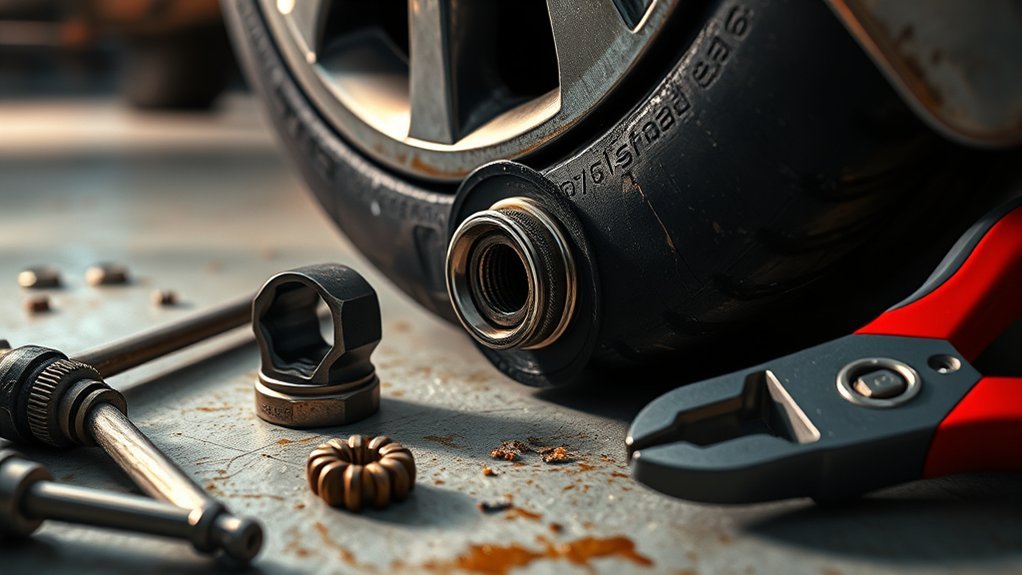
The right tool depends on how badly the lug nut is damaged. Start with the least destructive tool that can still grip the fastener.
| Lug nut extractor | Best first choice for rounded or stripped nuts with enough head left to bite. |
| Smaller impact socket | Useful when an extractor is not available. Treat it as a sacrificial socket. |
| Breaker bar | Gives steady leverage with more control than jumping on a lug wrench. |
| Impact wrench | Helpful for rusted or over-tightened nuts, but use short bursts and the correct impact socket. |
| Drill and metal bits | Last-resort option when the nut cannot be gripped. Use a center punch and cutting oil. |
If the tire is coming off for other maintenance, use the moment to inspect wear, sidewall damage, and the tire date code. Tire treadwear ratings can help compare tire life, but they do not replace a real tread-depth and damage check.
[Products Worth Considering]

Upgrade your wheels with MIKKUPPA M12x1.5 mag seat lug nuts built for secure, corrosion-resistant performance. These closed-end chrome lug nuts are a direct replacement for select Toyota models, including Camry, Corolla, RAV4, Sienna, Avalon, Highlander, Matrix, Venza, and Prius. Triple-chromium plating and cold-forged, heat-treated steel help deliver strength for daily driving and replacement needs.

This spare tire tool kit is designed for the 2004 to 2018 Ford F-150 to help you loosen and tighten wheel lug nuts and manage the spare tire and provided jack functions from underneath the vehicle. It includes the lug nut wrench and extension pieces plus a convenient storage carrying case for organized transport. The jack itself is not included.

The Dr.Roc spare tire tool kit helps you release, lower, or raise your spare tire with reliable extension tools and a lug nut wrench. It is made from rustproof automotive-grade steel and includes an organized carry case for convenient storage. Designed for compatibility with select GM models from the late 1990s through 2019, it uses upgraded extension components to install and remove spare tires with less hassle.
Replace the Lug Nut and Check the Stud
After you remove the stripped lug nut, replace it with a new lug nut that matches the thread pitch, seat style, and wheel type. A cone-seat nut, ball-seat nut, mag-seat nut, spline-drive nut, or locking nut is not interchangeable just because it threads on. The seat shape must match the wheel.
- Clean the stud threads with a wire brush and wipe away excess penetrating oil.
- Inspect the stud for flattened threads, bending, stretching, cracks, or fresh stripping.
- Thread the new lug nut on by hand for several turns to make sure it is not cross-threaded.
- Snug the nuts in a star or crisscross pattern so the wheel seats evenly.
- Lower the vehicle until the tire touches the ground, then use a torque wrench set to the vehicle manufacturer’s spec.
- Recheck torque after a short drive if your vehicle manual, wheel maker, or tire shop recommends it.
Do not rely on a universal torque number. Many passenger vehicles fall near the 80 to 100 ft-lb range, but the correct spec depends on the vehicle, wheel, stud size, and wheel design. Check the owner’s manual or the wheel manufacturer’s instructions. The same goes for replacement tires and wheels: the new lug nut must be compatible with your wheel and tire specifications before the vehicle goes back on the road.
What If It Is a Locking Lug Nut?
If the stripped fastener is a locking lug nut, look for the key first. Check the glove box, center console, trunk tool kit, spare tire well, and any pouch from the tire shop. If the key is damaged or missing, a tire shop or dealer may be able to match the pattern or remove it with less wheel damage than a DIY extractor.
You can use an extractor on many locking lug nuts, but it usually destroys the lock and can scratch the wheel if the nut is recessed. If the wheel is expensive or the lock has a spinning collar, stop and call a professional.
Frequently Asked Questions
How do you get a severely stripped lug nut off?
Use a lug nut extractor socket first. Tap it on straight, attach a breaker bar, and use slow pressure. If rust is involved, apply penetrating oil and let it work before trying again. If the extractor will not grip, a hammered-on smaller impact socket or careful drilling may be needed.
How do you remove a completely rounded lug nut?
A reverse-spiral extractor socket is the best DIY option for a completely rounded lug nut. It cuts into the outside of the nut as you turn. If the nut is recessed, has a spinning lock collar, or sits close to a delicate wheel finish, a tire shop is the safer choice.
Will WD-40 remove seized lug nuts?
A penetrating product can help loosen rusted threads, but it may not free a severely seized lug nut by itself. Use a dedicated penetrant, give it time to soak in, and combine it with a tight extractor socket or steady breaker-bar pressure. Wipe away excess before final installation.
What is the easiest way to remove a stripped nut?
The easiest method is usually a lug nut extractor socket. If you do not have one, hammer a slightly smaller impact socket onto the damaged nut and turn it with a breaker bar. Add penetrating oil if rust is present, and keep the socket square so it does not slip.
Can you drive with one damaged or missing lug nut?
Avoid driving with a damaged, loose, or missing lug nut. The wheel depends on even clamping force across all studs. If one stud or nut is compromised, replace it before normal driving. If you must move the vehicle a very short distance for safety, drive slowly to the nearest safe repair spot.
Should you put anti-seize on wheel studs?
Do not add anti-seize, grease, or oil to wheel studs unless the vehicle or wheel manufacturer says to. Lubrication can change the clamping force created at a given torque setting. For most DIY wheel installation, clean dry threads and the specified torque are the safer choice.
Conclusion
Start with safety, then move from least destructive to most destructive: extractor socket, smaller impact socket, penetrant, controlled impact use, and drilling only when nothing else works. Once the stripped lug nut is off, do not reuse it. Inspect the stud, install the correct replacement nut by hand, and torque the wheel to the exact vehicle spec before driving.
Sources
- NHTSA TireWise – tire safety, tire maintenance, tire sizing, and owner-manual checks.
- OSHA Personal Protective Equipment Overview – safety glasses, gloves, and other protective equipment guidance.
- WD-40 Specialist Penetrant – use of penetrant on stuck nuts, bolts, threads, and rusted parts.
- Schema.org HowTo – structured data for step-by-step instructions.
- Schema.org FAQPage – structured data for FAQ sections.