
How Heat Affects Tire Life and Blowout Risk on Heavy Trucks
Hot weather can shorten heavy truck tire life and increase the chance of a tread separation or rapid air loss, but ambient temperature is only part of the problem. The greatest danger usually comes from heat generated inside a tire that is underinflated, overloaded, damaged, mismatched with its dual partner, or exposed to a dragging brake or failing wheel-end component. A cold-pressure check, loaded axle weights, daily inspections, and prompt action on warning signs can greatly reduce the risk.
Quick Answer
Heat can reduce heavy truck tire life and contribute to blowouts, especially when a tire is underinflated, overloaded, damaged, or heated by a brake or wheel-end problem. Check pressure when tires are cold, use the correct load-and-inflation table, inspect every tire before a trip, and never bleed air from a normally heated tire.
Key Takeaways
- Underinflation and overloading increase tire flex, heat buildup, and the risk of permanent internal damage.
- A higher pressure reading after driving is normal. Never release air merely to return a hot tire to its cold-pressure target.
- Correct commercial tire pressure depends on the loaded axle weight, tire size, axle position, and the tire manufacturer’s load-and-inflation table.
- Dragging brakes, wheel-bearing problems, mismatched duals, air leaks, impact damage, and trapped debris can make one tire run abnormally hot.
- TPMS can help, but heavy trucks are not universally covered by the federal light-vehicle TPMS requirement, and temperature features and alert thresholds vary.
At a Glance
| Time Required | About 10–15 minutes for a basic cold pre-trip tire inspection |
| Difficulty | Easy for visual and pressure checks; wheel, rim, casing, and internal inspections require a qualified technician |
| Tools Needed | Calibrated commercial tire gauge, tread-depth gauge, flashlight, inspection log, and an approved inflation source; TPMS or an infrared thermometer is optional |
| Cost | Usually no added cost when fleet tools are supplied; basic gauges and inspection tools commonly cost about $20–$100 |
How Heat Affects Heavy Truck Tire Life
A truck tire normally becomes warmer as it rolls. The casing flexes at the contact patch, tread and internal components move, and some of that mechanical energy becomes heat. A properly selected, inflated, and loaded tire is designed to manage normal operating heat.
Problems begin when the tire flexes more than intended or receives heat from another source. Common causes include low pressure, excessive load, high speed, casing damage, a dragging brake, a failing hub or bearing, and poor matching in a dual assembly.
Underinflation is especially serious because the sidewall and casing bend farther on every rotation. The extra flex creates heat and can damage internal cords or rubber-to-cord bonds. The damage may remain even after the tire is reinflated. Michelin warns that a truck tire operated with insufficient pressure may suffer irreversible internal deterioration and rapid air loss later.
Hot weather raises a tire’s starting temperature, but underinflation, excess load, damage, and wheel-end problems are often what turn normal heat into a tire failure.
[Products Worth Considering]

EVOULTES heavy duty tire inflator with an integrated gauge delivers accurate pressure readings from 10–120 PSI, helping you inflate, deflate, and check tires in one tool. The 16.5-inch extended dual-head air chuck with swivel base reaches hard-to-access dual wheel valves on trucks and RVs. A brass trigger core and side-mounted air release valve make operation smooth, with standard 1/4" NPT threading and quick-connect compatibility for easy setup.
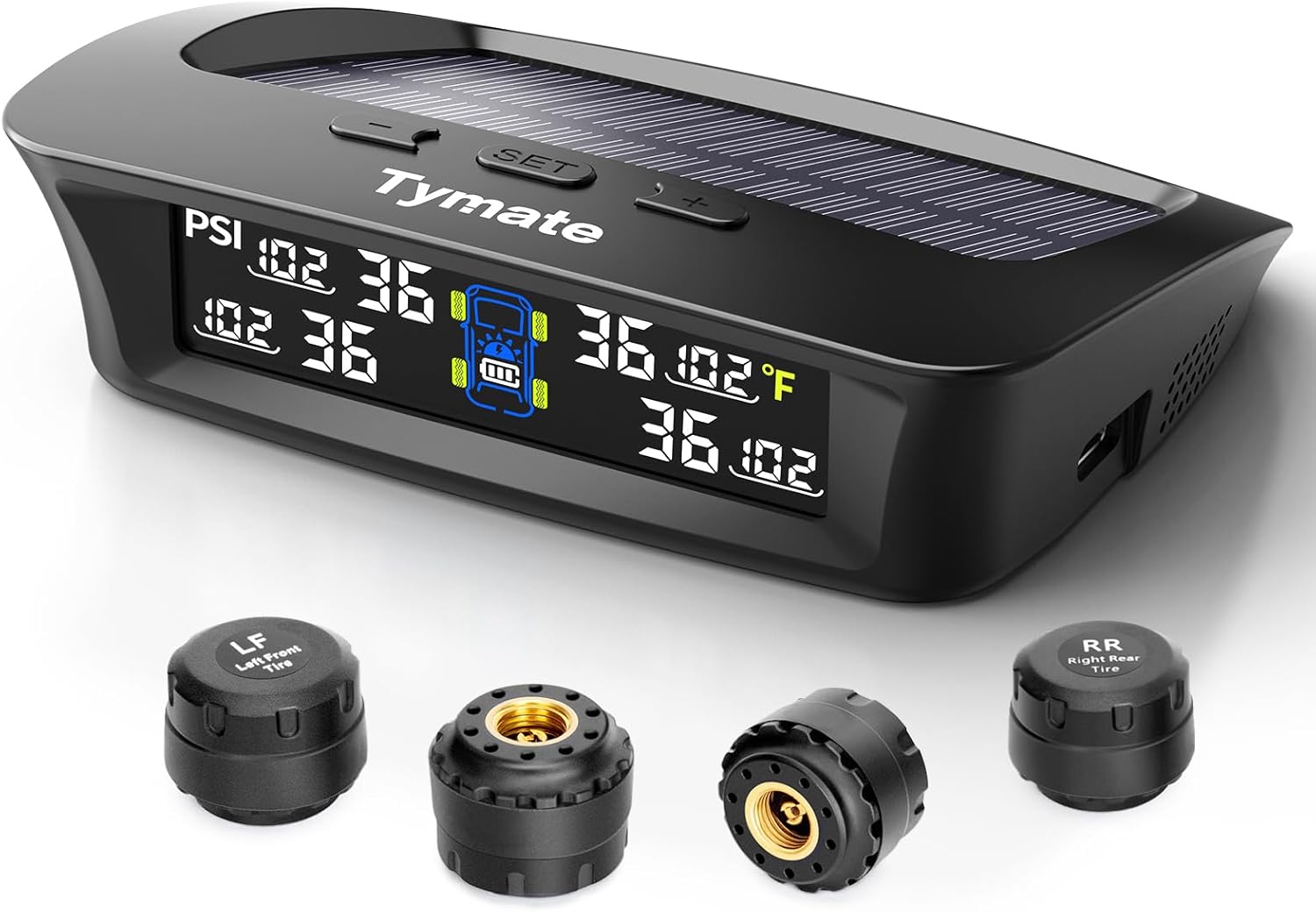
The Tymate TM3 RV TPMS delivers real-time tire pressure monitoring from 0 to 144 PSI with accurate readings and dependable wireless communication. It includes four external sensors with pre-pairing, six alarm modes for rapid leak, pressure extremes, temperature, and signal loss, plus an easy-reference setup for alert thresholds. Solar and USB-C charging help keep the display powered, while the color LCD and adaptive backlight improve visibility for safer driving and towing.
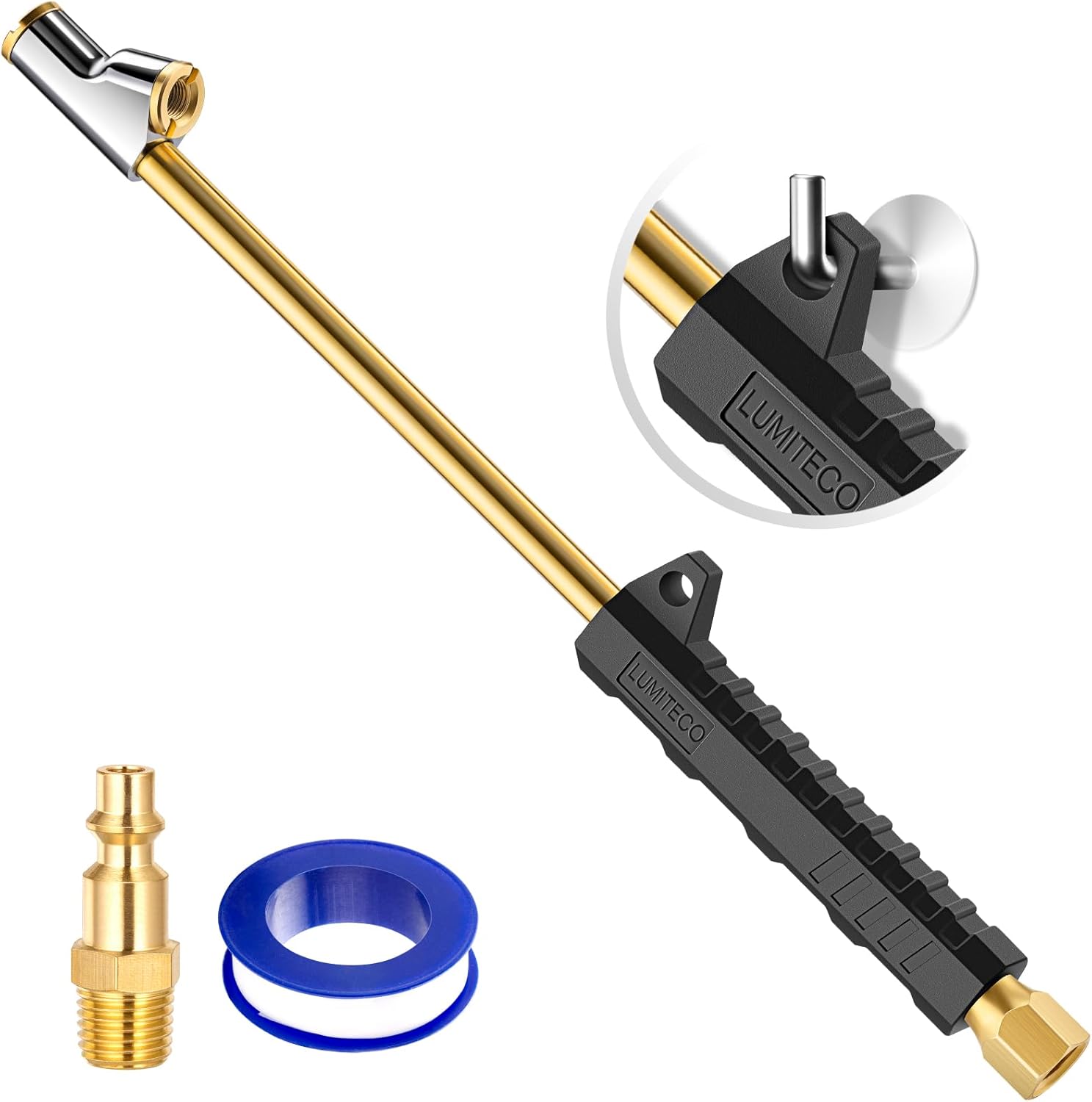
The LUMITECO 12" extended reach dual head air chuck is designed for hard-to-reach truck, RV, and bus dual wheels, making tire inflation quick and easier. It features a straight foot lock-on chuck for inner tires and a 30° reverse chuck for outer valves, with a closed-flow design that only allows air when engaged. Built with a brass body and ergonomic rubber grip, it connects easily using a 1/4" FNPT thread plus a standard quick plug for compressor-ready inflation.
Common Causes of Truck Tire Overheating
| Cause | Why It Creates Risk | What to Check |
|---|---|---|
| Low inflation pressure | Increases casing deflection, rolling resistance, and internal heat. | Cold pressure, leaks, valve stems, valve cores, caps, rims, and prior run-low damage. |
| Overloading | Forces the tire to carry more weight than its pressure and load rating support. | Loaded axle weights, individual wheel-position imbalance, GAWR, GVWR, and tire load tables. |
| Speed | Increases the number of flex cycles and may exceed the tire’s speed or application limits. | Tire speed rating, posted limits, load, road conditions, and fleet restrictions. |
| Dragging brake or wheel-end fault | Transfers abnormal heat from the brake, drum, rotor, hub, or bearing into the wheel and tire. | Hot odor, smoke, discoloration, pull, reduced performance, or one wheel end much hotter than its mate. |
| Mismatched dual tires | A pressure, diameter, tread-depth, or load mismatch can make one tire carry more load and scrub against the road. | Pressure, size, circumference, tread depth, spacing, and contact between the two tires. |
| Damage or improper repair | Impact, puncture, separation, exposed cords, or prior run-flat operation can weaken the casing. | Bulges, cuts, cracking, vibration, irregular wear, air loss, and qualified internal inspection when needed. |
How Tire Pressure Changes With Heat
Air pressure rises as a tire warms during operation. That rise is expected and is not, by itself, proof that the tire was overinflated when cold. The correct starting pressure must be established when the tire is cold and must support the actual load at that wheel position or axle.
For a heavy truck, do not rely on a universal “1 psi per 10°F” adjustment. Weigh the fully loaded vehicle by axle and compare the results with the tire manufacturer’s current load-and-inflation table. Michelin advises weighing the front, rear, and trailer axles separately and using the actual loads to determine the required pressure.
Warning: Never bleed a normally heated truck tire merely because its pressure is above the cold target. Releasing air while the tire is hot can leave it dangerously underinflated after it cools. If a hot tire reads lower than required, repeatedly loses pressure, or differs sharply from its matching tire, stop and have the cause investigated.
Federal commercial-vehicle rules include a heat-buildup correction for inspectors estimating cold pressure from a recently operated tire. That table is not a recommended running pressure and is not an instruction to release air. Drivers and maintenance teams should use cold readings whenever practical.
Pro Tip: Compare similar tire positions. One steer tire or one member of a dual assembly that is repeatedly lower in pressure or noticeably hotter than its mate deserves immediate attention, even when no universal temperature limit has been crossed.
Hot-Weather Blowout Risks and Warning Signs
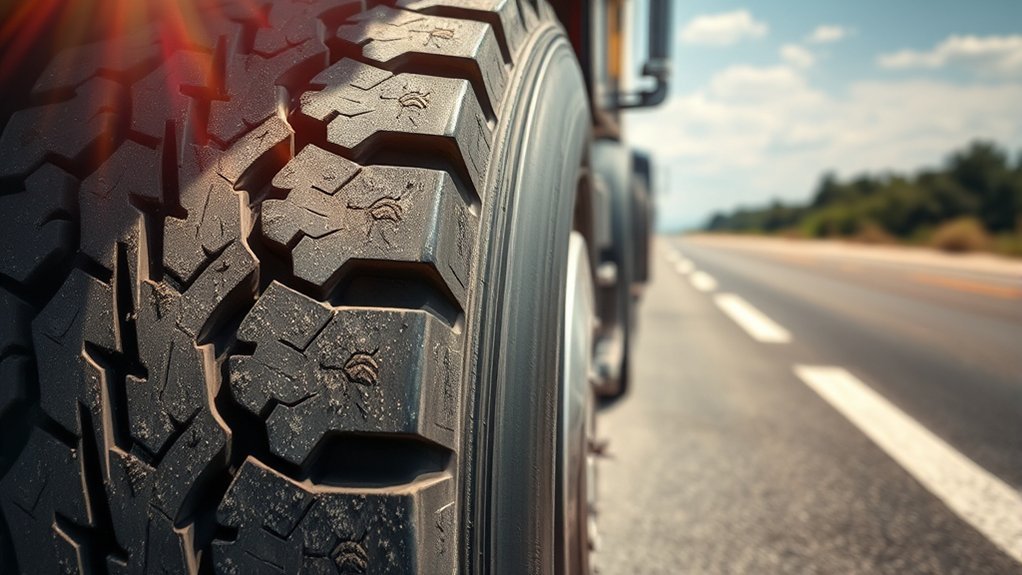
A blowout is a rapid loss of air that may follow a puncture, casing failure, impact break, tread or sidewall separation, wheel damage, or prolonged operation with low pressure. Hot pavement and high ambient temperatures can reduce the margin for error, but they rarely act alone.
Stop at the first safe location and investigate when you notice:
- A pressure or temperature warning from an onboard monitoring system
- One tire or wheel end that is much hotter than comparable positions
- A tire that repeatedly loses pressure
- Thumping, vibration, pulling, or a new change in handling
- A bulge, exposed cord, tread lift, sidewall separation, or deep cut
- Smoke, a hot-rubber smell, or a burning-brake odor
- Debris lodged between dual tires
- Dual tires touching each other under load
- Discoloration, lubricant leakage, or unusual noise at a hub or wheel bearing
Do not continue driving merely because the tire still holds some air. Internal damage from low-pressure operation may not be visible from outside and may remain after the pressure is corrected.
Heavy Truck Pre-Trip Tire Checklist
The FMCSA Commercial Tire Safety Tips advise drivers to inspect tires every day and gauge them cold before each trip. Use the following routine before hot-weather travel:
- Check every tire cold. Use a calibrated commercial tire gauge before the trip, preferably after the vehicle has been parked long enough for tire temperatures to stabilize.
- Use the correct pressure target. Match the pressure to the loaded axle weight, tire size, axle position, and current manufacturer load-and-inflation table.
- Inspect tread and sidewalls. Look for cuts, cracking, bulges, separation, exposed material, punctures, irregular wear, and objects in the tread.
- Measure tread depth. Do not depend on a visual estimate.
- Inspect valves and caps. Look for damaged stems, loose extensions, leaks, dirt, and missing sealing caps.
- Check dual assemblies. Verify matching pressure, compatible size and diameter, adequate spacing, and no debris trapped between the tires.
- Inspect the wheel end. Look for brake, hub, bearing, fastener, and lubricant problems that may create heat.
- Verify the load. Do not exceed the tire load rating, axle rating, gross vehicle weight rating, or legal weight limits.
- Record recurring problems. Repeated pressure loss, abnormal heat, or irregular wear requires diagnosis rather than repeated reinflation.
Commercial Tire Tread and Condition Requirements
For commercial motor vehicles covered by U.S. federal rules, 49 CFR 393.75 prohibits operating on a tire that:
- Has body-ply or belt material exposed through the tread or sidewall
- Has tread or sidewall separation
- Is flat or has an audible leak
- Has a cut that exposes ply or belt material
- Carries more load than its marked or approved capacity, unless a specific legal exception applies
- Has cold inflation pressure below that required for the load being carried
The federal minimum tread depth is at least 4/32 inch in a major groove on the front wheels of a bus, truck, or truck tractor and at least 2/32 inch on most other covered positions. State rules, fleet policies, customer contracts, and the tire manufacturer may require earlier removal.
Note: A tire can be unsafe before it reaches the legal tread minimum. Remove it from service when damage, separation, repeated air loss, exposed material, or another disqualifying condition is present.
How TPMS Helps Heavy Truck Drivers
A commercial tire pressure monitoring system can warn a driver about pressure loss and, on systems equipped with temperature sensing, unusual heat. It is most useful when the fleet establishes correct baseline pressures, programs thresholds for the application, maintains the sensors, and investigates alerts instead of repeatedly clearing them.
However, TPMS is not universal on heavy trucks. The federal TPMS standard in 49 CFR 571.138 applies to passenger cars, multipurpose passenger vehicles, trucks, and buses with a GVWR of 10,000 pounds or less, and it excludes vehicles with dual wheels on an axle. Many heavier vehicles use optional OEM, fleet-installed, or aftermarket systems instead.
| TPMS Information | How to Use It |
|---|---|
| Low-pressure alert | Slow safely, stop at an appropriate location, and find the cause. Do not simply add air repeatedly to a leaking or damaged tire. |
| High-temperature alert | Follow the TPMS and fleet instructions. Check the tire, brake, hub, bearing, load, and matching wheel position. |
| Pressure increase while driving | A normal increase is expected. Do not bleed a hot tire to the cold target. |
| Sensor fault or missing reading | Use a calibrated gauge and repair the monitoring system. A missing reading is not proof that the tire is safe. |
There is no universal 175°F alert threshold for every commercial tire or TPMS. Sensor location, tire construction, vehicle duty cycle, load, speed, and manufacturer programming all affect the reading and alarm strategy.
Tire Heat Management for Long Hauls

Begin every long haul with cold tires at the correct load-based pressure. Confirm the load, inspect the wheel ends, and address any pressure loss before departure. Once underway:
- Stay within posted speed limits, tire speed ratings, and fleet restrictions.
- Avoid curb strikes, potholes, and road debris when safely possible.
- Check tires and wheel ends during safe scheduled stops.
- Compare similar tire positions rather than relying only on one absolute surface-temperature number.
- Investigate any tire that is losing pressure or running much hotter than its mate.
- Keep dual assemblies free of trapped stones, metal, and other debris.
- Watch for dragging-brake odors, smoke, hub leaks, or discolored wheel components.
An infrared thermometer can help compare wheel positions, but it measures surface temperature, not the tire’s internal structure. Distance, angle, sunlight, road spray, and the measured surface can affect the result. It should support—not replace—pressure checks, TPMS data, and a physical inspection.
There is no universal rule requiring a tire-cooling stop every 100 miles or two hours. Planned stops are useful inspection opportunities, but a suspected leak, brake fault, bearing problem, damaged tire, smoke, or warning alert requires immediate action at the first safe location.
[Products Worth Considering]
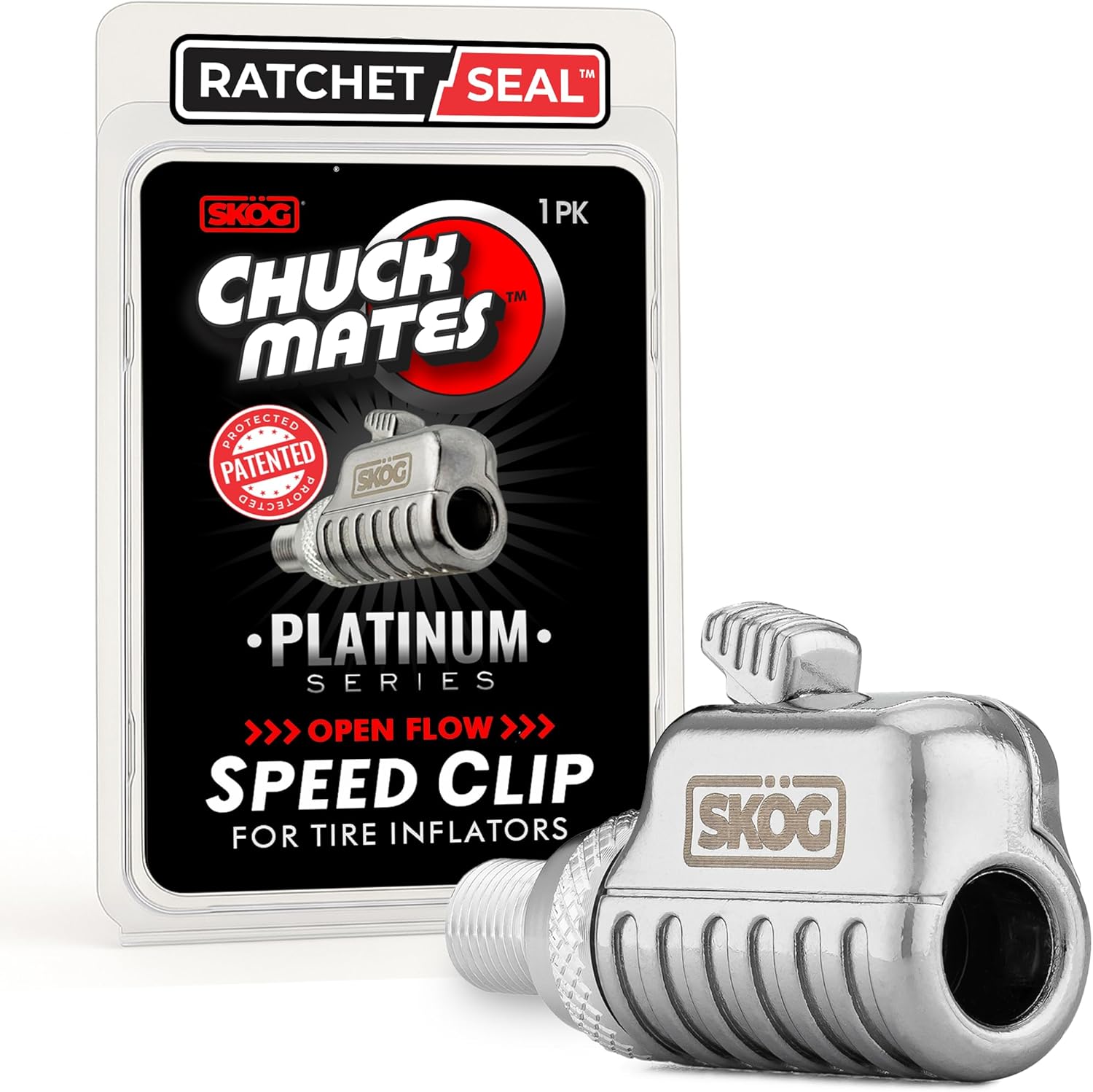
The SKÖG Chuck Mates Platinum uses a patented RatchetSeal push-to-connect system for instant, secure, air-tight attachment to standard tire valve stems. It features an easy push-button release for quick disconnects, plus 360° swivel open-flow airflow to keep operation smooth and kink-free. Universal Schrader compatibility makes it ideal for cars, bikes, motorcycles, RVs, trucks, and more.

This portable cordless tire inflator delivers fast, efficient inflation for cars, motorcycles, bikes, and sports balls with a digital pressure gauge. Use the one-click PSI preset with auto shut-off for accurate, hands-free topping to your target pressure up to 150 PSI. It’s compact and rechargeable with a built-in emergency LED light plus valve adapters and accessories for quick, ready-to-go use.
What to Do if a Truck Tire Is Overheating
- Reduce speed smoothly. Avoid sudden steering or hard braking unless necessary to avoid an immediate hazard.
- Pull off at a safe location. Move as far from traffic as conditions allow and activate the required warning devices.
- Keep people away. Do not stand beside, in front of, or behind a visibly damaged, smoking, or severely overheated tire.
- Do not release air. Bleeding a hot tire can worsen underinflation and does not repair the cause of abnormal heat.
- Inspect from a safe distance. Look for smoke, separation, a bulge, dual contact, debris, a brake problem, a hub leak, or obvious pressure loss.
- Use the monitoring data and gauge carefully. Follow fleet procedures and avoid approaching a tire that appears unstable or is making popping or cracking sounds.
- Call qualified service. A tire that ran significantly underinflated, has visible damage, repeatedly loses pressure, or was exposed to severe wheel-end heat may need to be removed and inspected internally.
Warning: Inflated commercial truck tire and rim-wheel assemblies can release enormous energy. Applicable rim-wheel service must be performed by trained workers using the procedures, restraining equipment, clip-on chuck, remote valve, and trajectory precautions required by OSHA 1910.177. Do not attempt casing, bead, rim, or wheel service at the roadside without proper training and equipment.
What to Do During a Tire Blowout
If a tire fails while the truck is moving, focus first on maintaining control:
- Hold the steering wheel firmly and keep the vehicle in its lane.
- Avoid an abrupt steering input or panic braking.
- Ease off the accelerator in a controlled manner.
- Allow the vehicle to slow while maintaining a stable path.
- Apply the brakes gently when the vehicle is under control.
- Move to a safe stopping area and use the required emergency warning equipment.
- Keep clear of traffic and the failed tire, then arrange qualified roadside assistance.
Truck configuration, axle position, load, speed, and road conditions affect how a failure behaves. Drivers should also follow their carrier’s training and emergency procedures.
Seasonal Hot-Weather Maintenance
Before sustained summer operation, have the fleet or service provider review:
- Cold pressure specifications and gauge calibration
- Actual loaded axle weights
- Tire size, load capacity, speed capability, and axle-position application
- Valve stems, extensions, cores, and sealing caps
- Dual-tire matching and spacing
- Alignment, suspension, and irregular-wear patterns
- Brake adjustment, brake release, drums or rotors, hubs, and bearings
- Prior puncture repairs and run-low history
- Tire age, casing condition, and the tire manufacturer’s inspection or removal criteria
- TPMS sensors, batteries, programmed baselines, and alert escalation procedures
Heat can worsen an existing defect, but replacing a tire solely by calendar age or tread depth may not address the actual cause. Use the tire manufacturer’s service-life guidance, fleet experience, casing inspections, duty cycle, and applicable regulations.
Selecting Heavy Truck Tires for Hot Weather
Do not choose a heavy-truck tire only because it has a deeper tread, wider grooves, or a passenger-style temperature grade. Select it for the vehicle and duty cycle.
Verify:
- Correct tire size and approved wheel or rim
- Steer, drive, trailer, regional, line-haul, urban, or on/off-road application
- Single and dual load capacity
- Required cold pressure for the actual load
- Load range or load index
- Speed rating and any operating restrictions
- Casing, retread, and regrooving suitability where applicable
- Compatibility with the matching tire in a dual assembly
- Fleet and tire-manufacturer recommendations for the route, load, and climate
The Michelin commercial tire pressure guidance emphasizes that pressure must be matched to load and use. Low-rolling-resistance construction, tread depth, compound, casing design, and application all involve tradeoffs, so generic tread-pattern rules should not replace the manufacturer’s data book.
Frequently Asked Questions
Does hot weather cause heavy truck tire blowouts?
Hot weather can contribute to tire deterioration and raises the starting temperature of the tire, but most heat-related failures involve another condition such as underinflation, overloading, impact damage, excessive speed, a dragging brake, a wheel-bearing problem, or a mismatched dual assembly.
Should I lower truck tire pressure on a hot day?
No. Set pressure when the tires are cold using the actual load and the tire manufacturer’s load-and-inflation table. Pressure normally rises during operation. Bleeding a hot tire to its cold target may leave it dangerously underinflated when it cools.
Do all heavy truck TPMS units warn at 175°F?
No. Some commercial systems monitor pressure only, while others also report temperature. Alert limits may be fixed or programmable and vary by system, sensor location, tire, load, vehicle, and fleet policy. Follow the TPMS, tire, and vehicle manufacturers’ instructions.
How often should heavy truck tire pressure be checked?
FMCSA advises checking commercial tire pressure cold before each trip and inspecting tires every day. Recheck during the trip when a monitoring alert, repeated leak, impact, unusual heat, vibration, or handling change occurs.
What does it mean if one dual tire is hotter than the other?
It may indicate unequal pressure, different tire diameter, excess load on one tire, internal damage, trapped debris, tire contact, a brake fault, or a hub or bearing problem. Stop safely and inspect the assembly instead of waiting for a universal temperature limit.
Conclusion
Heat can shorten heavy truck tire life and contribute to a blowout, but the most preventable risks are low pressure, excess load, speed, casing damage, mismatched duals, and brake or wheel-end faults. Check pressure cold, match it to the actual load, inspect every tire before the trip, and treat repeated air loss or abnormal heat as a fault—not a normal part of summer driving. Never bleed a hot tire to its cold target, and use qualified commercial tire service whenever damage or run-low operation is suspected.
Sources
- Federal Motor Carrier Safety Administration: Commercial Tire Safety Tips — daily inspections, cold pressure checks, load, speed, and heat buildup.
- Electronic Code of Federal Regulations: 49 CFR 393.75 — commercial tire condition, tread depth, load, and inflation requirements.
- Michelin Commercial Tires: The Right Tire Pressure for Trucks and Buses — axle weighing, load-based inflation, hot-tire precautions, and pressure maintenance.
- Electronic Code of Federal Regulations: FMVSS No. 138 — federal TPMS purpose, application, and vehicle-weight scope.
- National Highway Traffic Safety Administration: TireWise — heat, pressure, tread, maintenance, and blowout safety information.
- Occupational Safety and Health Administration: 29 CFR 1910.177 — safe servicing and inflation of applicable commercial rim-wheel assemblies.

Related Articles
Toyota Tundra Tire and Wheel Package: What to Consider Before Buying
Unlock the secrets to choosing the perfect tire and wheel package for your Toyota Tundra—essential tips await to enhance your ride.
Read More
Do Bigger Tires Void a Toyota Tundra Warranty? Magnuson-Moss Act Explained
Bigger tires might not void your Toyota Tundra warranty, but understanding the Magnuson-Moss Act is crucial—discover how to protect your investment effectively.
Read More
Toyota Tundra Tire Rack Setup: Garage Storage Ideas for Seasonal Sets
Better tire storage for your Toyota Tundra awaits—discover essential tips to maximize space and protect your seasonal sets in the garage!
Read More