
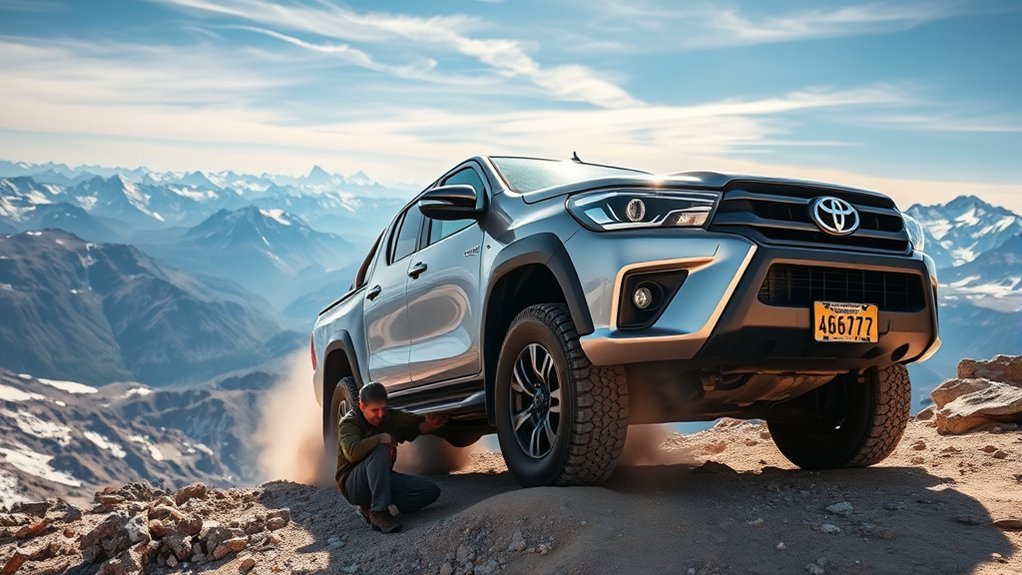
Mountain driving can change the pressure shown on your Toyota Hilux tires, but altitude alone does not justify adding or removing a fixed number of PSI. Atmospheric pressure, tire temperature, payload, towing weight, road speed, and off-road use all affect the final reading. The safest approach is to check the tires when cold and follow the pressure listed on your Hilux tyre placard or in the owner’s manual.
Quick Answer
Do not add or remove a fixed amount of air from Toyota Hilux tires simply because elevation changes. Check every tire cold and set it to the pressure on the Hilux tyre placard or owner’s manual for the current load. Recheck after major temperature changes, long climbs, towing, or off-road driving.
Key Takeaways
- Use the Hilux tyre placard or owner’s manual, not a universal altitude formula or the maximum pressure printed on the tire sidewall.
- Check pressure when the tires are cold, ideally before driving or after the vehicle has been parked for at least three hours.
- A higher elevation can increase gauge pressure slightly, while colder mountain air can lower it. The combined result varies.
- Payload, towing, tire size, and front-to-rear axle loading may require different pressures.
- TPMS is a warning system. Confirm pressure manually with an accurate gauge.
At a Glance
| Time Required | About 5 to 10 minutes |
| Difficulty | Easy |
| Tools Needed | Accurate tire-pressure gauge and an air compressor if adjustment is needed |
| Cost | Usually free at a service station or limited to the cost of a personal gauge |
How Altitude Changes Tire Pressure

Atmospheric pressure becomes lower as you climb to a higher elevation. A normal tire gauge measures the difference between the pressure inside the tire and the surrounding air, which is known as gauge pressure.
If a sealed tire moves uphill while its temperature and volume remain nearly unchanged, its gauge reading can rise slightly because the outside air pressure has fallen. Near lower elevations, the change in atmospheric pressure is roughly half a PSI per 1,000 feet, although the amount is not perfectly linear.
That does not mean you should automatically add or release half a PSI for every 1,000 feet. Mountain temperatures often become colder as elevation increases. Colder air inside the tire can lower its pressure and partially or completely offset the altitude effect.
Altitude can influence the gauge reading, but temperature often causes the larger real-world change during a mountain journey.
Note: Treat the pressure shown at your destination as a measurement to compare with the Hilux cold-pressure specification, not as a number that requires a preset altitude correction.
Correct Toyota Hilux Tire Pressure at High Altitude
Toyota Hilux tire pressures vary by model year, market, cab and body configuration, tire size, axle, and load. Some versions also provide separate recommendations for normal driving and full-load operation. For that reason, no single PSI value is correct for every Hilux.
Toyota advises owners to use the pressure listed on the vehicle’s tyre placard or in the owner’s manual. The placard is commonly positioned inside the driver’s door opening, although the exact location can vary by market.
- Follow the listed front and rear pressures separately if they differ.
- Use the full-load setting when the placard or manual requires it for passengers, cargo, or towing.
- Check that any replacement tire has the correct size, load rating, and speed rating.
- Do not use the maximum pressure molded on the tire sidewall as the normal operating recommendation.
Warning: Never add a fixed 10 PSI because the tires are warm, and never inflate every Hilux to 40 PSI without checking the vehicle placard. Excessive or insufficient pressure can affect handling, traction, tire temperature, wear, and load support.
How Temperature and Load Affect Tire Pressure
Temperature usually has a more noticeable effect on a mountain trip than altitude alone. According to the U.S. Tire Manufacturers Association, inflation pressure commonly changes by approximately one to two PSI for every 10°F change in temperature.
- Colder weather: Pressure normally falls as the air inside the tire cools.
- Warmer weather: Pressure normally rises as the tire and surrounding air become warmer.
- Driving heat: Tire flex and road friction warm the tire, so a pressure increase after driving is normal.
- Heavy loads: A loaded Hilux may require a higher placard-specified pressure to support the additional weight.
- Towing: Trailer tongue weight and cargo can increase the load on the rear axle. Use the Toyota load guidance for your exact configuration.
Check pressure during the same part of the day when comparing readings. A tire measured on a cold mountain morning cannot be compared directly with a reading taken after a long afternoon drive.
How to Check Tire Pressure at High Elevation

- Park long enough for the tires to cool. Check them before driving or after the Hilux has been parked for at least three hours.
- Find the correct specification. Read the tyre placard or the owner’s manual and identify the proper front, rear, and load-specific pressures.
- Remove the valve cap. Inspect the valve for dirt, damage, or an obvious leak.
- Press the gauge firmly onto the valve. Recheck if air continues to hiss or the reading appears inconsistent.
- Compare the reading with the placard. Add or release air in small amounts until the cold reading matches the applicable specification.
- Repeat the check. Measure every road tire and the spare if it uses an inflatable design.
- Replace the valve caps. Tight caps help keep dirt and moisture away from the valve core.
NHTSA recommends checking tire pressure at least monthly, before long trips, and when the tires are cold.
Pro Tip: Keep one dependable gauge in the Hilux and use it consistently. Comparing readings from several service-station gauges can create confusion because gauge accuracy and calibration may differ.
[Products Worth Considering]
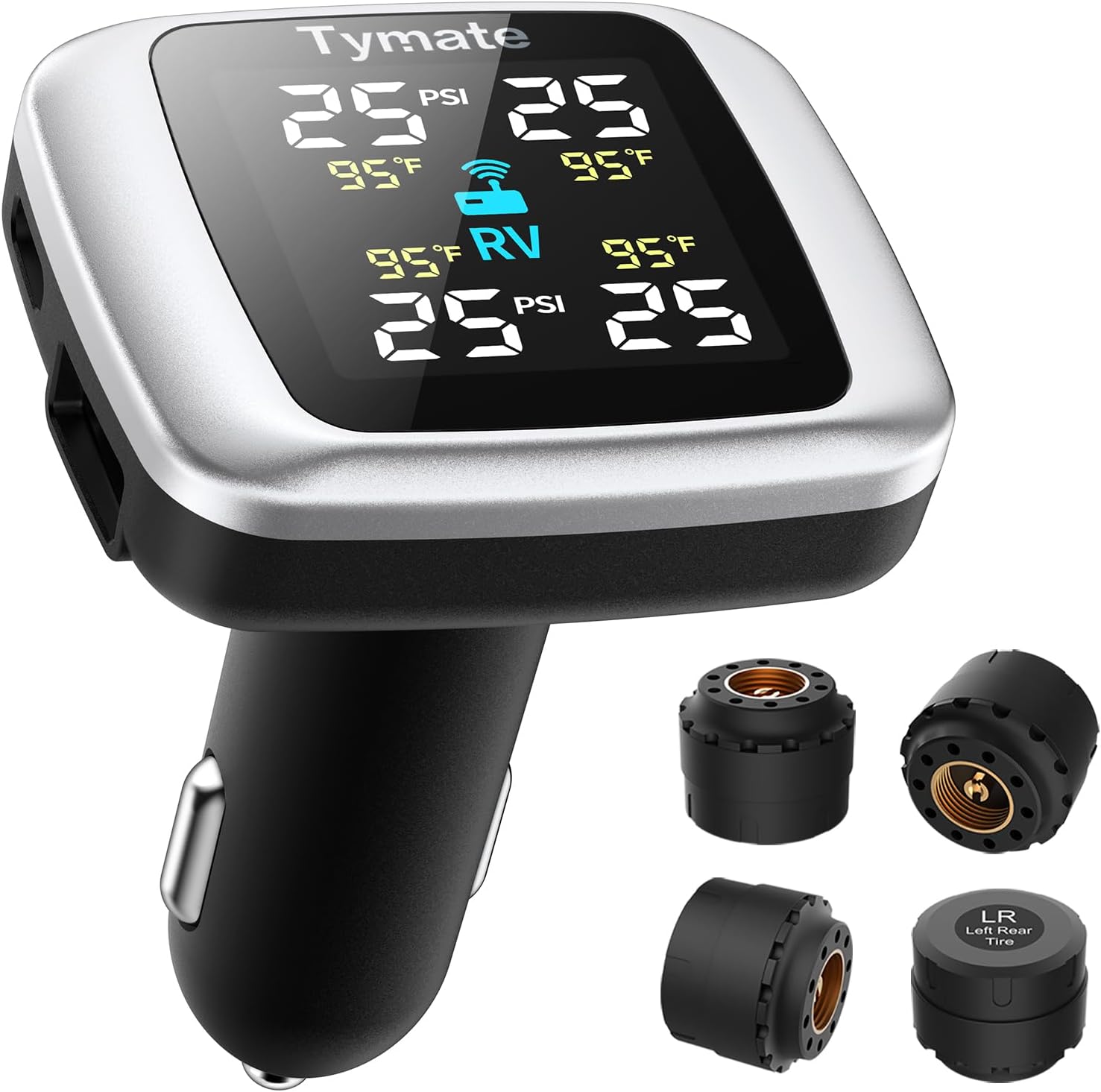
Tymate TM7 is a wireless tire pressure monitoring system that delivers real-time pressure and temperature readings for safer driving. It includes four external sensors, a bright color LCD display with adjustable backlight, and six alarm modes for high/low pressure, fast leakage, high temperature, and sensor signal or battery issues. The system covers a wide 0–144 PSI range and plugs into your vehicle’s cigarette lighter socket for quick DIY setup.

Upgrade your Toyota tire setup with these corrosion-resistant, leak-proof valve stem caps designed to help protect the valve core from water, snow, and road grime. The caps feature a snug rubber seal and durable copper alloy construction to resist rust and oxidation while maintaining stable tire pressure. Ideal for replacing worn original caps and keeping your wheels looking clean and stylish.

This tire inflator with pressure gauge delivers long-lasting performance with a durable rubber-protected gauge and sturdy build. The longer hose and 360 swivel air chuck help you seal the valve securely and keep your hands free while measuring, inflating, or deflating. It’s battery-free for reliable use and provides ±2 PSI accuracy in the mid-range for most typical tires, with universal compatibility for 1/4 NPT compressor outputs.
What to Do If the Tires Are Already Warm
Do not release air from a warm tire simply because its pressure is above the cold specification. The pressure is expected to rise during driving.
If a warm tire appears significantly low, add enough air to avoid driving on a severely underinflated tire. Then park the Hilux, allow the tires to cool for at least three hours, and set them accurately to the placard pressure. This follows the temporary warm-tire approach described by NHTSA.
How Mountain Conditions Affect the Reading
| Condition | Possible Reading | Correct Action |
|---|---|---|
| Higher elevation with a similar tire temperature | Gauge pressure may rise slightly as surrounding atmospheric pressure falls. | Do not apply a fixed altitude correction. Check the tire cold against the placard. |
| Higher elevation with much colder weather | The reading may remain similar or fall because the air inside the tire has cooled. | Add air only if the cold reading is below the applicable Hilux specification. |
| Immediately after a long climb or highway drive | Pressure will normally be above the cold specification because the tire is warm. | Do not bleed it down to the cold number. Recheck after cooling. |
| Heavy cargo or towing | Normal-load pressure may not provide the pressure specified for the added axle load. | Use the full-load or towing pressure supplied by Toyota for the exact vehicle. |
| Tires intentionally aired down off-road | Pressure is below the normal on-road placard setting. | Keep speed low and reinflate before returning to sealed roads or normal road speeds. |
Can Altitude Affect the Hilux TPMS?
TPMS equipment varies by Hilux model, model year, and sales market. A direct system uses sensors at the wheels, while an indirect system estimates pressure loss through wheel-speed and vehicle-sensor data. Some systems display numerical readings, while others only illuminate a warning symbol.
Altitude does not create a universal 3.5 PSI TPMS error. A displayed number may differ slightly from a handheld gauge because of sensor tolerances, temperature, update timing, or gauge accuracy. Do not apply a fixed correction to the TPMS display.
Use TPMS as an early warning, then confirm the pressure manually. NHTSA notes that TPMS is not a substitute for routine checks because a warning may not appear until a tire is significantly underinflated.
Tips for Tire Performance in Mountain Regions
- Check pressure before the trip: Begin with cold tires set to the Hilux placard specification.
- Check again after a major weather change: A cold front or large overnight temperature drop can reduce pressure.
- Inspect the tread and sidewalls: Look for cuts, bulges, exposed cords, embedded objects, uneven wear, and impact damage.
- Account for payload: Tools, camping gear, passengers, accessories, and trailer tongue weight add axle load.
- Avoid sidewall-pressure confusion: The molded sidewall number is a tire limit or load-related marking, not the normal Hilux recommendation.
- Reinflate after off-road use: Reduced off-road pressure is unsuitable for normal paved-road speeds unless it matches the placard.
- Check the spare: Spare tires can lose air while stored and are often forgotten until an emergency.
- Drive smoothly: Avoid sudden steering, braking, and acceleration on steep, loose, wet, icy, or rocky roads.
For broader mountain-driving safety, Michelin recommends using the vehicle manufacturer’s pressure specification instead of relying on an estimated altitude adjustment.
[Products Worth Considering]

Upgrade your Toyota’s wheels with durable aluminum alloy valve stem caps that help protect valve cores from corrosion and direct exposure to road grime, clay, water, and snow. Rubber rings improve sealing to help prevent air leakage and maintain stable tire pressure for safer driving. These caps are easy to install or remove without tools and add a unique, stylish look to your car.

Milton S-921 pencil tire pressure gauge helps you maintain optimal tire pressure for passenger cars with accurate readings in PSI and kPa. It features a built-in deflator valve for convenient pressure adjustments, plus a single chuck head and nylon indicator bar for easy use on the go. Built from durable plated brass and designed for reliable performance, it’s a practical road trip and cold-weather maintenance tool.

This tire inflator extension hose helps your air chuck quickly connect and disconnect from the tire nozzle with minimal leakage, supporting more accurate tire pressure. It uses a high-pressure resistant inflatable tube and durable brass chuck adapter for long-lasting performance. The quick-connect 90-degree thumb press chuck converts to a locking style and is easy to operate for car, motorcycle, and bicycle inflations.
What to Do If Tire Pressure Keeps Dropping
A continuing pressure loss is not a normal altitude effect. Inspect the affected tire and arrange professional service if it repeatedly falls below the placard setting.
- Listen and feel for air leaking around the valve stem.
- Check the tread for nails, screws, stones, or punctures.
- Inspect the sidewall for cuts, cracking, bubbles, or impact damage.
- Look for corrosion, dirt, or damage where the tire seals against the wheel.
- Compare the affected tire with the other tire on the same axle.
- Stop driving if the tire is visibly damaged, rapidly losing pressure, or unable to support the vehicle safely.
Warning: Do not continue a mountain journey on a tire with a bulge, exposed cords, rapid air loss, severe sidewall damage, or repeated TPMS warnings. Fit the appropriate spare or obtain roadside assistance.
[Products Worth Considering]

Steelman white tire marking crayons provide high-contrast, semi-permanent marks for repairing and inspecting tires and equipment. They write on wet or dry, smooth or coarse surfaces including rubber, metal, glass, and wood, making them ideal for puncture location and damage outlining. The lead- and zinc-free crayons resist weather and fading yet wipe away when you no longer need the marks.
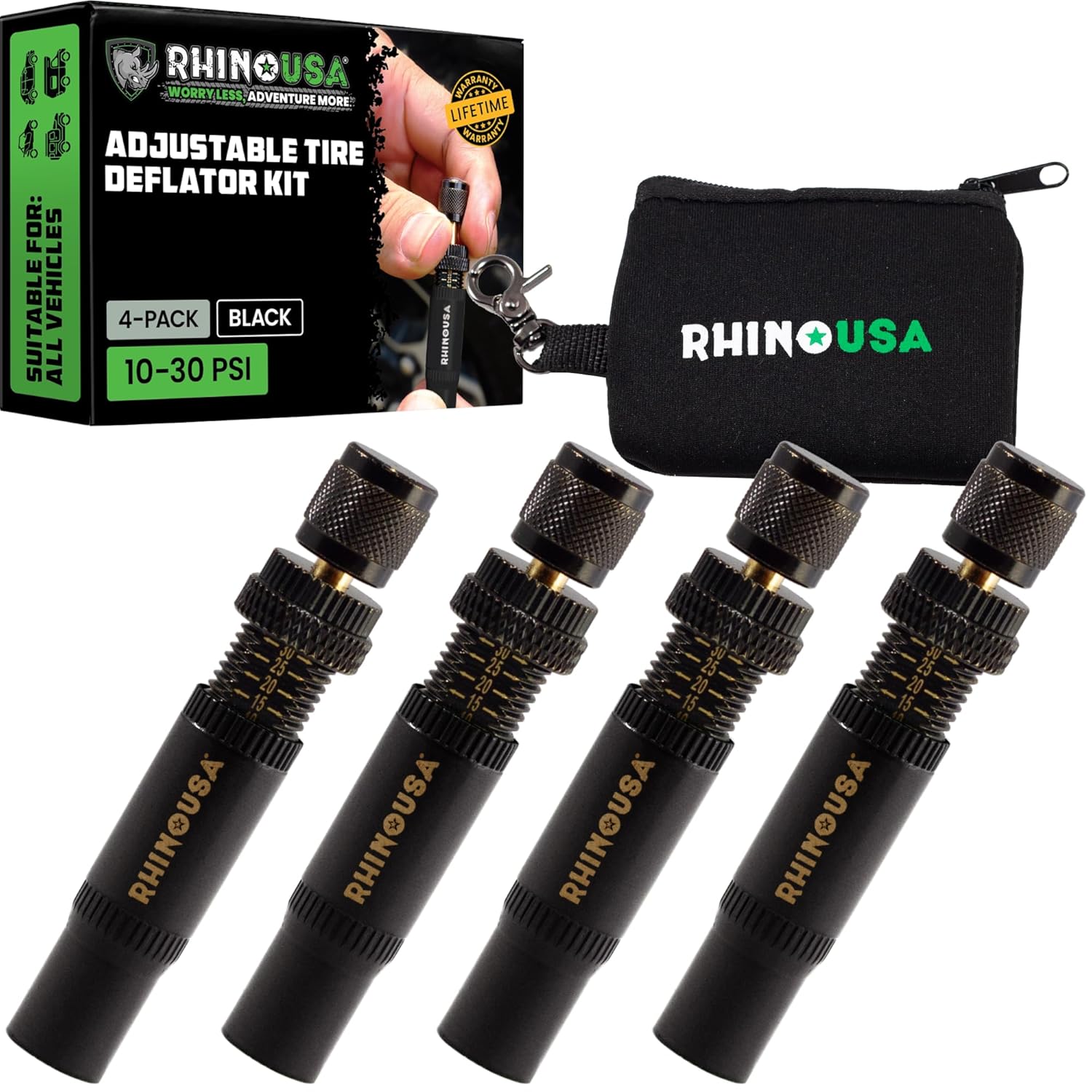
Use the Rhino USA adjustable tire deflators to air down all four tires at once by screwing one deflator onto each valve stem, letting you step away while the tires reach your preset pressure. Each deflator independently adjusts across a 10–30 PSI range with laser-etched indicators for quick setup and verification, making it ideal for beach, sand, and rocky off-road trails.
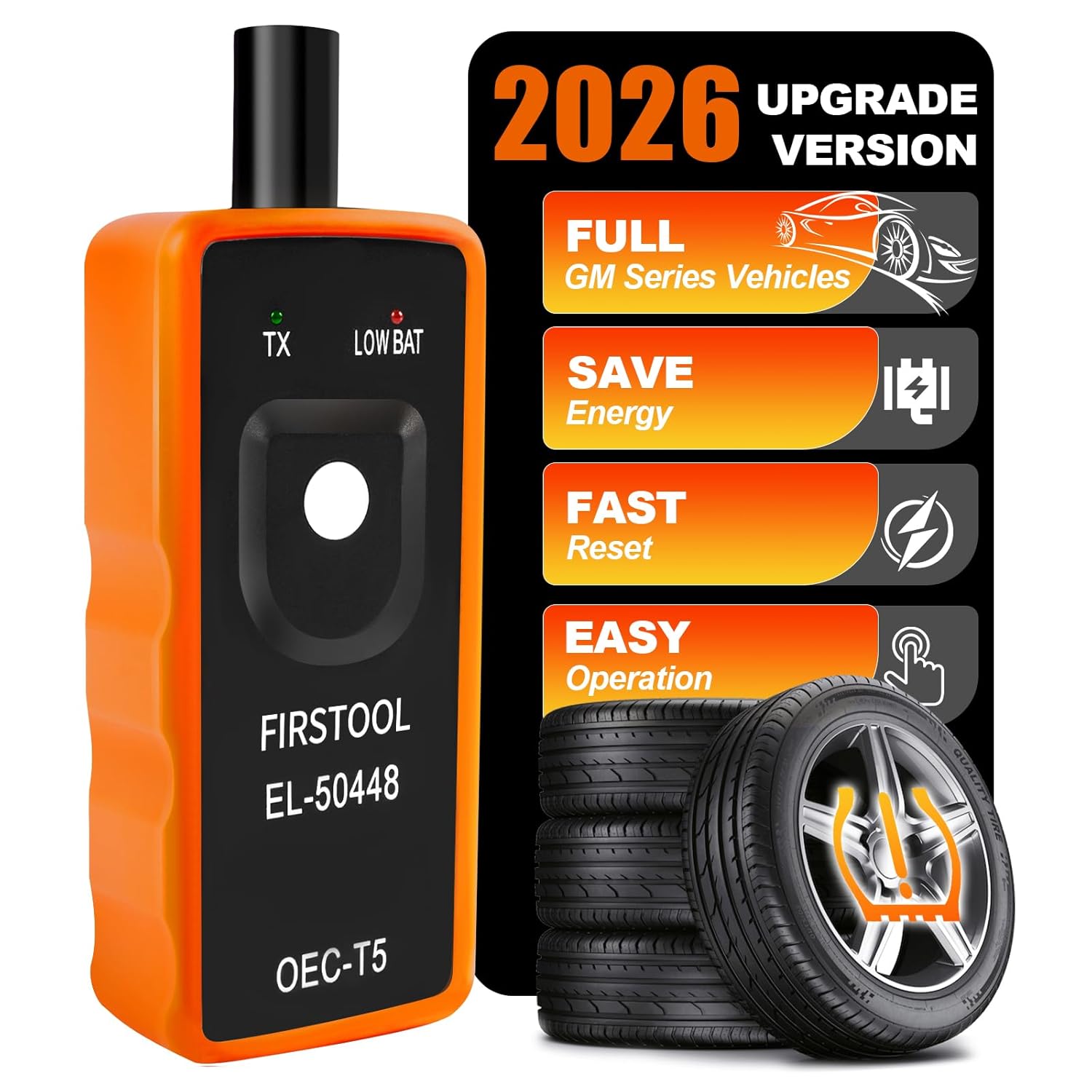
This TPMS relearn tool helps you quickly activate, match, and reset GM tire pressure sensors to keep the vehicle monitoring system working properly. It clears tire pressure alarms and dashboard warning lights after sensor replacement or tire rotation, and supports learning for common 315/433 MHz TPMS sensors. Designed for simple one-button operation, it can help you avoid unnecessary trips to repair shops.
Frequently Asked Questions
Should you adjust Toyota Hilux tire pressure for altitude?
Do not use a fixed altitude adjustment. Measure the tires when cold at your current location and set them to the Hilux tyre placard or owner’s-manual pressure for the current load. Temperature, driving heat, and payload can affect the reading more than altitude alone.
Is 40 PSI too high for a Toyota Hilux or another 4WD?
Not automatically. Forty PSI may be correct for certain tires, axle loads, or full-load settings and excessive for another configuration. Compare a cold reading with the pressure listed on the vehicle placard. Do not judge the correct setting from the vehicle type alone.
What is the 4 PSI rule for tires?
The 4 PSI rule is an informal sealed-road check that compares cold pressure with pressure after approximately 20 to 30 minutes of driving. A rise of roughly four PSI is sometimes used for passenger tires, while some guidance uses six PSI for light-truck or 4WD tires. It is not an altitude formula and must not replace the Hilux placard.
Where can you find the correct Hilux tire pressure?
Check the tyre placard inside the vehicle’s door opening and the owner’s manual. The correct values may differ between the front and rear axles and between normal-load and full-load use.
Should you release air from hot Hilux tires?
Normally, no. Driving heats the tire and raises its pressure, so bleeding a warm tire down to the cold placard value can leave it underinflated after it cools. Check and make the final adjustment after the vehicle has been parked for at least three hours.
Does towing change the required Hilux tire pressure?
It can. Cargo and trailer tongue weight increase axle load, particularly at the rear. Use Toyota’s full-load or towing guidance for your exact Hilux, and make sure the tires and wheels have suitable load ratings.
Conclusion
Altitude does not require a universal Toyota Hilux tire-pressure adjustment. Lower atmospheric pressure may make a gauge reading rise slightly, while colder mountain temperatures may lower it. Payload, towing weight, tire temperature, and off-road use add further variation.
For a safe setting, check every tire cold and follow the Hilux tyre placard or owner’s manual. Recheck after major temperature changes, reinflate after airing down, and investigate any pressure loss that continues after adjustment.
Sources
- Toyota Australia: Frequently Asked Questions — tyre-pressure checks, cold readings, and locating the vehicle specification.
- NHTSA TireWise — cold-pressure procedure, placard guidance, tire inspection, and TPMS limitations.
- U.S. Tire Manufacturers Association: Tire Care Essentials — temperature effects, monthly checks, load checks, and underinflation risks.
- National Weather Service: Standard Atmosphere Values — atmospheric pressure changes at increasing elevations.
- Michelin: Tips for Driving in the Mountains — mountain-driving and manufacturer-pressure guidance.

![[2026NEW] 5000A Jump Starter with Air Compressor (150PSI)](https://m.media-amazon.com/images/I/71oG4PFNsmL._AC_SL1500_.jpg)