
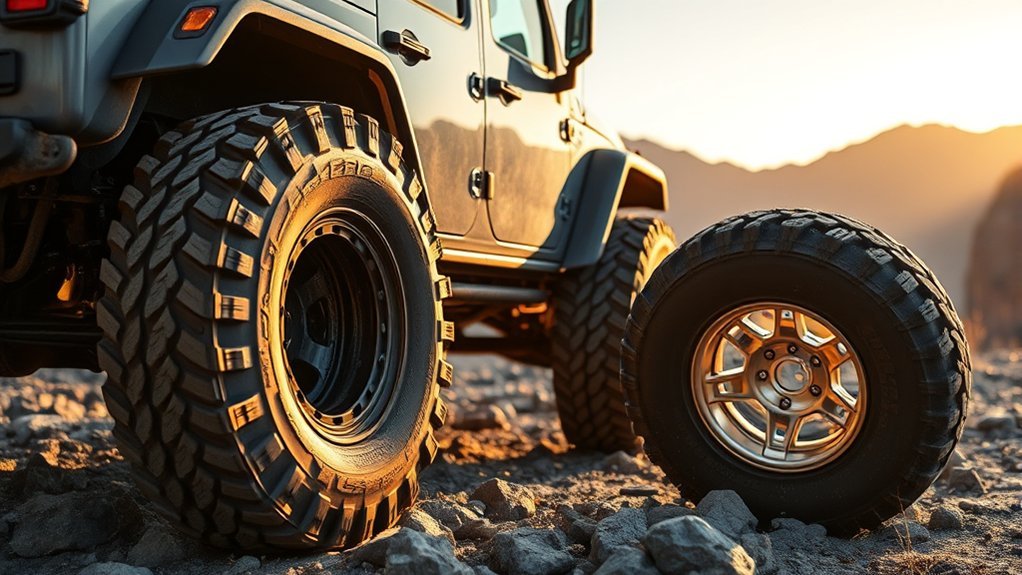
A 35-inch tire is a tire in the nominal 35-inch diameter class, usually chosen for trucks, Jeeps, SUVs, and off-road builds that need more clearance and a stronger stance. In real fitment, the number on the sidewall is not always the exact measured height. Many true 35×12.50 tires measure in the mid-34-inch range, and metric sizes like 315/70R17 are close but not identical. Before buying, check actual manufacturer specs, load rating, rim width, suspension clearance, and your vehicle’s tire placard.
Quick Answer
A 35-inch tire usually refers to a tire with a nominal outside diameter near 35 inches, such as 35×12.50R17 or 35×12.50R20. Actual measured height often lands closer to 34.5 to 34.9 inches, depending on brand, tread, rim width, and inflation.
Key Takeaways
- A 35-inch tire is a nominal size class, not a promise that the tire will measure exactly 35.00 inches tall.
- Common true 35-inch sizes include 35×12.50R17, 35×12.50R18, 35×12.50R20, and 35×13.50R20.
- Common metric near-equivalents include 315/70R17, 315/75R16, and 295/70R18, but each one should be checked by actual specs.
- All-terrain tires are better for mixed road and trail use, while mud-terrain tires are better for mud, rocks, and aggressive off-road driving.
- Upsizing to 35s can affect rubbing, gearing, braking, fuel economy, speedometer accuracy, and spare tire fitment.
What Is a 35-Inch Tire?
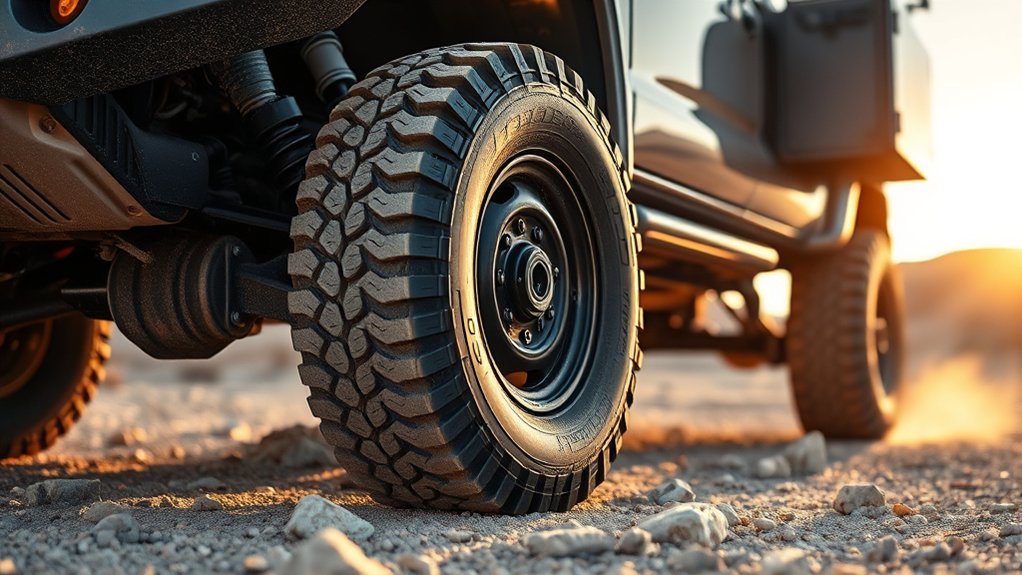
A 35-inch tire is defined by its approximate overall inflated diameter. On flotation sizes, such as 35×12.50R17, the first number is the nominal outside diameter in inches, the second number is the section width in inches, and the final number is the wheel diameter in inches.
Metric sizes work differently. A size such as 315/70R17 means the tire is about 315 mm wide, the sidewall height is 70% of that width, and it fits a 17-inch wheel. That works out to about 34.4 inches by formula, so many people call it a 35, but it is not exactly the same as every tire labeled 35×12.50R17.
Note: The safest tire size for your vehicle is the original size or another size recommended by the vehicle manufacturer. Check the owner’s manual, tire placard, and a qualified tire professional before changing tire size.
Common 35-Inch Tire Sizes
Common 35-inch tire sizes depend on wheel diameter, tire width, load range, and the type of driving you do. True flotation sizes are easy to read, while metric sizes need a quick calculation.
| Size | Type | Typical Use | Fitment Note |
| 35×12.50R17 | Flotation | Jeep, truck, trail, overland | Very common 17-inch off-road fitment |
| 35×12.50R20 | Flotation | Full-size trucks, lifted SUVs | Less sidewall than a 17-inch setup |
| 315/70R17 | Metric | Common “35-class” metric option | Calculated diameter is about 34.4 inches |
| 315/75R16 | Metric | 16-inch off-road wheels | Calculated diameter is about 34.6 inches |
| 295/70R18 | Metric | 18-inch truck and SUV wheels | Calculated diameter is about 34.3 inches |
For a real-world example, Nitto lists the 35×12.50R17LT Ridge Grappler at 34.76 inches overall diameter, 12.52 inches overall width, and an approved rim width range of 8.5 to 11.0 inches. That is why checking the spec sheet matters more than trusting the sidewall label alone.
How 35-Inch Tires Measure in Real Life
When you measure a 35-inch tire in real life, it may be shorter than expected. Tire construction, tread depth, inflation pressure, rim width, and vehicle load all affect the final height. A tire can also lose effective height when it is mounted on the vehicle because the lower sidewall compresses under weight.
Use this simple metric formula when comparing sizes:
Overall diameter in inches = wheel diameter + 2 × (section width × aspect ratio ÷ 25.4)
For example, a 315/70R17 tire calculates to about 34.4 inches. A 285/70R17 calculates to about 32.7 inches, while a 285/70R18 calculates to about 33.7 inches. That means “285/70” is not enough information by itself. You also need the wheel diameter.
Pro Tip: Compare the tire’s actual overall diameter, revolutions per mile, approved rim width range, load index, and weight before buying. Two tires with the same nominal size can fit and drive differently.
Fitment Checklist Before Buying 35-Inch Tires
Moving to 35s can improve trail clearance, but it can also create clearance and drivability problems. Before you order tires, check these points:
- Suspension clearance: Make sure the tire clears control arms, sway bars, fenders, liners, and body mounts at full steering lock and full suspension compression.
- Lift height: Some vehicles need a lift, leveling kit, trimming, or high-clearance fenders to run true 35s without rubbing.
- Wheel offset and backspacing: The same tire can rub or clear depending on where the wheel places the tire.
- Rim width: Match the wheel width to the tire maker’s approved rim range.
- Load rating: Choose a tire that meets or exceeds the load needs for your vehicle, passengers, cargo, and towing.
- Speed rating: Do not downgrade speed capability without understanding the handling and legal limits.
- Spare tire fit: Check the spare carrier, tailgate, bed mount, or underbody spare location.
- Speedometer and gearing: A taller tire can make the speedometer read low and can reduce effective axle gearing.
- Braking and fuel economy: Larger, heavier tires can increase braking distance and fuel use.
Warning: Do not choose 35-inch tires by size label alone. Use the vehicle owner’s manual, tire placard, manufacturer specs, and a qualified tire professional. Improper size, inflation, load rating, or mounting can lead to tire failure or loss of vehicle control.
All-Terrain vs Mud-Terrain 35-Inch Tires
The best 35-inch tire depends on where you drive most. All-terrain tires fit mixed use better because they balance road comfort, rain traction, gravel grip, and light trail use. Mud-terrain tires are more aggressive, with larger voids and stronger biting edges for mud, rocks, and loose ground, but they usually add more road noise and can reduce fuel economy.
| Tire Type | Best For | Strengths | Tradeoffs |
| All-terrain | Daily driving, gravel, camping, snow-rated options, light to moderate trails | Better road manners, longer wear, lower noise, better wet-road balance | Less self-cleaning bite in deep mud than a mud-terrain tire |
| Mud-terrain | Mud, rocks, ruts, aired-down trail driving, aggressive off-road use | Deep tread voids, stronger off-road bite, better mud clearing | More noise, rougher ride, lower efficiency, and often shorter tread life |
[Products Worth Considering]

Protect your spare wheel with a waterproof, dustproof tire cover made to resist sun and harsh weather. The elastic band design makes it easy to install and remove without tools, while reinforced stitching helps it keep its shape. Available in multiple sizes, it fits common RV, trailer, Jeep, SUV, and truck spare tires.

Secure a full-size spare on your trailer with this powder-coated steel spare tire mount bracket. It fits most 4-, 5-, and 6-lug wheel bolt patterns and mounts to trailer tongues up to 4 in wide and 5 in tall. Built for reliable carry with a max 150 lb load rating and includes zinc-plated hardware for straightforward installation.

Keep your tires properly inflated with this analog VONDIOR tire pressure gauge, designed for fast, easy readings without batteries. The swiveling, two-axis hose and large glow dial help you measure at any tire angle with instant visibility. Built with a protective rubber shield, it supports durable, low-maintenance use for cars and trucks.
Best 35-Inch All-Terrain Tires
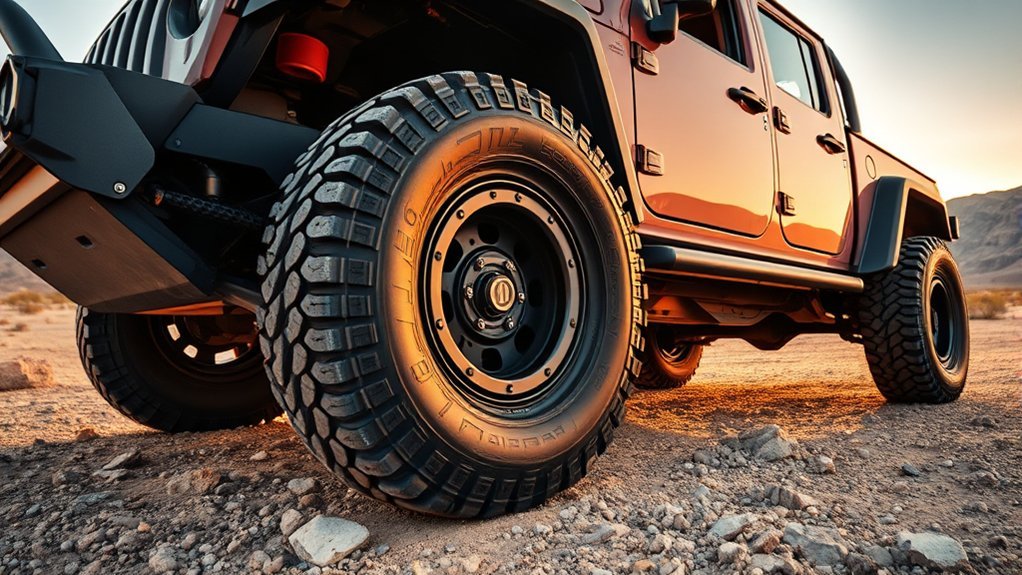
If you want a 35-inch all-terrain tire for mixed road and trail use, start with options that publish clear specs and match your vehicle’s load needs. Good all-terrain choices include the Nitto Ridge Grappler, BFGoodrich All-Terrain T/A KO3, and Toyo Open Country A/T III.
The Nitto Ridge Grappler is a hybrid terrain tire, so it leans more aggressive than a mild highway all-terrain while still aiming for daily comfort. The BFGoodrich KO3 is the newer BFGoodrich all-terrain line and is listed as severe snow rated with a 50,000-mile warranty. The Toyo Open Country A/T III is a strong mixed-use option with wet-road focus, off-road grip, and a warranty of up to 65,000 miles depending on size type.
For most daily-driven trucks and SUVs, an all-terrain tire is the better first choice. You get more useful grip on gravel, dirt, snow, and light trails without giving up as much comfort on pavement.
[Products Worth Considering]

Upgrade your tire inflating setup with this 12-inch hose adapter featuring a brass locking quick-connect chuck for secure, leak-proof attachment. The extended, flexible design helps reach hard-to-access valve stems, while the self-locking mechanism enables hands-free inflation with no pressure loss. It’s compatible with most portable air compressors and inflators, making it ideal for cars, trucks, motorcycles, and bicycles.

This manual duck head tire changer kit makes tire installation and removal simpler by letting you embed the duck head into the tire with applied pressure. The integrated design and durable steel construction help reduce friction and improve efficiency and safety during use. Suitable for 16–21 inch wheels, it’s convenient for cars, trucks, SUVs, and ATV tires, with 24-hour after-sales support.

Monitor tire tread wear with a smart, color-coded depth gauge that shows clear condition ranges at a glance. The bar is range marked for fast, easy readings, helping you maintain safer traction and performance. Each gauge is portable with a pocket clip, and the set includes 20 units for daily use and sharing.
Best 35-Inch Mud-Terrain Tires
Choose a 35-inch mud-terrain tire when deep mud, rocks, ruts, and trail traction matter more than quiet road manners. Mud-terrain tires use larger tread voids and more aggressive shoulder blocks to dig and self-clean, but that same design can add noise and weight on the highway.
The BFGoodrich Mud-Terrain T/A KM3 is built for extreme traction and toughness, with mud-release features and a rock-focused compound. The Toyo Open Country M/T is another serious off-road option, built for durability, aggressive tread bite, and muddy, snowy, rocky conditions.
If you drive mostly on pavement and only hit trails on weekends, an aggressive all-terrain or hybrid terrain tire may be easier to live with. If your vehicle spends real time in mud, rocks, and low-pressure trail use, a mud-terrain tire makes more sense.
[Products Worth Considering]

This digital tire pressure gauge with built-in inflator helps you accurately check and adjust tire pressure for safer driving and better fuel efficiency. It supports multiple units (PSI, KPA, BAR, KG/CM²) and reads within 1% for reliable results. The 3-in-1 design inflates, deflates, and measures, with a quick-connect air chuck and compatible hose setup for cars, trucks, SUVs, RVs, and motorcycles.

AZUNO’s digital tire inflator delivers stable, accurate pressure readings with a bright LCD and a 0.1 resolution display for confident inflation. It supports one-handed operation for inflating and quick deflating, and it’s built with rugged steel and brass components for reliable shop or garage use. With multi-unit pressure display and compatibility across cars, SUVs, motorcycles, and trucks, it’s a convenient accessory for everyday tire maintenance.

Measure tire tread depth quickly and accurately with this LUMITECO dial gauge that reads in 1/32" increments up to 14/32". The color-coded green/yellow/red zones make it easy to judge tire wear and know when replacement is needed. A rugged, compact design with a protective pouch helps keep the gauge ready for use on cars, trucks, motorcycles, and more.
How 35-Inch Tires Affect Your Vehicle
Going from a smaller stock tire to a 35-inch tire changes more than looks. It can improve axle and bumper clearance, but it also changes the way your vehicle accelerates, brakes, steers, and shifts.
- Ground clearance: You gain about half the tire diameter increase at the axle. For example, moving from a 33-inch tire to a 35-inch tire adds about 1 inch of axle clearance.
- Effective gearing: Larger tires make gearing feel taller. You may notice slower acceleration, more transmission hunting, or less crawl control off-road.
- Speedometer accuracy: A taller tire travels farther per revolution, so your speedometer may read lower than your actual speed unless recalibrated.
- Fuel economy: Heavier and more aggressive tires usually increase rolling resistance and rotating mass.
- Braking: More tire weight can add braking load, especially on heavy trucks or loaded overland builds.
- Ride and steering: Wider tires can follow road grooves, add steering effort, or change tracking depending on wheel offset and alignment.
Frequently Asked Questions
Are 35 tires the same as 295?
No. A 35-inch tire refers to approximate overall diameter, while 295 refers to metric section width in millimeters. A 295/70R17 is about 33.3 inches by formula, while a 295/70R18 is about 34.3 inches. The rim diameter changes the final height.
Is a 285 tire a 33 or 35?
Most 285-width tires are closer to 33 inches than 35 inches, but the full size matters. A 285/70R17 is about 32.7 inches. A 285/70R18 is about 33.7 inches. A 285/75R17 is about 33.8 inches. None of those are true 35-inch sizes.
Is a 315 tire the same as a 35?
Not exactly. A 315/70R17 calculates to about 34.4 inches, so many people group it with 35-inch tires. It is close, but it is not identical to every 35×12.50R17. Always compare actual manufacturer specs before buying.
Is 285/70 a 35-inch tire?
No. A 285/70 tire is usually below 35 inches, and the exact height depends on wheel diameter. A 285/70R17 is about 32.7 inches, and a 285/70R18 is about 33.7 inches. You need a larger size for a true 35-inch setup.
Do 35-inch tires need a lift?
Many vehicles need a lift, leveling kit, trimming, different wheel offset, or fender clearance work to run 35-inch tires without rubbing. Some factory off-road trims can fit 35s more easily than standard trims, but you still need to check clearance at full steering lock and full suspension compression.
Will 35-inch tires affect my speedometer and fuel economy?
Yes, they can. A taller tire changes revolutions per mile, which can make the speedometer read low unless it is recalibrated. Larger 35-inch tires also tend to be heavier, which can reduce fuel economy, soften acceleration, and increase braking load.
Conclusion
A 35-inch tire can give your truck, Jeep, or SUV more trail clearance, stronger obstacle clearance, and a tougher stance. The key is choosing the right 35-inch class tire, not just the biggest one that looks good. Check actual diameter, load rating, rim width, wheel offset, rubbing points, and speedometer impact before you buy. For mixed daily driving and trails, an all-terrain tire usually makes the most sense. For deep mud, rocks, and aggressive off-road use, a mud-terrain tire gives you more bite, with more noise and compromise on the road.
Sources
- NHTSA TireWise — tire size, tire placard, inflation, tread, and safety guidance.
- Nitto Ridge Grappler specs — actual 35×12.50R17 and 35×12.50R20 diameter, width, load, and rim-width data.
- BFGoodrich All-Terrain T/A KO3 — current BFGoodrich all-terrain features, severe snow rating, and warranty details.
- Toyo Open Country A/T III — all-terrain features, 3PMSF note, and treadwear warranty details.
- BFGoodrich Mud-Terrain T/A KM3 — mud-terrain features and off-road traction claims.
- Toyo Open Country M/T — mud-terrain construction, traction features, and off-road-use positioning.

