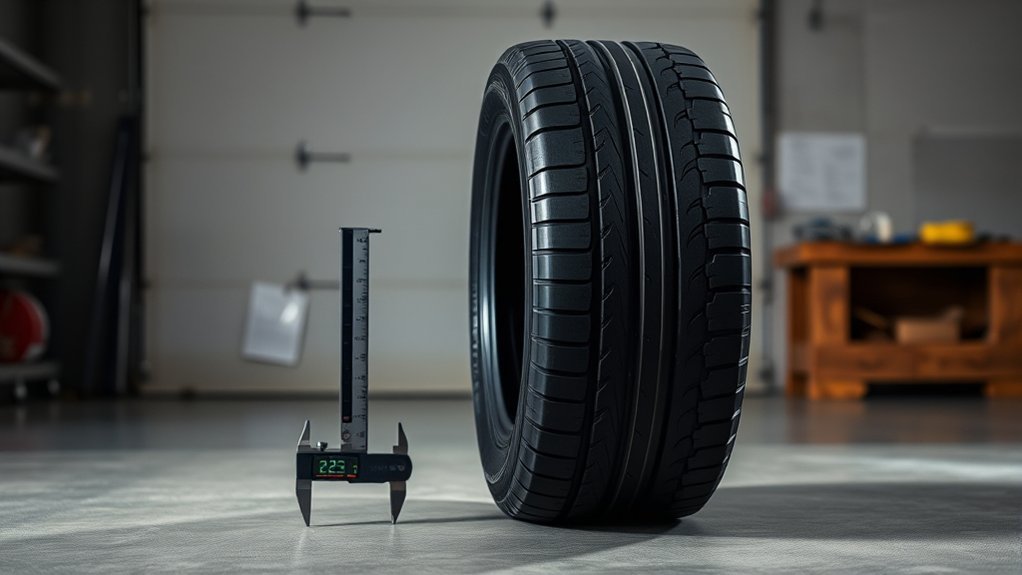
A 235 tire is about 9.25 inches wide, but that number alone does not tell you the tire’s full height. To calculate diameter, sidewall height, circumference, and speedometer change, you need the complete tire size, such as 235/75R15. In that common example, the tire is about 28.88 inches tall and turns about 698 times per mile.
Quick Answer
A 235 tire is roughly 9.25 inches wide because 235 mm equals 9.25 inches. A common 235/75R15 tire is about 28.88 inches tall, has a 6.94-inch sidewall, and has a circumference near 90.72 inches. Other 235 sizes can be shorter or taller.
Key Takeaways
- The 235 in a tire size means the nominal section width is 235 millimeters, or about 9.25 inches.
- A 235/75R15 tire is about 28.88 inches tall, but a different aspect ratio or rim size changes the height.
- Sidewall height equals tire width multiplied by the aspect ratio.
- Diameter changes can affect speedometer accuracy, gearing, clearance, and ride feel.
- Always verify the vehicle placard, owner’s manual, wheel size, load index, speed rating, and clearance before changing tire size.
What Does 235 Mean on a Tire?
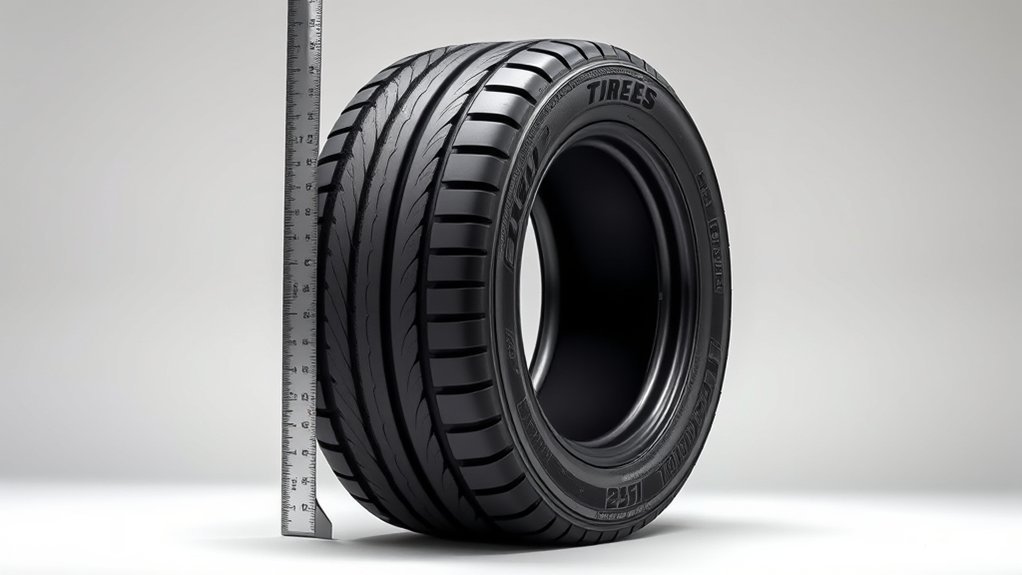
A 235 tire has a nominal section width of 235 millimeters. That is the width measurement from sidewall to sidewall, not the tread width and not the tire’s full diameter. Converted to inches, 235 mm is about 9.25 inches.
You need the complete size code to understand the rest of the tire. In 235/75R15, the 235 is width, 75 is the aspect ratio, R means radial construction, and 15 means the tire fits a 15-inch wheel. Bridgestone explains that tire width is listed in millimeters, the aspect ratio is the sidewall height as a percentage of width, and the rim diameter is listed in inches in a standard tire-size code.
That difference matters because two tires can both start with 235 and still have very different heights. A 235/60R15 is much shorter than a 235/75R15, while a 235/85R16 is taller than both.
Note: Actual measured tire dimensions can vary slightly by brand, tread design, rim width, inflation pressure, and load. Use the tire maker’s specification sheet when exact clearance matters.
235 Tire Width in Inches
A 235 tire is about 9.25 inches wide. The simple conversion is:
235 ÷ 25.4 = 9.25 inches
This gives you the nominal section width. The tread that touches the road is usually narrower than the section width because section width measures the inflated tire across the sidewalls. That is why a “235” tire does not always put a full 9.25-inch tread patch on the pavement.
Width Conversion Basics
Use 25.4 millimeters per inch when you convert tire width. For a 235 tire, the math is simple: 235 mm divided by 25.4 equals 9.25 inches. A wider tire can add stability and grip, but it may also add weight, rolling resistance, and rubbing risk if your vehicle does not have enough clearance.
Measurement Factors
The number printed on the sidewall is a size designation, not always the exact measured width on your vehicle. Rim width can make the sidewalls sit slightly wider or narrower. Tire pressure, tread design, and tire construction can also change the final mounted shape.
For fitment, you should compare the tire’s published section width, approved rim-width range, overall diameter, and load rating against your vehicle’s requirements. The vehicle door placard and owner’s manual are your starting points.
Comparison to Similar Tires
A 235 tire is wider than a 225 tire and narrower than a 245 or 265 tire when all other parts of the size are equal. For example, a 225/75R15 is about 8.86 inches wide, while a 235/75R15 is about 9.25 inches wide. That adds about 0.39 inch of nominal section width.
The bigger mistake is comparing only the first number. A 235/75R15 is taller than a 235/60R15 even though both are 235 tires. Width matters, but aspect ratio and rim diameter decide the final height.
How Tall Is a 235 Tire?
A 235 tire can be short, medium, or tall depending on the full size code. The height comes from the sidewall height plus the wheel diameter. A common 235/75R15 tire is about 28.88 inches tall.
| Tire Size | Approx. Sidewall Height | Approx. Overall Diameter | Best Use Context |
|---|---|---|---|
| 235/60R15 | 5.55 in | 26.10 in | Lower-profile 15-inch setup |
| 235/70R15 | 6.48 in | 27.95 in | Balanced street and light-truck use |
| 235/75R15 | 6.94 in | 28.88 in | Common SUV and light-truck size |
| 235/85R16 | 7.86 in | 31.73 in | Tall narrow truck fitment |
So, a 235 is not automatically a 29-inch tire or a 31-inch tire. The aspect ratio and rim diameter decide that.
235 Tire Diameter and Circumference
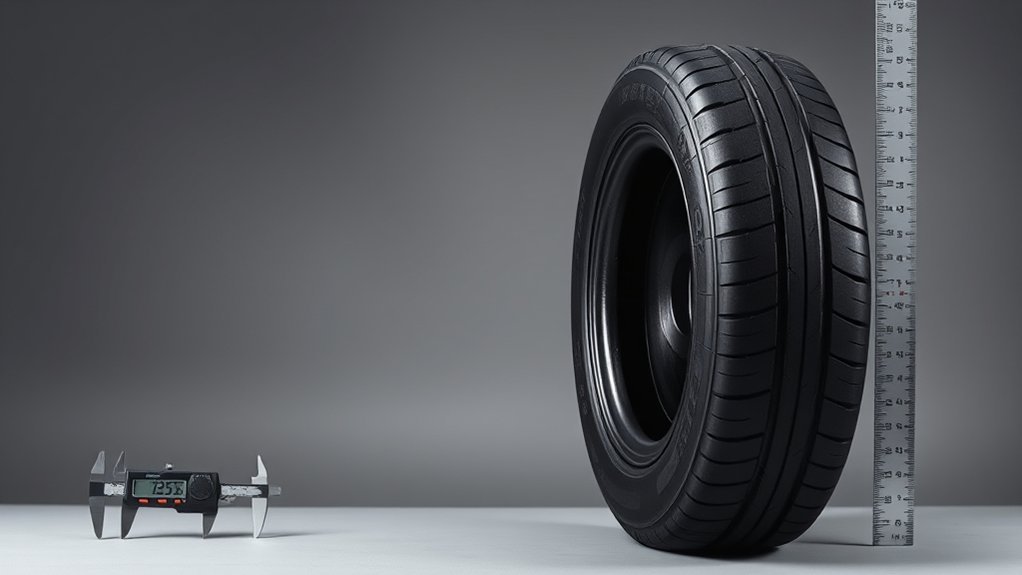
For a common 235/75R15, the overall diameter is about 28.88 inches. The circumference is about 90.72 inches. That means the tire travels roughly 90.72 inches with each full rotation.
235/75R15 Tire Diameter
Use this formula to calculate tire diameter:
Overall diameter = wheel diameter + (2 × sidewall height)
For 235/75R15:
- Width: 235 mm, or 9.25 inches
- Sidewall height: 235 × 0.75 = 176.25 mm, or 6.94 inches
- Wheel diameter: 15 inches
- Overall diameter: 15 + (2 × 6.94) = 28.88 inches
Tire Circumference Formula
Use this formula to calculate circumference:
Circumference = diameter × π
For a 235/75R15, the calculation is:
28.88 × 3.1416 = 90.72 inches
You can then estimate revolutions per mile:
63,360 inches per mile ÷ 90.72 = about 698 revolutions per mile
Speedometer Impact
Your speedometer estimates speed from wheel rotation. If you install a taller tire than the size your vehicle was calibrated for, each rotation carries the vehicle farther. That can make the speedometer read lower than your real road speed.
Use this formula:
Actual speed = indicated speed × new tire diameter ÷ old tire diameter
The amount of error depends on the tire you replaced. A 235/75R15 swap from a slightly smaller 225/75R15 creates a much smaller error than a swap from a much shorter tire.
How 235 Tires Affect Speedometers
A 235 tire affects your speedometer only when its overall diameter differs from the original tire size. The width alone does not cause the speedometer error. Diameter does.
| Original Size | Original Diameter | New Size | Approx. Change | When Speedometer Shows 60 mph |
|---|---|---|---|---|
| 225/75R15 | 28.29 in | 235/75R15 | +2.1% | About 61.3 mph |
| 215/75R15 | 27.70 in | 235/75R15 | +4.2% | About 62.5 mph |
| 205/75R15 | 27.11 in | 235/75R15 | +6.5% | About 63.9 mph |
| 235/70R15 | 27.95 in | 235/75R15 | +3.3% | About 62.0 mph |
Warning: A taller or shorter tire can affect speedometer accuracy, ABS behavior, traction control, transmission shift points, and clearance. Confirm the replacement size with a qualified tire professional if it differs from the vehicle placard.
Will a 235 Tire Fit Your Vehicle?
A 235 tire may fit your vehicle, but you should not decide from width alone. You need to match the full tire size, wheel diameter, rim-width range, load capacity, speed rating, and available clearance.
The National Highway Traffic Safety Administration advises using the same tire size as the vehicle’s original tires or another size recommended by the vehicle manufacturer. You can usually find that information on the Tire and Loading Information Label, driver-side doorjamb, or in the owner’s manual.
- Check the original tire size: Compare the full code, not just the 235 width.
- Confirm rim diameter: A 235/75R15 fits a 15-inch wheel, not a 16-inch or 17-inch wheel.
- Verify approved rim width: Use the tire manufacturer’s rim-width range for that specific tire model.
- Check clearance: Inspect fenders, struts, control arms, brake components, mud flaps, and inner liners.
- Turn lock to lock: Make sure the tire does not rub at full steering lock.
- Account for suspension travel: A tire that clears while parked may rub under compression.
- Match load and speed ratings: Do not use a tire with a lower required rating than your vehicle needs.
- Use correct pressure: Follow the vehicle placard pressure unless a qualified tire professional gives size-specific guidance.
235 Vs 225 Vs 245 Vs 265 Tire Size Differences
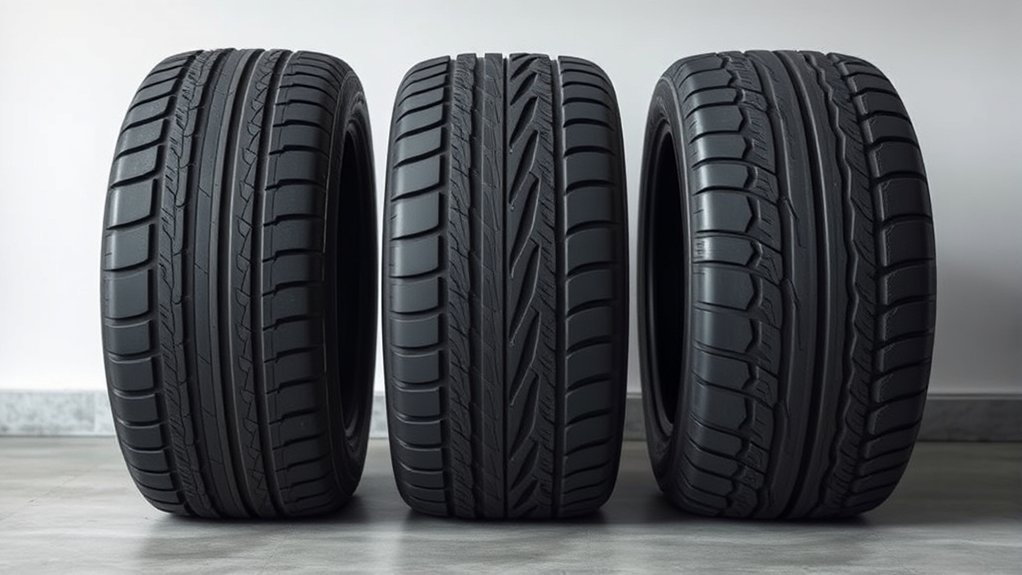
When the aspect ratio and rim diameter stay the same, a wider tire also gets taller because the sidewall height is a percentage of width. That means a 265/75R15 is not just wider than a 235/75R15. It is also taller.
| Size | Approx. Width | Approx. Diameter | Approx. Revs/Mile | Compared With 235/75R15 |
|---|---|---|---|---|
| 225/75R15 | 8.86 in | 28.29 in | 713 | Narrower and shorter |
| 235/75R15 | 9.25 in | 28.88 in | 698 | Baseline example |
| 245/75R15 | 9.65 in | 29.47 in | 684 | Wider and about 0.59 in taller |
| 265/75R15 | 10.43 in | 30.65 in | 658 | Much wider and about 1.77 in taller |
A wider tire can improve traction and stance, but it can also increase steering effort, rolling resistance, road noise, weight, and rubbing risk. If you want a wider size, check whether the diameter stays close enough to your original tire size for your vehicle’s systems.
[Products Worth Considering]

The ETENWOLF T600 digital tire pressure gauge delivers precise, manually calibrated readings to ANSI B40.7 Grade 2A standards with ±0.5% PSI accuracy. Its 360° rotating nozzle and display hold make it easy to check pressures from any angle, while a bleed button helps dial tires to the perfect level. With a 0–250 PSI range and support for PSI, BAR, and KPA, it’s a convenient tool for maintaining tire performance across many vehicles and seasons.

The SAFELIFE dial tire tread depth gauge measures tread depth in 1/32 inch increments with clear, easy-to-read 2-inch dial face. Color zones using a traffic light system help you quickly judge whether tread is low, marginal, or ample for safer driving. Built with a durable zinc cast body and a metal detect probe for precise, comfortable use across cars, motorcycles, trucks, and buses.

Upgrade your 2024-2026 Tesla Model 3 Highland with REEVAA all-weather mud flaps designed for seamless fit along the original body lines. The set of four delivers strong splash protection against mud, gravel, and road debris while using OEM-grade durable materials. Installation is non-destructive with original hole positions and snap-in clips, and the aerodynamic design helps minimize impact on efficiency.
Vehicles That Use 235 Tires
You’ll often find 235-width tires on older SUVs, light trucks, vans, and some utility vehicles, especially models that use 15-inch or 16-inch wheels. The exact size depends on year, trim, drivetrain, suspension, and market.
A 235-width tire is common because it offers a practical middle ground: wider than many compact passenger sizes, but not as bulky as many 265-width truck tires.
Common use cases include daily driving, light hauling, highway travel, gravel roads, and mild off-road use. Still, you should never assume a 235 tire fits just because a similar vehicle uses one. Trim packages and wheel options can change the correct size.
[Products Worth Considering]

Measure tire tread depth quickly and accurately with this LUMITECO dial gauge that reads in 1/32" increments up to 14/32". The color-coded green/yellow/red zones make it easy to judge tire wear and know when replacement is needed. A rugged, compact design with a protective pouch helps keep the gauge ready for use on cars, trucks, motorcycles, and more.

This ecocstm ratchet wrench is designed to make emergency and routine tire changes faster with a 360° rotating head and quick forward/reverse switching. The extended handle provides extra leverage to reduce effort and hand fatigue, while the adapter helps fit many scissor jacks on cars, SUVs, trucks, and vans. Built for reliable performance with durable construction, it’s a practical travel essential for on-the-road preparedness.

This wheel brush kit delivers pro-level cleaning at home, lifting dirt, grime, and brake dust to help restore wheel appearance. It includes multiple brush styles and applicator pads for tackling different wheel surfaces, with gentle, metal-free bristles designed to reduce scratching risk. The flat and double-ended brushes are built for comfort and reach, making wheel care easier for cars, trucks, and RVs.
How to Choose the Right 235 Tire
Choosing the right 235 tire starts with the complete size code. After that, match the tire’s load capacity, speed rating, tread type, and real-world dimensions to your vehicle and driving conditions.
- Start with the vehicle placard: Use the listed original size as your baseline.
- Compare diameter: Keep the new tire close to the original diameter unless you know the effects on gearing and electronics.
- Check load index: The load index tells you how much weight a tire can carry when properly inflated. Do not choose a tire below your vehicle’s required load rating.
- Check speed rating: Match or exceed the rating required for your vehicle and driving conditions.
- Choose the right tread type: Touring and highway tires work best for quiet road use, all-terrain tires add gravel and trail grip, and winter-rated tires help in severe snow conditions.
- Confirm tire pressure guidance: The correct pressure is usually on the vehicle placard, not the maximum pressure stamped on the tire sidewall.
- Test fitment carefully: Check clearance before driving aggressively or towing.
Pro Tip: If you are changing from one 235 size to another, compare overall diameter first. A 235/75R15 and 235/85R16 are the same nominal width, but they are not close in height.
[Products Worth Considering]

The Tymate TM12 RV TPMS delivers real-time tire pressure and temperature monitoring with a stable 433Hz display for safer long-distance driving. It supports simultaneous monitoring across vehicle and trailer zones, includes six alarm modes for pressure, temperature, leakage, battery, and signal loss, and features easy DIY installation with auto calibration. Power is supplied via USB-C charging or solar recharging, with a wide 0–144 PSI range and up to 50 ft signal coverage for RVs and towable trailers.

This 3-piece wheel and tire brush set makes it easy to clean light, medium, and heavy dirt from wheels, rims, tires, and exterior surfaces. It includes both soft and stiff bristle options for gentle scrubbing and tough grime removal, helping lift brake dust and road buildup. The long-handle design supports comfortable cleaning across cars, trucks, SUVs, RVs, motorcycles, and more, with simple care instructions to restore brush shape.

Keep your tires properly inflated with this analog VONDIOR tire pressure gauge, designed for fast, easy readings without batteries. The swiveling, two-axis hose and large glow dial help you measure at any tire angle with instant visibility. Built with a protective rubber shield, it supports durable, low-maintenance use for cars and trucks.
Frequently Asked Questions
Is a 235 tire taller than a 225?
A 235 tire is taller than a 225 tire only when the aspect ratio and rim diameter stay the same. For example, a 235/75R15 is about 28.88 inches tall, while a 225/75R15 is about 28.29 inches tall. If the 235 has a lower aspect ratio, it may be shorter than a 225 tire.
What size is a 235 tire in inches?
A 235 tire is about 9.25 inches wide. If the full size is 235/75R15, it is about 28.88 inches tall, with a sidewall height near 6.94 inches. Other 235 sizes can have different heights.
Is a 235 a 31-inch tire?
A 235 is not automatically a 31-inch tire. A 235/75R15 is about 28.88 inches tall, so it is not a 31-inch tire. However, a 235/85R16 is about 31.73 inches tall, so some 235 sizes can be near or above 31 inches.
What tire is taller, 235 or 245?
A 245 tire is taller than a 235 tire when both use the same aspect ratio and rim diameter. For example, a 245/75R15 is about 29.47 inches tall, while a 235/75R15 is about 28.88 inches tall. If the aspect ratios differ, calculate both sizes before comparing.
Can I replace 225 tires with 235 tires?
You may be able to replace 225 tires with 235 tires, but only if the full size, wheel width, clearance, load rating, and speed rating work for your vehicle. A 235/75R15 is wider and slightly taller than a 225/75R15, so check rubbing risk and speedometer change before switching.
Will 235 tires use more fuel?
They can, but not always. A wider or heavier 235 tire may increase rolling resistance compared with a narrower tire. Tread design, tire weight, inflation pressure, alignment, and driving style often matter just as much as width.
Conclusion
A 235 tire is about 9.25 inches wide, but the full size code decides the tire’s real height. A common 235/75R15 measures about 28.88 inches tall, has a 6.94-inch sidewall, and turns about 698 times per mile. Before you buy, compare the complete tire size against your vehicle placard, wheel specs, clearance, load index, and speed rating. That gives you a safer fit and a more accurate idea of how the tire will affect ride quality, speedometer readings, and handling.
Sources
- Bridgestone Americas: Determining Tire Size — supports tire-size code meanings, including width, aspect ratio, construction, rim diameter, load index, and speed rating.
- NHTSA TireWise — supports tire safety guidance, vehicle placard use, tire pressure, tread checks, and correct-size recommendations.
- Discount Tire: Load Range vs. Load Index — supports load-index and load-range explanations.