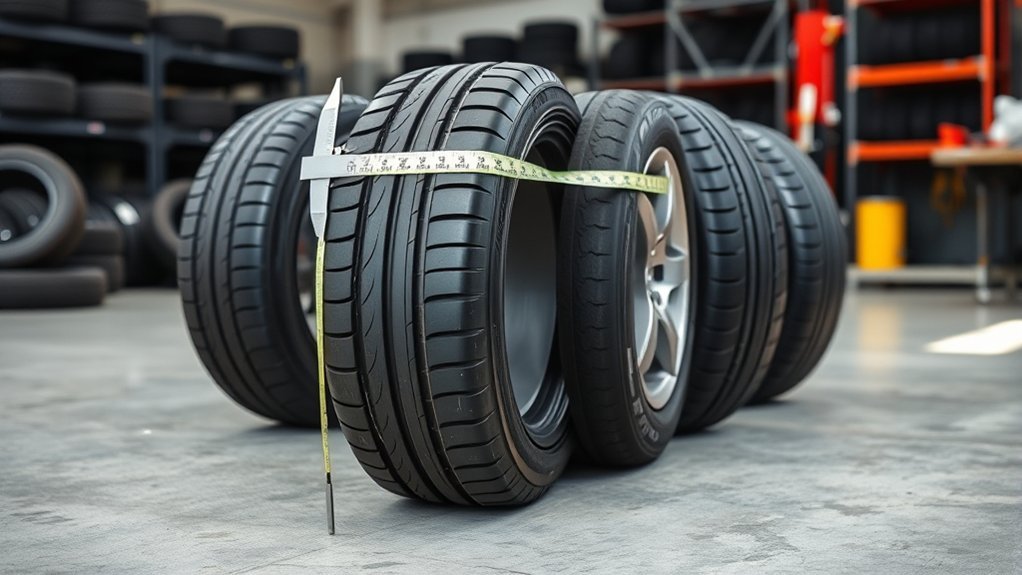
Tire width is the first major number most drivers notice on a tire sidewall, and it has a direct effect on fitment, steering feel, ride comfort, fuel economy, and clearance. In a size like P225/45R17, the 225 means the tire’s nominal section width is 225 millimeters from sidewall to sidewall. The safest choice is not simply the widest tire that fits; it is the width approved for your vehicle, wheel, load needs, and driving conditions.
Quick Answer
Tire width is the tire’s nominal section width, shown as the first three-digit number in a common tire size code. In P225/45R17, 225 means the tire is about 225 millimeters wide from sidewall to sidewall when mounted on its measuring rim and properly inflated.
Key Takeaways
- Tire width is the first three-digit number in many tire sizes, such as 225 in P225/45R17.
- That number is the nominal section width in millimeters, not always the exact measured width on your vehicle.
- Actual tire width can change slightly depending on rim width, tire design, and inflation pressure.
- Wider tires can improve dry grip and stability, but they may increase rolling resistance, road noise, steering effort, and wet-road hydroplaning risk.
- Always match tire width to the vehicle placard, owner’s manual, load index, speed rating, approved rim-width range, and available clearance.
At a Glance
| Time Required | 5–10 minutes to read your sidewall, placard, and wheel size |
| Difficulty | Easy for reading tire size; moderate for upsizing decisions |
| Tools Needed | Tire sidewall, vehicle placard, owner’s manual, wheel width, and tire manufacturer specs |
| Cost | Free to check; tire replacement cost depends on size, type, and brand |
What Is Tire Width?
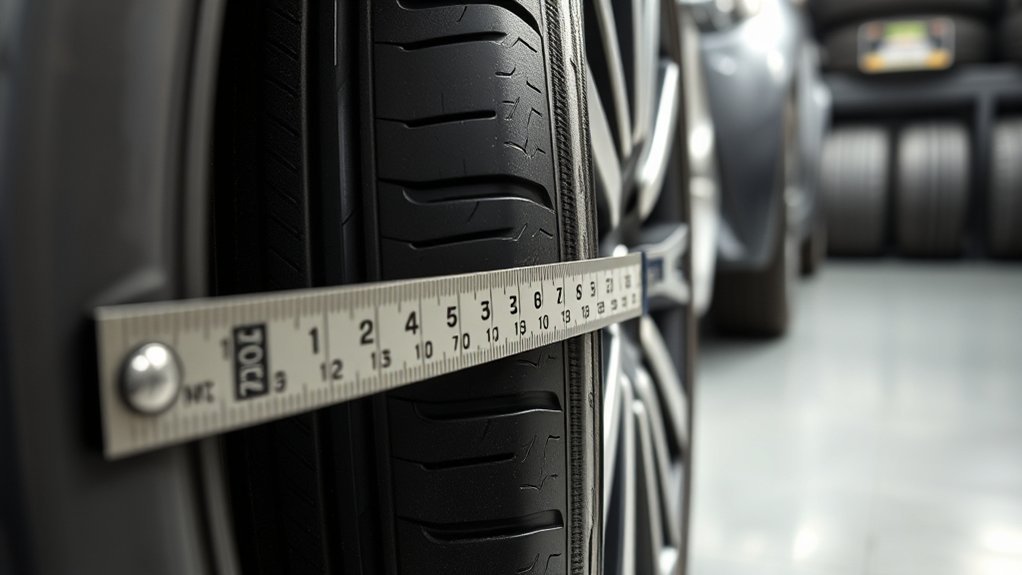
Tire width is the nominal section width of a tire. It is usually shown as the first three-digit number in a metric tire size. In P225/45R17, the tire width is 225 millimeters. That number describes the tire’s width from outer sidewall to outer sidewall, measured on a specified rim width and inflated under standard conditions.
This number helps you compare replacement tires, confirm wheel compatibility, and avoid clearance problems. Tire width affects the contact patch, steering response, braking feel, ride comfort, road noise, rolling resistance, and the way the vehicle looks in the wheel well. It should work with the rest of the tire size, not be chosen by itself.
Note: Tire width is not the same as tread width. Section width measures the tire’s widest sidewall-to-sidewall point, while tread width is the part of the tread face designed to contact the road.
How Tire Width Is Measured
When you read a tire size like P225/70R16, the first number tells you the tire’s indicated section width in millimeters. In this example, 225 means the tire is about 225 mm wide from sidewall to sidewall. Tire Rack explains that the first three numbers in a size such as 225/45R17 are the tire’s indicated section width in millimeters, measured sidewall to sidewall. Tire Rack’s tire-dimension guide also notes that actual section width depends on the wheel width the tire is mounted on.
A tire mounted on a narrower rim may measure slightly narrower because the sidewalls are pulled inward. The same tire mounted on a wider rim may measure slightly wider because the sidewalls are spread outward. That is why a tire’s manufacturer spec sheet lists a measuring rim and an approved rim-width range.
Pro Tip: If you are working with tight clearance, do not rely only on the number printed on the sidewall. Check the tire maker’s measured section width, approved rim-width range, and overall diameter for the exact tire model.
How to Read Tire Size Numbers
A common tire size combines millimeters, percentages, construction type, and wheel diameter. Continental explains that a size such as 225/45R18 breaks down into width, aspect ratio, construction, rim diameter, load index, and speed rating. Continental’s tire size guide also emphasizes that these elements help ensure the tire fits the wheel, supports the vehicle’s weight, and performs safely at the intended speed.
| Example: P225/45R17 91V | What it means |
| P | Passenger tire designation |
| 225 | Nominal section width in millimeters |
| 45 | Aspect ratio; sidewall height is 45% of the section width |
| R | Radial construction |
| 17 | Wheel diameter in inches |
| 91V | Load index and speed rating |
Tire Width vs. Section Width vs. Tread Width
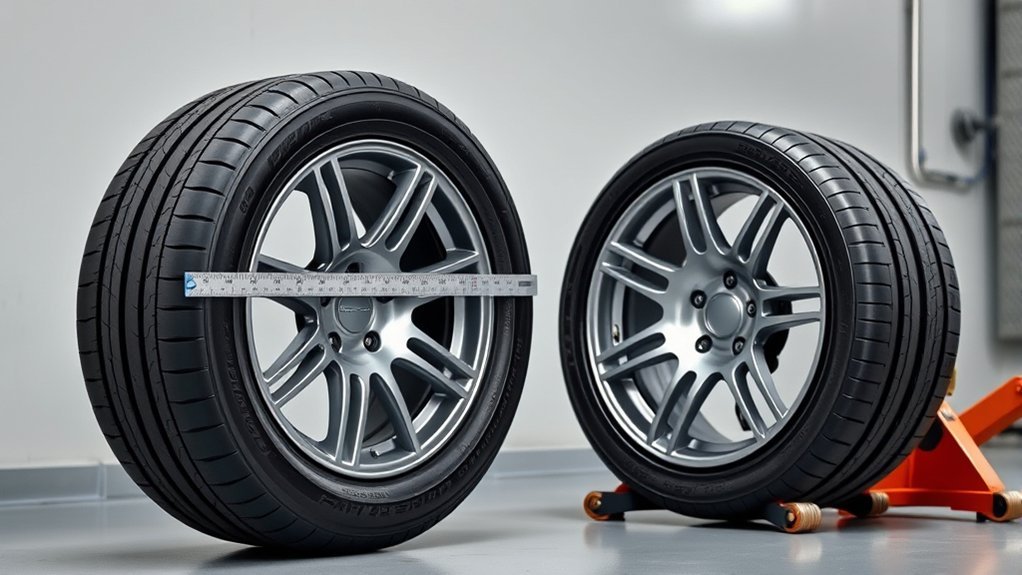
Drivers often use “tire width” and “section width” to mean the same thing, but the details matter. Section width is the tire’s sidewall-to-sidewall width when mounted on its measuring rim and inflated. The tire size code uses this section-width number. Tread width is different; it is the width of the tread face that meets the road, and it can be narrower than the section width.
Overall tire width can also vary slightly from the printed number because tire design, rim width, inflation pressure, and production tolerances all play a role. That is why two tires with the same printed size can look or measure different when installed.
Why Tire Width Affects Handling
Tire width affects handling because it changes the shape and behavior of the contact patch. A wider tire often gives more dry-road grip and cornering stability because more rubber can share the load. It can also make steering feel sharper when paired with the right wheel, suspension setup, and pressure.
That does not mean wider is always better. Wider tires can add rolling resistance, increase road noise, make steering heavier, reduce ride comfort, and create clearance problems. In wet conditions, a wider tire can also be more prone to hydroplaning if the tread pattern, speed, water depth, and pressure are not right. In snow, narrower tires can sometimes cut through slush better than wider tires.
The right tire width is the one that balances grip, load capacity, rim fit, clearance, efficiency, and the way you actually drive.
How to Match Tire Width to Wheels
To match tire width to wheels correctly, start with the tire’s approved rim-width range. Every tire size is designed around a measuring rim and can usually be used only within a specific range of rim widths. A wheel that is too narrow can make the tire sidewall flex too much. A wheel that is too wide can stretch the tire, reduce sidewall support, and make the ride harsher.
Warning: Do not choose a tire width from a rule of thumb alone. Check the vehicle’s Tire and Loading Information Label, owner’s manual, tire manufacturer spec sheet, load index, speed rating, wheel width, and fender/suspension clearance before changing size.
The National Highway Traffic Safety Administration recommends checking the owner’s manual or Tire and Loading Information Label for the correct tire size. For vehicles under 10,000 pounds GVWR, federal rules also require vehicle placards to include tire size designation and recommended cold tire inflation pressure. The current eCFR text for 49 CFR § 571.110 defines rim width and describes tire placard requirements.
[Products Worth Considering]

Keep your tires properly inflated with this analog VONDIOR tire pressure gauge, designed for fast, easy readings without batteries. The swiveling, two-axis hose and large glow dial help you measure at any tire angle with instant visibility. Built with a protective rubber shield, it supports durable, low-maintenance use for cars and trucks.

This professional wheel and rim cleaning brush set lifts brake dust, grime, and dirt with soft, scratch-free microfiber and synthetic wool fibers. The rim brush bends up to 360 degrees for easy access to hard-to-reach areas around spokes, lips, and faces. Ideal for thorough cleaning of car, truck, motorcycle, bicycle, RV, and more wheel and tire surfaces.
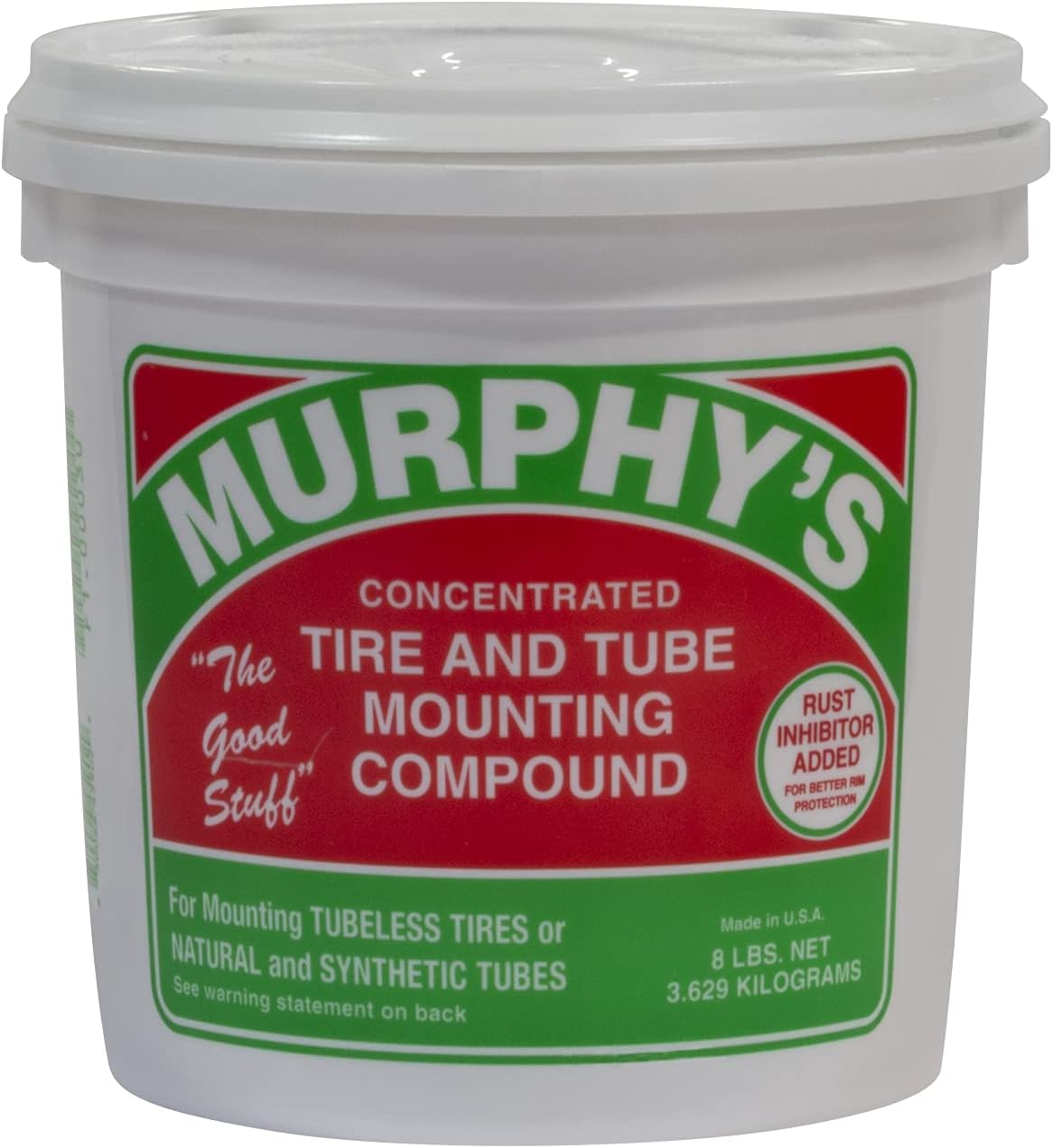
A concentrated tire and tube mounting compound designed to help simplify mounting rubber tires and tubes on passenger, semi truck, construction, and OTR applications. Its ultra-thick formula packs beads effectively and includes rust inhibitors to help protect against corrosion during use.
Tire Width Fitment Chart
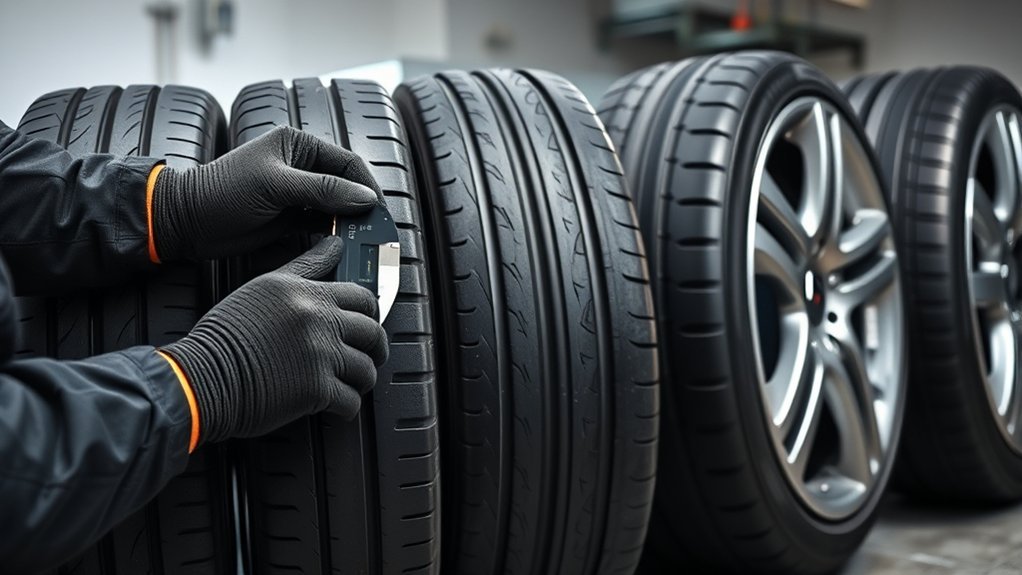
A tire width fitment chart can help you narrow the search, but it is only a starting point. The final answer must come from the tire manufacturer’s approved rim-width range and your vehicle’s specifications.
[Products Worth Considering]

These aluminum alloy tire valve stem caps with an O-ring seal help protect valve stems from corrosion while adding a clean, stylish look to your vehicle. The universal fit works across cars, trucks, motorcycles, bicycles, and more, making them an easy upgrade for everyday driving and off-road use. Installation is quick, and the included four-pack keeps all your tires dressed and protected.

Protect tire valves from water, dust, and sand to help prevent leaks and support safe driving. These universal stem caps install quickly by hand and feature durable aluminum alloy construction with an inner sealing ring for better air retention. Compatible with cars, SUVs, trucks, motorcycles, and bicycles for everyday convenience.

This 3-piece wheel brush set makes it easy to clean wheels and tires with soft, scratch-free brushes designed for lifting brake dust and grime. The flexible rim brush bends up to 360 degrees to reach hard-to-access areas for a thorough clean, while the comfortable grip helps control during detailing. A dedicated detailing brush supports gentle cleaning for sensitive surfaces, including interior use.
Tire Width Basics
Width is one of the most important tire dimensions because it affects handling, stability, load behavior, clearance, and comfort. The first number in sizes like P225/65R17 shows the nominal section width in millimeters. Wider tires can add grip and visual stance, while narrower tires can improve comfort, snow performance, and rolling efficiency in some cases.
Fitment Chart Guidance
The chart below shows common passenger-car starting ranges. Treat it as a planning guide, not an approval chart. Some tire models in the same printed size may have different approved rim ranges.
| Wheel Width | Common Tire Width Starting Range | Reminder |
| 6.0 in | 175–205 mm | Verify the exact tire model |
| 6.5 in | 185–215 mm | Check sidewall support |
| 7.0 in | 195–225 mm | Common for many compact and midsize setups |
| 7.5 in | 205–235 mm | Measure inner and outer clearance |
| 8.0 in | 215–245 mm | Confirm load index and speed rating |
| 8.5 in | 225–255 mm | Do not exceed the tire maker’s range |
Common Tire Width Mistakes
The biggest mistake is assuming a wider tire is automatically an upgrade. Extra width can help dry traction, but it can also add weight, rolling resistance, noise, rubbing, and steering effort. If the tire touches the fender liner, strut, control arm, brake line, or wheel well under load, the setup is not right.
Another common mistake is comparing section width with tread width. A 245 mm tire does not mean 245 mm of tread touches the road. Tire design decides tread width, shoulder shape, and contact patch behavior. Drivers also forget that changing width can change overall diameter when the aspect ratio stays the same. That can affect speedometer accuracy, gearing, ride height, and safety-system behavior.
Wider tires are not automatically safer or faster. Poor fitment, rubbing, incorrect load rating, and wrong pressure can turn a tire upgrade into a handling problem.
How to Pick the Right Tire Width
To pick the right tire width, work in this order:
- Read your current tire size. Find the first three-digit number on the sidewall.
- Check the vehicle placard. Look at the driver’s door jamb or owner’s manual for the approved size and cold tire pressure.
- Confirm load index and speed rating. The replacement tire should meet or exceed the vehicle requirement unless the vehicle manufacturer says otherwise.
- Check wheel width. Match the tire to the tire maker’s approved rim-width range.
- Measure clearance. Check inner suspension clearance, outer fender clearance, turning clearance, and clearance under load.
- Match the tire to your driving. Choose comfort and efficiency for commuting, dry grip for performance driving, and appropriate tread design for rain, snow, or off-road use.
- Use the correct pressure. Use the vehicle manufacturer’s cold inflation pressure, not the maximum pressure printed on the tire sidewall.
Narrower tires often make sense for daily drivers that need predictable comfort and efficiency. Wider tires can make sense for performance vehicles, towing-approved setups, off-road builds, or appearance upgrades, but only when the tire, wheel, and vehicle are designed to work together.
Note: If you are shopping for a Toyota RAV4 after confirming the approved size on your placard, vehicle-specific guides can help compare tire performance factors, tire selection criteria, UTQG rating, low rolling resistance, tread depth, aggressive tread designs, tread life ratings, Wet conditions, and premium touring tires. Keep those guides secondary to the approved size, load index, speed rating, and wheel fitment.
[Products Worth Considering]

This metal-free wheel and tire cleaning brush uses dense, fluffy synthetic wool to safely clean rims, spokes, fenders, and engine areas without worrying about damaging surfaces. Its flexible, comfortable design helps you reach detailed areas while maintaining durability, and the extra absorbent fibers work well with wheel spray cleaners for faster cleanup. Reusable and washable performance helps prevent grime and build-up for cleaner vehicles and easier maintenance at home.

These M14x1.5 closed-end chrome lug nuts are a one-piece replacement designed for secure fitment on compatible GM, Ford, and select Chrysler/Dodge models. Featuring a 60-degree conical seat and anti-rust chrome plating, they help resist corrosion and maintain a bright look for everyday driving. Built for long-term durability, they include OEM-style part references and are backed by 12 months of support.

The SAFELIFE dial tire tread depth gauge measures tread depth in 1/32 inch increments with clear, easy-to-read 2-inch dial face. Color zones using a traffic light system help you quickly judge whether tread is low, marginal, or ample for safer driving. Built with a durable zinc cast body and a metal detect probe for precise, comfortable use across cars, motorcycles, trucks, and buses.
Frequently Asked Questions
Is 275 considered a wide tire?
Yes, 275 mm is considered wide for many passenger cars, but it is normal on some performance cars, SUVs, and trucks. Whether it is appropriate depends on the vehicle, wheel width, suspension clearance, load index, speed rating, and the tire manufacturer’s approved rim range.
Is 285 the width of a tire?
Yes. In a size like 285/70R17, 285 is the nominal section width in millimeters. It means the tire is about 285 mm wide from sidewall to sidewall when mounted on the specified measuring rim and inflated under standard conditions.
What size tire does Tadej Pogačar use?
Tadej Pogačar’s reported bicycle tire sizes vary by race, stage, wheel, and team setup, so there is no single permanent answer. Elite road riders may use narrower tires for certain time trials and wider tires for rough roads or cobbles. For your own bike or car, do not copy a pro setup without checking rim compatibility, frame or vehicle clearance, pressure, and manufacturer limits.
How do I find the width of a tire?
Read the first three-digit number in the tire size on the sidewall. In P225/65R17, the width is 225 mm. You can also measure the inflated tire from sidewall to sidewall, but the measured number may differ slightly from the printed size because rim width and tire design affect actual section width.
Can I put wider tires on the same wheels?
Sometimes, but only if the wider tire is approved for your wheel width and your vehicle has enough clearance. You must also keep the correct load index, speed rating, overall diameter, and cold inflation pressure. If the tire maker does not approve your rim width, choose a different tire size.
Does a wider tire use more fuel?
It can. Wider tires often create more rolling resistance and may weigh more, which can reduce fuel economy. The real difference depends on tread compound, tire pressure, wheel weight, alignment, driving speed, and the vehicle’s design.
Conclusion
Choosing the right tire width is a fitment and safety decision, not just a style choice. Start with the first three-digit number on the sidewall, then confirm the approved tire size, load index, speed rating, wheel width, clearance, and cold inflation pressure. When the tire width matches the wheel and vehicle specs, you get better control, more predictable handling, and fewer avoidable problems.
Sources
- NHTSA TireWise — vehicle placard, tire size, tire pressure, tread, and tire safety guidance
- Tire Rack: How Do I Calculate Tire Dimensions? — section width, aspect ratio, wheel diameter, and rim-width effect on actual section width
- Continental Tire Size Guide — sidewall size decoding, load index, speed rating, and performance effects
- 49 CFR § 571.110 — tire selection, rim definitions, and vehicle placard requirements