
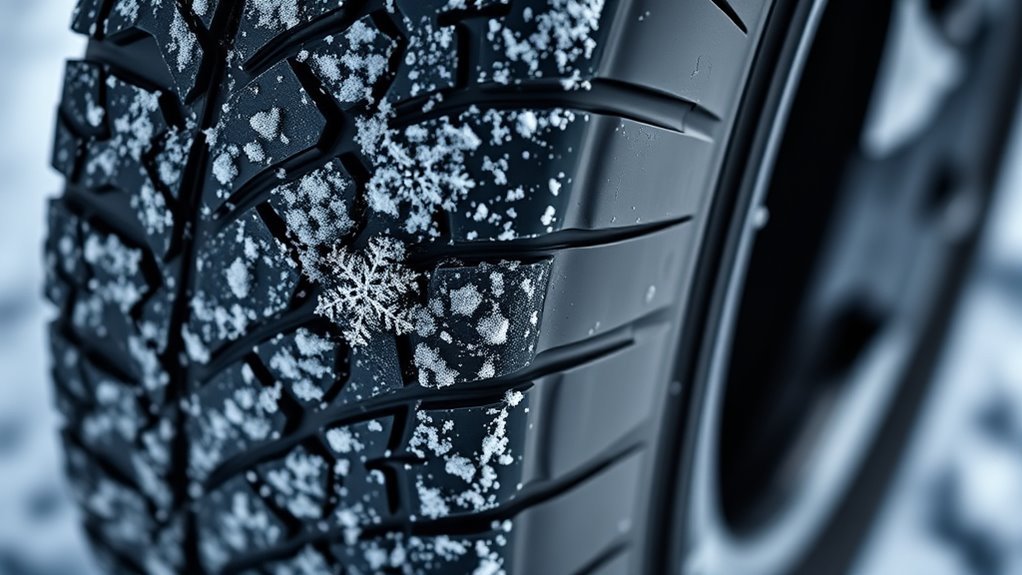
The 3PMSF symbol is one of the easiest ways to spot a tire built for real winter snow traction. It matters because the older M+S marking tells you more about tread appearance than tested snow performance. Still, the symbol has limits: it confirms severe-snow traction performance, not a full rating for ice braking, wet-road handling, tread life, or warm-weather comfort.
Quick Answer
The 3PMSF symbol means a tire meets severe-snow traction requirements in a standardized snow-traction test. It is a stronger winter-performance signal than M+S, but it does not guarantee best-in-class ice grip, braking, cornering, or year-round performance.
Key Takeaways
- 3PMSF stands for Three-Peak Mountain Snowflake and appears as a mountain outline with a snowflake inside.
- The mark confirms tested severe-snow traction, unlike M+S, which is mainly a tread-design marking.
- 3PMSF is common on dedicated winter tires and some all-weather or all-terrain tires.
- The test is mainly about snow traction; it is not a complete ice, braking, cornering, or wear rating.
- Always check local winter tire laws, tire size, load rating, speed rating, and tread depth before buying.
At a Glance
| Time Required | About 5 minutes per tire |
| Difficulty | Easy |
| Tools Needed | Flashlight, tire tread depth gauge, owner’s manual or door-jamb tire placard |
| Cost | Free to inspect; about $5–$15 for a basic tread depth gauge |
What the 3PMSF Symbol Means and Why It Matters
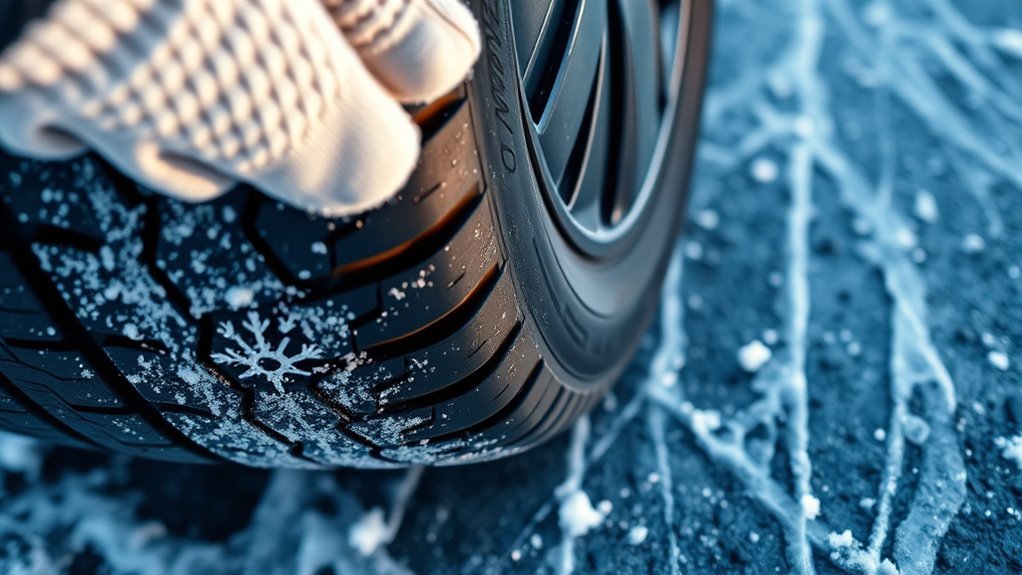
3PMSF stands for Three-Peak Mountain Snowflake. On the tire sidewall, it looks like a mountain with a snowflake inside. According to Transport Canada, tires with this symbol meet specific snow traction performance requirements and are designed for severe snow conditions.
That makes 3PMSF useful when you drive through packed snow, slush, mountain passes, unplowed roads, or regions with legal winter tire rules. It helps you choose a tire with verified snow traction instead of relying only on marketing terms such as “winter-ready,” “snow capable,” or “all-season.”
Note: 3PMSF does not mean every tire with the symbol performs the same. A premium dedicated winter tire, an all-weather tire, and an all-terrain tire can all carry the symbol, but their ice grip, wet braking, road noise, tread life, and warm-weather handling may differ a lot.
What 3PMSF Does and Does Not Certify
The biggest misunderstanding is that 3PMSF means “best winter tire in every condition.” It does not. The symbol confirms that the tire meets a severe-snow traction standard. It does not automatically prove superior performance in every winter situation.
| 3PMSF Confirms | 3PMSF Does Not Fully Rate |
|---|---|
| Severe-snow traction performance | Ice braking distance |
| A tested snow-grip threshold | Lateral cornering grip |
| Better snow-service credibility than M+S alone | Wet-road braking |
| Winter suitability for severe snow conditions | Noise, comfort, fuel economy, or tread life |
For the safest choice, treat 3PMSF as a minimum snow-traction benchmark, then compare tire reviews, independent tests, compound type, tread design, and your local road conditions.
3PMSF Testing and Certification
3PMSF testing is performance-based. Instead of judging a tire by how aggressive the tread looks, the tire is compared against a reference tire under controlled snow-traction conditions.
Testing Protocols Overview
For passenger and light-truck tires in North America, the severe-snow definition is tied to a snow-traction test such as ASTM F1805, which measures single-wheel driving traction in a straight line on snow- or ice-covered surfaces. The U.S. Tire Manufacturers Association describes severe-snow tires as tires that meet a required snow grip index against standard reference test tires on medium-packed snow.
In practical terms, the tire must show better acceleration traction in snow than a reference tire. This is why 3PMSF is more meaningful than an M+S marking: it is connected to measured snow performance, not just tread geometry.
Performance Pass Criteria
The exact pass criteria can depend on the tire category and reference tire used, but the purpose is the same: the candidate tire must meet the required snow-grip threshold for severe-snow service. For shoppers, the key point is simple: a 3PMSF tire has passed a recognized snow-traction benchmark, while an M+S-only tire has not necessarily passed the same performance test.
- Measured condition: snow traction, especially driving or acceleration traction.
- Test comparison: candidate tire versus standard reference tire.
- Surface focus: controlled snow conditions, commonly medium-packed snow.
- Result: pass/fail eligibility for the mountain-snowflake sidewall symbol.
What the Test Does Not Cover
The 3PMSF test is not a complete winter tire report card. ASTM notes that F1805 addresses longitudinal driving traction, while other test methods cover braking and lateral traction. That means a tire can earn 3PMSF and still differ from another 3PMSF tire in stopping distance, ice grip, wet braking, ride comfort, road noise, and tread wear.
Warning: Do not assume a 3PMSF tire removes the need for winter driving habits. Increase following distance, brake earlier, reduce speed before corners, and avoid sudden steering inputs on snow or ice.
Certification Application Process
Drivers do not apply for 3PMSF certification; manufacturers do. Tire makers test or validate the tire against the applicable severe-snow standard and then mark qualifying tires with the 3PMSF pictogram on at least one sidewall. Under Canadian rules, manufacturers certify that winter tires meet the required traction performance test before displaying the Alpine symbol.
When buying, you do not need paperwork from the manufacturer. You only need to confirm the sidewall symbol, tire size, load index, speed rating, production date, and tread condition.
Which Tire Types Can Carry the 3PMSF Mark
You will most often see 3PMSF on dedicated winter tires, but it can also appear on other tire types that meet the severe-snow traction requirement.
- Dedicated winter tires: Usually the best choice for regular snow, ice, and below-freezing temperatures.
- All-weather tires: Built for year-round use and commonly marked with 3PMSF, but usually not as strong as dedicated winter tires in extreme winter conditions.
- All-terrain tires: Some truck and SUV all-terrain tires carry 3PMSF, especially models aimed at snow, gravel, and mixed conditions.
- Performance winter tires: Designed for cold-weather use on sportier vehicles, often balancing snow traction with dry-road stability.
- Commercial or specialty tires: Some truck, bus, and fleet tires use similar severe-snow service markings under standards for their category.
Pro Tip: If your winters are mild but you still get occasional snow, a 3PMSF all-weather tire can be a convenient compromise. If you regularly drive on ice, steep snowy roads, or mountain highways, a dedicated winter tire is usually the safer pick.
3PMSF Vs M+S: Key Performance Differences
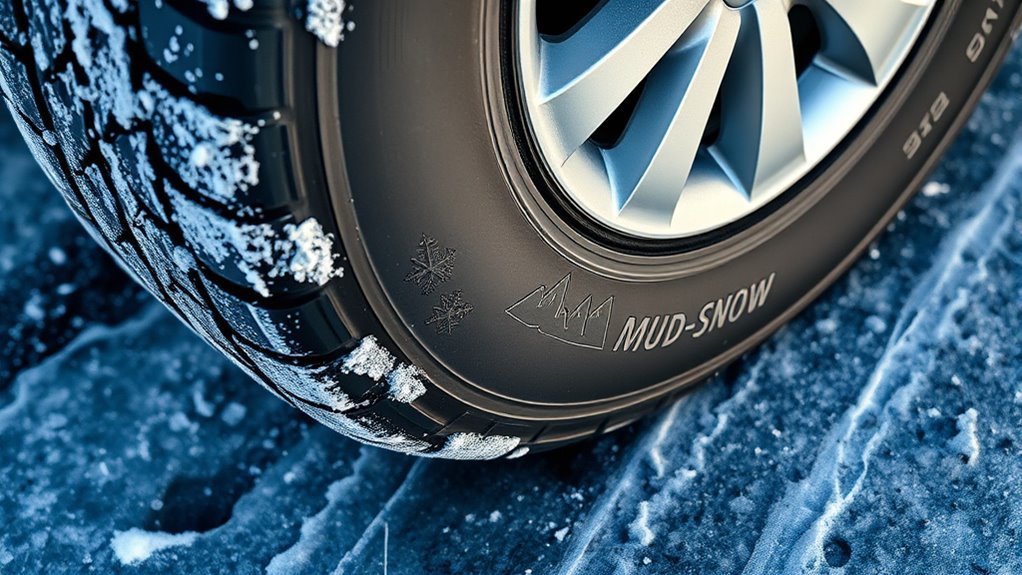
The difference between 3PMSF and M+S is simple: 3PMSF is tied to a snow-traction performance requirement, while M+S is mainly a tread-design marking. M+S stands for mud and snow, but it does not prove the tire passed the same severe-snow traction test.
| Attribute | 3PMSF | M+S |
|---|---|---|
| Meaning | Three-Peak Mountain Snowflake | Mud and Snow |
| Performance test | Connected to severe-snow traction testing | Not the same severe-snow traction certification |
| Best use | Snowy and cold winter driving | Light snow, mud, or basic all-season use |
| Buyer confidence | Higher for snow traction | More variable |
| Legal status | Often accepted where winter tire rules require the snowflake pictogram | Accepted in some regions, but not all winter tire laws treat it the same |
If you only see M+S and no mountain-snowflake symbol, check your local rules and the tire’s independent test results before relying on it for harsh winter driving.
Where and When 3PMSF Tires Are Required or Recommended
Winter tire laws vary by country, province, state, road, and vehicle class. Some regions require the 3PMSF pictogram specifically, while others allow M+S, chains, or other winter equipment. Always check the current rule for the exact route you drive.
[Products Worth Considering]

The SAFELIFE dial tire tread depth gauge measures tread depth in 1/32 inch increments with clear, easy-to-read 2-inch dial face. Color zones using a traffic light system help you quickly judge whether tread is low, marginal, or ample for safer driving. Built with a durable zinc cast body and a metal detect probe for precise, comfortable use across cars, motorcycles, trucks, and buses.

Monitor tire tread wear with a smart, color-coded depth gauge that shows clear condition ranges at a glance. The bar is range marked for fast, easy readings, helping you maintain safer traction and performance. Each gauge is portable with a pocket clip, and the set includes 20 units for daily use and sharing.

Measure tire tread depth quickly and accurately with this LUMITECO dial gauge that reads in 1/32" increments up to 14/32". The color-coded green/yellow/red zones make it easy to judge tire wear and know when replacement is needed. A rugged, compact design with a protective pouch helps keep the gauge ready for use on cars, trucks, motorcycles, and more.
Legal Winter Tire Mandates
In Québec, winter tires are mandatory from December 1 to March 15 inclusive for most motorized road vehicles registered in the province, and compliant winter tires must have the required pictogram or be studded, subject to listed exceptions. The Québec government explains these requirements on its winter tire requirements page.
In British Columbia, winter tires or chains are required on many designated routes from October 1 to April 30, with some routes ending March 31. For standard passenger vehicles, B.C. says a legal winter tire must have at least 3.5 mm of tread depth and be marked with either M+S or the 3-peaked mountain/snowflake symbol. B.C. also recommends 3PMSF tires for cold-weather driving because they offer better traction in snow and ice than M+S minimum tires.
Regional Weather Recommendations
Even where 3PMSF tires are not legally required, they are strongly recommended if you regularly drive in:
- Mountain passes or high-elevation roads
- Regions with packed snow, slush, or frequent freeze-thaw cycles
- Rural areas where roads may not be plowed quickly
- Cold climates where temperatures often fall below 7°C
- Long winter commutes where predictable traction matters
A 3PMSF tire is best understood as a verified snow-traction baseline, not a promise that every winter-driving situation will be safe at normal speeds.
Vehicle Type Requirements
Passenger cars, SUVs, pickups, vans, buses, commercial trucks, and fleet vehicles may be covered by different rules. Some commercial routes require chains even when winter tires are installed. Before winter travel, check the rules for your vehicle class, axle configuration, tire size, and route.
- Passenger cars: Choose 3PMSF if you drive in regular snow or must comply with winter tire laws.
- SUVs and pickups: Do not rely on four-wheel drive alone; traction still depends on the tires.
- Commercial fleets: Check route-specific requirements for chains, tread depth, and approved tire markings.
- EVs and hybrids: Confirm the tire’s load rating and rolling-resistance needs because battery weight can affect tire selection.
How to Verify the 3PMSF Sidewall Mark and Check Tread Depth
Start by looking at the tire sidewall. The 3PMSF symbol is a small mountain outline with a snowflake inside. It usually appears near other molded tire information such as size, load index, speed rating, DOT code, and M+S marking.
| Check | Tool | What to Do |
|---|---|---|
| Sidewall mark | Flashlight | Confirm the 3PMSF symbol appears on each tire |
| Tread depth | Tread depth gauge | Measure several grooves across each tire |
| Tire size | Door-jamb placard or owner’s manual | Match size, load index, and speed rating |
| Age and condition | Visual inspection | Check DOT date code, cracks, bulges, and uneven wear |
For winter use, many tire experts recommend replacing winter tires before they reach the normal legal minimum because snow traction drops as tread depth decreases. In British Columbia, for example, passenger winter tires on designated routes must have at least 3.5 mm of tread depth. A common practical target for winter performance is around 4 mm or more.
Warning: Replace tires with exposed cords, sidewall bulges, deep cracks, puncture damage near the sidewall, or severe uneven wear. A 3PMSF symbol cannot make a damaged tire safe.
[Products Worth Considering]

Accurately measure tire tread depth with a calibrated gauge marked from 0 to 1 inch in 1/32 inch increments. The color-coded bar helps you quickly identify tread condition ranges, supporting safe driving for trucks, motorcycles, automobiles, and passenger vehicles.

The Kurgo Seasonal Tire Tote helps protect your car interior, clothes, and garage from tire grime, brake dust, and residue during seasonal tire changes. Its universal design fits most passenger tires between 22" and 31" in diameter, making storage and transport simpler with less mess. Built for rugged, repeated use, it’s machine washable for easy care and comes with a lifetime warranty.

Steelman white tire marking crayons provide high-contrast, semi-permanent marks for repairing and inspecting tires and equipment. They write on wet or dry, smooth or coarse surfaces including rubber, metal, glass, and wood, making them ideal for puncture location and damage outlining. The lead- and zinc-free crayons resist weather and fading yet wipe away when you no longer need the marks.
Choosing the Right 3PMSF Winter Tire for Your Vehicle
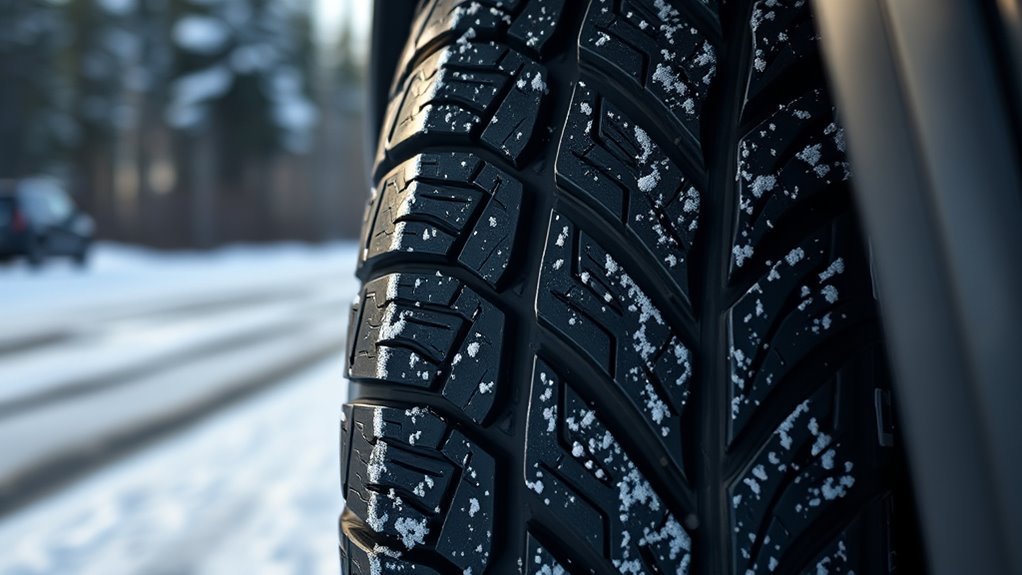
Do not choose a tire based on the 3PMSF symbol alone. Use the symbol as your starting point, then match the tire to your vehicle, climate, and driving style.
- Match the size: Use the size listed on the vehicle placard or owner’s manual unless a tire professional confirms an approved alternative.
- Check load and speed ratings: The tire must support your vehicle’s weight and intended use.
- Choose the right category: Dedicated winter tires suit harsh winters; all-weather tires suit milder climates with occasional snow.
- Compare independent test results: Look at snow braking, ice braking, wet braking, noise, and tread wear, not just the sidewall symbol.
- Install a full set of four: Mixing winter and non-winter tires can reduce stability, especially during braking and cornering.
- Plan seasonal timing: Install winter tires before regular cold weather arrives, not after the first storm.
Pro Tip: If you store winter tires during summer, keep them clean, dry, out of direct sunlight, and away from ozone sources such as electric motors. Proper storage helps protect the rubber compound.
[Products Worth Considering]

Measure tyre tread depth precisely with a digital gauge that reads in both MM and inches, helping you monitor safe driving conditions. The large LCD screen is easy to operate, and the compact tool fits for cars, trucks, and motorcycles. It provides high accuracy with a 0-25.4mm range and includes a 1-year warranty for added peace of mind.

These universal tire valve stem caps help protect valve cores from dust, debris, and moisture while helping maintain stable tire pressure. The corrosion-resistant metal construction and sealed design provide reliable protection in road grime, mud, and winter conditions. Twist-on installation makes them quick to fit on cars, SUVs, trucks, and motorcycles.

The Continental Grand Prix 5000 is an allround road bike tire engineered for faster rolling, improved ride comfort, and enhanced puncture protection. It features a Vectran Breaker cut-protection layer, Lazer Grip micro-profile tread for confident cornering control, and Active Comfort Technology to damp vibration for smoother rides. BlackChili compound optimizes grip and speed for everyday performance and long-lasting confidence.
Common 3PMSF Myths to Avoid
Myth 1: 3PMSF Means the Tire Is Perfect on Ice
False. The symbol confirms severe-snow traction performance. Ice braking is a different challenge, and some tires perform much better than others on glare ice.
Myth 2: All-Season Tires with M+S Are the Same as 3PMSF
False. M+S can be useful in light snow or mud, but it is not the same severe-snow traction certification.
Myth 3: All 3PMSF Tires Can Be Used Year-Round
Not always. Some 3PMSF tires are all-weather tires designed for year-round use. Many dedicated winter tires are not ideal for hot weather because they can wear faster and feel softer in summer temperatures.
Myth 4: Four-Wheel Drive Replaces Winter Tires
False. Four-wheel drive can help a vehicle accelerate, but tires control braking, steering, and grip. A two-wheel-drive car on good winter tires can often stop and turn more confidently than a four-wheel-drive vehicle on poor tires.
Frequently Asked Questions
Are 3PMSF tires considered snow tires?
Yes, 3PMSF tires are suitable for severe snow service because they meet a recognized snow-traction performance requirement. However, not every 3PMSF tire is a dedicated winter tire. Some all-weather and all-terrain tires also carry the symbol.
Can you use 3PMSF tires year-round?
You can use some 3PMSF tires year-round if they are all-weather tires designed for that purpose. Dedicated winter tires should usually be removed in warm weather because softer winter compounds can wear faster and feel less precise on hot pavement.
What does 3PMSF mean on tires?
3PMSF means Three-Peak Mountain Snowflake. It is a sidewall symbol showing that the tire meets severe-snow traction requirements in a standardized snow-traction test.
What is the snowflake symbol on the 3PMSF?
The snowflake inside the three-peak mountain is the visual mark for severe-snow service. It helps shoppers identify tires that meet the required snow-traction performance standard.
Is 3PMSF better than M+S?
For snow traction, yes. 3PMSF is tied to a severe-snow performance requirement, while M+S is mainly a tread-design marking. M+S may be legal in some regions, but 3PMSF is the stronger winter-performance signal.
Do 3PMSF tires work on ice?
They can help in winter conditions, but 3PMSF is not a full ice-grip certification. If you often drive on glare ice, compare independent ice-braking tests or consider tires specifically designed for icy conditions.
Do I need 3PMSF tires if I have all-wheel drive?
All-wheel drive helps with acceleration, but it does not shorten stopping distance by itself. If you drive in snow or cold winter conditions, proper winter-rated tires are still important for braking and steering control.
Conclusion
The 3PMSF symbol is a reliable sign that a tire meets severe-snow traction requirements, making it a better winter-shopping guide than M+S alone. Use it to narrow your options, but do not stop there. Check the tire’s size, load rating, speed rating, tread depth, age, local legal requirements, and independent test results before buying. The right 3PMSF tire can improve confidence in snow, but safe winter driving still depends on speed, spacing, road conditions, and tire maintenance.
Sources
- Transport Canada — Using winter tires — backs up the meaning of the mountain snowflake symbol and the below-7°C winter tire guidance.
- U.S. Tire Manufacturers Association — Severe snow service definition — backs up severe-snow tire performance requirements for passenger and light-truck tires.
- ASTM F1805-20 — backs up the scope of the single-wheel driving traction test and its limits.
- Province of British Columbia — About winter tires — backs up B.C. legal winter tire markings and tread depth requirements.
- Province of British Columbia — Winter tire and chain routes — backs up winter tire and chain route dates.
- Gouvernement du Québec — Requirements for winter tires — backs up Québec winter tire compliance rules.

1 thought on “What Does the 3PMSF Symbol Mean? Winter Tire Certified”