Last updated: July 7, 2026
ETRTO tire sizing gives you the safest way to match a bicycle tyre, rim, and tube because it uses two millimetre values: nominal tyre section width and bead-seat diameter (BSD). A marking like 28-622 means the tyre is about 28 mm wide and fits a 622 mm bead-seat rim. Match the second number first, then confirm rim internal width, frame or brake clearance, tube or tubeless compatibility, and the lower pressure limit printed on the tyre or rim.
What ETRTO Tire Sizing Tells You (Quick Summary)
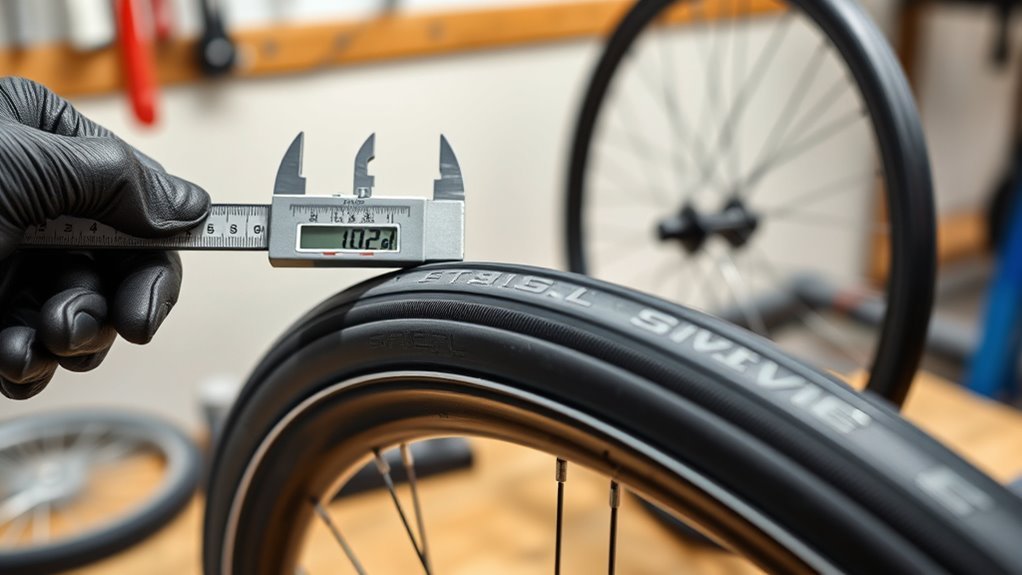
An ETRTO size like 28-622 tells you the tyre’s nominal width and the rim diameter it must fit. The 28 is the nominal tyre section width in millimetres. The 622 is the bead-seat diameter, which is the rim diameter where the tyre bead sits.
ETRTO stands for the European Tyre and Rim Technical Organisation. Its sizing system, reflected in ISO bicycle tyre markings, reduces confusion from older inch and French labels. It does not make every tyre with the same old name interchangeable, so always rely on the millimetre code.
- Match BSD first: a 622 mm tyre fits a 622 mm rim, not a 635 mm or 642 mm rim.
- Check width second: the tyre width must suit your rim’s internal width and your bike’s clearance.
- Respect pressure limits: use the lower maximum printed on the tyre or rim.
- Verify tube or tubeless setup: tubeless-ready tyres need compatible rims and valves.
If you remember one rule, use this: the second ETRTO number controls rim fit. Width affects clearance and handling, but a wrong bead-seat diameter can prevent safe mounting.
How to Read ETRTO Markings on Tyre, Rim, and Tube
Read ETRTO markings as width-bead diameter in millimetres. For example, 28-622 means the tyre has a nominal section width of 28 mm and fits a 622 mm bead-seat rim.
Use the marking in this order: read the tyre code, confirm the rim’s bead-seat diameter, then choose a tube that covers the same diameter and width range. A tube may list a range, such as 25/32-622, which means it can stretch across several compatible widths on a 622 mm rim.
| Component | Marking example | Meaning |
|---|---|---|
| Tyre | 28-622 | Nominal tyre width – bead-seat diameter |
| Rim | 622 × 19C | Bead-seat diameter × internal rim width/type |
| Tube | 25/32-622 | Compatible tyre-width range and BSD |
Do not force a tyre onto a rim because the old inch label looks close. A small bead-seat mismatch can cause loose seating, difficult installation, or bead failure.
Common ETRTO Codes and Their Wheel-Size Names (622, 584, 559…)
Numbers like 622, 584, and 559 are ETRTO bead-seat diameters. They map to familiar names such as 700C, 650B, 29 inch, 27.5 inch, and 26 inch. The ETRTO number is more reliable than the marketing name because old names often overlap.
For example, 622 mm is used for 700C road wheels and many 29 inch mountain bike wheels. But some old 28 inch tyres used 635 mm or 642 mm bead diameters, so a 28 inch label alone is not enough.
ETRTO to Traditional Size Quick Reference
| ETRTO BSD (mm) | Traditional Name | Common Use |
|---|---|---|
| 622 | 700C / 29″ / some 28″ | Road, gravel, 29er MTB |
| 584 | 650B / 27.5″ | Gravel, mountain bike |
| 559 | 26″ | Traditional mountain bike |
| 507 | 24″ | Junior bikes, some wheelchairs |
| 406 | 20″ | BMX, folding bikes |
| 305 | 16″ | Small folding bikes, kids’ bikes |
| 630 | 27″ | Older road bikes |
| 635 / 642 | Some 700B / 700A / old 28″ | Vintage and regional sizes |
When you restore an older bike, read the stamped ETRTO code before buying tyres. If the old tyre has no clear code, measure carefully and cross-check a reputable sizing reference before ordering.
How Rim Internal Width Changes Actual Tyre Width and Fit
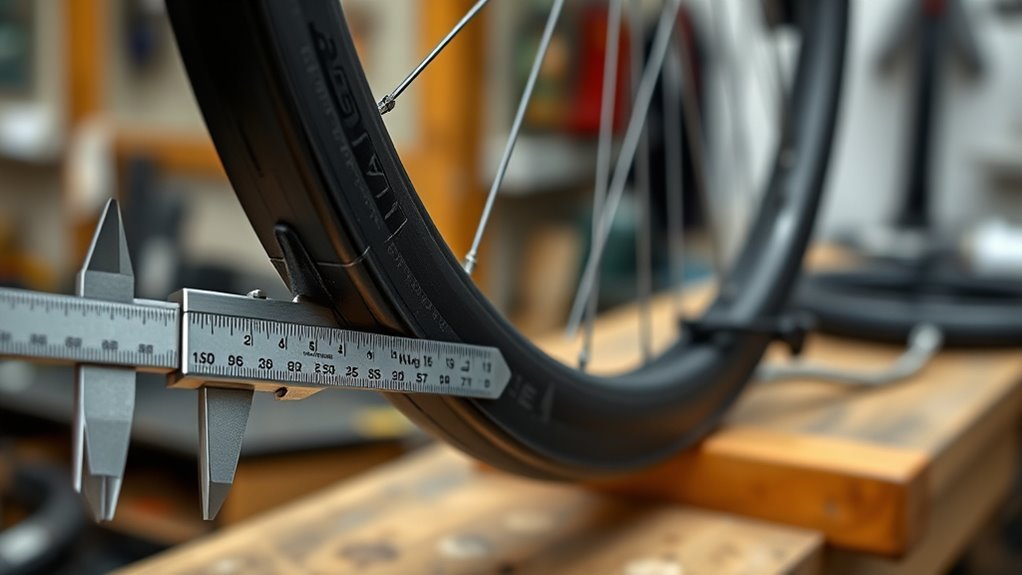
Once you match the bead-seat diameter, check rim internal width. It changes the mounted tyre shape, the actual measured width, and the way the tyre handles.
The width printed on the sidewall is a nominal value, not a guaranteed mounted width. A wider rim spreads the casing and can make the tyre measure wider. A narrow rim rounds the tyre profile and can make steering feel less stable, especially with larger tyres.
Use the rim or tyre manufacturer’s compatibility chart whenever possible. Older rules of thumb often used a tyre-to-rim-width ratio near 1.4 to 2.2, but modern hooked, hookless, tubeless, gravel, and mountain-bike systems can have stricter limits. If you need exact clearance, install the tyre, inflate it within the allowed range, and measure the mounted width with calipers.
[Products Worth Considering]

Ultraverse 700c inner tubes are built for 700x28C to 32C tires and feature a 48mm Presta valve for accurate, secure inflation. The high-elasticity butyl rubber construction helps seal air tightly, resist pressure loss, and absorb road vibrations for a smoother ride. A reinforced valve base and thick walls add durability and puncture resistance for reliable everyday performance on road, gravel, and city routes.

Switch to tubeless with this Muc-Off rim tape designed to create an airtight seal for smooth-running setups. The pressure-sensitive adhesive offers the right stretch for strength and durability, while the semi-transparent material helps you locate the valve hole quickly. It includes four seal patches for a secure finishing seal after wrapping.

The Tyre Glider is the original clip-on bicycle tyre lever designed to glide tyres on and off with controlled, effortless use. Its reinforced, glass-filled nylon construction helps it withstand high forces without snapping, while the smooth polymer surface protects rims and tubes. Universal compatibility makes it suitable for a wide range of tyres, including road, MTB, and gravel, for both tubed and tubeless setups.
ETRTO Safety Limits: Max Tyre Width, Brake/Frame Clearance, and Pressure
ETRTO sizing helps you avoid the three common fit problems: a wrong rim diameter, a tyre that is too wide for the rim or frame, and pressure that exceeds a component limit.
Start with rim compatibility. The tyre’s bead-seat diameter must match the rim’s bead-seat diameter, and the tyre width must fall within the rim maker’s approved range. This matters even more for tubeless and hookless rims, where bead retention depends on tight tyre, rim, and pressure tolerances.
Next, check brake and frame clearance. Follow your frame or fork manufacturer’s minimum clearance. If no official number is available, keep at least 4-6 mm of open space around a road or gravel tyre, and allow more for mud, wheel flex, fenders, or off-road use.
Finally, compare pressure markings. Inflate only up to the lower maximum printed on the tyre or rim. If the tyre allows 80 psi but the rim allows 72.5 psi, the rim limit governs safe inflation.
[Products Worth Considering]

Upgrade your ride with a 2-pack set of 26x1.95 folding mountain bike tires built for dependable traction on mud, rocks, and trail surfaces. A reinforced puncture-resistant layer helps protect against sharp debris, while included butyl inner tubes provide strong sealing and shock absorption. Ready for fast swaps with included tire levers and universal sizing for most bikes.

This Hycline 2-pack mountain bike tire set delivers durable, puncture-resistant performance with a high-grip, aggressive tread designed for traction on hard surfaces and confident handling through mud and soil. Includes matching inner tubes and tire levers for easier everyday maintenance and quicker installation after folding storage. Built for a range of riding conditions with reinforced rubber and nylon cord for wear-resistant reliability.

This heavy-duty bicycle rim liner provides complete tube protection by shielding the inner tube from rim spoke holes and sharp metal burrs that can cause flats. Made from premium, wear-resistant PVC, it lays flat with optimized 18 mm width and 0.50 mm thickness for edge-to-edge coverage. Installation is quick with flexible stretch placement and a secure, non-slip fit.
Measure Your Bike: Brake, Crown, Stay Clearances, and Rim Specs
Before picking a larger replacement tyre, measure the places where fit usually fails. A tyre can match the rim and still rub the frame, fork, brake, fender, or front derailleur.
Brake and fork clearance: Measure around the brake caliper or brake bridge, fork crown, and both fork legs. Check with the wheel centered and the tyre fully inflated.
Chainstay and seatstay clearance: Measure both sides of the rear tyre near the chainstays, seatstays, and bridge. Leave extra room if you ride mud, gravel, or fenders.
Rim specs: Read the rim’s internal width, rim type, and max pressure. Match those numbers to the tyre manufacturer’s compatibility guidance before installation.
| What to measure | Why it matters |
|---|---|
| Bead-seat diameter | Controls basic rim and tyre fit |
| Internal rim width | Limits safe tyre-width range |
| Brake/fork/stay clearance | Prevents rubbing under load or debris |
| Tyre and rim pressure markings | Sets the safe inflation ceiling |
Choosing Replacements: Matching ETRTO Codes, Tubed vs Tubeless, and Rim Compatibility
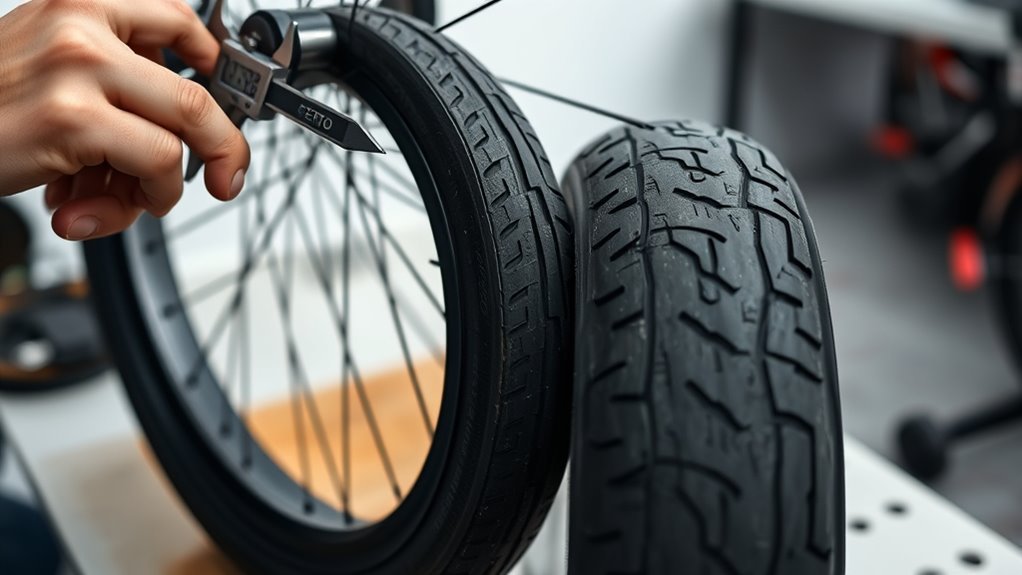
To choose a replacement tyre, copy the bead-seat diameter from your current tyre or rim first. Then choose the width that fits your rim, frame clearance, riding style, and pressure range.
For a like-for-like replacement, match the full ETRTO code. For example, replace 28-622 with another 28-622 if you want the same nominal width and rim diameter. To go wider or narrower, keep the 622 BSD the same and confirm the new width is approved for your rim.
For tubed setups, choose an inner tube that covers the tyre’s width range and bead-seat diameter. For tubeless setups, use a tubeless-ready tyre, a compatible tubeless rim, proper tape, a tubeless valve, and sealant. Do not assume every clincher tyre or rim is safe for tubeless use.
After installation, inflate gradually, inspect bead seating on both sides, spin the wheel, and recheck clearance. Stop if the bead line dips, the tyre rubs, or the tyre needs pressure above the rim’s stated limit.
[Products Worth Considering]

Upgrade your rides with FANSPRO 700c road bike inner tubes designed for common road tire sizes from 35mm through 43mm. Made with durable butyl rubber for reliable air retention and heat resistance, each pack includes two tire levers to speed up flat repairs. The 48mm Schrader valve fits most road bikes, helping you replace tubes quickly and confidently.

This 2-pack bicycle inner tube set is designed for kids, road, and MTB bikes with 20-inch tires in the 1.75 to 2.125 width range, using a 32mm AV Schrader valve. Each tube includes two tire levers for easier installation and safer handling while swapping tubes. Butyl rubber delivers reliable air retention, elasticity, and comfort for everyday rides.

Two-pack 26" bicycle inner tubes for tires sized 1.75 to 2.125, built with a 35mm AV Schrader valve for easy compatibility. The thicker inner wall and premium butyl rubber help absorb bumps and vibrations while improving durability and air retention. Includes two upgraded tire levers for simpler installation and reduced risk of breakage.
Troubleshooting Size Mismatches and Conversion Pitfalls (Historical Sizes, Tubulars)
When a tyre size does not make sense, trust the measured bead-seat diameter over the old label. Historical inch and French names can point to several different rim diameters, so the same-looking label may not fit your wheel.
Historical Size Confusion
Historical French and inch-based size names can mislead modern buyers. Their stated diameters often describe approximate outside tyre size, not the bead-seat diameter that controls rim fit.
For example, modern 700C is usually 622 mm, but 700B and 700A can refer to 635 mm and 642 mm bead-seat diameters. Likewise, 20 inch and 26 inch labels can cover more than one rim diameter.
Always read the ETRTO pair stamped on both tyre and rim. When restoring vintage wheels or sourcing obsolete sizes, verify the BSD numerically instead of trusting the nominal label. Sheldon Brown’s tire sizing reference is useful for cross-checking old and new sizing systems.
Tubular Rim Compatibility
Tubular tyres do not seat like clincher tyres. They are sewn into a closed casing and glued or taped to a tubular rim bed, so clincher ETRTO fit logic does not apply in the same way.
Match the tubular tyre size to a tubular-compatible rim, then follow the tyre, rim, and adhesive manufacturer’s instructions. Check rim material as well, because aluminium, carbon, and older steel rims can require different surface preparation or adhesive systems.
Dry-fit the tubular before gluing or taping. The tyre should center cleanly on the rim bed without twisting, bulging, or pulling to one side.
Conversion Measurement Errors
Most conversion errors happen when you treat inch labels as exact measurements. They are names, not reliable engineering dimensions.
Measure bead-seat diameter and tyre width in millimetres when the marking is missing or unclear. Compare the measured value with the rim, tyre, and tube labels before buying.
For tubulars, confirm the rim type and tyre format rather than inferring fit from clincher dimensions. Tubular, tubeless, and tube-type clincher systems each have different mounting requirements.
Write down the existing tyre code, rim code, mounted tyre width, and clearance before purchase. That small record prevents repeat conversion mistakes and makes future replacements easier.
Frequently Asked Questions
What Does ETRTO Size Mean?
ETRTO size means nominal tyre width and bead-seat diameter in millimetres. In 28-622, 28 is the nominal tyre width and 622 is the rim bead-seat diameter the tyre must fit.
What Does 40-622 Mean?
40-622 means the tyre is about 40 mm wide and fits a 622 mm bead-seat rim. It commonly corresponds to a 700C or 29 inch rim, depending on tyre style and bike category.
Is ETRTO the Same as ISO Tire Sizing?
For bicycle tyres, ETRTO-style markings are closely tied to ISO 5775 sizing. Both use millimetre-based tyre width and bead-seat diameter to reduce confusion from older inch and French names.
Can I Fit a 700C Tyre on a 622 Rim?
Usually, yes. Modern 700C tyres normally use a 622 mm bead-seat diameter. Still, check the full ETRTO code, rim internal width, tyre clearance, and pressure limits before riding.
How Do I Know What Tyre Fits My Rim?
Match the tyre and rim bead-seat diameter first. Then check the rim’s internal width, the tyre maker’s approved rim-width range, frame clearance, brake clearance, and the lower max pressure printed on the tyre or rim.
Do Inner Tubes Need the Same ETRTO Size?
The tube must match the same bead-seat diameter and cover the tyre’s width range. A tube marked 25/32-622 can fit several 622 mm tyres from about 25 mm to 32 mm wide.
Conclusion
ETRTO gives you a clear numerical language for tyre fit. Match the bead-seat diameter first, choose a width that suits your rim and frame, then check tube or tubeless compatibility and pressure limits. Treat old inch and French names as clues, not final proof. If a marking is missing or confusing, measure the rim and tyre in millimetres before you buy.