Upsizing tires on a Toyota Tundra can improve stance, ground clearance, and off-road grip, but it also changes how the truck feels from a stop, how accurately the speedometer reads, and how hard the engine and transmission have to work. The biggest factors are tire diameter, tire weight, tread design, load rating, wheel offset, and whether your Tundra is an older 5.7L V8 model or a newer 10-speed truck.
Quick Answer
Bigger tires effectively make your Tundra’s gearing taller. That can reduce low-speed punch, change shift timing, lower real-world MPG, and make the speedometer read slower than your actual speed. Mild upsizes are usually manageable, but heavy 34- to 35-inch tires often need recalibration and careful fitment checks.
Key Takeaways
- A taller tire lowers the effective axle ratio because each tire revolution travels farther.
- A 275/65R18 tire is about 32.1 inches tall; a 295/70R18 is about 34.3 inches tall, or roughly 6.8% taller.
- At 60 mph indicated, a 6.8% taller tire can mean you are actually traveling about 64 mph unless the speedometer is corrected.
- Do not choose a tire with a lower load index or load capacity than Toyota specifies on the tire placard or owner’s manual.
- Re-gearing is not always necessary, but calibration, proper tire pressure, alignment, and clearance checks are important after upsizing.
At a Glance
| Time Required | 30–90 minutes to compare sizes, check fitment, and verify speedometer error; longer if trimming, alignment, or re-gearing is needed. |
| Difficulty | Moderate. The math is simple, but fitment, towing use, and calibration matter. |
| Tools Needed | Door-jamb tire placard, owner’s manual, tire-size calculator, tire-pressure gauge, GPS speed app, and a qualified tire shop for final fitment. |
| Cost | $0 for planning; $100–$300+ for some calibrators or shop work; much more for gears, suspension, wheels, trimming, or premium tires. |
Understanding Tire Size and Specifications
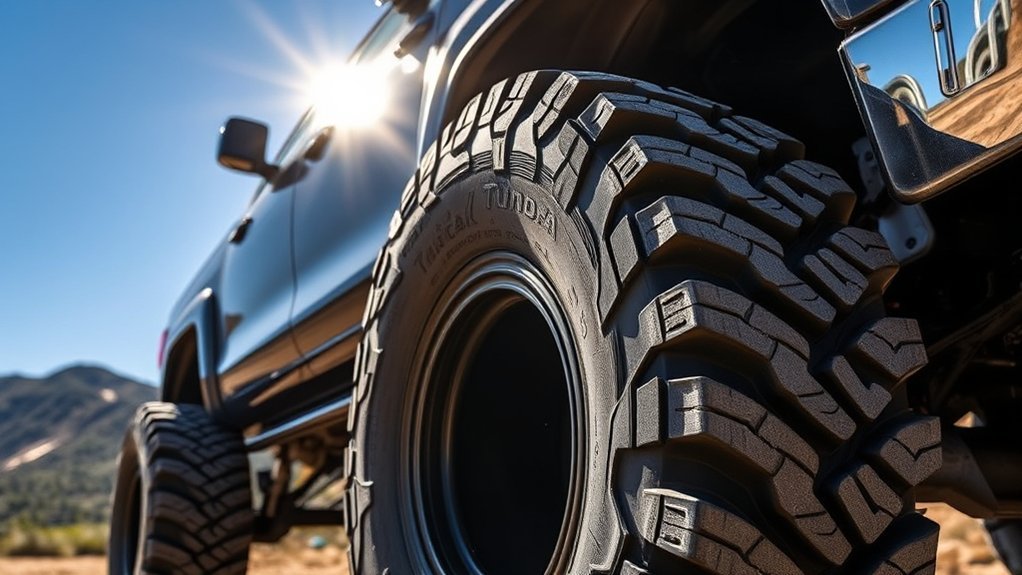
Tire size has three main numbers. In a size like 275/65R18, 275 is the section width in millimeters, 65 is the sidewall height as a percentage of the width, and 18 is the wheel diameter in inches. The approximate tire diameter is:
Tire diameter = wheel diameter + 2 × section width × aspect ratio ÷ 25.4
For example, a 275/65R18 tire is about 32.1 inches tall. A 295/70R18 tire is about 34.3 inches tall. That is not a small change; it is about a 6.8% increase in diameter.
Factory Tundra tire sizes vary by generation and trim. The 2021 Tundra brochure lists sizes such as P255/70R18, P275/65R18, and P275/55R20, while the 2024 Tundra brochure lists sizes such as 245/75R18, 265/70R18, 265/60R20, 265/50R22, and 285/65R18 on TRD Pro. Before buying tires, compare your exact tire placard and owner’s manual, not just a forum post or another owner’s build.
Warning: Never install a tire with a lower load index, load capacity, or speed rating than Toyota specifies for your truck. If you tow, haul, or run LT tires, confirm the correct pressure with a tire professional and the tire manufacturer’s load-inflation data.
How Tire Upsizing Affects Acceleration and Power Delivery
When you install a taller tire, the engine has to turn a larger rolling diameter. That makes the truck act like it has a numerically lower axle ratio. It does not reduce the engine’s actual horsepower, but it can make the truck feel slower because less torque multiplication reaches the ground.
Use this formula to estimate the change:
Effective axle ratio = original axle ratio × stock tire diameter ÷ new tire diameter
On an older 5.7L Tundra with a 4.30 rear differential and 275/65R18 tires, moving to 295/70R18 tires changes the effective ratio to about:
4.30 × 32.1 ÷ 34.3 = 4.03
That means the truck will feel taller geared than stock. It may need more throttle to launch, may downshift more often on hills, and may feel less responsive while towing. On current-generation Tundras, do not assume the old 4.30 number applies; the platform, transmission, and factory tire sizes are different.
The Impact of Larger Tires on Gear Ratios
Gear ratio is only one part of the story. Tire weight, tread aggressiveness, wheel weight, and air pressure also affect how the truck feels. A heavy LT all-terrain or hybrid-terrain tire can add a lot of rotating mass compared with a lighter P-metric highway tire. That extra mass affects acceleration, braking, ride quality, and fuel economy.
Gear Ratio Changes Explained
A taller tire reduces the number of tire revolutions per mile. The engine and transmission see fewer wheel revolutions for the same road speed, so the truck behaves as if the differential ratio were lower. This is why a mild tire change may feel fine, while a jump to a heavy 34- or 35-inch tire can feel sluggish.
Performance Impact Assessment
Small changes near the stock diameter are usually the easiest to live with. Larger changes should be evaluated as a system: tire size, tire weight, wheel offset, lift height, axle ratio, towing load, and calibration. If you only daily-drive on flat roads, you may tolerate a taller tire better than someone who tows through hills or drives technical trails.
Acceleration and Towing Capacity
Upsizing tires does not change Toyota’s published tow rating, but it can change how confidently the truck tows. Taller, heavier tires can increase shift hunting, raise transmission heat under load, and lengthen braking distance. If towing is a major use case, choose the lightest tire that meets the required load rating and keep the diameter increase modest.
Note: Re-gearing is an aftermarket modification, not a one-size-fits-all requirement. It can help older trucks with large tires, but it adds cost and should be planned with a drivetrain shop that understands your Tundra generation.
Fuel Economy: What Happens When You Upsize Tires?
Fuel economy usually drops after a meaningful tire upsize, but there is no guaranteed number. Many owners see a real-world loss of about 1–3 MPG, especially when switching to heavier LT tires or more aggressive tread. The exact result depends on tire weight, tread design, diameter, inflation pressure, lift height, driving speed, terrain, and whether the speedometer/odometer has been corrected.
Fuel Economy Impact
Larger tires can hurt MPG in four ways:
| Factor | What It Does |
|---|---|
| More rolling resistance | Aggressive tread and wider contact patches can take more energy to roll. |
| More rotating weight | Heavier tires and wheels require more energy to accelerate and slow down. |
| Taller effective gearing | The engine may work harder at low speed or downshift more often under load. |
| Uncorrected odometer | Displayed MPG can be misleading if the truck is undercounting miles. |
Weight Considerations
Two tires with the same diameter can feel very different. A light all-terrain in a P-metric or standard-load size may keep the truck responsive. A heavy LT Load Range E tire may feel stronger off-road and carry load well, but it can ride stiffer, weigh more, and reduce MPG.
Acceleration Changes
The more aggressive the tire, the more likely you are to notice slower acceleration. A modest jump from a stock-size highway tire to a slightly taller all-terrain may be subtle. A jump to a 34- or 35-inch LT tire can be obvious, especially in stop-and-go driving or when towing.
Common Transmission Issues Caused by Tire Size Changes
Tire size changes can influence shift behavior because the truck’s computers expect a certain relationship between wheel speed, engine speed, throttle position, and load. Possible symptoms include:
- Earlier or later shifts than expected
- More frequent downshifts on hills
- Shift hunting while towing
- Less responsive throttle feel
- Speedometer and odometer error
- ABS, traction control, or stability-control behavior that feels different after a major diameter change
These symptoms are more likely when the tire change is large, the tires are much heavier than stock, or the truck is used for towing and hauling. Mild upsizes usually cause fewer issues, but the speedometer should still be checked.
Recalibrating Your Speedometer After Upsizing Tires
A taller tire travels farther with each revolution. That means your Tundra can be moving faster than the speedometer shows. The rough formula is:
Actual speed = indicated speed × new tire diameter ÷ stock tire diameter
Example: if your truck came with 275/65R18 tires at about 32.1 inches and you install 295/70R18 tires at about 34.3 inches, then:
60 mph indicated × 34.3 ÷ 32.1 = about 64 mph actual
Importance of Accurate Calibration
Calibration matters for more than avoiding a speeding ticket. It also affects odometer accuracy, trip MPG calculations, maintenance intervals, and shift logic. If your odometer undercounts miles, oil changes and tire rotations may also be delayed if you rely only on the dash reading.
Tools for Recalibration Methods
| Method | Best For | Limitations |
|---|---|---|
| Dealer check | Owners who want Toyota-specific guidance | Dealer may not calibrate non-OE sizes. |
| Aftermarket calibrator | Common larger-tire setups | Compatibility varies by model year and trim. |
| GPS speed verification | Checking the error before and after changes | Does not correct the truck by itself. |
Pro Tip: Verify speed with GPS at 30, 60, and 70 mph after the tire change. A small percentage error becomes a bigger mph difference at highway speed.
Tire Load Ratings and Weight Differences
Load rating is not optional on a truck. Your replacement tires should meet or exceed the size, load index, and speed rating Toyota specifies for your Tundra. This is especially important if you tow, haul tools, carry a camper shell, or run off-road at lower pressures.
Also understand the difference between P-metric and LT tires:
- P-metric tires are often lighter and ride smoother, but may not be the best choice for heavy towing or harsh off-road use.
- LT tires are often stronger and available in higher load ranges, but they are usually heavier, stiffer, and may reduce MPG.
- Load Range E is not automatically “better” for every Tundra. It can be useful for heavy use, but it can also add unnecessary weight and harshness for a daily driver.
Use the door placard and owner’s manual as the starting point, then confirm your chosen tire’s load capacity and pressure with a qualified tire shop.
[Products Worth Considering]

The Trivd Frol 1/2" air impact wrench delivers high performance torque up to 1500 ft-lbs with a twin hammer impact mechanism for strong, balanced blows. It features an ergonomic grip, compact lightweight design, and quick-stop control with 3 forward speeds up to 8000 RPM plus a reverse speed. Built for demanding automotive repair and tire shop work, the rear exhaust helps keep debris away from the surface.

Upgrade your ride with a 2-pack set of 26x1.95 folding mountain bike tires built for dependable traction on mud, rocks, and trail surfaces. A reinforced puncture-resistant layer helps protect against sharp debris, while included butyl inner tubes provide strong sealing and shock absorption. Ready for fast swaps with included tire levers and universal sizing for most bikes.

Keep your tires properly inflated with this analog VONDIOR tire pressure gauge, designed for fast, easy readings without batteries. The swiveling, two-axis hose and large glow dial help you measure at any tire angle with instant visibility. Built with a protective rubber shield, it supports durable, low-maintenance use for cars and trucks.
Recommended Gear Ratios for Common Tire Sizes
There is no single gear-ratio recommendation that fits every Tundra. A 2007–2021 5.7L V8 truck with a 6-speed automatic and 4.30 gears is different from a current-generation Tundra with a 10-speed automatic. Use this table as a practical planning guide, not a Toyota specification.
| Tire Diameter | Typical Feel | Planning Advice |
|---|---|---|
| Stock to about 33 inches | Usually mild change | Re-gearing is usually unnecessary; check speedometer and rubbing. |
| 34 to 35 inches | Noticeable loss of snap, especially with heavy LT tires | Calibrate first. If towing/off-roading feels poor, discuss gears with a drivetrain shop. |
| 37 inches and larger | Major change to drivability, braking, clearance, and gearing | Plan for suspension, trimming, calibration, possible gears, and stronger supporting parts. |
[Products Worth Considering]

The TYAMATE TM8 solar-powered wireless TPMS delivers real-time tire pressure and temperature monitoring with six alarm modes for safer driving. A vibrant color LCD display shows readings clearly while windshield mounting keeps it hands-free and easy to read. With a wide 0–87 PSI range, strong 433.92 MHz signal transmission, and quick sensor pairing, it’s ideal for RV, sedan, SUV, MPV, and truck use.

These universal tire valve stem caps help protect valve cores from dust, debris, and moisture while helping maintain stable tire pressure. The corrosion-resistant metal construction and sealed design provide reliable protection in road grime, mud, and winter conditions. Twist-on installation makes them quick to fit on cars, SUVs, trucks, and motorcycles.
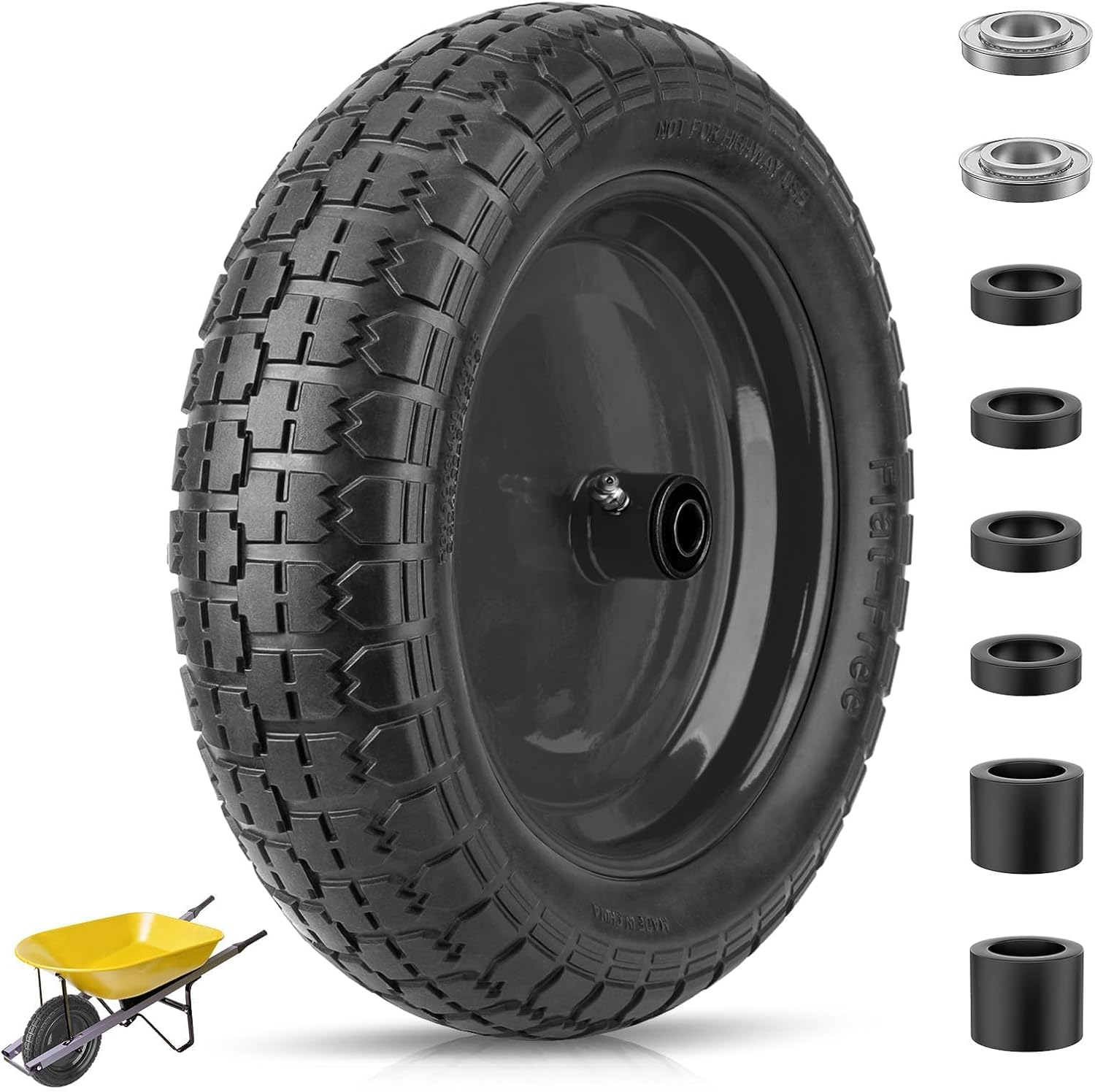
This flat-free TICONN wheelbarrow tire features durable polyurethane foam construction that never needs inflation, helping prevent punctures and reducing maintenance on rough outdoor terrain. With a 300 lb max load capacity and stable steel rim design, it supports safer transport for yard work and hauling tasks. An adapter kit with ball bearings and nylon spacers is included for easier fit and customization across common wheelbarrow and cart axle setups.
Real-World Experiences With Larger Tires on Tundras
Most owners notice the tire change in stages. The first difference is usually steering feel and ride. Then comes acceleration and shift behavior. Fuel economy often shows up after a few tanks, especially if the odometer has been corrected and the truck is driven at highway speeds.
Common owner-reported trade-offs include:
- Better stance and ground clearance
- Improved traction on dirt, gravel, snow, or trails, depending on tread
- More road noise with aggressive tires
- Lower MPG with heavier or wider tires
- Slower acceleration with tall, heavy setups
- Possible rubbing at full steering lock or suspension compression
- More braking effort and longer stopping distance with heavy tire-and-wheel packages
The best tire is not always the biggest tire. For many Tundra owners, a moderate all-terrain that preserves drivability is better than the tallest tire that barely fits.
Best Practices for Upgrading Tires on a Tundra
Use this checklist before you order larger tires:
- Confirm your factory size. Check the driver-door placard, owner’s manual, and current tire sidewall.
- Calculate diameter change. Keep the increase modest if you care about MPG, towing, and stock-like shifting.
- Compare tire weight. A lighter tire can preserve more drivability than a heavy LT tire in the same size.
- Check load index. Never go below the factory load requirement.
- Verify wheel width and offset. Offset can cause rubbing even when diameter looks acceptable.
- Check clearance at full lock. Inspect mudflaps, fender liners, body mounts, cab mounts, and upper control arms.
- Align the truck. Larger tires and lifts can expose alignment issues quickly.
- Recheck speedometer error. Use GPS and calibrate if the error is meaningful.
- Match the spare strategy. A much smaller spare can be a problem on 4WD trucks and long trips.
- Retorque and recheck pressure. Recheck lug torque after installation and set cold pressure correctly.
Note: A lift kit creates more vertical space, but it does not automatically solve rubbing. Tire width, wheel offset, caster, and inner fender clearance still matter.
[Products Worth Considering]

This manual duck head tire changer kit makes tire installation and removal simpler by letting you embed the duck head into the tire with applied pressure. The integrated design and durable steel construction help reduce friction and improve efficiency and safety during use. Suitable for 16–21 inch wheels, it’s convenient for cars, trucks, SUVs, and ATV tires, with 24-hour after-sales support.
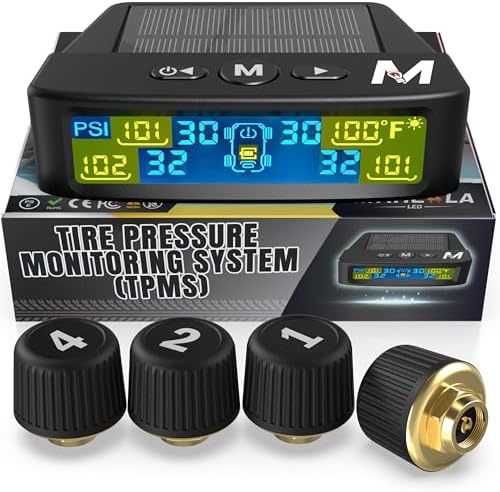
Marcala’s TPMS set of four sensors helps you monitor tire pressure and temperature in real time while driving, with updates every second. The bright color LCD uses auto-dimming for easy viewing, powered by dual solar and USB charging, and offers six alarm modes. Built for trailers, RVs, campers, trucks, and towing setups, the sensors support monitoring 1-4 wheels up to 98 PSI with IP67 waterproof protection.

These pre-assembled 15x6.00-6 front tire and wheel assemblies are designed for quick replacement on riding lawn mowers and lawn tractors. Built with natural rubber pneumatic tires and turf-friendly tread for solid traction and improved shock absorption. A thickened welded rim and 3/4" sintered iron bushing help provide stable, heavy-duty support for everyday mowing use.
Frequently Asked Questions
Can I put bigger tires on my Tundra?
Yes, but the safe size depends on your Tundra generation, trim, suspension, wheel offset, and how you use the truck. Always verify load rating, clearance, speedometer error, and tire pressure before driving long distances or towing.
Do bigger tires change my Tundra’s gear ratio?
They do not change the physical gears, but they lower the effective gear ratio. A taller tire travels farther per revolution, so the truck feels like it has numerically lower gears.
Will 35-inch tires make my Tundra slower?
Usually, yes. The exact difference depends on tire weight, true measured diameter, axle ratio, transmission, and tuning. Heavy 35-inch LT tires are much more noticeable than a mild, lightweight upsize.
Do I need to regear my Tundra for bigger tires?
Not always. Mild upsizes usually need only speedometer verification or calibration. Larger 34-, 35-, or 37-inch setups may benefit from re-gearing, especially on older trucks used for towing or crawling, but this should be planned with a drivetrain specialist.
How much will bigger tires affect MPG?
A common real-world drop is about 1–3 MPG, but it varies. Tire weight, tread pattern, width, pressure, lift height, driving speed, and odometer correction all affect the final number.
Can calibration restore the lost power?
Calibration can correct speedometer, odometer, and sometimes shift behavior, but it does not remove the extra weight or rolling resistance of larger tires. It helps the truck understand the new tire size; it does not make a heavy tire light.
Conclusion
Upsizing tires on a Tundra can be worth it when you want more clearance, better trail traction, or a stronger stance. The trade-off is that larger tires change effective gearing, speedometer accuracy, acceleration, braking feel, and fuel economy. The safest approach is to calculate the diameter change, choose the right load rating, keep tire weight reasonable, check clearance carefully, and recalibrate the speedometer when the change is significant. Done thoughtfully, a tire upgrade can improve your Tundra without making it frustrating to drive.
Sources
- Toyota 2021 Tundra eBrochure — older 5.7L V8 Tundra tire sizes, 6-speed transmission, and 4.30 rear differential.
- Toyota 2024 Tundra eBrochure — current-generation factory tire sizes and Tundra specifications.
- NHTSA Tire Safety Brochure — tire size, tire pressure, placard, and owner’s manual guidance.
- U.S. Tire Manufacturers Association: Replacing Tires — replacement tire size, load index, speed rating, and professional guidance.
- Tire Rack: How Do I Check Speedometer Accuracy? — how tire diameter changes affect speedometer accuracy.
- Tire Rack: What Are Plus Size Wheels & Tires? — overall diameter, driveline gearing, ABS, traction control, and stability-system considerations.