Cold weather can make your Toyota Tacoma’s tire-pressure light come on even when the tire is not punctured. As the air inside the tire cools, pressure drops, often by about 1 PSI for every 10°F decrease. That small-looking change can affect traction, braking, tire wear, and fuel economy, so winter pressure checks are worth doing before you drive.
Quick Answer
Yes. Cold weather lowers Toyota Tacoma tire pressure because air contracts as temperature drops. Expect about 1 PSI of pressure loss for every 10°F drop. Set your Tacoma’s tires to the cold PSI shown on the driver-side door-jamb placard, not the maximum PSI printed on the tire sidewall.
Key Takeaways
- A 40°F temperature drop can lower tire pressure by about 4 PSI.
- Use the Tacoma’s Tire and Loading Information Label on the driver-side door jamb for the correct cold PSI.
- Check pressure when the tires are cold, meaning the truck has been parked for at least three hours.
- Do not rely only on TPMS; it usually warns after a tire is already significantly underinflated.
- If one tire keeps losing pressure, have the tire, valve stem, and wheel inspected for leaks or damage.
At a Glance
| Time Required | 5–10 minutes |
| Difficulty | Easy |
| Tools Needed | Tire pressure gauge, air compressor, valve caps, and your Tacoma’s door-jamb placard |
| Cost | Usually free if you already own a gauge; about $5–$20 for a basic gauge |
Understanding Why Cold Weather Lowers Tire Pressure
Cold weather lowers tire pressure because the air inside the tire cools and contracts. In normal driving terms, pressure changes by about 1 PSI for every 10°F change in outside temperature, according to Bridgestone tire inflation guidance. So if your Tacoma’s tires were set correctly on a 70°F afternoon and the morning temperature drops to 30°F, you may see roughly a 4 PSI loss before you even start the truck.
That does not always mean the tire has a leak. A cold snap can lower all four tires at once, which may trigger the Tire Pressure Monitoring System (TPMS). However, if only one tire is much lower than the others, or the same tire keeps dropping after you refill it, treat it as a possible puncture, valve-stem leak, bead leak, or wheel issue.
Note: Tire pressure should be measured cold. The National Highway Traffic Safety Administration defines a cold tire as one that has not been driven on for at least three hours.
Risks of Low Tire Pressure in Cold Weather
Low tire pressure is more than a dashboard nuisance. Your Tacoma’s tires are the only contact patches between the truck and the road, and winter driving already reduces available grip. When pressure is too low, the tire can flex too much, heat up unevenly, and wear faster.
- Reduced traction: Underinflated tires can feel less stable on icy, snowy, or slushy roads.
- Longer stopping distances: Poor inflation can hurt braking response when you need grip most.
- Slower steering response: A soft tire can make the Tacoma feel vague or heavy in turns.
- Uneven tread wear: Low PSI can wear the shoulders of the tire faster.
- Higher fuel use: FuelEconomy.gov reports that underinflated tires can lower gas mileage by about 0.2% for every 1 PSI drop in the average pressure of all tires.
- Greater tire-failure risk: NHTSA warns that poor tire maintenance, including not having enough air, can contribute to flats, blowouts, or tread separation.
NHTSA reports that 511 people died in tire-related crashes in 2024, which is a strong reminder that tire pressure, tread, and damage checks are safety items—not just maintenance chores.
Warning: Do not keep driving on a tire that looks flat, has a bulge, shows exposed cords, or loses pressure quickly after inflation. Install the spare if it is safe to do so, or call roadside assistance.
Optimal Tire Pressure for Winter Driving
The right winter tire pressure for your Toyota Tacoma is the cold tire pressure listed on your truck’s Tire and Loading Information Label, usually on the driver-side door jamb. Toyota’s Tacoma owner information points owners to the tire and loading information label for the recommended cold tire inflation pressure and tire size, and NHTSA gives the same general guidance for passenger vehicles.
Do not use the maximum PSI printed on the tire sidewall as your normal target. That sidewall number is the tire’s maximum pressure rating, not the vehicle-specific pressure Toyota selected for ride, load, braking, and handling. For the safest result, match the placard for your exact Tacoma model year, trim, tire size, and load setup.
Here is a simple winter pressure example:
- If your Tacoma’s placard says 32 PSI and the temperature drops 20°F, the tires may read about 30 PSI.
- If the temperature drops 40°F, the same tires may read about 28 PSI.
- If the tire reads far lower than the temperature change explains, check for a leak or damage.
Pro Tip: If you park in a heated garage, your tires may read higher indoors than they will outside. For the most accurate winter reading, check them in the morning before driving, after the truck has been sitting in outdoor temperatures.
[Products Worth Considering]

Keep your tires properly inflated with this analog VONDIOR tire pressure gauge, designed for fast, easy readings without batteries. The swiveling, two-axis hose and large glow dial help you measure at any tire angle with instant visibility. Built with a protective rubber shield, it supports durable, low-maintenance use for cars and trucks.

These aluminum alloy tire valve stem caps with an O-ring seal help protect valve stems from corrosion while adding a clean, stylish look to your vehicle. The universal fit works across cars, trucks, motorcycles, bicycles, and more, making them an easy upgrade for everyday driving and off-road use. Installation is quick, and the included four-pack keeps all your tires dressed and protected.

Milton S-921 pencil tire pressure gauge helps you maintain optimal tire pressure for passenger cars with accurate readings in PSI and kPa. It features a built-in deflator valve for convenient pressure adjustments, plus a single chuck head and nylon indicator bar for easy use on the go. Built from durable plated brass and designed for reliable performance, it’s a practical road trip and cold-weather maintenance tool.
Effective Techniques for Checking and Maintaining Tire Pressure
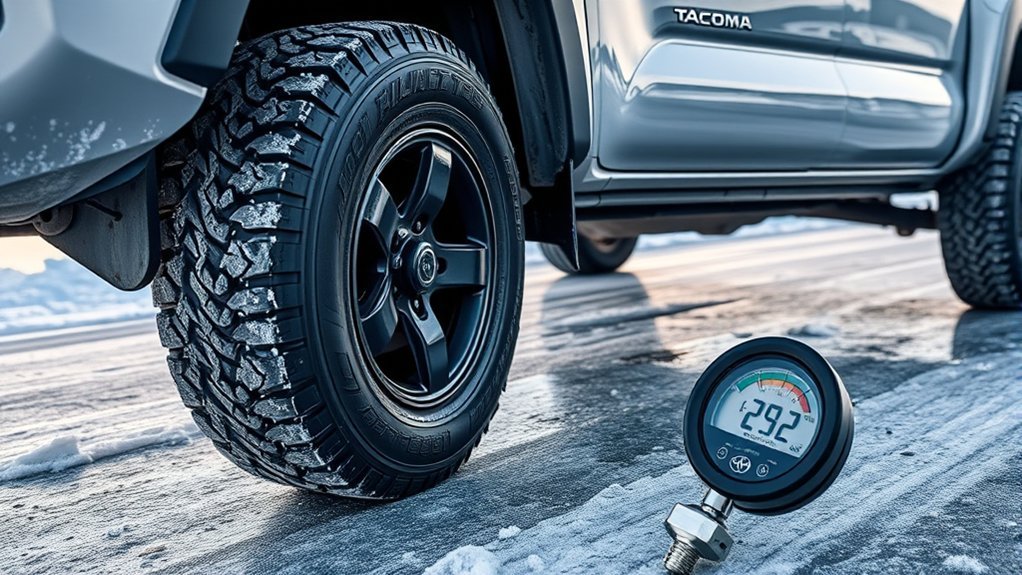
Checking your Tacoma’s tire pressure is simple, but the timing matters. A warm tire can read a few PSI higher after driving, which may lead you to underfill it for the next cold start.
- Park long enough for a cold reading. Wait at least three hours after driving, or check first thing in the morning.
- Find your Tacoma’s correct PSI. Open the driver’s door and read the Tire and Loading Information Label. Use that cold PSI, not the sidewall maximum.
- Check all four tires. Press a quality gauge straight onto the valve stem and note each reading.
- Check the spare if accessible. A flat spare is useless when you need it, and NHTSA recommends checking all tires, including the spare.
- Add air to low tires. Add the difference between your measured PSI and the placard PSI.
- Release air only if the tire is cold and over the placard value. Do not bleed warm tires just because they read higher after driving.
- Recheck after inflation. Confirm each tire matches the Tacoma’s placard pressure.
- Replace every valve cap. Valve caps help keep dirt and moisture out of the valve stem.
During winter, check pressure at least once a month, before long trips, after large temperature swings, and any time the TPMS light comes on. In very cold climates, checking every two weeks is a smart habit.
[Products Worth Considering]
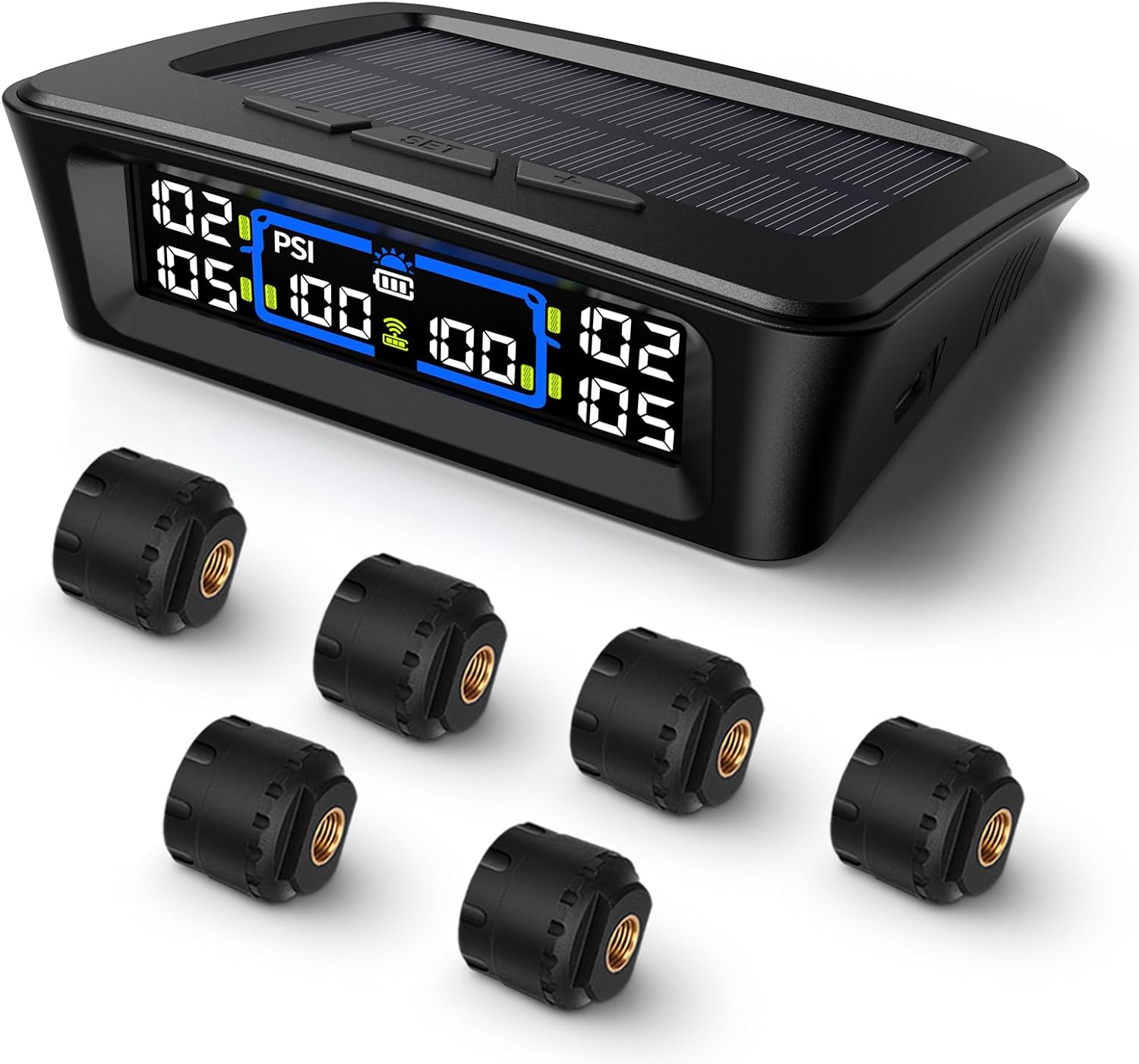
The Tymate TM12 RV TPMS delivers real-time tire pressure and temperature monitoring with a stable 433Hz display for safer long-distance driving. It supports simultaneous monitoring across vehicle and trailer zones, includes six alarm modes for pressure, temperature, leakage, battery, and signal loss, and features easy DIY installation with auto calibration. Power is supplied via USB-C charging or solar recharging, with a wide 0–144 PSI range and up to 50 ft signal coverage for RVs and towable trailers.

Upgrade your Toyota tire setup with these corrosion-resistant, leak-proof valve stem caps designed to help protect the valve core from water, snow, and road grime. The caps feature a snug rubber seal and durable copper alloy construction to resist rust and oxidation while maintaining stable tire pressure. Ideal for replacing worn original caps and keeping your wheels looking clean and stylish.

The Milton S-693 straight foot dual head air chuck is designed for accurate tire pressure checks and quick, secure valve-core engagement with lock-on threads on both ends. With a 1/4" FNPT connection and a maximum 150 PSI rating, it’s built for use on inner duals and common vehicle tires, including trucks and RVs.
What to Do When the TPMS Light Comes On in Cold Weather
A cold-weather TPMS warning often means the pressure dropped overnight. It should not be ignored. Federal TPMS rules require the low-pressure warning to illuminate when one or more tires become significantly underinflated, generally at or below 25% under the manufacturer’s recommended cold inflation pressure, according to FMVSS No. 138.
Use this quick check:
- All tires are low by a similar amount: cold weather is the likely cause. Inflate all tires to the placard PSI when cold.
- One tire is much lower: inspect for a nail, screw, valve leak, bead leak, cracked wheel, or sidewall damage.
- Light stays on after inflation: drive a short distance if your owner’s manual allows it, then recheck. Some systems need time to update.
- Light flashes or shows a TPMS malfunction: the sensor, battery, or system may need service.
Warning: TPMS is a backup alert, not a replacement for a gauge. A tire can be underinflated before the warning light appears.
Best Practices for Winter Tire Maintenance
Correct PSI is only one part of winter tire safety. Your Tacoma also needs enough tread, even wear, healthy sidewalls, and tires suited to the weather you drive in.
[Products Worth Considering]

Monitor tire tread wear with a smart, color-coded depth gauge that shows clear condition ranges at a glance. The bar is range marked for fast, easy readings, helping you maintain safer traction and performance. Each gauge is portable with a pocket clip, and the set includes 20 units for daily use and sharing.

These universal tire valve stem caps help protect valve cores from dust, debris, and moisture while helping maintain stable tire pressure. The corrosion-resistant metal construction and sealed design provide reliable protection in road grime, mud, and winter conditions. Twist-on installation makes them quick to fit on cars, SUVs, trucks, and motorcycles.

The Big Rig Defense Tire Thumper is a truck tire pressure checker that lets you quickly check multiple tires by giving them a firm whack. Listen for a reassuring thump and feel the stick bounce when a tire is fully inflated, helping you get back on the road safely. It features a comfortable, glove-friendly handle and a secure wrist strap for confident use on busy routes.
Inspect tread depth and damage
NHTSA says tires are not safe and should be replaced when tread is worn down to 2/32 of an inch. For winter roads, more tread depth is better because grooves help move slush and water away from the tire. Check for cuts, cracks, bulges, exposed cords, punctures, and uneven wear while you are checking pressure.
Rotate tires on schedule
Regular rotation helps even out wear and can extend tire life. Follow your Tacoma owner’s manual or service schedule for the proper rotation interval and pattern, especially if your tire setup is different from stock.
Do not overinflate for winter grip
Adding extra air above the placard PSI is not a shortcut to better winter handling. Too much pressure can reduce the tire’s contact patch and make the ride harsher. Use Toyota’s recommended cold PSI unless your tire manufacturer, Toyota documentation, or a qualified tire professional gives a specific reason for a different pressure.
Know when winter tires matter
If your Tacoma regularly sees snow, ice, mountain roads, or temperatures below freezing, tire type matters as much as tire pressure. Michelin recommends installing winter tires when daily temperatures consistently fall below 45°F, because winter tire rubber stays more flexible in cold conditions.
Frequently Asked Questions
Is 35 PSI too high for a Toyota Tacoma?
Not always, but do not guess. If your Tacoma’s door-jamb placard lists 35 PSI cold, then 35 PSI is correct. If the placard lists a lower number, inflate to that number instead. The correct PSI depends on your exact model year, tire size, trim, and load setup.
Is 25 PSI too low in winter?
For most Tacoma setups, 25 PSI is likely too low for normal driving, but the exact answer depends on your placard pressure. If your tire reads 25 PSI, check the door-jamb label, inflate to the listed cold PSI, and inspect the tire if it keeps losing air.
Should I inflate my Tacoma tires to the sidewall PSI?
No. The sidewall PSI is the tire’s maximum inflation rating, not your Tacoma’s recommended driving pressure. Use the cold tire pressure on the driver-side door-jamb Tire and Loading Information Label.
Does a cold-weather TPMS light mean I have a leak?
Not always. A sudden cold snap can lower all four tires enough to trigger the TPMS light. A leak is more likely if one tire is much lower than the others, the pressure drops again soon after inflation, or you find a nail, cut, cracked valve stem, or wheel damage.
How often should I check Tacoma tire pressure in winter?
Check at least once a month when the tires are cold. In winter, also check before long trips, after a 10°F or greater temperature swing, and whenever the TPMS light turns on.
Should I add extra PSI before a cold night?
Set the tires to the placard PSI when they are cold. If you know a major cold front is coming, check pressure again the next morning. Do not overinflate far above the placard just to “prepare” for cold weather.
Sources
- Toyota Owners — Tacoma tire inflation pressure — supports using the Tacoma tire and loading information label for recommended cold tire inflation pressure.
- NHTSA TireWise — supports cold tire pressure checks, placard guidance, TPMS limits, tread depth, and monthly tire inspections.
- Bridgestone Americas — Tire Inflation — supports the 1 PSI per 10°F temperature-change rule and sidewall maximum PSI warning.
- eCFR — FMVSS No. 138 Tire Pressure Monitoring Systems — supports TPMS warning threshold context.
- FuelEconomy.gov — Gas Mileage Tips — supports the fuel economy impact of underinflated tires and the warning not to use sidewall max PSI as the target pressure.
- Michelin — Preparing for Winter — supports cold-weather PSI guidance and the 45°F winter tire recommendation.
Conclusion
Cold weather can lower your Toyota Tacoma’s tire pressure quickly, but the fix is simple: check the tires cold, inflate them to the PSI on the driver-side door-jamb placard, and recheck after big temperature swings. Do not rely only on the TPMS light, and do not use the tire sidewall maximum as your target. With the right PSI, healthy tread, and regular winter checks, your Tacoma will be better prepared for cold roads, slush, snow, and sudden morning temperature drops.