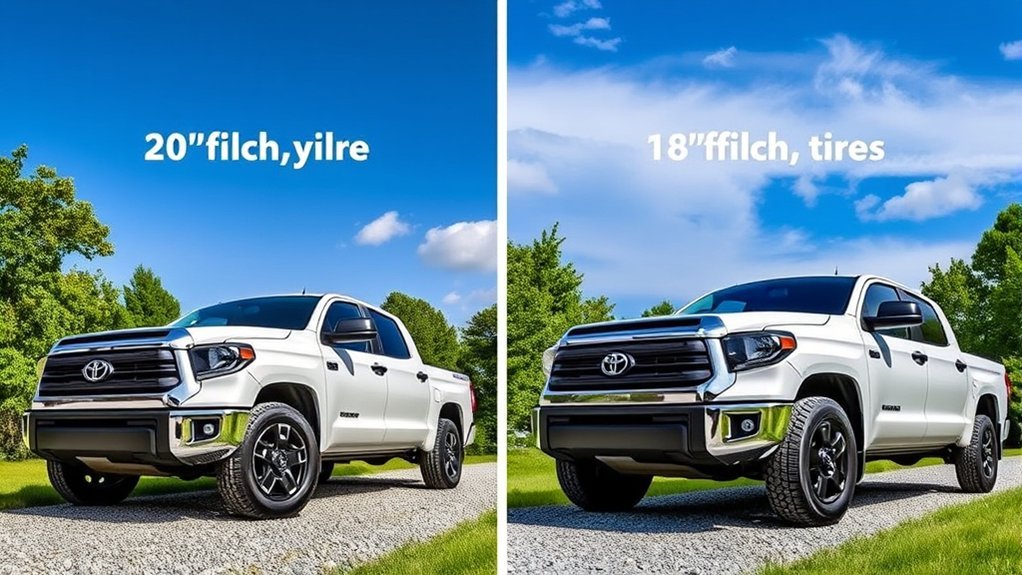
Choosing between 18-inch and 20-inch wheels for a Toyota Tundra is not just a style decision. Wheel size affects sidewall height, ride feel, tire availability, off-road confidence, replacement cost, and fitment details such as load rating and clearance. The best choice depends on how you use your truck: commuting, towing, hauling, trail driving, or building a cleaner street-focused look.
Quick Answer
For most Toyota Tundra owners, 18-inch wheels are the better all-around choice if ride comfort, trail use, tire availability, and replacement cost matter most. Choose 20-inch wheels if you prefer the factory premium look and mostly drive on pavement. Always match tire size, load rating, clearance, and the door-jamb placard.
Key Takeaways
- 18-inch wheels usually ride smoother because they allow a taller tire sidewall, which helps absorb potholes, gravel, washboard roads, and trail impacts.
- 20-inch wheels give the Tundra a sharper, premium factory look, but the shorter sidewall can feel firmer on rough roads.
- Fuel economy is not guaranteed to improve just because you switch to 18-inch wheels; tire weight, tread pattern, rolling resistance, inflation, and diameter matter more.
- Current Tundra factory examples include 18-inch, 20-inch, and 22-inch wheels depending on trim, so always verify your exact truck before ordering tires.
- Before changing sizes, confirm load index, speed rating, offset, brake clearance, TPMS compatibility, spare-tire strategy, and rubbing clearance.
Deciding Between 18-Inch and 20-Inch Wheels: Key Benefits to Consider
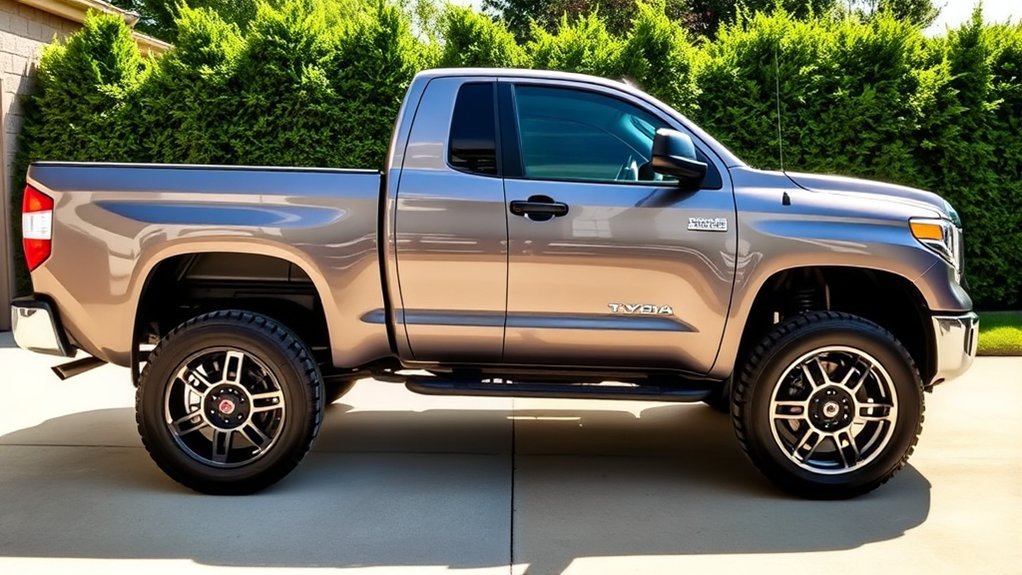
The simple difference is sidewall. If the overall tire diameter stays similar, an 18-inch wheel leaves more room for tire sidewall than a 20-inch wheel. That extra rubber can help the tire flex over bumps, potholes, rocks, and rough dirt roads.
A 20-inch wheel leaves less sidewall when paired with a similar outside tire diameter. That can sharpen the look and steering feel on pavement, but it also gives the tire less cushion when the road gets rough. Tire Rack’s plus-sizing guidance explains that larger wheels with shorter sidewalls can improve steering response and appearance, but low-profile sidewalls are more vulnerable to potholes, curbs, and debris impacts. Tire Rack’s plus-sizing guide is a useful reference for that tradeoff.
| Category | 18-Inch Wheels | 20-Inch Wheels |
|---|---|---|
| Ride comfort | Usually softer because of taller sidewalls | Usually firmer, especially on rough pavement |
| Off-road use | Better sidewall cushion and airing-down flexibility | Can work, but has less sidewall protection |
| Appearance | More rugged, trail-ready look | Cleaner premium street look |
| Tire choices | Often broader for all-terrain, mud-terrain, and LT tire options | Still plenty of choices, but often pricier for truck tires |
| Best for | Comfort, rough roads, off-road use, value | Pavement driving, premium appearance, factory luxury trims |
Factory Tundra Wheel and Tire Sizes to Know
Before comparing tire prices or shopping for aftermarket wheels, start with the factory setup on your exact Tundra. Toyota’s current 2026 Tundra lineup shows 18-inch styled-steel wheels on SR, 18-inch alloy wheels on SR5, 20-inch wheels on Limited, Platinum, and 1794 Edition trims, 18-inch BBS forged-aluminum wheels with Falken WildPeak all-terrain tires on TRD Pro, and 22-inch wheels on Capstone. You can verify the current trim lineup on Toyota’s official Tundra page.
Common current-generation Tundra tire-size examples include 265/70R18, 265/60R20, 285/65R18 on TRD Pro-style fitments, and 265/50R22 on Capstone-style fitments. Toyota manual data also points to these sizes on current-generation Tundra models, but your safest source is still the tire placard on your own driver-side door jamb. Toyota Owners manual data is helpful for reference, but trim, market, package, and model year can change details.
Note: A size like 285/70R18 may be popular in some truck communities, but it is not the same as the common TRD Pro-style 285/65R18 example. Larger tires can rub or affect speedometer accuracy unless wheel offset, suspension height, and clearance are checked first.
How Changing Wheel Sizes Affects Performance
Changing wheel size affects more than the look of your Tundra. The wheel, tire, tread, and overall diameter work together. If you move from a 20-inch wheel to an 18-inch wheel while keeping a similar overall tire diameter, the truck usually gains sidewall height. That can make the ride feel more settled on broken pavement and rough trails.
On pavement, a 20-inch wheel with a shorter sidewall can feel more direct when turning. Some drivers like that sharper response. Others notice more harshness over expansion joints, potholes, and gravel. The biggest mistake is assuming wheel diameter alone determines performance. A lightweight 20-inch wheel with a highway tire may feel different from a heavy 18-inch wheel with an aggressive all-terrain tire.
Fuel economy is the same story: wheel size alone does not guarantee a gain. Tire rolling resistance, tire weight, tread depth, pressure, alignment, and driving speed all matter. NHTSA’s TireWise guidance notes that lower rolling resistance can improve fuel economy, but that is about the tire’s construction and rolling resistance, not simply whether the wheel is 18 or 20 inches.
The practical rule: choose 18-inch wheels for cushion and tire flexibility; choose 20-inch wheels for factory premium style and a firmer, more street-focused feel.
What Tire Options Are Available for 18-Inch and 20-Inch Wheels?
For 18-inch Tundra wheels, you will usually find strong choices in highway-terrain, all-terrain, rugged-terrain, mud-terrain, and LT-rated truck tires. That makes 18s attractive for drivers who tow, camp, hunt, work on rough job sites, or spend time on gravel and trails.
For 20-inch Tundra wheels, you still have good tire options, especially in highway-terrain and all-terrain categories. The difference is that equivalent 20-inch truck tires often cost more, and the shorter sidewall gives you less cushion. If your Tundra mostly sees pavement and you like the look of the Limited, Platinum, or 1794 Edition factory stance, 20-inch wheels still make sense.
| Tire Type | 18-Inch Wheels | 20-Inch Wheels |
|---|---|---|
| Highway-terrain | Good daily comfort and value | Good choice for quiet pavement driving |
| All-terrain | Excellent mix of trail grip and comfort | Available, but often firmer and pricier |
| Mud-terrain | More practical for serious off-road builds | Available, but ride and cost tradeoffs grow |
| LT/load-rated tires | Often easier to shop for towing and work use | Available, but compare weight and ride carefully |
[Products Worth Considering]

Keep your tires properly inflated with this analog VONDIOR tire pressure gauge, designed for fast, easy readings without batteries. The swiveling, two-axis hose and large glow dial help you measure at any tire angle with instant visibility. Built with a protective rubber shield, it supports durable, low-maintenance use for cars and trucks.

These universal tire valve stem caps help protect valve cores from dust, debris, and moisture while helping maintain stable tire pressure. The corrosion-resistant metal construction and sealed design provide reliable protection in road grime, mud, and winter conditions. Twist-on installation makes them quick to fit on cars, SUVs, trucks, and motorcycles.

These aluminum alloy tire valve stem caps with an O-ring seal help protect valve stems from corrosion while adding a clean, stylish look to your vehicle. The universal fit works across cars, trucks, motorcycles, bicycles, and more, making them an easy upgrade for everyday driving and off-road use. Installation is quick, and the included four-pack keeps all your tires dressed and protected.
Choosing the Right Size for Aesthetic Appeal
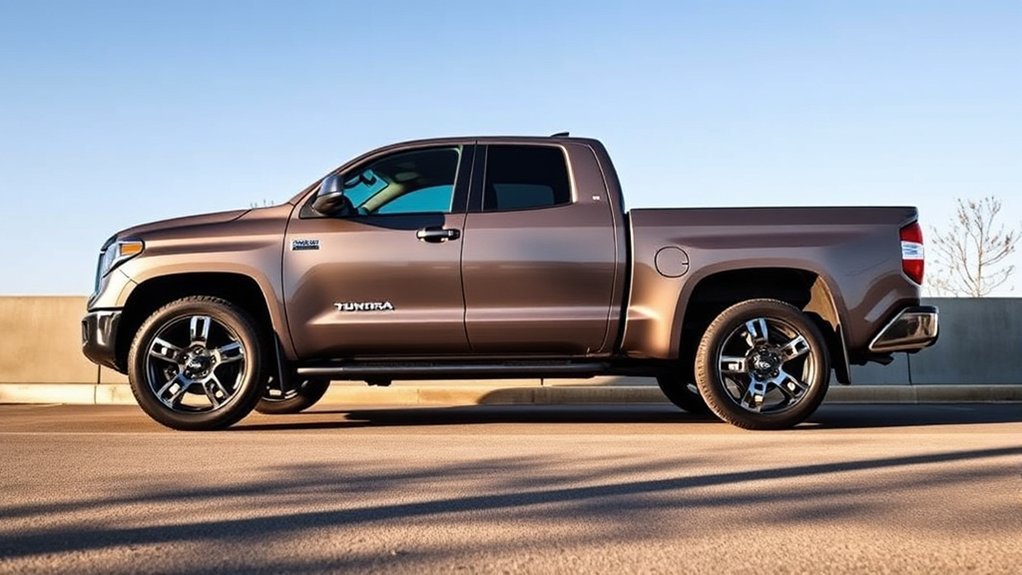
If appearance is your top priority, 20-inch wheels have a clear advantage for many Tundra owners. They fill the wheel wells well, match the premium look of higher trims, and give the truck a cleaner street presence. That is one reason Toyota uses 20-inch wheels on trims such as Limited, Platinum, and 1794 Edition.
That said, 18-inch wheels can look just as intentional when paired with the right tire. A taller all-terrain tire on an 18-inch wheel gives the Tundra a more rugged, overland-ready stance. This look fits especially well if you like TRD-style builds, backcountry driving, or a practical work-truck setup.
Pro Tip: Do not judge the wheel alone. The same 18-inch wheel can look plain with a mild highway tire or aggressive with a properly sized all-terrain tire. The tire’s sidewall, tread, and width drive much of the final look.
Cost of Tires for 18-Inch vs. 20-Inch Wheels
In many cases, 18-inch Tundra tires cost less than comparable 20-inch tires in the same brand, model, load rating, and tread category. The exact price changes constantly, so it is better to compare real installed quotes than rely on a fixed price range.
When comparing costs, look beyond the tire sticker price. A full wheel-size change can include wheels, tires, TPMS sensors or sensor transfer, mounting, balancing, lug nuts, alignment checks, and possibly a matching spare. If you tow or haul, the cheapest tire is not automatically the best value because load capacity and heat resistance matter.
- Compare the same tire model in 18-inch and 20-inch sizes when possible.
- Check load index and speed rating against your original tires.
- Ask for installed pricing, including mounting, balancing, valve stems, disposal fees, and TPMS work.
- Consider tire weight, especially for aggressive all-terrain or LT tires.
- Plan for the spare if the new tire diameter differs from the factory spare.
[Products Worth Considering]

The SAFELIFE dial tire tread depth gauge measures tread depth in 1/32 inch increments with clear, easy-to-read 2-inch dial face. Color zones using a traffic light system help you quickly judge whether tread is low, marginal, or ample for safer driving. Built with a durable zinc cast body and a metal detect probe for precise, comfortable use across cars, motorcycles, trucks, and buses.

Secure your vehicle during transport with this 4-pack of heavy-duty tire tie down straps designed for trailers and hauling. The ratchet system with flat hooks and D-rings helps you tension the straps quickly, while the wheel-friendly design protects tires. With high break strength and corrosion-resistant hardware, these straps provide reliable, confidence-inspiring tie-down security for cars, trucks, and UTVs.

Measure tire tread depth quickly and accurately with this LUMITECO dial gauge that reads in 1/32" increments up to 14/32". The color-coded green/yellow/red zones make it easy to judge tire wear and know when replacement is needed. A rugged, compact design with a protective pouch helps keep the gauge ready for use on cars, trucks, motorcycles, and more.
Off-Road, Towing, and Payload Considerations
If you drive off-road, 18-inch wheels have the strongest practical case. More sidewall helps absorb hits and gives you more flexibility when airing down for sand, rocks, or washboard roads. That does not mean every 18-inch tire is trail-ready; a mild highway tire on an 18-inch wheel will not perform like a quality all-terrain or mud-terrain tire.
For towing and payload, the key detail is not wheel diameter. It is whether the tire and wheel are rated for the load. Your Tundra’s tire placard lists original tire size, recommended cold tire pressure, and vehicle load information. Tire Rack explains that the tire placard is commonly found on the driver’s door jamb and provides original equipment tire sizes and cold pressure recommendations. You can learn more from Tire Rack’s tire placard guide.
Warning: Never install a tire with a lower load rating than your Tundra requires. After off-road airing down, reinflate before highway driving. Low pressure at speed can overheat tires, reduce control, and damage the tire.
[Products Worth Considering]

Accurately measure tire tread depth with a calibrated gauge marked from 0 to 1 inch in 1/32 inch increments. The color-coded bar helps you quickly identify tread condition ranges, supporting safe driving for trucks, motorcycles, automobiles, and passenger vehicles.

This professional wheel and rim brush kit makes it easy to lift brake dust, grime, and dirt from wheels and tires without scratching finishes. The brushes feature soft, metal-free wool heads and a flexible 360-degree rim brush design for reaching hard-to-clean areas. Includes multiple brush types plus accessories for thorough car, motorcycle, and general vehicle detailing.

Upgrade your 2024-2026 Tesla Model 3 Highland with REEVAA all-weather mud flaps designed for seamless fit along the original body lines. The set of four delivers strong splash protection against mud, gravel, and road debris while using OEM-grade durable materials. Installation is non-destructive with original hole positions and snap-in clips, and the aerodynamic design helps minimize impact on efficiency.
Fitment Checklist Before Switching Wheel Sizes
Before moving from 20-inch to 18-inch wheels, or from 18-inch to 20-inch wheels, confirm the full fitment package. A wheel can have the right diameter and still be wrong for the truck.
- Bolt pattern: Match the Tundra’s required bolt pattern for your generation and model year.
- Center bore: Make sure the wheel centers correctly on the hub or uses the correct hub-centric ring if needed.
- Offset and backspacing: Wrong offset can cause rubbing, poor steering feel, or extra stress on components.
- Brake clearance: Not every 18-inch wheel clears every brake package. Test-fit before mounting tires if possible.
- Load rating: Wheels and tires both need adequate load capacity for the truck, passengers, cargo, and trailer tongue weight.
- Overall tire diameter: Keep the new tire close to the original diameter unless you understand the effect on clearance, gearing, speedometer reading, ABS, and traction control.
- TPMS compatibility: Confirm sensors can be transferred or replaced and programmed.
- Lug nuts: Use the correct seat style, thread, and torque procedure for the wheel.
- Spare tire: A large diameter mismatch between the spare and road tires can create problems, especially on four-wheel-drive trucks.
- Rubbing check: Check full steering lock, suspension compression, mud flaps, fender liners, and upper control arm clearance.
Which Size Should You Choose?
Choose 18-inch wheels if your Tundra is a daily driver that sees rough pavement, gravel roads, job sites, trails, camping routes, snow, or towing duty. The extra sidewall gives you more comfort and more tire flexibility, and it usually makes long-term tire replacement easier on the budget.
Choose 20-inch wheels if you like the premium factory look, mostly drive on paved roads, and want the truck to keep a clean Limited, Platinum, or 1794-style stance. They are not “bad” wheels; they simply trade some sidewall cushion for appearance and sharper street feel.
For a balanced Tundra build, an 18-inch wheel with a quality all-terrain tire is the most versatile setup. For a street-focused Tundra, a 20-inch wheel with a well-chosen highway-terrain or mild all-terrain tire can look great and still drive comfortably.
Frequently Asked Questions
Are 18-inch wheels worth it on a Toyota Tundra?
Yes, 18-inch wheels are worth it for many Tundra owners because they allow more tire sidewall, which can improve comfort on rough roads and give better flexibility for all-terrain tires. They are especially practical for off-road driving, towing, camping, and work-truck use.
Can I replace 20-inch Tundra wheels with 18-inch wheels?
Usually, yes, but only if the 18-inch wheel clears the brakes and has the correct bolt pattern, center bore, offset, load rating, and lug-seat design. Use a tire size that keeps the overall diameter close to stock unless you have confirmed clearance and speedometer effects.
Do 18-inch wheels improve Tundra fuel economy?
Not automatically. A lighter, low-rolling-resistance 18-inch tire may help, but an aggressive or heavy all-terrain tire can reduce fuel economy. Tire weight, tread pattern, rolling resistance, inflation pressure, alignment, and driving speed matter more than wheel diameter alone.
Are 20-inch wheels bad for off-road driving?
No, 20-inch wheels can handle mild dirt roads and light trail use with the right tire. The drawback is less sidewall compared with an 18-inch setup, which means less cushion against rocks, ruts, potholes, and impacts when aired down.
What is a common 18-inch tire size for a current-generation Tundra?
A common current-generation 18-inch example is 265/70R18, while TRD Pro-style fitments commonly use 285/65R18. Always check your own tire placard, trim, suspension setup, and clearance before ordering because packages and model years can vary.
What is a common 20-inch tire size for a Toyota Tundra?
A common current-generation 20-inch example is 265/60R20 on several Tundra trims. If you are replacing tires, match or exceed the required load index and speed rating and verify the recommended cold tire pressure on the driver-door placard.
Conclusion
For the Toyota Tundra, 18-inch wheels are the stronger choice for comfort, rough roads, off-road use, and long-term tire flexibility. They give you more sidewall, more practical all-terrain choices, and often better replacement value. The 20-inch wheels still make sense if you want a premium factory look and spend most of your time on pavement. The smartest choice is the one that matches your driving: 18s for capability and comfort, 20s for style and street presence.
Sources
- Toyota 2026 Tundra official page — current trim, wheel, MPG, towing, and payload context.
- Toyota Owners manual data — current-generation Tundra tire-size reference.
- NHTSA TireWise — tire safety, tire pressure, tire maintenance, and rolling-resistance guidance.
- Tire Rack Plus Sizing Guide — sidewall, impact, handling, and plus-sizing tradeoffs.
- Tire Rack Tire Placard Guide — door-jamb tire placard, OE tire size, cold pressure, and load-capacity guidance.