
What Makes Off Road Tires More Durable on a Toyota Tacoma
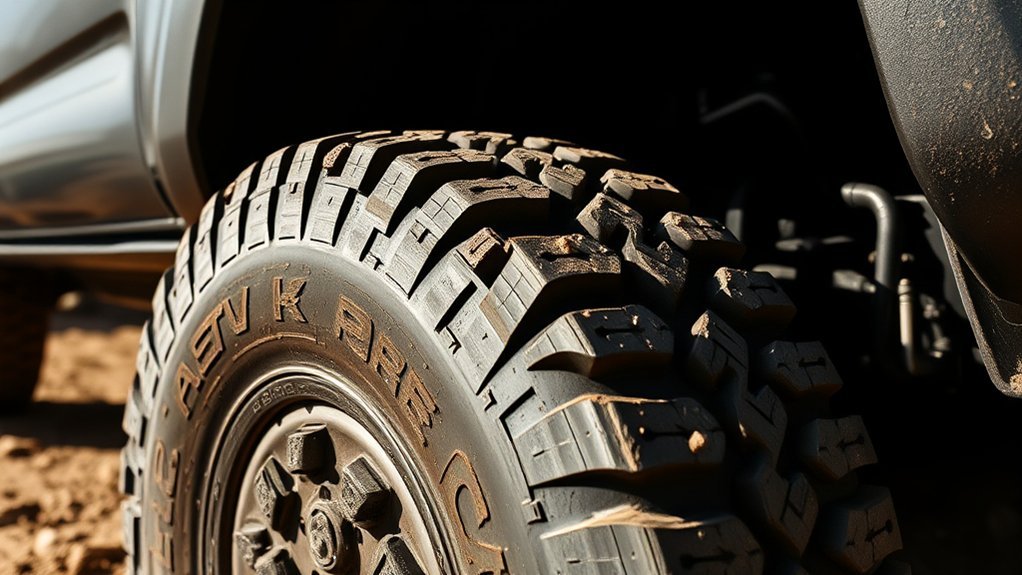
Choosing durable off-road tires for a Toyota Tacoma is not just about picking the most aggressive tread. The longest-lasting setup is the tire that matches your terrain, load, wheel size, driving speed, and maintenance routine. Start with your Tacoma’s tire placard and owner’s manual, then compare tread design, sidewall construction, load rating, warranty, and real-world tradeoffs like road noise, weight, and fuel economy.
Quick Answer
For a Toyota Tacoma, the most durable off-road tires usually combine a strong LT-rated construction, reinforced sidewalls, cut-resistant rubber, deep self-cleaning tread, and the correct load index for your truck. Pick all-terrain tires for mixed daily driving, rugged-terrain tires for harder trails, and mud-terrain tires for frequent mud, rocks, and low-speed off-road use.
Key Takeaways
- Check your Tacoma’s driver-door tire placard and owner’s manual before changing tire size, load index, or pressure.
- For durability, prioritize reinforced sidewalls, proper load rating, stone ejectors, deep tread, and cut-resistant rubber over looks alone.
- All-terrain tires are best for daily driving plus trails; rugged-terrain tires add toughness; mud-terrain tires give maximum bite but usually add noise, weight, and wear.
- Airing down can improve trail traction, but you must reinflate before highway driving and avoid overloading the tire.
- Rotations, pressure checks, alignment, and post-trail inspections are just as important as the tire brand you buy.
At a Glance
| Time Required | 20–45 minutes to compare tire type, size, load rating, warranty, and fitment; installation time varies by shop. |
| Difficulty | Easy to moderate. Choosing a stock-size tire is simple; upsizing requires more fitment checks. |
| Tools Needed | Owner’s manual, driver-door tire placard, tire pressure gauge, tread-depth gauge, and a reliable inflator if you air down off-road. |
| Cost | Varies by size, tire category, and load range. Budget for tires plus mounting, balancing, valve stems or TPMS service, alignment, and possible spare-tire matching. |
How to Choose the Right Off-Road Tires for Your Tacoma
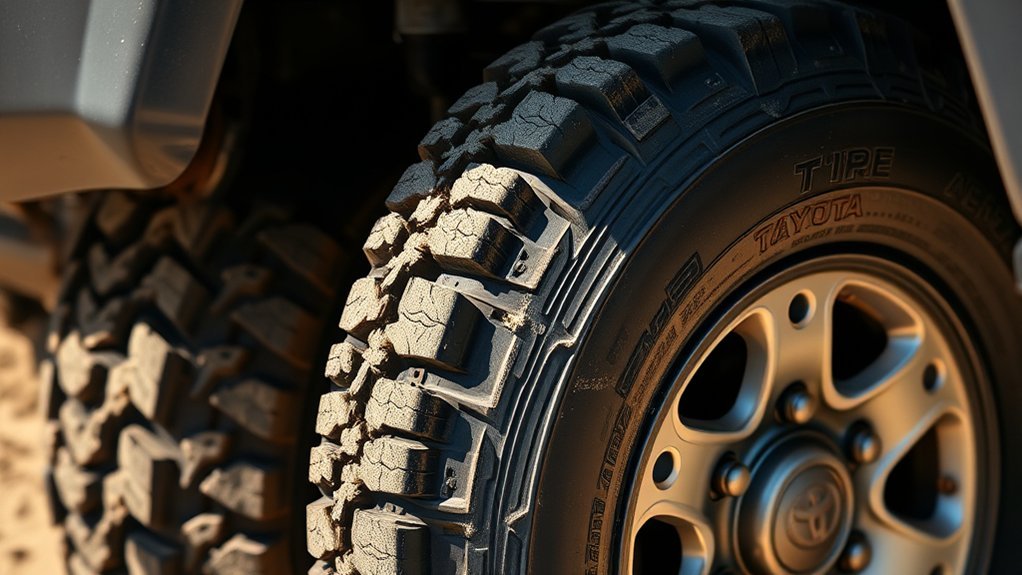
Start with how you actually use your Tacoma. A tire that lasts on a daily-driven SR5 with weekend forest-road trips may not be the right tire for a loaded overland build, a rock-crawling truck, or a mud-heavy trail rig. The goal is to choose enough tire for your terrain without adding unnecessary weight, noise, and rolling resistance.
[Products Worth Considering]

EVOULTES heavy duty tire inflator with an integrated gauge delivers accurate pressure readings from 10–120 PSI, helping you inflate, deflate, and check tires in one tool. The 16.5-inch extended dual-head air chuck with swivel base reaches hard-to-access dual wheel valves on trucks and RVs. A brass trigger core and side-mounted air release valve make operation smooth, with standard 1/4" NPT threading and quick-connect compatibility for easy setup.

This VEVOR tire bead breaker uses a slide-hammer impact and wedge tip to separate tire beads from rims quickly and efficiently without damaging hub surfaces. The long handle and sturdy steel construction help reduce user strain while providing reliable, portable tire changing for cars, trucks, and more. Ideal for home mechanics and repair shops handling multiple vehicle tire sizes.
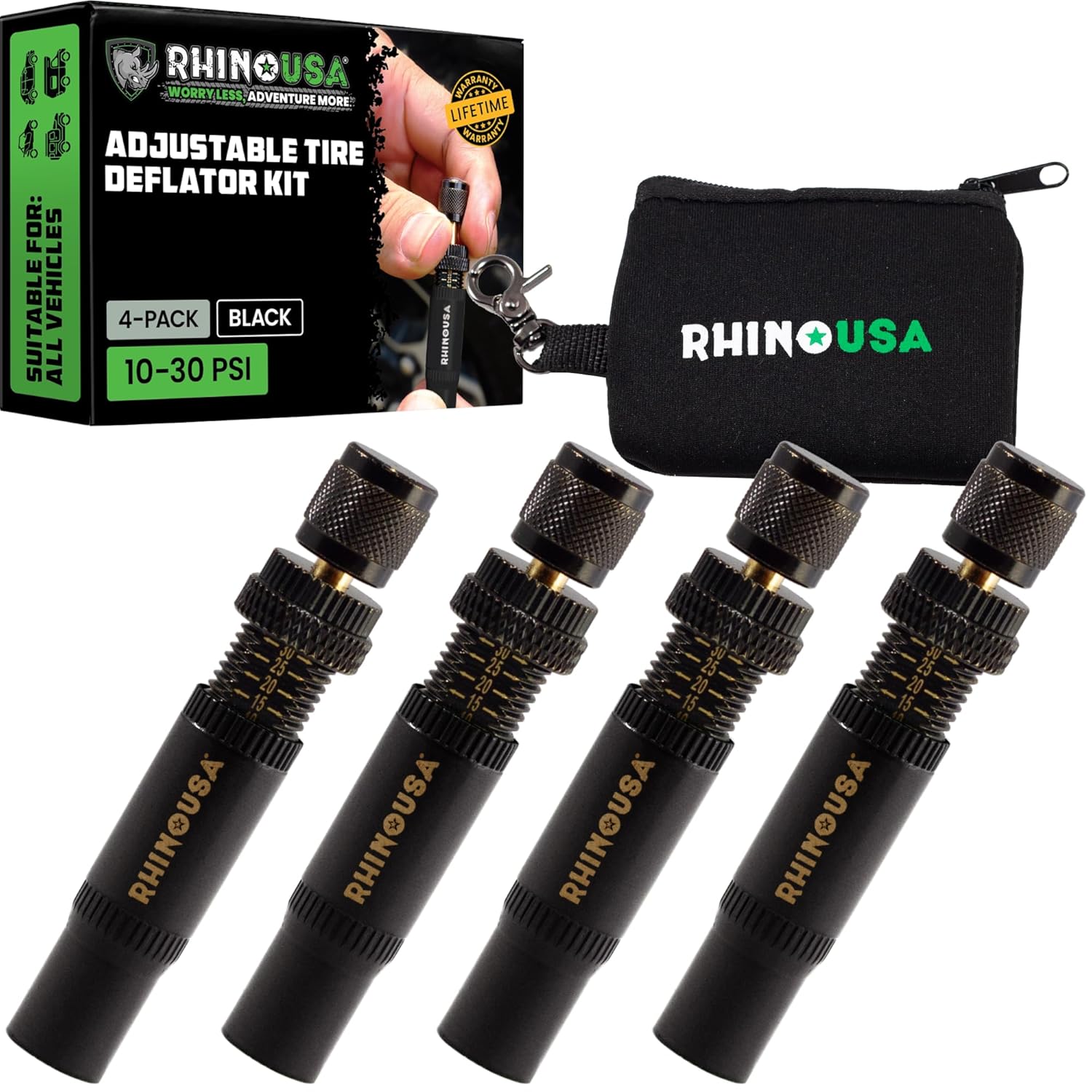
Use the Rhino USA adjustable tire deflators to air down all four tires at once by screwing one deflator onto each valve stem, letting you step away while the tires reach your preset pressure. Each deflator independently adjusts across a 10–30 PSI range with laser-etched indicators for quick setup and verification, making it ideal for beach, sand, and rocky off-road trails.
1. Choose the Right Tire Category
- All-terrain (A/T): Best for Tacomas that split time between pavement, gravel, dirt roads, snow, and moderate trails. Current examples include the BFGoodrich All-Terrain T/A KO3 and Falken Wildpeak A/T4W.
- Rugged-terrain or hybrid terrain: A middle ground between A/T and mud-terrain. These usually add tougher shoulders and a more aggressive look while keeping better road manners than a full M/T.
- Mud-terrain (M/T): Best for frequent mud, rocks, deep ruts, and low-speed trail use. A tire like the Toyo Open Country M/T is built for maximum off-road traction, but mud-terrain tires usually ride louder and heavier on pavement.
2. Match the Tire to Your Tacoma, Not Just the Trail
Before changing size or load range, check the tire information label on the driver’s door area and your Toyota owner’s manual. NHTSA recommends using the owner’s manual or Tire and Loading Information Label to confirm the correct tire size and inflation information for your vehicle. Toyota also provides model-specific manuals through the Toyota Owners manuals portal.
If you upsize, confirm wheel width, offset, suspension clearance, spare-tire fit, and whether the tire rubs at full steering lock or during suspension compression. Oversized tires can change speedometer readings, gearing feel, braking, fuel economy, and transmission behavior.
Warning: Never choose a tire with a lower load capacity than your Tacoma requires. Underinflation, overloading, sidewall damage, and improper mounting can cause tire failure. Have tires mounted by a qualified tire professional and follow the vehicle placard and tire manufacturer’s guidance.
3. Look at Load Range and Construction
Many Tacoma owners prefer LT-rated tires for trail durability because they often use stronger casings than standard passenger-metric tires. The tradeoff is weight. Heavier tires can reduce acceleration, fuel economy, and ride comfort. Load Range C often feels more balanced on a midsize truck than very heavy-duty Load Range E, but the right answer depends on tire size, payload, towing, and terrain.
What Factors Contribute to Off-Road Tire Durability?
Durability comes from the whole tire, not one feature. The sidewall, casing, tread compound, tread depth, shoulder design, bead area, and load rating all work together. For a Tacoma, the most useful durability features are the ones that reduce cuts, punctures, heat buildup, uneven wear, and stone drilling.
| Durability Feature | Why It Matters | Best For |
|---|---|---|
| Reinforced sidewalls | Help resist cuts, bruising, and impact damage from rocks and roots. | Rocky trails, desert roads, loaded overland builds. |
| Deep, self-cleaning tread | Clears mud, gravel, and snow so the tread can keep biting. | Mud, loose dirt, gravel, snow-covered roads. |
| Stone ejectors | Help reduce stones wedging into grooves and drilling into the tread base. | Gravel roads, sharp rock, mixed trail use. |
| Cut- and chip-resistant compound | Helps tread blocks survive sharp stone, heat, and repeated off-road abuse. | Rock, desert, construction roads, high-mileage trail driving. |
| Correct load rating | Keeps the tire within its safe load and inflation limits. | Towing, bed racks, campers, rooftop tents, recovery gear. |
Current tire examples show how these features vary. The BFGoodrich All-Terrain T/A KO3 lists severe-snow rating, 3PMSF marking, a new tread pattern, and a 50,000-mile mileage warranty. The Falken Wildpeak A/T4W lists up to a 65,000-mile limited tread life warranty for non-LT sizes, 60,000 miles for LT sizes, and 3-ply DURASPEC Sidewall Technology on select sizes. Toyo’s Open Country M/T emphasizes tough polyester construction, aggressive hook-shaped blocks, open scalloped shoulders, and over-the-shoulder tread for deep mud and snow.
How Tread Design Enhances Traction and Longevity
Tread design affects both grip and wear. A tire with huge voids may clean mud well but wear faster and hum louder on the highway. A tighter all-terrain pattern may last longer on pavement but pack up sooner in sticky mud. The best Tacoma tire is usually the one that matches your most common terrain, not your hardest once-a-year trail.
Key Features of Tread Design
Look for tread blocks with enough void space to clear debris, but enough block stability to avoid squirming on pavement. Interlocking tread blocks, tie bars, and reinforced tread foundations can reduce block movement, which helps with steering feel and uneven wear. The Nitto Ridge Grappler, for example, uses a hybrid tread pattern, variable pitch design for road comfort, stone ejectors, staggered shoulder lugs, and a reinforced block foundation.
Impact of Tread Depth
Deeper tread can improve loose-surface traction and give the tire more usable rubber before it reaches the wear bars. Many LT all-terrain and mud-terrain tires start around the mid-teens in 32nds of an inch, but tread depth varies by model and size. Write down the starting depth when the tires are new so you can track wear during rotations.
Benefits of Tread Patterns
A good off-road tread should do three things: bite, clean, and stay stable. Large lugs help in mud and loose dirt. Sipes add biting edges for wet roads and snow. Shoulder lugs help when the tire is aired down and the sidewall starts working against rocks, ruts, and soft surfaces. Self-cleaning shoulder designs, like those promoted on the Goodyear Wrangler DuraTrac, help clear debris from the tread for dirt, gravel, and mud traction.
Pro Tip: If your Tacoma spends most of its miles on pavement, avoid choosing the most aggressive mud-terrain tire just for appearance. A quality all-terrain or rugged-terrain tire often lasts longer, rides quieter, and still handles most trails well.
The Role of Sidewall Construction in Puncture Resistance
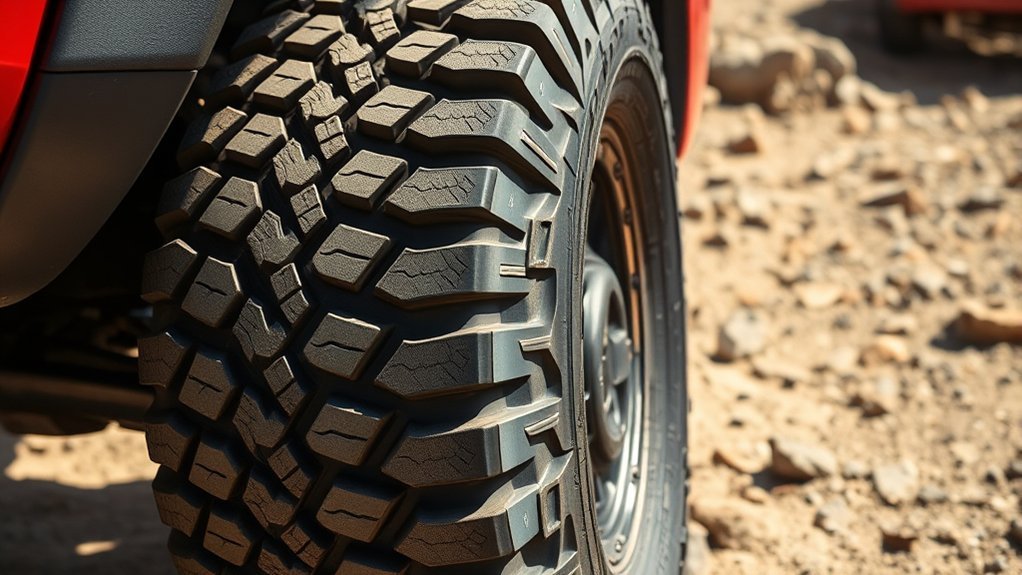
The sidewall is one of the most important durability areas for a Tacoma that sees rocks, roots, ruts, and aired-down trail driving. Tread punctures can often be repaired if they are in the repairable area, but sidewall cuts usually mean the tire is finished.
Key Sidewall Materials
Strong off-road tires may use reinforced polyester plies, stronger shoulder lugs, thicker sidewall rubber, or brand-specific sidewall technologies. Toyo describes the Open Country M/T as using high-turn-up, tough polyester construction, while Falken lists 3-ply DURASPEC Sidewall Technology on select A/T4W sizes. Always verify the exact tire size because not every size in a tire line has the same construction.
Reinforced Sidewall Designs
- Extra sidewall protection helps reduce cuts from sharp rocks and trail debris.
- Shoulder lugs add grip when the tire is aired down and the sidewall contacts terrain.
- Higher load capacity can help with campers, bed racks, towing, and recovery gear when matched correctly to the vehicle.
- Thicker construction may improve toughness but can also add weight and ride harshness.
Impact Resistance Features
Impact resistance matters most on rock ledges, washboard roads, potholes, and fast gravel. A stronger tire casing can help, but it does not make the tire invincible. Sharp impacts can still break belts, bruise sidewalls, bend wheels, or cause slow leaks. After a hard trail day, inspect both sidewalls, the tread face, the bead area, and the inside sidewall if you can safely access it.
Why Rubber Matters for Off-Road Tires
The rubber compound affects grip, chip resistance, wet braking, snow traction, and tread life. Softer compounds may grip well but wear faster. Harder compounds may last longer but feel less confident in rain or cold weather. The best durable off-road tire balances compound, tread design, and casing strength.
- Cut- and chip-resistant compounds help on sharp rocks and gravel.
- Silica-enhanced compounds can improve wet and cold-weather grip depending on the tire design.
- Full-depth sipes help maintain biting edges as the tire wears.
- 3PMSF-rated compounds and tread designs are tested for severe-snow service, but they are not a substitute for dedicated winter tires on ice.
Note: The Three-Peak Mountain Snowflake symbol helps identify tires that meet severe-snow traction requirements, but it does not mean the tire has been optimized for every winter condition. Ice braking and hard-packed freezing surfaces still require extra caution.
Off-Road Conditions That Affect Tire Durability
Different terrain damages tires in different ways. Choose the tire for the terrain you drive most often, then adjust pressure and speed to reduce damage.
[Products Worth Considering]

The JACO FlowPro Tire Inflator measures, inflates, and airs down tires up to 100 PSI with battery-free operation and ±2% accuracy after calibration. It features a glowing pressure dial for night visibility, a heavy-duty steel build with a hybrid hose, and a precision push-to-inflate thumb trigger. The patented Lightning Air Chuck locks on for a secure seal, and the kit includes quick-connect hardware for easy inline use with your air compressor.

This portable cordless tire inflator delivers fast, efficient inflation for cars, motorcycles, bikes, and sports balls with a digital pressure gauge. Use the one-click PSI preset with auto shut-off for accurate, hands-free topping to your target pressure up to 150 PSI. It’s compact and rechargeable with a built-in emergency LED light plus valve adapters and accessories for quick, ready-to-go use.
Rocky Trails
Rocks are hard on sidewalls and tread blocks. Choose tires with reinforced sidewalls, strong shoulder lugs, and stone ejectors. Airing down can improve grip and reduce bouncing, but too little pressure can pinch the sidewall or unseat the bead.
Mud and Clay
Mud requires larger voids and self-cleaning tread. All-terrain tires can pack up in sticky clay, while mud-terrain tires clear better. The tradeoff is usually more road noise and faster highway wear.
Sand
Sand rewards flotation more than sharp biting edges. A wider footprint and controlled lower pressure can help, but aggressive digging can bury the truck. Smooth throttle control matters as much as the tire.
Snow and Wet Roads
For winter-prone areas, look for a 3PMSF-rated all-terrain or all-weather tire. For frequent ice, steep winter roads, or severe cold, consider dedicated winter tires instead of relying only on an off-road tire.
Highway Miles
Most Tacoma owners still drive a lot of pavement. If that is you, pay attention to treadwear warranty, wet braking, noise rating, and tire weight. A very heavy mud-terrain tire can make the truck feel slower and less efficient.
Tire Pressure’s Impact on Durability
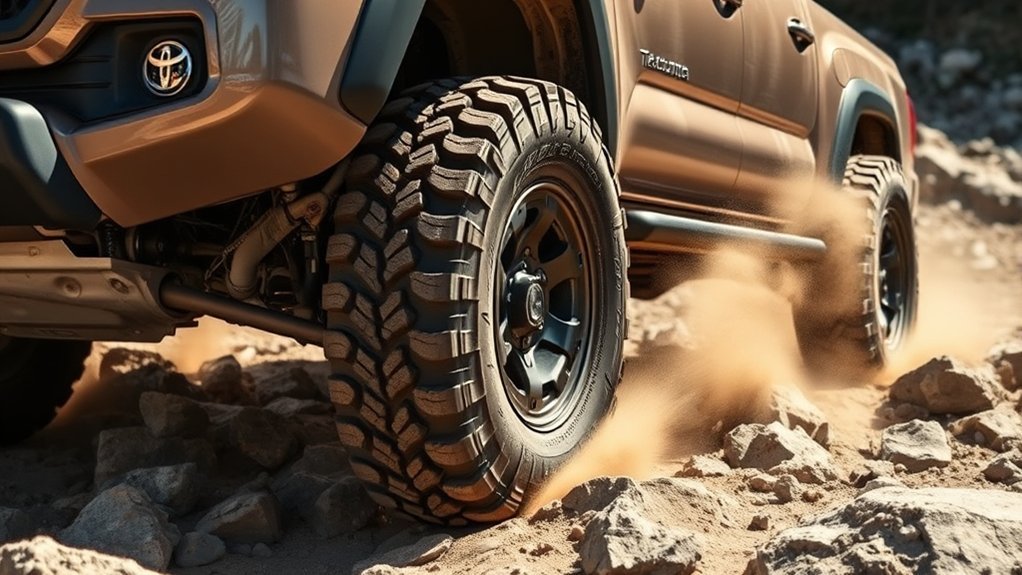
Tire pressure has a direct effect on wear, heat, traction, and puncture risk. On the road, use the pressure listed for your Tacoma’s tire size and load conditions unless your tire professional or manufacturer gives a properly matched alternative for a changed tire size. Off-road, some drivers air down for traction and ride comfort, but airing down is a temporary trail technique, not a highway setup.
NHTSA reports that proper tire pressure, load limits, road-hazard avoidance, and regular inspection are key steps for reducing tire failure risk.
- Underinflation increases heat and sidewall flex, which can shorten tire life and raise failure risk.
- Overinflation can reduce ride comfort and cause more wear near the tread center.
- Airing down improves trail compliance but requires slower speeds and reinflation before highway driving.
- Loaded Tacomas may need pressure adjustments based on the tire and vehicle load limits.
Warning: Do not drive highway speeds on aired-down tires. Reinflate before leaving the trail, and never exceed the tire’s maximum cold inflation pressure or the vehicle’s load limits.
Essential Tire Maintenance for Off-Road Durability
Even the toughest tire will wear quickly if it is run underinflated, overloaded, out of alignment, or never rotated. Maintenance is where many Tacoma owners either gain or lose thousands of miles of tire life.
| Maintenance Task | Recommended Frequency | Why It Helps |
|---|---|---|
| Check tire pressure | At least monthly, before long trips, and before/after trail days | Reduces heat, uneven wear, and load-related stress. |
| Rotate tires | Commonly every 5,000–7,500 miles, or according to your tire and vehicle guidance | Promotes even tread wear across front and rear positions. |
| Inspect sidewalls and tread | After every off-road trip | Finds cuts, bulges, lodged stones, missing chunks, and punctures early. |
| Check alignment and balance | When wear looks uneven, after hard impacts, or about every 6–12 months | Prevents cupping, pulling, vibration, and rapid edge wear. |
| Clean mud and stones from tread | After muddy or rocky driving | Reduces imbalance, stone drilling, and trapped debris. |
| Inspect the spare | Monthly and before remote trips | A flat, old, or mismatched spare can ruin a trail recovery. |
When Should You Replace Tacoma Off-Road Tires?
Mileage alone is not enough. Replace or professionally inspect your tires if you see exposed cords, sidewall bulges, deep sidewall cuts, repeated air loss, severe cracking, uneven wear that cannot be corrected, or tread worn down to the wear indicators. Also consider age: even tires with tread left can age out from heat, sunlight, and ozone exposure.
If you run trails often, measure tread depth at each rotation and keep a simple log. If one tire wears much faster than the others, check alignment, suspension parts, wheel balance, and pressure. If you rotate a full-size spare, include it consistently so all five tires stay close in diameter.
Frequently Asked Questions
How often should I replace my off-road tires?
Replace off-road tires when they are worn to the treadwear indicators, damaged, cracking, losing air, or no longer safe for your driving conditions. Many all-terrain tires carry mileage warranties, but trail use, alignment, rotation habits, tire pressure, and load can shorten or extend real tire life.
Can I use off-road tires on highways?
Yes, many off-road and all-terrain tires are DOT-approved for highway use. The tradeoffs can include more road noise, longer stopping distances than a highway tire, lower fuel economy, and faster wear if the tire is very aggressive or heavy.
What is the cost difference between off-road and regular tires?
Off-road tires often cost more because they use stronger casing designs, deeper tread, larger tread blocks, and heavier construction. The final cost depends on size, brand, load range, warranty, mounting, balancing, alignment, and whether you also replace the spare.
Are there specific brands known for durable off-road tires?
Yes. BFGoodrich, Falken, Goodyear, Toyo, Nitto, Cooper, and Mickey Thompson all make respected off-road and all-terrain tires. Do not choose by brand alone; compare the exact size, load range, sidewall construction, warranty, weight, snow rating, and tread pattern.
How does tire size affect off-road performance?
A larger tire can improve ground clearance and flotation, but it can also add weight, cause rubbing, change speedometer readings, affect gearing, reduce fuel economy, and make the spare harder to fit. Check fitment carefully before upsizing your Tacoma tires.
Are LT tires always better for a Toyota Tacoma?
Not always. LT tires can add durability and load capacity, but they are often heavier and firmer than passenger-metric tires. A lightly loaded daily-driven Tacoma may feel better on a lighter tire, while an overland or towing setup may benefit from LT construction.
Should I air down my Tacoma tires off-road?
Airing down can improve traction and ride comfort on rocks, sand, and washboard trails. Use conservative pressures, drive slower, avoid sharp steering at low pressure, and reinflate before highway speeds. Carry a quality gauge and air compressor.
Conclusion
The most durable off-road tire for your Toyota Tacoma is the one that fits your truck, your load, and your terrain. Look for reinforced sidewalls, a tread pattern that matches your trails, the right load rating, and a rubber compound built for cut resistance and long wear. Then protect your investment with correct pressure, regular rotations, alignment checks, and careful inspections after every trail ride.
For most Tacoma owners, a high-quality all-terrain tire is the best balance of durability, road comfort, and off-road traction. If you run harder trails, tow, carry heavy gear, or spend more time in mud and rocks, a rugged-terrain or mud-terrain tire may be worth the extra weight and noise.
Sources
- NHTSA TireWise — tire size, tire pressure, tire ratings, and tire maintenance safety guidance.
- Toyota Owners Manuals and Warranties — official Tacoma owner manual access for model-specific tire and maintenance information.
- BFGoodrich All-Terrain T/A KO3 — current all-terrain tire features, severe-snow rating, and mileage warranty information.
- Falken Wildpeak A/T4W — current A/T4W warranty, 3PMSF rating, sidewall technology, and Tacoma fitment information.
- Toyo Open Country M/T — mud-terrain construction, tread, shoulder, and off-road traction features.
- Goodyear Wrangler DuraTrac — all-terrain tread and self-cleaning shoulder-block feature reference.

Related Articles
How Tire Weight Affects Toyota Tacoma Performance
How does tire weight influence your Toyota Tacoma's performance and efficiency? Discover the surprising effects that could change your driving experience.
Read More
Tire Noise Levels by Tire Type on a Toyota Tacoma
A comprehensive look at how tire types affect noise levels in your Toyota Tacoma reveals surprising insights that could enhance your driving experience.
Read More
How To Choose Tires for a Dual Use Toyota Tacoma
Unlock the secrets to selecting the perfect tires for your dual-use Toyota Tacoma, ensuring optimal performance and comfort on every adventure. Discover more inside!
Read More