
How Do All-Terrain Tires Perform on Ice? What to Expect and Limitations
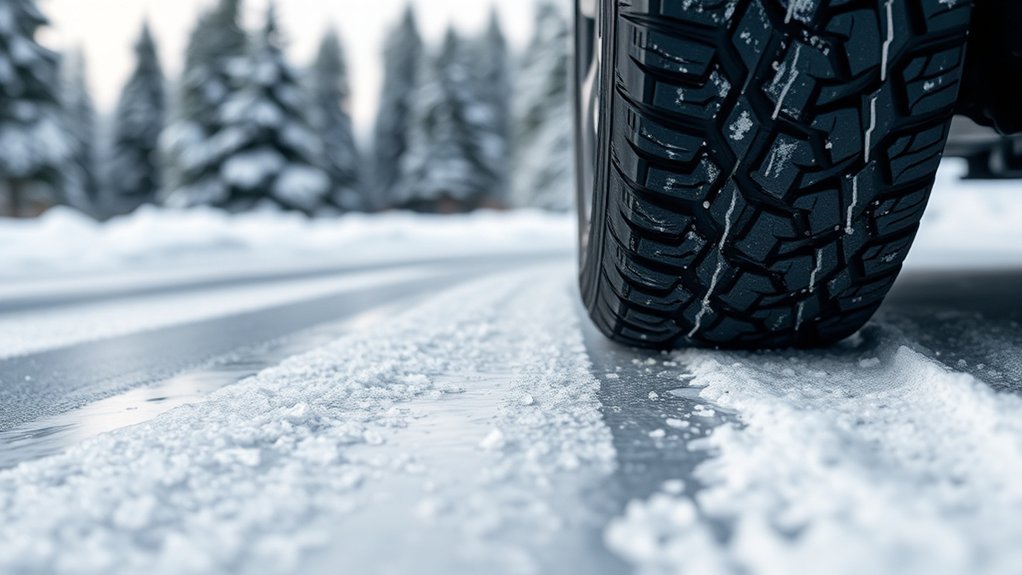
All-terrain tires can help on gravel, dirt, mud, and light snow, but ice is a much tougher surface. On slick city streets, black ice, frozen bridges, and packed intersections, most all-terrain tires cannot match the grip of a dedicated winter tire. The right choice depends on how often you drive on ice, how severe your winters are, and whether your tires carry a real severe-snow rating.
Quick Answer
All-terrain tires are not ideal on ice. Some 3-Peak Mountain Snowflake-rated all-terrain tires can handle light snow and mild winter roads, but glare ice, black ice, and frozen intersections call for dedicated winter tires, slower speeds, and extra caution.
Key Takeaways
- All-terrain tires are built for mixed surfaces, not maximum grip on ice.
- A 3-Peak Mountain Snowflake rating helps with severe-snow traction, but it does not make an all-terrain tire equal to a dedicated winter tire on glare ice.
- Winter tires use cold-weather compounds and more biting edges to improve grip in freezing conditions.
- If you regularly drive on icy roads, winter tires are the safer choice.
- Chains or studs may help in extreme conditions, but only where legal and approved for your vehicle.
How Do All-Terrain Tires Perform on Ice?
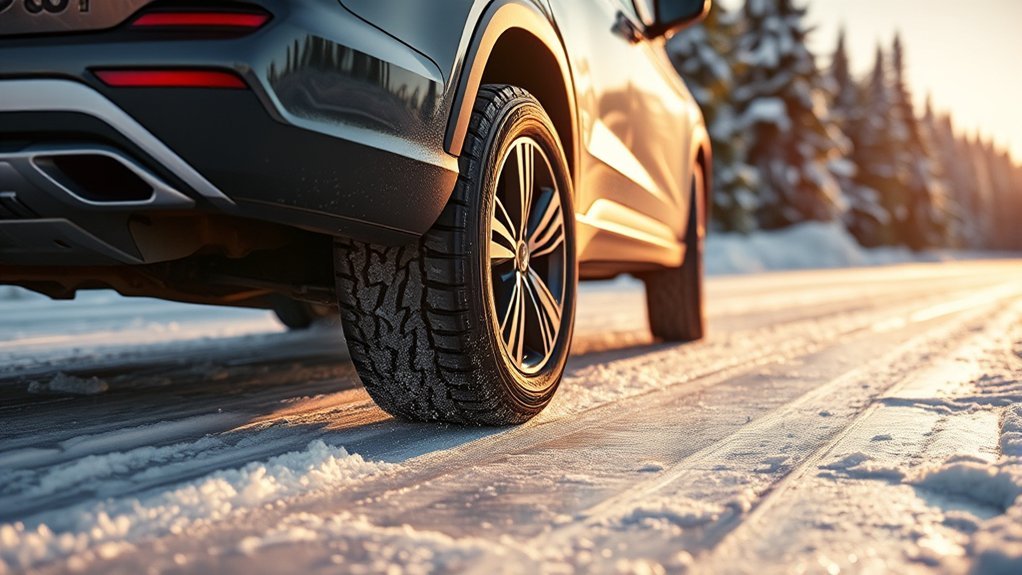
All-terrain tires can perform acceptably in light snow, slush, gravel, and mixed winter conditions, but ice exposes their biggest weakness: limited contact and limited biting grip. Their tread blocks are often larger and more open than winter-tire tread blocks, which helps in dirt and loose snow but can reduce the amount of rubber gripping smooth ice.
Many all-terrain tires also use compounds designed for durability, load carrying, and off-road toughness. That can be useful on rocks and trails, but on cold, polished ice, a harder compound may not conform to the surface as well as a winter tire. Transport Canada notes that winter tires are designed to keep elasticity and grip at temperatures below about 7°C/45°F.
So, are all-terrain tires good on icy roads? They are better than worn tires and may be manageable in occasional mild winter conditions, but they are not the best choice for regular ice driving. If ice is common where you live, dedicated winter tires provide more consistent control.
Warning: No tire makes ice completely safe. If roads are covered in glare ice or freezing rain, the safest option is often to delay the trip, reduce speed dramatically, or use a route that has been treated.
[Products Worth Considering]

Monitor tire tread wear with a smart, color-coded depth gauge that shows clear condition ranges at a glance. The bar is range marked for fast, easy readings, helping you maintain safer traction and performance. Each gauge is portable with a pocket clip, and the set includes 20 units for daily use and sharing.
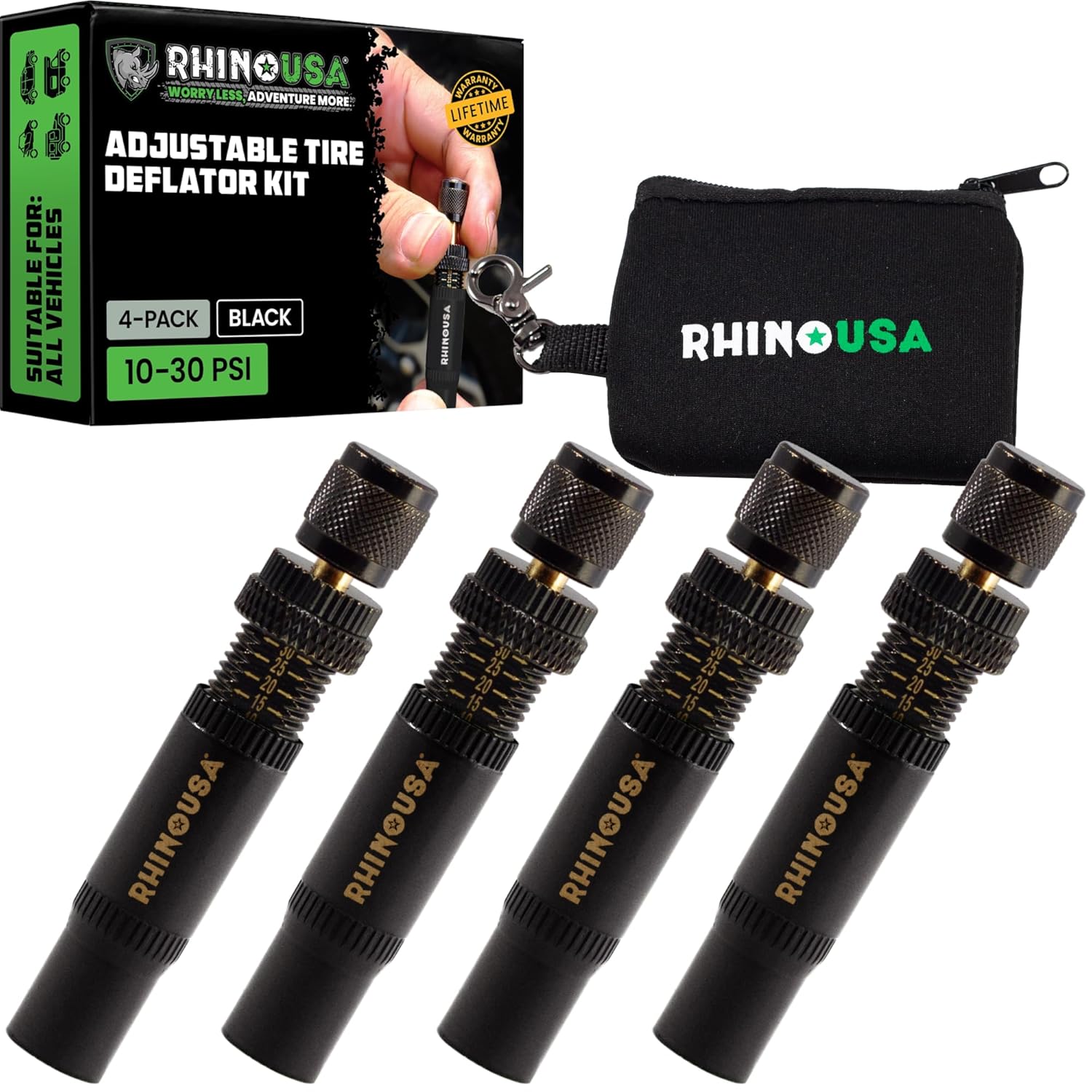
Use the Rhino USA adjustable tire deflators to air down all four tires at once by screwing one deflator onto each valve stem, letting you step away while the tires reach your preset pressure. Each deflator independently adjusts across a 10–30 PSI range with laser-etched indicators for quick setup and verification, making it ideal for beach, sand, and rocky off-road trails.

The SAFELIFE dial tire tread depth gauge measures tread depth in 1/32 inch increments with clear, easy-to-read 2-inch dial face. Color zones using a traffic light system help you quickly judge whether tread is low, marginal, or ample for safer driving. Built with a durable zinc cast body and a metal detect probe for precise, comfortable use across cars, motorcycles, trucks, and buses.
Understanding All-Terrain Tires and Their Design
All-terrain tires are designed as a compromise. They try to balance highway comfort, off-road durability, gravel traction, mud clearing, and some winter capability. That balance is exactly why they can fall short on ice, where a tire needs maximum cold-weather flexibility and many small biting edges.
Tread Design Features
Most all-terrain tires use deep tread blocks, wide grooves, and shoulder lugs. These features help the tire dig into loose surfaces and eject mud, stones, and snow. On ice, however, aggressive voids can reduce the contact patch and make braking or cornering less predictable.
| Feature | How It Helps | Ice Limitation |
|---|---|---|
| Aggressive tread blocks | Bite into dirt, gravel, mud, and loose snow | Can feel less stable on smooth ice |
| Wide voids | Help clear mud and packed snow | Less rubber may contact the ice |
| Sipes | Create small biting edges | Usually fewer than on dedicated winter tires |
| Durable compound | Resists cuts, chips, and off-road wear | May not stay as pliable in freezing weather |
| 3PMSF rating on some models | Shows the tire meets severe-snow traction requirements | Does not guarantee winter-tire-level braking on ice |
Traction in Slippery Conditions
All-terrain tires work best when the surface gives the tread something to bite into. Loose snow, packed dirt, gravel, and muddy trails give the tire edges a surface to grab. Smooth ice does not. That is why an all-terrain tire may feel fine on a snowy driveway but slide at a polished intersection.
Modern snow-rated all-terrain tires can be impressive in snow. For example, Tire Reviews tested snow-rated all-terrain tires in 2025 across snow and ice traction, braking, and handling. Even then, ice performance varied by model, which means the category name alone is not enough to judge safety.
Rubber Composition and Flexibility
Rubber flexibility matters on ice. A tire that stays flexible can better conform to tiny surface textures. Dedicated winter tires are built around this idea, using cold-weather compounds and dense siping to improve grip.
Many all-terrain tires prioritize tread life, puncture resistance, towing stability, and off-road durability. That does not make them bad tires, but it does explain why they may not grip ice as well as winter tires. If you choose all-terrain tires for winter, look for a model with the 3-Peak Mountain Snowflake symbol and strong independent winter-test results.
What the 3-Peak Mountain Snowflake Rating Really Means
The 3-Peak Mountain Snowflake symbol, often shortened to 3PMSF, means a tire meets specific severe-snow traction requirements. It is a useful mark, but it is often misunderstood.
According to Tire Rack, many all-season and all-terrain tires now carry the 3PMSF symbol. That does not automatically make them dedicated winter tires. The rating is mainly about severe-snow traction, not a promise that the tire will stop quickly on glare ice, corner safely at normal speeds, or replace cautious winter driving.
The testing behind winter traction marks is also controlled and limited. ASTM F1805, one related traction test method, addresses straight-line driving traction under specified conditions. Real roads add braking, turning, hills, black ice, slush, traffic, temperature swings, and driver reaction time.
Note: 3PMSF is worth having if you drive in winter, but it should be treated as a minimum snow-traction signal, not a guarantee of ice safety.
Why Choose All-Terrain vs. Winter Tires?
Choosing between all-terrain and winter tires comes down to where you drive most often. If you spend your time on gravel roads, forest roads, job sites, mild snow, and occasional slush, a high-quality 3PMSF all-terrain tire may be a practical year-round compromise. If you often face icy hills, freezing rain, black ice, or long winter commutes, dedicated winter tires are the better safety choice.
Winter tires are designed for cold pavement, snow, slush, and ice. They normally have more siping, softer cold-weather compounds, and tread patterns built for winter braking and control. All-terrain tires are more versatile off-road, but versatility is not the same as maximum ice grip.
| Driving Situation | Better Tire Choice | Why |
|---|---|---|
| Light snow and dry winter roads | 3PMSF all-terrain or winter tire | A snow-rated all-terrain can be acceptable if ice is rare |
| Frequent black ice or freezing rain | Dedicated winter tire | Ice needs cold-compound grip and dense biting edges |
| Off-road trails plus occasional snow | 3PMSF all-terrain | Balances trail durability with snow capability |
| Steep icy driveways or mountain passes | Winter tire, possibly chains where legal | More grip and better control are needed |
Factors Affecting All-Terrain Tire Grip on Ice
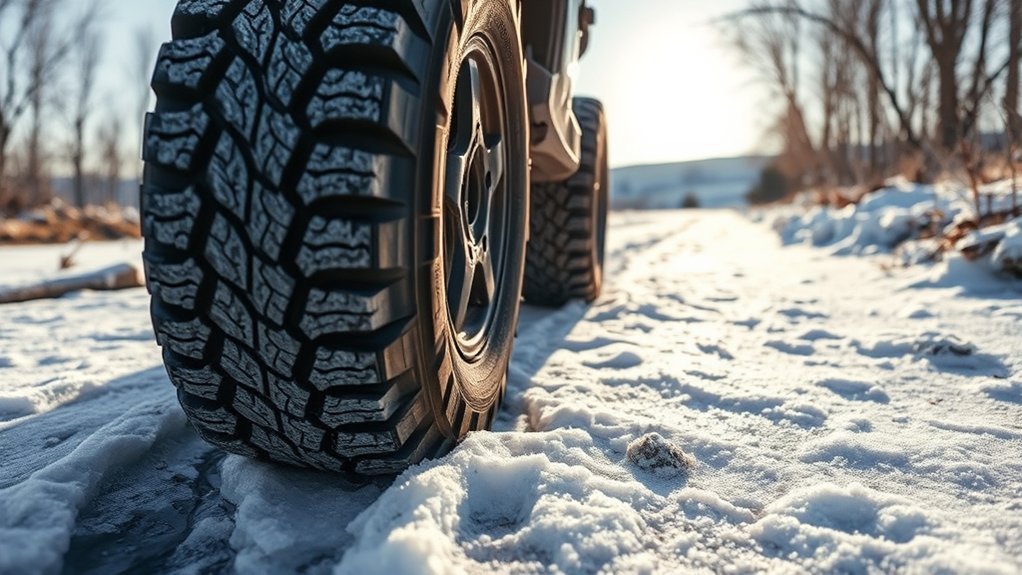
Not every all-terrain tire behaves the same on ice. The model, age, tread depth, pressure, temperature, vehicle weight, drivetrain, and road surface all matter.
- Rubber compound: A compound that hardens in cold weather will have less grip on ice.
- Tread depth: Deep tread can help in snow, but worn tread reduces winter traction.
- Siping: More small cuts in the tread can create more biting edges.
- 3PMSF rating: Useful for snow performance, but not a complete ice-safety guarantee.
- Road temperature: Ice near freezing can be especially slippery because a thin water film may form on the surface.
- Driver inputs: Sudden braking, sharp steering, and quick acceleration can overwhelm any tire.
NHTSA reports that in 2023 there were 320 fatal crashes and an estimated 22,293 injury crashes when snow or sleet conditions were present.
Before winter driving, follow basic tire safety checks from NHTSA: inspect tires for damage, check tire pressure, and make sure tread depth is safe. Tires at the legal minimum may still be poor performers in winter conditions, so do not rely on tread depth alone when ice is common.
Advantages of All-Terrain Tires in Winter Conditions
All-terrain tires do have winter advantages, especially for drivers who split time between pavement and rough surfaces. Their deeper tread, stronger sidewalls, and open grooves can help in loose snow, slush, mud, and rutted winter roads.
Performance in Light Snow
In light snow, many all-terrain tires perform better than standard highway all-season tires, especially when the all-terrain tire has a 3PMSF rating. The deeper tread can bite into snow, while wider grooves can help push loose material away from the contact patch.
A tire such as the BFGoodrich All-Terrain T/A KO2 is an example of a snow-rated all-terrain tire. That makes it more winter-capable than many non-rated all-terrain tires, but it still should not be treated as equal to a dedicated winter tire on glare ice.
Versatile Tread Design
The biggest advantage of all-terrain tires is versatility. They are built to handle paved roads, gravel, dirt, sand, mud, and some snow. If you need one tire for many surfaces and only occasionally see ice, a 3PMSF all-terrain tire can be a reasonable compromise.
That said, a compromise always gives something up. Compared with winter tires, all-terrain tires usually have fewer fine biting edges and a less ice-focused compound. The more often you drive on frozen pavement, the less attractive that compromise becomes.
Enhanced Off-Road Capability
All-terrain tires are often stronger than winter tires for off-road use. They may have reinforced sidewalls, chip-resistant compounds, and tread designs that resist damage from stones and ruts. For trucks, SUVs, and overland vehicles, that durability matters.
In snowy off-road conditions, the aggressive tread can be helpful. On a frozen paved road, though, the same tire may not stop or corner as well as a winter tire. Think of all-terrain tires as rugged and flexible, not ice-specialized.
Debunking Myths About All-Terrain Tires in Winter Conditions
There are several common myths about all-terrain tires in winter. Clearing them up can help you choose the right tire before roads turn dangerous.
- Myth: All 3PMSF tires are winter tires. Truth: Some all-terrain and all-weather tires carry 3PMSF, but dedicated winter tires are still designed more specifically for cold-weather grip.
- Myth: Big tread blocks are best on ice. Truth: Large tread blocks help on loose surfaces, but ice often needs many small biting edges and a flexible compound.
- Myth: Four-wheel drive fixes poor tire grip. Truth: Four-wheel drive can help you accelerate, but it does not create extra braking grip on ice.
- Myth: If the tread looks deep, the tire is safe on ice. Truth: Tread depth helps, but compound, siping, age, pressure, and temperature also matter.
- Myth: Chains or studs are always the answer. Truth: They can help in some conditions, but they must be legal, correctly sized, properly installed, and approved for your vehicle.
[Products Worth Considering]

Measure tire tread depth quickly and accurately with this LUMITECO dial gauge that reads in 1/32" increments up to 14/32". The color-coded green/yellow/red zones make it easy to judge tire wear and know when replacement is needed. A rugged, compact design with a protective pouch helps keep the gauge ready for use on cars, trucks, motorcycles, and more.

Measure tyre tread depth precisely with a digital gauge that reads in both MM and inches, helping you monitor safe driving conditions. The large LCD screen is easy to operate, and the compact tool fits for cars, trucks, and motorcycles. It provides high accuracy with a 0-25.4mm range and includes a 1-year warranty for added peace of mind.

Milton S-921 pencil tire pressure gauge helps you maintain optimal tire pressure for passenger cars with accurate readings in PSI and kPa. It features a built-in deflator valve for convenient pressure adjustments, plus a single chuck head and nylon indicator bar for easy use on the go. Built from durable plated brass and designed for reliable performance, it’s a practical road trip and cold-weather maintenance tool.
How to Use All-Terrain Tires in Icy Conditions
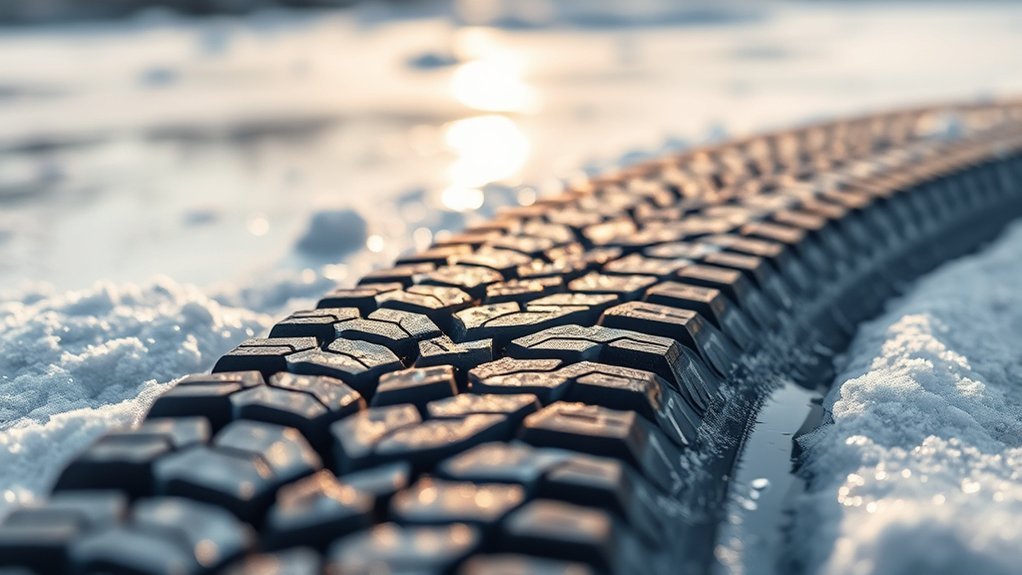
If you must drive on ice with all-terrain tires, your driving style matters as much as the tire. Use the tire’s limited grip carefully and avoid sudden inputs.
- Slow down before turns: Brake in a straight line before the curve, then steer gently.
- Increase following distance: Leave much more room than you would on dry pavement.
- Use gentle throttle: Hard acceleration can spin the tires and polish the ice under them.
- Avoid sudden braking: Brake early and smoothly. If your vehicle has ABS and you need emergency braking, press firmly and let the system work.
- Check tire pressure: Cold weather changes pressure, and underinflation or overinflation can hurt handling.
- Inspect tread and age: Old or worn all-terrain tires are much worse on ice than fresh, properly maintained tires.
- Use chains only when appropriate: Follow your owner’s manual, tire size limits, road signs, and local laws.
Pro Tip: If your commute includes icy bridges, shaded roads, or steep hills, install winter tires before the first major freeze instead of waiting until your all-terrain tires slide.
All-Terrain Tire Limitations on Ice
The main limitation is simple: ice offers very little friction. All-terrain tires are built to claw into loose or uneven terrain, but smooth ice does not give the tread much to grab. Even a strong all-terrain tire can lose traction when braking, turning, or climbing an icy hill.
| Feature | All-Terrain Tires | Dedicated Winter Tires |
|---|---|---|
| Ice traction | Limited to moderate, depending on model | Usually stronger and more predictable |
| Snow traction | Good if 3PMSF-rated | Excellent when properly matched to the vehicle |
| Cold-weather compound | Often balanced for durability and all-season use | Designed to stay flexible in cold weather |
| Off-road durability | Strong | Usually not the main priority |
For mixed winter adventures, all-terrain tires can make sense. For daily ice, winter tires are the more focused tool.
User Experiences: Real-World Performance Insights
Real-world drivers often notice the same pattern: all-terrain tires feel capable in loose snow but less confident on polished ice. That makes sense because snow and ice ask different things from a tire. Snow gives tread blocks something to pack into and push against. Ice requires fine grip, cold flexibility, and controlled braking.
Urban ice is especially challenging. Intersections can become polished by traffic, bridges freeze sooner than regular pavement, and shaded areas may stay icy after the rest of the road looks clear. In these situations, an all-terrain tire can slide even if it performed well in a snowy driveway or on a rural road.
If you are comparing tires, look beyond marketing terms. Check whether the exact size and load rating you plan to buy has the 3PMSF symbol, read winter-specific test results when available, and consider whether your real driving includes ice or mostly snow.
What to Do If Your All-Terrain Tires Slip on Ice?
If your all-terrain tires start to slip on ice, stay calm and avoid sudden movements. Panic braking or sharp steering can make the slide worse.
- Ease off the accelerator. Do not add more power while the tires are already sliding.
- Look where you want to go. Your hands tend to follow your eyes.
- Steer gently in that direction. Avoid jerking the wheel or overcorrecting.
- Do not slam the brakes. If your vehicle has ABS and you need to stop, apply firm steady pressure. If it does not have ABS, use gentle threshold braking to avoid locking the wheels.
- Regain control before accelerating again. Once the vehicle straightens, continue slowly.
AAA gives similar skid advice: ease off the accelerator, look and steer where you want to go, and avoid slamming on the brakes.
Frequently Asked Questions
Are all-terrain tires good on icy roads?
All-terrain tires are not the best choice for icy roads. Some snow-rated all-terrain tires can handle mild winter conditions, but dedicated winter tires usually provide better braking, steering, and control on ice.
Is there a downside to all-terrain tires?
Yes. All-terrain tires can be noisier, heavier, and less efficient than highway tires. On ice, their larger tread blocks and durability-focused compounds may provide less grip than dedicated winter tires.
Does 3PMSF mean an all-terrain tire is safe on ice?
No. 3PMSF means the tire meets severe-snow traction requirements. It is helpful, but it does not guarantee strong braking, cornering, or safety on glare ice.
Are all-terrain tires better than all-season tires in winter?
A 3PMSF all-terrain tire may be better than a basic all-season tire in snow, but it still may not beat a dedicated winter tire on ice. The exact tire model matters more than the category name.
Should I use chains with all-terrain tires on ice?
Chains can improve traction in severe snow or ice, but only use them if they are legal where you drive, approved in your owner’s manual, correctly sized, and installed with enough clearance.
Conclusion
All-terrain tires can be useful in winter, but they are not ice specialists. A snow-rated all-terrain tire may be fine for light snow, slush, and occasional winter driving. On black ice, freezing rain, steep icy hills, or polished intersections, dedicated winter tires are the safer and more predictable choice.
The best approach is to match the tire to your real conditions. If winter in your area means mostly dry roads with a few snowy days, a high-quality 3PMSF all-terrain tire may be enough. If winter means regular ice, choose winter tires, drive slower, increase following distance, and avoid treating any tire as a guarantee of safety.
Sources
- NHTSA Winter Driving Tips — backs up winter crash risk, tire inspection, tread, and winter-driving safety guidance.
- Transport Canada: Using Winter Tires — backs up cold-weather tire elasticity and winter tire recommendations.
- Tire Rack: Three-Peak Mountain Snowflake Symbol — explains what 3PMSF means and why it appears on multiple tire categories.
- ASTM F1805-20 — supports the discussion of controlled snow and ice traction testing.
- BFGoodrich All-Terrain T/A KO2 — confirms a real example of a 3PMSF all-terrain tire.
- AAA: What To Do if Your Car Starts to Skid — backs up skid recovery guidance.
[Products Worth Considering]

Upgrade your ride with a 2-pack set of 26x1.95 folding mountain bike tires built for dependable traction on mud, rocks, and trail surfaces. A reinforced puncture-resistant layer helps protect against sharp debris, while included butyl inner tubes provide strong sealing and shock absorption. Ready for fast swaps with included tire levers and universal sizing for most bikes.

Steelman white tire marking crayons provide high-contrast, semi-permanent marks for repairing and inspecting tires and equipment. They write on wet or dry, smooth or coarse surfaces including rubber, metal, glass, and wood, making them ideal for puncture location and damage outlining. The lead- and zinc-free crayons resist weather and fading yet wipe away when you no longer need the marks.
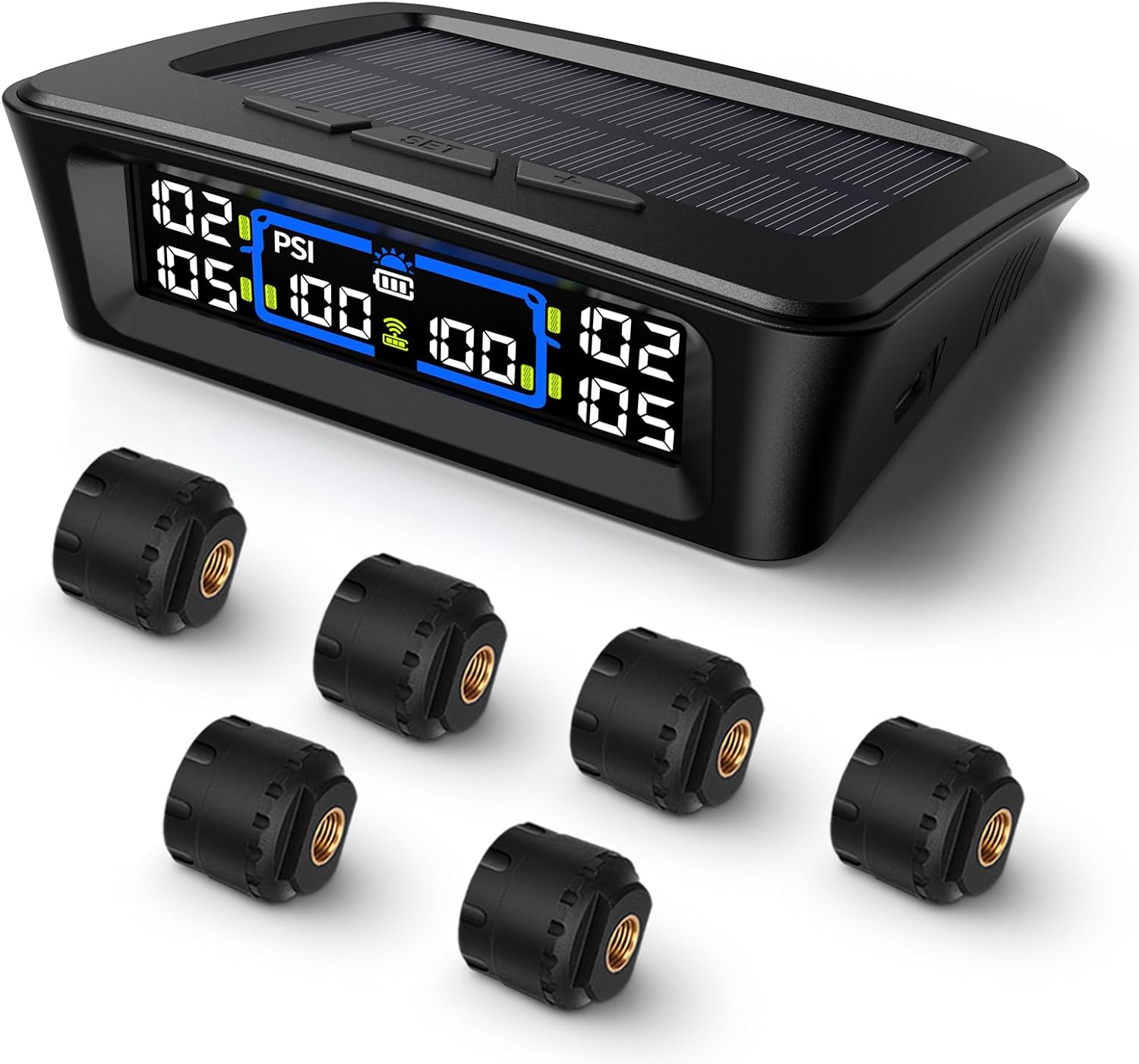
The Tymate TM12 RV TPMS delivers real-time tire pressure and temperature monitoring with a stable 433Hz display for safer long-distance driving. It supports simultaneous monitoring across vehicle and trailer zones, includes six alarm modes for pressure, temperature, leakage, battery, and signal loss, and features easy DIY installation with auto calibration. Power is supplied via USB-C charging or solar recharging, with a wide 0–144 PSI range and up to 50 ft signal coverage for RVs and towable trailers.

Related Articles
Toyota Tundra Tire and Wheel Package: What to Consider Before Buying
Unlock the secrets to choosing the perfect tire and wheel package for your Toyota Tundra—essential tips await to enhance your ride.
Read More
Do Bigger Tires Void a Toyota Tundra Warranty? Magnuson-Moss Act Explained
Bigger tires might not void your Toyota Tundra warranty, but understanding the Magnuson-Moss Act is crucial—discover how to protect your investment effectively.
Read More
Toyota Tundra Tire Rack Setup: Garage Storage Ideas for Seasonal Sets
Better tire storage for your Toyota Tundra awaits—discover essential tips to maximize space and protect your seasonal sets in the garage!
Read More