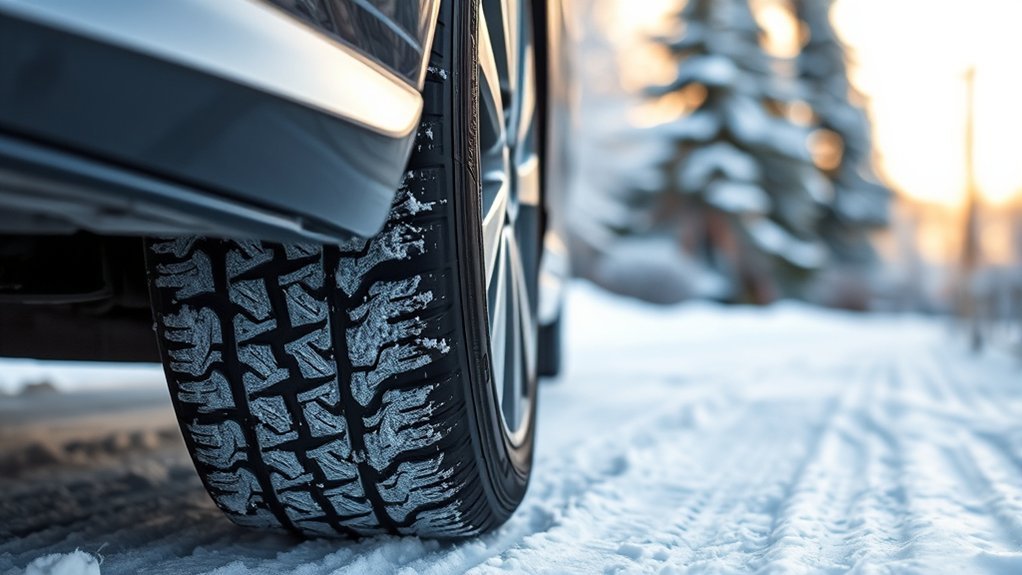
Driving a Honda Accord on icy roads starts with the right tires, not with a driving mode or a clever trick. A good winter setup should match your Accord’s door-jamb tire placard, use winter-rated tires on all four wheels, and respect Honda’s chain-clearance limits. For most drivers, a dedicated set of 3PMSF-rated winter tires is the safest upgrade for snow, ice, slush, and freezing pavement.
Quick Answer
The best Honda Accord tires for icy roads are dedicated winter tires in the correct factory size and load rating, installed on all four wheels. Choose a 3PMSF-rated model, prioritize Ice Grip certification if ice is your main concern, and check your owner’s manual before using tire chains.
Key Takeaways
- Use winter tires on all four wheels for balanced braking, steering, and stability.
- Check your door-jamb placard before choosing between 225/50R17, 235/40R19, or any alternate size.
- For true winter driving, look for the 3PMSF symbol; for ice-focused performance, look for the Ice Grip symbol when available.
- Honda allows front-only cable chains on some 225/50R17 Accord models, but chains/cables are not recommended on some 235/40R19 models.
- Replace or retire winter tires before winter grip fades, not just when they reach the legal minimum tread depth.
At a Glance
| Time Required | 10 minutes to check your tire placard and tread; 1–2 hours for a shop to mount and balance a winter set. |
| Difficulty | Easy for inspection and selection; professional help is recommended for mounting, balancing, and alternate-size fitment. |
| Tools Needed | Owner’s manual, door-jamb tire placard, tire pressure gauge, tread depth gauge, and approved cable chains only if your model allows them. |
| Cost | Varies by tire size, brand, wheel choice, mounting, balancing, TPMS service, local tax, and whether you buy a separate winter wheel set. |
Best Winter Tires for Icy Conditions
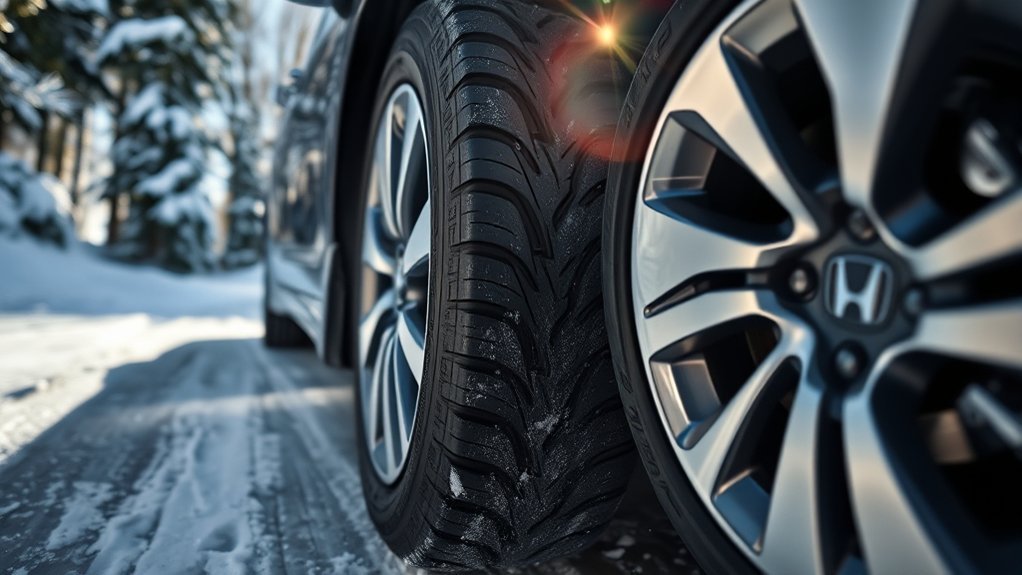
The best winter tire for a Honda Accord is not just the tire with the most aggressive-looking tread. It is the tire that matches your exact Accord size, load rating, speed rating, wheel clearance, and winter driving conditions. Start by checking the tire placard on the driver’s door jamb, then confirm the same information in your owner’s manual.
For icy roads, prioritize a studless ice-and-snow tire with the 3PMSF severe snow symbol. If your winter driving includes frequent black ice, freezing rain, or polished intersections, also look for an Ice Grip symbol where available. The Ice Grip mark is used on select passenger tires that meet a specific ice-braking performance threshold.
| Winter Tire | Best For | Why It Fits This Topic |
|---|---|---|
| Michelin X-Ice Snow+ | Ice-focused commuting | Carries winter, 3PMSF, M+S, and Ice Grip markings in Michelin’s current listing. |
| Bridgestone Blizzak IcePeak | Current Bridgestone winter pick | Bridgestone announced it as the 2026 replacement for Blizzak WS90 and DM-V2, with 3PMSF and Ice Grip certification. |
| Continental VikingContact 7 | Balanced snow, ice, comfort, and wet-road control | A premium winter tire for passenger cars and crossovers with 3PMSF severe-winter capability. |
| Bridgestone Blizzak WS90 | Existing inventory or closeout sets | Still a proven winter tire, but shoppers should know that IcePeak is Bridgestone’s newer successor in North America. |
Note: Do not buy by brand name alone. Confirm your exact size, load index, speed rating, and wheel diameter before ordering. If you are changing wheel size for winter, have a tire professional confirm clearance and speedometer impact.
[Products Worth Considering]

Measure tire tread depth quickly and accurately with this LUMITECO dial gauge that reads in 1/32" increments up to 14/32". The color-coded green/yellow/red zones make it easy to judge tire wear and know when replacement is needed. A rugged, compact design with a protective pouch helps keep the gauge ready for use on cars, trucks, motorcycles, and more.

Monitor tire tread wear with a smart, color-coded depth gauge that shows clear condition ranges at a glance. The bar is range marked for fast, easy readings, helping you maintain safer traction and performance. Each gauge is portable with a pocket clip, and the set includes 20 units for daily use and sharing.
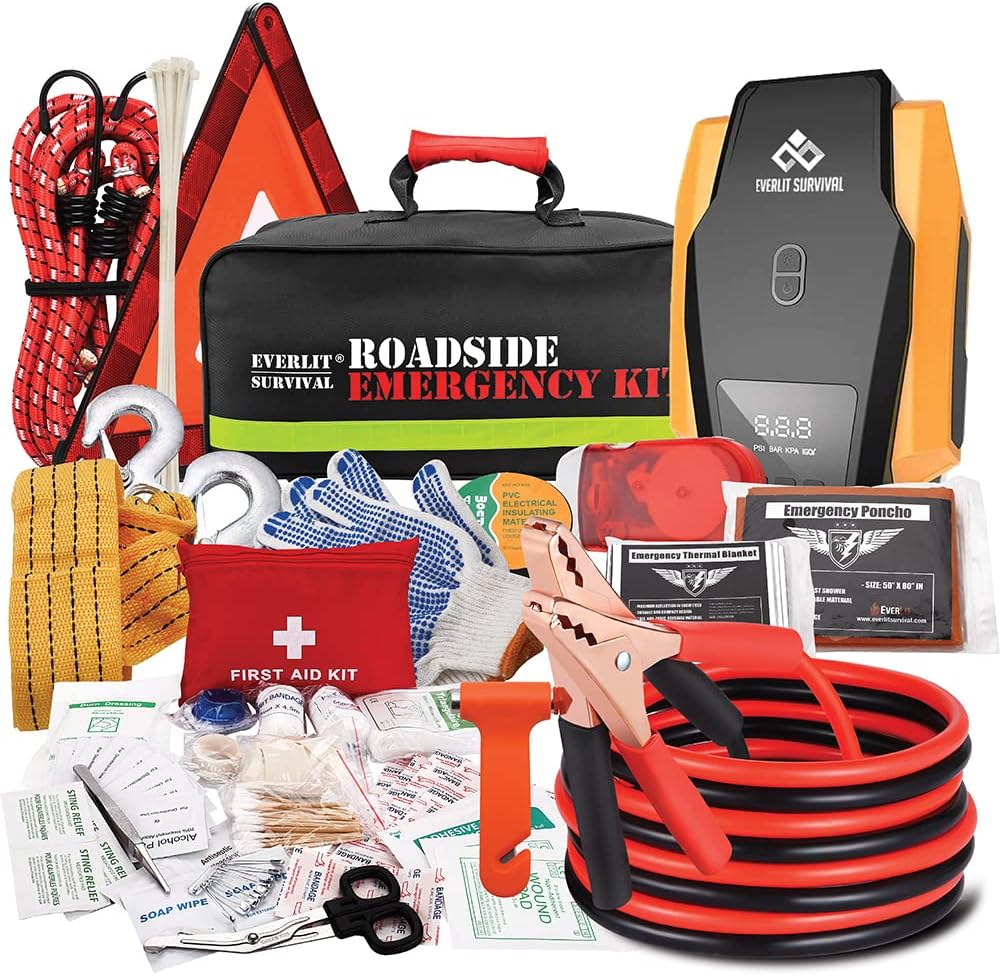
The Everlit Road Guardian emergency kit is designed for roadside breakdowns, combining essential safety gear and roadside tools in one compact bag. It includes a digital 12V auto tire inflator with preset and auto shutoff, plus 12-foot 8-gauge jumper cables to get you moving again. You also get a full 108-piece first aid kit, reflective warning tools, safety gloves, and emergency convenience items for safer travel.
Why Winter Tires Are a Must for Your Honda Accord
Honda’s winter guidance is clear: if you are driving on snowy or frozen roads, use all-season tires marked M+S, snow tires, or tire chains where the law and your vehicle allow them. Honda also says winter tires should be the same size and load range as the original tires and should be mounted on all four wheels.
That last point matters. Your Accord is a front-wheel-drive sedan, but putting winter tires only on the front creates a grip mismatch. The front tires may steer and accelerate better, while the rear tires can lose traction first during braking or cornering. For predictable handling, use a matched set of four winter tires.
Winter tires help because their rubber compounds stay more flexible in cold weather, and their tread blocks use sipes and grooves to create biting edges on snow, slush, and ice. Michelin explains that winter tires are designed to stay flexible below 45°F, while all-season and summer tires can harden and lose grip as temperatures drop.
Winter tires do not make ice safe. They give your Accord more usable grip, but you still need slower speeds, longer following distance, and gentle steering and braking.
Understand Winter Tire Markings: 3PMSF, M+S, and Ice Grip
Sidewall markings can be confusing, but they matter when you are choosing tires for icy roads.
| Marking | What It Means | What to Do |
|---|---|---|
| M+S | Mud and Snow marking. It appears on many all-season and winter tires. | Useful, but not enough by itself for severe winter confidence. |
| 3PMSF | Three-Peak Mountain Snowflake; confirms the tire meets an industry severe snow traction standard. | Make this your minimum target for real snow-belt winter driving. |
| Ice Grip | A newer ice-focused marking used on select tires that meet an ice-braking performance standard. | Prioritize it if freezing rain, black ice, or hard-packed icy roads are common where you drive. |
Tire Size Comparison: 225/50R17 vs. 215/55R17
The original article compared 225/50R17 and 215/55R17, but that needs a safety caveat: tire size is not a guess. For current Accord models, 225/50R17 is a common 17-inch size, while 235/40R19 appears on some 19-inch-wheel trims. A 215/55R17 tire may look attractive because it is narrower and has a taller sidewall, but it is not automatically approved for every Accord.
| Size | Use Case | Winter Notes |
|---|---|---|
| 225/50R17 | Best if your door placard lists this size. | Good direct-fit winter choice on compatible trims. Honda lists SCC Radial Chain SC1036 cable chains for some 225/50R17 Accord models. |
| 215/55R17 | Possible alternate-size winter setup only after fitment confirmation. | Narrower tread can help cut through snow, and the taller sidewall can improve pothole comfort, but verify load index, speed rating, clearance, and speedometer effect. |
| 235/40R19 | Common on sportier 19-inch Accord trims. | Lower sidewall and tighter clearance make winter potholes and chain clearance more challenging. Honda says chains/cables are not recommended on some 235/40R19 Accord Hybrid models. |
Pro Tip: If your Accord came with 19-inch wheels, ask a tire shop about a 17-inch winter wheel-and-tire package that matches Honda-approved diameter, load rating, offset, brake clearance, and TPMS requirements. Smaller winter wheels often cost less and ride better over frozen potholes.
All-Season vs. All-Weather vs. Winter Tires
All-season tires are designed for a wide range of mild conditions, but they are not the best choice for regular ice. All-weather tires are a stronger compromise because many carry the 3PMSF symbol and can be used year-round. Dedicated winter tires are still the best choice for repeated snow, ice, slush, and freezing pavement.
| Tire Type | Best For | Main Tradeoff |
|---|---|---|
| All-season | Mild climates, rain, dry roads, occasional light snow. | Reduced grip on ice and severe winter roads. |
| All-weather | Drivers who need one tire set and see moderate snow. | Better winter rating than most all-seasons, but usually not as ice-focused as a dedicated winter tire. |
| Dedicated winter | Cold climates, icy commutes, mountain routes, snow-belt driving. | Needs seasonal swap and storage; wears faster in warm weather. |
[Products Worth Considering]

Measure tyre tread depth precisely with a digital gauge that reads in both MM and inches, helping you monitor safe driving conditions. The large LCD screen is easy to operate, and the compact tool fits for cars, trucks, and motorcycles. It provides high accuracy with a 0-25.4mm range and includes a 1-year warranty for added peace of mind.

Milton S-921 pencil tire pressure gauge helps you maintain optimal tire pressure for passenger cars with accurate readings in PSI and kPa. It features a built-in deflator valve for convenient pressure adjustments, plus a single chuck head and nylon indicator bar for easy use on the go. Built from durable plated brass and designed for reliable performance, it’s a practical road trip and cold-weather maintenance tool.

The SAFELIFE dial tire tread depth gauge measures tread depth in 1/32 inch increments with clear, easy-to-read 2-inch dial face. Color zones using a traffic light system help you quickly judge whether tread is low, marginal, or ample for safer driving. Built with a durable zinc cast body and a metal detect probe for precise, comfortable use across cars, motorcycles, trucks, and buses.
Alloy vs. Steel Wheels for Winter Performance
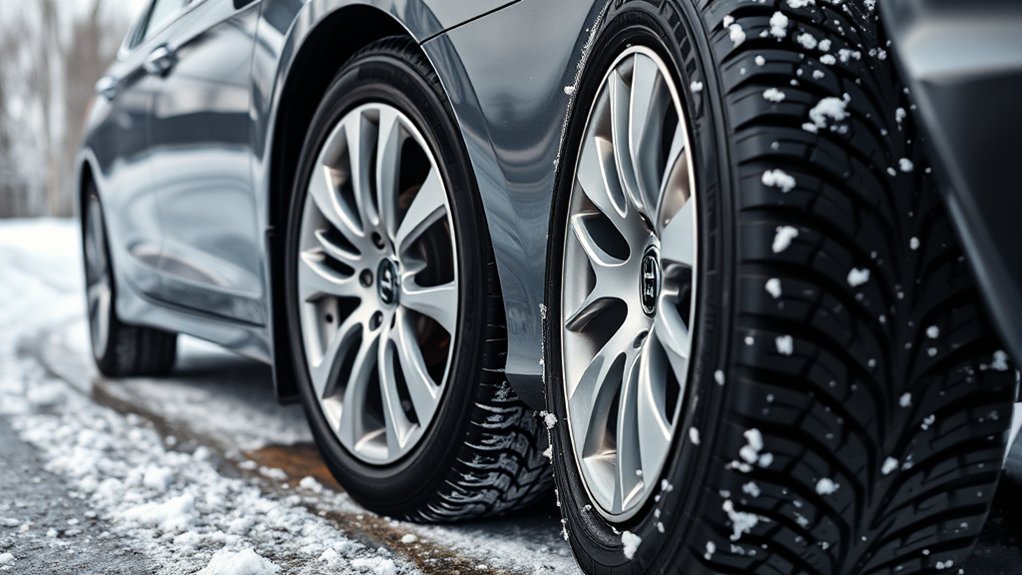
Both alloy and steel wheels can work well for a Honda Accord winter setup if the size, offset, hub bore, brake clearance, and TPMS compatibility are correct. The better choice depends on your budget and road conditions.
Steel wheels are usually cheaper and can tolerate rough winter use, road salt, and pothole damage better from a budget standpoint. They are a practical choice if you care more about durability than looks.
Alloy wheels are usually lighter and more attractive. They may improve steering feel compared with heavier steel wheels, but winter salt can damage the finish if the wheels are not cleaned regularly.
For many Accord owners, the ideal winter setup is not “steel vs. alloy” as much as “dedicated winter wheels vs. remounting tires every season.” A separate wheel-and-tire package costs more up front, but it can reduce seasonal mounting costs and protect your original wheels from salt and potholes.
[Products Worth Considering]

Accurately measure tire tread depth with a calibrated gauge marked from 0 to 1 inch in 1/32 inch increments. The color-coded bar helps you quickly identify tread condition ranges, supporting safe driving for trucks, motorcycles, automobiles, and passenger vehicles.

The 22800 wheel stud installer makes replacing wheel studs quick and secure, saving time and effort during tire service. It uses a ratchet or impact wrench to pull new studs firmly into place, helping when existing studs are too long. Compatible with most automotive wheels and light-duty truck wheel studs, it’s designed for easy, tool-assisted installation.

Steelman white tire marking crayons provide high-contrast, semi-permanent marks for repairing and inspecting tires and equipment. They write on wet or dry, smooth or coarse surfaces including rubber, metal, glass, and wood, making them ideal for puncture location and damage outlining. The lead- and zinc-free crayons resist weather and fading yet wipe away when you no longer need the marks.
Installing Tire Chains for Better Traction
Tire chains and cables can help in mountain passes or chain-control areas, but they are not automatically safe for every Accord wheel-and-tire package. Honda’s current guidance says chains should be installed on the front tires only, and that the wrong chains or poor installation can damage brake lines, suspension, bodywork, or wheels.
Warning: Do not install chains just because they physically wrap around the tire. For 2025 Accord Hybrid models, Honda lists SCC Radial Chain SC1036 for 225/50R17 tires but says chains or cables are not recommended for 235/40R19 tires. Always follow your exact owner’s manual.
If your Accord is approved for cable chains, follow these basics:
- Install them on the front tires only.
- Use only the chain or cable type Honda recommends for your tire size.
- Mount them as tightly as the chain manufacturer allows.
- Stop immediately if the chains hit the brake lines, suspension, body, or wheels.
- Drive slowly and obey the chain manufacturer’s speed limit.
- Remove chains as soon as you are off the snow/ice surface that requires them.
Safe Driving Techniques for Winter Travel
Winter tires improve traction, but driver inputs still matter most. NHTSA advises drivers to slow down because vehicles are harder to control or stop on slick or snow-covered surfaces. It also recommends increasing following distance so you have enough time to stop.
| Technique | Description |
|---|---|
| Slow Down Early | Brake before the turn, not in the middle of it. Avoid sudden throttle, steering, or brake inputs. |
| Increase Following Distance | Leave much more space than normal because stopping distances grow quickly on snow and ice. |
| Use Smooth Inputs | Accelerate gently, steer gradually, and brake with steady pressure. |
| Check Pressure Cold | Tire pressure drops with temperature. Check pressure before driving, using the door-jamb specification. |
| Plan the Route | Avoid steep untreated roads, check weather and traffic, and postpone nonessential trips during ice storms. |
Pack a small winter kit before long trips: ice scraper, snow brush, small shovel, flashlight, phone charger, gloves, blanket, water, snacks, and traction material such as sand or non-clumping kitty litter.
Traction Control, VSA, and Snow Mode on a Honda Accord
Do not rely on Snow Mode advice unless your exact Accord actually has that mode. Current official 2024 Accord Hybrid documentation lists Individual, Sport, Normal, and ECON modes, not Snow Mode. Some Honda SUVs and trucks have a Snow mode, but the Accord guidance should come from your specific owner’s manual.
Your Accord’s Vehicle Stability Assist system can help reduce wheelspin and support stability. Keep it on for normal winter driving. Honda notes that switching VSA off may help only in unusual cases when the vehicle is stuck in shallow mud or fresh snow, and it should be switched back on immediately after the vehicle is free.
Warning: Turning off VSA or traction control is not a general icy-road driving technique. Use it only as a brief stuck-vehicle aid if your owner’s manual allows it, then turn it back on.
Caring for Your Winter Tires: Essential Maintenance Tips
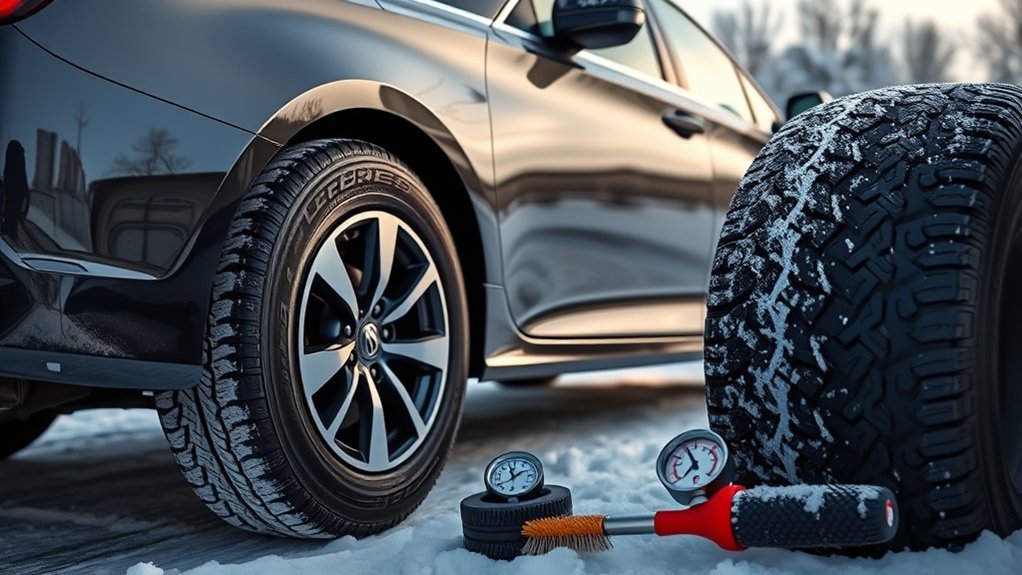
Winter tires work best when they are properly inflated, rotated, stored, and replaced before their cold-weather grip is gone. Do not wait until the tire reaches the legal minimum tread depth if you still need dependable snow traction.
Inspect Tire Condition Regularly
Inspect your winter tires at least once a month and before long trips. Look for cuts, punctures, bulges, sidewall cracks, uneven wear, embedded objects, and vibration that could point to a bent wheel or balance issue. If anything looks questionable, have a tire professional inspect it before your next winter drive.
Monitor Tire Pressure Consistently
Cold weather lowers tire pressure. Check pressure when the tires are cold, ideally before the car has been driven or after it has sat for several hours. Use the recommended pressure on the driver’s door-jamb placard, not the maximum pressure printed on the tire sidewall.
Check Tread Depth Frequently
For snow-covered roads, Tire Rack recommends replacing tires around 5/32 inch of remaining tread depth to maintain good winter mobility. For wet conditions, 4/32 inch is a common replacement point, while 2/32 inch is the legal minimum in many places but is far too low for confident winter performance.
| Measurement Technique | How to Use | Winter Action Point |
|---|---|---|
| Tread Depth Gauge | Insert into the main tread grooves. | Plan replacement near 5/32 inch for snow use. |
| Quarter Test | Use a quarter as a quick visual check in the grooves. | Confirm with a real gauge before winter trips. |
| Visual Inspection | Look for uneven wear, cracks, bulges, or damage. | Inspect monthly and before road trips. |
| Pressure Check | Use a tire pressure gauge when tires are cold. | Check monthly and after major temperature swings. |
| Tire Rotation | Follow your Honda maintenance schedule or tire-shop recommendation. | Promotes even wear across all four tires. |
Store Winter Tires the Right Way
When winter ends, remove dedicated winter tires once temperatures stay consistently warm. Clean off salt and grime, dry the tires, label their wheel positions, and store them in a cool, dry, dark place away from sunlight, ozone sources, and petroleum products. If the tires are mounted on wheels, they can be stacked flat. If they are unmounted, store them upright and rotate their position occasionally.
Community Experiences: Real Feedback on Honda Accord Tires in Winter
Honda Accord owners often report the same pattern in winter: the car itself can be predictable, but the tires decide how confident it feels. Stock touring all-season tires may feel fine in rain and light snow, yet struggle on polished ice, steep driveways, and frozen intersections.
The most useful community lesson is simple: changing from all-season tires to a true winter set usually makes a bigger difference than changing driving modes, adding weight, or trying to “drive around” poor traction. Owners in snow-belt areas also tend to prefer separate winter wheels because they make seasonal swaps easier and protect factory wheels from winter damage.
Be careful with forum advice about disabling traction control. If your Accord is stuck in shallow snow, briefly reducing traction control intervention may help the wheels spin enough to free the car. For normal winter road driving, keep VSA on and let the winter tires do their job.
Frequently Asked Questions
What are the best tires for driving a Honda Accord on icy roads?
Choose dedicated studless winter tires in your Accord’s correct size and load rating. Good options include Michelin X-Ice Snow+, Bridgestone Blizzak IcePeak where available, Continental VikingContact 7, and remaining Blizzak WS90 inventory if it fits your car and budget.
Are Honda Accords good in snow and ice?
A Honda Accord can be manageable in winter because it is front-wheel drive and predictable, but it is not an all-wheel-drive SUV. Its winter performance depends heavily on tire choice, tread depth, tire pressure, ground clearance, and how gently you drive.
Does Honda Snow Mode work on ice?
Most current U.S. Honda Accord documentation does not list a Snow Mode. Current Accord Hybrid drive modes include settings such as Normal, ECON, Sport, and Individual. If your exact Accord does not have Snow Mode, focus on winter tires, slower speeds, and smooth inputs.
Should I install winter tires on all four wheels?
Yes. Honda recommends mounting winter tires on all four wheels. Mixing winter tires on the front with non-winter tires on the rear can create unstable handling because the front and rear axles have different levels of grip.
Can I use tire chains on a Honda Accord?
Only if your owner’s manual allows them for your exact tire size. Honda lists front-only SCC Radial Chain SC1036 cable chains for some 225/50R17 Accord models, but chains or cables are not recommended on some 235/40R19 models due to limited clearance.
When should I replace Honda Accord winter tires?
For snow performance, start planning replacement around 5/32 inch of remaining tread depth. Also replace tires that show cracking, bulges, uneven wear, age-related hardening, or noticeably worse grip, even if they still have legal tread depth.
Conclusion
The safest Honda Accord winter setup is a matched set of four winter tires in the correct size and load rating. For icy roads, choose a 3PMSF-rated tire, consider Ice Grip certification if ice is your biggest hazard, and verify every fitment detail against your door placard and owner’s manual. If your Accord uses 19-inch tires, pay special attention to chain restrictions and consider an approved 17-inch winter wheel package. With the right tires, proper pressure, enough tread depth, and slower winter driving habits, your Accord can feel far more controlled when the road turns slick.
Sources
- Honda 2025 Accord Hybrid Owner’s Manual — Winter Tires — tire size, all-four winter tire guidance, and chain restrictions.
- Honda 2024 Accord Hybrid Owner’s Manual — Drive Mode System — Accord drive-mode availability.
- NHTSA Winter Weather Driving Tips — winter driving, pressure checks, tire inspection, and emergency preparation.
- Michelin — Winter Tires vs. Snow Tires Explained — 45°F guidance, winter-tire construction, 3PMSF, and Ice Grip markings.
- Tire Rack — How Much Tread Depth Is Enough? — winter tread-depth replacement guidance.
- Bridgestone Americas — Blizzak IcePeak Launch — 2026 Blizzak IcePeak details and WS90 replacement context.