
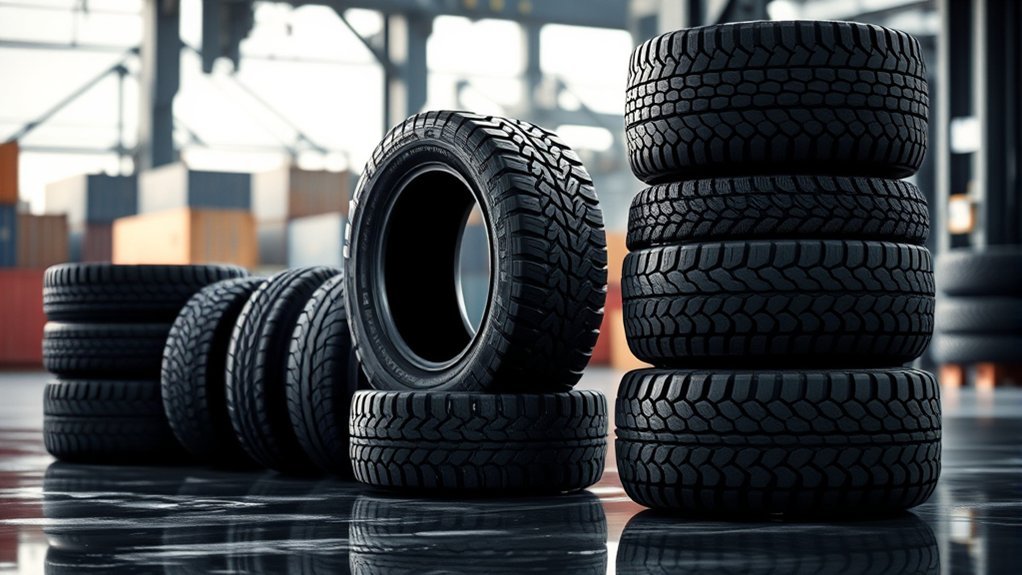
Michelin is the largest full-size tire manufacturer in the latest major global ranking by tire sales, while LEGO holds a separate Guinness World Records title for producing the most toy tires by unit count. That distinction matters because “largest” can mean sales, unit volume, market share, or regional strength depending on how you measure it.
Quick Answer
Michelin is the world’s largest full-size tire manufacturer by tire sales in the latest Global Tire Report ranking. Bridgestone is second, followed by Goodyear, Continental, and Pirelli. LEGO makes more tires by unit count, but those are small toy tires, not road-going automotive tires.
Key Takeaways
- Michelin ranks No. 1 among full-size tire manufacturers by estimated tire sales in the 2025 Global Tire Report.
- The global top five are Michelin, Bridgestone, Goodyear, Continental, and Pirelli.
- Tire Business ranks manufacturers by revenue from tires they manufacture, not by market capitalization or total company revenue.
- Goodyear is the leading U.S.-headquartered tire maker in the global ranking, and Cooper is now part of Goodyear.
- LEGO produces around 306 million toy rubber tires a year, but that record is separate from automotive tire manufacturing.
Who Is the Largest Tire Manufacturer?
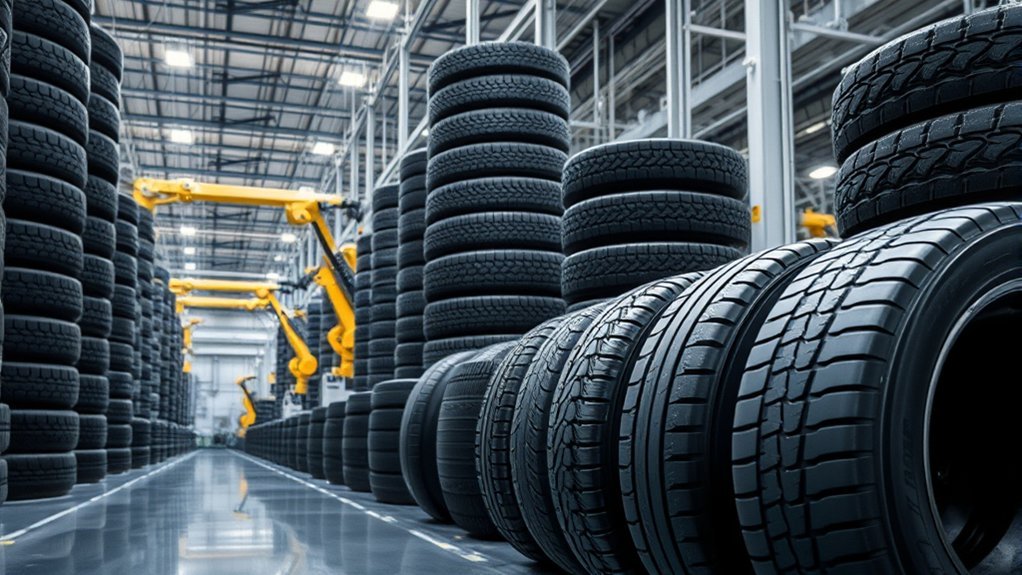
Michelin is the largest full-size tire manufacturer in the world by tire sales in the latest Global Tire Report ranking. The report, published by European Rubber Journal using Tire Business ranking data, lists Group Michelin at about $25.65 billion in estimated fiscal 2024 tire sales, ahead of Bridgestone at about $24.77 billion.
That makes Michelin the best answer when the question is about real vehicle tires and tire-manufacturing revenue. Bridgestone remains a very close No. 2, Goodyear is No. 3, Continental is No. 4, and Pirelli is No. 5.
Note: Do not rank tire companies by market capitalization alone. Market cap changes daily and measures investor value, not how much tire revenue a manufacturer generates.
What “Largest Tire Manufacturer” Really Means
The answer changes depending on what you measure. For the tire industry, the cleanest comparison is usually tire sales from tires a company manufactures. That is different from total company revenue, retail service revenue, brand popularity, or the number of small toy tires produced.
| Measurement | Best answer | Why it matters |
|---|---|---|
| Full-size tire sales | Michelin | Best measure for ranking automotive, truck, aircraft, two-wheel, agricultural, and industrial tire makers. |
| Toy tire unit count | LEGO | LEGO makes far more small rubber toy tires by unit count, but they are not road tires. |
| U.S.-headquartered global tire maker | Goodyear | Goodyear is the highest-ranked U.S.-based tire manufacturer in the global tire-sales ranking. |
| Investor value | Changes constantly | Market capitalization is useful for investors, but it is not the standard way to rank tire producers. |
Top 10 Tire Manufacturers in the World
The latest Global Tire Report ranks tire producers by estimated 2024 tire sales. Here is the current leaderboard:
| Rank | Company | Headquarters | Estimated 2024 tire sales |
|---|---|---|---|
| 1 | Michelin | Clermont-Ferrand, France | $25.65 billion |
| 2 | Bridgestone | Tokyo, Japan | $24.77 billion |
| 3 | Goodyear | Akron, Ohio, USA | $17.45 billion |
| 4 | Continental | Hanover, Germany | $12.47 billion |
| 5 | Pirelli | Milan, Italy | $7.33 billion |
| 6 | Sumitomo Rubber Industries | Kobe, Japan | $6.91 billion |
| 7 | Hankook Tire & Technology | Seoul, South Korea | $6.84 billion |
| 8 | Yokohama Rubber | Hiratsuka, Japan | $6.47 billion |
| 9 | Zhongce Rubber Group | Hangzhou, China | $5.20 billion |
| 10 | Sailun Group | Dongying City, China | $4.36 billion |
Michelin led the latest global ranking with about $25.65 billion in estimated tire sales, keeping it just under $900 million ahead of Bridgestone.
[Products Worth Considering]

This tire repair kit provides fast emergency puncture repair without removing the tire from the rim, helping you get back on the road quickly. Its screw plug system is designed for punctures in both tread and sidewall and includes a complete patch plug tool set with essential accessories. A portable storage bag makes it easy to carry for cars, trucks, SUVs, motorcycles, and heavy-duty applications.

This professional wheel and tire cleaning brush kit helps you scrub rims, hubs, spokes, and tires with scratch-free, ultra-fine bristles. The brushes can bend 360 degrees for deep reach into crevices, bolts, and intricate wheel details, while the kit supports both wet washing with cleaners and dry dust removal. Easy to rinse, quick to air-dry, and designed for convenient maintenance with hanging holes.

The Continental Grand Prix 5000 is an allround road bike tire engineered for faster rolling, improved ride comfort, and enhanced puncture protection. It features a Vectran Breaker cut-protection layer, Lazer Grip micro-profile tread for confident cornering control, and Active Comfort Technology to damp vibration for smoother rides. BlackChili compound optimizes grip and speed for everyday performance and long-lasting confidence.
How the Largest Tire Makers Are Ranked
The most useful ranking method is not total corporate revenue. Large tire companies often own service networks, chemical businesses, technology units, or retail operations. That can make total company revenue a noisy number.
The Global Tire Report uses Tire Business ranking data and focuses on revenue from tires that companies manufacture. It excludes non-tire revenue and some third-party or service-network revenue so that Michelin, Bridgestone, Goodyear, Continental, Pirelli, and other producers can be compared more fairly.
That is why a company can look bigger in an annual report but rank differently in a tire-only industry table. For buyers and industry watchers, tire-sales ranking gives the clearest view of manufacturing scale.
Bridgestone vs Michelin: The Top Two
Bridgestone and Michelin remain the two giants of the global tire industry. Bridgestone held the top position for years, but Michelin has led the ranking in recent Global Tire Reports.
The gap is still close. Michelin’s estimated fiscal 2024 tire sales were about $25.65 billion, while Bridgestone’s were about $24.77 billion. That means the race is not a runaway. Both companies compete across passenger tires, truck and bus tires, specialty tires, premium fitments, fleet solutions, and sustainability-focused materials.
Michelin’s edge comes from a strong premium tire mix, broad product coverage, and a long-running push into more sustainable materials. Bridgestone remains powerful because of its global manufacturing scale, strong Japanese base, premium tire portfolio, and large commercial tire operations.
[Products Worth Considering]

The 22800 wheel stud installer makes replacing wheel studs quick and secure, saving time and effort during tire service. It uses a ratchet or impact wrench to pull new studs firmly into place, helping when existing studs are too long. Compatible with most automotive wheels and light-duty truck wheel studs, it’s designed for easy, tool-assisted installation.

ETENWOLF’s tire pressure gauge helps you quickly and accurately check tire PSI across cars, trucks, motorcycles, bikes, and more. It’s manually calibrated to ANSI B40.1 Grade A for reliable readings, includes a large glow dial for easy nighttime viewing, and features a 360-degree swivel chuck for use at any valve angle. The gauge also works consistently in extreme hot or cold weather.
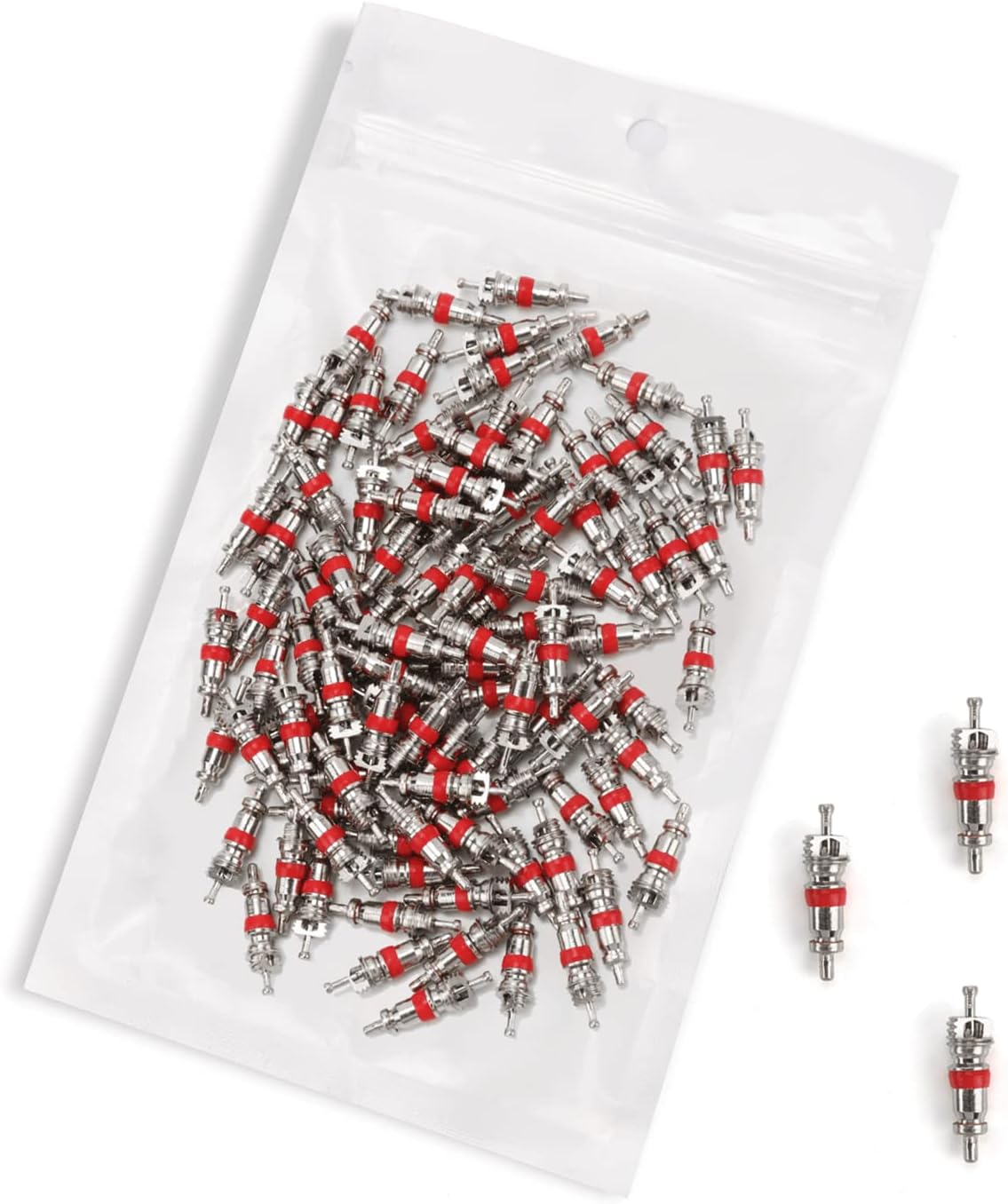
Replace worn Schrader valve cores with durable, nickel-plated replacements designed to resist rust and corrosion for a longer service life. Each core is 100% leakage tested and rated for up to 300 PSI, helping maintain a safe, reliable tire pressure system. Universal fit makes them suitable for cars, RVs, ATVs, motorcycles, bicycles, and many refrigeration/air conditioning applications.
The Biggest Tire Brands in the U.S.
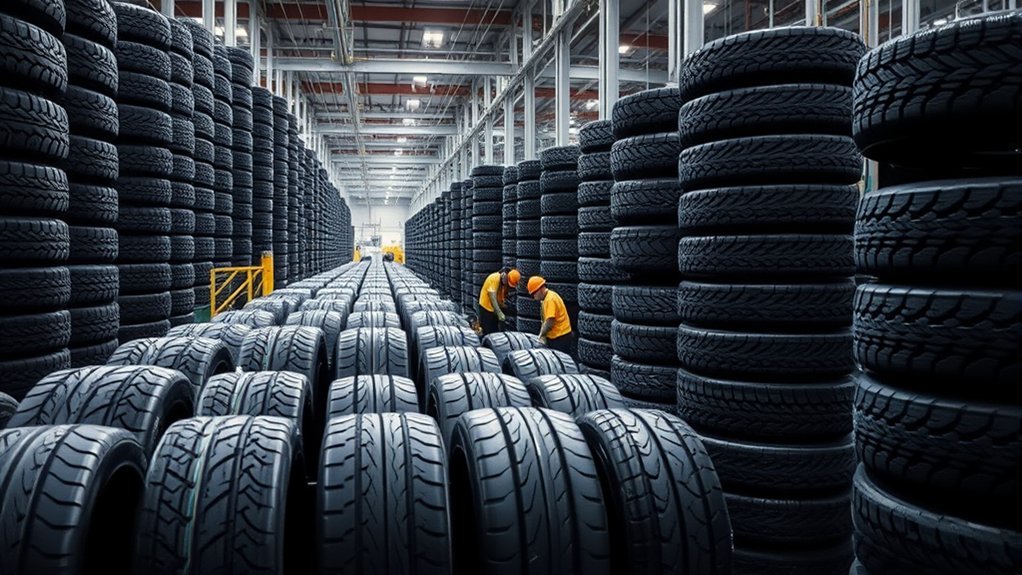
In global terms, Goodyear is the largest U.S.-headquartered tire manufacturer. It ranks third worldwide by tire sales, behind Michelin and Bridgestone. Goodyear is based in Akron, Ohio, and sells tires for passenger vehicles, trucks, buses, aircraft, motorcycles, and commercial fleets.
Cooper is also important in the U.S. tire conversation, but it should not be listed as a separate top-five global manufacturer anymore. Goodyear completed its acquisition of Cooper Tire in 2021, so Cooper now sits inside the Goodyear brand family.
The U.S. tire market itself is huge. The U.S. Tire Manufacturers Association projected 340.2 million total U.S. tire shipments in 2025. Those shipments include replacement and original equipment tires across passenger, light truck, and truck categories.
[Products Worth Considering]

This VEVOR tire bead breaker uses a slide-hammer impact and wedge tip to separate tire beads from rims quickly and efficiently without damaging hub surfaces. The long handle and sturdy steel construction help reduce user strain while providing reliable, portable tire changing for cars, trucks, and more. Ideal for home mechanics and repair shops handling multiple vehicle tire sizes.

ETENWOLF T300 is a calibrated digital tire pressure gauge for accurate readings from 3 to 200 PSI across light and heavy-duty vehicles. It includes thermal compensation for reliable performance in extreme cold or heat, with an auto shut-off to extend battery life and an LED for easier reading. The sturdy design supports rugged everyday use, making it ideal for pickups, RVs, and industrial applications.
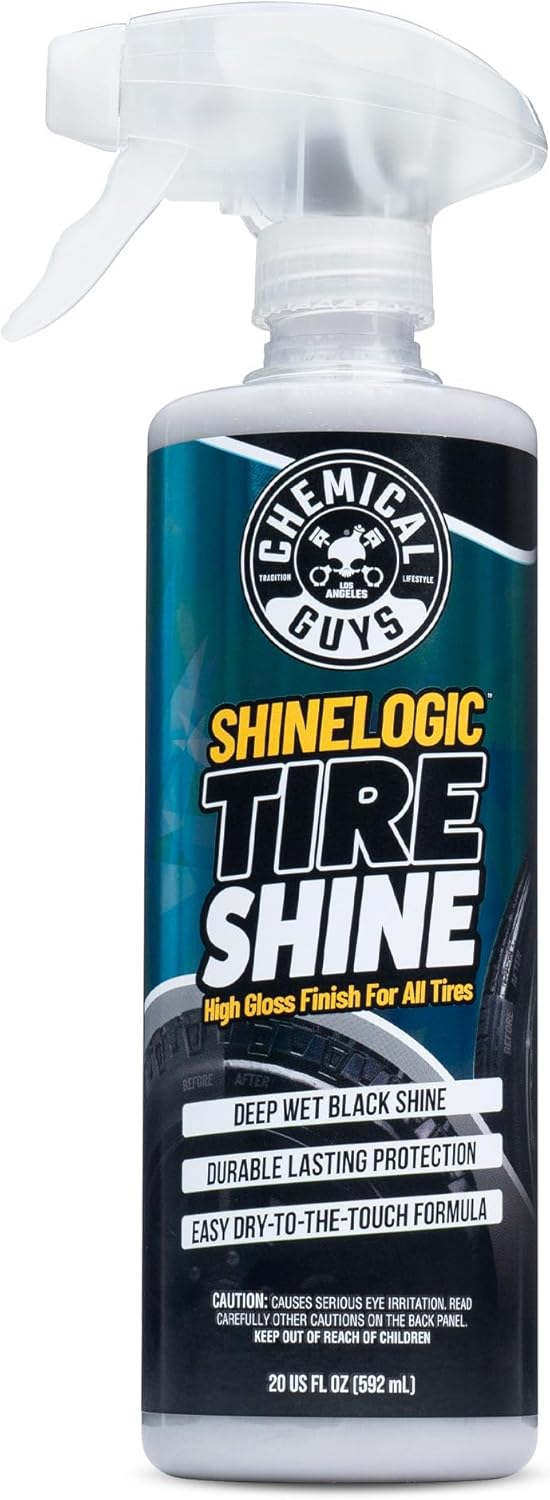
Chemical Guys ShineLogic Tire Shine delivers a deep wet black, high-shine finish for rubber tires with a sleek look. It’s designed for durable, one-step application with minimal drips, streaks, or runs, and it helps produce effortless, long-lasting shine. Choose aerosol or trigger spray for easy use on cars, trucks, motorcycles, RVs, and more.
Europe’s Leading Tire Manufacturers
Europe has two of the world’s most important tire producers: Michelin in France and Continental in Germany. Michelin ranks first globally, while Continental ranks fourth. Pirelli, headquartered in Italy, ranks fifth and remains especially strong in premium, performance, and high-end consumer tires.
European Market Leaders
Michelin leads Europe by scale and global tire sales. Continental follows as a major premium tire and automotive technology company. Pirelli adds another European powerhouse, with a focused consumer tire business and a strong reputation in performance segments.
These companies compete heavily in premium passenger tires, electric vehicle fitments, winter tires, all-season tires, motorsport technology, and lower-rolling-resistance designs. Europe’s strict performance and environmental expectations keep pushing its tire makers toward better wet grip, lower noise, longer wear, and more efficient production.
Premium Tire Innovation
Premium tire innovation is not just about grip. It includes tread compounds, casing design, rolling resistance, road-noise reduction, EV load handling, connected fleet data, retreading, recycling, and renewable or recycled materials.
Michelin has shown road-approved tire prototypes containing high levels of sustainable materials, including a passenger tire with 45% sustainable materials and a bus tire with 58%. The company has also stated a long-term goal of using 100% renewable or recycled materials in its tires by 2050.
Asia’s Fastest-Growing Tire Giants
Asia is where much of the tire industry’s growth pressure is coming from. Japan remains strong through Bridgestone, Sumitomo, Yokohama, and Toyo. South Korea has Hankook and Kumho. China has a growing group of challengers, led in the latest top-10 ranking by Zhongce Rubber Group and Sailun Group.
Zhongce Rubber Group ranked ninth globally in the latest Global Tire Report, while Sailun ranked tenth. Linglong is also a major Chinese manufacturer, but it ranked fifteenth in that same global table. That matters because “fast-growing” does not always mean “largest.”
Asian tire makers are gaining ground through competitive pricing, expanding overseas factories, broader distribution, and fast investment in passenger, truck, bus, and off-road tire capacity. Legacy brands still dominate the very top, but the gap below the top five is getting more crowded.
Why Michelin Took the Lead
Michelin’s rise to the top was not based on one product or one market. It came from a mix of premium positioning, strong replacement tire demand, commercial tire strength, technology investment, brand trust, and disciplined product strategy.
Michelin’s Premium Mix
Premium tires are important because they usually carry stronger margins than low-cost commodity tires. Michelin has stayed strong in high-performance, touring, truck, two-wheel, aircraft, agricultural, and specialty categories. Its broad range helps protect the company when one part of the market slows.
The company also benefits from demand for larger rim-diameter passenger tires, EV-ready products, and replacement tires that promise longer wear or better all-weather performance. That premium mix helps explain why Michelin can lead even when total tire volumes are under pressure.
Bridgestone’s Market Share Shift
Bridgestone is still extremely close to Michelin in global tire sales. Its second-place position should not be read as weakness. Bridgestone remains one of the industry’s strongest manufacturers, with deep roots in Japan, broad global production, and major commercial tire operations.
The key point is that the leadership measure has shifted toward tire-sales performance and premium tire strategy. Michelin currently leads that comparison, but Bridgestone remains close enough that the top spot is still worth watching.
How Sustainability Is Changing Tire Manufacturing
Sustainability is changing tire manufacturing because tires depend on rubber, carbon black, silica, steel, textiles, petroleum-based inputs, energy-intensive production, and complex end-of-life recycling challenges.
Michelin says its long-term target is to use 100% renewable or recycled materials in its tires by 2050, with an interim target of 40% by 2030. Its road-approved sustainable-material tire demonstrations show where the industry is heading, but they also show how difficult the transition is. A tire still has to meet safety, durability, wet grip, heat resistance, noise, rolling resistance, and load requirements.
Pro Tip: When judging “eco” tire claims, look for specific numbers, such as sustainable-material percentage, rolling-resistance rating, retreadability, or verified lifecycle data. Broad green language is much weaker than measurable performance.
Lego’s Tire Production Record vs. Full-Size Tires
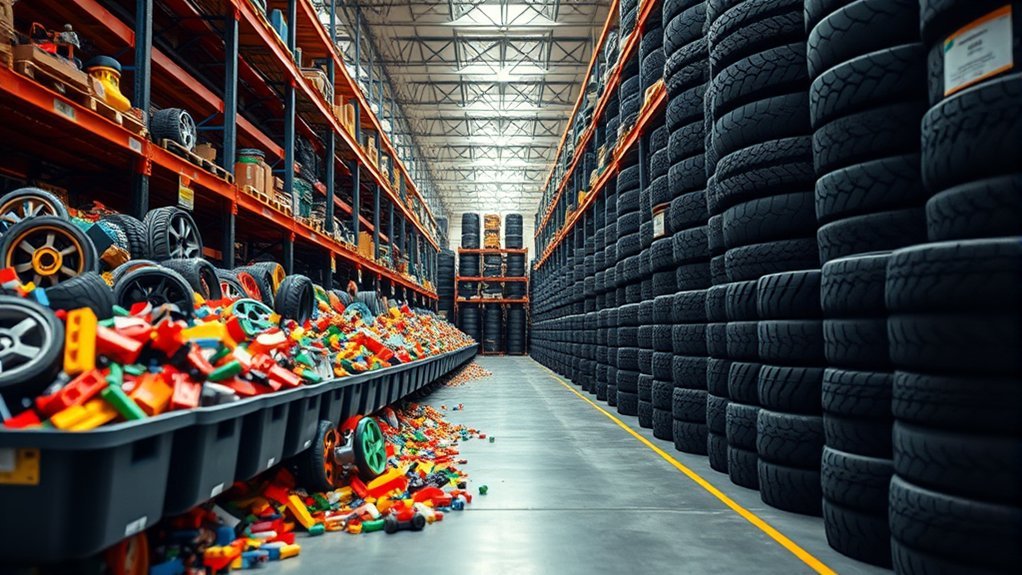
LEGO is the surprising answer if you measure tire production only by unit count. Guinness World Records recognizes LEGO for making around 306 million rubber toy tires each year, with a peak of 381 million tires in 2010.
That does not make LEGO the largest automotive tire manufacturer. LEGO tires are small toy parts, not tires for cars, trucks, buses, aircraft, motorcycles, or industrial equipment. The comparison is fun, but it needs the right label: LEGO leads in toy tire unit volume; Michelin leads in full-size tire manufacturing by tire sales.
So, if you are answering a trivia question, LEGO may win. If you are answering an industry question, Michelin is the stronger answer.
Frequently Asked Questions
Is LEGO the biggest tire manufacturer in the world?
LEGO is the biggest tire producer by toy tire unit count. Guinness World Records says LEGO makes around 306 million rubber toy tires each year. For full-size vehicle tires, Michelin is the largest manufacturer by tire sales in the latest global ranking.
Who are the top 5 tire manufacturers in the world?
The top five tire manufacturers by estimated 2024 tire sales are Michelin, Bridgestone, Goodyear, Continental, and Pirelli. Cooper should not be listed separately because Goodyear acquired Cooper Tire in 2021.
What tires are 100% made in America?
There is no simple brand-wide answer because tire origin can change by model, size, and production run. Some Goodyear, Cooper, Michelin, Bridgestone, Continental, Toyo, and Kumho tires are made in U.S. plants, but you should verify the exact tire. Check the DOT Tire Identification Number on the sidewall; federal rules require plant-code information as part of tire identification.
Where does the U.S. get most of its tires?
The U.S. tire market is supplied by both domestic plants and imports. USTMA projected more than 340 million total U.S. tire shipments in 2025 across passenger, light truck, and truck categories. For a specific tire, the sidewall DOT/TIN code is the best way to check where it was manufactured.
Is Michelin bigger than Bridgestone?
By the latest tire-sales ranking, yes. Michelin ranked first with about $25.65 billion in estimated fiscal 2024 tire sales, while Bridgestone ranked second with about $24.77 billion. The gap is close, and both remain global tire giants.
Why is market capitalization not the best way to rank tire makers?
Market capitalization measures investor value and changes with stock price. Tire-industry rankings usually focus on tire sales from tires a company manufactures, which is a more direct way to compare production scale.
Conclusion
Michelin is the largest full-size tire manufacturer by tire sales, Bridgestone is a close second, and Goodyear, Continental, and Pirelli complete the global top five. LEGO deserves its famous trivia win for toy tire volume, but that is a different race entirely. If the question is about the company that keeps the real road, fleet, aircraft, farm, and industrial tire world moving, Michelin currently wears the crown.
Sources
- European Rubber Journal — Global Tire Report 2025 — global top tire manufacturer rankings and tire-sales methodology
- Michelin — Financial information at December 31, 2025 — Michelin financial and tire-segment context
- Bridgestone — Latest Financial Results — Bridgestone financial context
- Goodyear — Full-Year 2025 Financial Results — Goodyear sales and tire-unit context
- USTMA — July 2025 U.S. Tire Shipment Forecast — U.S. tire shipment context
- Guinness World Records — Largest annual volume toy tyre manufacturer — LEGO toy tire production record
