Best Tire Brands for 2026: Michelin to Nokian
Choosing the best tire brand is not just about picking the most famous logo. The safest choice depends on your vehicle, tire size, climate, driving style, and budget. Michelin and Continental are excellent all-around starting points, but Goodyear, Bridgestone, Vredestein, BFGoodrich, Pirelli, Nokian, Toyo, Yokohama, Cooper, Falken, Hankook, and General all have strong models for specific needs.
Disclosure: This guide may include links to tire brands, retailers, or related guides. Recommendations are based on fitment logic, public tire-testing summaries, manufacturer specifications, safety guidance, and buyer-use cases. Always confirm the exact tire model, size, load index, speed rating, and warranty before buying.
Quick Answer
The best tire brands for most drivers are Michelin and Continental for all-around performance, Goodyear and Bridgestone for broad availability, Vredestein and Nokian for weather-focused grip, BFGoodrich and Toyo for trucks and all-terrain use, and Pirelli for sport handling. Always choose by tire model, not brand name alone.
Key Takeaways
- Michelin remains the safest starting point for balanced grip, tread life, and category depth.
- Continental is a top all-around choice for wet braking, touring comfort, and value.
- Goodyear and Bridgestone are strong mainstream brands with wide all-season, all-weather, SUV, and truck coverage.
- BFGoodrich, Toyo, Falken, and Goodyear are especially worth comparing for all-terrain and light-truck needs.
- Nokian, Michelin, Bridgestone, and Pirelli are important winter-tire brands, but severe-snow ratings matter more than the logo.
- The best brand is only a shortlist. The exact tire model, size, load rating, speed rating, date code, and climate match decide the real result.
Best Brand Starting Points
- Best overall shortlist: Michelin, Continental, Vredestein
- Best daily-driver shortlist: Michelin, Continental, Goodyear, Bridgestone, Hankook
- Best winter shortlist: Nokian, Michelin, Bridgestone, Continental, Pirelli
- Best truck and all-terrain shortlist: BFGoodrich, Toyo, Goodyear, Falken, Cooper
- Best value shortlist: Cooper, General, Falken, Hankook, Toyo
How Tire Brand Rankings Work
Consumer Reports and other tire testers do not judge a brand by advertising claims. They compare real tire models across braking, wet grip, dry handling, hydroplaning resistance, snow and ice traction, ride comfort, noise, rolling resistance, and treadwear. Public summaries of Consumer Reports’ 2026 tire work report testing across 129 tire models from 30 brands, with 18 brands qualifying for the brand report card because enough models were tested.
That detail matters. A brand can rank highly overall and still make one tire that is not ideal for your vehicle. The reverse is also true: a mid-priced brand may offer an excellent tire in one category. Use brand rankings to build a shortlist, then compare the exact tire model in your size.
A tire brand is a starting point, not the final answer. The right model in the right size will matter more than the name molded into the sidewall.
| Driving priority | Brands to compare first | Why they stand out |
|---|---|---|
| Best all-around | Michelin, Continental, Vredestein | Strong balance of grip, handling, tread life, and comfort. |
| Daily commuting | Michelin, Continental, Goodyear, Bridgestone, Hankook | Broad all-season lineups, good availability, and practical warranty coverage. |
| Winter and ice | Nokian, Michelin, Bridgestone, Pirelli, Continental | Strong winter-focused models and severe-snow-rated options. |
| Trucks and all-terrain | BFGoodrich, Goodyear, Toyo, Falken, Cooper | Durable construction, off-road traction, and SUV/light-truck fitments. |
| Sport handling | Pirelli, Michelin, Continental, Yokohama | Responsive steering, high-speed stability, and strong cornering grip. |
| Value | Cooper, General, Falken, Hankook, Toyo | Competitive pricing with many capable touring, SUV, and all-terrain options. |
[Products Worth Considering]

Accurately measure tire tread depth with a calibrated gauge marked from 0 to 1 inch in 1/32 inch increments. The color-coded bar helps you quickly identify tread condition ranges, supporting safe driving for trucks, motorcycles, automobiles, and passenger vehicles.

Measure tire tread depth quickly and accurately with this LUMITECO dial gauge that reads in 1/32" increments up to 14/32". The color-coded green/yellow/red zones make it easy to judge tire wear and know when replacement is needed. A rugged, compact design with a protective pouch helps keep the gauge ready for use on cars, trucks, motorcycles, and more.

The Continental Grand Prix 5000 is an allround road bike tire engineered for faster rolling, improved ride comfort, and enhanced puncture protection. It features a Vectran Breaker cut-protection layer, Lazer Grip micro-profile tread for confident cornering control, and Active Comfort Technology to damp vibration for smoother rides. BlackChili compound optimizes grip and speed for everyday performance and long-lasting confidence.
Why Michelin Still Leads Many Tire Brand Rankings
Michelin is often the safest first brand to compare because it performs well across many categories rather than relying on one specialty. Its current lineup covers long-wearing touring tires, all-weather tires, truck/SUV tires, winter tires, and ultra-high-performance options.
Michelin’s biggest strength is balance. Models such as the Defender2, CrossClimate2, Pilot Sport All Season 4, Pilot Sport 4S, and X-Ice Snow show why the brand often ranks highly for grip, tread life, braking, and driver satisfaction. Michelin is rarely the cheapest option, but its better models can make sense when long wear and predictable performance are priorities.
- Best for: drivers who want a premium, low-risk starting point.
- Watch for: higher prices and category-specific trade-offs.
- Compare first: Defender2 for touring, CrossClimate2 for all-weather use, Pilot Sport models for performance, and X-Ice Snow for winter.
If you drive a Toyota crossover, this Michelin tire guide for RAV4 models can help you compare vehicle-specific options.
Continental Tires: Value and Performance
Continental is one of the best tire brands for drivers who want premium performance without always paying the highest premium-brand price. It is especially strong in touring, all-season, truck/SUV, winter, and performance categories.
The Continental TrueContact Tour is a good example of the brand’s practical strengths. Continental says the tire uses EcoPlus Technology to support fuel savings or optimized range, shorter wet-road stopping, and extended tread life. That makes Continental a strong pick for drivers who care about comfort, wet-weather control, and long-term value.
- Best for: daily drivers, commuters, crossovers, SUVs, and drivers who see frequent rain.
- Watch for: choosing the correct model; Continental’s performance tires and touring tires serve different needs.
- Compare first: TrueContact Tour, CrossContact LX25, ExtremeContact DWS 06 Plus, TerrainContact H/T, and VikingContact 7.
For Toyota SUV shoppers, this Continental tires for RAV4 guide is a useful vehicle-specific starting point.
Goodyear and Bridgestone: Strong Mainstream Choices
Goodyear and Bridgestone remain two of the most useful tire brands to compare because they offer wide availability, broad size coverage, and models for commuters, SUVs, trucks, all-weather driving, and winter use.
Goodyear Tires for Every Driving Need
Goodyear is a strong choice when you want easy availability and a wide model range. The brand covers fuel-conscious all-season tires, all-weather tires, sport tires, highway tires, winter tires, and rugged truck options.
The Goodyear Assurance WeatherReady 2 is positioned for commuter use and broad daily-driving needs. If you are shopping it for winter use, confirm the Three-Peak Mountain Snowflake marking, size availability, and warranty details for your exact fitment before buying. The Wrangler line gives truck and SUV drivers more off-road and all-terrain choices.
- Best for: all-weather commuting, truck/SUV use, and drivers who want easy replacement availability.
- Watch for: road noise, size-specific ratings, and treadwear differences by model.
- Compare first: Assurance WeatherReady 2, Assurance MaxLife, Wrangler All-Terrain Adventure, and Ultra Grip winter models.
For a vehicle-specific comparison, see these Goodyear tires for RAV4 models.
Bridgestone Performance Strengths
Bridgestone is a dependable mainstream brand with strong coverage for sedans, crossovers, SUVs, trucks, EVs, and winter driving. Its Turanza, Dueler, Ecopia, Potenza, and Blizzak lines cover very different needs.
- Turanza: comfort-focused touring and grand-touring use.
- Dueler: SUV, crossover, and light-truck fitments.
- Ecopia: lower rolling resistance and efficiency-focused driving.
- Potenza: sport and performance handling.
- Blizzak: winter traction in cold, snow, and ice conditions.
Choose Bridgestone when you want a familiar brand with broad retailer support and a tire family that fits your driving style.
BFGoodrich, Cooper, Toyo, and Falken for Trucks, SUVs, and Value
If you drive a pickup, Jeep, SUV, crossover, or spend time on gravel, dirt, snow, or job-site roads, the best tire brand may not be the same one that wins a sedan touring-tire test. In this category, construction strength, sidewall protection, tread depth, stone ejection, snow rating, and on-road manners all matter.
BFGoodrich Off-Road Durability
BFGoodrich is one of the strongest names in all-terrain tires. The BFGoodrich All-Terrain T/A KO2 is marketed as the brand’s toughest all-terrain tire, carries the 3PMSF severe-snow symbol, and is backed by a 50,000-mile mileage warranty in many fitments. BFGoodrich also states that KO2 sidewalls are 20% tougher than the previous KO in a manufacturer sidewall-splitting test, so treat that as a brand-backed comparison rather than a universal real-world guarantee.
- Best for: off-road use, overlanding, gravel roads, trucks, SUVs, and drivers who want tougher sidewalls.
- Watch for: heavier weight, possible road noise, and reduced fuel economy compared with highway touring tires.
- Compare first: All-Terrain T/A KO2, All-Terrain T/A KO3, Trail-Terrain T/A, and Mud-Terrain T/A KM3.
Cooper Value and Wear
Cooper is a practical brand for shoppers who want reasonable pricing without dropping to unknown-budget territory. The Discoverer lineup is especially useful for SUVs, trucks, all-terrain driving, and touring use.
- Best for: budget-conscious SUV and truck owners.
- Watch for: model-by-model differences in wet braking, treadwear, and noise.
- Compare first: Discoverer Road+Trail AT, Discoverer AT3, Endeavor, and ProControl.
If you are comparing value-focused options for a Toyota crossover, this General tires for RAV4 guide may also help you build a shortlist.
Toyo and Falken All-Terrain Value
Toyo and Falken are worth comparing when you want all-terrain capability without giving up too much daily-driving comfort. Toyo’s Open Country family is popular with truck and SUV drivers, while Falken’s Wildpeak line is known for combining off-road traction with usable road manners.
- Toyo: strong for trucks, SUVs, off-road traction, and tough-looking all-terrain fitments.
- Falken: strong for drivers who want value, snow-capable all-terrain options, and rugged crossover/SUV choices.
RAV4 owners can also compare these Falken tires for RAV4 models before buying.
Pirelli, Yokohama, Nokian, Vredestein, and Hankook
Some tire brands stand out because they solve a specific problem better than they dominate every category. That is where Pirelli, Yokohama, Nokian, Vredestein, and Hankook deserve attention.
Pirelli Sport Handling
Pirelli is best known for performance and premium-vehicle tires. The Pirelli P Zero focuses on high-performance grip, steering response, braking, wet control, and stability. That makes Pirelli a smart comparison brand for performance sedans, sports cars, luxury SUVs, and drivers who value handling feel.
- Best for: sport handling, performance vehicles, and premium fitments.
- Watch for: shorter tread life on some performance tires compared with touring tires.
- Compare first: P Zero, P Zero All Season, Cinturato, Scorpion, and winter-focused Sottozero models.
Yokohama Balanced Value
Yokohama is a strong comparison brand for drivers who want a balance of handling, value, and broad fitment coverage. The ADVAN line leans sporty, while Geolandar models serve SUVs, crossovers, and light trucks.
For Toyota crossover shoppers, this Yokohama tires for RAV4 guide can help narrow options.
Nokian and Vredestein for Weather-Focused Grip
Nokian is one of the most important winter-tire brands to compare, especially if you regularly drive in snow, ice, slush, or long freezing temperatures. The Hakkapeliitta line is built around winter grip, and Nokian appears frequently in winter-tire discussions because it focuses heavily on cold-weather performance.
Vredestein has become more relevant in North American tire comparisons because current public Consumer Reports brand-ranking summaries place it near the top among qualifying brands. It is especially worth checking for all-weather, touring, performance, and winter categories if the model is available in your size.
Hankook and General as Practical Alternatives
Hankook and General can be smart comparison brands if you want capable tires at a more moderate price. Hankook has become especially competitive in touring, EV, and all-season categories, while General is a practical value brand for sedans, SUVs, light trucks, and all-terrain use.
Note: Availability changes by tire size. Before you fall in love with a brand, confirm that the exact model is made in your vehicle’s size, load index, speed rating, and load range.
Best Tire Brands by Driving Conditions
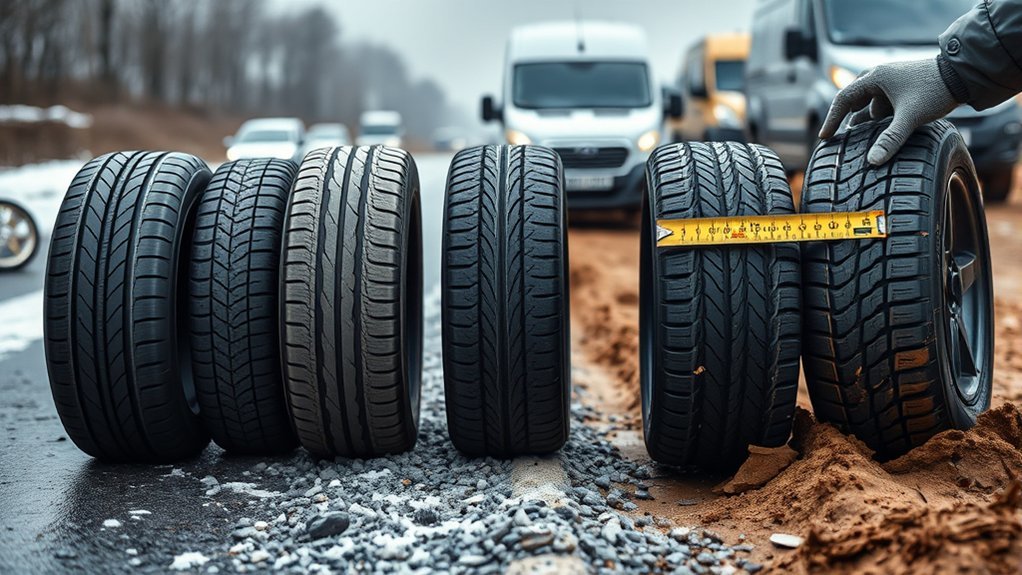
The best tire brand changes with the road. A quiet touring tire that is excellent for highway commuting may be wrong for deep snow, heavy towing, or muddy trails. Use the table below to match brand strengths to real driving conditions.
| Driving condition | Best brands to compare | What to prioritize |
|---|---|---|
| All-season commuting | Michelin, Continental, Goodyear, Bridgestone, Hankook | Wet braking, comfort, treadwear warranty, low noise. |
| All-weather use | Michelin, Goodyear, Nokian, Vredestein, Continental | 3PMSF severe-snow symbol plus good dry and wet road manners. |
| Winter snow and ice | Nokian, Michelin, Bridgestone, Continental, Pirelli | Snow traction, ice braking, cold-weather compound, local stud rules. |
| Sport and performance | Pirelli, Michelin, Continental, Yokohama | Steering response, dry grip, wet grip, heat resistance. |
| SUV and highway truck use | Continental, Bridgestone, Michelin, Goodyear, Cooper | Load rating, comfort, treadwear, wet control, towing needs. |
| All-terrain and trails | BFGoodrich, Toyo, Goodyear, Falken, Cooper | Sidewall strength, tread depth, stone resistance, snow rating. |
| EV and hybrid use | Michelin, Continental, Hankook, Bridgestone, Pirelli | Load capacity, low rolling resistance, noise control, torque wear. |
If you drive a newer Toyota SUV, compare model-specific guides such as the best tires for a 2024 Toyota RAV4 and best tires for a 2023 Toyota RAV4 after you narrow your preferred brand.
[Products Worth Considering]

Monitor tire tread wear with a smart, color-coded depth gauge that shows clear condition ranges at a glance. The bar is range marked for fast, easy readings, helping you maintain safer traction and performance. Each gauge is portable with a pocket clip, and the set includes 20 units for daily use and sharing.

Keep your tires properly inflated with this analog VONDIOR tire pressure gauge, designed for fast, easy readings without batteries. The swiveling, two-axis hose and large glow dial help you measure at any tire angle with instant visibility. Built with a protective rubber shield, it supports durable, low-maintenance use for cars and trucks.

The SAFELIFE dial tire tread depth gauge measures tread depth in 1/32 inch increments with clear, easy-to-read 2-inch dial face. Color zones using a traffic light system help you quickly judge whether tread is low, marginal, or ample for safer driving. Built with a durable zinc cast body and a metal detect probe for precise, comfortable use across cars, motorcycles, trucks, and buses.
How to Choose the Right Tire Brand
To choose the right tire brand, start with your driving conditions and then compare exact tire models. Do not buy only because a brand ranks well overall.
- Check your required tire size. Use your owner’s manual or the tire placard on the driver-side door jamb.
- Match the load index and speed rating. This is especially important for SUVs, trucks, EVs, towing, and heavy cargo.
- Pick the right tire category. Touring, grand touring, all-weather, winter, ultra-high-performance, highway truck, and all-terrain tires are built for different jobs.
- Compare wet braking and treadwear. These two factors matter for most everyday drivers.
- Look for UTQG ratings. The U.S. Uniform Tire Quality Grading system compares treadwear, traction, and temperature resistance for many passenger tires.
- Use 3PMSF for snow needs. The Three-Peak Mountain Snowflake symbol means the tire meets severe-snow traction requirements, but it does not automatically make every tire equal on ice.
- Check warranty and trial period. A treadwear warranty, road-hazard plan, and satisfaction trial can improve long-term value.
- Verify recall status and tire age. Avoid old stock, damaged tires, mismatched sets, and any tire with an unresolved recall.
Warning: Never install a tire with the wrong size, load rating, or speed rating just because it is cheaper. The wrong fitment can affect braking, handling, stability control, tire wear, and safety.
Pro Tip: If two tires test similarly, choose the one with better wet braking, better owner feedback for noise and treadwear, and stronger availability in your exact size.
Before You Buy: Tire Brand Checklist
- Size: Match the full tire size on your door placard or owner’s manual.
- Load and speed: Match or exceed the required load index and speed rating unless your vehicle maker says otherwise.
- Climate: Choose all-season, all-weather, winter, summer, highway, or all-terrain based on where you drive most.
- AWD and 4WD: Avoid mismatched tread depths or tire types that can affect driveline behavior.
- Winter roads: Look for 3PMSF if you need severe-snow traction, but use dedicated winter tires for regular ice and deep snow.
- Age and recalls: Check the DOT date code and recall status before installation.
- Total value: Compare treadwear warranty, road-hazard coverage, road noise, wet braking, and replacement availability.
Top Tire Brands Consumer Reports Highlights
Consumer Reports’ public tire coverage is useful because it tests tires by category rather than treating every driver the same. Its 2026 public Top Picks page highlights Michelin, Continental, and Nokian among the best-performing tire models, while public summaries of its 2026 brand report card place Michelin, Continental, and Vredestein at the top of the brand rankings.
That does not mean those are the only brands worth buying. It means they are especially strong starting points when you want tested, category-wide performance. For many shoppers, Goodyear, Bridgestone, BFGoodrich, Toyo, Pirelli, Yokohama, Cooper, Falken, Hankook, and General still deserve comparison because they may offer the best model for your size, vehicle, terrain, or budget.
What Tire Brands or Tires Should You Be Careful With?
It is more accurate to avoid weak tire models than to reject an entire mainstream brand. Some budget tires perform well enough for light-duty use, while some expensive tires may be wrong for your climate or vehicle. Be careful with any tire that has poor independent wet-braking results, short tread life, weak owner feedback, no clear warranty, unknown manufacturing origin, old date codes, unresolved recalls, or limited availability for replacement.
Also avoid mixing tire types unless your vehicle manufacturer specifically allows it. A mismatched set can change handling balance, all-wheel-drive behavior, braking, and stability-control response.
Frequently Asked Questions
What is the highest-rated tire brand?
Michelin is the highest-rated tire brand in several current public ranking summaries because it performs well across many categories, including touring, all-weather, winter, and performance tires. Continental and Vredestein are also top all-around brands in recent public Consumer Reports summaries. The best choice still depends on the exact tire model and size.
What is the #1 rated tire?
There is no single #1 tire for every driver. The top tire changes by category: all-season, all-weather, winter, ultra-high-performance, truck/SUV, EV, and all-terrain tires are tested for different strengths. A Michelin touring tire may be best for tread life, while a Nokian winter tire may be better for ice and snow.
Are Michelin tires worth the money?
Michelin tires are often worth the money if you value balanced performance, long tread life, wet-road confidence, and strong category coverage. They are not always the cheapest option, so compare the exact Michelin model against Continental, Goodyear, Bridgestone, Vredestein, Hankook, or Cooper alternatives in the same size.
What tire brand is best for rain?
Continental, Michelin, Goodyear, Bridgestone, Pirelli, and Vredestein are all worth comparing for wet-weather driving. Look for independent wet-braking scores, hydroplaning resistance, tread design, and owner feedback for wet-road confidence rather than relying only on the brand name.
What tire brand is best for snow?
Nokian, Michelin, Bridgestone, Continental, Goodyear, and Pirelli are strong winter-tire brands. For snow, check for the Three-Peak Mountain Snowflake symbol and compare snow traction and ice braking. For severe winters, a dedicated winter tire is usually better than a standard all-season tire.
What tire brand is best for trucks and SUVs?
BFGoodrich, Goodyear, Toyo, Falken, Cooper, Michelin, Continental, and Bridgestone all make strong truck and SUV tires. For highway driving, compare comfort and treadwear. For trails or gravel, compare sidewall strength, tread depth, snow rating, and all-terrain traction.
What tire brands should you stay away from?
Avoid tire models with poor wet-braking results, weak treadwear, unclear warranty coverage, old date codes, damage, recalls, or the wrong size/load rating for your vehicle. It is better to judge a tire by model-specific testing than to reject an entire mainstream brand.
Should I buy tires by brand or by model?
Use the brand to build a shortlist, then buy by exact model. The same brand may make a quiet touring tire, a winter tire, a summer performance tire, and an all-terrain tire with very different strengths. Size, load index, speed rating, category, and climate match matter more than the logo alone.
Conclusion
The best tire brands are Michelin and Continental for all-around confidence, Goodyear and Bridgestone for broad mainstream coverage, Vredestein and Nokian for weather-focused performance, BFGoodrich and Toyo for all-terrain strength, Pirelli for sport handling, and Cooper, Falken, Hankook, General, and Yokohama for strong value in the right category. Start with the brand, but make the final decision by model, size, climate, safety ratings, warranty, and real driving needs.
Sources
- Consumer Reports — 2026 Tire Top Picks — supports current tire-testing context and top-performing model categories.
- The Car Guide summary of Consumer Reports’ 2026 tire brand ranking — supports public summary details for Michelin, Continental, and Vredestein.
- NHTSA TireWise — supports tire safety ratings, UTQG, tire maintenance, size checks, and tire-safety guidance.
- Continental TrueContact Tour — supports EcoPlus Technology, touring use, wet braking, tread life, and warranty details.
- Goodyear Assurance WeatherReady 2 — supports current manufacturer positioning, warranty, and daily-driver category details.
- BFGoodrich All-Terrain T/A KO2 — supports KO2 all-terrain features, 3PMSF rating, mileage warranty, and sidewall-strength claim context.
- Pirelli P Zero — supports P Zero performance positioning, wet-control features, handling, and sport fitment context.
[Products Worth Considering]

These universal tire valve stem caps help protect valve cores from dust, debris, and moisture while helping maintain stable tire pressure. The corrosion-resistant metal construction and sealed design provide reliable protection in road grime, mud, and winter conditions. Twist-on installation makes them quick to fit on cars, SUVs, trucks, and motorcycles.

These aluminum alloy tire valve stem caps with an O-ring seal help protect valve stems from corrosion while adding a clean, stylish look to your vehicle. The universal fit works across cars, trucks, motorcycles, bicycles, and more, making them an easy upgrade for everyday driving and off-road use. Installation is quick, and the included four-pack keeps all your tires dressed and protected.

Protect your spare wheel with a waterproof, dustproof tire cover made to resist sun and harsh weather. The elastic band design makes it easy to install and remove without tools, while reinforced stitching helps it keep its shape. Available in multiple sizes, it fits common RV, trailer, Jeep, SUV, and truck spare tires.

Related Articles
BFGoodrich vs Goodyear: Which Tire Brand Is Better?
I compare BFGoodrich vs Goodyear to reveal which tire brand wins for traction, comfort, and value—before you buy.
Read More
Hankook vs Goodyear Tires: Which Should You Buy?
Torn between Hankook and Goodyear tires? Discover which one delivers the best value, performance, and longevity before you buy.
Read More
Best Achilles Tires 2026: Budget Tire Picks for Dry and Wet Roads
You need tires that balance cost, safety and real-world performance, especially when you drive a truck or SUV on mixed dry and wet roads.…
Read More