Your Toyota Tundra tire pressure is not one fixed number for every truck. The correct PSI is the cold tire pressure printed on the Tire and Loading Information Label on your driver-side door jamb, or in your Toyota owner’s manual. Use that number first, then adjust only when your tire size, load rating, or driving setup requires it.
Quick Answer
The correct Toyota Tundra tire pressure is the cold PSI listed on your driver-side door label. Many Tundra setups use around 35 PSI, while some older, 22-inch, or LT tire setups differ. Do not use the tire sidewall max as your normal pressure.
Key Takeaways
- Use the cold PSI on your Tundra’s door-jamb label as the main reference.
- Check tire pressure when the truck has been parked for at least three hours.
- Do not inflate to the maximum PSI printed on the tire sidewall unless a qualified tire professional confirms that setting for your setup.
- Towing, hauling, replacement tires, and LT tires may require load-based guidance, not guesswork.
- Check pressure monthly, before long trips, before towing, and when the weather changes sharply.
At a Glance
| Time Required | 5 to 10 minutes |
| Difficulty | Easy |
| Tools Needed | Tire pressure gauge, air compressor, valve caps, and your door-jamb PSI label |
| Cost | Usually free at home if you own a gauge and compressor; low cost at most air stations |
Understanding the Importance of Correct Tire Pressure for Your Tundra
Correct tire pressure helps your Tundra brake, steer, tow, and carry weight safely. Underinflated tires can overheat, wear on the shoulders, reduce fuel economy, and raise the risk of tire failure. Overinflated tires can ride harshly, wear faster in the center, and reduce grip on rough or wet pavement.
The safest starting point is the vehicle manufacturer’s recommended cold inflation pressure. The National Highway Traffic Safety Administration explains that the correct pressure is on the Tire and Loading Information Label or in the owner’s manual, not the maximum pressure printed on the tire sidewall.
For Toyota-specific documents, use the Toyota owner’s manuals and warranties page. Enter your model year and Tundra details, then confirm the tire information for your exact truck.
What’s the Right PSI for Your Tundra?
The right PSI for your Toyota Tundra is the cold pressure shown on the driver-side door-jamb label. That label accounts for the original tire size, wheel size, axle loads, and ride-and-handling targets Toyota set for that truck.
Some Tundra setups use the same PSI front and rear. Others use different front and rear pressures. Replacement tires can also change the answer, especially if you move from passenger-rated tires to LT tires or change tire size.
Note: The examples below help you understand why Tundra PSI varies. They do not replace the tire label on your own truck.
| Tundra Tire Size Example | Example Front PSI | Example Rear PSI | What It Means |
|---|---|---|---|
| P255/70R18 112T | 30 PSI | 33 PSI | Some Tundra sizes use different front and rear pressures. |
| 265/60R20 112H | 35 PSI | 35 PSI | Common late-model 20-inch setups often use equal pressure. |
| 265/70R18 116T | 35 PSI | 35 PSI | Many 18-inch setups also use equal pressure. |
| 265/50R22 XL 112H | 38 PSI | 38 PSI | XL tires may need a higher placard pressure. |
| LT285/70R17/D 121R | 50 PSI | 50 PSI | LT tires can need much different pressure than passenger-rated tires. |
These examples are based on BFGoodrich Toyota Tundra tire pressure and size data. Your own door label remains the best reference for original-equipment tires.
How to Find the Tire Pressure Label on a Toyota Tundra
Open the driver’s door and look at the door jamb or B-pillar. You should see a Tire and Loading Information Label. It usually lists the original tire size, recommended cold front PSI, recommended cold rear PSI, seating capacity, and cargo/load information.
If your Tundra has replacement wheels or tires, compare the label against the current tire size printed on your tire sidewall. If the size or load rating does not match, ask a Toyota dealer, tire shop, or tire manufacturer for the correct pressure using load-inflation guidance.
Warning: The PSI printed on the tire sidewall is usually the tire’s maximum pressure, not the recommended pressure for your Tundra. Using sidewall max as your everyday setting can hurt ride quality, traction, and tire wear.
Checking and Adjusting Tire Pressure
Check your Toyota Tundra’s tire pressure when the tires are cold. NHTSA defines cold tires as tires that have not been driven on for at least three hours. A cold reading gives you the most accurate number because driving heats the tires and raises pressure.
[Products Worth Considering]

These aluminum alloy tire valve stem caps with an O-ring seal help protect valve stems from corrosion while adding a clean, stylish look to your vehicle. The universal fit works across cars, trucks, motorcycles, bicycles, and more, making them an easy upgrade for everyday driving and off-road use. Installation is quick, and the included four-pack keeps all your tires dressed and protected.

These universal tire valve stem caps help protect valve cores from dust, debris, and moisture while helping maintain stable tire pressure. The corrosion-resistant metal construction and sealed design provide reliable protection in road grime, mud, and winter conditions. Twist-on installation makes them quick to fit on cars, SUVs, trucks, and motorcycles.

Keep your tires properly inflated with this analog VONDIOR tire pressure gauge, designed for fast, easy readings without batteries. The swiveling, two-axis hose and large glow dial help you measure at any tire angle with instant visibility. Built with a protective rubber shield, it supports durable, low-maintenance use for cars and trucks.
Tools Required For Checking
You do not need many tools, but accuracy matters. Keep these items in your truck or garage:
- Tire pressure gauge: A reliable digital or analog gauge gives a better reading than guessing by eye.
- Air compressor: A home compressor or gas-station air pump lets you add air when pressure is low.
- Valve caps: Caps help keep dirt and moisture out of the valve stem.
- Door-jamb PSI label: Use it as your main pressure reference.
- Owner’s manual: Use it for TPMS, spare tire, towing, and tire-size details.
Best Practices For Adjusting
- Park your Tundra for at least three hours, or check it before your first drive of the day.
- Find the cold front and rear PSI on the driver-side door label.
- Remove the valve cap from one tire.
- Press the gauge squarely onto the valve stem until the hissing stops.
- Compare the reading with the label pressure.
- Add air if the tire is low, or release air slowly if it is high.
- Recheck with the gauge after each adjustment.
- Repeat for all four tires and the spare if your Tundra carries one.
- Reinstall each valve cap.
- If the TPMS light stays on after proper inflation, follow the owner’s manual or have the system inspected.
Pro Tip: Keep a small tire gauge in the glove box. TPMS is helpful, but it does not replace monthly manual pressure checks.
Adjusting Tire Pressure Based on Load and Driving Conditions
Load matters, but you should not add random PSI just because you are towing or hauling. Tire pressure must support the actual load without exceeding the tire’s safe limits or the truck’s ratings.
[Products Worth Considering]

Upgrade your Toyota’s wheels with durable aluminum alloy valve stem caps that help protect valve cores from corrosion and direct exposure to road grime, clay, water, and snow. Rubber rings improve sealing to help prevent air leakage and maintain stable tire pressure for safer driving. These caps are easy to install or remove without tools and add a unique, stylish look to your car.

Inflate Presta and Schrader bike and car tires with one compressor attachment, including tubeless setups. The digital gauge lets you monitor 2–200 PSI readings in 0.1 PSI increments with ±2 PSI accuracy, while the adjustable lever and built-in bleed button help you dial in precise pressure. Quick-connect coupler, hose, and a complete Presta service kit with spare cores and caps make it ready for fast maintenance.

Secure your vehicle during transport with this 4-pack of heavy-duty tire tie down straps designed for trailers and hauling. The ratchet system with flat hooks and D-rings helps you tension the straps quickly, while the wheel-friendly design protects tires. With high break strength and corrosion-resistant hardware, these straps provide reliable, confidence-inspiring tie-down security for cars, trucks, and UTVs.
Load-Specific Pressure Adjustments
Start with the placard PSI. Then consider your payload, trailer tongue weight, tire type, and axle loads. If your truck is near its payload limit or you use LT replacement tires, use professional load-inflation guidance instead of copying another owner’s setting.
- Use the door-jamb PSI for normal driving on original-size tires.
- Check pressure before loading the truck, not after the tires are hot.
- Never exceed the maximum cold PSI listed on the tire sidewall.
- Never exceed your Tundra’s payload, GVWR, or axle ratings.
- For replacement LT tires, ask the installer for the pressure that matches your truck’s actual axle load.
For 2026 context, Toyota lists the Tundra with up to 12,000 lb of max towing and up to 1,850 lb of max payload when properly equipped, but those numbers depend on configuration. Always match your trailer and cargo to your exact truck, not just the Tundra nameplate.
Seasonal Driving Considerations
Cold weather lowers tire pressure. Michelin Canada notes that tires lose about 1 PSI for every 5°C drop in temperature. That means a Tundra set correctly in warm weather can read several PSI low when winter arrives.
Check your pressure during major temperature swings, before road trips, and before towing. Do not bleed air from hot tires just because they read higher after highway driving. Let the tires cool, then adjust to the cold PSI on the label.
Off-Road Driving and Airing Back Up
Some drivers air down for sand, rocks, or trails to improve traction and ride comfort. That is an off-road technique, not a normal street-pressure setting. If you air down, drive slowly, avoid sharp steering, and air back up before returning to pavement.
Driving at highway speed with aired-down tires can overheat the tire and damage the sidewall. Carry a compressor if you plan to leave paved roads.
How Tire Pressure Impacts Safety and Handling
Correct tire pressure keeps the tire’s contact patch working as designed. Your Tundra will steer more predictably, brake more consistently, and carry load more safely when the tires match the recommended cold PSI.
Underinflated tires flex more than they should. That flex builds heat, increases rolling resistance, and can lead to tread or sidewall damage. Overinflated tires can reduce comfort and make the tire more prone to center wear.
A TPMS warning means at least one tire is significantly underinflated. Stop when safe, inspect the tires, and check pressure with a gauge as soon as possible.
To protect handling and tire life, remember to:
- Check pressure at least once a month.
- Check before long trips and towing.
- Inspect for uneven wear, cracks, punctures, and sidewall bulges.
- Rotate tires according to your owner’s manual.
- Have alignment checked if the truck pulls or tires wear unevenly.
Identifying Symptoms of Incorrect Tire Pressure
Wrong tire pressure often shows up as wear, ride, or handling changes before you notice a visible problem. Do not rely on looks alone. Radial tires can look normal while still being low.
| Symptom | Likely Meaning | Action Needed |
|---|---|---|
| Outer-edge tire wear | Possible underinflation or alignment issue | Check PSI cold and inspect alignment |
| Center tire wear | Possible overinflation | Set pressure to the placard PSI when cold |
| Poor handling or slow steering response | Pressure may be low, uneven, or mismatched | Check all four tires with the same gauge |
| Rough ride or vibration | Pressure, balance, tire damage, or wheel issue | Check PSI, then inspect tires and wheels |
| TPMS warning light | At least one tire is significantly underinflated or the system has a fault | Stop safely, check pressure, and inspect for damage |
How Proper Tire Pressure Boosts Fuel Efficiency
Incorrect tire pressure can cost you fuel. FuelEconomy.gov, a U.S. Department of Energy and EPA resource, says proper inflation can improve gas mileage by 0.6% on average and up to 3% in some cases. It also notes that underinflated tires can lower fuel economy by about 0.2% for every 1 PSI drop in the average pressure of all tires.
Those numbers are general vehicle estimates, not a Tundra-specific guarantee. Still, the lesson is clear: correct PSI reduces rolling resistance, helps tires run cooler, and supports better tread life.
- Check pressure monthly.
- Check before highway trips, towing, and heavy hauling.
- Use the cold pressure on the door label.
- Recheck after seasonal tire swaps.
- Do not wait for the TPMS light before adding air.
Debunking Common Tire Pressure Myths for Trucks
Truck owners often hear pressure advice that sounds simple but can be risky. Here are the biggest myths to avoid:
- Myth: Every Tundra should run 40 PSI. Some setups may use pressure near that range, but many do not. Your label, tire size, and load rating matter.
- Myth: The sidewall max PSI is the best pressure. That number is a tire limit, not your truck’s normal recommended pressure.
- Myth: TPMS means you do not need a gauge. TPMS warns late enough that manual monthly checks still matter.
- Myth: Front and rear PSI always match. Some Tundra tire sizes use matching pressure, while others use different front and rear settings.
- Myth: Bigger tires always need lower pressure. Replacement tire pressure depends on load capacity, tire construction, and actual vehicle load.
Essential Tools for Tire Pressure Maintenance
Having the right tools makes tire pressure maintenance faster and more accurate. You do not need a professional shop for basic checks, but you do need consistent readings.
- Quality tire pressure gauge: Use one gauge consistently so your readings do not jump between tools.
- Portable air compressor: Useful before trips, towing, camping, or off-road driving.
- Valve caps: Replace missing caps to keep debris away from the valve core.
- Tread-depth gauge: Helps track wear along with pressure checks.
- Owner’s manual access: Use Toyota’s manual resources for TPMS, spare tire, and tire-size details.
[Products Worth Considering]
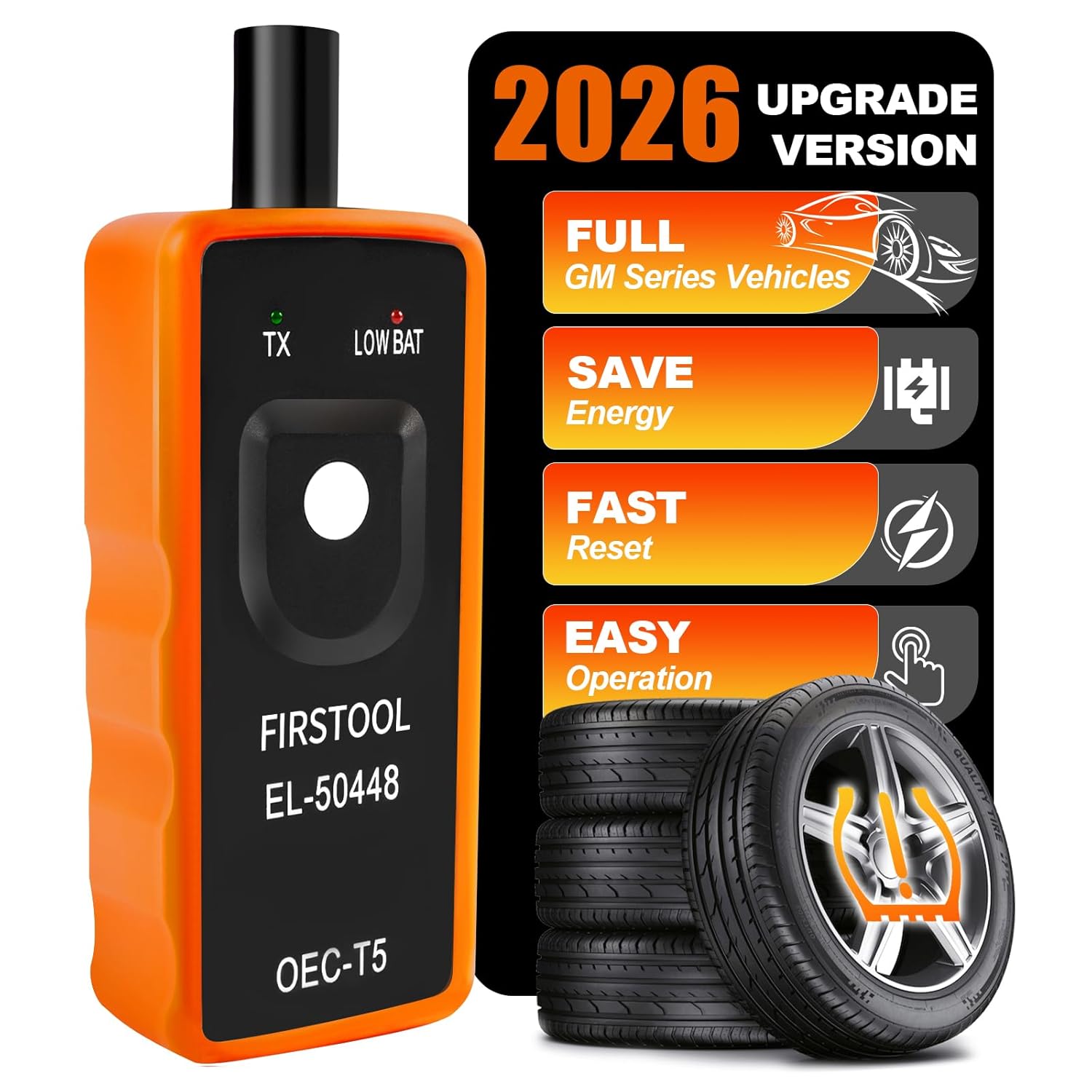
This TPMS relearn tool helps you quickly activate, match, and reset GM tire pressure sensors to keep the vehicle monitoring system working properly. It clears tire pressure alarms and dashboard warning lights after sensor replacement or tire rotation, and supports learning for common 315/433 MHz TPMS sensors. Designed for simple one-button operation, it can help you avoid unnecessary trips to repair shops.
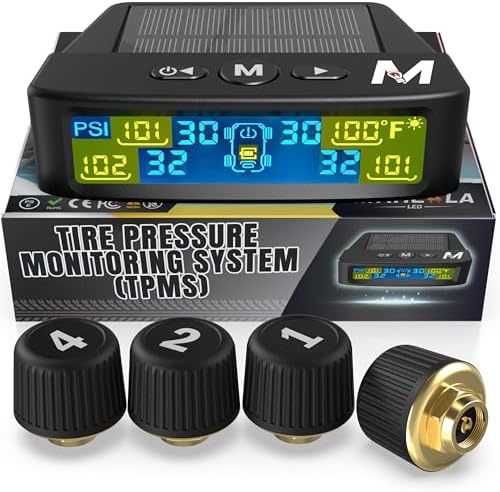
Marcala’s TPMS set of four sensors helps you monitor tire pressure and temperature in real time while driving, with updates every second. The bright color LCD uses auto-dimming for easy viewing, powered by dual solar and USB charging, and offers six alarm modes. Built for trailers, RVs, campers, trucks, and towing setups, the sensors support monitoring 1-4 wheels up to 98 PSI with IP67 waterproof protection.
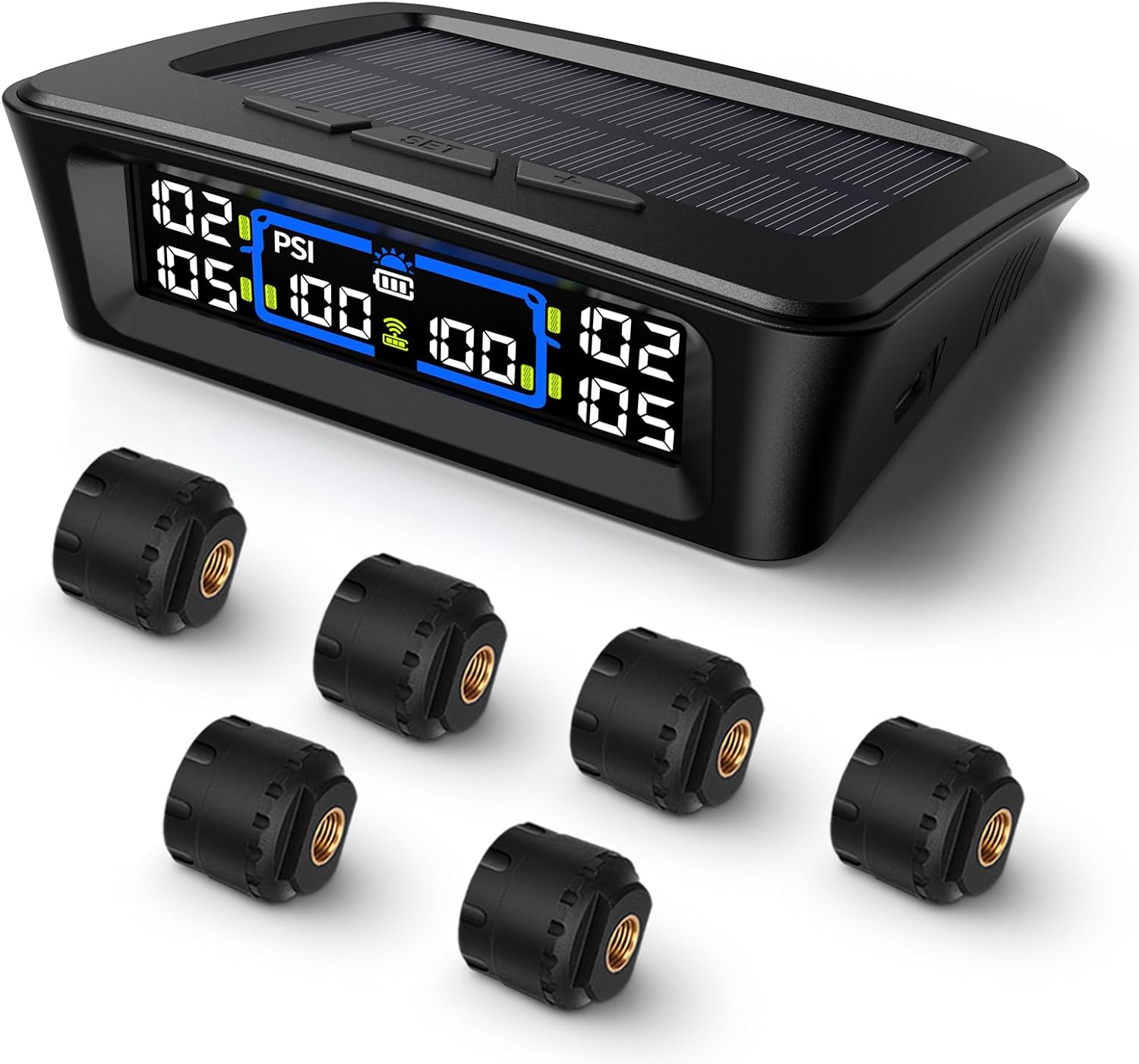
The Tymate TM12 RV TPMS delivers real-time tire pressure and temperature monitoring with a stable 433Hz display for safer long-distance driving. It supports simultaneous monitoring across vehicle and trailer zones, includes six alarm modes for pressure, temperature, leakage, battery, and signal loss, and features easy DIY installation with auto calibration. Power is supplied via USB-C charging or solar recharging, with a wide 0–144 PSI range and up to 50 ft signal coverage for RVs and towable trailers.
Frequently Asked Questions
Is 40 PSI good tire pressure for a Toyota Tundra?
It depends on your Tundra’s tire size, load rating, and door-jamb label. Some setups may be close to 40 PSI, but many original-equipment Tundra tires use lower or different pressures. Check the cold PSI on your truck’s label first.
Where do I find the correct Toyota Tundra tire pressure?
Open the driver’s door and look for the Tire and Loading Information Label on the door jamb or B-pillar. It lists the recommended cold PSI for the original tire size. You can also check your Toyota owner’s manual.
Should I change tire pressure when towing with a Tundra?
Do not guess. Start with the placard PSI, stay within tire and vehicle limits, and account for trailer tongue weight, payload, and axle load. If you use LT or non-original tires, ask a tire professional for load-based pressure guidance.
How often should I check Toyota Tundra tire pressure?
Check pressure at least once a month, before long trips, before towing, and when temperatures change sharply. Check when the tires are cold for the most accurate reading.
Which Tundra engine is best for towing?
Choose the Tundra configuration rated for your trailer and payload, not the engine alone. For 2026, Toyota lists the i-FORCE MAX at 437 hp and 583 lb-ft of torque, the i-FORCE at 389 hp and 479 lb-ft, and max towing at up to 12,000 lb when properly equipped.
Conclusion
The best Toyota Tundra tire pressure is the cold PSI printed on your own truck’s door-jamb label. Generic numbers like 30/33, 35/35, or 40 PSI can be right for some setups and wrong for others. Check your pressure cold, use a reliable gauge, inspect the spare, and adjust only with proper load and tire guidance.
That small monthly habit protects handling, fuel economy, tire life, and towing stability. It also helps you catch slow leaks before they turn into roadside problems.
Sources
- Toyota Owner’s Manuals and Warranties — owner’s manual access for Toyota vehicles.
- NHTSA Tire Safety — cold tire pressure, TPMS, tire label, and monthly pressure checks.
- FuelEconomy.gov: Keeping Your Vehicle in Shape — fuel economy impact of proper tire inflation.
- Michelin Canada Winter Tire Timing & PSI Tips — cold-weather tire pressure changes and winter PSI checks.
- BFGoodrich Toyota Tundra Tire Pressure and Sizes — example Tundra tire sizes and pressure recommendations.
- Toyota Tundra Official Specs — current Tundra power, towing, and payload context.