
How To Fix a Slow Leak in a Toyota Tacoma Tire
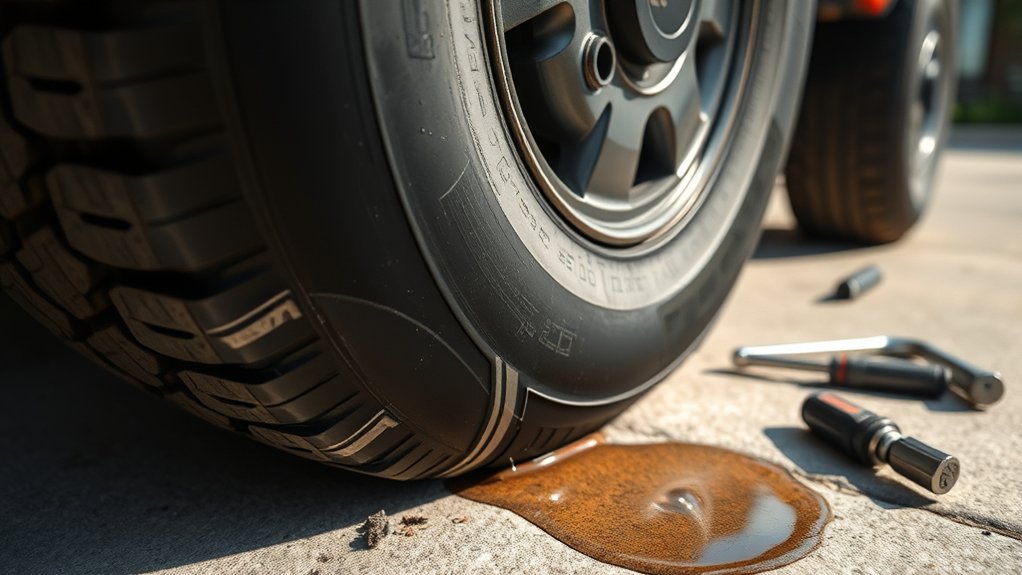
A slow leak in your Toyota Tacoma tire usually comes from a small tread puncture, loose valve core, cracked valve stem, bead leak, rim corrosion, TPMS sensor seal, or wheel damage. Start with a cold tire pressure check, then use soapy water to find bubbles. Use sealant only as a temporary emergency measure, and get a proper inside-the-tire repair when the tire is repairable.
Quick Answer
To fix a slow leak in a Toyota Tacoma tire, check the cold PSI, inspect the tread, valve stem, bead, rim, and TPMS area with soapy water, then mark the leak. A tire shop should repair small center-tread punctures with an internal patch-plug. Replace the tire if the damage reaches the sidewall or shoulder.
Key Takeaways
- Use the cold tire pressure on your Tacoma’s driver-door Tire and Loading Information Label or owner’s manual, not the maximum PSI on the tire sidewall.
- Soapy water is the easiest way to find bubbles around the tread, valve stem, bead, rim, and TPMS sensor area.
- Sealant and plug kits are temporary emergency tools, not the same as a proper permanent tire repair.
- A safe permanent repair usually requires the tire to come off the wheel for inspection and an internal patch-plug repair.
- Sidewall, shoulder, bulge, exposed-cord, large-puncture, and repeatedly leaking tire damage usually means replacement, not repair.
At a Glance
| Time Required | 15–30 minutes to find the leak; longer if a shop removes and repairs the tire |
| Difficulty | Easy for diagnosis; professional help recommended for permanent puncture repair |
| Tools Needed | Tire pressure gauge, spray bottle, dish soap and water, chalk or tape, flashlight, portable inflator, and tread-depth gauge or penny |
| Cost | Varies by shop, tire condition, valve or TPMS parts, bead cleanup, warranty coverage, and whether the tire needs replacement |
Warning: Do not drive normally on a tire that keeps losing air, shows a sidewall puncture, has a bulge, exposes cords, or triggers a TPMS warning repeatedly. Install the spare or get roadside help if the tire will not hold safe pressure.
Identify the Source of the Leak
Start by checking the tire when it is cold. Write down the PSI, inflate it to the pressure listed on your Tacoma’s Tire and Loading Information Label, then check it again after several hours or the next morning. The National Highway Traffic Safety Administration says the correct pressure is on the driver-side Tire and Loading Information Label or in the owner’s manual, not on the tire sidewall.
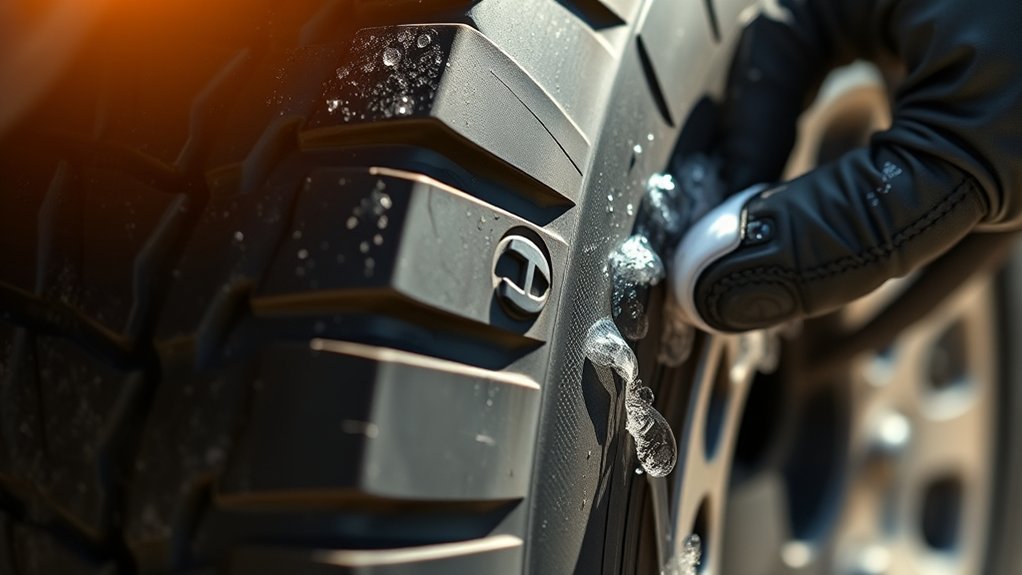
Mix dish soap with water in a spray bottle and soak the likely leak points. Bubbles that grow or foam in one spot show where air is escaping. Move slowly because a small leak may take several seconds to show.
- Check the tread first. Look for nails, screws, glass, thorns, or a dark spot where air and moisture have pushed through.
- Spray the valve core. Remove the valve cap and spray the valve opening. Bubbling at the center often means a loose or damaged valve core.
- Spray the valve stem base. Bubbles around the rubber stem or metal TPMS stem may point to a cracked stem, damaged seal, or loose sensor nut.
- Spray the bead area. Work around both sides where the tire seals against the wheel. Dirt, corrosion, or old bead sealer can create a slow leak.
- Inspect the rim. A bent, cracked, corroded, or heavily scraped wheel may leak even when the tire is fine.
- Mark the leak. Use chalk or tape so the tire shop can find the exact spot quickly.
Pro Tip: If you cannot find bubbles while the tire is on the truck, ask a shop to remove the wheel and dunk-test it. Some bead and inner-liner leaks are easier to see off the vehicle.
[Products Worth Considering]

EVOULTES heavy duty tire inflator with an integrated gauge delivers accurate pressure readings from 10–120 PSI, helping you inflate, deflate, and check tires in one tool. The 16.5-inch extended dual-head air chuck with swivel base reaches hard-to-access dual wheel valves on trucks and RVs. A brass trigger core and side-mounted air release valve make operation smooth, with standard 1/4" NPT threading and quick-connect compatibility for easy setup.

This portable cordless tire inflator delivers up to 160 PSI with fast 17 L/min airflow to help you quickly top up tires and get back on the road. It features dual power mode, running on a 21V rechargeable battery or a 12V DC adapter for convenient roadside use. An automatic shut-off with digital pressure gauge helps prevent overinflation, and a built-in LED light improves visibility in low-light conditions.

This compact capsule-style tire repair kit helps you quickly fix punctures and plug flats with minimal effort. The rugged stainless steel shell protects the contents for reliable roadside use, while the simple plug assembly makes repairs fast and tool-free. Suitable for motorcycles, cars, ATVs, UTVs, and even mountain bikes.
Check Your Tire Pressure Regularly
Check your Tacoma’s tires at least once a month and before long trips. NHTSA recommends checking tire pressure when the tires are cold, meaning the vehicle has not been driven for at least three hours. A warm tire can read higher and hide an underinflation problem.
Do not use one universal PSI number for every Toyota Tacoma. The correct cold pressure depends on the model year, trim, tire size, load rating, and original equipment setup. Look for the Tire and Loading Information Label on the driver’s door edge or B-pillar, or confirm it in your Toyota Tacoma owner’s manual.
Your TPMS is useful, but it is not a replacement for a gauge. NHTSA notes that TPMS warnings usually appear when a tire is significantly underinflated. A tire can still be low enough to affect wear, fuel economy, braking, and handling before the warning light stays on.
| Pressure Change | What It Usually Means | What To Do |
|---|---|---|
| 1–2 PSI over several weeks | Normal temperature change or a very small leak | Recheck cold pressure and inspect if it repeats |
| 3–5 PSI in a few days | Likely slow leak | Find the leak with soapy water and schedule repair |
| Large drop overnight | Active puncture, bead leak, valve failure, or wheel damage | Avoid normal driving; use the spare or get roadside help |
Temporary Solutions for Short-Term Tire Leak Management
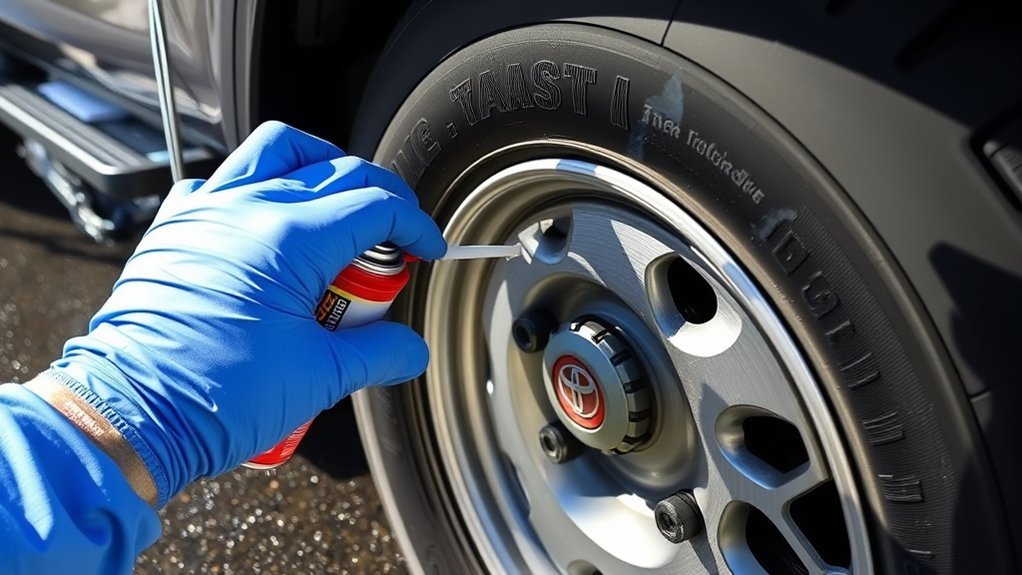
Temporary fixes can help you reach a tire shop, but they should not become your long-term repair. Keep a tire pressure gauge and portable inflator in your Tacoma, especially if you drive gravel roads, job sites, trails, or remote highways.
If the tire is only slightly low and still holds pressure, inflate it to the correct cold PSI and drive slowly to a repair shop. Check the pressure again before leaving. If it drops quickly, install the spare instead.
A tire plug kit can be useful as an emergency trail or roadside tool for a small tread puncture, but a plug-only repair is not considered a proper permanent repair. The U.S. Tire Manufacturers Association says a proper puncture repair requires the tire to be removed from the wheel, inspected, filled with a rubber stem, and sealed with a patch on the inner liner.
Note: If your Tacoma has a full-size spare, check its pressure monthly too. A flat spare turns a manageable slow leak into a bigger roadside problem.
Using Tire Sealant: When and How?
Tire sealant may slow a small tread-area leak long enough to get you to a shop. It is not a repair for sidewall damage, shoulder damage, bead leaks, valve leaks, cracked wheels, large punctures, or tires with visible structural damage.
Use sealant only when the product label says it is safe for your tire type and your situation. Follow the product instructions exactly because the amount, driving time, and cleanup requirements vary. Tell the tire shop that sealant is inside the tire before they remove it.
Ideal Situations for Use
Sealant is most reasonable when you have a small tread puncture, the tire still holds some air, and you need to travel a short distance to a safe repair location. It is not a good choice when the tire is nearly flat, the sidewall is damaged, the bead is leaking, or the wheel looks bent or cracked.
| Sealant Use Case | Better Choice |
|---|---|
| Small puncture in the center tread | Temporary sealant may help, then get an internal patch-plug repair |
| Valve stem or valve core leak | Replace the valve core, valve stem, or TPMS service seal |
| Bead leak at the rim | Remove tire, clean bead seat, inspect rim, and reseal |
| Sidewall or shoulder damage | Replace the tire |
Application Process Steps
Before using sealant, move the Tacoma to a safe, flat area away from traffic. Read the sealant label, check whether it is safe for TPMS-equipped wheels, and confirm that the leak is not in the sidewall or bead.
- Remove the object only if the product instructions tell you to do so.
- Attach the sealant hose to the valve stem as directed on the label.
- Add only the amount listed for your tire size and product.
- Inflate the tire to the cold PSI listed on your Tacoma’s placard.
- Drive only as directed by the product label so the sealant can distribute.
- Recheck pressure soon afterward and go to a tire shop for inspection.
The Tire Industry Association warns that sealants and emergency inflators are not recommended as long-term solutions. Treat them as emergency mobility tools, not final repairs.
Professional Repair Options Explained

A professional tire shop can confirm whether the tire is safe to repair. For a repairable tread puncture, the best practice is to remove the tire from the wheel, inspect the inside, fill the puncture channel, seal the inner liner, remount the tire, and balance the wheel.
Ask the shop to check these leak points:
- Tread puncture: Nail, screw, staple, or sharp debris in the center tread area.
- Valve core: Loose or damaged core that bubbles at the valve opening.
- Valve stem: Cracked rubber stem or leaking metal TPMS stem seal.
- Bead seat: Dirt, corrosion, old sealant, or oxidation where the tire meets the wheel.
- Wheel damage: Bent rim, crack, corrosion, or impact damage.
- TPMS hardware: Sensor nut, grommet, washer, or seal that leaks around the valve base.
For many Tacoma slow leaks, the fix is not only “patch the tire.” A shop may need to replace a valve stem, install a TPMS service kit, clean the rim bead seat, use bead sealer, repair or replace the wheel, or replace the tire.
Tire Repair Costs Explained
Tire repair cost depends on the leak source, local labor rates, tire size, wheel condition, TPMS parts, and whether you bought road-hazard coverage. A simple repairable tread puncture usually costs less than a bead reseal, TPMS valve service, wheel repair, or tire replacement.
Ask for the full out-the-door price before approving work. Also ask whether the shop will use a proper internal patch-plug repair, whether the wheel needs balancing afterward, and whether any warranty or road-hazard plan applies.
| Problem Found | Likely Fix | Repairable? |
|---|---|---|
| Small center-tread puncture | Internal patch-plug after tire removal and inspection | Usually, if within repair limits |
| Valve core leak | Replace or tighten valve core | Usually |
| TPMS valve seal leak | Replace TPMS service kit or valve stem parts | Usually |
| Bead leak | Remove tire, clean bead seat, inspect wheel, reseal | Often, unless wheel or tire bead is damaged |
| Sidewall or shoulder puncture | Replace tire | No |
| Bulge, exposed cords, or run-flat damage | Replace tire | No |
[Products Worth Considering]
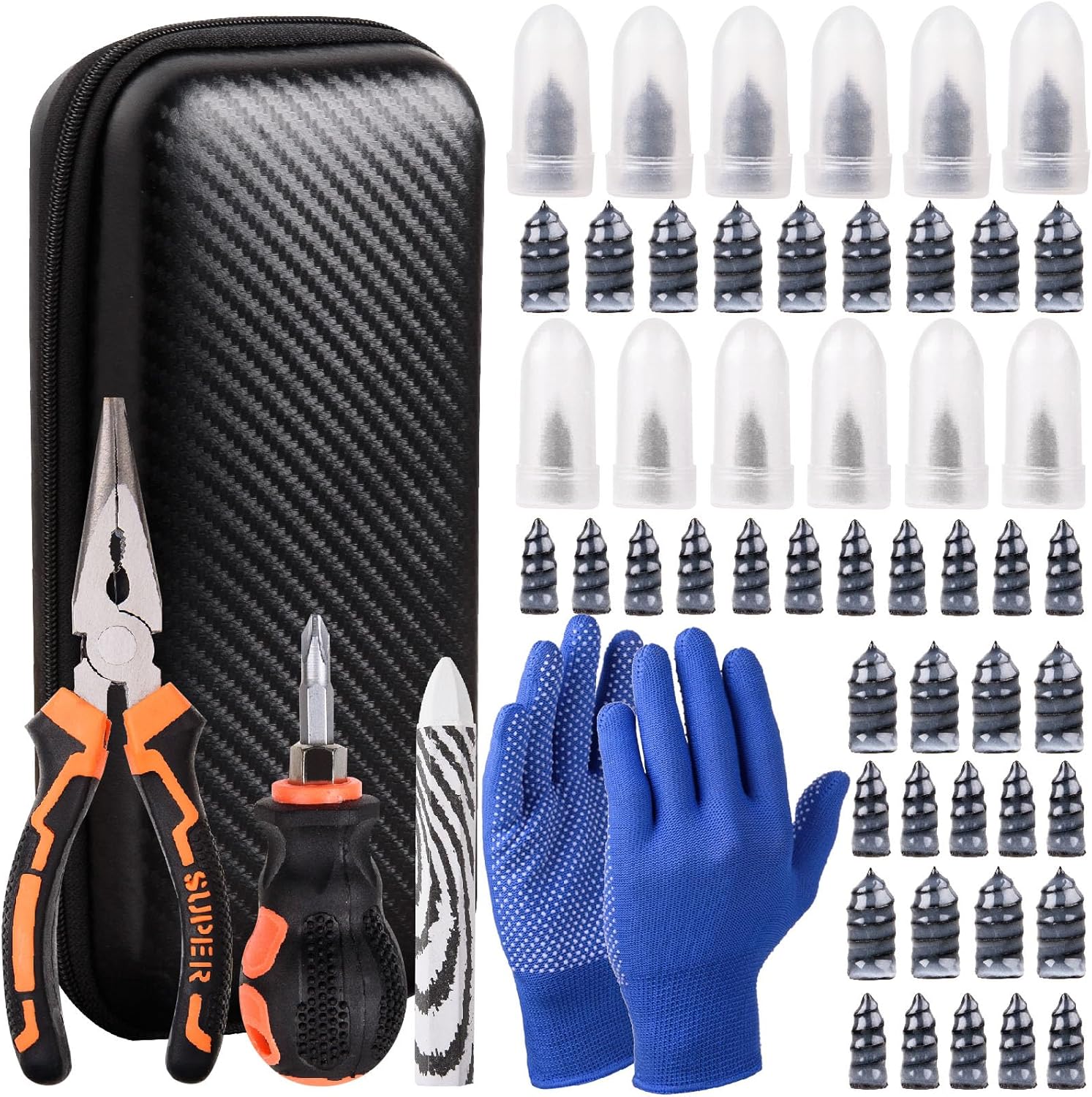
This tire sidewall puncture repair kit fixes flats fast without removing the tire, helping you get back on the road in minutes. It includes self-tapping repair nails, essential tools, gloves, and a portable storage bag for convenient roadside use. Designed for tubeless tires, it helps create a tight, leak-resistant seal for cars, motorcycles, trucks, SUVs, and ATVs.
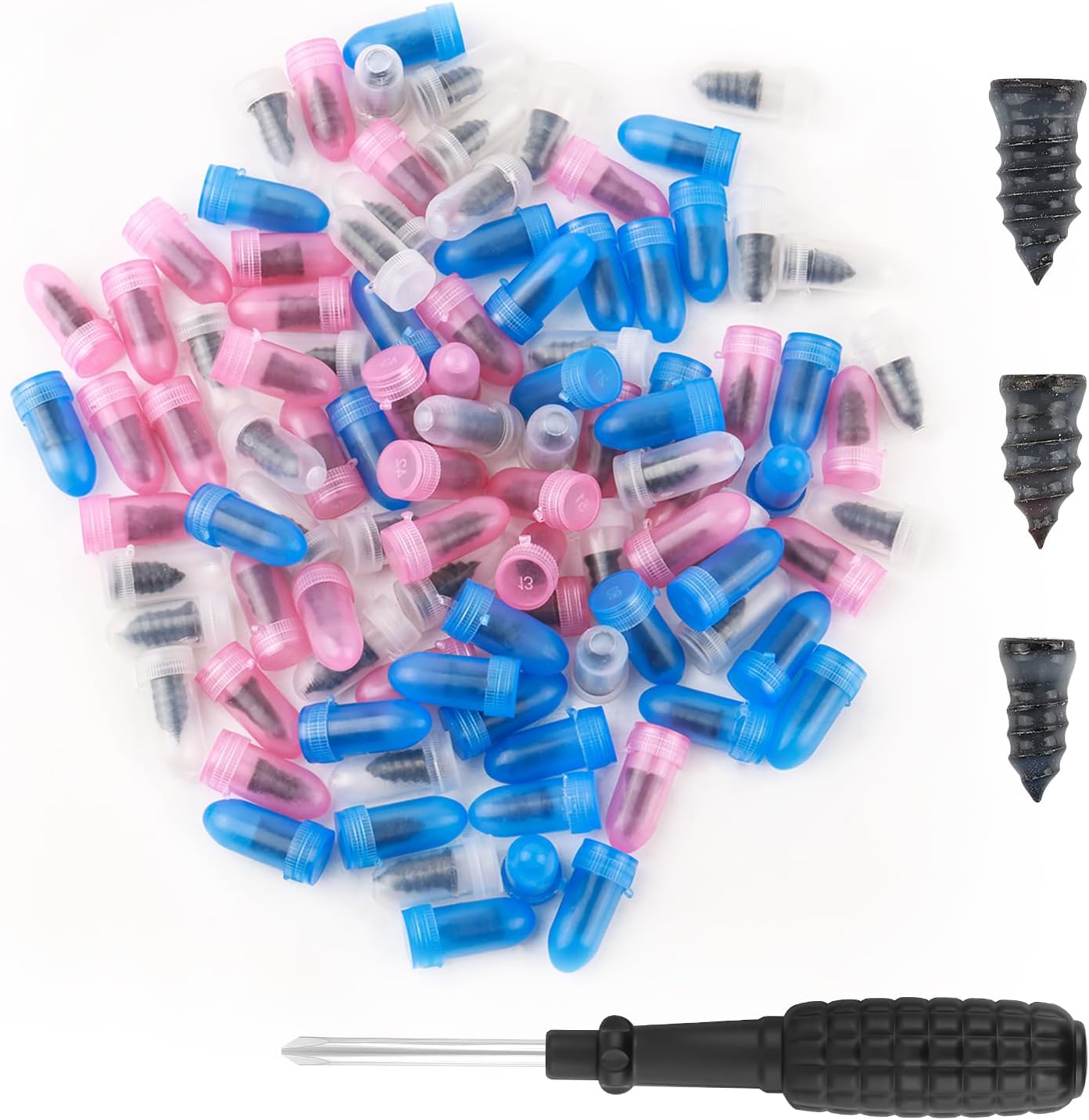
This 100-piece tire repair screw plug kit provides a fast, self-service solution for punctures on the road. Choose the correct plug size, insert it into the break, and screw it in to help seal the puncture and temporarily restore tire pressure. Thickened threads and rubber-wrapped plugs improve bite and sealing while remaining compact and easy to carry.
Long-Term Maintenance Tips for Tires
After fixing a slow leak, keep monitoring the repaired tire. Check all four tires and the spare monthly with a reliable gauge. NHTSA also recommends checking tread when you check pressure, because tires are not safe when tread reaches 2/32 inch.
Rotate your tires according to your Tacoma owner’s manual and tire setup. NHTSA says to follow the vehicle manufacturer’s rotation guidance, and Toyota’s Tacoma maintenance information commonly uses 5,000-mile or six-month maintenance intervals. If your Tacoma has different front and rear tire sizes or a special wheel setup, ask your shop for the correct rotation pattern.
Clean your wheels periodically, especially if you drive in road salt, mud, sand, or off-road conditions. Corrosion and packed dirt around the bead can create slow leaks. Also replace missing valve caps because they help keep dirt and moisture away from the valve core.
Pro Tip: After a tire repair, check the same tire’s cold pressure the next morning and again after a few days. If it keeps dropping, the shop needs to inspect the bead, valve, TPMS seal, wheel, and inner liner again.
Community Resources for Tire Repair Support
Community help can be useful for learning common Tacoma leak causes, especially if you use larger tires, aftermarket wheels, off-road tires, or wheel spacers. Use forums and groups for ideas, but use a qualified tire professional for final safety decisions.
- Search Tacoma owner forums for similar leaks tied to your tire size, wheel brand, TPMS sensor, or off-road use.
- Ask local tire shops whether they see bead corrosion, valve stem leaks, or TPMS seal leaks on Tacomas in your climate.
- Watch tire maintenance classes or demonstrations from reputable tire shops, schools, or industry organizations.
- Keep photos of the leak location and pressure readings so a technician can diagnose the issue faster.
Avoid copying risky online shortcuts such as driving for weeks on sealant, using a plug-only repair as a permanent fix, or repairing sidewall damage. Tire repair standards exist because hidden internal damage can make a tire unsafe even when it looks fine from the outside.
Frequently Asked Questions
Is it okay to drive on a Toyota Tacoma tire with a slow leak?
Only drive a short distance if the tire still holds the correct cold pressure and shows no sidewall damage, bulge, vibration, or rapid pressure loss. If the tire drops quickly or the TPMS warning keeps returning, install the spare or get roadside help.
How much does it cost to fix a slow leak in a tire?
Cost varies by shop, location, tire size, warranty coverage, and leak source. A repairable tread puncture usually costs less than a bead reseal, TPMS valve service, wheel repair, or tire replacement. Ask for the full price before approving the work.
Can I fix a Tacoma tire slow leak with a plug kit?
A plug kit may help in an emergency if the puncture is small and in the tread area, but a plug alone is not the preferred permanent repair. A shop should remove the tire, inspect the inside, and use a proper internal patch-plug when the tire is repairable.
Can a sidewall leak be repaired?
No. Sidewall and shoulder damage should not be repaired. Replace the tire if the leak is outside the repairable center tread area, or if you see a bulge, cut, exposed cords, cracking, or impact damage.
Why does my Tacoma tire leak but no nail is visible?
The leak may come from a loose valve core, cracked valve stem, TPMS seal, bead leak, corrosion on the rim, a tiny tread puncture, or a cracked wheel. Spray soapy water around each area and look for bubbles.
Conclusion
Fixing a slow leak in your Toyota Tacoma tire starts with safe diagnosis: check cold pressure, find the leak with soapy water, and confirm whether the problem is in the tread, valve, bead, rim, or TPMS area. Use sealant or a plug kit only as a temporary emergency option. For a lasting fix, have a tire shop inspect the tire from the inside and repair it only if it meets accepted safety limits.
Sources
- NHTSA TireWise — tire pressure label guidance, TPMS limitations, tread depth, penny test, and rotation guidance
- NHTSA Tire Safety Month — monthly cold tire pressure checks and maintenance inspection guidance
- U.S. Tire Manufacturers Association Tire Repair Basics — proper puncture repair criteria and patch-plug guidance
- Tire Industry Association Tire Repair — sealant limitations, center-tread repair area, and sidewall repair warnings
- Toyota Tacoma Owner’s Manuals and Warranty Resources — Toyota source for Tacoma owner manual lookup

Related Articles

How Tire Weight Affects Toyota Tacoma Performance
How does tire weight influence your Toyota Tacoma's performance and efficiency? Discover the surprising effects that could change your driving experience.
Read More
Tire Noise Levels by Tire Type on a Toyota Tacoma
A comprehensive look at how tire types affect noise levels in your Toyota Tacoma reveals surprising insights that could enhance your driving experience.
Read More
How To Choose Tires for a Dual Use Toyota Tacoma
Unlock the secrets to selecting the perfect tires for your dual-use Toyota Tacoma, ensuring optimal performance and comfort on every adventure. Discover more inside!
Read More