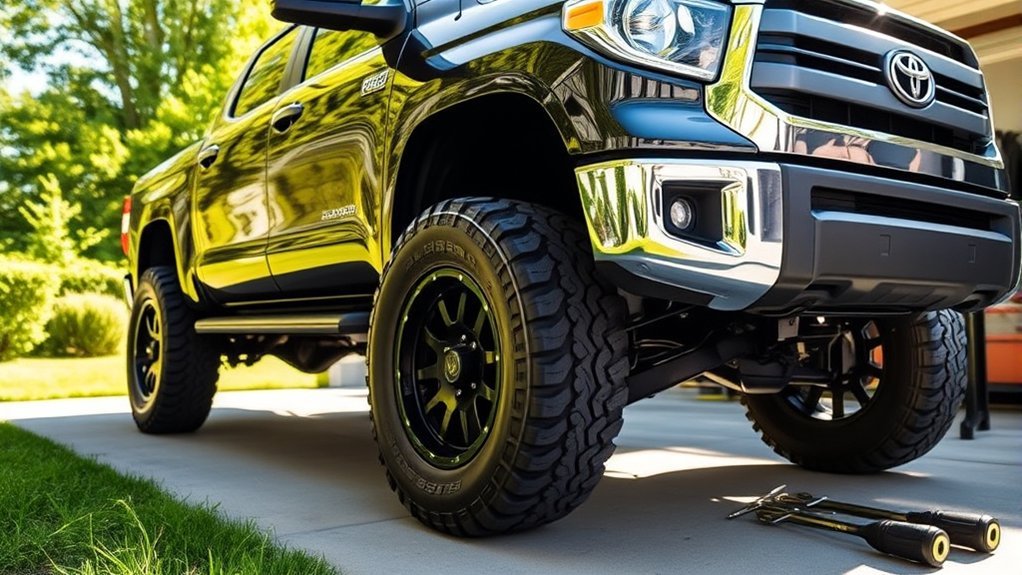
Your Toyota Tundra’s tires do not all wear at the same speed. The front tires handle steering and much of the braking load, while the rear tires can carry more stress from payload, towing, and acceleration. A steady rotation schedule helps the full set wear more evenly and gives you a chance to catch pressure, tread, balance, and alignment problems early.
Last updated: July 7, 2026
Quick Answer
For most Toyota Tundra drivers, rotate the tires every 5,000 to 8,000 miles. Use about 5,000 miles or sooner if you tow, haul heavy loads, drive off-road, use aggressive all-terrain tires, or see uneven wear. Your exact interval and pattern should come from your model-year owner’s manual.
Key Takeaways
- Rotate Toyota Tundra tires every 5,000 to 8,000 miles for normal commuting and highway driving.
- Use the shorter end of the range for towing, hauling, gravel roads, off-road driving, or fast tread wear.
- Check cold tire pressure, tread depth, sidewall condition, and lug nut torque at each rotation.
- Replace tires at 2/32 inch tread depth, or sooner if damage, exposed cords, bulges, or cracking appears.
- Use your owner’s manual, tire sidewall markings, and tire manufacturer guidance to choose the correct rotation pattern.
At a Glance
| Time Required | About 30 to 60 minutes for careful DIY work; 15 to 30 minutes at many tire shops |
| Difficulty | Moderate DIY job because a Tundra is heavy and must be lifted safely |
| Tools Needed | Wheel chocks, rated hydraulic jack, rated jack stands, breaker bar, correct socket, torque wrench, tire pressure gauge, tread depth gauge |
| Cost | Often free with a tire service plan; commonly low-cost at a shop; DIY cost depends on tools you already own |
How Often Should You Rotate Tires on a Toyota Tundra?

For typical driving, stay near the 5,000 to 8,000-mile range. The National Highway Traffic Safety Administration says drivers should check the owner’s manual for rotation frequency and pattern, and that tires may be rotated every 5,000 to 8,000 miles if the vehicle manufacturer recommends it.
For a working Tundra, the shorter interval is usually the safer habit. Rotate closer to 5,000 miles if your truck tows trailers, carries heavy cargo, runs all-terrain tires, spends time on gravel, or shows shoulder wear, cupping, feathering, vibration, or faster wear on one tire.
The exact answer still depends on your model year, tire type, tire size, drivetrain, and wheel setup. Use the Toyota owner’s manual and warranty guide for your specific Tundra before choosing the interval, pattern, lift points, and lug nut torque.
| Tundra Use Case | Rotation Interval | What to Check at the Same Time |
|---|---|---|
| Normal commuting and highway driving | Every 5,000 to 8,000 miles | Cold tire pressure, tread depth, sidewall damage |
| Frequent towing or heavy payloads | About every 5,000 miles or sooner | Rear tire wear, load rating, inflation under load |
| Off-road, gravel, construction, or rough-road use | 3,000 to 5,000 miles if wear appears fast | Cuts, stone drilling, shoulder wear, wheel balance |
| Visible cupping, vibration, or one tire wearing faster | Rotate now only after checking for damage | Alignment, suspension parts, wheel balance, pressure |
Why Regular Tire Rotations Matter
Skipping tire rotations may feel harmless, but uneven wear can reduce traction, increase road noise, shorten tire life, and create vibration. Your Tundra’s front tires handle steering and much of the braking load. The rear tires can work harder when the truck is loaded, towing, or accelerating.
Tire rotation spreads that work across the full set. It also gives you a scheduled chance to inspect tread depth, sidewall damage, valve stems, wheel balance, and pressure before small problems become expensive repairs.
NHTSA reports 511 motor vehicle traffic fatalities in tire-related crashes in 2024, which is a strong reminder that tire maintenance is a safety issue, not just a tire-cost issue.
Safety matters here because poor tire maintenance can lead to flats, blowouts, or tread separation. Tire rotation should stay on your normal maintenance list, along with cold pressure checks, tread checks, balancing, and alignment when needed.
How to Identify When Your Tires Need Rotating or Replacing
Check your tires at least monthly and before long drives. Look at tread depth, wear pattern, sidewall condition, and pressure. A tire can still hold air but be unsafe if the tread is low, the sidewall is cracked, or wear appears uneven across the tread.
[Products Worth Considering]

The SAFELIFE dial tire tread depth gauge measures tread depth in 1/32 inch increments with clear, easy-to-read 2-inch dial face. Color zones using a traffic light system help you quickly judge whether tread is low, marginal, or ample for safer driving. Built with a durable zinc cast body and a metal detect probe for precise, comfortable use across cars, motorcycles, trucks, and buses.

Measure tire tread depth quickly and accurately with this LUMITECO dial gauge that reads in 1/32" increments up to 14/32". The color-coded green/yellow/red zones make it easy to judge tire wear and know when replacement is needed. A rugged, compact design with a protective pouch helps keep the gauge ready for use on cars, trucks, motorcycles, and more.

This 1/2-inch drive breaker bar delivers powerful leverage for loosening and tightening stubborn lug nuts and automotive fasteners. The 180-degree flex head helps you reach tight spaces at the angle you need, making tire and brake jobs easier. A spring-loaded ball detent design holds 1/2-inch sockets securely while the chrome-moly head provides durable strength for everyday use.
Tread Depth Measurement
Use a tread depth gauge for the clearest reading. Replace tires once tread depth reaches 2/32 inch. You can also use the penny test: place a penny into the tread with Lincoln’s head upside down. If you can see the top of Lincoln’s head, the tire is worn to the replacement point.
Do not judge all four tires by one groove on one tire. Measure several grooves across each tire because inner-edge or outer-edge wear can hide alignment problems.
Visual Wear Inspection
Walk around the truck and check each tire from the outer shoulder to the inner shoulder. Look for cuts, bulges, cracks, exposed cords, embedded objects, or treadwear bars that sit flush with the tread.
If your steering wheel shakes or the truck vibrates after a rotation, the tires may need balancing. If the Tundra pulls to one side or one edge wears faster, schedule an alignment check.
Uneven Wear Patterns
Uneven wear tells you what to inspect next. Edge wear often points to low pressure or alignment trouble. Center wear can come from overinflation. Feathering may suggest toe alignment issues. Cupping can point to worn suspension parts, imbalance, or missed rotations.
If one tire is far lower than the others, do not just rotate and ignore it. Find the cause first, then decide whether the set can stay in service safely.
Note: A tire pressure monitoring system is helpful, but it is not a substitute for monthly pressure checks with a gauge. Check pressure when the tires are cold, and use the driver-door placard or owner’s manual pressure, not the maximum pressure molded into the tire sidewall.
Effective Tire Rotation Practices for Your Toyota Tundra

A good Tundra tire rotation routine has three parts: choose the right interval, use the correct pattern, and tighten the lug nuts to the proper torque from your owner’s manual. Do not rely on a generic pattern if your truck uses directional tires, staggered sizes, custom wheels, or a full-size spare with TPMS.
Recommended Rotation Patterns
The correct tire rotation pattern depends on tire size, tread direction, drivetrain, and spare-tire setup. The Bridgestone tire rotation guide notes that patterns vary by drivetrain, directional tire design, tire size, and whether a full-size spare is included.
| Tire Setup | Common Pattern | Important Caution |
|---|---|---|
| Same-size, non-directional tires | Rearward cross or X-pattern may apply, depending on drivetrain and tire guidance | Confirm with your owner’s manual and tire maker before crossing tires side to side |
| Directional tires | Front to back on the same side | Do not reverse rotation direction unless the tires are dismounted and remounted correctly |
| Different front and rear sizes or some custom wheel setups | May be side-to-side only, or may not be rotatable in a normal four-tire pattern | Check wheel size, offset, tire size, and tire direction before moving anything |
| Matching full-size spare | A five-tire pattern may apply | Confirm TPMS relearn needs and spare compatibility before using the spare in rotation |
Frequency of Rotations
For typical driving, stay near the 5,000 to 8,000-mile range. Use the shorter interval if your Tundra tows trailers, carries tools or cargo, spends time on gravel, or wears all-terrain tires with large tread blocks.
Rotating at 3,000 miles is not harmful when tires show early uneven wear. Going 10,000 miles may be possible in light-use driving, but it gives uneven wear more time to develop on a truck that hauls, tows, or runs rough roads.
Monitoring Tire Wear
Record tread depth at each rotation. A simple note such as “LF 9/32, RF 9/32, LR 10/32, RR 10/32” makes wear trends easier to catch before the tire becomes noisy or unsafe.
Also check cold pressure before the tires heat up from driving. Use the Tire and Loading Information Label on the driver’s doorjamb or the owner’s manual, not the maximum pressure molded into the tire sidewall.
Pro Tip: Write the mileage, tire positions, tread depths, and pressure readings in your maintenance notes. That record can help you spot alignment trouble early and may also help with tire warranty questions.
How to Rotate Toyota Tundra Tires Safely
You can rotate Tundra tires at home if you have the right equipment, a safe flat work area, and the correct information for your model year. If any part of the lift setup feels uncertain, use a professional shop instead.
Warning: Never work under a Toyota Tundra supported only by a jack. Use jack stands rated for the vehicle and place them only at approved lift points from your owner’s manual.
- Confirm the pattern first. Check the owner’s manual, tire sidewall direction arrows, tire size, wheel setup, and spare-tire rules.
- Park safely. Use a flat, solid surface. Set the parking brake and chock the wheels that stay on the ground.
- Loosen lug nuts slightly. Break them loose while the tires are still on the ground, but do not remove them yet.
- Lift and support the truck. Use approved lift points and place rated jack stands before removing any wheel.
- Move the tires by the correct pattern. Keep directional tires on the same side unless they are remounted correctly.
- Hand-start the lug nuts. Make sure each lug nut threads smoothly before tightening.
- Lower the truck and torque the lug nuts. Use the model-year torque spec in your owner’s manual and tighten in a star pattern.
- Set cold pressure and inspect. Check tread depth, sidewalls, valve stems, and pressure after the rotation.
- Test drive carefully. Listen for vibration, pulling, rubbing, or new road noise. Recheck the work if anything feels wrong.
How Driving Conditions Impact Tire Wear
Your driving conditions can shorten the rotation interval. Heavy towing puts extra heat and load into the tires. Rough roads and gravel can chip tread blocks, change wear patterns, and knock wheels out of balance. Short city trips can also create more steering and braking wear than steady highway driving.
Temperature matters too. Cold weather can lower tire pressure, while hot weather and heavy loads can raise operating temperature. That is why you should check pressure when the tires are cold and recheck it when the season changes.
Driving style also counts. Hard cornering, fast starts, heavy braking, and tight parking maneuvers can wear tire shoulders faster. If your Tundra works hard, treat tire rotation as a condition-based service, not just a mileage number.
What Mistakes Should You Avoid When Rotating Tires?
Avoid these common tire rotation mistakes on a Toyota Tundra:
- Waiting too long: do not stretch rotations past the normal interval when tread wear already looks uneven.
- Using the wrong pattern: directional tires, staggered sizes, and some custom setups need special handling.
- Skipping cold pressure checks: wrong pressure can create new wear even after a correct rotation.
- Ignoring lug nut torque: under-tightened or over-tightened lug nuts can create safety problems. Use the model-year torque spec in your manual.
- Rotating damaged tires: do not move a tire with bulges, exposed cords, deep cuts, or unsafe tread depth back into service.
- Forgetting alignment clues: rotation will not fix a pull, feathering, cupping, or repeated edge wear.
- Assuming TPMS handles everything: TPMS can warn about low pressure, but you still need regular gauge checks and visual inspections.
Essential Tools for DIY Tire Rotation
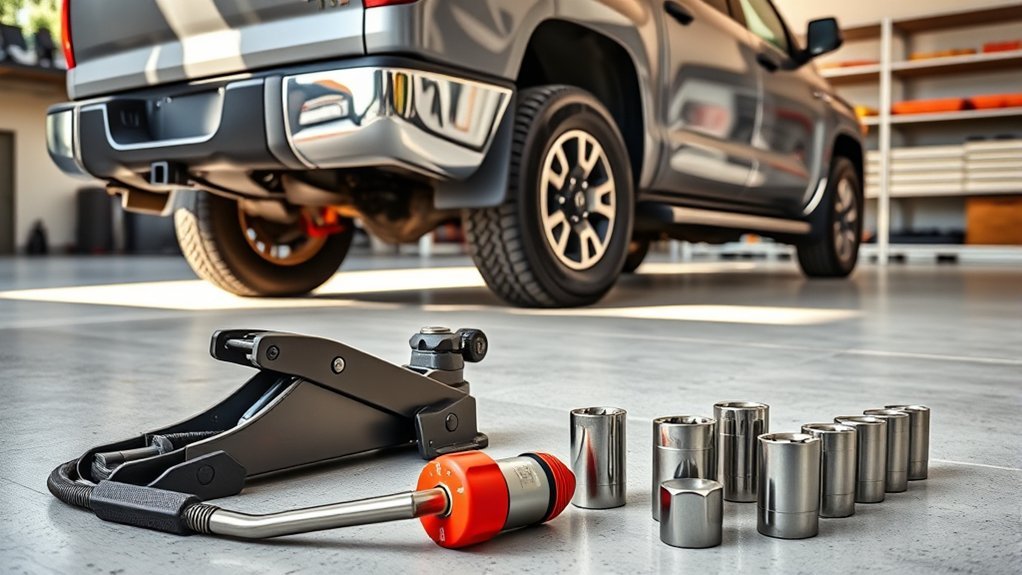
You can rotate Tundra tires at home if you have the correct equipment and a safe, flat work area. Do not work under a truck supported only by a jack.
- Wheel chocks to keep the truck from rolling.
- Hydraulic jack rated for your Tundra’s weight.
- Jack stands rated for the vehicle and placed at approved lift points.
- Breaker bar and socket for loosening lug nuts.
- Torque wrench for tightening lug nuts to the model-year spec.
- Tire pressure gauge for cold inflation checks.
- Tread depth gauge for tracking wear at every rotation.
After rotating, drive a short distance and listen for vibration, pulling, rubbing, or new noise. Recheck lug nut torque if your owner’s manual or wheel manufacturer recommends it.
[Products Worth Considering]
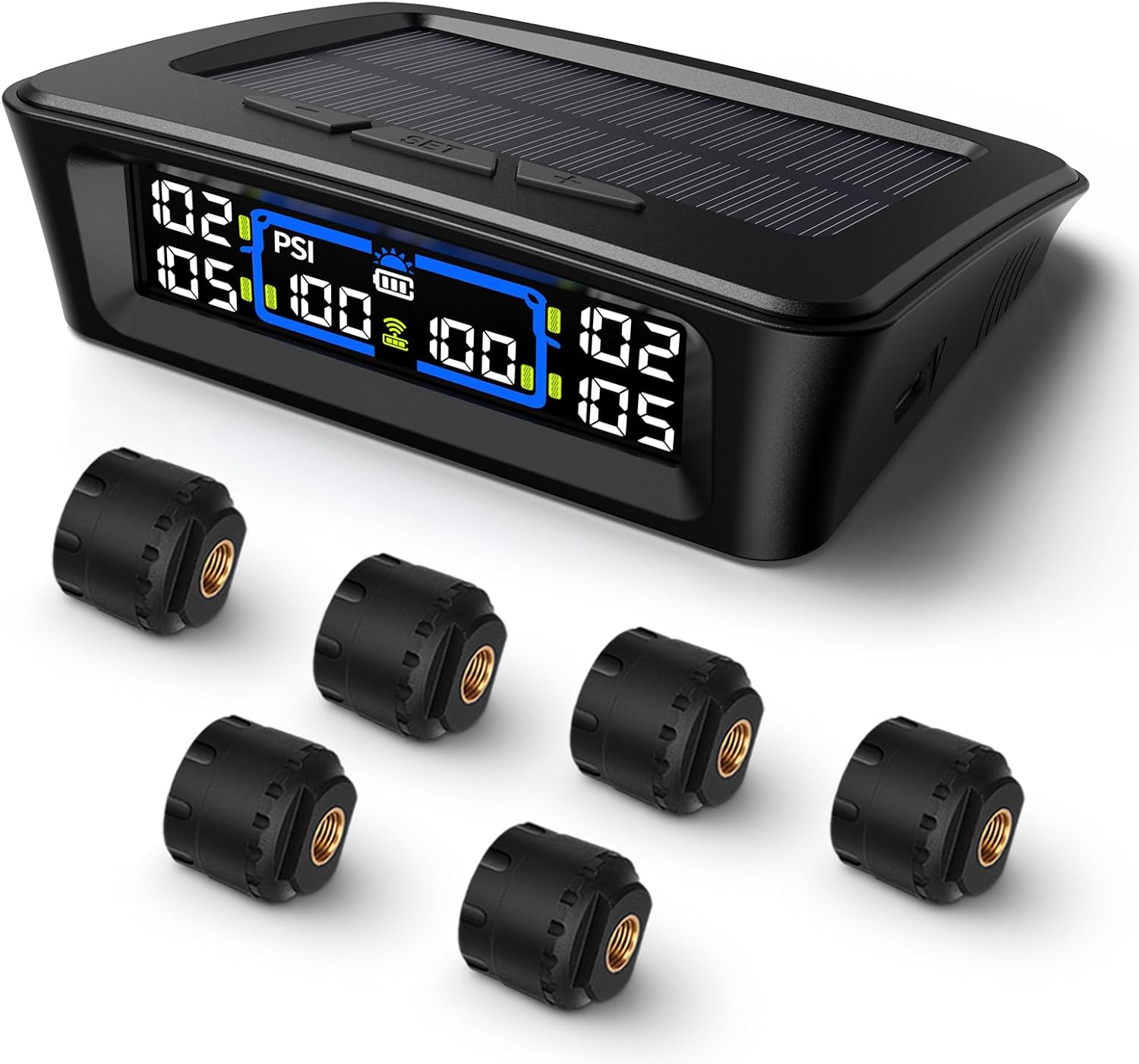
The Tymate TM12 RV TPMS delivers real-time tire pressure and temperature monitoring with a stable 433Hz display for safer long-distance driving. It supports simultaneous monitoring across vehicle and trailer zones, includes six alarm modes for pressure, temperature, leakage, battery, and signal loss, and features easy DIY installation with auto calibration. Power is supplied via USB-C charging or solar recharging, with a wide 0–144 PSI range and up to 50 ft signal coverage for RVs and towable trailers.

Monitor tire tread wear with a smart, color-coded depth gauge that shows clear condition ranges at a glance. The bar is range marked for fast, easy readings, helping you maintain safer traction and performance. Each gauge is portable with a pocket clip, and the set includes 20 units for daily use and sharing.

This TPMS sensor training and relearn reset tool is customized for Ford, Lincoln, and Mercury vehicles to help activate tire pressure programming after sensor replacement or tire rotation. It can activate individual tire pressure sensors with one-button operation, helping prevent TPMS warning light illumination. It is not a sensor programming tool and cannot program replacement sensors—use it to trigger/activate sensors only.
When to Seek Professional Help for Tire Maintenance
Get professional help if you see cupping, rapid edge wear, a steering pull, vibration, exposed cords, sidewall bulges, repeated pressure loss, or cracks. These signs can point to alignment, balance, suspension, wheel, or tire damage issues that rotation alone will not solve.
You should also use a shop if you are unsure about lift points, lug nut torque, TPMS relearn procedures, custom wheels, directional tires, or full-size spare rotation. A tire technician can rotate, balance, inspect, and document the tire condition in one visit.
[Products Worth Considering]

The VEHLIVE SU-50448 II TPMS relearn tool provides a fast activation reset to restore accurate tire pressure monitoring after sensor replacement or tire rotation. It supports 315 MHz and 433 MHz GM series sensors and helps clear dashboard pressure warnings. With simple two-button operation and horn-confirmed relearning order, you can reprogram sensors conveniently at home.

Measure tyre tread depth precisely with a digital gauge that reads in both MM and inches, helping you monitor safe driving conditions. The large LCD screen is easy to operate, and the compact tool fits for cars, trucks, and motorcycles. It provides high accuracy with a 0-25.4mm range and includes a 1-year warranty for added peace of mind.

These universal tire valve stem caps help protect valve cores from dust, debris, and moisture while helping maintain stable tire pressure. The corrosion-resistant metal construction and sealed design provide reliable protection in road grime, mud, and winter conditions. Twist-on installation makes them quick to fit on cars, SUVs, trucks, and motorcycles.
Frequently Asked Questions
How often should I rotate tires on a Toyota Tundra?
Rotate your Toyota Tundra tires every 5,000 to 8,000 miles for normal driving. Rotate closer to 5,000 miles if you tow, haul, drive off-road, use all-terrain tires, or notice uneven tread wear.
Can you go 10,000 miles between tire rotations?
You can physically drive 10,000 miles between rotations, but it is not the best habit for a Tundra. A longer interval gives uneven wear more time to develop, especially with towing, heavy loads, rough roads, or aggressive tires.
Is 3,000 miles too soon to rotate tires?
No. Rotating at 3,000 miles is not too soon if you see uneven wear, drive off-road, tow often, recently installed new tires, or are trying to correct early wear trends. It is preventive service, not a repair.
What tire rotation pattern should I use on a Toyota Tundra?
Use the pattern in your owner’s manual or tire manufacturer guidance. Many same-size, non-directional truck tires can use a rearward cross or X-pattern, while directional tires usually stay on the same side and move front to back.
Should I align my Tundra every time I rotate tires?
You do not need an alignment at every rotation if the truck tracks straight and tires wear evenly. Schedule an alignment if you see feathering, edge wear, steering pull, an off-center wheel, or uneven tread depth.
Should I include the spare tire in a Tundra tire rotation?
Include the spare only if it is a matching full-size tire and your owner’s manual or tire manufacturer allows a five-tire rotation. Do not include a temporary spare. Also confirm TPMS relearn steps before adding a full-size spare to the pattern.
Sources
- NHTSA TireWise tire maintenance guide — supports tire pressure, tread depth, tire rotation, tire-related crash safety, and blowout guidance.
- Toyota manuals and warranties — supports checking the Toyota owner’s manual for model-year maintenance guidance, lift points, and specifications.
- Bridgestone tire rotation guide — supports general 5,000 to 8,000-mile rotation guidance and pattern differences by tire type, drivetrain, and spare setup.
- Toyota Tire Center — supports Toyota tire safety and dealer tire service context.
Conclusion
For most Toyota Tundra owners, the right tire rotation interval is every 5,000 to 8,000 miles. Shorten that interval when towing, hauling, driving off-road, using aggressive all-terrain tires, or seeing uneven tread wear.
Use each rotation as a tire health check: measure tread depth, set cold pressure, inspect sidewalls, confirm the correct pattern, and watch for vibration or pulling. When the wear pattern looks abnormal, fix the cause before it costs you a set of tires or creates a safety problem.