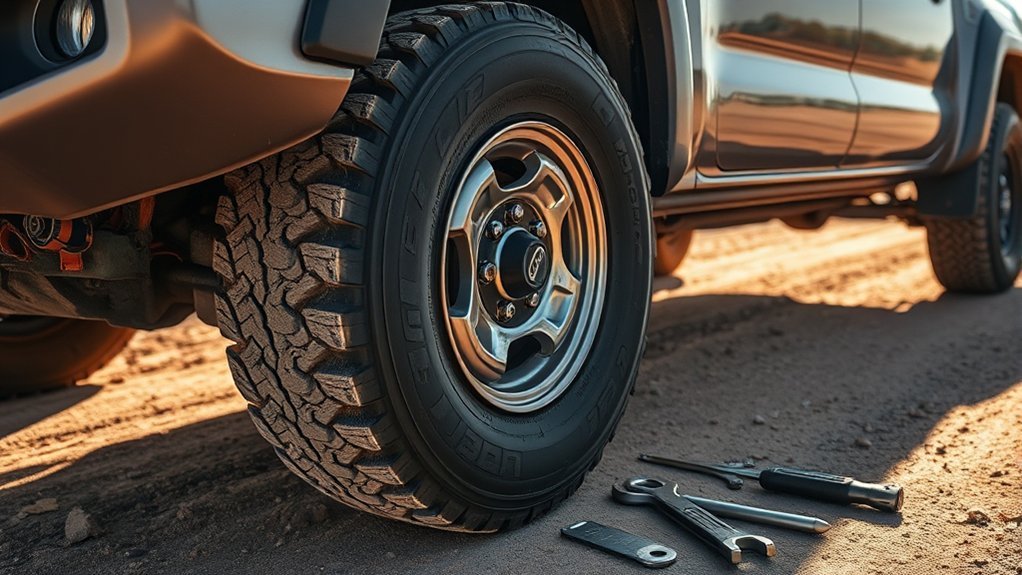
A small nail or screw in your Toyota Tacoma tire can turn into a bigger problem fast, especially if you are on a trail, job site, or highway shoulder. You can use a tire plug kit to seal a small tread puncture long enough to get moving again, but that does not make every tire safe to repair. Before you plug anything, check the damage location, tire condition, air pressure, and your Tacoma owner’s manual guidance for your model year.
Quick Answer
You can plug a Toyota Tacoma tire yourself only when the puncture is small, straight, and located in the tread area. Do not plug sidewall or shoulder damage. Treat a roadside plug as a temporary repair, inflate the tire to the cold pressure on the door placard, and have a tire shop inspect it from the inside.
Key Takeaways
- Plug only a small puncture in the tread. Sidewall, shoulder, cut, bulge, exposed-cord, or driven-flat damage needs professional inspection or tire replacement.
- A string plug is useful for emergency roadside or trail repair, but a proper long-term repair usually requires tire removal and internal inspection.
- Use the tire pressure on your Tacoma door placard or owner’s manual, not the maximum pressure printed on the tire sidewall.
- If the plug leaks during the soapy-water test, install the spare or call roadside help instead of forcing the repair.
At a Glance
| Time Required | 15 to 30 minutes for a simple tread plug, plus time to reinflate and retest |
| Difficulty | Beginner to moderate, depending on puncture access and tire size |
| Tools Needed | Tire plug kit, needle-nose pliers, air compressor, tire pressure gauge, spray bottle with soapy water, gloves, light, wheel chocks, and spare tire tools |
| Cost | Usually $10 to $35 for a plug kit, plus the cost of an inflator if you do not already carry one |
Check If the Tire Is Safe to Plug First
Before you pull out the puncturing object, decide if the tire is repairable. A plug should only be used for a small puncture in the tread area. The tread is the part of the tire that touches the road. The sidewall is the thinner outer side of the tire, and the shoulder is the rounded edge where the tread turns toward the sidewall.
Warning: Do not plug a Tacoma tire if the damage is in the sidewall or shoulder, if the tire has a bulge, slice, exposed cords, torn tread, or if it was driven while flat. Use the spare tire or call for help instead.
A tire shop may also reject a repair if the puncture is too large, too close to another puncture, too close to a previous repair, or if the tire is badly worn. The National Highway Traffic Safety Administration tire safety guidance is a good reference for pressure, tread, and general tire-safety checks.
Essential Tools for Tacoma Tire Repair
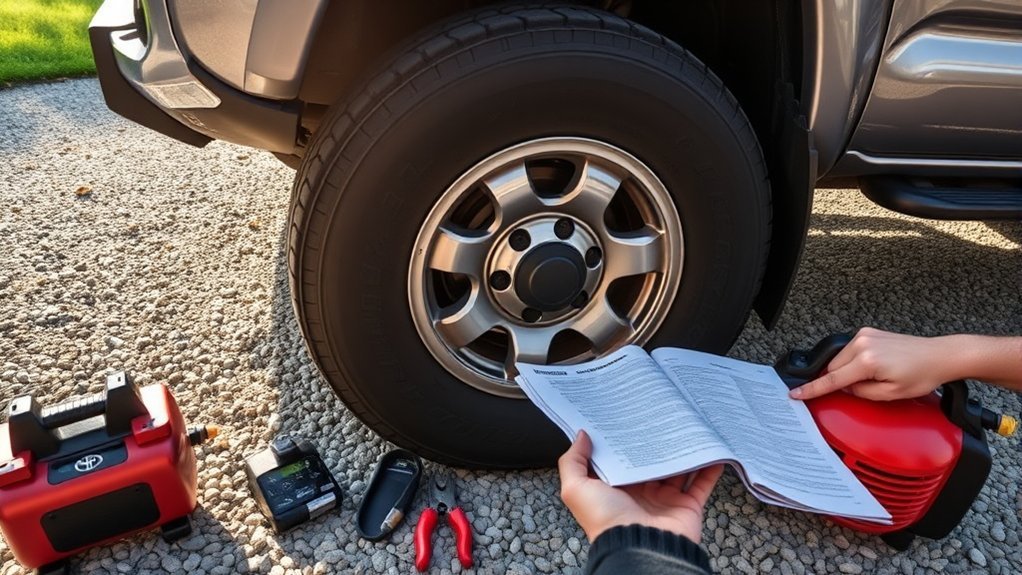
Keep your tire repair tools in a bag or hard case so they are easy to find when a leak happens. At minimum, carry:
- Tire plug kit: Look for a kit with rubber string plugs, a reamer, insertion tool, and rubber cement if the kit requires it.
- Needle-nose pliers: These help remove nails, screws, staples, and trail debris from the tread.
- Portable air compressor: Choose one strong enough for light-truck tires and long enough to reach all four wheels.
- Tire pressure gauge: Do not rely only on the compressor’s built-in gauge.
- Soapy water spray bottle: A dish-soap and water mix makes leaks easier to spot.
- Flush cutters or razor blade: Use these to trim the plug close to the tread.
- Gloves and eye protection: Tire cords, metal objects, and gravel can cut your hands.
- Wheel chocks, flashlight, and first aid kit: These matter more when you are working on a trail or shoulder.
Note: Tacoma equipment varies by model year and trim. Check your Toyota owner’s manual for jack points, spare-tire tool location, spare lowering steps, and wheel-changing warnings.
[Products Worth Considering]

This tire repair kit provides fast emergency puncture repair without removing the tire from the rim, helping you get back on the road quickly. Its screw plug system is designed for punctures in both tread and sidewall and includes a complete patch plug tool set with essential accessories. A portable storage bag makes it easy to carry for cars, trucks, SUVs, motorcycles, and heavy-duty applications.
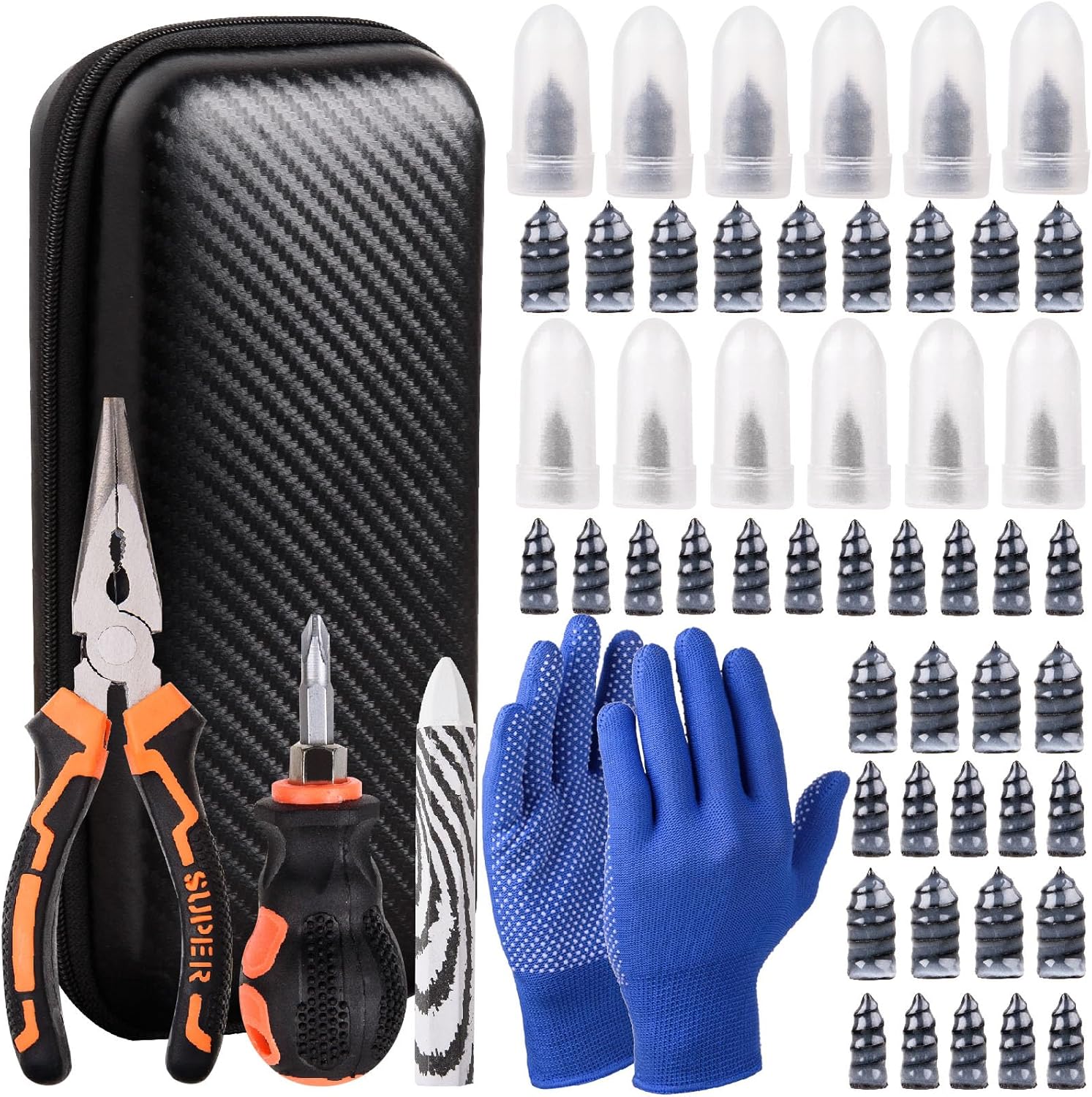
This tire sidewall puncture repair kit fixes flats fast without removing the tire, helping you get back on the road in minutes. It includes self-tapping repair nails, essential tools, gloves, and a portable storage bag for convenient roadside use. Designed for tubeless tires, it helps create a tight, leak-resistant seal for cars, motorcycles, trucks, SUVs, and ATVs.

These aluminum alloy tire valve stem caps with an O-ring seal help protect valve stems from corrosion while adding a clean, stylish look to your vehicle. The universal fit works across cars, trucks, motorcycles, bicycles, and more, making them an easy upgrade for everyday driving and off-road use. Installation is quick, and the included four-pack keeps all your tires dressed and protected.
Identify Your Tire Leak
Start with a visual inspection. Look across the tread for a nail, screw, thorn, sharp rock, or metal shard. If you can safely move the Tacoma, park on level ground, turn on the hazard lights, set the parking brake, and keep the truck away from traffic.
If the tire still has air in it, spray the tread, valve stem, and bead area with soapy water. Bubbles that keep growing usually show where air is escaping. If the puncture is on the bottom of the tire, move the Tacoma a few inches or rotate the tire after safely lifting the vehicle according to the owner’s manual.
Also check the valve stem. A slow leak is not always from a nail. Valve stem damage, bead leaks, cracked wheels, and previous repairs can all cause air loss. If the bubbles come from the valve stem or bead, a plug kit will not fix the problem.
Pro Tip: Mark the puncture with chalk, a paint pen, or a small piece of tape before pulling the object out. Once the nail or screw is removed, the hole can be harder to find.
How to Plug a Tacoma Tire: Step-by-Step
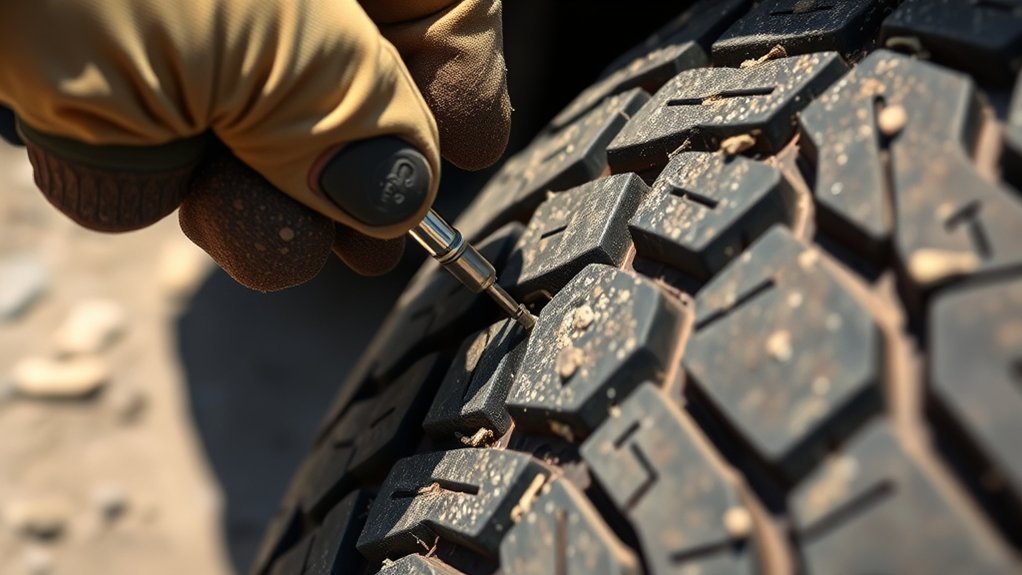
These steps are for a small tread puncture only. If the damage fails the safety check above, skip the plug and install the spare.
- Stabilize the Tacoma. Park on firm, level ground. Set the parking brake, turn on hazard lights, and chock a wheel on the opposite side if possible.
- Confirm the puncture location. Make sure the hole is in the tread, not the sidewall or shoulder.
- Prepare the plug. Thread one rubber plug through the insertion tool so both ends are even. Add rubber cement if your kit requires it.
- Remove the object. Pull the nail or screw straight out with pliers. Be ready, because the tire may lose air faster once the object is removed.
- Ream the hole. Push the reamer into the puncture and work it in and out several times. This cleans and sizes the hole for the plug.
- Insert the plug. Push the loaded insertion tool into the hole until about half an inch of plug remains outside the tread. Do not push the plug all the way into the tire.
- Pull the tool out quickly. The plug should stay in the tire as the tool comes out.
- Trim the excess plug. Cut the plug close to the tread surface. A small amount above the tread is fine and will wear down.
- Inflate the tire. Use the cold tire pressure listed on your Tacoma’s driver-side door placard or in the owner’s manual. Do not use the maximum pressure molded on the tire sidewall as your target pressure.
- Retest for leaks. Spray the repair with soapy water. If bubbles keep forming, the repair did not seal.
Warning: Never crawl under a Tacoma supported only by a jack. A plug repair usually does not require removing the wheel, but if you do lift the truck, use the correct jack point and follow Toyota’s manual.
[Products Worth Considering]

This AUTOWN flat tire repair kit is designed for quick, reliable puncture repairs using a plug kit and spiral probe tool to simplify installation. Built for durability and safe handling, it offers strong adhesion and flexibility to help maintain tire air tightness. With a portable storage case and a multi-vehicle approach, it’s suitable for cars, motorcycles, ATVs, tractors, lawn mowers, RVs, jeeps, and trucks.
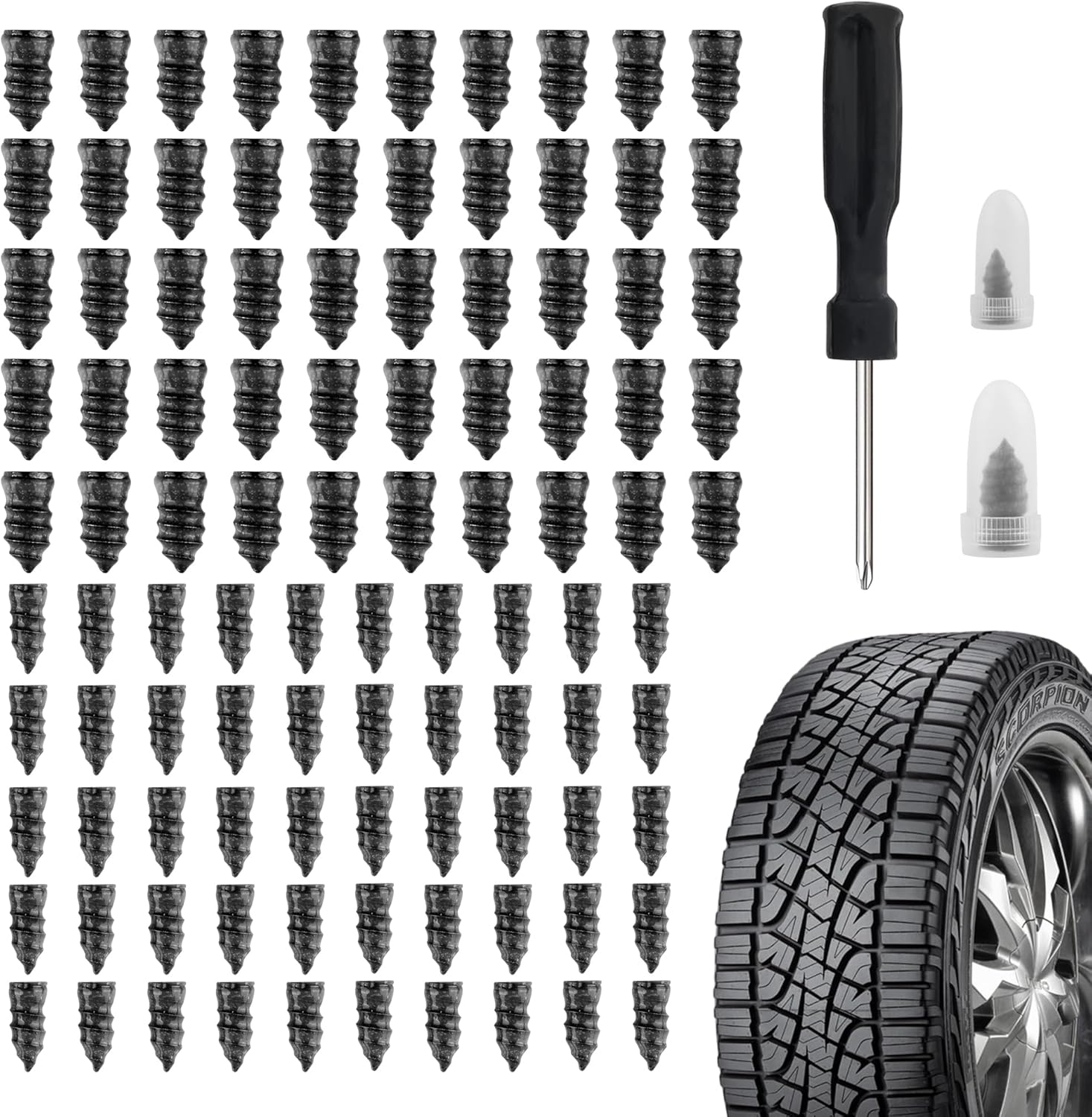
Salior’s tire plug kit provides a fast, reliable self-service fix for punctured or leaking tires without the need for flaring tools. Choose the correct plug size, then screw the nail into the puncture using the included screwdriver for an enhanced seal. The set is durable and convenient for on-the-go maintenance across multiple vehicle types.

Get back on the road fast with this compact tire plug repair kit for tubeless tires. It includes self-vulcanizing rubber plugs, T-handle rasp and insert tools, and a storage box that fits in your glove compartment for easy access. Also included are a 4-way valve steam tool set with valve cores and caps for added roadside convenience.
After the Plug: What to Check Next
Once the plug holds air, drive cautiously and avoid high speeds, heavy towing, and aggressive off-road driving until the tire has been inspected. A plug may seal the outer hole, but it does not let you see internal liner damage, belt damage, or heat damage from driving underinflated.
Watch the tire pressure monitoring system, but do not treat the TPMS light as your only check. Federal TPMS requirements are designed to warn drivers about low tire pressure, but a hand gauge is still the better tool for confirming exact pressure after a repair. You can review the TPMS rule in 49 CFR 571.138.
Recheck the repaired tire with a gauge after a few miles and again the next morning when the tire is cold. If pressure drops, install the spare or have the tire repaired or replaced by a professional.
A roadside plug can get your Tacoma moving, but the safest long-term fix is a professional internal inspection and repair, or tire replacement when the damage is not repairable.
How to Stay Safe While Repairing Tires on the Trail
Trail repairs add problems you do not face in a driveway. Uneven ground, mud, soft sand, rocks, poor light, and limited cell service can turn a simple tire leak into a safety risk.
- Choose the safest flat area available. Avoid soft shoulders, steep angles, and loose rock. If the truck is unstable, do not jack it up.
- Make yourself visible. Use hazard lights, a flashlight, reflective vest, or marker lights if other vehicles may pass.
- Keep hands protected. Gloves help prevent cuts from steel belts, sharp tread blocks, and embedded metal.
- Use the spare when the plug is questionable. A spare is safer than forcing a repair on shoulder damage or a leaking plug.
- Do not rush reinflation. Light-truck tires can take time to air up with a small compressor. Stop if the compressor overheats.
Troubleshooting Common Tire Plug Problems
If the repair does not work the first time, do not keep driving on a tire that is losing air. Use this quick guide:
- Bubbles keep forming around the plug: The plug did not seal, the hole may be too large, or the angle may be wrong. Install the spare or get professional help.
- The tire will not inflate: The damage may be too large, the bead may be leaking, the valve stem may be damaged, or the compressor may be too weak.
- The leak is at the valve stem: A tire plug will not help. The valve stem or TPMS sensor seal may need service.
- The puncture is near the edge of the tread: Treat it as unsafe for DIY repair and have a tire shop inspect it.
- The TPMS light stays on: Confirm pressure with a gauge. If pressure is correct, your Tacoma may need to be driven for the system to update, or the sensor may need service.
[Products Worth Considering]

Vigorder rubber cement glue delivers superior adhesion and cures quickly within about 30 seconds for seamless rubber bonding. Once cured, it helps provide a strong, durable, waterproof seal that holds up to vehicle weight, pressure, and heat. Suitable for cars, motorcycles, trucks, bicycles, and off-road tires, it’s designed for emergency patch and maintenance repairs.

TireJect Off-Road Tire Sealant Kit provides 5-in-1 sealing to help fix tread punctures up to 3/8", sidewall punctures up to 3/8", bead leaks, slow leaks, and minor dry rot on low-speed tires. It permanently seals with liquid rubber, recycled tire particles, and Aramid fibers, making it ideal for flats caused by thorns, nails, and screws. The included dispensing cap attaches to the valve stem for a no-mess installation, along with a metal valve core remover tool and valve stem cap. This kit is for off-road use only.

AUTOWN’s 68-piece tire repair kit helps you fix punctures and plug flats quickly and effectively. It includes a T-handle and spiral probe tool for easy insertion, while the steel patch and plug materials are designed for strong adhesion and long-lasting airtight performance. The compact case makes it convenient for roadside repairs across a wide range of vehicles.
Know When to Seek Professional Help
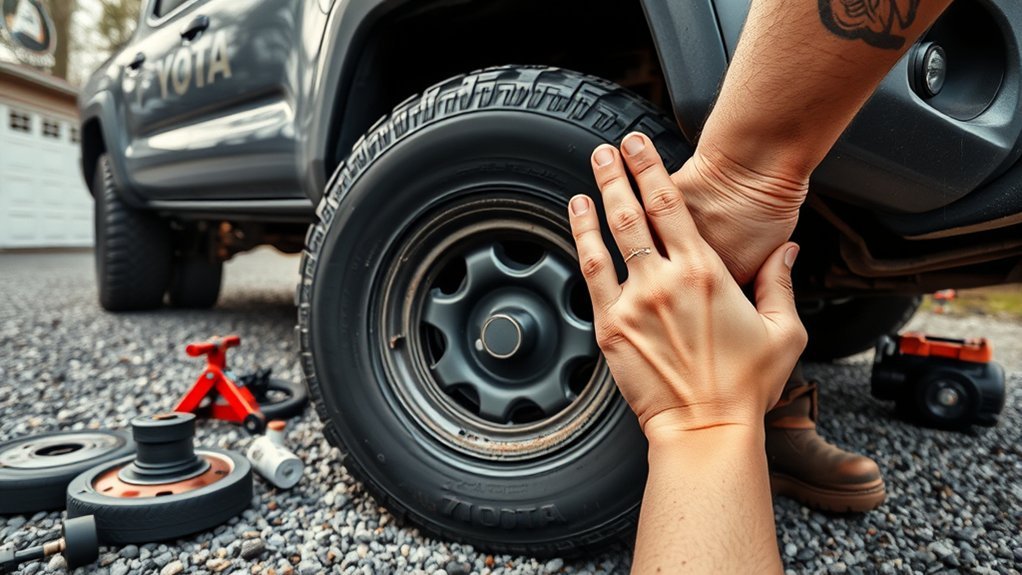
Get professional help if the damage is in the sidewall or shoulder, if the puncture is large, if the plug leaks, or if the tire was driven while low or flat. Also seek help if you see a bulge, vibration, exposed cords, uneven tread separation, or a cut longer than a simple puncture hole.
A tire shop can remove the tire from the wheel, inspect the inner liner, and decide whether a permanent internal repair is safe. If the tire is not repairable, replacement is the safer choice. That may cost more than a plug kit, but it protects your Tacoma, passengers, and other drivers.
Frequently Asked Questions
Can I patch a Tacoma tire myself?
You can plug a small tread puncture yourself with a tire plug kit, but a true patch repair usually requires removing the tire from the wheel and repairing it from the inside. Use a DIY plug as an emergency repair, then have the tire inspected by a professional.
How does a Toyota tire repair kit work?
Toyota equipment varies by model year and trim. If your kit uses sealant and an inflator, it sends sealant through the valve stem and inflates the tire enough for short, temporary driving. Many Tacoma owners rely on a spare tire, jack tools, and a plug kit instead. Check your owner’s manual before you need it.
How long will a patched tire last?
A professionally repaired tire can last for the remaining usable life of the tire if the damage is repairable, the tire was not driven flat, and the internal repair is done correctly. A roadside string plug should be treated as temporary until a tire shop inspects it.
What tires cannot be patched or plugged?
Do not patch or plug tires with sidewall damage, shoulder damage, large punctures, slices, bulges, exposed cords, tread separation, or damage from being driven flat. Tires with multiple close punctures or previous repairs near the new hole may also need replacement.
Can I drive highway speeds after plugging a tire?
Avoid highway speeds, heavy loads, towing, and hard cornering after a roadside plug. Drive cautiously to a safe place or tire shop, recheck pressure often, and replace or professionally repair the tire if it loses air.
Should I use a plug kit or the spare tire?
Use a plug kit for a small tread puncture when the tire is otherwise in good shape and still holds some air. Use the spare tire when the puncture is near the sidewall, the plug leaks, the tire is badly damaged, or you are not sure the repair is safe.
Conclusion
Patching or plugging a Toyota Tacoma tire can save time when the damage is a small tread puncture, but safety comes first. Inspect the tire, confirm the leak, use the correct tools, inflate to the Tacoma’s cold pressure specification, and test the repair with soapy water. If the damage is in the sidewall or shoulder, if the tire was driven flat, or if the plug does not hold air, stop and use the spare or call a professional. A quick plug can get you off the trail or roadside, but a tire shop should handle the final inspection and permanent repair decision.
Sources
- National Highway Traffic Safety Administration: Tires — tire pressure, tread, and tire safety basics.
- Toyota Owner’s Manuals — Tacoma-specific jack, spare tire, warning, and tire pressure information by model year.
- 49 CFR 571.138: Tire Pressure Monitoring Systems — federal TPMS performance requirements.
- U.S. Tire Manufacturers Association — tire industry safety and maintenance reference.