
Steelman White Tire Marking Crayons Review
Disclosure: As an Amazon Associate, we earn from qualifying purchases. If you click a link on this page and make a purchase, we may receive a small commission at no extra cost to you.
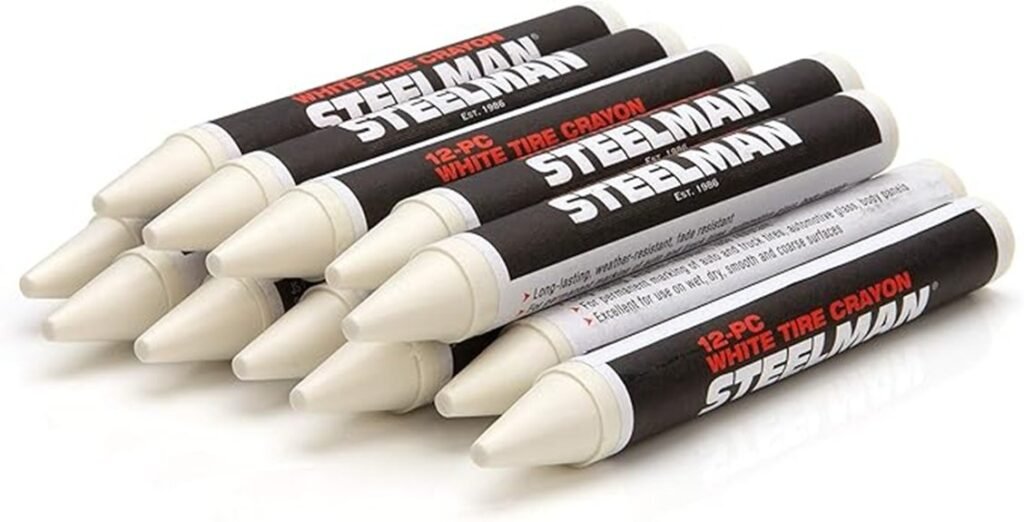
Clear tire marks save time when you are locating punctures, tracking wheel positions, or identifying equipment that needs attention. Steelman White Tire Marking Crayons give you a bright white line on dark rubber and several other shop surfaces without the mess of liquid paint. This review explains where the crayons work well, how long the marks should be expected to remain useful, and what limitations matter before you buy. Their main strengths are broad surface compatibility and easy visibility, while their semi-permanent design means abrasion can remove the mark.
Quick Verdict
Rating: 8/10, Recommended with caveats
Best For: Tire shops, home garages, fleet crews, and anyone who needs removable high-contrast marks on dark surfaces
Bottom Line: Steelman model 00063 is a practical 12-pack that writes on wet or dry rubber, metal, glass, and wood. The marks resist weather and fading, but they are designed to rub away, so this is not the right choice for permanent labels or decorative tire lettering.
Key Specifications
| Specification | Detail |
|---|---|
| Brand | Steelman |
| Model | 00063 |
| Product type | White tire and material marking crayon |
| Material | Wax |
| Color | White |
| Quantity | 12 crayons per box |
| Listed dimensions | 4.29 x 0.55 x 0.55 inches |
| Listed item weight | 0.03 lb |
| Supported surfaces | Rubber, metal, glass, and wood |
| Surface conditions | Wet or dry, smooth or coarse |
| Mark type | High-contrast, weather- and fade-resistant, semi-permanent |
| Composition note | Contains no lead or zinc compounds |
| Country of origin | Taiwan |
| Warranty | No warranty listed by the manufacturer |
| Best use | Puncture location, tire position, wear notes, and equipment marking |
[Products Worth Considering]

Monitor tire tread wear with a smart, color-coded depth gauge that shows clear condition ranges at a glance. The bar is range marked for fast, easy readings, helping you maintain safer traction and performance. Each gauge is portable with a pocket clip, and the set includes 20 units for daily use and sharing.

Steelman white tire marking crayons provide high-contrast, semi-permanent marks for repairing and inspecting tires and equipment. They write on wet or dry, smooth or coarse surfaces including rubber, metal, glass, and wood, making them ideal for puncture location and damage outlining. The lead- and zinc-free crayons resist weather and fading yet wipe away when you no longer need the marks.

Measure tire tread depth quickly and accurately with this LUMITECO dial gauge that reads in 1/32" increments up to 14/32". The color-coded green/yellow/red zones make it easy to judge tire wear and know when replacement is needed. A rugged, compact design with a protective pouch helps keep the gauge ready for use on cars, trucks, motorcycles, and more.
Key Takeaways
- The white wax formula creates an easy-to-see mark on black tires and other dark surfaces.
- Steelman says the crayons write on wet or dry, smooth or coarse rubber, metal, glass, and wood.
- The box contains 12 crayons, which suits repeat shop work better than a single-marker pack.
- The marks are weather- and fade-resistant but remain semi-permanent and can be rubbed away.
- The formula contains no lead or zinc compounds, but Steelman does not describe the product as food-safe or suitable for skin.
What Are Steelman White Tire Marking Crayons?
Steelman White Tire Marking Crayons, model 00063, are solid wax markers made for automotive and industrial marking. Each box contains 12 white crayons. You can use them to circle a puncture, mark tire wear, identify wheel positions during seasonal swaps, or outline damage on outdoor and construction equipment.
The crayon format gives you a direct mark without a cap, drying time, or liquid reservoir. Steelman describes the formula as less messy than chalk and paint, while still producing a bold line on rubber and other supported materials. Because the mark is semi-permanent, it is meant to survive normal exposure but remain removable when the job is complete.
Who Should Buy It?
Best For
- Tire technicians who need fast, visible puncture and wear marks
- Drivers who label seasonal wheel positions before storage
- Fleet, warehouse, bicycle, and equipment crews that mark several surface types
Skip If
- You need permanent lettering or a mark that cannot rub off
- You need a fine-tip marker for small serial numbers or detailed writing
- You want a product with a manufacturer warranty
Before You Buy: These crayons make semi-permanent service marks, not permanent decorative tire lettering. Friction, handling, and deliberate rubbing can remove the wax, so choose a paint marker when long-term decoration is your goal.
Visibility and Marking Quality
White is the main advantage on black tire rubber. The high contrast lets you spot a circle, arrow, wheel-position code, or repair note without searching for it under normal shop lighting. The solid wax also avoids the drips that can come with liquid paint.
The 0.55-inch body supports a broad, practical mark rather than pen-like detail. That works well when you need to circle a puncture or write a short position code such as LF or RR. It is less suitable for tiny text, narrow labels, or precise layout work.
Surface Compatibility
Steelman lists rubber, metal, glass, and wood as compatible materials. The crayons are also intended for wet or dry surfaces and for both smooth and coarse finishes. This range makes one box useful beyond passenger-car tires.
On tires, you can mark puncture locations, tread damage, sidewall inspection points, or wheel positions. On bicycles, outdoor equipment, and construction gear, you can outline an area that needs repair. In a garage or warehouse, the crayons can also provide a temporary visual reference on compatible parts and materials.
Surface texture still affects the result. A clean, firm stroke usually produces a clearer line than a light pass over loose dirt or heavy grease. When removal matters, test a small hidden area first, especially on porous or finished materials.
Durability and Removal
Steelman describes the marks as weather- and fade-resistant and able to withstand the elements. The manufacturer does not publish a fixed lifespan in days or weeks, so the most accurate expectation is condition-based. A mark that sits untouched should remain readable longer than one exposed to repeated handling, road contact, scrubbing, or abrasion.
| Condition | What to Expect | Best Practice |
|---|---|---|
| Clean, dry tire | Clear, high-contrast service mark | Use firm pressure and a broad stroke |
| Wet tire or part | Designed to mark, though water and grime may reduce clarity | Wipe away standing water when practical |
| Outdoor exposure | Weather- and fade-resistant marking | Check readability before relying on an old mark |
| Frequent rubbing or abrasion | The semi-permanent wax can wear or rub away | Keep the mark away from contact areas when possible |
Removal is part of the design. The manufacturer says the marks can be rubbed away when they are no longer needed. Removal effort can differ by surface condition, texture, age of the mark, and contamination, so avoid promising one-step cleanup on every material.
Materials and Safety
The crayons use a wax material and contain no lead or zinc compounds. That is a useful composition detail, but it should not be expanded into a broad “non-toxic” claim because the manufacturer does not make that statement on the product page.
Use the crayons as material markers only. Keep them away from food-contact surfaces, skin, children, and pets unless the product label specifically allows that use. Marking a damaged tire helps you locate the area, but the crayon does not diagnose the damage or make the tire safe to drive. Have punctures, sidewall cuts, bulges, and structural damage inspected by a qualified tire professional.
[Products Worth Considering]

SELEAD jumbo white tire markers deliver waterproof, quick-dry, long-lasting lettering for car tires and more. The premium non-toxic, acid-free, no-odor ink resists fading from outdoor weather and car washing. A 3-in-1 switchable jumbo tip range (3–15mm) helps you create precise or thick tire markings with smooth, even ink flow.

Vigorder rubber cement glue delivers superior adhesion and cures quickly within about 30 seconds for seamless rubber bonding. Once cured, it helps provide a strong, durable, waterproof seal that holds up to vehicle weight, pressure, and heat. Suitable for cars, motorcycles, trucks, bicycles, and off-road tires, it’s designed for emergency patch and maintenance repairs.

DAPAWIN white permanent paint markers deliver long-lasting, opaque coverage with a non-toxic, low-odor, quick-dry waterproof oil-based ink. These paint pens work on metal and many other surfaces including tires, wood, plastic, rocks, fabric, ceramic, canvas, rubber, and glass for outdoor and craft projects. The rounded medium tip helps create clean lines for labeling, decorating, and quick fixes, while the caps and nib guidance help reduce leaking.
How It Performs in Real Use
For Puncture and Damage Location
A bold white circle or arrow is easier to find than a small dark puncture once the tire reaches a repair bench. The crayon’s broad line is useful for this task because you can mark around the damaged area without needing precise handwriting.
For Seasonal Wheel Storage
Short codes such as LF, RF, LR, and RR can help you remember each wheel’s previous position. Mark the tire or another compatible surface before storage, then confirm the note is still readable when you reinstall the set. Do not use the crayon as a substitute for recording rotation history or checking tread depth.
For Fleet and Shop Work
A 12-pack gives several technicians access to the same marking system and reduces the need to share one marker. The wax format also has no liquid ink cartridge to leak. The tradeoff is that the broad crayon format is better for service marks than fine writing.
For Bicycles and Outdoor Equipment
The manufacturer specifically lists bicycle punctures and damage on outdoor or construction equipment as suitable uses. The ability to mark rubber, metal, glass, and wood makes the pack useful when your work moves between tires, tools, and equipment parts.
How to Use Them Correctly
- Choose the marking area. Place the mark where it will stay visible and away from surfaces that receive constant friction.
- Remove loose debris. Brush or wipe away dirt, mud, and standing water when practical. The crayons can write on wet surfaces, but a cleaner area gives you better contrast.
- Use firm pressure. Make one broad stroke, then repeat only if the mark needs more coverage.
- Keep the note simple. Use circles, arrows, or short position codes rather than small handwriting.
- Confirm before service. A mark identifies an area, but you should still inspect and measure the tire or part using the correct tools.
- Rub away the mark when finished. Test your removal method on a small area if the surface is finished, porous, or appearance-sensitive.
Pro Tip: For seasonal wheels, use a simple two-letter code and take a phone photo before storage. The photo gives you a backup if the semi-permanent mark is rubbed during handling.
Pros and Cons
Pros
- Bright white marks stand out on dark tire rubber
- Writes on wet or dry, smooth or coarse surfaces
- Compatible with rubber, metal, glass, and wood
- Weather- and fade-resistant for service and inspection use
- Box of 12 suits repeat work and multi-user shops
Cons
- Semi-permanent marks can rub off under abrasion
- Broad crayon format is not ideal for fine detail
- No manufacturer warranty is listed
Is It Worth the Price?
Steelman White Tire Marking Crayons fit the budget shop-supply category. The value comes from getting 12 markers that work across several materials instead of buying a single-purpose tire pen for each task. Shops, fleet crews, and drivers who mark multiple wheel sets are likely to get the most use from the pack.
The crayons are worth considering when you need fast, removable service marks and prefer a solid wax format over paint or chalk. They are not the best fit if you need permanent decoration, fine writing, or warranty coverage. Check the current seller, package quantity, and product details before ordering because marketplace offers can change.
How It Compares to Alternatives
Markal Tyre Marque is a closer specialist alternative if you want a solid paint crayon designed for temporary tire marking, including wet or cold rubber. Markal’s Original B Paintstik is better suited to buyers who want a more paint-like industrial marker for oily, wet, dry, or cold surfaces. A single Certified white tire crayon may make more sense when you only need one marker and do not want a 12-pack.
The Steelman pack makes the most sense when you want a simple white wax crayon, broad material compatibility, and enough quantity for repeated automotive or shop use.
Frequently Asked Questions
Are Steelman White Tire Marking Crayons non-toxic?
Steelman states that the crayons contain no lead or zinc compounds. The manufacturer does not label them broadly as non-toxic, food-safe, or suitable for skin, so use them only as material markers and follow the package directions.
Can they mark wet tires?
Yes. Steelman lists wet and dry surfaces as supported. You may get a clearer line by removing standing water, mud, and loose debris before marking.
What materials can the crayons mark?
The manufacturer lists rubber, metal, glass, and wood. It also says the crayons work on smooth or coarse surfaces, which helps when you move between tires, parts, tools, and equipment.
How many crayons come in the box?
Model 00063 is sold as a box of 12 white marking crayons. Confirm the seller’s package description before checkout because marketplace listings and bundles can change.
Are the marks permanent?
No. The marks are semi-permanent, weather- and fade-resistant, and designed to rub away when no longer needed. Heavy handling, scrubbing, or road contact can shorten how long a mark remains readable.
Can they repair a tire puncture?
No. The crayon only marks the location of damage. A qualified tire professional should inspect the puncture and decide whether the tire can be repaired under accepted repair procedures.
Who should choose a paint marker instead?
Choose a paint marker when you need permanent decorative lettering, finer detail, or stronger resistance to rubbing. The Steelman crayon is better for bold service marks that you expect to remove later.
The Bottom Line
Steelman White Tire Marking Crayons are a strong choice for tire technicians, garages, fleet crews, and drivers who need bold removable marks across several materials. Buy them for high contrast, wet-or-dry use, and a practical 12-count box. Skip them when you need permanent lettering, very fine writing, or a product backed by a manufacturer warranty.
[Products Worth Considering]
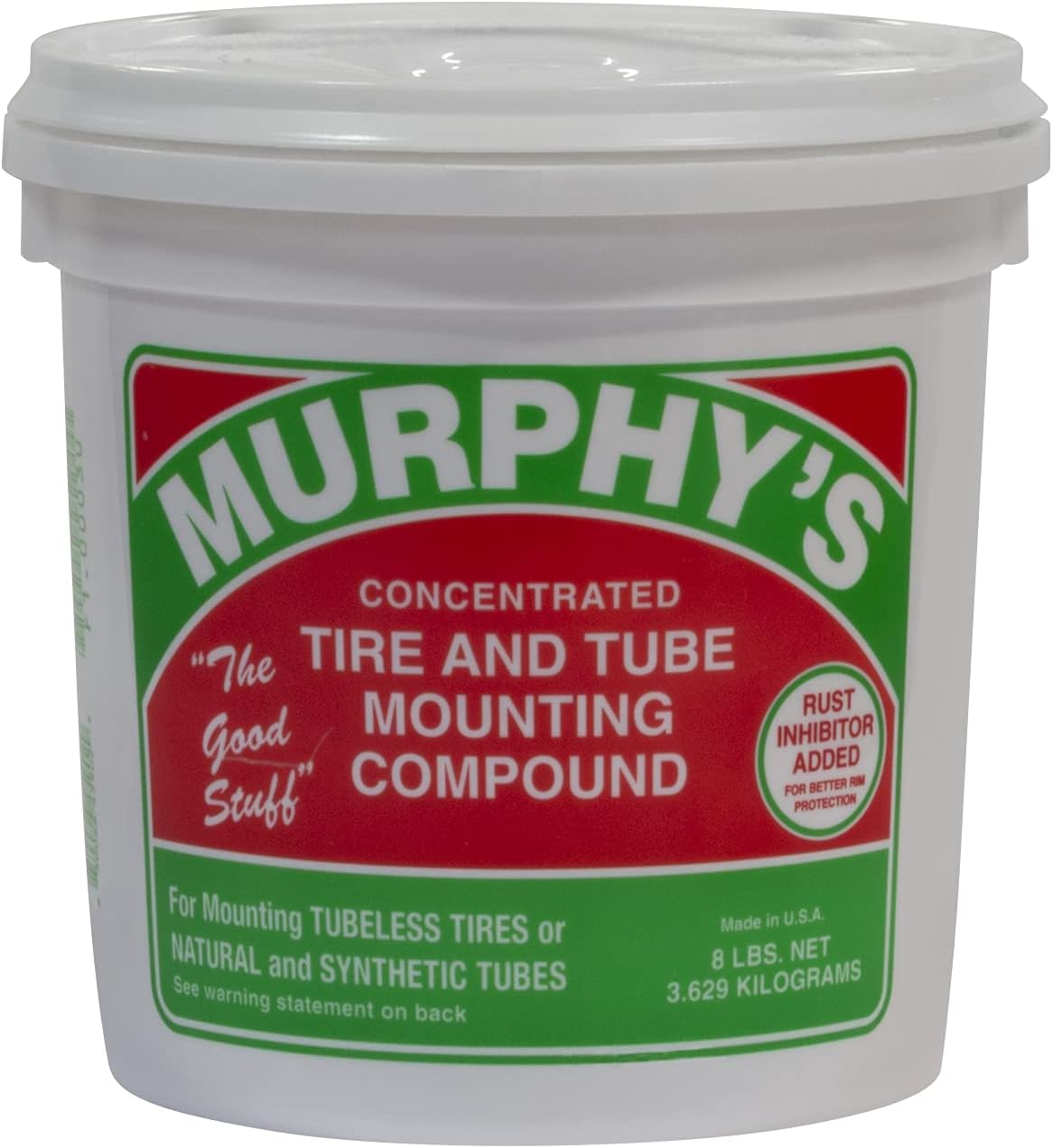
A concentrated tire and tube mounting compound designed to help simplify mounting rubber tires and tubes on passenger, semi truck, construction, and OTR applications. Its ultra-thick formula packs beads effectively and includes rust inhibitors to help protect against corrosion during use.

These oil-based permanent paint pens use quick-dry, waterproof ink for clean, lasting marks across many craft and DIY surfaces. The medium round nib delivers smooth, precise application for detailed writing, painting, and labeling. Each marker is individually packaged to help prevent leakage during shipping or storage.

The Trivd Frol 1/2" air impact wrench delivers high performance torque up to 1500 ft-lbs with a twin hammer impact mechanism for strong, balanced blows. It features an ergonomic grip, compact lightweight design, and quick-stop control with 3 forward speeds up to 8000 RPM plus a reverse speed. Built for demanding automotive repair and tire shop work, the rear exhaust helps keep debris away from the surface.

Related Articles
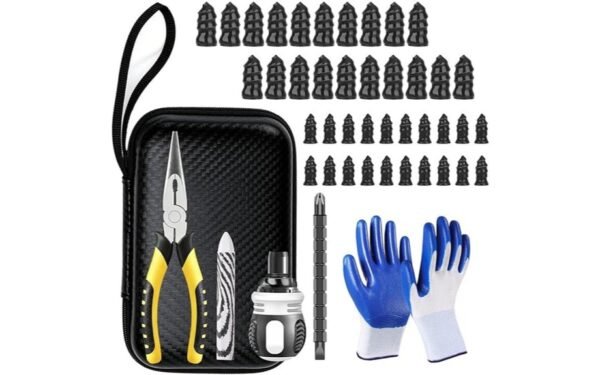
Tire Screw Plug Repair Kit Review
Compact tire screw plug repair kit review reveals fast roadside fixes, but which punctures are truly safe enough to trust?
Read More
Wall Mount Spare Tire Carrier Mount Review
I review the wall mount spare tire carrier’s fit, strength, and stability—see what could make or break your trailer setup.
Read More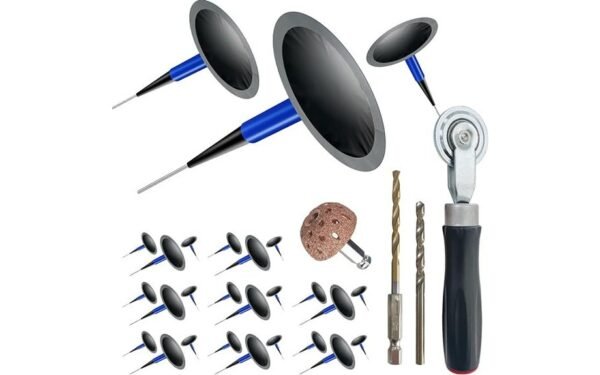
Socpuro Tire Repair Patch Tool Kit Review
Great for quick DIY puncture fixes, the Socpuro Tire Repair Patch Tool Kit has limits and surprises you’ll want to know before buying.
Read More