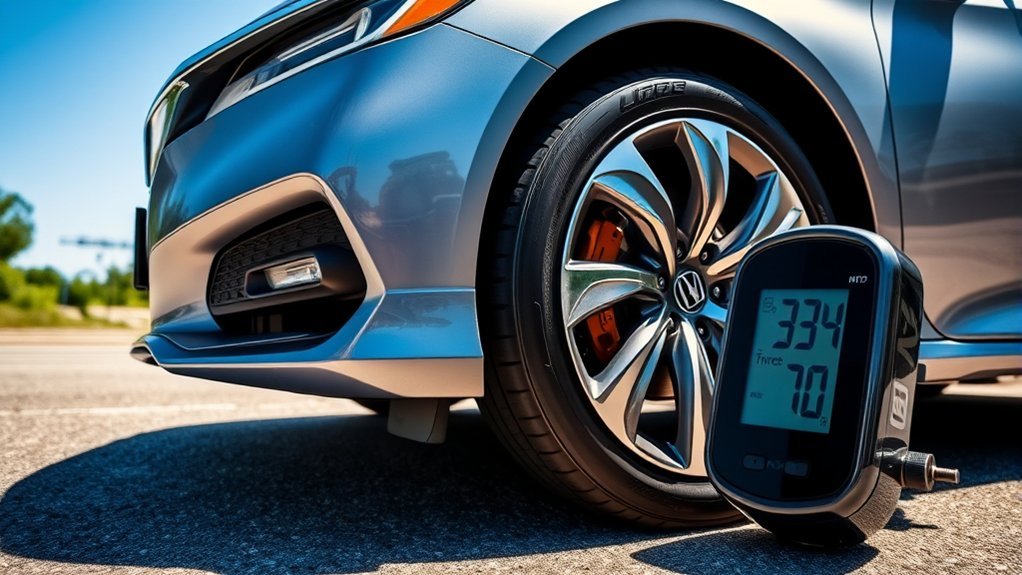
For highway driving in a Honda Accord, the safest tire pressure is the cold PSI listed on your driver-side doorjamb tire and loading label, not a generic number from the internet and not the maximum PSI printed on the tire sidewall. For some 2024 Accord models, Honda also gives separate sustained high-speed guidance by tire size, so the right answer depends on your exact model, tire size, and driving conditions.
Quick Answer
For normal highway driving, set your Honda Accord tires to the cold pressure shown on the driver-side doorjamb label. For 2024 Accord sustained high-speed guidance, Honda lists examples such as 35 psi front / 33 psi rear for 225/50R17 non-hybrid tires, with higher values on some Accord Hybrid tire sizes.
Key Takeaways
- Use the cold PSI on your Accord’s doorjamb label first; it is the vehicle-specific reference for your tires.
- Check tire pressure when the tires are cold: after the car has been parked for at least three hours or driven less than 1 mile.
- Hot tires can read about 4–6 PSI higher, so do not bleed air from hot tires just because the number looks high.
- After adjusting tire pressure on many newer Accords, calibrate the TPMS so the warning system can learn the corrected tire condition.
- Do not tow a trailer with a 2024 Accord or Accord Hybrid; Honda states these vehicles are not designed for trailer towing.
At a Glance
| Time Required | 5–10 minutes to check and adjust all four tires |
| Difficulty | Easy DIY maintenance |
| Tools Needed | Accurate tire pressure gauge, air compressor, valve-stem caps, and your driver-door tire label |
| Cost | Usually free at home or a service station; about $10–$25 for a basic digital gauge |
Recommended Tire Pressure Settings for Your Honda Accord

The best starting point is always the Honda tire and loading information label on the driver-side doorjamb. That label lists the original tire size, vehicle load information, and the proper cold tire pressure for your specific Accord.
For ordinary highway speeds, do not automatically add extra air just because you are getting on the interstate. Use the cold PSI on the doorjamb label unless your owner’s manual gives a specific condition-based adjustment for your model, tire size, and driving situation.
Honda’s 2024 Accord manuals also include sustained high-speed guidance for certain tire sizes. Honda recommends not driving faster than posted speed limits and road conditions allow, but if the car is operated in sustained high-speed conditions where lawful and appropriate, the manual gives these cold-pressure examples:
| Model / Tire Size | Honda-listed sustained high-speed cold pressure |
| 2024 Accord, 225/50R17 94V | Front: 35 psi / Rear: 33 psi |
| 2024 Accord Hybrid, 225/50R17 94V | Front: 36 psi / Rear: 33 psi |
| 2024 Accord Hybrid, 235/40R19 96V | Front: 38 psi / Rear: 36 psi |
Note: These are 2024 examples from Honda’s manual, not a universal rule for every Accord year. Older Accords, replacement tire sizes, and different trims may use different PSI values. Your doorjamb label and owner’s manual are the final references.
[Products Worth Considering]

Keep your tires properly inflated with this analog VONDIOR tire pressure gauge, designed for fast, easy readings without batteries. The swiveling, two-axis hose and large glow dial help you measure at any tire angle with instant visibility. Built with a protective rubber shield, it supports durable, low-maintenance use for cars and trucks.
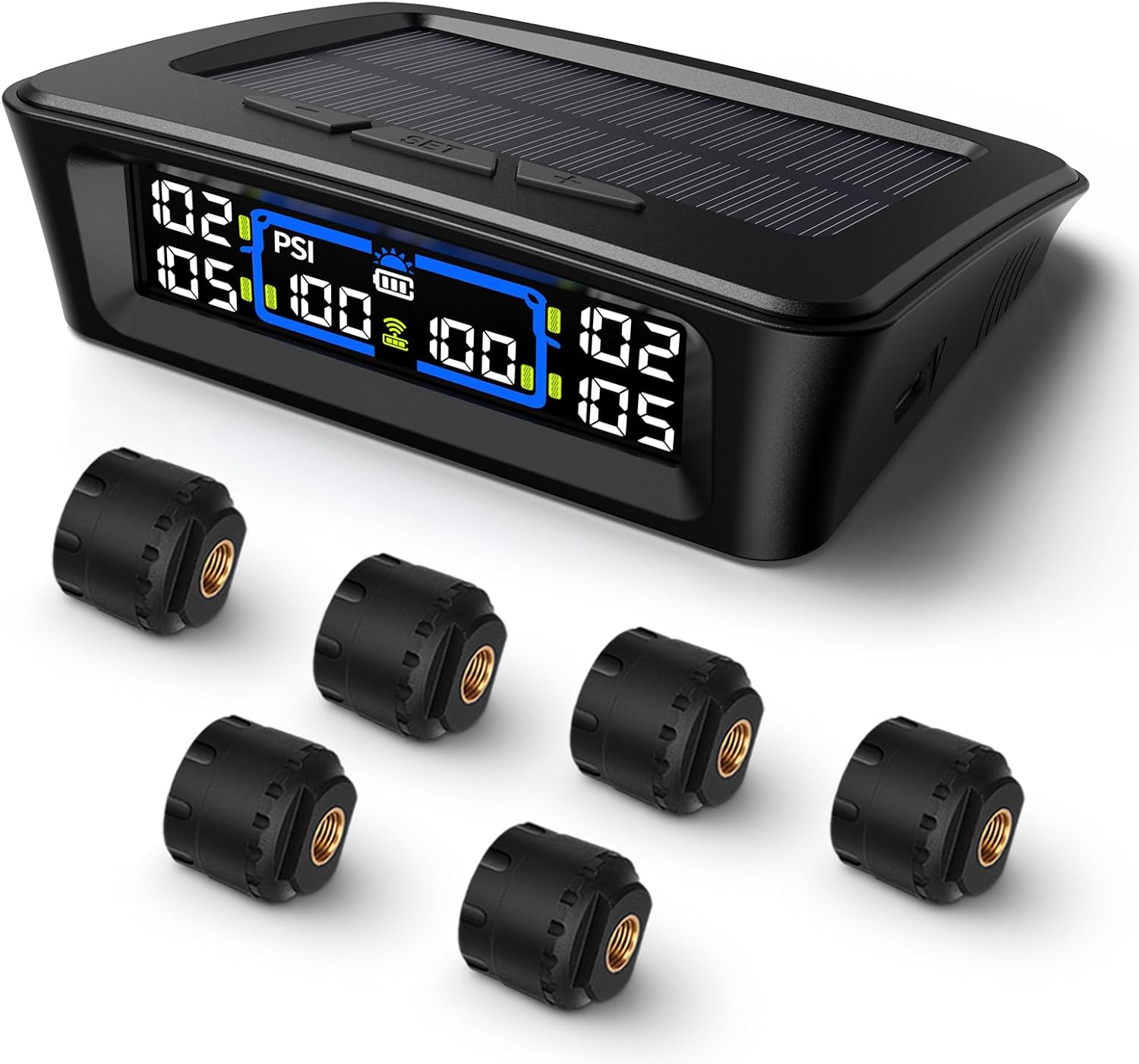
The Tymate TM12 RV TPMS delivers real-time tire pressure and temperature monitoring with a stable 433Hz display for safer long-distance driving. It supports simultaneous monitoring across vehicle and trailer zones, includes six alarm modes for pressure, temperature, leakage, battery, and signal loss, and features easy DIY installation with auto calibration. Power is supplied via USB-C charging or solar recharging, with a wide 0–144 PSI range and up to 50 ft signal coverage for RVs and towable trailers.
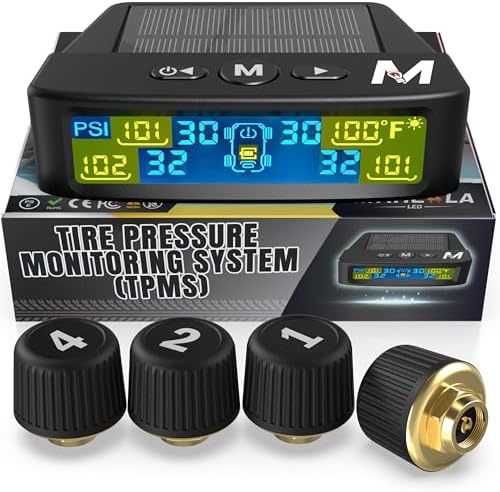
Marcala’s TPMS set of four sensors helps you monitor tire pressure and temperature in real time while driving, with updates every second. The bright color LCD uses auto-dimming for easy viewing, powered by dual solar and USB charging, and offers six alarm modes. Built for trailers, RVs, campers, trucks, and towing setups, the sensors support monitoring 1-4 wheels up to 98 PSI with IP67 waterproof protection.
Why Correct Tire Pressure Is Crucial for Highway Safety and Performance
Correct tire pressure matters more on the highway because heat, speed, and long travel distances put more stress on the tires. Proper inflation helps the tire keep the right contact patch, manage heat, wear evenly, and respond predictably when you brake, steer, or change lanes.
Tire Pressure and Fuel Efficiency
Under-inflated tires flex more as they roll, which increases rolling resistance and makes the engine work harder. FuelEconomy.gov says keeping tires properly inflated can improve gas mileage by 0.6% on average and up to 3% in some cases. It also notes that under-inflated tires can lower gas mileage by about 0.2% for every 1 PSI drop in the average pressure of all tires.
Proper tire pressure is a small maintenance step with a real payoff: safer handling, longer tire life, and better fuel economy.
Handling and Stability Benefits
When tire pressure is too low, the sidewall flexes more and the tread can squirm under load. That can make the Accord feel less stable during lane changes, curves, and emergency braking. When tire pressure is too high, the ride can become harsher and the tires may be more vulnerable to road-hazard damage.
Honda’s tire guidance says properly inflated tires provide the best combination of handling, tread life, and comfort. It also warns that underinflated tires can wear unevenly, reduce fuel economy, and be more likely to fail from overheating.
How Temperature Affects Tire Pressure on the Highway
Tire pressure changes with temperature. Cold mornings can make pressure read lower, while long highway drives can make tire pressure read higher because the tire heats up as it rolls. Honda states that if you check the tires when hot, the reading can be about 4–6 PSI higher than a true cold reading.
This is why a cold reading matters. For the most accurate number, check pressure before you drive, after the car has been parked for at least three hours, or after it has been driven less than 1 mile.
Pro Tip: If you must add air when the tires are warm, inflate to at least the recommended cold PSI, then recheck and fine-tune the pressure the next morning when the tires are cold.
How to Check and Adjust Honda Accord Tire Pressure
Checking your Accord’s tire pressure is simple, but doing it in the right order matters. Follow this process before long highway trips and at least once a month.
- Find the correct PSI. Open the driver door and read the tire and loading information label. Use that cold PSI, not the tire sidewall maximum.
- Check when cold. Measure pressure before driving, after the car has been parked for at least three hours, or after driving less than 1 mile.
- Use a reliable gauge. Press the gauge firmly onto the valve stem so there is no air hiss, then read the pressure.
- Add or release air. If pressure is low, add the missing PSI. If pressure is high during a cold check, release air slowly until it matches the label.
- Check all four tires. Front and rear tires may have different recommended pressures, so do not assume all four should match.
- Reinstall valve caps. Valve caps help keep dirt and moisture out of the valve stem.
- Calibrate TPMS if required. On newer Accords, use the vehicle settings menu to start TPMS calibration after correcting tire pressure.
[Products Worth Considering]

The Big Rig Defense Tire Thumper is a truck tire pressure checker that lets you quickly check multiple tires by giving them a firm whack. Listen for a reassuring thump and feel the stick bounce when a tire is fully inflated, helping you get back on the road safely. It features a comfortable, glove-friendly handle and a secure wrist strap for confident use on busy routes.

Milton S-921 pencil tire pressure gauge helps you maintain optimal tire pressure for passenger cars with accurate readings in PSI and kPa. It features a built-in deflator valve for convenient pressure adjustments, plus a single chuck head and nylon indicator bar for easy use on the go. Built from durable plated brass and designed for reliable performance, it’s a practical road trip and cold-weather maintenance tool.

The TYAMATE TM8 solar-powered wireless TPMS delivers real-time tire pressure and temperature monitoring with six alarm modes for safer driving. A vibrant color LCD display shows readings clearly while windshield mounting keeps it hands-free and easy to read. With a wide 0–87 PSI range, strong 433.92 MHz signal transmission, and quick sensor pairing, it’s ideal for RV, sedan, SUV, MPV, and truck use.
TPMS Calibration After Adjusting Tire Pressure
Many newer Honda Accords use an indirect Tire Pressure Monitoring System (TPMS). After you adjust tire pressure, rotate tires, or replace tires, the system may need calibration so it can learn the corrected tire condition.
For 2024 Accord models, Honda’s TPMS calibration path is typically through the vehicle settings menu. After starting calibration, the process finishes automatically after about 30 minutes of cumulative driving at 30–60 mph. If the low tire pressure/TPMS indicator stays on even after the tires are properly inflated and calibrated, have the vehicle inspected by a Honda dealer or qualified tire professional.
Warning: TPMS is a backup warning system, not a replacement for manual pressure checks. A tire can be low enough to hurt fuel economy, handling, and tread life before the TPMS warning appears.
Adjusting Tire Pressure for Loads and Towing
If you are carrying passengers or cargo, stay within the load limit shown on the driver-side label and owner’s manual. Do not guess by adding extra PSI unless Honda’s manual or the tire label for your vehicle calls for it. Overinflation can make the ride harsh and can cause uneven tire wear.
For 2024 Accord and 2024 Accord Hybrid models, Honda states that the vehicle is not designed to tow a trailer. Attempting to tow can void warranties. That means the correct “towing tire pressure” advice for these models is not to add 2–3 PSI and tow anyway; it is to avoid trailer towing and use a vehicle designed for that job.
[Products Worth Considering]

Measure tire tread depth quickly and accurately with this LUMITECO dial gauge that reads in 1/32" increments up to 14/32". The color-coded green/yellow/red zones make it easy to judge tire wear and know when replacement is needed. A rugged, compact design with a protective pouch helps keep the gauge ready for use on cars, trucks, motorcycles, and more.

AstroAI’s heavy-duty digital tire pressure gauge delivers quick, accurate readings with 0.1 increments and a secure valve-stem seal. It features a green backlit LCD and built-in flashlight for easy use in low light, plus an ergonomic non-slip stainless-steel design. The wide 0–230 PSI range works across common vehicle tires, with unit selection and an auto shut-off to save battery.

Check tire pressure quickly and accurately with the Accutire MS-4021B digital gauge, featuring a large backlit LCD for easy visibility. The angled head and rubber-coated handle make it comfortable to grip, while unit switching lets you read psi, bar, kPa, or kg/cm2. An automatic shutoff helps preserve battery life, and it measures 5–150 PSI in small increments for confident tire maintenance.
How to Identify Low Tire Pressure While Driving

Low tire pressure can show up in several ways before or along with a dashboard warning. If something feels off, slow down safely, avoid hard steering or braking, and check the tires as soon as you can pull over in a safe place.
Common Warning Signs
- A tire looks visibly lower than the others.
- The car pulls to one side on a straight road.
- The steering feels heavier than usual.
- The ride feels bouncy, squirmy, or unstable.
- You notice vibration, thumping, or unusual tire noise.
- Fuel economy drops without another clear reason.
Dashboard Light Indicators
The Tire Pressure Monitoring System warning light means at least one tire may be significantly underinflated. Under U.S. federal TPMS rules, the warning must illuminate when pressure in one or more tires is at or below the required low-pressure threshold, including 25% below the manufacturer’s recommended cold inflation pressure or the applicable minimum threshold, whichever is higher.
If the TPMS light comes on, do not ignore it. Check all four tires with a gauge, inflate them to the recommended cold PSI, and calibrate the system if your Accord requires it.
Driving Performance Changes
On the highway, low tire pressure can make the Accord feel less precise during lane changes and curves. It can also increase heat buildup in the tire. If you feel a sudden vibration, hear a loud thump, or the car becomes unstable, ease off the accelerator, hold the steering wheel firmly, and move to a safe area before inspecting the tires.
Regularly Check and Maintain Your Tire Pressure
Check your Honda Accord’s tire pressure at least once a month and before long highway trips. Honda also recommends visually checking the tires before driving and using a gauge if one tire looks lower than the others.
Each time you check pressure, inspect the tread and sidewalls. Look for cuts, bulges, cracks, embedded objects, uneven wear, and damaged valve stems. If you see sidewall bulges, exposed cord, or repeated pressure loss, do not treat it as a simple inflation problem. Have the tire inspected or replaced before highway driving.
Frequently Asked Questions
Is 42 PSI too high to drive a Honda Accord?
Usually, yes. For most Honda Accord tires, 42 PSI is higher than the recommended cold pressure on the doorjamb label. Do not use the tire sidewall maximum as your daily driving target. If your tires read 42 PSI when hot, let them cool and recheck before releasing air.
Should I add extra PSI for highway driving?
For normal highway driving, use the cold PSI on the driver-door label. Do not add extra air unless your owner’s manual gives a specific condition-based pressure for your model, tire size, and driving situation.
Should all four Accord tires have the same PSI?
Not always. Some Accord models list different front and rear pressures. Always follow the front and rear PSI shown on the tire and loading label or in the owner’s manual.
Why does my TPMS light come on during cold weather?
Cold air can lower tire pressure enough to trigger a warning, especially if the tires were already close to the low-pressure threshold. Check all tires with a gauge when cold, inflate to the doorjamb PSI, and calibrate TPMS if your Accord requires it.
Can I tow a trailer if I increase my Accord’s tire pressure?
Not on 2024 Accord and Accord Hybrid models. Honda states these vehicles are not designed to tow a trailer, and attempting to do so can void warranties. Increasing tire pressure does not create a safe towing rating.
Conclusion
The ideal Honda Accord tire pressure for highway driving is not one universal number. The correct PSI is the cold pressure on your driver-side doorjamb label, adjusted only when Honda’s owner’s manual gives a specific condition-based instruction for your model and tire size. Check pressure cold, recheck monthly and before long trips, calibrate TPMS after adjustments when required, and avoid unsafe shortcuts like using the tire sidewall maximum or adding air for towing on models Honda says are not designed to tow.
Sources
- Honda 2024 Accord Owner’s Manual — Checking Tires — cold tire checks, hot-pressure difference, high-speed pressure example, inspection guidance
- Honda 2024 Accord Hybrid Owner’s Manual — Checking Tires — hybrid tire-size pressure examples, cold tire checks, TPMS calibration note
- Honda 2024 Accord Owner’s Manual — Towing a Trailer — trailer towing warning
- NHTSA TireWise — Tire Safety — placard-first PSI guidance, cold tire pressure checks, tire safety basics
- FuelEconomy.gov — Keeping Your Vehicle in Shape — tire pressure and fuel economy data
- eCFR 49 CFR 571.138 — Tire Pressure Monitoring Systems — federal TPMS warning threshold requirements