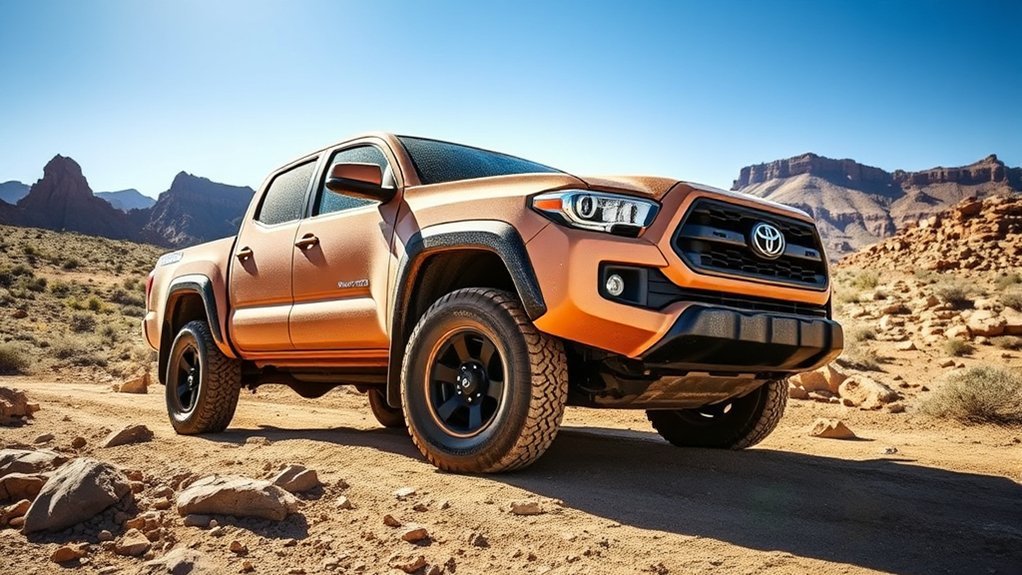
For off-roading in your Toyota Tacoma, tire pressure is one of the easiest settings to change and one of the easiest to get wrong. Airing down can improve traction, comfort, and flotation, but there is no single perfect PSI for every Tacoma, tire, wheel, load, or trail. Use the ranges below as safe starting points, then adjust slowly based on terrain, speed, tire construction, and your Tacoma’s door-jamb tire placard.
Quick Answer
Most Toyota Tacoma owners can start around 18–22 PSI for general trail use, 15–18 PSI for sand or deep snow, 16–20 PSI for mud, and 18–24 PSI for rocky trails. These are off-road-only starting points. Reinflate to the cold PSI on your driver-side placard before highway driving.
Key Takeaways
- Airing down helps your Tacoma’s tires flex, lengthen the contact patch, and float better on loose terrain.
- The best PSI depends on tire size, load, sidewall stiffness, wheel design, speed, and terrain.
- Avoid very low PSI on stock wheels unless you are moving slowly and understand the risk of unseating a tire bead.
- Never return to pavement at trail pressure. Air back up to the cold pressure listed on the driver-side tire placard.
- Use a real tire-pressure gauge. TPMS is helpful, but it is not a replacement for routine manual pressure checks.
At a Glance
| Time Required | About 10–20 minutes to air down at the trailhead; 10–30 minutes to air back up, depending on compressor size and tire volume. |
| Difficulty | Easy, but pressure choice requires judgment. Start conservative and drop 2–3 PSI at a time. |
| Tools Needed | Accurate tire-pressure gauge, tire deflator, portable air compressor, valve caps, spare valve cores, full-size spare, and tire plug kit. |
| Cost | $0 if you already have the tools; about $20–$300+ for a gauge, deflator, and trail-ready compressor setup. |
Best Tire Pressure for Different Off-Road Terrains
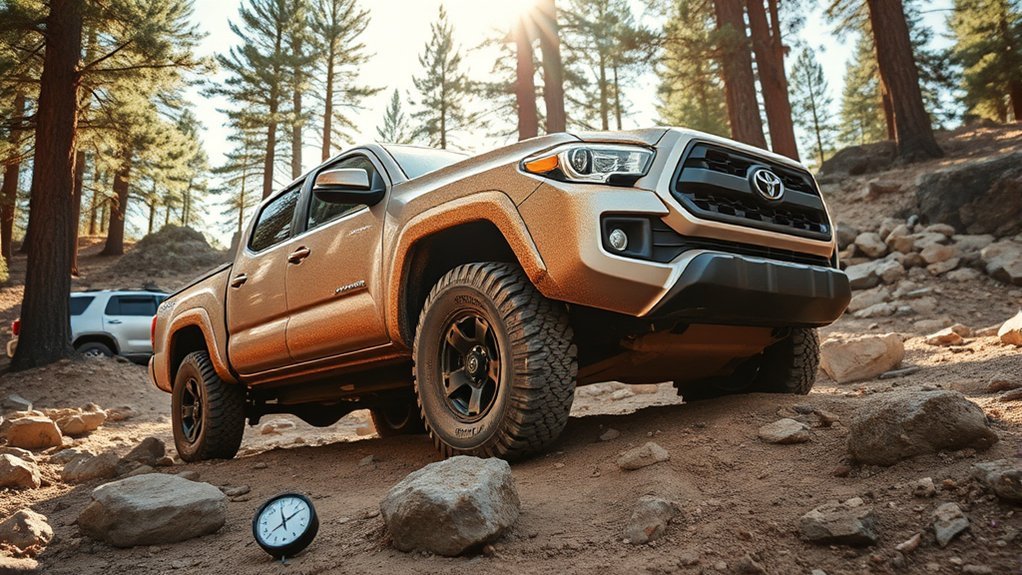
The right tire pressure for off-roading your Toyota Tacoma is a range, not a fixed number. The NHTSA TireWise guide says the correct on-road cold PSI is the vehicle manufacturer’s pressure on the tire placard or owner’s manual. Off-road pressures are temporary trail settings, so always air back up before pavement.
| Terrain | Trail PSI Starting Point | Why It Helps | Watch Out For |
| Gravel roads and mild forest roads | 22–28 PSI | Smooths washboard chatter and improves control without making the tire too soft. | Use higher pressure if you are carrying heavy gear or driving faster dirt roads. |
| Rocky trails | 18–24 PSI | Lets the tire conform around rocks for better grip and a less jarring ride. | Sharp rocks can pinch or cut sidewalls. Stay higher if the trail is fast or jagged. |
| Sand | 15–18 PSI | Increases flotation so the Tacoma rides on top of soft sand instead of digging in. | Avoid sharp turns and high speed at low PSI because the bead can unseat. |
| Mud | 16–20 PSI; 12–15 PSI only for deep mud at very low speed | Improves the footprint and helps the tire grab slick surfaces. | Too low can expose the sidewall, pack mud into the bead, or make steering vague. |
| Deep off-road snow | 15–20 PSI | Adds flotation and keeps the truck from cutting down into soft snow. | For paved winter roads, use the door-jamb cold PSI, not trail pressure. |
Warning: These PSI ranges are for low-speed off-road use only. Do not drive on highways or fast paved roads with aired-down tires. Underinflated tires can overheat, affect handling, damage the tire, or cause tire failure.
[Products Worth Considering]
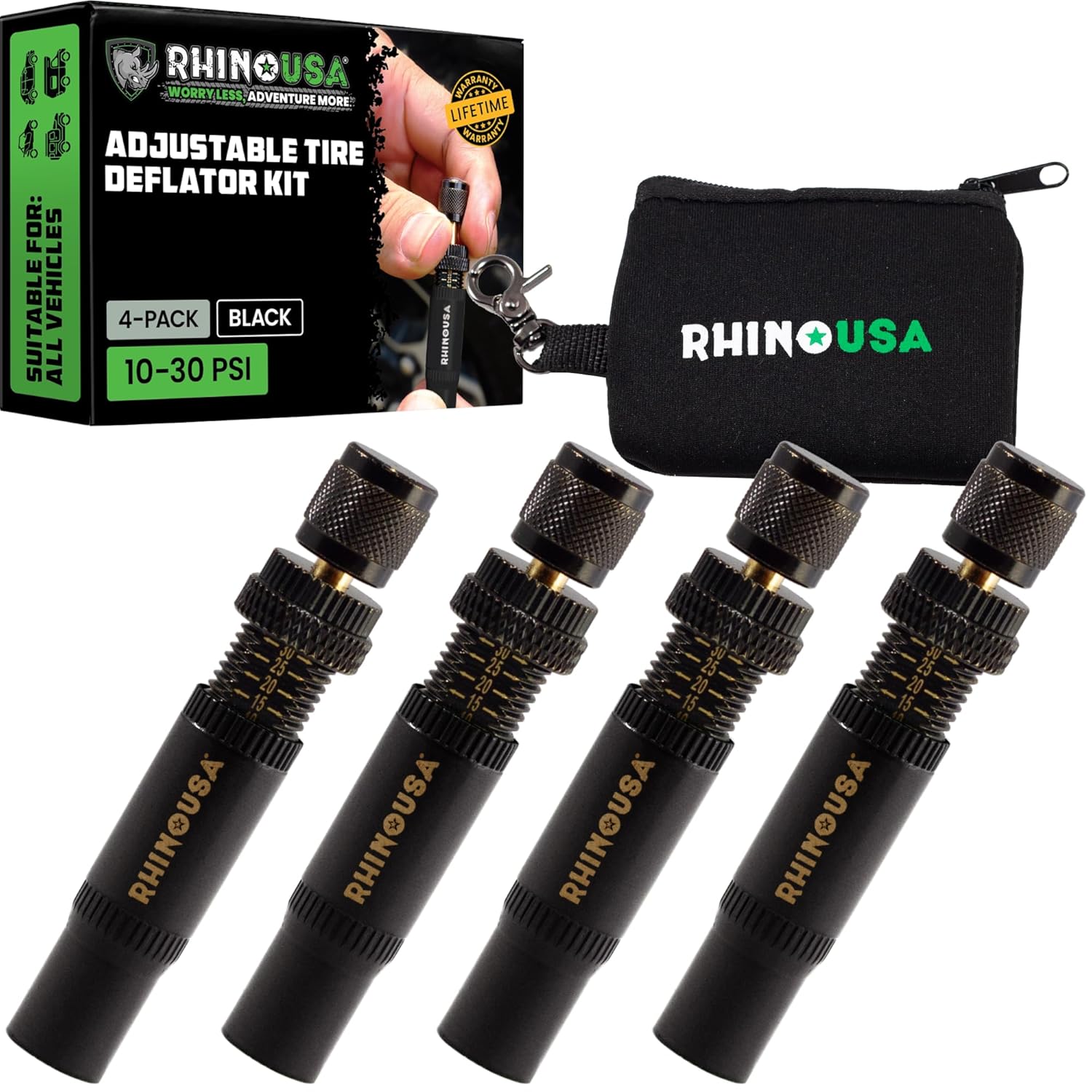
Use the Rhino USA adjustable tire deflators to air down all four tires at once by screwing one deflator onto each valve stem, letting you step away while the tires reach your preset pressure. Each deflator independently adjusts across a 10–30 PSI range with laser-etched indicators for quick setup and verification, making it ideal for beach, sand, and rocky off-road trails.
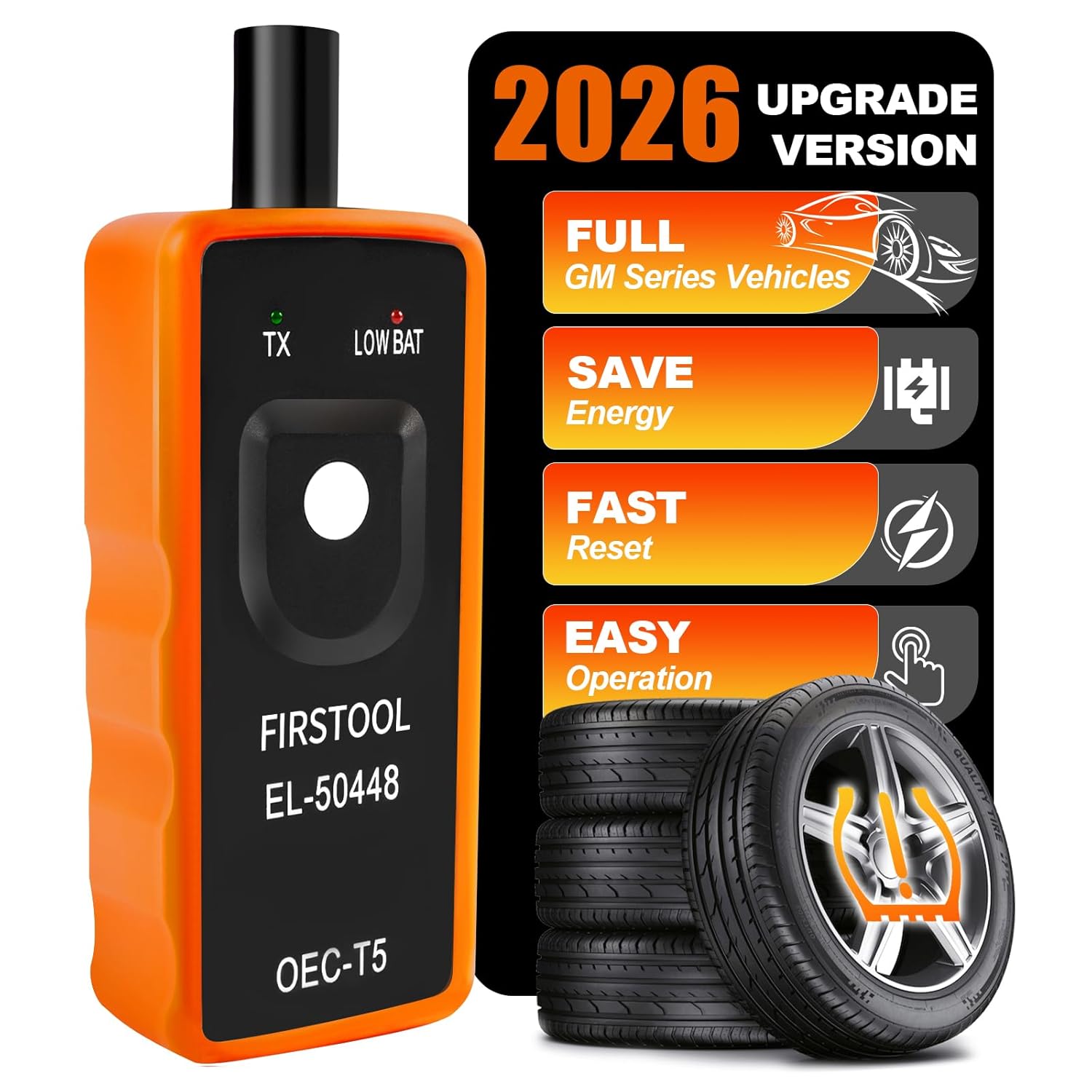
This TPMS relearn tool helps you quickly activate, match, and reset GM tire pressure sensors to keep the vehicle monitoring system working properly. It clears tire pressure alarms and dashboard warning lights after sensor replacement or tire rotation, and supports learning for common 315/433 MHz TPMS sensors. Designed for simple one-button operation, it can help you avoid unnecessary trips to repair shops.

These aluminum alloy tire valve stem caps with an O-ring seal help protect valve stems from corrosion while adding a clean, stylish look to your vehicle. The universal fit works across cars, trucks, motorcycles, bicycles, and more, making them an easy upgrade for everyday driving and off-road use. Installation is quick, and the included four-pack keeps all your tires dressed and protected.
How to Choose the Right PSI for Your Tacoma
Start with your Tacoma, not someone else’s trail setup. The correct road pressure is the cold PSI printed on your driver-side tire placard. Toyota’s tire-inflation guidance says to measure with a gauge and adjust to the recommended level, and tire makers such as Toyo Tires also point owners back to the vehicle placard or owner’s manual for original-equipment sizes.
- Check your tire type. A P-metric all-season tire, LT all-terrain tire, and heavy mud-terrain tire can all feel different at the same PSI.
- Account for load. A Tacoma loaded with camping gear, recovery boards, drawers, a rooftop tent, or a trailer needs more pressure than an empty truck.
- Consider your wheels. Stock wheels are not beadlocks. Very low PSI increases the chance of unseating the bead during hard turns or side loads.
- Adjust in small steps. Drop 2–3 PSI, drive a short section, then reassess steering feel, traction, and sidewall bulge.
- Reduce speed as PSI drops. BFGoodrich notes that tire load, speed, and pressure are linked; lower pressure requires lower speed to avoid heat buildup.
Pro Tip: Write down your best PSI for each trail type after the drive. A simple note like “sand: 17 PSI, no rubbing, good steering” is more useful than guessing next time.
[Products Worth Considering]

This ALL-TOP auto-stop tire deflator valve kit lets you air down off-road tires quickly without watching pressure, automatically stopping when your preset PSI is reached. Each valve is individually calibrated for reliable performance with an acceptable +/- 2 PSI tolerance. The adjustable deflator range covers 10 to 30 PSI and includes four valves plus valve caps and a zipper pouch for easy setup on trucks, SUVs, RVs, UTVs, and powersports.

This compact tire repair kit includes a heavy-duty universal plug kit for fast roadside puncture repairs in most tubeless tires. It comes with a durable MOLLE storage pouch so you can keep the tools organized and easily store them in your UTV, ATV, truck, motorcycle, RV, or overlanding gear. Ideal for getting back on the road, trail, or job site with confidence.
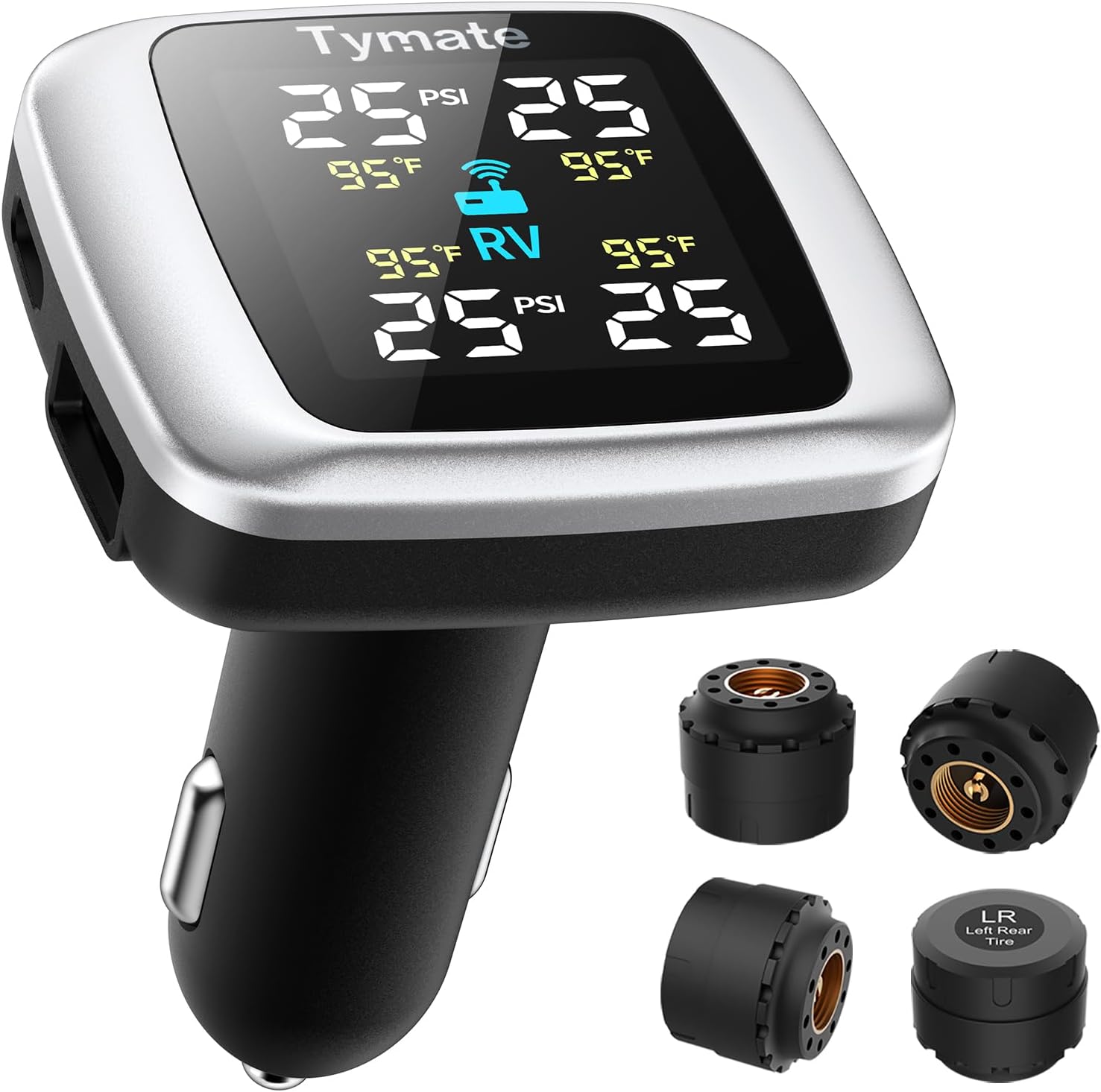
Tymate TM7 is a wireless tire pressure monitoring system that delivers real-time pressure and temperature readings for safer driving. It includes four external sensors, a bright color LCD display with adjustable backlight, and six alarm modes for high/low pressure, fast leakage, high temperature, and sensor signal or battery issues. The system covers a wide 0–144 PSI range and plugs into your vehicle’s cigarette lighter socket for quick DIY setup.
Why Lower Tire Pressure for Off-Roading?
Lowering tire pressure helps your Tacoma’s tires flex. That larger, softer footprint can improve traction, smooth out chatter, and help the tire conform to rocks, roots, ruts, sand, and snow. BFGoodrich’s off-road tire guidance explains that airing down increases the tire footprint and improves ride comfort on soft or uneven terrain.
Aired-down tires also provide better flotation. In sand and deep snow, flotation matters because a stiff, high-pressure tire tends to dig down. A softer tire spreads the Tacoma’s weight over a larger patch, helping the truck stay on top of the surface instead of trenching.
That benefit has limits. If pressure is too low for your tire, wheel, load, or speed, the sidewall can flex too much, heat can build, and the tire bead can unseat from the rim. Airing down is a tool, not a competition to run the lowest number.
The best Tacoma off-road tire pressure is the highest PSI that still gives you the traction, ride comfort, and flotation you need for the trail.
When Not to Air Down
There are times when lowering tire pressure can hurt more than help. Keep pressure closer to the door-jamb placard or the high end of the trail range when:
- You are driving on pavement or high-speed graded roads.
- Your Tacoma is heavily loaded with camping gear, tools, passengers, or bed weight.
- You are towing or carrying a slide-in camper.
- The trail has sharp rocks that can pinch the sidewall.
- You do not have a compressor to air back up before the road.
- You are on stock wheels and considering pressures below about 15 PSI.
Note: The number on the tire sidewall is not the recommended driving pressure. For normal road use, use the Tacoma’s tire placard or owner’s manual, not the tire’s maximum PSI marking.
Essential Tools for Tire Pressure Management
Effective tire pressure management is essential for off-road enthusiasts driving a Toyota Tacoma. The right tools make airing down more accurate and airing up much safer before you return to pavement.
- Accurate tire-pressure gauge: Use a gauge you trust. TPMS readings are helpful, but a manual gauge gives you direct confirmation at the valve stem.
- Tire deflator: A screw-on deflator or gauge/deflator combo speeds up the process. The ARB E-Z Tire Deflator, for example, is designed to remove the valve core for fast deflation while allowing pressure checks.
- Portable air compressor: Do not air down unless you have a reliable way to air back up before highway driving.
- Valve caps and spare valve cores: Mud, sand, and dust can damage or clog valve stems. Carry small spares.
- Full-size spare and tire plug kit: Aired-down tires can still get cut, punctured, or debeaded on rough trails.
- Work gloves and a flashlight: Useful for nighttime reinflation, valve-core work, and tire inspection.
[Products Worth Considering]
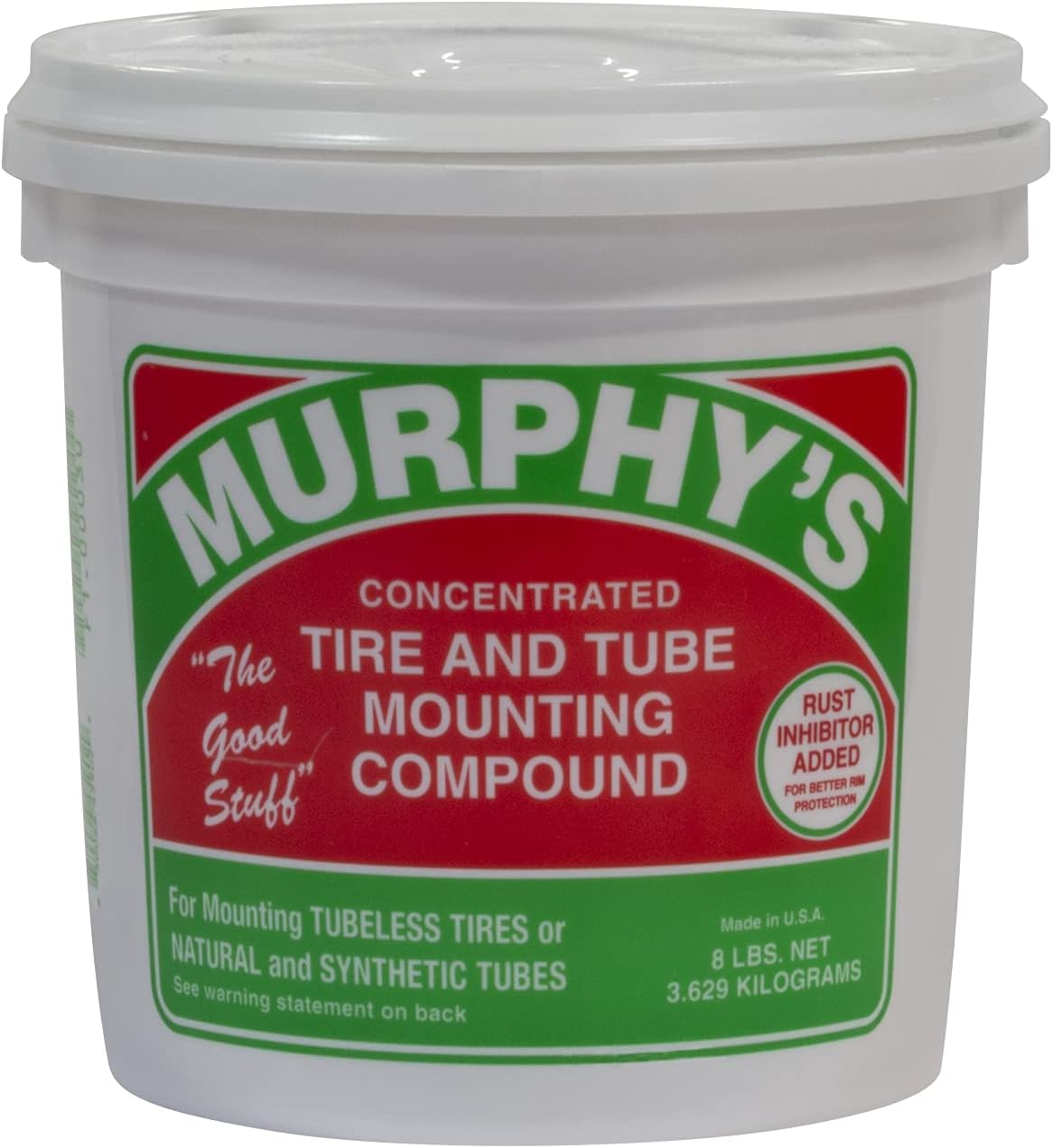
A concentrated tire and tube mounting compound designed to help simplify mounting rubber tires and tubes on passenger, semi truck, construction, and OTR applications. Its ultra-thick formula packs beads effectively and includes rust inhibitors to help protect against corrosion during use.

The VEHLIVE SU-50448 II TPMS relearn tool provides a fast activation reset to restore accurate tire pressure monitoring after sensor replacement or tire rotation. It supports 315 MHz and 433 MHz GM series sensors and helps clear dashboard pressure warnings. With simple two-button operation and horn-confirmed relearning order, you can reprogram sensors conveniently at home.
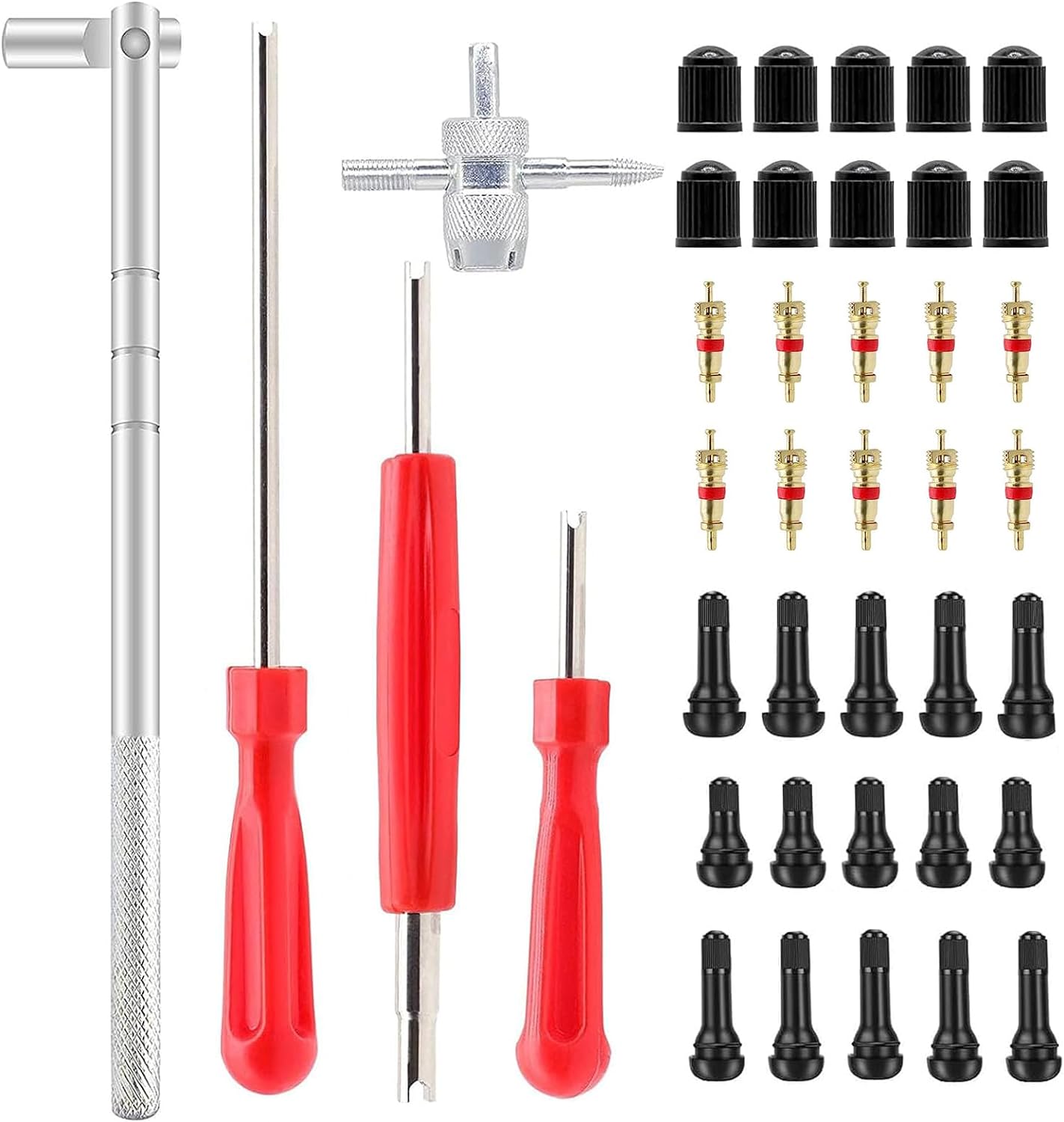
This ZHSMS valve stem puller and installer tool set makes it easy to remove and install tire valve stems without damaging wheels or valves. It uses a leverage design to save effort and includes valve stem tools plus removable valve core functionality for quick tire repairs. Compatible with tubeless tires for passenger cars, motorcycles, ATVs, off-road vehicles, and trucks.
Step-by-Step: How to Air Down a Toyota Tacoma
- Stop at the trailhead. Air down on level ground before the rough section begins, not in the middle of an obstacle.
- Check your starting PSI. Use a gauge and note whether the tires are cold or already warmed from driving.
- Pick a conservative target. For most Tacoma trail use, 18–22 PSI is a safe first adjustment. Go lower only when the terrain truly needs it.
- Deflate each tire evenly. Work around the truck and keep all four tires within about 1 PSI of each other unless your setup calls for a different front/rear split.
- Inspect sidewall bulge. A little bulge is normal; extreme bulge on stock wheels is a warning sign.
- Drive slowly at first. Check steering feel, braking response, and sidewall behavior before committing to the trail.
- Recheck after a few minutes. Pressure can change with tire temperature, elevation, and sun exposure.
Tips for Safely Reinflating Tires Post-Off-Roading
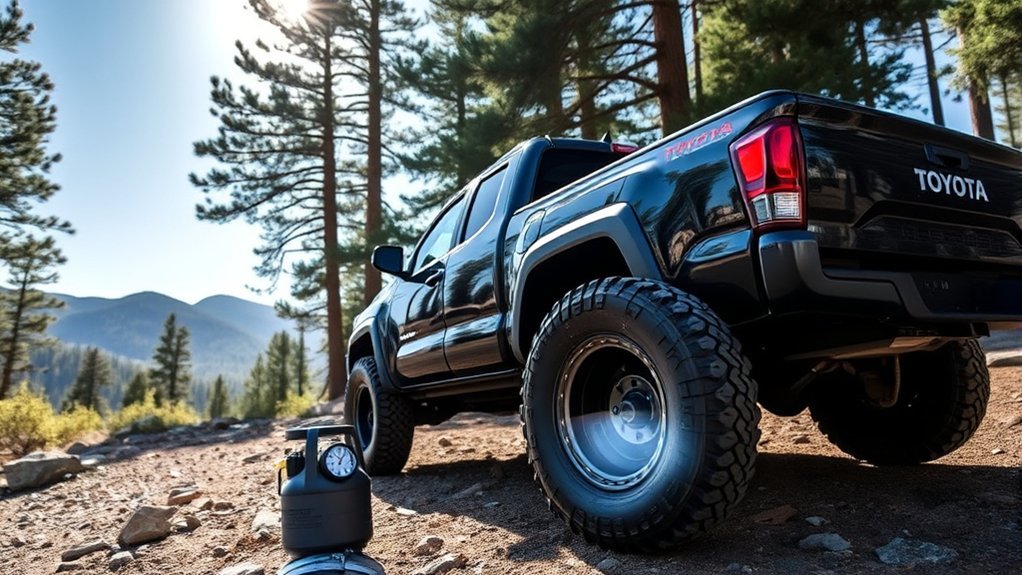
After tackling challenging off-road trails, safely reinflating your Toyota Tacoma’s tires is crucial for handling, braking, tire life, and highway safety. Air up before you return to pavement, especially if you dropped below 25 PSI.
- Use the driver-side placard as your target. The correct highway PSI is the Tacoma’s cold inflation pressure listed by Toyota for your tire size and load, not a generic trail number.
- Inflate gradually. Add air in stages and check each tire with a gauge so you do not overshoot.
- Check all four tires. NHTSA recommends checking all tires, including spares, because uneven pressure can affect handling.
- Inspect for damage. Look for cuts, sidewall bubbles, missing valve caps, rocks in the bead area, or slow leaks.
- Let TPMS update. Toyota notes that tire-pressure displays may take a few minutes to update after adjustment. Follow your owner’s manual if the system needs initialization after tire or pressure-setting changes.
- Recheck cold pressure later. If you aired up while the tires were hot, check again the next morning or after the truck has been parked long enough for a cold reading.
Warning: Do not rely on TPMS alone after off-roading. The federal TPMS standard is designed to warn about significant underinflation, but it does not replace checking tire pressure with a gauge.
Debunking Myths About Tire Pressure
Understanding tire pressure is key to maximizing your off-road experience with the Toyota Tacoma. The common myths below cause most pressure mistakes.
- Myth: Higher PSI is always better for 4WD. Higher pressure can help on pavement and with heavy loads, but it usually reduces comfort and footprint on rough trails.
- Myth: Lower PSI always protects the tire. Lower pressure can soften impacts, but too little air can over-flex the sidewall, build heat, or unseat the bead.
- Myth: The same PSI works for every Tacoma. A stock SR5, loaded overland build, TRD Off-Road, and Tacoma on LT mud-terrain tires may need different pressures.
- Myth: Winter tires should always be run low. For paved winter driving, use the placard pressure. Lower trail PSI is for deep off-road snow at low speed.
- Myth: TPMS means you do not need a gauge. TPMS is a warning system. A gauge is still the best tool for setting exact PSI.
Troubleshooting Common Tire Pressure Problems
| Problem | Likely Cause | What to Do |
| TPMS light stays on after airing up | Pressure is still low, sensor has not updated, or system needs initialization. | Check all tires with a gauge, drive a few minutes if safe, and follow the Toyota manual for TPMS initialization if needed. |
| One tire keeps losing pressure | Puncture, dirty bead, loose valve core, or damaged valve stem. | Spray soapy water around the valve and bead, inspect the tread, and repair or swap to the spare if the leak continues. |
| Tire bead unseats on trail | PSI too low, hard side load, sharp turn, or non-beadlock wheel. | Stop immediately, avoid driving on the tire, install the spare if you cannot safely reseat it, and use higher PSI next time. |
| Steering feels vague or squirmy | Pressure is too low for speed, load, or trail surface. | Add 2–4 PSI and slow down until steering and braking feel stable. |
| Compressor takes too long | Small compressor, large tires, high heat, or low battery voltage. | Let the compressor cool as directed, keep the engine running if safe, and upgrade if your tire size overwhelms the unit. |
Frequently Asked Questions
Is 40 PSI too high for 4WD?
For low-speed off-roading, 40 PSI is usually too high because the tire stays stiff and the contact patch is smaller. For pavement, towing, or heavy loads, 40 PSI may be appropriate only if your tire placard, tire load data, or tire professional supports it. Do not use one number for every situation.
Is 35 PSI too high for a Tacoma?
Not necessarily. Around 35 PSI can be normal for some Tacoma tire and load setups on the road if the door-jamb placard calls for it. For off-road trails, 35 PSI is often higher than needed, so many drivers air down to improve ride comfort and traction.
What PSI should I air down to when off-roading?
A good first target for a Toyota Tacoma is 18–22 PSI for general trails, 15–18 PSI for sand or deep snow, 16–20 PSI for mud, and 18–24 PSI for rocky terrain. Start higher if you are loaded, moving faster, or using stock wheels.
Is 30 PSI too low for winter tires?
For paved winter driving, use the cold PSI listed on your Tacoma’s tire placard. Do not lower pressure just because it is winter. Lower pressures such as 15–20 PSI are for deep off-road snow at low speed, not normal road driving.
How low can I go on stock Tacoma wheels?
For most stock-wheel Tacoma setups, avoid going below about 15 PSI unless you are experienced, moving very slowly, and willing to accept the risk of unseating a bead. Beadlock wheels and stronger off-road tires can change the range, but they do not remove the need for caution.
Can I drive on the highway after airing down?
No. Air back up before highway driving. Aired-down tires can run hotter, steer poorly, wear unevenly, and fail at road speed. Reinflate to the cold pressure on your driver-side placard before returning to pavement.
Do I need to reset TPMS after airing back up?
Usually, you should first confirm each tire with a gauge and let the TPMS update. Some Toyota systems may need initialization after tire changes or pressure-setting changes. Follow the Tacoma owner’s manual if the warning light does not clear after correct inflation.
Conclusion
Lowering your Toyota Tacoma’s tire pressure can make off-roading smoother, safer, and more controlled when it is done with judgment. Use 18–22 PSI as a general trail starting point, go lower only when sand, mud, or deep snow demands it, and stay mindful of load, speed, wheel design, and tire construction. Most importantly, air back up to the Tacoma’s placard PSI before you return to paved roads. The right pressure protects your tires, your truck, and your trip.
Sources
- Toyota Owners — 2026 Tacoma Tire Inflation Pressure — backs up using a gauge and adjusting tire inflation to the recommended level.
- Toyota Owners — 2026 Tacoma Tires and TPMS Notes — backs up TPMS limitations, pressure display behavior, and initialization nuance.
- NHTSA TireWise — backs up cold tire-pressure checks and using the vehicle placard or owner’s manual.
- 49 CFR § 571.138 — Tire Pressure Monitoring Systems — backs up TPMS warning purpose and underinflation safety risks.
- BFGoodrich — On- and Off-Road Tyre Pressure Guidance — backs up the relationship between load, speed, pressure, heat, and off-road airing down.
- Toyo Tires — Load and Inflation Tables — backs up using the vehicle placard or owner’s manual for OE tire pressure and load/inflation considerations.