
When To Replace Tires on a Toyota Tacoma
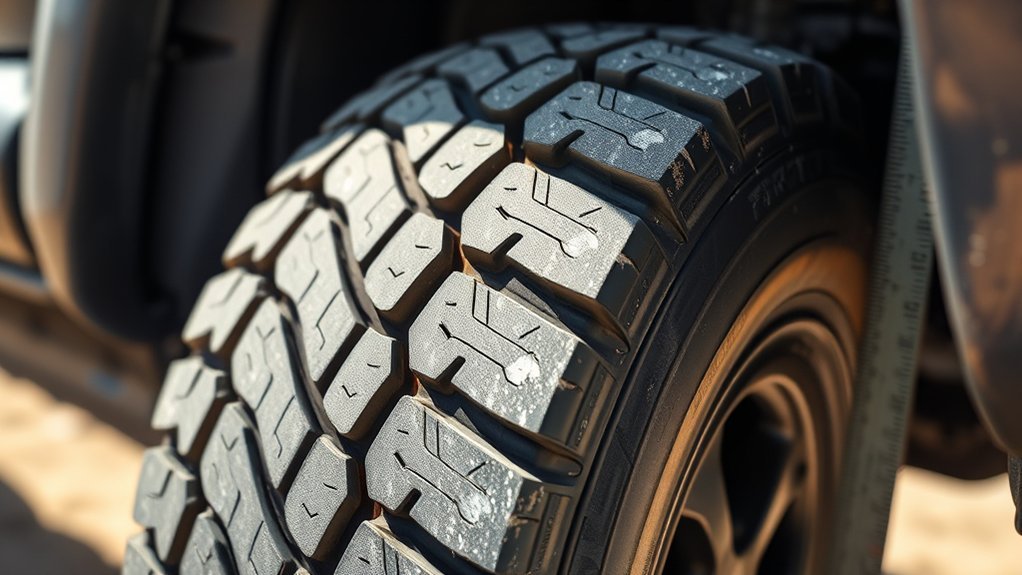
Your Toyota Tacoma tires should be replaced when the tread reaches 2/32 inch, when the treadwear bars are flush with the tread, when the tire has sidewall cracks, exposed cords, bulges, punctures, or irregular wear, or when age and condition make the tire unsafe. For Tacoma owners who tow, drive off-road, or spend a lot of time in rain or snow, it is smart to plan replacement before the legal minimum.
Quick Answer
Replace Toyota Tacoma tires when any main tread groove is at or below 2/32 inch, when the wear bars are level with the tread, or when you see bulges, deep cuts, exposed cords, sidewall damage, persistent vibration, or uneven wear. Also check tire age by the DOT code and follow the tire maker’s age limit.
Key Takeaways
- The legal minimum tread depth is 2/32 inch, but wet-weather grip can fade before that point.
- Use the penny test as a quick check, but a tread depth gauge is more accurate.
- Replace a tire immediately if it has a sidewall bulge, exposed cords, deep cracking, or sidewall puncture.
- Check cold tire pressure monthly using the driver-door tire placard, not the number molded on the tire sidewall.
- For current Tacoma maintenance, Toyota schedules service every 5,000 miles or six months and lists tire rotation at those intervals.
At a Glance
| Time Required | 10–15 minutes for a driveway inspection |
| Difficulty | Easy for inspection; professional service recommended for balancing, alignment, mounting, and damage diagnosis |
| Tools Needed | Tread depth gauge, penny or quarter, tire pressure gauge, flashlight, gloves |
| Cost | Inspection is usually free or low cost; replacement cost varies by tire size, load rating, terrain type, and brand |
Identifying Signs of Tire Wear and When to Act
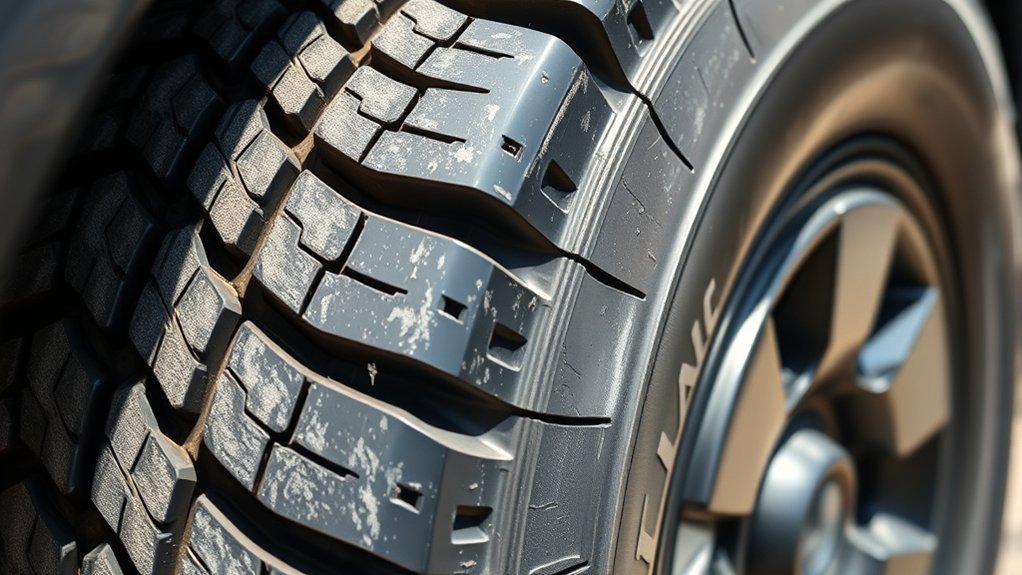
When you inspect your Toyota Tacoma tires, look at more than tread depth. A tire can have visible tread and still be unsafe because of sidewall damage, impact damage, old age, or internal separation.
Replace or professionally inspect the tire right away if you notice any of these signs:
- Tread at or below 2/32 inch: The tire has reached the U.S. minimum safety threshold used for replacement guidance.
- Wear bars are flush: Built-in treadwear indicators level with the tread mean the tire is worn out.
- Sidewall cracks, cuts, or exposed cords: These can weaken the tire structure and may not be safely repairable.
- Bulges or blisters: A bubble in the sidewall usually points to internal damage.
- Uneven wear: One-side wear, center wear, edge wear, cupping, or feathering may signal pressure, alignment, suspension, or rotation problems.
- Persistent vibration or pulling: Shaking that does not go away on smooth pavement can indicate imbalance, belt damage, uneven wear, or wheel/alignment issues.
Warning: Do not keep driving on a tire with a sidewall bulge, exposed cords, a sidewall puncture, or a deep cut. Use your spare only as an emergency temporary solution, then have the damaged tire inspected or replaced.
[Products Worth Considering]

EVOULTES heavy duty tire inflator with an integrated gauge delivers accurate pressure readings from 10–120 PSI, helping you inflate, deflate, and check tires in one tool. The 16.5-inch extended dual-head air chuck with swivel base reaches hard-to-access dual wheel valves on trucks and RVs. A brass trigger core and side-mounted air release valve make operation smooth, with standard 1/4" NPT threading and quick-connect compatibility for easy setup.

The JACO FlowPro Tire Inflator measures, inflates, and airs down tires up to 100 PSI with battery-free operation and ±2% accuracy after calibration. It features a glowing pressure dial for night visibility, a heavy-duty steel build with a hybrid hose, and a precision push-to-inflate thumb trigger. The patented Lightning Air Chuck locks on for a secure seal, and the kit includes quick-connect hardware for easy inline use with your air compressor.

Blackline Blackout is a water-based trim and tire dressing that restores rubber, vinyl, and plastic with a rich satin, blackout look. Its no-sling formula dries quickly and helps prevent messy transfer onto paint. The coating repels water and offers UV protection to help prevent fading, cracking, and discoloration for a clean, long-lasting finish.
Understanding Tread Depth for Safety
Tread depth is one of the clearest ways to decide when to replace Tacoma tires. The National Highway Traffic Safety Administration says tires are not safe and should be replaced when tread is worn down to 2/32 inch. That is the point where the tire has very little usable tread left for channeling water and gripping the road.
For everyday driving, especially in rain, snow, towing, or off-road use, do not treat 2/32 inch as the goal. Treat it as the absolute limit. If your Tacoma sees wet highways, heavy payloads, trails, or long trips, start shopping sooner so you are not forced into an emergency tire purchase.
NHTSA reported 511 deaths in tire-related crashes in 2024, which is why regular tread, pressure, and damage checks matter.
How to Check Tacoma Tire Tread Depth
You can check your Tacoma’s tire tread with a tread depth gauge, a penny, a quarter, or the built-in wear bars. A gauge is best because it gives an exact reading, but coin tests are useful for quick checks.
Tread Depth Gauge Method
- Park on a flat surface and make sure the tires are cool.
- Place the gauge probe into a main tread groove.
- Press the gauge base flat against the tread block.
- Check the inner, center, and outer grooves on each tire.
- Use the lowest reading, not the best reading, to decide if the tire is safe.
Penny Test Method
- Place a penny into a main tread groove with Lincoln’s head pointing down.
- If the tread covers the top of Lincoln’s head, that spot is above 2/32 inch.
- If the top of Lincoln’s head is visible in any main groove, the tire is at or near the replacement limit.
- Repeat the test across the inside, center, and outside of every tire.
Quarter Test for Wet-Weather Planning
The quarter test is a useful early-warning check. Place a quarter into the tread with Washington’s head pointing down. If all of Washington’s head is visible, tread is around or below 4/32 inch, and wet-weather stopping and hydroplaning resistance may be reduced. This is a good time to plan replacement before the tire reaches the minimum limit.
Pro Tip: Always check several spots on each tire. Tacoma tires can wear unevenly from towing, off-road use, low pressure, aggressive cornering, or alignment issues, so one “good” groove does not prove the whole tire is safe.
How Tread Wear Indicator Bars Help You Gauge Tire Safety
Treadwear indicator bars are small raised rubber bars molded into the tire grooves. When the surrounding tread wears down until it is even with those bars, the tire is at about 2/32 inch and needs replacement.
On many tires, you can find the wear bars by looking for “TWI” or small triangle markings on the sidewall. Follow the mark into the tread groove, then look for the raised bar across the groove.
- Fast visual check: Wear bars let you spot a worn-out tire without tools.
- Legal minimum warning: Bars flush with the tread mean the tire is at the replacement threshold.
- Uneven-wear clue: If one wear bar is flush but another area has deeper tread, the tire may have alignment, pressure, or suspension issues.
Spotting Sidewall Damage: What to Look For
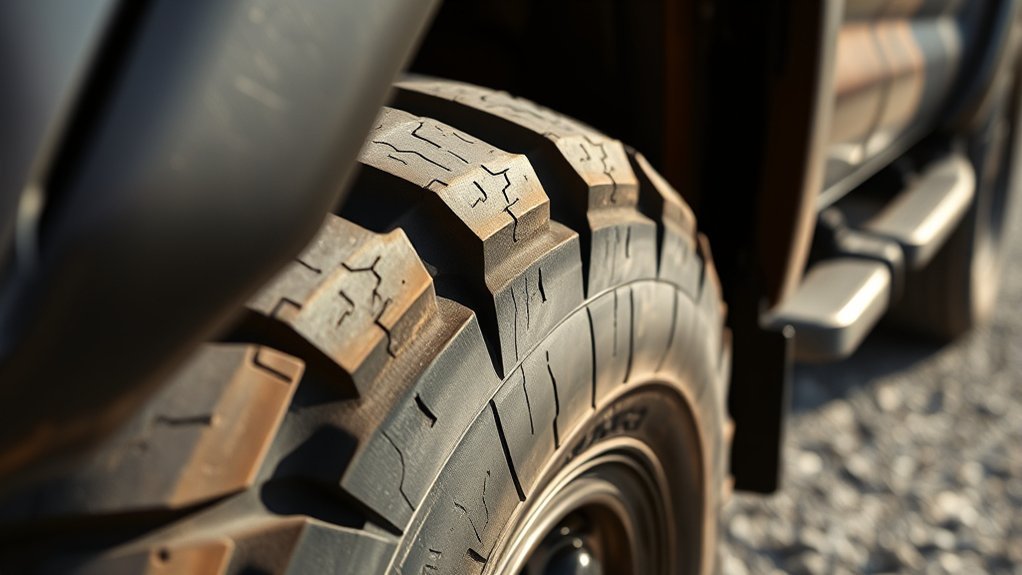
Sidewall damage deserves immediate attention because the sidewall flexes constantly and supports the tire’s structure. Unlike many tread-area punctures, sidewall punctures and deep sidewall cuts are usually not safe to repair.
Inspect both the outside and inside sidewalls for:
- Bulges, bubbles, or blisters
- Cracks that open when the rubber flexes
- Cuts, gashes, or exposed fabric cords
- Scrapes from curbs, rocks, potholes, or trail obstacles
- Damage from driving while flat or severely underinflated
If you hit a pothole, curb, rock, or trail obstacle hard enough to feel it through the steering wheel, inspect the tires afterward. Damage may show up as a sidewall bubble, new vibration, pressure loss, or a pull to one side.
Identifying Bulges and Blisters on Tires
Bulges and blisters are warning signs that the tire’s internal structure may be damaged. They often form after impact damage, underinflation, overload, or driving on rough surfaces. On a Tacoma used for towing or trails, these signs should never be ignored.
Causes of Bulges and Blisters
- Impact damage: Potholes, curbs, rocks, and road debris can damage internal cords.
- Low pressure: Underinflation increases heat and sidewall flex.
- Overloading: Payload or trailer tongue weight above the tire’s load capacity can overstress the tire.
- Driving while flat: Even a short distance on a flat tire can ruin the sidewall.
Risks of Ignoring Damage
| Damage Type | Potential Risk | Recommended Action |
|---|---|---|
| Bulge or blister | Internal tire damage and possible sudden failure | Replace immediately |
| Sidewall cut or puncture | Weak sidewall and air loss | Have inspected; replacement is usually required |
| Exposed cords | Structural tire failure | Do not drive on it; replace |
| Pothole or curb impact | Hidden belt, sidewall, wheel, or alignment damage | Inspect tire, wheel, and alignment |
What Excessive Vibration Indicates About Your Tires
Some vibration is normal on rough roads, but persistent vibration on smooth pavement needs attention. It may come from a tire imbalance, bent wheel, uneven tread wear, tire separation, loose suspension parts, or alignment issues.
Use this quick guide:
- Vibration at certain speeds: often points to tire or wheel imbalance.
- Vibration after a pothole hit: may point to wheel, tire, or alignment damage.
- Vibration with a visible bulge: treat as a serious tire damage warning.
- Pulling to one side: may point to alignment, tire pressure difference, or tire damage.
If the vibration is new, strong, or paired with pressure loss, bulging, or uneven wear, have the tire inspected before long-distance driving.
How to Check for Tread Wear and Alignment Issues
Uneven wear patterns can tell you what is happening before the tire fails. Check tread depth across the inner edge, center, and outer edge of each tire.
- Center wear: often caused by overinflation or load/pressure mismatch.
- Both-edge wear: often caused by underinflation.
- One-edge wear: often caused by alignment or worn suspension parts.
- Cupping or scalloping: may point to worn shocks, imbalance, or suspension issues.
- Feathering: can be a sign of toe alignment problems.
Fix the cause before installing new tires. New tires can wear quickly if the Tacoma still has low pressure, poor alignment, worn suspension parts, or unbalanced wheels.
[Products Worth Considering]

Universal magnetic jack pad with aluminum grooved design to protect vehicle pinch welds during lifting. Durable nylon pad inserts are upgraded and secured with screws to resist damage and keep in place. Designed to fit most single vehicle pinpoint welds for safer, stable jacking when changing tires, repairs, or performing oil changes.

This portable cordless tire inflator delivers fast, efficient inflation for cars, motorcycles, bikes, and sports balls with a digital pressure gauge. Use the one-click PSI preset with auto shut-off for accurate, hands-free topping to your target pressure up to 150 PSI. It’s compact and rechargeable with a built-in emergency LED light plus valve adapters and accessories for quick, ready-to-go use.
Recommended Schedule for Tire Replacement
There is no single mileage number for replacing Tacoma tires. Tire life depends on tire type, load, road surface, rotation, pressure, alignment, climate, and driving style. Use this schedule to stay ahead of unsafe wear:
Replace by condition first: tread depth, sidewall damage, bulges, exposed cords, pressure loss, vibration, and tire age matter more than mileage alone.
- Monthly: Check cold tire pressure, tread depth, visible damage, and the spare tire.
- Every 5,000 miles or six months: Follow Toyota’s current Tacoma maintenance interval and rotate tires when listed in your model-year maintenance guide.
- Every 3 months or before long trips: Measure tread depth with a gauge in several grooves on every tire.
- After impacts: Inspect after hitting a pothole, curb, rock, or trail obstacle.
- After 5 years: Have aging tires inspected more carefully by a tire professional.
- By 10 years from manufacture: Many tire makers recommend replacement even if tread remains; check your tire manufacturer’s guidance.
Tire Age and the DOT Date Code
Tires age even when they have plenty of tread. Heat, sunlight, ozone, storage conditions, low use, and poor maintenance can make rubber and internal materials degrade over time.
To check tire age, find the DOT Tire Identification Number on the sidewall. The last four digits show the week and year the tire was made. For example, a tire ending in “3520” was made in the 35th week of 2020. Check both sidewalls because the full code may appear on only one side.
Note: Tire age is counted from the manufacture date, not the purchase date. This matters for spare tires, low-mileage trucks, and tires that sat in storage before installation.
Tips for Proper Tire Maintenance and Longevity
Good tire maintenance helps your Tacoma handle better, brake more predictably, and avoid premature tire wear.
- Check cold pressure monthly: Use the PSI on the driver-door Tire and Loading Information Label or owner’s manual. Do not use the maximum PSI molded on the tire sidewall as your normal inflation target.
- Do not rely only on TPMS: Tire Pressure Monitoring Systems warn when a tire is significantly underinflated, but they are not a substitute for regular pressure checks.
- Rotate on schedule: Follow your Tacoma maintenance guide. Toyota’s current Tacoma guide schedules maintenance every 5,000 miles or six months and lists tire rotation at those intervals.
- Balance new tires: New tires should be balanced when installed to reduce vibration and uneven wear.
- Check alignment when wear is uneven: Alignment problems can ruin new tires quickly.
- Inspect the spare: A spare tire ages even if it has never touched the road.
Choosing the Right Replacement Tires for a Tacoma
When replacing Tacoma tires, match the tire to the truck and how you use it. Start with the tire size, load rating, and recommended cold pressure on the driver-door placard and in the owner’s manual. If your Tacoma is modified with different wheels, a lift, or non-stock tire sizes, confirm fitment, load capacity, speed rating, rubbing clearance, and spare-tire compatibility with a qualified tire shop.
Common Tacoma tire choices include:
- Highway terrain: Best for quiet ride, fuel economy, and paved-road use.
- All-terrain: A strong choice for mixed pavement, gravel, light trails, camping, and daily driving.
- Mud-terrain: Better for deep mud and rough trails, but usually louder and less efficient on pavement.
- Winter tires: Best for cold climates, snow, and ice when temperatures regularly stay low.
If you tow, haul heavy loads, or drive off-road often, pay close attention to load rating and tire construction. A tire that fits the wheel is not automatically the right tire for your Tacoma’s workload.
Frequently Asked Questions
How often should I rotate Toyota Tacoma tires?
Follow your model-year Toyota maintenance guide. For the current Tacoma maintenance guide, Toyota schedules maintenance every 5,000 miles or six months and lists tire rotation at those intervals. Rotate sooner if you see uneven wear.
Can I mix different tire brands on my Tacoma?
It is best to run four matching tires with the same size, type, load rating, speed rating, model, and similar tread depth. If you must replace only one tire, match it as closely as possible to the others and ask a tire professional, especially on a 4WD Tacoma where mismatched rolling diameter can create drivetrain stress.
What are the signs of uneven tire wear?
Common signs include bald shoulders, center wear, one-edge wear, cupping, feathering, vibration, or one tire wearing faster than the others. These patterns often point to inflation, alignment, balance, suspension, or rotation problems.
Should I replace all four Tacoma tires at once?
Replacing all four is the cleanest option because tread depth, tire model, traction, and rolling diameter stay matched. If replacing two tires, use matching tires on the same axle and follow professional guidance. If replacing one tire, match size, model, load rating, and remaining tread depth as closely as possible.
How do I choose the right tire type for my Tacoma?
Choose by how you drive. Highway-terrain tires suit mostly paved roads, all-terrain tires suit daily driving plus gravel and light trails, mud-terrain tires suit more aggressive off-road use, and winter tires suit snow and ice. Always match the tire size and load rating to your Tacoma’s placard or approved fitment.
Does the Tacoma spare tire need replacement too?
Yes. Spare tires age even when unused. Check the spare’s air pressure, sidewall condition, tread, and DOT date. Do not use an old or damaged spare as a normal replacement for worn tires.
Conclusion
Replace your Toyota Tacoma tires when tread reaches 2/32 inch, the wear bars are flush, or the tire shows serious damage such as bulges, exposed cords, deep cracks, sidewall punctures, pressure loss, vibration, or unsafe age. For the best results, check pressure monthly, measure tread in several spots, rotate on Toyota’s schedule, and fix alignment or suspension problems before installing new tires. Well-matched, properly maintained tires help your Tacoma brake, steer, tow, and handle safely on pavement, gravel, trails, and wet roads.
Sources
- NHTSA Tire Safety Ratings and Awareness — tread depth, pressure checks, tire aging, TPMS, rotation, tire-related crash data, and damage warnings
- Toyota 2026 Tacoma Warranty & Maintenance Guide — Tacoma maintenance interval and tire rotation schedule
- Toyota Owners: 2025 Tacoma Tires — tire inspection, treadwear indicators, uneven wear, and replacement guidance
- Michelin: When to Replace Tires — tire age, DOT date code, visible damage, performance changes, and tire matching guidance
- Bridgestone: How to Check Tire Tread Depth — penny test, quarter test, tread depth gauge, and wear bar guidance

Related Articles
How Tire Weight Affects Toyota Tacoma Performance
How does tire weight influence your Toyota Tacoma's performance and efficiency? Discover the surprising effects that could change your driving experience.
Read More
Tire Noise Levels by Tire Type on a Toyota Tacoma
A comprehensive look at how tire types affect noise levels in your Toyota Tacoma reveals surprising insights that could enhance your driving experience.
Read More
How To Choose Tires for a Dual Use Toyota Tacoma
Unlock the secrets to selecting the perfect tires for your dual-use Toyota Tacoma, ensuring optimal performance and comfort on every adventure. Discover more inside!
Read More