
What Tire Type Is Best for Honda Accord Highway Driving

For mostly highway driving in a Honda Accord, the best tire is usually a touring all-season tire in the exact size, load index, and speed rating listed on your driver’s doorjamb label. It gives the Accord the right mix of steady tracking, wet-road grip, quiet ride comfort, tread life, and fuel economy. If you drive through real winter weather, an all-weather tire or a dedicated winter tire may be the safer choice.
Quick Answer
For Honda Accord highway driving, choose a touring all-season tire if you mostly drive in mild weather, an all-weather tire if you want better light-snow confidence, or a dedicated winter tire if you regularly drive in freezing temperatures, packed snow, or ice. Always match the Accord’s doorjamb tire size, load index, speed rating, and cold PSI.
Key Takeaways
- For most Accord owners, a touring all-season tire is the best highway choice because it balances comfort, tread life, wet grip, and fuel economy.
- For current U.S. Accord models, common factory sizes include 225/50 R17 and 235/40 R19, but your driver’s doorjamb label is the final source.
- Do not use “33 PSI” as a universal rule. Check pressure when the tires are cold and follow the front/rear PSI on the tire placard.
- If you drive in frequent rain, start shopping before the tread reaches 2/32 inch; around 4/32 inch is a smarter planning point for wet highway safety.
- Replace tires with the same size, load range, speed rating, and proper cold pressure rating to protect handling, braking, ABS, and stability systems.
At a Glance
| Time Required | 10–20 minutes to confirm your size, PSI, climate needs, and shortlist tire types |
| Difficulty | Easy, as long as you use the tire placard and avoid guessing on size or pressure |
| Tools Needed | Driver’s doorjamb tire label, tire pressure gauge, tread-depth gauge, and owner’s manual |
| Cost | Varies by tire size, brand, speed rating, warranty, and installation fees |
Understanding Highway Driving Needs for Your Honda Accord

Highway driving asks more from a tire than slow city driving. At higher speeds, your Accord needs stable straight-line tracking, predictable braking, low road noise, good heat resistance, and enough tread depth to move water away from the contact patch.
For most drivers, the best starting point is a touring all-season tire. It is built for daily commuting, long highway trips, wet-road confidence, and longer tread life. Good examples in this category include the Hankook Kinergy PT, which Hankook lists as a premium touring all-season tire, and the Pirelli Cinturato WeatherActive, an all-weather option with Three Peak Mountain Snowflake rating for drivers who want more winter capability than a standard all-season tire.
Warning: Never choose a tire by brand name alone. Match the size, load index, speed rating, and cold inflation pressure requirements shown on your Accord’s tire placard or owner’s manual. Honda warns that improper tire size or construction can affect systems such as ABS and Vehicle Stability Assist.
[Products Worth Considering]

Keep your tires properly inflated with this analog VONDIOR tire pressure gauge, designed for fast, easy readings without batteries. The swiveling, two-axis hose and large glow dial help you measure at any tire angle with instant visibility. Built with a protective rubber shield, it supports durable, low-maintenance use for cars and trucks.

This tire inflator with pressure gauge delivers long-lasting performance with a durable rubber-protected gauge and sturdy build. The longer hose and 360 swivel air chuck help you seal the valve securely and keep your hands free while measuring, inflating, or deflating. It’s battery-free for reliable use and provides ±2 PSI accuracy in the mid-range for most typical tires, with universal compatibility for 1/4 NPT compressor outputs.

The SAFELIFE dial tire tread depth gauge measures tread depth in 1/32 inch increments with clear, easy-to-read 2-inch dial face. Color zones using a traffic light system help you quickly judge whether tread is low, marginal, or ample for safer driving. Built with a durable zinc cast body and a metal detect probe for precise, comfortable use across cars, motorcycles, trucks, and buses.
Benefits of All-Season Tires for Highway Driving
All-season tires are popular for Honda Accord highway use because they are designed to work in a wide range of mild conditions. They are not the best at every single job, but they make sense for drivers who want one set of tires for dry pavement, rain, cool mornings, and occasional light snow.
Balanced Wet and Dry Traction
A quality all-season tire gives your Accord predictable grip in everyday dry and wet conditions. For highway driving, look for strong wet-braking reputation, wide circumferential grooves, stable tread blocks, and a tire model that is available in your exact Accord size.
Year-Round Convenience
All-season tires remove the need for seasonal tire swaps in mild climates. That convenience matters if your Accord is used for commuting, road trips, and family driving. However, “all-season” does not mean “ideal for severe winter.” If snow and ice are normal where you live, consider all-weather or winter tires instead.
Best All-Season Features for Accord Highway Use
- Touring or grand-touring category: Better comfort and quieter ride than many performance tires.
- V-speed rating or higher when required: Match or exceed the tire speed symbol on your placard.
- Strong wet-road design: Important for highway rain and hydroplaning resistance.
- Good treadwear warranty: Helpful for long-distance drivers, but read the warranty details for your exact size and speed rating.
- Low rolling resistance: Can help fuel economy, especially on long highway trips.
Essential High-Performance Tire Features for Highway Safety
High-performance tires can make an Accord feel sharper, especially on Sport, Sport-L, or Touring trims with 19-inch wheels. A tire such as the Continental ExtremeContact DWS 06 Plus is an ultra-high-performance all-season tire built for responsive handling, wet grip, and year-round traction. That said, not every Accord driver needs a performance tire.
Choose a performance-focused tire if you care most about steering response, cornering feel, and wet grip. Choose a touring tire if you care more about quiet comfort, tread life, and lower long-term cost.
| Driving Priority | Best Tire Type | Why It Fits |
| Quiet highway commuting | Touring all-season | Best balance of comfort, tread life, and everyday wet/dry grip |
| Frequent rain | Grand-touring all-season or all-weather | Look for strong wet-braking performance and hydroplaning resistance |
| Light snow without seasonal swaps | All-weather with 3PMSF | Better winter capability than a standard all-season tire |
| Sharp handling | Ultra-high-performance all-season | Improves steering response but may ride firmer and wear faster |
| Regular ice and packed snow | Dedicated winter tire | Best choice for cold-weather braking and snow/ice traction |
All-Weather vs. Winter Tires: Which Is Best for Highway Driving?
All-weather tires and winter tires solve different problems. An all-weather tire is a year-round tire with stronger winter capability than a normal all-season tire. A winter tire is built mainly for cold temperatures, snow, slush, and ice.
Tire Performance Differences
For an Accord that spends most of its time on highways in a mild or mixed climate, all-weather tires can be a smart one-set solution. The Pirelli Cinturato WeatherActive, for example, is marketed as going beyond all-season performance and carries the Three Peak Mountain Snowflake symbol.
For a driver in a place with long, harsh winters, dedicated winter tires are safer. They use winter-focused rubber compounds and tread patterns that stay more effective in freezing temperatures. The tradeoff is that winter tires can wear faster and feel less precise when used in warm weather.
Weather Conditions Impact
If your highway driving is mostly dry and rainy, choose a touring all-season or all-weather tire with strong wet-road performance. If you often drive through snow-covered interstates, steep hills, or icy bridges, use winter tires during the cold season.
Longevity and Cost Considerations
All-weather tires can save the cost and storage hassle of seasonal swaps, but they may not ride as quietly or last as long as the longest-wearing touring all-season tires. Winter tires cost more up front because they require a second set, but they preserve your main tires during winter and give better cold-weather safety.
Note: If temperatures regularly stay below about 45°F and you drive in snow or ice, winter tires are worth considering even if your Accord has front-wheel drive and modern stability control.
Why Tire Size Matters for Your Drive

Tire size affects ride comfort, braking, steering, speedometer accuracy, ABS behavior, and stability-control performance. That is why the safest move is to match the size and specs listed on your driver’s doorjamb label.
For current U.S. Honda Accord models, factory tire sizes commonly include 225/50 R17 and 235/40 R19, depending on trim. Honda’s 2026 Accord feature guide lists 225/50 R17 all-season tires on LX and EX-L Hybrid, while SE, Sport Hybrid, Sport-L Hybrid, and Touring Hybrid use 235/40 R19 tires.
| Accord Trim Example | Common Factory Tire Size | Highway Driving Note |
| LX | 225/50 R17 | Usually smoother and less expensive to replace than 19-inch tires |
| EX-L Hybrid | 225/50 R17 | Good fit for comfort, fuel economy, and long-distance driving |
| SE | 235/40 R19 | Sharper look and steering feel, but less sidewall cushion |
| Sport Hybrid / Sport-L Hybrid / Touring Hybrid | 235/40 R19 | Choose carefully for noise, wet grip, and impact comfort |
Also pay attention to the numbers after the tire size. In a code such as 225/50R17 94V, “94” is the load index and “V” is the speed rating. Honda says replacement tires should be radials of the same size, load range, speed rating, and maximum cold tire pressure rating.
Maintenance Tips for Extending Tire Lifespan on Highways
Good tires only perform well if they are maintained. Highway heat, long trips, heavy loads, potholes, and underinflation can all shorten tire life.
- Check tire pressure monthly and before long trips. Use a gauge when the tires are cold. Honda defines cold tires as tires on a vehicle parked for at least three hours or driven less than 1 mile.
- Use the doorjamb label, not the tire sidewall, for PSI. The sidewall shows the tire’s maximum rating, not your Accord’s recommended cold inflation pressure.
- Check front and rear PSI separately. Some Accord models use different front and rear pressures.
- Inspect tread depth. Replace at 2/32 inch at the latest, and start planning earlier if you often drive in rain.
- Look for damage. Bulges, cuts, exposed cords, cracking, vibration, or repeated air loss need professional inspection.
- Rotate according to the Maintenance Minder or your service schedule. Rotation helps even out tread wear, especially on front-wheel-drive cars.
- Recalibrate TPMS when required. Honda notes that TPMS calibration may be needed after tire pressure adjustment, depending on model and system.
Tread depth matters most when the road is wet. As grooves get shallower, the tire has less room to move water away, which can increase hydroplaning risk and stopping distance.
Pro Tip: Keep a compact tire pressure gauge in the glovebox. TPMS is helpful, but it usually warns only after pressure is already significantly low.
[Products Worth Considering]

Monitor tire tread wear with a smart, color-coded depth gauge that shows clear condition ranges at a glance. The bar is range marked for fast, easy readings, helping you maintain safer traction and performance. Each gauge is portable with a pocket clip, and the set includes 20 units for daily use and sharing.
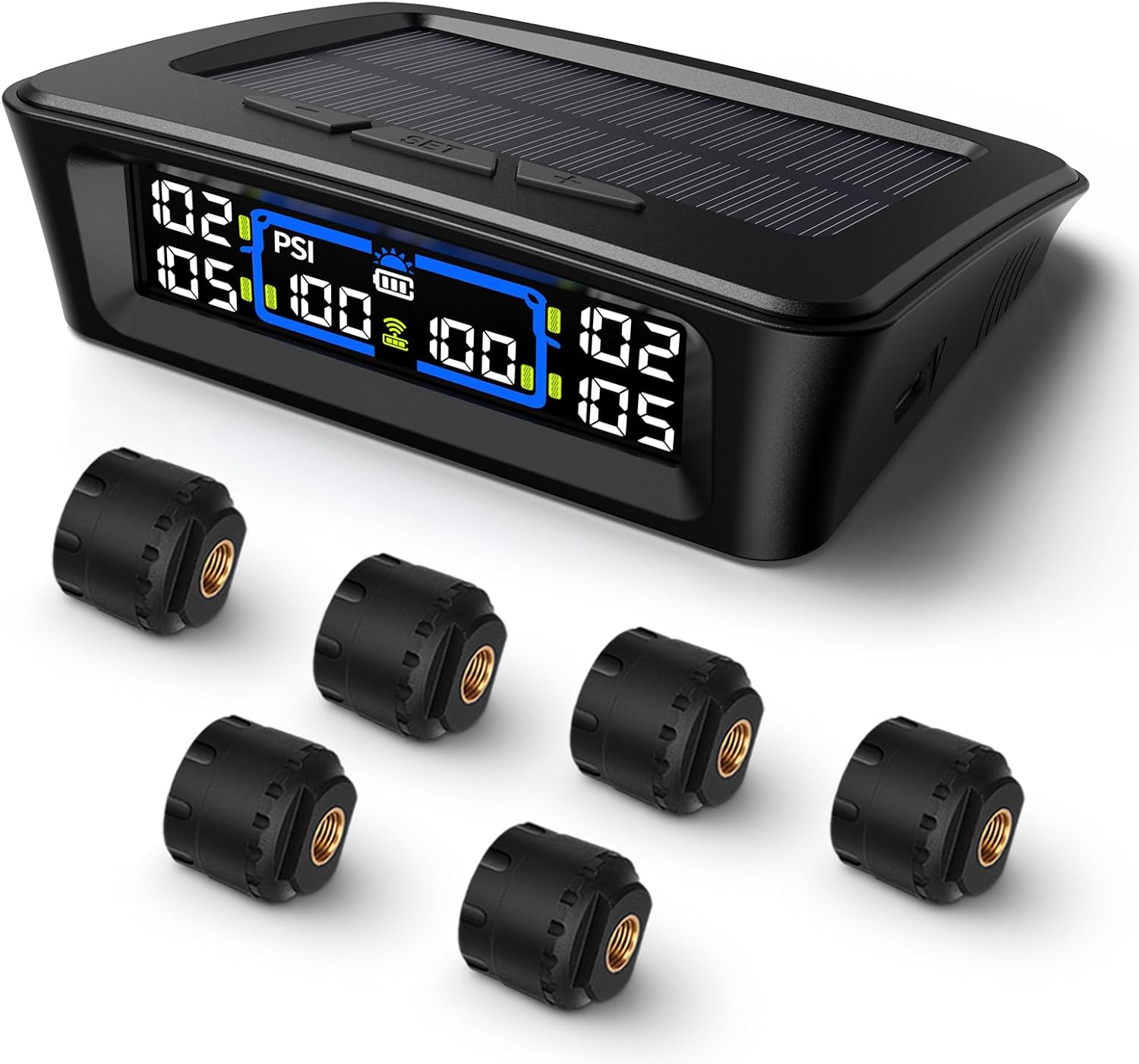
The Tymate TM12 RV TPMS delivers real-time tire pressure and temperature monitoring with a stable 433Hz display for safer long-distance driving. It supports simultaneous monitoring across vehicle and trailer zones, includes six alarm modes for pressure, temperature, leakage, battery, and signal loss, and features easy DIY installation with auto calibration. Power is supplied via USB-C charging or solar recharging, with a wide 0–144 PSI range and up to 50 ft signal coverage for RVs and towable trailers.

Accurately measure tire tread depth with a calibrated gauge marked from 0 to 1 inch in 1/32 inch increments. The color-coded bar helps you quickly identify tread condition ranges, supporting safe driving for trucks, motorcycles, automobiles, and passenger vehicles.
How to Choose the Best Tire Brand for Your Honda Accord
The best tire brand for your Accord depends on how and where you drive. Instead of starting with brand loyalty, start with your highway priorities.
- For comfort and tread life: Look at touring all-season tires from brands such as Michelin, Continental, Bridgestone, Goodyear, Hankook, Yokohama, and Pirelli.
- For wet confidence: Compare independent wet-braking results when available and choose a tire known for strong rain performance.
- For light snow: Consider all-weather tires with the Three Peak Mountain Snowflake symbol.
- For sporty driving: Look at ultra-high-performance all-season tires in the exact Accord size and speed rating.
- For long ownership: Read the warranty details for your exact tire size and speed rating. A tire advertised with a high mileage warranty may have a lower warranty in V- or W-rated sizes.
For example, the Hankook Kinergy PT is a touring all-season tire with a mileage warranty that varies by speed rating. Hankook lists 90,000 miles for H- and T-rated sizes and 75,000 miles for V-rated sizes. That difference matters because many Honda Accord fitments use V-rated tires.
Frequently Asked Questions About Highway Tires for Honda Accord

Before buying highway tires for your Accord, confirm three things: the factory tire size, the required load index and speed rating, and your real driving weather. A comfortable touring all-season tire is the best default for mild climates, but rain-heavy, snowy, or sporty driving may call for a different tire category.
Frequently Asked Questions
How often should I replace highway tires on my Honda Accord?
Replace tires when they reach the wear bars or 2/32 inch of tread at the latest, sooner if they show damage, cracking, uneven wear, vibration, or repeated air loss. If you often drive in rain, start shopping around 4/32 inch because wet braking and hydroplaning resistance decline as tread gets shallow. Age matters too; many tire and vehicle safety resources advise extra caution once tires are six to 10 years old, even if tread remains.
Are performance tires suitable for long highway trips?
Yes, performance all-season tires can work well for highway trips if they match your Accord’s required size, load index, and speed rating. They usually improve steering response and grip, but they may ride firmer, cost more, and wear faster than touring all-season tires. For maximum comfort and tread life, a touring or grand-touring all-season tire is usually the better highway pick.
What is the ideal tire pressure for highway driving in a Honda Accord?
The ideal pressure is the cold PSI listed on your Accord’s driver’s doorjamb tire placard or owner’s manual, not a universal number. For example, Honda’s 2025 gas Accord with 225/50R17 94V tires lists 33 psi front and 32 psi rear, while other trims and tire sizes can differ. Check pressure cold, at least monthly, and before long highway trips.
Can I mix tire brands on my Honda Accord?
It is best to use four matching tires. If you cannot replace all four at once, replace tires in pairs on the same axle and make sure the new tires match the required size, load range, speed rating, and cold pressure rating. Avoid mixing different tire categories, such as one winter tire with three all-season tires, because handling and braking can become unpredictable.
How do I know when my Accord tires are worn out?
Use a tread-depth gauge for the most accurate check. Built-in wear bars show when the tread is near 2/32 inch. Also watch for sidewall cracks, bulges, cuts, exposed cords, feathered wear, cupping, vibration, or a tire that keeps losing air. Any of those signs means the tire should be inspected by a professional.
Are all-weather tires better than all-season tires for a Honda Accord?
All-weather tires are better if you want more light-snow and cold-weather confidence without switching to winter tires. Standard touring all-season tires are often quieter, smoother, and longer-wearing for mild-climate highway driving. If your area gets serious winter weather, dedicated winter tires are still the safer choice.
Conclusion
The best highway tire for a Honda Accord is the one that fits your exact trim, climate, and driving style. For most drivers, that means a touring all-season tire with strong wet-road performance, a quiet ride, the correct load index, and the correct speed rating. If your highways are often snowy or icy, move up to all-weather or winter tires instead.
Before buying, check the driver’s doorjamb label, confirm the tire size and cold PSI, compare wet grip and treadwear, and avoid underspec replacements. With the right tires and regular pressure checks, your Accord will feel more stable, quieter, safer, and more efficient on long highway drives.
Sources
- Honda Info Center — 2026 Accord Wheels and Tires — current Accord trim tire sizes and wheel information
- Honda Owner’s Manual — 2025 Accord Specifications — tire size and cold PSI example for 225/50R17 94V
- Honda Owner’s Manual — Checking Tires — cold pressure checks, inspection guidance, and high-speed pressure notes
- Honda Owner’s Manual — Tire and Wheel Replacement — replacement tire size, load range, speed rating, and safety guidance
- NHTSA TireWise — tire safety, tire pressure, tread, tire aging, and maintenance guidance
- Tire Rack — Tread Depth and Wet Braking — wet-braking comparison and 4/32-inch rain-driving guidance
[Products Worth Considering]

Measure tire tread depth quickly and accurately with this LUMITECO dial gauge that reads in 1/32" increments up to 14/32". The color-coded green/yellow/red zones make it easy to judge tire wear and know when replacement is needed. A rugged, compact design with a protective pouch helps keep the gauge ready for use on cars, trucks, motorcycles, and more.

ETENWOLF T300 is a calibrated digital tire pressure gauge for accurate readings from 3 to 200 PSI across light and heavy-duty vehicles. It includes thermal compensation for reliable performance in extreme cold or heat, with an auto shut-off to extend battery life and an LED for easier reading. The sturdy design supports rugged everyday use, making it ideal for pickups, RVs, and industrial applications.

Steelman white tire marking crayons provide high-contrast, semi-permanent marks for repairing and inspecting tires and equipment. They write on wet or dry, smooth or coarse surfaces including rubber, metal, glass, and wood, making them ideal for puncture location and damage outlining. The lead- and zinc-free crayons resist weather and fading yet wipe away when you no longer need the marks.

Related Articles
How Tall Is a 305 70 R17 Tire? Exact Height, Width & Dimensions
Curious how tall a 305 70 R17 tire really is—and whether it fits your truck?
Read More
Can-Am Defender Tire Size Guide: Stock Specs & Upgrade Options
Just how big can you go on a Can-Am Defender before mods become necessary?
Read More
How Tall Is a 275 65 20 Tire? Exact Height, Width & Dimensions
Check the exact height, width, and hidden fitment effects of a 275/65R20 tire before you buy or upgrade.
Read More