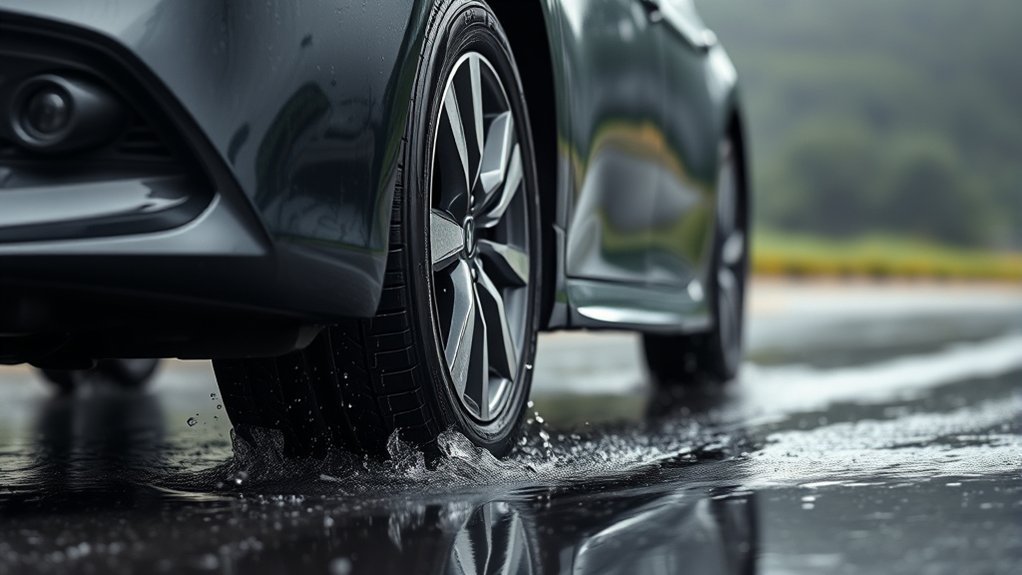
Your Toyota Camry can lose a surprising amount of traction when rain, worn tread, incorrect pressure, and speed combine. The safest approach is to use the exact tire specifications on your vehicle’s placard, check tread and pressure regularly, choose tires with proven wet-braking performance, and change your driving before water begins to build on the road.
Quick Answer
To improve Toyota Camry tire grip on wet pavement, use the exact cold pressure on the driver-door placard, keep enough tread for rain, and replace damaged or worn tires promptly. Choose the correct factory-approved size with strong wet-traction performance, slow down, increase following distance, and avoid standing or moving water.
Key Takeaways
- Use the cold tire pressure printed on your Camry’s Tire and Loading Information label, not a universal 30 psi target or the maximum pressure on the tire sidewall.
- NHTSA’s replacement threshold is 2/32 inch, but wet braking and handling can decline well before the tread reaches that point.
- Correct size, adequate tread, sound tire construction, and verified wet-traction performance matter more than tire width alone.
- In rain, reduce speed for the actual conditions, leave more space, steer smoothly, and never drive through a flooded roadway.
Understanding Tire Tread and Its Importance for Grip
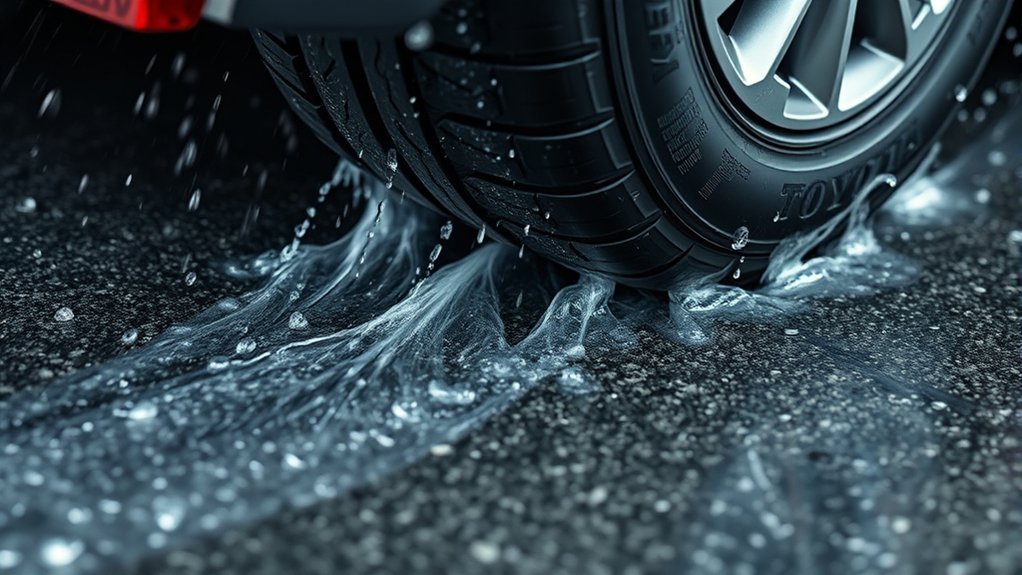
Tire tread helps your Camry maintain contact with wet pavement by giving water a path away from the tire’s contact area. Circumferential grooves, lateral channels, and small cuts called sipes all contribute, but their effectiveness falls as the tread wears, the tire becomes damaged, or water becomes deeper.
The National Highway Traffic Safety Administration says tires should be replaced when tread reaches 2/32 inch. Treat that as an immediate replacement point, not a guarantee of strong rain performance. If you drive frequently in heavy rain, begin planning replacement earlier when wet braking, steering feel, or tread measurements show a declining safety margin.
Pressure is equally important, but your correct number depends on the Camry’s model year, trim, tire size, and axle specification. Read the Tire and Loading Information label on the driver’s door edge or door pillar and measure pressure when the tires are cold.
How Tread Depth Affects Performance on Wet Roads
Tread depth affects how much water a tire can manage before the contact patch begins to lose grip. Deeper tread does not make hydroplaning impossible, but worn tread leaves less space for water and reduces the margin available for braking and steering on a wet surface.
Tread Depth Impact
Use a tread-depth gauge for the clearest reading. Measure the inner, center, and outer grooves at several points around each tire because alignment, inflation, or suspension problems can create uneven wear.
- Above 4/32 inch: Continue monthly checks and watch for uneven wear, cracking, cuts, or vibration.
- At about 4/32 inch: Start planning replacement if you regularly drive in rain. AAA testing found a major decline in wet stopping and handling at this depth compared with new tires.
- At 2/32 inch: Replace the tire. At this point, the built-in treadwear bars are level with the remaining tread.
- At any depth: Replace or professionally inspect a tire with exposed cords, a bulge, a deep cut, a separated tread, or repeated pressure loss.
In AAA’s controlled wet testing, passenger-car tires worn to 4/32 inch averaged 87 feet longer stopping distance than new tires at highway speed.
Water Evacuation Efficiency
No single liters-per-second number accurately describes every tire. Water evacuation changes with tread design, tread depth, tire size, inflation, vehicle load, pavement texture, water depth, and speed. Use the practical guide below instead of relying on a universal flow-rate claim.
| Tread Condition | Wet-Road Meaning | Action |
|---|---|---|
| Healthy, even tread | More groove volume is available to move water away. | Keep checking pressure, depth, and damage monthly. |
| About 4/32 inch | Wet braking and handling may be noticeably worse than with new tires. | Plan replacement sooner if rain is common in your area. |
| 2/32 inch or wear bars flush | The tire has reached NHTSA’s wear-indicator threshold and has little wet-weather margin. | Replace it immediately. |
Hydroplaning Risk Factors
Hydroplaning depends on several conditions at the same time, so no single speed or water depth is safe in every situation. Risk rises when:
- Speed is too high for the amount of water and available visibility.
- Tread is shallow, damaged, unevenly worn, or unsuitable for the conditions.
- Tire pressure is below the vehicle manufacturer’s specification.
- Standing water collects in ruts, low areas, or poorly drained lanes.
- Steering, braking, or acceleration inputs are abrupt.
The Federal Highway Administration notes that water reduces tire-pavement friction and that worn tires are especially sensitive as water depth and speed increase. Slow down before reaching pooled water rather than braking sharply after entering it.
Best Tire Types for Wet Weather Traction
The best wet-weather tire for a Toyota Camry is not simply the widest or softest option. It must fit the approved wheel size, carry the required load, meet an appropriate speed rating, suit your climate, and demonstrate dependable wet braking and handling.
[Products Worth Considering]

The SAFELIFE dial tire tread depth gauge measures tread depth in 1/32 inch increments with clear, easy-to-read 2-inch dial face. Color zones using a traffic light system help you quickly judge whether tread is low, marginal, or ample for safer driving. Built with a durable zinc cast body and a metal detect probe for precise, comfortable use across cars, motorcycles, trucks, and buses.

This tire inflator with pressure gauge delivers long-lasting performance with a durable rubber-protected gauge and sturdy build. The longer hose and 360 swivel air chuck help you seal the valve securely and keep your hands free while measuring, inflating, or deflating. It’s battery-free for reliable use and provides ±2 PSI accuracy in the mid-range for most typical tires, with universal compatibility for 1/4 NPT compressor outputs.

Monitor tire tread wear with a smart, color-coded depth gauge that shows clear condition ranges at a glance. The bar is range marked for fast, easy readings, helping you maintain safer traction and performance. Each gauge is portable with a pocket clip, and the set includes 20 units for daily use and sharing.
Tread Design Importance
Compare these features when shopping:
- Correct specification: Match the size and load requirements shown on the vehicle label or in the correct Camry owner’s manual.
- Wet-traction evidence: Look for reputable independent wet-braking and wet-handling tests for the exact tire model and size.
- UTQG traction grade: For applicable U.S. passenger tires, NHTSA grades straight-line wet braking from AA to C. Use the grade as one comparison point, not as a complete hydroplaning or cornering score.
- Climate fit: All-season tires suit many drivers, summer tires can offer strong warm-weather performance but are not intended for freezing conditions, and winter tires are designed for cold, snow, and ice.
- Consistent fitment: Avoid unapproved sizes or mixing incompatible tire types. Follow the owner’s manual and a qualified tire installer’s fitment guidance.
Note: A wider tire does not automatically resist hydroplaning better. Width changes the contact shape and water-management demands, so use a Toyota-approved size rather than changing width for rain performance alone.
Tire Pressure Considerations
Do not use “around 30 psi” as a universal Camry setting. Inflate each tire to the recommended cold pressure printed on your vehicle’s Tire and Loading Information label. Front and rear values may differ, and the correct pressure can change across model years and wheel packages.
Check pressure after the car has been parked for at least three hours or before it has traveled far enough to heat the tires. Do not bleed air from a warm tire merely because the reading is higher than the cold specification. Recheck it when cold.
How Proper Tire Pressure Improves Safety
Correct inflation helps the tread maintain its intended shape and contact with the road. Underinflation can increase heat, distort the contact patch, accelerate shoulder wear, reduce fuel economy, and affect handling or stopping. Overinflation can also reduce ride quality and create uneven center wear.
- Check all four tires at least monthly and before a long trip.
- Use a reliable gauge; visual inspection cannot confirm pressure accurately.
- Check the spare if your Camry has one.
- Investigate a tire that repeatedly loses pressure instead of topping it up indefinitely.
- Remember that the TPMS warning is not a replacement for routine pressure checks.
Pro Tip: Keep a digital pressure gauge and tread-depth gauge in the glove box. Record the readings by tire position so you can spot a slow leak or uneven wear before it becomes obvious.
Why Slowing Down Matters on Wet Roads
Wet pavement provides less friction and usually less visibility than a dry road. Reducing speed gives the tread more time to move water, lowers the forces demanded during a turn or stop, and gives you more time to see and respond to hazards.
Reduced Speed Benefits
A fixed instruction such as “slow by 5 to 10 mph” or “stay below 35 mph” cannot account for tire condition, rainfall, traffic, curves, darkness, or standing water. Instead:
- Reduce speed until steering and braking feel stable for the conditions.
- Increase following distance because wet-road stopping distance can be longer.
- Slow before curves, puddles, lane changes, or downhill sections.
- Pull off at a safe location if rain or spray prevents you from seeing far enough ahead.
Enhanced Tire Control
| Factor | Safer Wet-Road Response |
|---|---|
| Tread depth | Measure across each tire and replace before wet performance becomes unacceptable. |
| Tire pressure | Set cold pressure to the vehicle placard, not the sidewall maximum. |
| Driver inputs | Accelerate, steer, and brake smoothly to avoid exceeding available grip. |
| Standing water | Slow before it, avoid it when possible, and never enter a flooded road. |
What to Do If Your Camry Hydroplanes
- Stay calm and look where you want the car to go.
- Ease off the accelerator gradually.
- Hold the steering wheel steady and avoid abrupt corrections.
- Avoid hard braking while the tires have little grip.
- After traction returns, reduce speed and pull over safely if the tires, weather, or visibility need attention.
Warning: Never drive around a barricade or through a flooded road. Water can hide pavement damage, stall the vehicle, or move it off the roadway.
Common Signs of Worn Tires and Their Impacts
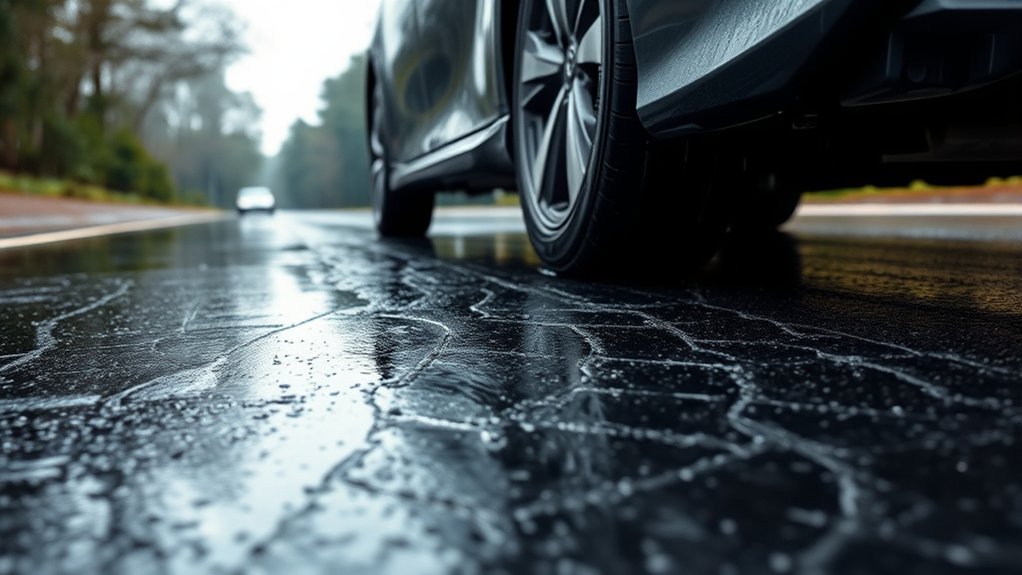
Tires are your Camry’s only contact with the road, so visible damage or uneven wear deserves prompt attention. Check for:
- Tread that is level with the built-in wear bars.
- Different tread depths on the inner, center, and outer grooves.
- Cracks, cuts, punctures, bulges, bubbles, exposed cords, or missing tread pieces.
- Feathering, cupping, flat spots, or one-sided wear that may point to pressure, alignment, balance, or suspension problems.
- New vibration, pulling, thumping, or repeated pressure loss.
- Old rubber that has hardened or cracked even though some tread remains.
Use the DOT Tire Identification Number to identify the tire’s manufacturing week and year, then follow the tire maker’s age, inspection, and replacement guidance. Age is one factor; condition, service history, climate, storage, and damage also matter.
What to Do If Your Tires Are Worn
Once you find significant wear or damage, match the response to the severity instead of continuing to drive normally.
| Action | What to Look For | Next Step |
|---|---|---|
| Measure tread | Check several grooves and locations with a gauge. | Plan early for rain use and replace at 2/32 inch at the latest. |
| Inspect damage | Look for bulges, exposed cords, deep cuts, separation, or repeated air loss. | Stop driving when unsafe and have the tire professionally inspected or replaced. |
| Check inflation | Compare cold readings with the driver-door placard. | Adjust pressure and investigate recurring loss. |
| Correct uneven wear | Check for shoulder, center, cupped, or one-sided wear. | Have pressure, alignment, balance, and suspension checked. |
| Choose replacements | Confirm size, load rating, speed rating, climate, and wet-test performance. | Install a compatible set according to Toyota and tire-manufacturer guidance. |
Do not rely on sealant, extra pressure, or careful driving to make a structurally damaged tire safe.
[Products Worth Considering]

Keep your tires properly inflated with this analog VONDIOR tire pressure gauge, designed for fast, easy readings without batteries. The swiveling, two-axis hose and large glow dial help you measure at any tire angle with instant visibility. Built with a protective rubber shield, it supports durable, low-maintenance use for cars and trucks.

Measure tyre tread depth precisely with a digital gauge that reads in both MM and inches, helping you monitor safe driving conditions. The large LCD screen is easy to operate, and the compact tool fits for cars, trucks, and motorcycles. It provides high accuracy with a 0-25.4mm range and includes a 1-year warranty for added peace of mind.

Measure tire tread depth quickly and accurately with this LUMITECO dial gauge that reads in 1/32" increments up to 14/32". The color-coded green/yellow/red zones make it easy to judge tire wear and know when replacement is needed. A rugged, compact design with a protective pouch helps keep the gauge ready for use on cars, trucks, motorcycles, and more.
How Seasonal Conditions Affect Tire Performance
Temperature changes both tire pressure and rubber behavior. Cold air lowers pressure, while sustained driving warms the tire and raises the reading. Check and correct pressure when cold rather than chasing normal warm-pressure changes.
- Warm, rainy climates: Prioritize wet braking, wet handling, heat resistance, and water-channeling design.
- Cold winters: Use tires designed for the temperatures, snow, and ice you actually face. Summer tires are not intended for freezing conditions.
- Mixed seasons: A well-rated all-season tire may be practical, but it is still a compromise and must retain adequate tread.
- Long dry periods: The first rain can mix with surface contamination and create slick conditions, so reduce speed early.
Seasonal tire changes do not replace regular checks. Inspect pressure, tread, damage, and age whenever tires are installed, rotated, or stored.
Choosing Tires for Your Toyota Camry
Start with the exact size and load information for your Camry. The Toyota owner’s manual system provides model-specific tire guidance, while the vehicle placard shows the installed specification and cold inflation pressure.
Then compare:
- Wet braking and handling: Prefer tests that compare the exact model under controlled wet conditions.
- UTQG traction: AA or A can be useful for straight-line wet-braking comparison when the grade applies.
- Climate: Match all-season, summer, or winter design to your real temperatures and precipitation.
- Ride and noise: Touring tires may favor comfort, while performance tires may trade some comfort or tread life for response.
- Load and speed rating: Do not choose a replacement below Toyota’s required specification.
- Manufacturing date and condition: Inspect every tire, including a tire sold as new, before installation.
Price alone does not predict wet performance. Use verified test results, the correct fitment, warranty terms, and a qualified installer instead of choosing by marketing claims.
[Products Worth Considering]

Accurately measure tire tread depth with a calibrated gauge marked from 0 to 1 inch in 1/32 inch increments. The color-coded bar helps you quickly identify tread condition ranges, supporting safe driving for trucks, motorcycles, automobiles, and passenger vehicles.

Steelman white tire marking crayons provide high-contrast, semi-permanent marks for repairing and inspecting tires and equipment. They write on wet or dry, smooth or coarse surfaces including rubber, metal, glass, and wood, making them ideal for puncture location and damage outlining. The lead- and zinc-free crayons resist weather and fading yet wipe away when you no longer need the marks.

ETENWOLF’s calibrated tire pressure gauge delivers accurate readings for cars, trucks, motorcycles, bikes, SUVs, RVs, and ATVs across a 0–75 PSI range. The large glow dial improves visibility in low light, while the 360° swivel chuck makes it easy to check valve pressure from any angle. It’s designed to stay accurate even in extreme hot or cold weather.
Tips for Driving Safely in Wet Conditions
Good tires increase your safety margin, but they cannot overcome excessive speed, poor visibility, or deep water. The NHTSA severe-weather guidance recommends driving slowly and increasing following distance because slick roads are harder to control and stop on.
- Reduce speed before water, curves, lane changes, and downhill sections.
- Leave more space behind the vehicle ahead.
- Use smooth steering, braking, and acceleration.
- Keep headlights, wipers, defoggers, and washer fluid ready for reduced visibility.
- Avoid standing water when possible and never enter a flooded roadway.
- Pull over at a safe location when visibility becomes too poor to continue.
- After a hard pothole impact or curb strike, inspect the tire and wheel for damage.
Electronic stability control, anti-lock brakes, traction control, and driver-assistance systems still depend on available tire grip. Proper maintenance and cautious driving remain essential.
Frequently Asked Questions
Which factor most affects tire grip?
No single factor controls grip. Tread depth and design, rubber compound, correct pressure, tire condition, vehicle load, speed, pavement texture, and water depth all affect the friction available for braking and steering.
What tire pressure should a Toyota Camry use?
Use the cold pressure printed on the Tire and Loading Information label on the driver’s door edge or pillar. The correct value varies by model year, trim, tire size, and axle, so a universal 30 psi recommendation is not reliable.
Is 2/32 inch of tread safe in heavy rain?
Two thirty-seconds of an inch is the replacement threshold, not a strong wet-weather target. Wet stopping and handling may decline well before that depth. Drivers who face frequent rain should monitor performance and begin replacement planning near 4/32 inch.
How often should Camry tire pressure and tread be checked?
Check pressure and tread at least monthly and before long trips. Measure pressure when the tires are cold, and measure tread in several grooves across each tire so uneven wear is not missed.
What should you do if your Camry starts hydroplaning?
Ease off the accelerator, hold the steering wheel steady, avoid hard braking or sudden steering, and wait for the tires to regain contact. Then slow down and stop safely if conditions remain poor.
Which tire type is best for a Camry in rain?
Choose a factory-approved size with the required load and speed ratings, then compare wet braking, wet handling, and hydroplaning resistance in reputable tests. Match the tire category to your climate instead of assuming every all-season, summer, or performance tire behaves the same.
Sources
- NHTSA TireWise — tire pressure, tread depth, tire ratings, inspection, and replacement guidance.
- Toyota Camry Owner’s Manual — model-specific tire and wheel guidance.
- Federal Highway Administration: Driving in Wet Weather — wet-pavement friction, water depth, speed, tire condition, and stopping considerations.
- NHTSA Severe-Weather Driving — speed, following distance, visibility, and flooded-road safety.
- AAA Wet-Tire Research — controlled comparison of new tires and tires worn to 4/32 inch.
Conclusion
Your Camry’s wet grip depends on a complete system: correct-size tires, enough tread, placard-specified cold pressure, sound alignment and tire condition, and driving that matches the rain and road surface. Replace tires at the 2/32-inch threshold, but do not wait for that limit if wet performance is already poor or tread is near 4/32 inch in a rain-heavy area. Slow down, leave more space, avoid standing water, and treat any bulge, exposed cord, severe vibration, or repeated pressure loss as a reason for immediate inspection.