
When your Toyota Camry tire pressure light comes on, the safest first move is not to reset it right away. Check the tire pressure while the tires are cold, inflate each tire to the PSI shown on the driver-side door placard, inspect for obvious damage, and then reset or initialize the Tire Pressure Warning System (TPWS) only after the pressure is correct.
Quick Answer
To reset a Toyota Camry tire pressure light, set all cold tires to the door-placard PSI, then use the multi-information display on compatible models: Vehicle Settings → TPWS → Set Pressure. Hold OK until the warning light blinks three times. If your Camry has a physical reset button or different menu, follow the owner’s manual.
Key Takeaways
- Do not reset the TPMS before correcting tire pressure. Initializing the system with low tires can teach the system the wrong baseline.
- Use the recommended cold PSI on the driver-side door placard, not the maximum PSI printed on the tire sidewall.
- A solid tire pressure light usually points to low pressure. A light that flashes for about a minute and then stays on often points to a TPMS malfunction.
- The reset process varies by Camry year and trim, so use the Vehicle Settings/TPWS menu only if your car has that display option.
At a Glance
| Time Required | 5–15 minutes, plus a short drive if your model needs time to relearn pressure data |
| Difficulty | Easy DIY check; professional help may be needed for sensor faults |
| Tools Needed | Reliable tire pressure gauge, air compressor, owner’s manual, and TPMS scan tool if diagnosing sensors |
| Cost | Usually free if pressure is low; sensor replacement and programming can cost more if a sensor has failed |
Before You Reset the Toyota Camry TPMS Light
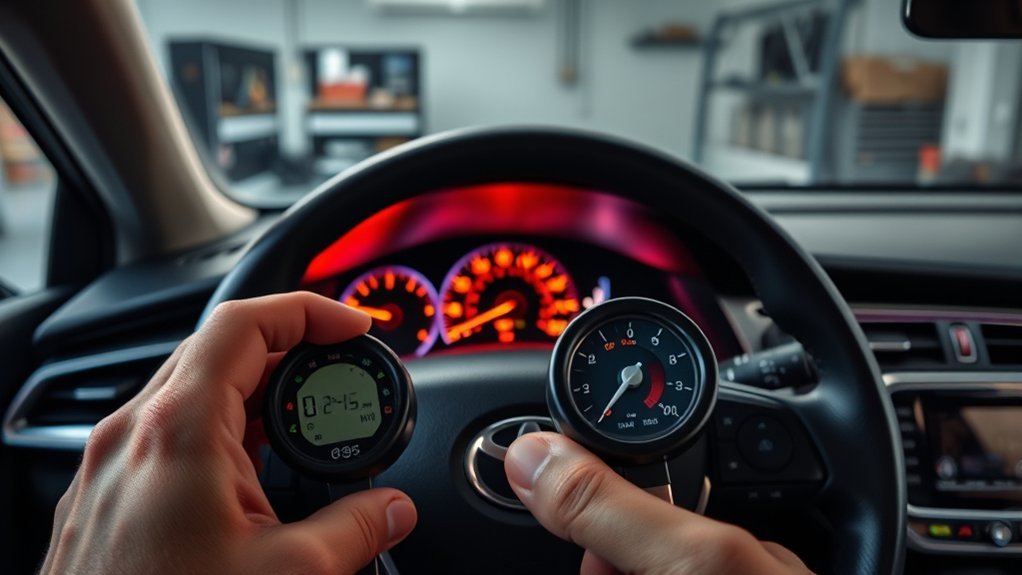
Start with the basics. The tire pressure warning light is there to alert you when one or more tires may be underinflated or when the tire pressure monitoring system has a fault. Toyota also reminds drivers to check tire pressure with a gauge and not rely only on the monitor system. You can find the official manual for your model through Toyota Owner’s Manuals.
Check tire pressure when the tires are cold, meaning the car has been parked for several hours or has only been driven a short distance. Use the recommended PSI on the tire and loading information label inside the driver-side door jamb. Do not use the maximum PSI printed on the tire sidewall unless it matches your vehicle placard.
Warning: If a tire looks flat, has sidewall damage, has a nail or screw in it, or loses air again soon after inflation, do not simply reset the light and keep driving. Install the spare if safe to do so or have the tire inspected.
Before resetting, do this checklist:
- Check all four road tires with a tire pressure gauge.
- Inflate or deflate each tire to the cold PSI listed on the door placard.
- Check the spare tire manually if your Camry has one, but do not assume the spare is monitored by TPMS unless your owner’s manual says it is.
- Look for punctures, cracked valve stems, uneven wear, or a tire that is repeatedly low.
- Confirm whether the TPMS light is solid or flashing.
How to Reset the Tire Pressure Light on a Newer Toyota Camry
Many newer Toyota Camry models use the multi-information display instead of a physical TPMS reset button. The exact icons and display layout can vary by model year, trim, and screen size, but the common TPWS initialization path is similar.
- Park the Camry in a safe, level place.
- Set all tires to the recommended cold tire pressure.
- Turn the ignition or power switch to ON. You usually do not need to start driving yet.
- Use the steering wheel controls to open the multi-information display settings.
- Select Vehicle Settings.
- Select TPWS or Tire Pressure Warning System.
- Select Set Pressure.
- Press and hold OK until the tire pressure warning light blinks three times.
- Drive normally for several minutes if the owner’s manual or display prompts you to do so.
If the tire pressure light turns off and stays off, the reset worked. If it returns, recheck the tire pressure cold the next morning. A tire that keeps dropping pressure may have a slow leak even if it looks normal.
Note: On Toyota systems, this process is often called “initialization” or “set pressure,” not just “reset.” It teaches the system the current correct pressure as the reference point.
What If Your Camry Has a TPMS Reset Button?
Some older Toyota Camry models use a physical tire pressure warning reset button instead of a TPWS menu. The button location varies, so check the owner’s manual before removing panels or pressing random buttons.
The general older-model process is:
- Set all tires to the correct cold PSI.
- Turn the ignition to ON without starting the engine, unless your manual says otherwise.
- Press and hold the TPMS reset button until the tire pressure light blinks.
- Release the button and allow the system time to initialize.
- Drive the vehicle as directed by the manual, then confirm the warning light stays off.
If your Camry does not have the menu path above and you cannot find a reset button, do not force the process. Use the Toyota owner’s manual for your exact year or ask a Toyota service department to confirm the reset method.
Solid vs. Flashing TPMS Light: What It Means
A solid tire pressure warning light usually means one or more tires are below the set pressure threshold. A flashing tire pressure light that flashes for about a minute and then stays on usually points to a TPMS malfunction, such as a failed sensor, dead sensor battery, missing sensor ID, or receiver issue.
The federal TPMS standard explains that TPMS exists to warn drivers of significant underinflation and related safety problems. You can read the rule at 49 CFR § 571.138.
A TPMS warning is not a substitute for tire maintenance. It is a last-line alert that should send you back to the tire gauge, the door placard, and a visual tire inspection.
Common Causes of TPMS Light Activation
Incorrect Tire Pressure
Incorrect tire pressure is the most common reason the Toyota Camry TPMS light comes on. Cold weather, natural air loss, punctures, and recent tire service can all change pressure. The National Highway Traffic Safety Administration recommends checking tire pressure when tires are cold and using the vehicle placard pressure.
Temperature swings can make the light appear suddenly. A tire that was barely correct on a warm afternoon may drop below the threshold on a cold morning. That does not mean the TPMS is broken; it means the tire pressure should be checked and corrected cold.
Slow Leaks or Tire Damage
If the same tire keeps losing pressure, suspect a slow leak. Common causes include nails, screws, bead leaks, cracked valve stems, corrosion around the wheel, or a previous tire repair that is failing.
Do not reset the system repeatedly to hide the warning. Find and repair the air-loss source first.
Sensor Malfunction Issues
Each direct TPMS sensor transmits tire pressure data to the vehicle. If a sensor battery is weak, a sensor is damaged, a valve stem corrodes, or the receiver cannot read the signal, the system may show a warning even when tire pressures are correct.
Sensor problems are more likely after tire replacement, wheel replacement, collision damage, valve-stem damage, or years of normal sensor aging.
Battery Life Concerns
Most TPMS sensors use sealed, non-serviceable batteries. When the battery fails, the usual repair is to replace the sensor and register or program it to the vehicle. Many sensors last several years, but lifespan depends on sensor design, climate, mileage, and driving conditions.
If your Camry is older and the original sensors are still installed, a persistent TPMS malfunction warning may be caused by one or more weak sensor batteries.
Immediate Steps After TPMS Light Activation
Confirm Tire Pressure First
When the TPMS light comes on, check pressure before you reset anything. Find the recommended PSI on the driver-side door placard, then measure each tire with a reliable gauge. If one tire is much lower than the others, inspect it carefully before adding air and driving.
- Use cold tire pressure whenever possible.
- Inflate to the door-placard PSI, not the sidewall maximum.
- Check the spare manually if equipped.
- Recheck pressure the next day if the warning returns.
Reset TPMS Light Properly
After all tires are corrected, use the correct reset method for your model. On compatible Camrys, use the TPWS menu and hold OK on Set Pressure until the warning light blinks three times. On older models, use the physical reset button if your owner’s manual lists one.
Pro Tip: Keep a small digital tire gauge in the glove box. TPMS tells you there may be a problem, but a gauge tells you the actual PSI.
When Not to Reset the Toyota Camry TPMS Light
Do not reset or initialize the TPMS if:
- One or more tires are visibly low.
- You have not checked the pressure with a gauge.
- A tire keeps losing air after being inflated.
- The tire pressure light is flashing and then staying on.
- You just replaced a sensor and the sensor IDs have not been registered.
- You changed tire size and have not confirmed the correct pressure with Toyota guidance or a tire professional.
Resetting at the wrong time can make the system less useful because it may learn the wrong pressure baseline.
Diagnosing TPMS Issues and Sensors
If tire pressure is correct but the light stays on, move from pressure checks to system diagnosis. A TPMS scan tool can read sensor IDs, sensor battery status when supported, temperature, pressure, and trouble codes. This is especially useful after tire replacement, wheel replacement, or sensor replacement.
Common diagnostic findings include:
- Dead or weak sensor battery: The sensor may stop transmitting reliably.
- Missing sensor ID: A new sensor may need to be registered to the vehicle.
- Damaged valve stem or sensor body: Damage can happen during tire service or from corrosion.
- Receiver or antenna issue: Less common, but possible if multiple sensors stop communicating.
- Wrong sensor frequency or incompatible aftermarket sensor: The vehicle may not recognize it.
If you do not have a TPMS scan tool, a tire shop or Toyota dealer can usually identify which sensor is not communicating.
[Products Worth Considering]

This TPMS sensor training and relearn reset tool is customized for Ford, Lincoln, and Mercury vehicles to help activate tire pressure programming after sensor replacement or tire rotation. It can activate individual tire pressure sensors with one-button operation, helping prevent TPMS warning light illumination. It is not a sensor programming tool and cannot program replacement sensors—use it to trigger/activate sensors only.
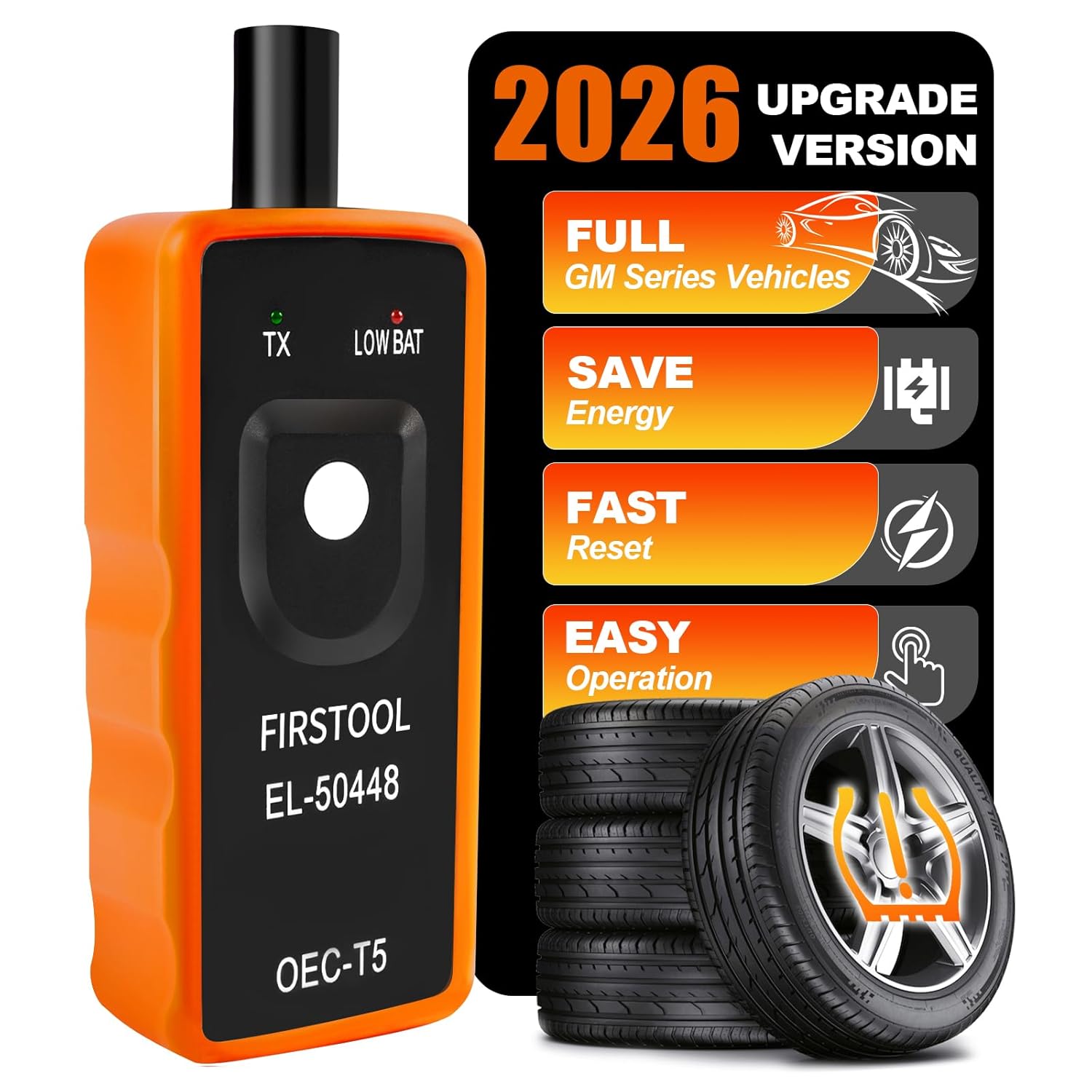
This TPMS relearn tool helps you quickly activate, match, and reset GM tire pressure sensors to keep the vehicle monitoring system working properly. It clears tire pressure alarms and dashboard warning lights after sensor replacement or tire rotation, and supports learning for common 315/433 MHz TPMS sensors. Designed for simple one-button operation, it can help you avoid unnecessary trips to repair shops.

The VEHLIVE SU-50448 II TPMS relearn tool provides a fast activation reset to restore accurate tire pressure monitoring after sensor replacement or tire rotation. It supports 315 MHz and 433 MHz GM series sensors and helps clear dashboard pressure warnings. With simple two-button operation and horn-confirmed relearning order, you can reprogram sensors conveniently at home.
Why Regular Tire Maintenance Is Essential for TPMS Functionality

Regular tire maintenance helps your Camry’s TPMS work as intended. Monthly pressure checks reduce false alarms, improve tire life, and help avoid driving on underinflated tires. FuelEconomy.gov says keeping tires properly inflated can improve gas mileage by 0.6% on average and up to 3% in some cases.
Rotate tires at the interval listed in your Toyota maintenance guide or owner’s manual. Tire rotation does not automatically fix a TPMS issue, but it helps even out tire wear and gives a technician a chance to inspect valve stems, tread, sidewalls, and sensor-related damage.
Good tire habits include:
- Checking tire pressure monthly and before long trips.
- Checking pressure after major temperature changes.
- Inspecting tread depth and uneven wear.
- Replacing damaged valve stems during tire service when needed.
- Asking the shop to confirm TPMS sensor health during tire replacement.
How to Know When It’s Time to Replace Your TPMS Sensors
[Products Worth Considering]

Replace your worn or missing TPMS sensors with pre-programmed, direct-fit sensors for compatible Ford, Lincoln, and select Mazda models. Each sensor comes ready to activate with a scan tool, helping restore accurate tire pressure monitoring and trouble-free installation. Built with a long-life CR2032 battery and tested before factory release, this set provides dependable performance with a one-year warranty.

Replace worn or malfunctioning GM TPMS sensors with this 433MHz pre-programmed sensor set designed for compatibility with many Chevrolet, Buick, GMC, and Cadillac models. It includes guidance for proper OBDII relearning/pairing after installation and supports reliable long-term operation with a high-performance CR2032 battery. Quality tested for durability and performance to help restore accurate tire pressure monitoring.

The UYYE TPMS relearn tool helps activate and relearn tire pressure monitor sensors quickly, typically in minutes. It supports TPMS learn mode resetting using a simple three-step process: enter learn mode, position the tool near the valve stem, and press the learn button. Designed for specific GM models, it streamlines sensor programming and reduces trips to dealers or tire shops.
Signs of Battery Failure
TPMS sensor battery failure usually shows up as communication trouble, not a simple low-pressure reading. You may see a flashing TPMS warning, missing pressure data, inconsistent readings, or a trouble code for one sensor.
Because the battery is sealed inside most sensors, the fix is usually sensor replacement rather than battery replacement.
Sensor Age Considerations
If your Camry is more than several years old and still has its original sensors, age becomes a factor. Do not replace sensors only because they are old, but do consider replacement if diagnostics show weak communication, battery failure, corrosion, cracked valve stems, or repeated TPMS faults.
Frequent Warning Light Activation
If the warning light keeps coming back even after the tire pressure is correct, do not keep resetting it. Recheck the pressure cold, inspect for leaks, and scan the TPMS. Repeated activation usually means the system is detecting a real pressure drop or a sensor problem.
After Tire Rotation, New Tires, or Sensor Replacement
After tire rotation, many Camrys can continue monitoring normally, but the displayed tire location may need time or service-tool support to match the new positions. After replacing a tire pressure sensor, the new sensor ID may need to be registered with the vehicle. A compatible TPMS scan tool or Toyota diagnostic tool may be required.
If the light came on right after new tires, wheel replacement, or a tire repair, ask the shop to confirm:
- Each wheel has the correct TPMS sensor installed.
- The sensors are compatible with your Camry year and market.
- Sensor IDs were registered if required.
- All tires were set to the placard PSI before initialization.
[Products Worth Considering]

The AICEL TPMS relearn tool helps you quickly reset or relearn tire pressure sensors after replacement, tire rotation, or resolving tire pressure alarms. It provides an activation reset function so your vehicle’s TPMS can operate optimally, saving time and money on frequent visits to an auto shop. Designed for easy use on most vehicles, it works by placing the tool near the valve stem and using the learn button.

Monitor tire tread wear with a smart, color-coded depth gauge that shows clear condition ranges at a glance. The bar is range marked for fast, easy readings, helping you maintain safer traction and performance. Each gauge is portable with a pocket clip, and the set includes 20 units for daily use and sharing.

Masoll Gen 2 external TPMS sensors are a DIY replacement set of 4 for select GM vehicles made after 2006, helping you shut off the TPMS warning light quickly. Simply screw the sensors onto the tire valves and sync to your car ECU using the included EL-50448 relearn tool. Dual-frequency 315/433 MHz design provides OEM-level performance with accurate readings and replaceable batteries for about two years.
When to Seek Professional Help for TPMS Issues
Seek professional help if the TPMS light flashes for about a minute and then stays on, if the same tire repeatedly loses air, or if the reset fails after pressures are confirmed correct. A shop can test for leaks, scan each sensor, check sensor IDs, and confirm whether the warning is caused by a pressure problem or a system malfunction.
You should also get help if your Camry has aftermarket wheels, recently replaced sensors, corrosion around the valve stems, or a tire that was repaired with sealant. Tire sealants and improper mounting can damage some TPMS sensors.
Tips for Preventing Future TPMS Problems

Preventing TPMS problems is mostly about tire care. A working TPMS is helpful, but it should not be your only tire-maintenance tool.
- Check cold tire pressure at least once a month.
- Use the door placard or owner’s manual for the correct PSI.
- Top off tires before long trips.
- Inspect valve stems for cracks or corrosion.
- Have slow leaks repaired instead of repeatedly adding air.
- Ask for TPMS-friendly service when replacing tires.
- Keep records of sensor replacements so you know their age.
Understanding the Role of Tire Pressure in TPMS
Your Camry’s TPMS is designed to warn you when tire pressure becomes significantly low or when the system cannot monitor pressure properly. It does not replace routine pressure checks, and it may not warn you immediately for every small pressure change.
Correct tire pressure supports safer handling, better tread wear, and better fuel economy. Underinflated tires can run hotter, wear unevenly, and reduce vehicle control. Overinflated tires can also wear poorly and reduce ride quality, so the goal is not “more air.” The goal is the manufacturer-recommended cold PSI.
Best Practices for Maintaining Your TPMS System
Use these best practices to keep the tire pressure warning system dependable:
- Check tire pressure cold and use the driver-side door placard.
- Reset or initialize TPMS only after pressure has been corrected.
- Do not ignore a flashing TPMS light.
- Use TPMS-compatible valve stems and sensors during tire service.
- Ask the tire shop to scan sensors before replacing tires on an older Camry.
- Replace failed sensors with compatible parts and register them correctly.
For general tire-safety guidance, NHTSA’s TireWise tire safety page is a reliable reference for cold tire pressure, placard PSI, tire age, and tread checks.
Frequently Asked Questions
Why is my tire pressure light on when my tires are fine on my Toyota Camry?
The tires may look fine but still be below the recommended cold PSI. Check them with a gauge. If pressure is correct and the light stays on, the cause may be a slow leak, failed TPMS sensor, weak sensor battery, missing sensor ID, or TPMS receiver issue.
Where is the Toyota Camry TPMS reset button?
It depends on the model year. Many newer Camrys use the multi-information display menu instead of a physical button. Older models may have a reset button under the dash, near the steering column, or in another location listed in the owner’s manual.
Can I reset the TPMS light without adding air?
You should not reset the light until you have checked and corrected tire pressure. Resetting with low tires can teach the system the wrong baseline and may make the warning less useful.
Why does my TPMS light come on in cold weather?
Cold air lowers tire pressure. If your tires were close to the warning threshold, a cold morning can make the light turn on. Check pressure cold and inflate to the door-placard PSI.
What does it mean if the tire pressure light flashes first and then stays on?
A flashing TPMS light that later stays on usually indicates a system malfunction rather than simple low pressure. A sensor may not be transmitting, a sensor battery may be dead, or the vehicle may not recognize a sensor ID. Have the system scanned.
Should I inflate my Camry tires to the number on the tire sidewall?
No. The sidewall number is usually the tire’s maximum pressure, not the recommended operating pressure for your Camry. Use the cold PSI on the driver-side door placard or the owner’s manual.
Conclusion
Resetting the Toyota Camry tire pressure light is simple once the tires are actually set correctly. Check cold pressure first, use the driver-side door placard, inspect for leaks or damage, and then initialize the TPWS through the display menu or reset button that matches your model year. If the light flashes, returns quickly, or stays on after a proper reset, treat it as a real tire or sensor issue and have it diagnosed.
Sources
- Toyota Owner’s Manuals and Warranties — official Toyota manual lookup for model-specific TPWS instructions
- Toyota Support: Tire Pressure Monitor — Toyota guidance that TPMS should not replace gauge-based tire pressure checks
- NHTSA TireWise — cold tire pressure, tire placard, and tire safety guidance
- 49 CFR § 571.138 Tire Pressure Monitoring Systems — federal TPMS purpose, warning requirements, and malfunction requirements
- FuelEconomy.gov: Keeping Your Vehicle in Shape — fuel economy impact of proper tire inflation
- TPMSDirect: TPMS Sensor Batteries — general TPMS sensor battery lifespan and sealed-battery replacement context