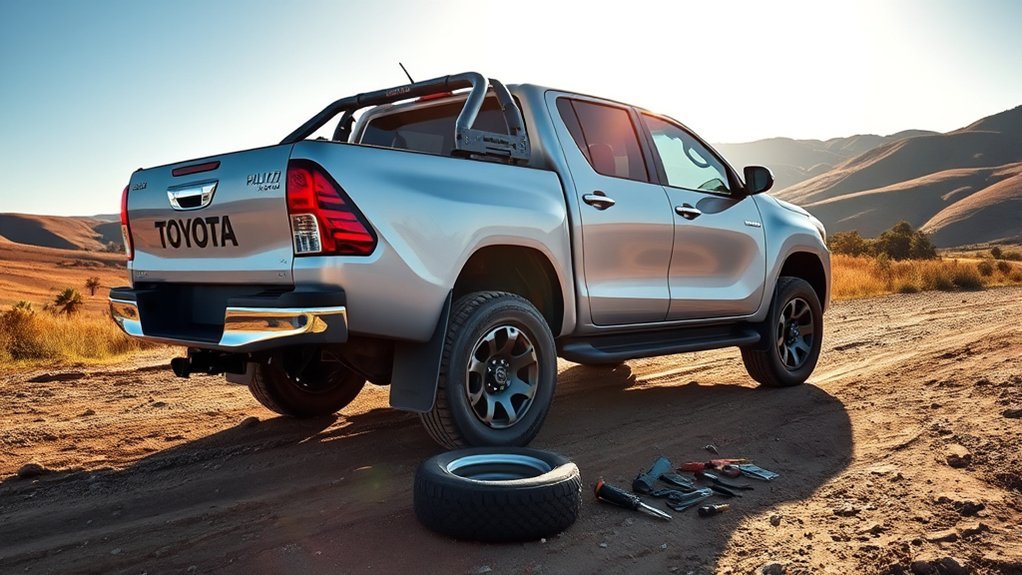
If you get a flat tire on your Toyota Hilux, slow down carefully, move out of traffic, and decide whether it is safe to change the wheel yourself. A Hilux is a heavy pickup, so the safest repair depends on your location, the damage, your spare tire, and the tools supplied with your specific model year. Always check your owner’s manual, tire placard, and spare-tire label before driving on a replacement wheel.
Quick Answer
For a Toyota Hilux flat tire, pull over safely, switch on the hazard lights, set the parking brake, chock a wheel, and inspect the damage. If the tire is unsafe to repair, install the spare using the correct jack point and tighten the lug nuts in a crisscross pattern. Drive cautiously and get the damaged tire inspected as soon as possible.
Key Takeaways
- Do not change a tire in a live traffic lane, on a steep slope, or on soft ground.
- Use the Hilux owner’s manual for the correct jack point, spare location, and wheel-nut torque.
- Tire sealant and plug kits are temporary fixes and are not suitable for sidewall damage, blowouts, or large cuts.
- Check tire pressure when the tires are cold and use the pressure shown on your Hilux tire placard, not a generic PSI number.
At a Glance
| Time Required | 20 to 45 minutes if the tools, spare, and ground conditions are suitable |
| Difficulty | Moderate because the Hilux is a pickup and the spare may be heavy or stored under the vehicle |
| Tools Needed | Spare wheel, jack, jack handle, lug wrench, wheel chocks, gloves, flashlight, tire pressure gauge, and a stable board for soft ground |
| Cost | Free if using your spare yourself; paid repair or replacement may be needed after inspection |
Identifying a Flat Tire on Your Toyota Hilux
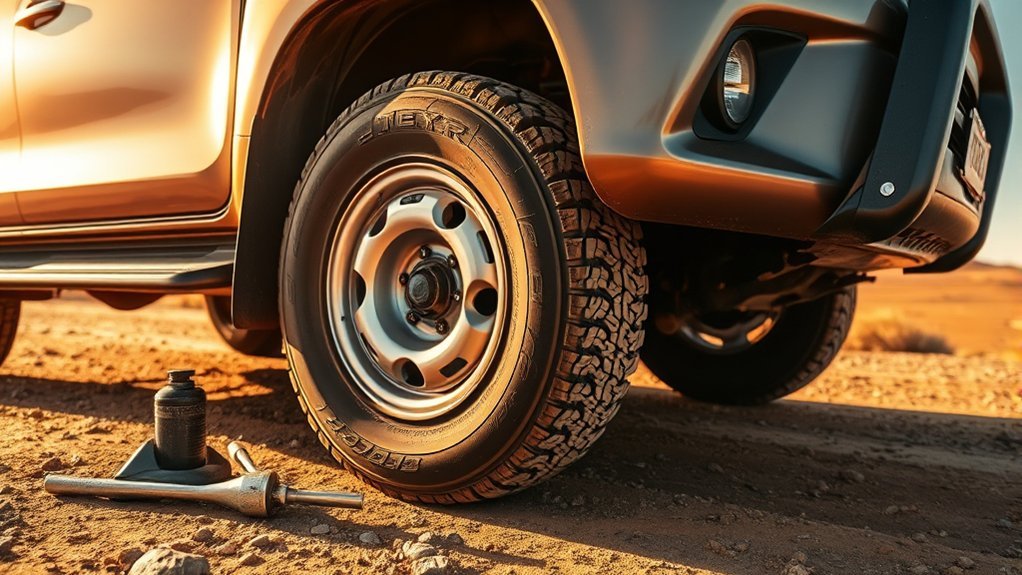
Identifying a flat tire early can help you avoid rim damage, loss of control, and unsafe roadside work. Common signs include a thumping or flapping sound, heavy steering, a sudden pull to one side, vibration, or a low tire pressure warning light.
If the tire fails while you are moving, keep both hands on the wheel, avoid hard braking, ease off the accelerator, and steer to a safe stopping area. The National Highway Traffic Safety Administration advises drivers to inspect tires and check pressure regularly because poor tire maintenance can contribute to flats, blowouts, and tread separation.
Warning: Do not stop in a traffic lane to inspect or change the tire. If you cannot reach a flat, stable, well-lit area away from moving vehicles, call roadside assistance instead.
Once parked safely, walk around the Hilux and look for obvious signs of damage. Check for nails, screws, cuts, sidewall bulges, cracked rubber, a separated tread, or a tire sitting visibly lower than the others. If the tire is shredded, the sidewall is damaged, or the wheel rim has touched the road, treat the tire as unsafe until a professional inspects it.
Step-by-Step Guide to Changing Your Flat Tire Safely
Before changing a flat tire on a Toyota Hilux, confirm that the ground is firm and level. A Hilux is heavier than a small car, and an unstable jack can slip. If your truck is loaded, towing, parked on gravel, or stuck on an uneven shoulder, professional help is often the safer choice.
Park Safely and Prepare the Hilux
- Pull over as far from traffic as possible and turn on your hazard lights.
- Put the transmission in Park for an automatic or in gear for a manual, then set the parking brake.
- Ask passengers to stand well away from traffic and the vehicle.
- Place wheel chocks in front of and behind the tire diagonally opposite the flat.
- Check the owner’s manual for the correct jack point and the location of the spare wheel, jack, and tools.
Tools Required For Change
After you have made the area safe, gather the right equipment. Your exact Hilux tool kit may vary by market and model year, so compare this list with your owner’s manual.
| Tool | Purpose |
|---|---|
| Spare wheel or tire repair kit | Gets the Hilux moving temporarily after a puncture |
| Lug wrench | Loosens and tightens the wheel nuts |
| Vehicle jack and jack handle | Lifts the Hilux at the correct lift point |
| Wheel chocks | Help prevent the truck from rolling |
| Gloves | Protect your hands from hot brakes, sharp edges, and road dirt |
| Flashlight | Helps you see the jack point, wheel nuts, and tire damage at night |
| Small wood board | Can help stabilize the jack on firm but slightly uneven ground |
| Tire pressure gauge | Confirms the spare and other tires are inflated correctly |
Remove the Flat and Install the Spare
- Remove any wheel cover if your Hilux has one.
- Loosen each lug nut slightly while the tire is still on the ground. Do not remove the nuts yet.
- Place the jack only at the approved Hilux jack point shown in the owner’s manual.
- Raise the vehicle until the flat tire clears the ground.
- Remove the lug nuts and keep them somewhere clean where they cannot roll away.
- Pull the flat tire straight off the hub.
- Mount the spare wheel by aligning the holes with the wheel studs.
- Start each lug nut by hand to avoid cross-threading.
- Snug the lug nuts in a crisscross pattern.
- Lower the Hilux until the tire touches the ground, then tighten the lug nuts again in a crisscross pattern.
- Fully lower the truck, remove the jack, stow the tools, and check the spare’s pressure.
Pro Tip: After installing the spare, drive gently to a tire shop or Toyota service center and ask for the wheel nuts to be torqued to the specification for your Hilux. Do not rely only on “as tight as possible.”
Temporary Tire Fixes: What to Know
If your Toyota Hilux has a tire repair kit instead of a usable spare, read the kit instructions before using it. Sealant may help with a small tread puncture, but it is not a full repair. It also may not work on sidewall cuts, shoulder damage, large holes, blowouts, valve-stem leaks, cracked tires, or damage caused by driving on a flat.
Use these temporary options carefully:
- Sealant and air compressor: May temporarily seal a small tread puncture. Drive only as directed by the kit and have the tire inspected quickly.
- Tire plug kit: Useful only for certain tread punctures and usually best treated as a temporary roadside fix.
- Full-size spare: Often more stable than a compact spare, but it still needs correct pressure and safe tread condition.
- Temporary spare: Follow the speed and distance limit printed on the spare and in the owner’s manual.
- Roadside assistance: Best choice if you are near traffic, carrying a heavy load, towing, on unstable ground, or unsure about the repair.
Note: Hilux equipment varies by country, generation, and trim. Toyota announced a ninth-generation Hilux in November 2025 with market-specific powertrains and equipment, so always follow the manual for your exact truck rather than assuming every Hilux has the same spare or repair kit.
[Products Worth Considering]

Wykodra tire plugs provide quick vulcanizing repairs for tubeless tires, helping you seal punctures and get back on the road. The industrial-strength rubber creates a long-lasting, leak-resistant bond and is designed for emergency fixes without removing the tire. Choose between two standard plug sizes with color-matched options for small to larger damage across many vehicles and off-road uses.

The Dr.Roc spare tire tool kit helps you release, lower, or raise your spare tire with reliable extension tools and a lug nut wrench. It is made from rustproof automotive-grade steel and includes an organized carry case for convenient storage. Designed for compatibility with select GM models from the late 1990s through 2019, it uses upgraded extension components to install and remove spare tires with less hassle.
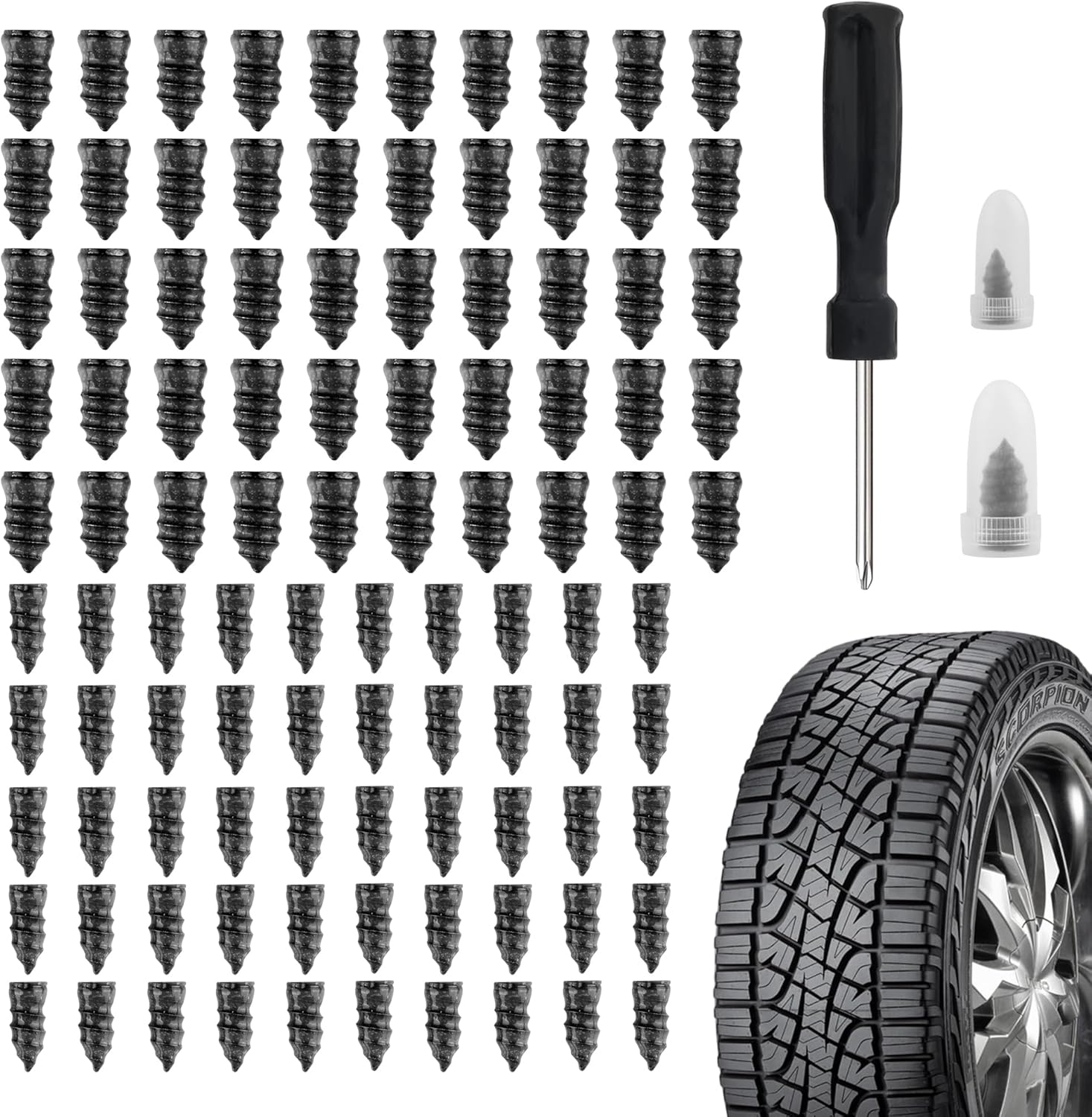
Salior’s tire plug kit provides a fast, reliable self-service fix for punctured or leaking tires without the need for flaring tools. Choose the correct plug size, then screw the nail into the puncture using the included screwdriver for an enhanced seal. The set is durable and convenient for on-the-go maintenance across multiple vehicle types.
Essential Tools for Flat Tire Repair
A good emergency kit makes a flat tire repair easier and safer. Keep the factory jack, jack handle, lug wrench, spare wheel tools, wheel chocks, gloves, a flashlight, a reflective vest, and a tire pressure gauge in the Hilux. If you drive off-road or carry heavy loads, also consider a stronger flashlight, a compact air compressor, a tire tread-depth gauge, and a sturdy board for jack support on firm dirt or gravel.
Before long trips, confirm that the spare is actually usable. Check its air pressure, tread, sidewall condition, and age. A spare that is flat, cracked, or missing its tools will not help during an emergency.
[Products Worth Considering]
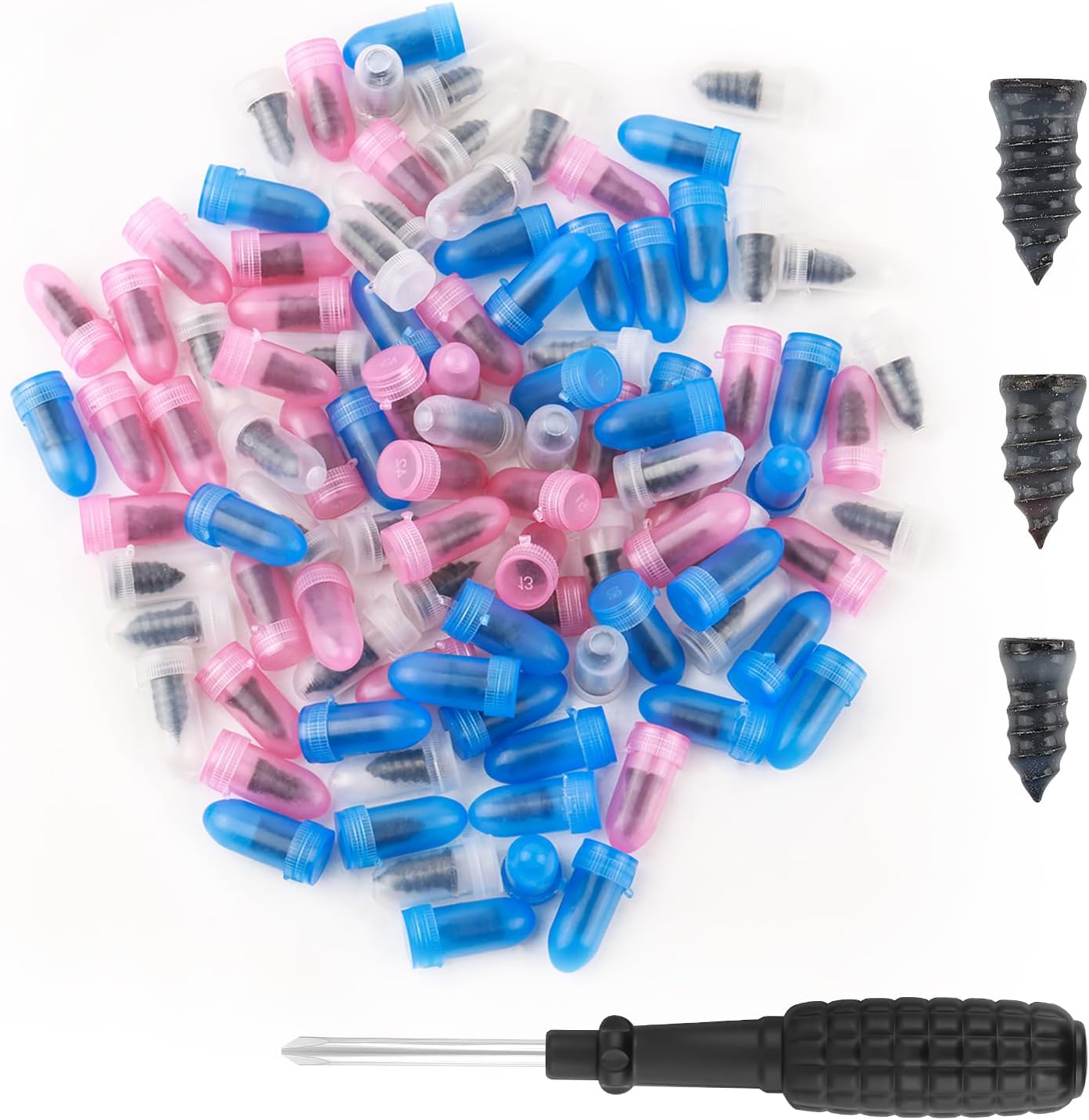
This 100-piece tire repair screw plug kit provides a fast, self-service solution for punctures on the road. Choose the correct plug size, insert it into the break, and screw it in to help seal the puncture and temporarily restore tire pressure. Thickened threads and rubber-wrapped plugs improve bite and sealing while remaining compact and easy to carry.

This screw-in tire plug kit seals punctures fast using the included screwdriver, letting you repair tread damage without removing the tire or using messy glue. It includes two plug sizes for different puncture types and uses high-density rubber for an airtight, heat-resistant temporary seal that helps you reach a tire shop safely. Compact and universal, it works on tubeless tires across cars, trucks, motorcycles, tractors, and more.

TireJect Off-Road Tire Sealant Kit provides 5-in-1 sealing to help fix tread punctures up to 3/8", sidewall punctures up to 3/8", bead leaks, slow leaks, and minor dry rot on low-speed tires. It permanently seals with liquid rubber, recycled tire particles, and Aramid fibers, making it ideal for flats caused by thorns, nails, and screws. The included dispensing cap attaches to the valve stem for a no-mess installation, along with a metal valve core remover tool and valve stem cap. This kit is for off-road use only.
When to Seek Professional Tire Help?
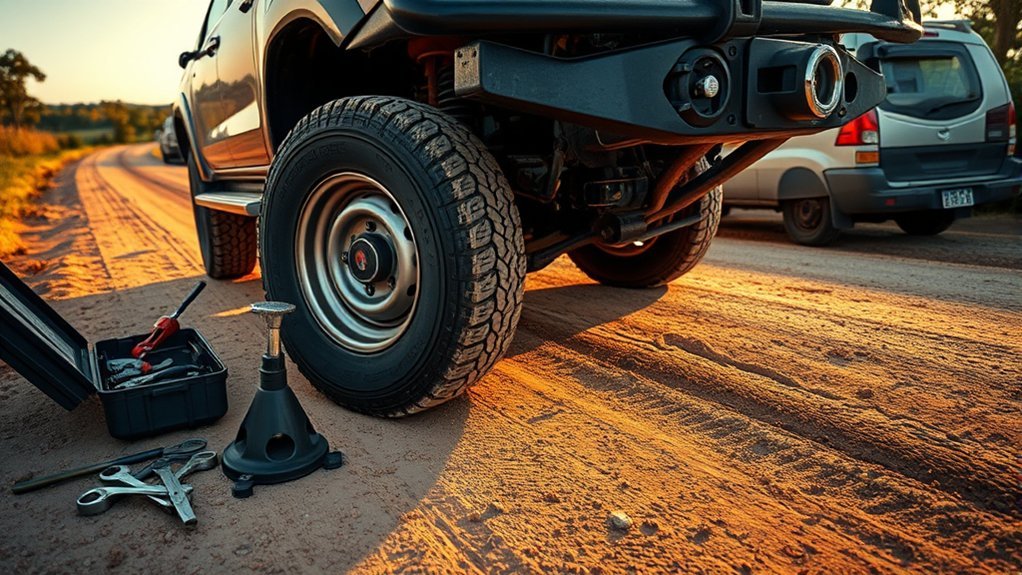
You should seek professional tire help if the damage may affect tire structure, the vehicle is unsafe to lift, or you cannot verify the correct repair method. Tires are safety-critical parts, and some damage cannot be repaired safely.
Call a tire technician, roadside assistance, Toyota Vallejo, or another qualified Toyota service center if you notice:
- Sidewall damage: Cuts, bubbles, or bulges on the sidewall usually mean replacement is needed.
- Large tread punctures: Big holes, tears, or multiple punctures need professional inspection.
- Run-flat damage: If you drove on the tire while it was flat, the inner structure may be damaged even if the outside looks acceptable.
- Persistent slow leaks: A damaged valve stem, bead leak, cracked wheel, or hidden puncture may be the cause.
- TPMS warning after inflation: If the light stays on or flashes, the tire or monitoring system may need service.
- Heavy load or towing: Do not continue a long trip with a questionable spare while carrying cargo or towing a trailer.
Warning: Never crawl under a Hilux supported only by the factory jack. The jack is for emergency wheel changes, not under-vehicle inspection or repair.
[Products Worth Considering]

This spare tire tool kit is designed for the 2004 to 2018 Ford F-150 to help you loosen and tighten wheel lug nuts and manage the spare tire and provided jack functions from underneath the vehicle. It includes the lug nut wrench and extension pieces plus a convenient storage carrying case for organized transport. The jack itself is not included.

The 22800 wheel stud installer makes replacing wheel studs quick and secure, saving time and effort during tire service. It uses a ratchet or impact wrench to pull new studs firmly into place, helping when existing studs are too long. Compatible with most automotive wheels and light-duty truck wheel studs, it’s designed for easy, tool-assisted installation.

CKAuto Universal Tire Repair Kit provides a complete emergency solution for fixing flat tire punctures using plug-style repairs without removing the tire from the rim. The kit includes insertion/probe tools, repair plugs, lubricant, valve accessories, and a convenient carry bag for quick roadside use. Designed for tubeless tires across cars, SUVs, trucks, motorcycles, RVs, and more, it’s easy enough for anyone to perform a proper repair.
Preventing Future Flat Tires: Maintenance Tips
Good tire maintenance lowers the chance of future flats, blowouts, uneven wear, and poor fuel economy. NHTSA recommends checking tire pressure at least once a month, including the spare, and checking when the tires are cold. Use the pressure shown on the Hilux tire placard or owner’s manual. Do not use the maximum pressure printed on the tire sidewall as your normal target.
Regular Tire Pressure Checks
- Check all four tires and the spare at least once a month.
- Measure pressure when the tires are cold, before driving or after the truck has been parked for several hours.
- Use the PSI or kPa value listed on your Hilux tire placard or owner’s manual.
- Inspect for nails, screws, cuts, cracking, bulges, and uneven wear while checking pressure.
- Do not ignore a tire pressure warning light; confirm pressure with a gauge.
Timely Tire Rotations
Rotating your tires helps even out wear and can extend tire life. For many vehicles, NHTSA notes that tires may be rotated every 5,000 to 8,000 miles if recommended by the vehicle manufacturer, or sooner if uneven wear appears. For your Hilux, follow the maintenance schedule for your model year, drivetrain, tire size, and driving conditions.
If your Hilux uses different tire sizes, directional tires, or a non-matching spare, the rotation pattern may change. A Toyota service center or tire professional can confirm the correct pattern.
Inspect Tread and Sidewalls
Check tread depth when you check pressure. Tires should be replaced when the tread is worn to the legal minimum or when wear bars are level with the tread. Also watch for cracking, exposed cords, bulges, shoulder wear, or repeated punctures. Off-road driving, potholes, sharp gravel, heavy loads, and towing can all speed up tire damage on a pickup.
NHTSA reported 511 fatalities in tire-related crashes in 2024, which is why monthly pressure checks, tread checks, and timely tire service matter.
Why Trust Toyota Vallejo for Your Tire Needs?
When you need tire help for your Toyota Hilux, Toyota Vallejo or another qualified Toyota service center can inspect the tire, check the wheel, verify the correct replacement size, and confirm whether your coverage or roadside plan applies. This is especially useful if the tire pressure warning light stays on, the spare is not matching, or the truck has been driven while the tire was flat.
- Toyota-specific service: Technicians can check Hilux jack points, tire size, lug nut torque, TPMS, and maintenance records.
- Correct tire matching: A service center can help match load rating, speed rating, size, and tread type.
- Professional inspection: A technician can inspect internal tire damage that is not visible from the outside.
- Coverage check: ToyotaCare, dealer plans, tire protection plans, and roadside assistance vary, so a service advisor can confirm what applies to your vehicle.
Frequently Asked Questions
Does Toyota do free flat tire repair?
Not always. ToyotaCare and Toyota maintenance plans may include scheduled maintenance and roadside assistance, but free flat tire repair is not a universal promise for every Toyota, dealer, tire, or market. Check your ToyotaCare terms, tire protection plan, warranty paperwork, or dealer service advisor before assuming the repair is free.
Can I drive my Toyota Hilux on the spare tire?
Yes, if the spare is inflated, undamaged, installed correctly, and approved for your Hilux. Follow the label on the spare and the owner’s manual. If the spare is temporary, limit speed and distance. If it is a full-size spare, still get the damaged tire inspected soon.
Can a sidewall puncture be repaired?
Usually no. Sidewall damage, bulges, shoulder cuts, blowout damage, and tires driven while flat usually require replacement. A professional tire inspection is the safest way to decide.
What should I do if the tire pressure light stays on after changing the tire?
Check the pressure of all tires with a gauge, including the spare if it has a sensor. If the light remains on or flashes, the TPMS may need resetting, the spare may not have a sensor, or a sensor may need service. Have a Toyota service center or tire shop inspect it.
Should I use tire sealant on a Hilux flat tire?
Use sealant only when the kit instructions allow it and the damage is a small tread puncture. Do not use it for sidewall cuts, large holes, shredded tires, valve leaks, cracked wheels, or tires that came off the bead. Sealant is temporary and the tire still needs professional inspection.
Conclusion
A flat tire on your Toyota Hilux is manageable if you put safety first. Move away from traffic, use the correct jack point, install the spare carefully, and treat sealants or plugs as temporary fixes. For pressure, rotation, spare limits, and torque, rely on your Hilux owner’s manual and tire placard rather than generic numbers. When damage looks serious, the TPMS light will not clear, or the truck is loaded or towing, get professional tire help before continuing your trip.
Sources
- NHTSA TireWise: Tire Safety Ratings and Awareness — supports tire pressure, tread, rotation, TPMS, tire-related crash data, and blowout safety guidance.
- ToyotaCare & Maintenance Plans — supports ToyotaCare and roadside-assistance coverage caveats.
- Toyota Europe Newsroom: All-new Hilux announcement — supports current Hilux market and equipment variability.