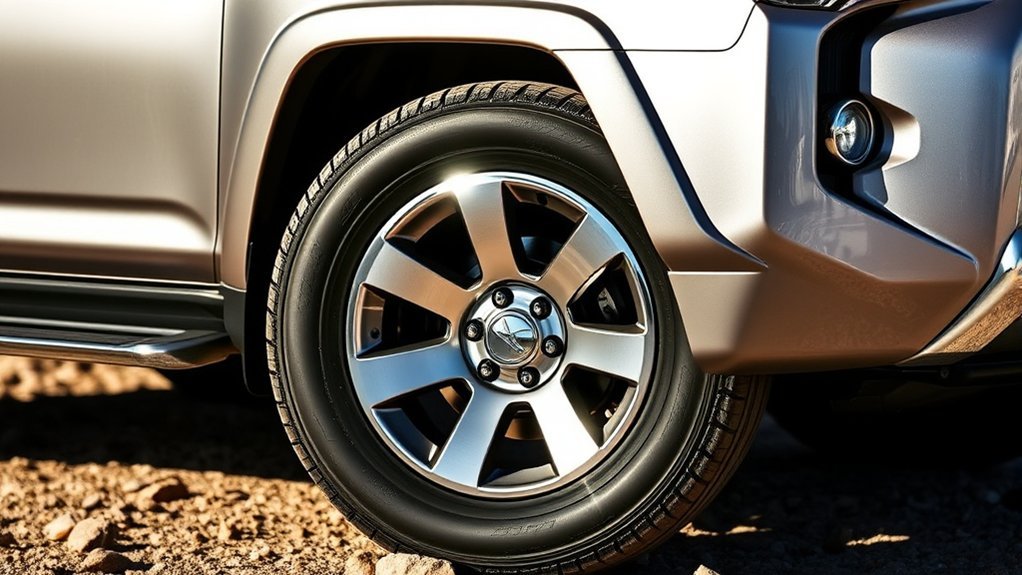
If you own a 2025 Toyota 4Runner Limited with the factory 20-inch wheel package, the stock tire size to check for is 265/55R20. That size is about 31.5 inches tall and is built for a balance of ride comfort, road grip, steering response, and light trail use. Before buying replacements, confirm the exact tire size, load rating, and cold tire pressure on your driver-door tire placard or in your Toyota owner materials.
Quick Answer
The 2025 4Runner Limited with factory 20-inch wheels commonly uses 265/55R20 tires. Use the same size, or a closely matched alternative, only if the load rating, speed rating, wheel fitment, TPMS setup, and clearance are correct. Always follow the tire placard on your specific 4Runner.
Key Takeaways
- Factory 20-inch Limited size: 265/55R20 is the size to verify on the driver-door placard.
- Pressure: Use the cold PSI printed on your vehicle placard, not a generic number from a forum or tire listing.
- Plus-sizing: 275/55R20 is only a mild size increase, but it still needs a clearance check at full steering lock and suspension compression.
- Safety: Replacement tires should meet or exceed the original load index and speed rating.
- Winter setup: Pick tires with the three-peak mountain snowflake symbol for real winter driving, and use TPMS-compatible wheels if you buy a second set.
At a Glance
| Time Required | 5 minutes to check the placard and tire sidewall; 30 to 60 minutes for a proper tire shop fitment check |
| Difficulty | Easy for same-size replacement; moderate if changing tire or wheel size |
| Tools Needed | Tire pressure gauge, tire tread gauge, flashlight, and your driver-door tire placard |
| Cost | Free to verify specs; tire cost varies by brand, load rating, season, and wheel size |
Understanding the Stock Tire Size for the 2025 4Runner Limited
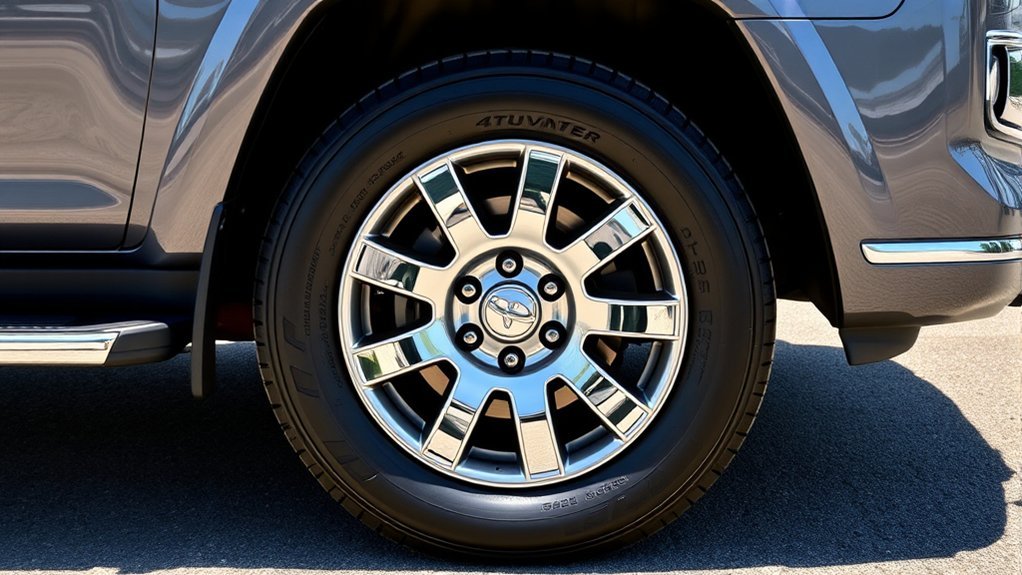
The stock tire size for a 2025 Toyota 4Runner Limited with factory 20-inch wheels is commonly listed as 265/55R20. In that tire code, 265 is the section width in millimeters, 55 is the sidewall height as a percentage of the width, R means radial construction, and 20 means the tire fits a 20-inch wheel.
A 265/55R20 tire is about 31.5 inches in overall diameter. That keeps the Limited close to its factory ride height, gearing, speedometer calibration, and driver-assist behavior. It also gives the tire enough sidewall for normal road impacts while keeping the firmer steering feel many owners expect from a 20-inch wheel.
Note: Toyota can vary tires by market, package, and production details. Before ordering, check the tire and loading information placard on the driver-door jamb and compare it with the sidewall on your current tires.
The Limited trim is more road-comfort focused than the TRD Pro or Trailhunter models, so its 20-inch setup is not meant to copy the taller off-road tire packages used on those trims. If you want a more aggressive tire, focus on load rating, clearance, and real winter or all-terrain performance instead of size alone.
What 265/55R20 Means in Real Driving
The factory 265/55R20 size matters because tire height and width affect more than looks. A taller tire changes your effective gearing and can make the speedometer read slightly slow. A wider tire may improve curb appeal and contact patch, but it can also add weight, reduce fuel economy, and create rubbing near the fender liner, mud flap, upper control arm, or sway bar.
| Tire Size | Approx. Diameter | Change vs. 265/55R20 | Best Use |
|---|---|---|---|
| 265/55R20 | 31.5 in. | Factory baseline | Best same-size replacement for most Limited owners |
| 275/55R20 | 31.9 in. | About 1.4% taller | Mild plus-size only after clearance check |
| 285/70R17 | 32.7 in. | About 3.9% taller | Requires 17-inch wheels and careful fitment planning |
Warning: Do not judge tire fitment by diameter alone. A tire with a square shoulder, deep all-terrain tread, lower wheel offset, or heavier load rating can rub even when another tire in the same listed size does not.
How to Choose Alternative Tire Sizes: Pros and Cons
Alternative tire sizes can change how your 2025 4Runner Limited looks and drives. A same-size replacement keeps the vehicle closest to Toyota’s original setup. A mild plus-size, such as 275/55R20, can add a slightly wider stance and a little more sidewall height, but it should never be treated as an automatic fit.
The safest tire upgrade is not the biggest tire that fits while parked. It is the tire that clears while turning, braking, loaded, and moving through suspension travel.
Before changing size, check these points:
- Overall diameter: Stay close to the stock diameter if you want accurate speedometer readings and factory-like shifting behavior.
- Load index: Choose a replacement tire that meets or exceeds the original tire’s load index.
- Speed rating: Match or exceed the original speed rating unless a tire professional confirms a safe seasonal exception, such as a winter tire.
- Wheel width range: Confirm the tire manufacturer approves the tire for your wheel width.
- Clearance: Check the front and rear of the wheel well, mud flaps, fender liner, upper control arm, brake components, and sway bar.
- Spare tire: Avoid running a much different rolling diameter from the spare, especially when using 4WD.
- TPMS: Make sure the tire pressure monitoring sensors are transferred, replaced, or programmed correctly.
A move to 285/70R17 is not a direct swap for the Limited’s 20-inch wheel. That size requires 17-inch wheels, and the wheel must clear the brakes, hub, lug pattern, center bore, and suspension. It can also affect speedometer accuracy, fuel economy, and clearance. For most Limited owners, a quality 265/55R20 all-season, all-weather, winter, or mild all-terrain tire is the cleaner choice.
[Products Worth Considering]
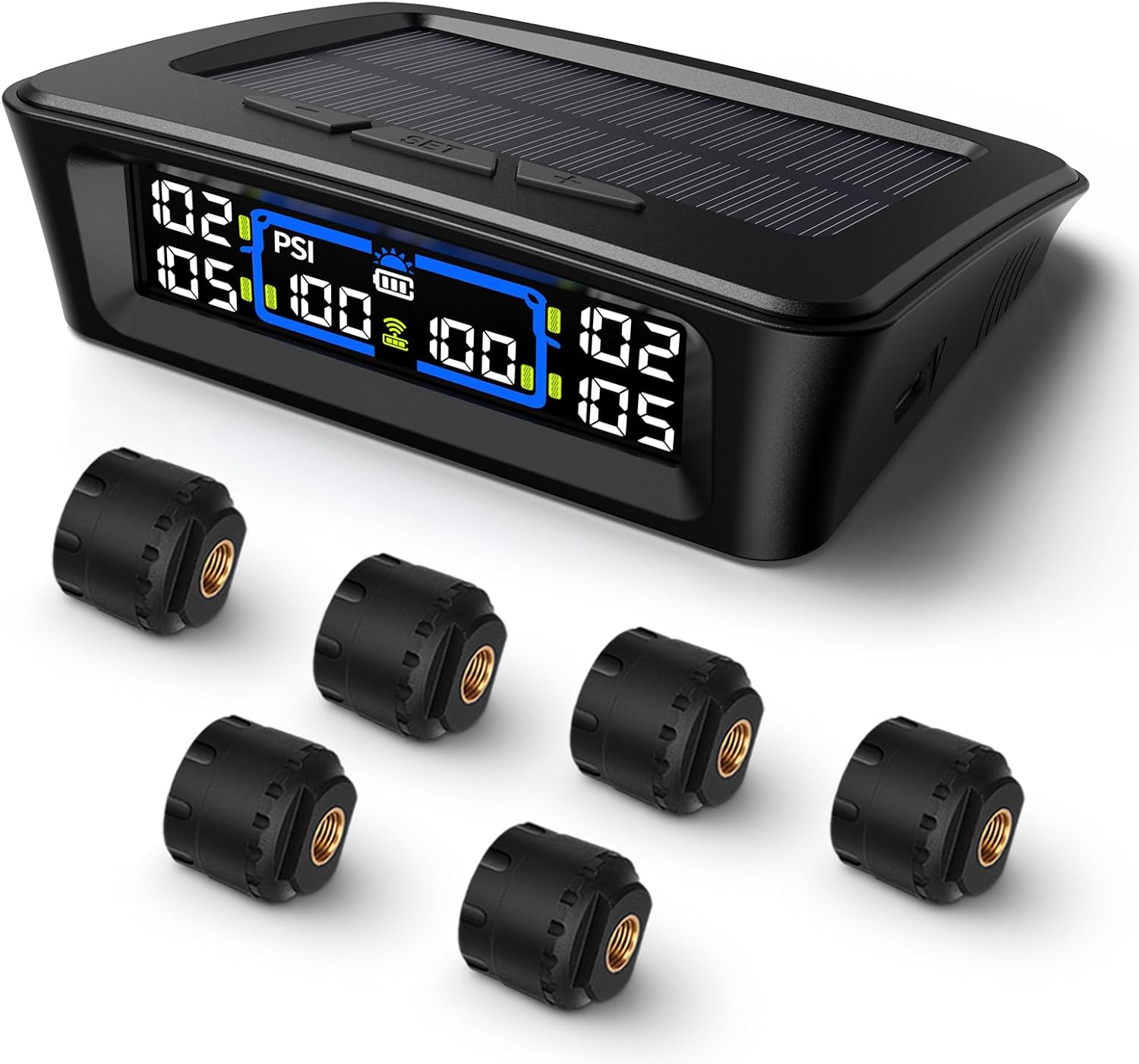
The Tymate TM12 RV TPMS delivers real-time tire pressure and temperature monitoring with a stable 433Hz display for safer long-distance driving. It supports simultaneous monitoring across vehicle and trailer zones, includes six alarm modes for pressure, temperature, leakage, battery, and signal loss, and features easy DIY installation with auto calibration. Power is supplied via USB-C charging or solar recharging, with a wide 0–144 PSI range and up to 50 ft signal coverage for RVs and towable trailers.

Keep your tires properly inflated with this analog VONDIOR tire pressure gauge, designed for fast, easy readings without batteries. The swiveling, two-axis hose and large glow dial help you measure at any tire angle with instant visibility. Built with a protective rubber shield, it supports durable, low-maintenance use for cars and trucks.

Monitor tire tread wear with a smart, color-coded depth gauge that shows clear condition ranges at a glance. The bar is range marked for fast, easy readings, helping you maintain safer traction and performance. Each gauge is portable with a pocket clip, and the set includes 20 units for daily use and sharing.
Essential Specifications for 20-Inch Alloy Wheels on the 4Runner
The 20-inch alloy wheels on the 2025 4Runner Limited are part of the trim’s road-focused setup. They give the SUV a polished look and a more direct steering feel than smaller wheels with taller tire sidewalls. The tradeoff is that 20-inch tires usually leave less sidewall cushion for rocks, potholes, and rough trails.
If you are keeping the original wheels, the easiest path is to stay with 265/55R20 and match the original load and speed rating. If you are buying new wheels, do not rely on diameter alone. You need to confirm:
- Bolt pattern: Must match the 4Runner hub exactly.
- Center bore: Must fit the hub correctly or use the correct hub-centric ring if allowed by the wheel maker.
- Offset: Must keep the tire away from suspension parts while avoiding fender and mud-flap rubbing.
- Load rating: Wheel load capacity must be suitable for the vehicle.
- Brake clearance: The wheel must clear calipers and related hardware.
- Lug nut seat type: The nut seat must match the wheel design.
- Torque spec: Use the Toyota-specified lug nut torque from the owner manual or service information.
Pro Tip: If you want a winter or trail setup, a separate wheel-and-tire package can protect the factory 20-inch wheels and make seasonal swaps easier. Just make sure the second set uses compatible TPMS sensors.
[Products Worth Considering]

Replace worn or malfunctioning GM TPMS sensors with this 433MHz pre-programmed sensor set designed for compatibility with many Chevrolet, Buick, GMC, and Cadillac models. It includes guidance for proper OBDII relearning/pairing after installation and supports reliable long-term operation with a high-performance CR2032 battery. Quality tested for durability and performance to help restore accurate tire pressure monitoring.

Replace worn or missing TPMS sensors with a pre-programmed 4-pack designed for compatible GM vehicles. These 315MHz sensors provide real-time tire pressure monitoring and alert you if pressure is too high, too low, or if a rapid air leak occurs. Most installations are ready with minimal relearn effort after mounting, helping improve safety and driving confidence.

The SAFELIFE dial tire tread depth gauge measures tread depth in 1/32 inch increments with clear, easy-to-read 2-inch dial face. Color zones using a traffic light system help you quickly judge whether tread is low, marginal, or ample for safer driving. Built with a durable zinc cast body and a metal detect probe for precise, comfortable use across cars, motorcycles, trucks, and buses.
2025 4Runner Limited Tire Pressure: Tips for Optimal Maintenance
For tire pressure, the best source is the tire and loading information placard on your driver-door jamb. Many owners may see a cold pressure around 33 psi, but you should use the number printed on your specific 4Runner. Different tire sizes, trims, loads, and markets can change the correct value.
Check pressure when the tires are cold, before driving more than a short distance. Heat from driving raises pressure and can give you a false reading. A good tire pressure routine helps with braking, fuel economy, tread wear, and ride comfort.
- Check monthly: Use a quality gauge even if the TPMS light is off.
- Check before trips: Add pressure checks before towing, carrying heavy cargo, or driving long highway distances.
- Adjust for cold weather: Tire pressure often drops when outside temperatures fall.
- Do not use sidewall max pressure: The sidewall number is not the normal recommended driving pressure.
- Recheck after tire service: Confirm all four tires are set to the placard pressure after installation.
The tire pressure monitoring system is a warning system, not a replacement for routine pressure checks. If you install new wheels, replace sensors, rotate tires, or use a winter set, the TPMS may need sensor registration or relearning. A tire shop or Toyota dealer can confirm the correct procedure for your 4Runner.
Best Practices for Installing Winter Tires on Your 4Runner
Winter tires can make a bigger difference than a size change if you drive in snow, ice, or freezing temperatures. For real winter use, look for tires marked with the three-peak mountain snowflake symbol. That symbol is more meaningful for winter traction than an aggressive-looking tread alone.
| Winter Tire Tip | What to Do |
|---|---|
| Stay with a proven size | Use 265/55R20 unless a tire professional confirms another size fits your wheels and clears the vehicle. |
| Check the winter symbol | Choose a tire with the three-peak mountain snowflake symbol for severe snow service. |
| Use four matching tires | Install winter tires as a full set of four to keep braking, steering, and 4WD behavior predictable. |
| Confirm load rating | Match or exceed the original load index shown by your OEM tire or placard guidance. |
| Set cold pressure | Inflate to the driver-door placard pressure unless Toyota or your tire professional specifies otherwise. |
| Plan for TPMS | Use compatible TPMS sensors in a second wheel set or have the original sensors transferred. |
A narrower winter tire can sometimes cut through snow better than a wider tire, but the size still needs to fit the wheel, carry the vehicle weight, and clear the brakes. If you want to downsize from 20-inch wheels for winter, confirm the smaller wheel clears the brake hardware and uses the correct hub, offset, lug seat, and load capacity.
[Products Worth Considering]

Measure tire tread depth quickly and accurately with this LUMITECO dial gauge that reads in 1/32" increments up to 14/32". The color-coded green/yellow/red zones make it easy to judge tire wear and know when replacement is needed. A rugged, compact design with a protective pouch helps keep the gauge ready for use on cars, trucks, motorcycles, and more.

The TYAMATE TM8 solar-powered wireless TPMS delivers real-time tire pressure and temperature monitoring with six alarm modes for safer driving. A vibrant color LCD display shows readings clearly while windshield mounting keeps it hands-free and easy to read. With a wide 0–87 PSI range, strong 433.92 MHz signal transmission, and quick sensor pairing, it’s ideal for RV, sedan, SUV, MPV, and truck use.

Milton S-921 pencil tire pressure gauge helps you maintain optimal tire pressure for passenger cars with accurate readings in PSI and kPa. It features a built-in deflator valve for convenient pressure adjustments, plus a single chuck head and nylon indicator bar for easy use on the go. Built from durable plated brass and designed for reliable performance, it’s a practical road trip and cold-weather maintenance tool.
When to Replace or Rotate Your 4Runner Tires
Replace your 4Runner tires when tread depth is low, sidewalls are cracked, wear is uneven, or the tire has damage that cannot be repaired safely. If one tire is damaged, compare tread depth across all four tires before replacing only one. Large tread-depth differences can cause driveline stress and uneven traction, especially in 4WD use.
Rotate tires on a regular schedule based on Toyota’s maintenance guidance and your tire maker’s warranty terms. Rotation helps even out wear between the front and rear tires. If you install directional winter tires or staggered sizes, ask the tire shop which rotation pattern is allowed.
Frequently Asked Questions
What size tires are on a 2025 4Runner Limited with 20-inch wheels?
A 2025 4Runner Limited with the factory 20-inch wheel package commonly uses 265/55R20 tires. Check the driver-door tire placard and the sidewall of your current tires before ordering replacements.
Is 265 or 275 better for a 4Runner Limited?
For most Limited owners, 265/55R20 is the safest and simplest choice because it keeps the vehicle closest to factory calibration. A 275/55R20 can add a slightly wider and taller footprint, but it needs a proper clearance check and may slightly affect speedometer reading, weight, and fuel economy.
Can I put 17-inch wheels on a 2025 4Runner Limited?
Possibly, but it is not a simple tire-only change. The 17-inch wheel must clear the brakes, match the bolt pattern, fit the hub, have the right offset, support the vehicle’s weight, and use the correct lug hardware. Confirm fitment with Toyota parts data or a trusted tire and wheel shop.
Will bigger tires change my speedometer?
Yes. A taller tire travels farther per rotation, so the speedometer can read lower than your real road speed. For example, 275/55R20 is about 1.4% taller than 265/55R20, while 285/70R17 is about 3.9% taller.
What tire pressure should I use on a 2025 4Runner Limited?
Use the cold tire pressure printed on your driver-door tire placard. Do not use the maximum PSI printed on the tire sidewall as your normal driving pressure. If your placard lists 33 psi, set the tires to 33 psi cold.
Do I need new TPMS sensors with winter wheels?
If you buy a second wheel set, you either need compatible TPMS sensors installed in those wheels or you need to move your original sensors. The vehicle may also need sensor registration or relearning after the swap.
Conclusion
The best tire choice for a 2025 4Runner Limited starts with the factory 265/55R20 size, the driver-door tire placard, and the correct load rating. If you stay with the original size, replacement shopping is simple and the SUV stays close to Toyota’s intended ride, handling, and calibration. If you move to 275/55R20, winter tires, all-terrain tires, or a smaller wheel package, check clearance, TPMS compatibility, speedometer change, wheel specs, and spare-tire matching before you commit.
Sources
- Toyota 4Runner official model page — current 4Runner model and trim reference.
- Toyota Owner Manuals and Warranty page — owner manual and vehicle-specific maintenance reference.
- NHTSA Tire Safety — tire pressure, tread, and tire safety guidance.
- 49 CFR § 571.138, Tire Pressure Monitoring Systems — U.S. TPMS performance standard reference.