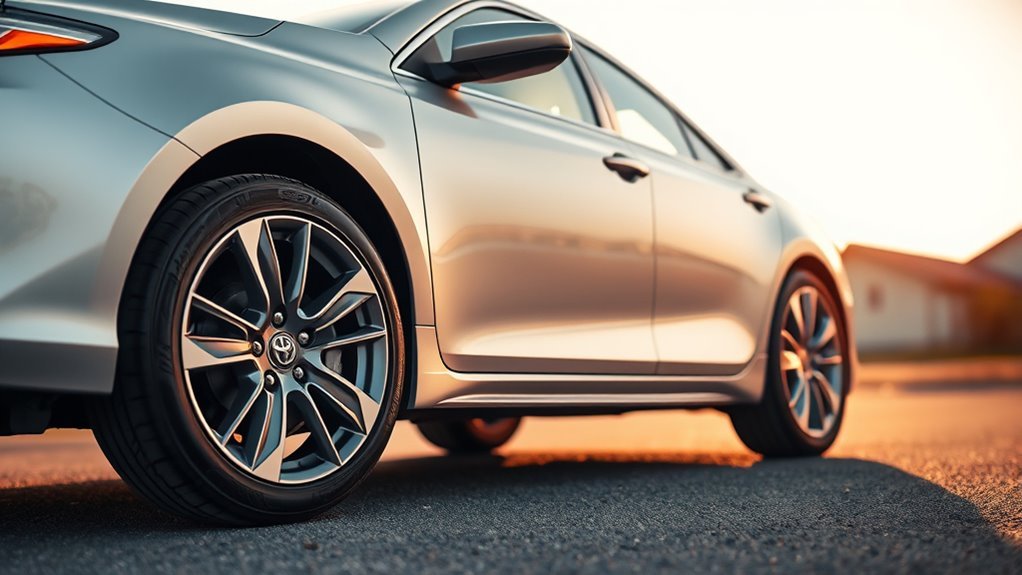
On a Toyota Camry, 18-inch tires usually make the most sense if you want a smoother ride, better pothole protection, wider tire availability, and lower long-term replacement costs. Nineteen-inch tires can give your Camry a sharper steering feel and a sportier look, but they often ride firmer and cost more to replace. The better choice depends on your trim, roads, budget, and how much you value comfort versus response.
Quick Answer
Choose 18-inch tires for the best all-around Camry setup because they ride softer, handle rough roads better, and usually cost less. Choose 19-inch tires if you care more about sharper steering, a sportier stance, and dry-road grip than maximum comfort or pothole protection.
Key Takeaways
- 18-inch wheels usually give a Camry a smoother, quieter, more forgiving ride.
- 19-inch wheels usually improve steering response and appearance, but they use shorter sidewalls.
- For rough roads, potholes, winter use, and lower tire costs, 18s are usually the safer daily-driver pick.
- For sharper handling and a sportier trim look, 19s can be worth it if you accept the firmer ride.
- Before switching sizes, confirm the correct tire size, load rating, speed rating, offset, and pressure on your Camry’s tire placard or owner’s manual.
18-Inch vs 19-Inch Wheels for a Camry
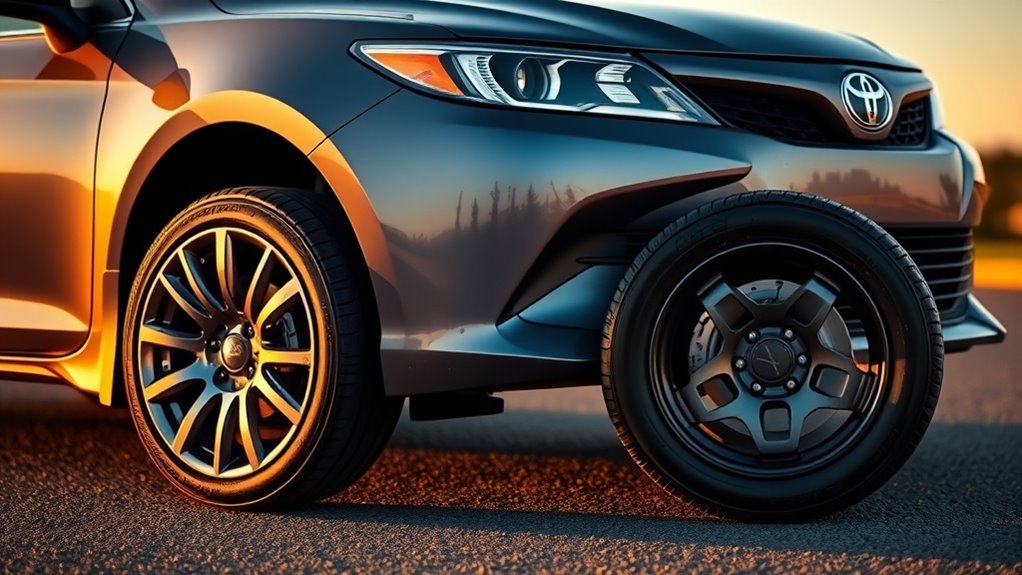
When you compare 18-inch and 19-inch wheels on a Toyota Camry, the main tradeoff is comfort versus response. The 18-inch setup usually has a taller tire sidewall, so it absorbs bumps, pavement seams, and pothole edges better. That makes it easier to live with on rough roads and long commutes.
The 19-inch setup usually has a shorter sidewall and a sportier tire profile. That can make steering feel quicker and more direct, especially during lane changes and cornering. The tradeoff is less rubber between the rim and the road, which means more impact harshness and a greater chance of tire or wheel damage on bad pavement.
| Category | 18-Inch Camry Setup | 19-Inch Camry Setup |
| Ride comfort | Softer and more forgiving | Firmer and more road-feeling |
| Handling feel | Balanced and predictable | Sharper turn-in and sportier response |
| Pothole protection | Better sidewall cushion | Less sidewall cushion |
| Tire cost and availability | Usually lower cost and wider selection | Usually higher cost and fewer budget choices |
| Best for | Commuting, rough roads, winter tires, value | Sporty styling, quicker steering, dry-road grip |
[Products Worth Considering]
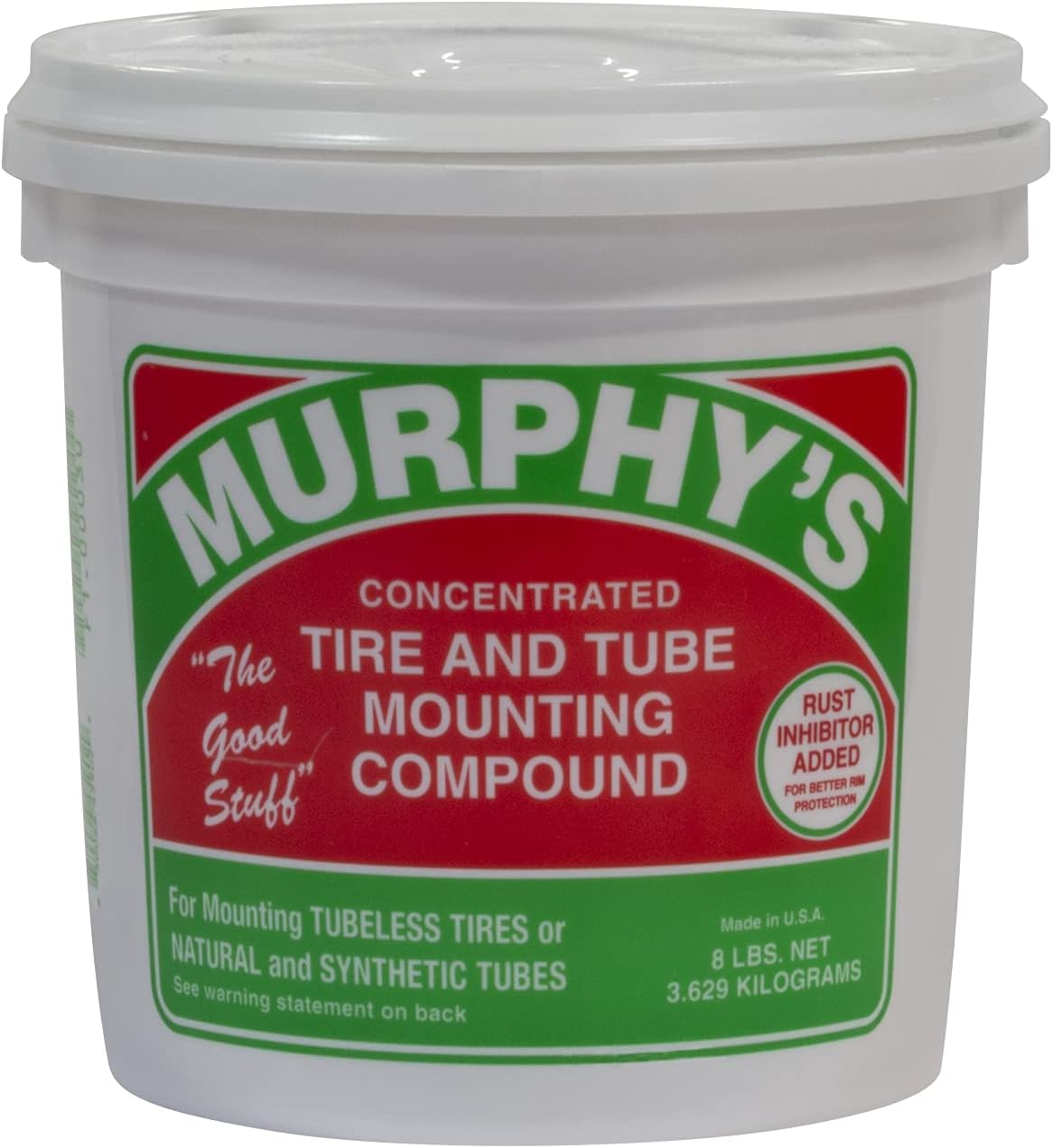
A concentrated tire and tube mounting compound designed to help simplify mounting rubber tires and tubes on passenger, semi truck, construction, and OTR applications. Its ultra-thick formula packs beads effectively and includes rust inhibitors to help protect against corrosion during use.

This professional wheel and rim cleaning brush set lifts brake dust, grime, and dirt with soft, scratch-free microfiber and synthetic wool fibers. The rim brush bends up to 360 degrees for easy access to hard-to-reach areas around spokes, lips, and faces. Ideal for thorough cleaning of car, truck, motorcycle, bicycle, RV, and more wheel and tire surfaces.

Upgrade your wheels with MIKKUPPA M12x1.5 mag seat lug nuts built for secure, corrosion-resistant performance. These closed-end chrome lug nuts are a direct replacement for select Toyota models, including Camry, Corolla, RAV4, Sienna, Avalon, Highlander, Matrix, Venza, and Prius. Triple-chromium plating and cold-forged, heat-treated steel help deliver strength for daily driving and replacement needs.
Confirm Your Factory Tire Size First
Before you compare tire prices or order a new set, confirm the size your Camry actually uses. Toyota Camry tire sizes vary by model year, trim, market, and package. Many late-model Camry setups use sizes in the 18- and 19-inch range, but you should not assume your car matches another trim.
The safest place to check is the Tire and Loading Information Label on the driver’s doorjamb, followed by your owner’s manual. The National Highway Traffic Safety Administration also recommends using the owner’s manual or the tire placard to confirm the correct tire size for your vehicle.
Note: If you switch from 18-inch to 19-inch wheels, the overall tire diameter should stay close to the factory size. A proper plus-size setup uses a shorter sidewall on the larger wheel so speedometer readings, clearance, traction control, and ABS behavior stay within the expected range.
How 18s and 19s Change Ride Comfort
When you move from 18-inch to 19-inch tires on your Camry, you usually feel a firmer ride because the 19-inch tire has less sidewall to absorb the road. The difference is most noticeable on patched pavement, expansion joints, potholes, broken asphalt, and city streets with sharp edges.
With 18-inch wheels, the taller sidewall acts like an extra cushion. The suspension still does most of the work, but the tire can flex more before the impact reaches the cabin. That is why 18s often feel quieter and less tiring during daily driving.
Ride Comfort Differences
With 19-inch tires, you may notice quicker steering and a more planted feel, but you also feel more road texture. Small bumps can sound sharper, and bigger hits can feel harsher through the seat and steering wheel. This does not mean 19s are bad. It means they are tuned more toward response than isolation.
With 18-inch tires, the Camry usually feels calmer. The ride has more give, the cabin is less busy over rough pavement, and the tires are less likely to feel nervous on broken roads. If your commute includes potholes, frost heaves, gravel shoulders, or older pavement, 18s are usually the easier size to live with.
Sidewall Impact on Ride
The ride difference comes mainly from sidewall height. A 19-inch wheel leaves less room for tire sidewall if the overall tire diameter stays close to stock. Less sidewall means less flex. That improves steering sharpness, but it also passes more impact energy into the wheel, suspension, and cabin.
An 18-inch tire gives you more sidewall flexibility. That helps absorb bumps and can reduce the risk of pinching a tire against the rim when you hit a sharp pothole. For most Camry drivers, that extra sidewall is the biggest reason to choose 18s.
What 19-Inch Wheels Add to Handling
Nineteen-inch wheels can make a Camry feel more responsive because the tire sidewall flexes less when you turn the steering wheel. The car may feel more immediate during quick lane changes, highway ramps, and faster cornering. If the 19-inch tire is also wider or more performance-focused, dry-road grip can improve too.
The handling gain depends heavily on the tire, not just the wheel diameter. A high-quality 18-inch performance tire can feel better than a cheap 19-inch tire. Tire compound, tread design, construction, temperature range, and inflation pressure all matter.
For everyday driving, the handling difference is noticeable but not dramatic. You are most likely to appreciate 19s if you like a firmer steering feel, drive mostly on smooth roads, and care about the sportier look. If you drive gently or deal with rough pavement, the comfort tradeoff may matter more than the handling gain.
Do 19-Inch Wheels Hurt MPG?
Yes, 19-inch wheels can slightly hurt MPG, but the drop is not a fixed number. It depends on the exact wheel weight, tire weight, tread compound, tire width, pressure, alignment, drivetrain, road speed, temperature, and how you drive. Do not assume that every Camry with 19s loses the same amount of fuel economy.
Current Camry fuel economy also varies by model year, trim, and drivetrain. For late-model hybrid Camrys, use FuelEconomy.gov to compare the official rating for your exact year and configuration. Tire choice can affect real-world MPG even when the window-sticker rating looks similar.
Rotating Mass Impact
Larger wheel and tire packages often add rotating mass, especially if the 19-inch wheel is heavier or the tire is wider. Rotating mass matters because the engine and hybrid system must spin that weight every time you accelerate. You may feel the difference most in stop-and-go driving, where the car repeatedly starts from low speed.
The effect is usually small on a Camry, but it can still show up over time. A heavier setup may feel slightly slower off the line and may require more braking effort. A lighter 18-inch setup can feel a bit easier and more efficient, especially in city driving.
Tire Width and Rolling Resistance
Tire width and tread compound can affect fuel economy as much as wheel diameter. A wider or stickier tire may give you more grip, but it can also create more rolling resistance. Low-rolling-resistance touring tires are usually better for MPG, while sportier performance tires usually prioritize grip and steering feel.
Proper tire pressure matters too. NHTSA notes that correct tire pressure affects safety, tire durability, and fuel consumption. Check pressure when the tires are cold and use the pressure listed on your Camry’s tire placard, not the maximum pressure molded into the tire sidewall.
Speedometer and Diameter
A factory-style 18-to-19-inch change should keep the overall tire diameter close to the original size. That is why a 19-inch setup usually uses a lower-profile tire. If the total diameter changes too much, your speedometer, odometer, ABS, traction control, and driver-assistance systems may not behave as intended.
If you are staying with an OEM Camry wheel and tire size for your model year, the risk is lower. If you are buying aftermarket wheels, confirm the diameter, width, offset, load rating, and tire size with a qualified tire shop before installing them.
Camry Tire Costs and Availability
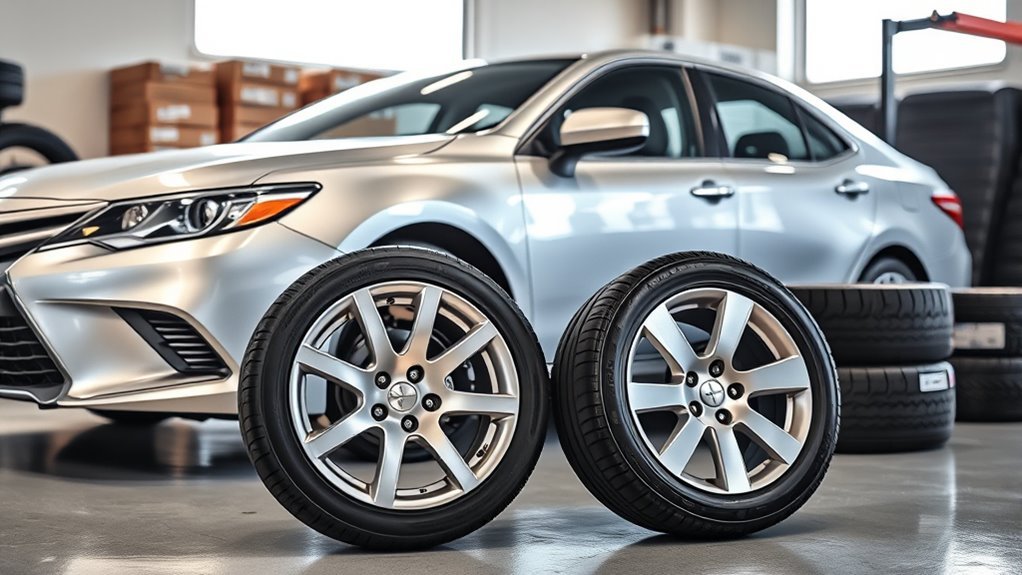
Camry tire costs change by brand, retailer, season, performance category, and size. In general, 18-inch tires are easier to shop for because they usually have more touring, all-season, winter, and budget-friendly choices. That broader selection can make replacements cheaper and easier to find on short notice.
Nineteen-inch tires often cost more because they are lower-profile and more likely to be sold in sportier categories. You may still find good touring options, but the selection can be narrower, especially if you need winter tires or a quiet comfort tire.
Availability matters when you get a flat, damage a sidewall, or need a replacement during a road trip. If you want the lowest ownership stress, 18s usually win. If you are comfortable paying more for the appearance and sharper response, 19s can still make sense.
[Products Worth Considering]

Upgrade your Toyota’s wheels with durable aluminum alloy valve stem caps that help protect valve cores from corrosion and direct exposure to road grime, clay, water, and snow. Rubber rings improve sealing to help prevent air leakage and maintain stable tire pressure for safer driving. These caps are easy to install or remove without tools and add a unique, stylish look to your car.

These aluminum alloy tire valve stem caps with an O-ring seal help protect valve stems from corrosion while adding a clean, stylish look to your vehicle. The universal fit works across cars, trucks, motorcycles, bicycles, and more, making them an easy upgrade for everyday driving and off-road use. Installation is quick, and the included four-pack keeps all your tires dressed and protected.

The TYAMATE TM8 solar-powered wireless TPMS delivers real-time tire pressure and temperature monitoring with six alarm modes for safer driving. A vibrant color LCD display shows readings clearly while windshield mounting keeps it hands-free and easy to read. With a wide 0–87 PSI range, strong 433.92 MHz signal transmission, and quick sensor pairing, it’s ideal for RV, sedan, SUV, MPV, and truck use.
How Wheel Weight Affects Acceleration
Wheel weight affects how your Camry feels when it pulls away from a stop. A heavier wheel and tire package takes more energy to accelerate. That extra rotating weight can make the car feel slightly less eager, especially in city traffic.
With 18-inch wheels, the package is often lighter, though not always. Some aftermarket 19-inch wheels are lighter than factory wheels, and some cheap 18-inch wheels are heavy. The exact wheel design matters. Still, if you compare similar factory-style packages, the 18-inch setup is usually the more efficient and comfortable choice.
Lighter wheels can also help braking and suspension response because there is less unsprung weight for the suspension to control. On rough roads, lower unsprung weight can help the tire stay in contact with the pavement more consistently.
Which Size Handles Potholes Better?
Between 18-inch and 19-inch Camry wheels, 18-inch wheels handle potholes better. The reason is simple: the taller tire sidewall gives you more cushion between the rim and the road. That extra rubber can reduce the chance of a bent wheel, tire bubble, sidewall cut, or harsh impact.
Nineteen-inch wheels leave less sidewall, so sharp potholes are riskier. If you drive in a city with rough pavement, winter freeze-thaw damage, or frequent road construction, 19s require more attention. You may need to slow down more for broken pavement and inspect tires more often for bubbles or sidewall damage.
Warning: Do not install a non-approved tire size just to gain more sidewall. Use a size approved for your Camry, and confirm load rating, speed rating, brake clearance, and tire pressure before changing wheel size.
If maximum comfort and pothole protection are your top priorities, some Camry trims with smaller factory wheel options may ride even softer than 18s. But for the 18-vs-19 decision, 18s are the clear pothole-friendly choice.
Best Tire Options for 18s and 19s
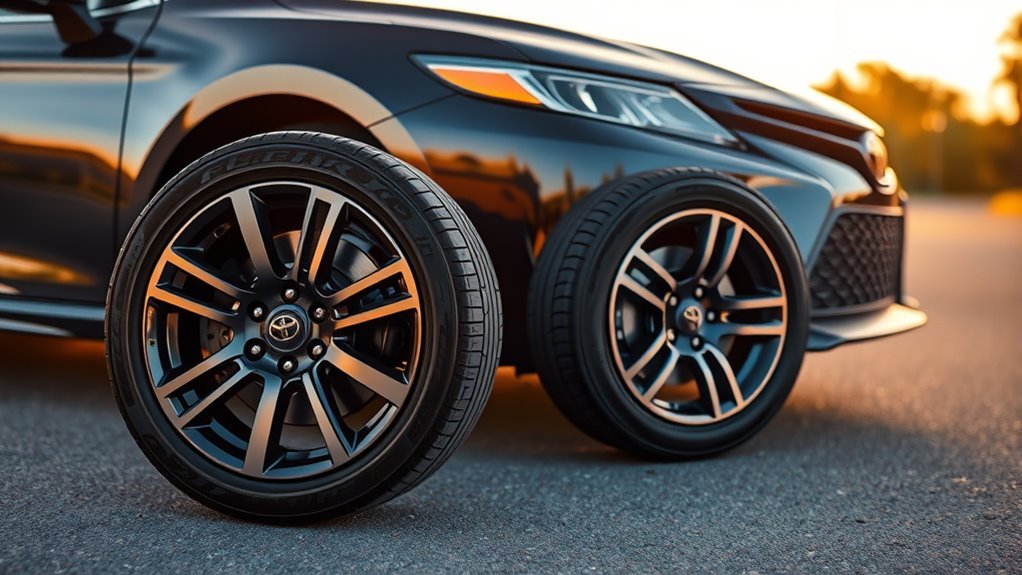
The best Camry tire is not just the one with the right size. It also needs the right category for your weather, driving style, and comfort expectations. A quiet touring all-season tire feels very different from a sporty ultra-high-performance all-season tire, even in the same size.
| Driving Need | Good 18-Inch Direction | Good 19-Inch Direction |
| Quiet commuting | Grand touring all-season tires, such as Michelin Defender 2, Bridgestone Turanza, or Continental PureContact-style options when available | Touring all-season tires with strong comfort and noise ratings |
| Sportier handling | Performance all-season tires if you want sharper response without moving to 19s | Performance all-season tires, such as Michelin Pilot Sport All Season 4 or Continental ExtremeContact DWS-style options when available |
| Snow and ice | Dedicated winter tires are usually easier to find and often cheaper in 18-inch sizes | Winter choices may be available, but selection and price can be less favorable |
| Lowest long-term cost | Usually the better choice because availability is broader | Usually costs more, especially in premium or performance categories |
For the smoothest Camry ride, choose a touring or grand touring tire with strong comfort, noise, wet braking, and treadwear ratings. For a sportier Camry feel, choose a performance all-season tire, but expect more road feel and possibly shorter tread life.
Pro Tip: If you use winter tires, 18-inch wheels are often the better winter setup. They usually cost less, leave more sidewall for potholes, and give you more winter-tire choices.
[Products Worth Considering]

Keep your tires properly inflated with this analog VONDIOR tire pressure gauge, designed for fast, easy readings without batteries. The swiveling, two-axis hose and large glow dial help you measure at any tire angle with instant visibility. Built with a protective rubber shield, it supports durable, low-maintenance use for cars and trucks.

Replace worn or missing TPMS sensors with a pre-programmed 4-pack designed for compatible GM vehicles. These 315MHz sensors provide real-time tire pressure monitoring and alert you if pressure is too high, too low, or if a rapid air leak occurs. Most installations are ready with minimal relearn effort after mounting, helping improve safety and driving confidence.

Milton S-921 pencil tire pressure gauge helps you maintain optimal tire pressure for passenger cars with accurate readings in PSI and kPa. It features a built-in deflator valve for convenient pressure adjustments, plus a single chuck head and nylon indicator bar for easy use on the go. Built from durable plated brass and designed for reliable performance, it’s a practical road trip and cold-weather maintenance tool.
Which Wheel Size Fits Your Driving Style?
Your driving style usually points you toward one size. Choose 18-inch wheels if you want a quiet commute, lower tire costs, more winter-tire options, and better pothole protection. They suit most Camry owners because the Camry is already a comfort-focused sedan.
Choose 19-inch wheels if you want the car to look sharper and feel more direct from the steering wheel. They suit drivers who prefer a firmer, sportier feel and drive mostly on smoother roads. The 19-inch setup can make the Camry feel more responsive, but it asks you to accept more road harshness and higher replacement costs.
If you are still unsure, pick 18s. They give you the better all-around balance for real-world roads. Pick 19s only when appearance and sharper response are important enough to outweigh comfort and cost.
Safety and Fitment Checks Before Switching Sizes
Wheel-size changes should be treated as a fitment decision, not just a styling decision. Before switching between 18-inch and 19-inch wheels, confirm these points:
- Tire size: Match an OEM-approved size for your Camry’s year and trim.
- Load index: Use a tire that can safely carry the vehicle’s required load.
- Speed rating: Match or exceed the required rating for your vehicle.
- Wheel offset and width: Avoid rubbing against the suspension, fenders, or inner liners.
- Brake clearance: Make sure the wheel clears the brake hardware.
- Overall diameter: Keep it close to the factory tire diameter.
- TPMS: Confirm your tire-pressure sensors work after installation.
- Alignment: Get an alignment check if the car pulls, vibrates, or wears tires unevenly.
- Cold tire pressure: Use the pressure listed on the driver’s doorjamb placard.
If you are using aftermarket wheels, ask the tire shop to verify hub bore, lug pattern, offset, wheel load rating, and lug-nut seat type. A wheel can be the right diameter and still be the wrong fit.
Frequently Asked Questions
Are 18-inch wheels worth it on a Toyota Camry?
Yes. For most Camry drivers, 18-inch wheels are worth it because they give a strong balance of comfort, handling, tire availability, and cost. They are especially good if you drive on rough roads or want a quieter daily commute.
Are 19-inch wheels better than 18-inch wheels?
Nineteen-inch wheels are better if you want sharper steering response and a sportier appearance. They are not better for comfort, pothole protection, winter-tire value, or replacement cost. For daily driving, 18s are usually the more practical choice.
What are the best tires to buy for a Toyota Camry?
For comfort, look for grand touring all-season tires with strong wet braking, treadwear, and noise ratings. For sharper handling, look for performance all-season tires. For snow and ice, use dedicated winter tires in the correct size for your Camry.
What size wheels give a Camry the smoothest ride?
Smaller factory-approved wheels with taller tire sidewalls usually give the smoothest ride. Between 18-inch and 19-inch Camry wheels, 18s ride smoother because they have more sidewall cushion.
Can I switch my Camry from 18-inch to 19-inch wheels?
You can switch only if the 19-inch wheel and tire package is compatible with your Camry. Confirm the correct tire size, load index, speed rating, offset, brake clearance, overall diameter, and TPMS compatibility before installing.
Do 19-inch Camry wheels get damaged more easily?
They can be more vulnerable on rough roads because the tire sidewall is shorter. Less sidewall means less cushion between the rim and potholes, which can raise the risk of bent wheels, tire bubbles, and sidewall damage.
Conclusion
If you want the best all-around Toyota Camry setup, choose 18-inch wheels. They ride smoother, protect better against potholes, usually cost less to replace, and give you more tire choices. If you want a sportier look and sharper steering feel, 19-inch wheels can be worth it, especially on smooth roads. The right choice is not the largest wheel. It is the one that matches your roads, budget, and driving style.
Sources
- Toyota Camry Features — factory trim and equipment context for current Camry models.
- FuelEconomy.gov Find a Car — official EPA fuel economy lookup by year, trim, and drivetrain.
- NHTSA TireWise — tire size, tire pressure, maintenance, treadwear, and safety guidance.
- Car and Driver: Toyota Camry Trim Guidance — current Camry trim context, including 18-inch wheel availability on SE-style trims.
- Car and Driver: 2026 Toyota Camry Nightshade Test — current 19-inch-wheel Camry driving and fuel-economy context.