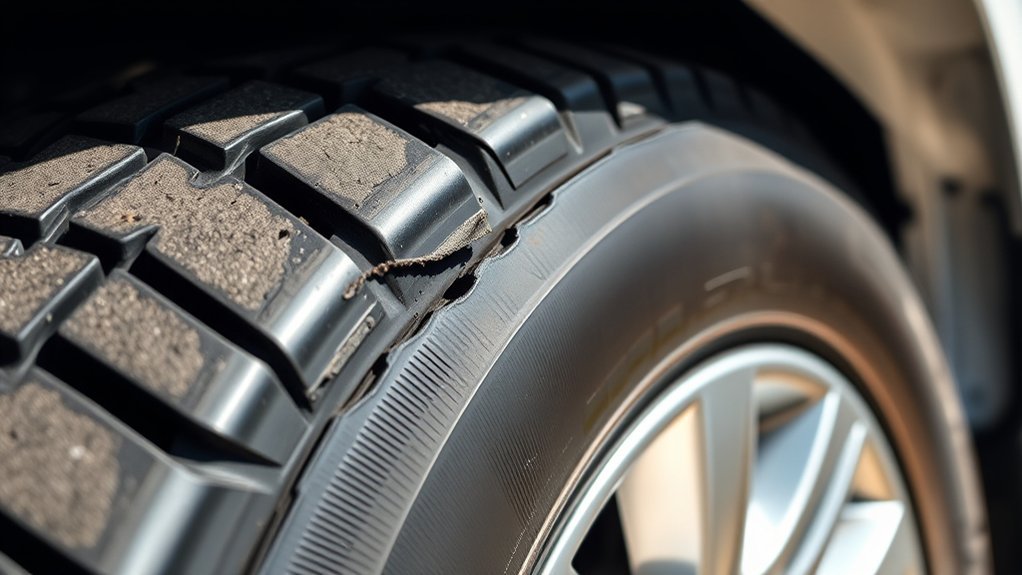
You usually cannot safely repair sidewall damage on a Toyota Hilux tire. A cut, bulge, crack, exposed cord, or bead-area injury can weaken the tire structure, increase the risk of rapid air loss, and make the tire unsafe under load. The safest move is to stop driving on it, use a safe spare or roadside assistance, and replace the damaged tire with the correct size and load-rated match.
Quick Answer
Do not patch, plug, or seal a Toyota Hilux tire with sidewall damage. Sidewall cuts, bulges, cracks, or exposed cords affect the tire’s structure, not just its air seal. Install a safe spare if available, call roadside assistance if needed, and replace the tire with the correct size, load rating, and speed rating.
Key Takeaways
- Sidewall damage is different from a small tread puncture because it can weaken the tire carcass.
- Sealants and plug kits should not be used as a fix for cuts, bulges, exposed cords, or bead-area damage.
- A tire shop should inspect the tire from the inside before deciding whether any tire damage is repairable.
- Replacement tires for a Hilux must match the tire placard or owner’s manual for size, load rating, speed rating, and pressure.
At a Glance
| Time Required | 5–10 minutes to inspect; longer if you need a spare, tow, or tire shop visit |
| Difficulty | Easy inspection; replacement should be handled by a tire professional unless you are safely installing a spare |
| Tools Needed | Flashlight, tire pressure gauge, safe spare tire, jack and wheel wrench if changing the wheel |
| Cost | Inspection may be free or low-cost; replacement cost depends on tire size, brand, load rating, and region |
What Should You Do About Sidewall Damage?
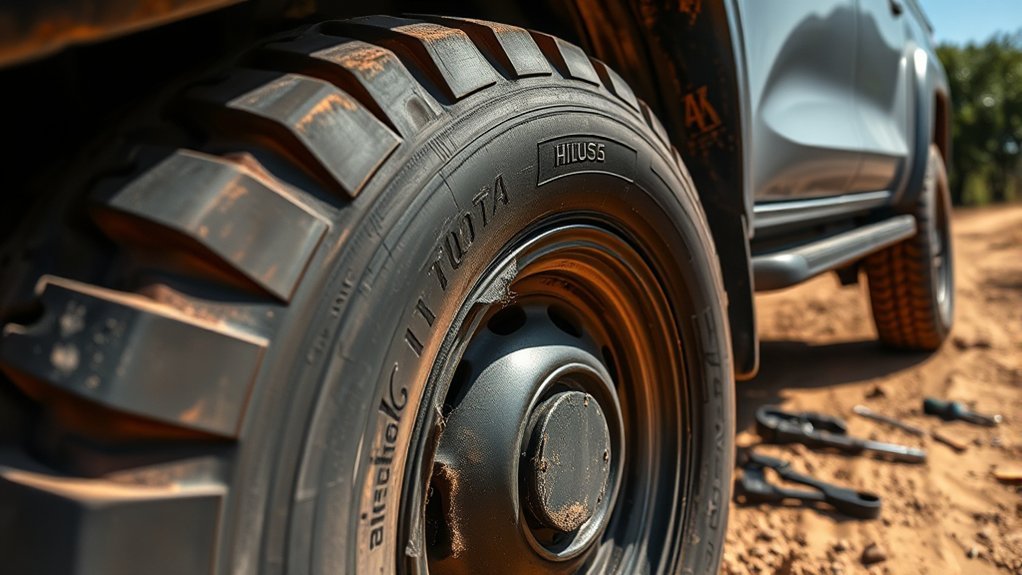
If you notice sidewall damage on your Toyota Hilux tire, slow down safely, pull over in a safe place, and inspect the tire before driving farther. Look for cracks, cuts, bubbles, missing rubber, bead-area damage, air loss, or visible cords. Any of these signs can mean the tire’s structure is compromised.
Warning: Do not keep driving on a tire with a sidewall bulge, exposed cord, deep cut, rapid air leak, or damage after a hard curb or pothole impact. A damaged sidewall can fail without much warning, especially at highway speed, while towing, or while carrying heavy cargo.
Do not try to patch, plug, stitch, glue, or seal the sidewall. Those methods may slow an air leak for a moment, but they do not restore the tire’s internal strength. If the tire is losing air or the damage is more than a light surface scuff, install a safe spare if you have one, call roadside assistance, or have the Hilux towed to a tire shop.
Understanding Sidewall Damage and Its Implications
The sidewall is the area between the tread and the bead of the tire. It flexes constantly as your Hilux carries weight, turns, brakes, hits bumps, and travels over uneven roads. Federal tire rules define the sidewall as the portion between the tread and bead, and they also define damage conditions such as cracking, cord separation, and sidewall separation in tire construction standards. 49 CFR 571.139
That matters because a sidewall injury is not just a small hole. A sharp cut, an L-shaped tear, a bubble, or exposed fabric can mean the reinforcing cords have been damaged. Once those cords are weakened, the tire may no longer handle normal heat, flex, load, and speed safely.
Note: A scrape that only marks the outer rubber may not always mean immediate replacement, but you should still have it inspected. If you can see fabric, cords, a bubble, or a cut that opens when the tire flexes, treat the tire as unsafe.
Can Sidewall Damage Be Repaired?
In practical terms, sidewall damage should be treated as non-repairable. A small puncture in the main tread area may sometimes be repaired after the tire is removed and inspected from the inside. A sidewall cut or bulge is different because the tire’s flexing structure has been affected.
Most reputable tire shops will refuse to repair a damaged sidewall because the repair cannot restore the tire’s load-bearing strength. This is especially important on a Toyota Hilux because the vehicle may be used with cargo, towing, rough tracks, gravel roads, or off-road trails. Those conditions place more stress on the tire than light city driving.
Safety Risks of Driving on Tires With Sidewall Damage
Driving on a tire with sidewall damage can lead to rapid air loss, a blowout, poor handling, or loss of control. The National Highway Traffic Safety Administration warns that poor tire maintenance can lead to a flat tire, blowout, or tread separation, and tire-related crashes caused hundreds of deaths in 2024.
The risk increases when the tire is hot, underinflated, overloaded, or used at higher speeds. A Hilux carrying tools, passengers, trailers, camping gear, or off-road recovery equipment places even more demand on the tires. Do not assume the tire is safe just because it is still holding air.
If the sidewall is cut, bulging, or showing cords, the question is not whether the tire can hold air today. The question is whether it can safely carry load, heat, speed, and flex tomorrow.
Temporary Solutions for Sidewall Damage: What Are Your Options?
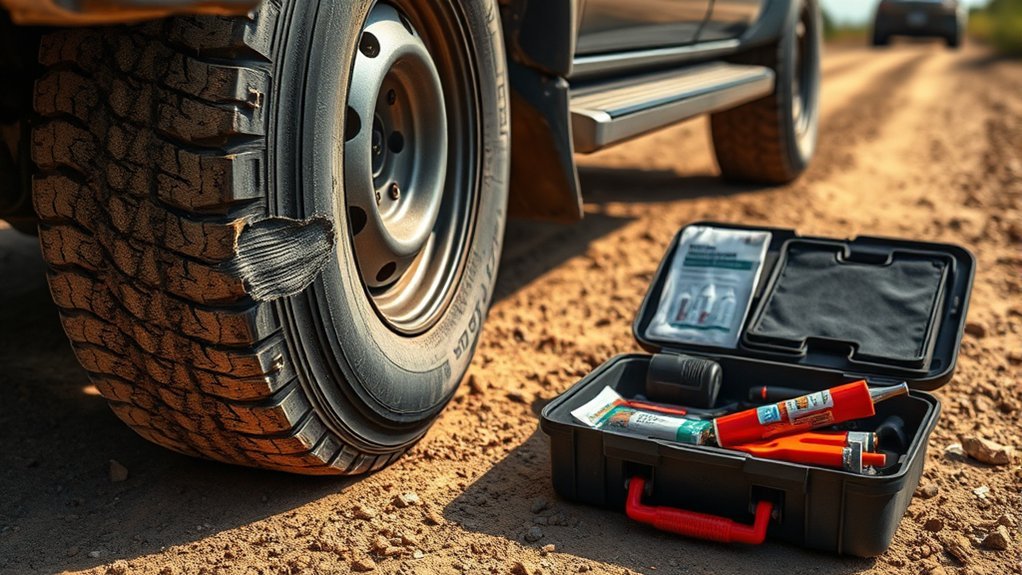
Temporary fixes are not a safe repair for sidewall damage. A tire inflator or sealant can be useful for some small tread punctures, but it cannot rebuild torn cords or repair a bulging sidewall. If you use sealant on a damaged sidewall and continue driving, you may hide the problem long enough for the tire to fail later.
| Option | Use It? | Why |
|---|---|---|
| Tire sealant | No for sidewall damage | It may slow air loss, but it does not restore sidewall strength. |
| Plug kit | No for sidewall damage | A plug cannot repair damaged cords, bulges, or sidewall flex damage. |
| Safe spare tire | Yes, if properly inflated and undamaged | It lets you reach a tire shop without driving on the damaged tire. |
| Tow or roadside assistance | Yes | Best choice when there is no safe spare or the tire is rapidly losing air. |
Pro Tip: Check your Hilux spare tire before you need it. A flat, cracked, or old spare will not help when sidewall damage leaves you stranded.
[Products Worth Considering]

The Trivd Frol 1/2" air impact wrench delivers high performance torque up to 1500 ft-lbs with a twin hammer impact mechanism for strong, balanced blows. It features an ergonomic grip, compact lightweight design, and quick-stop control with 3 forward speeds up to 8000 RPM plus a reverse speed. Built for demanding automotive repair and tire shop work, the rear exhaust helps keep debris away from the surface.

Vigorder rubber cement glue delivers superior adhesion and cures quickly within about 30 seconds for seamless rubber bonding. Once cured, it helps provide a strong, durable, waterproof seal that holds up to vehicle weight, pressure, and heat. Suitable for cars, motorcycles, trucks, bicycles, and off-road tires, it’s designed for emergency patch and maintenance repairs.

Mosconly tire repair glue and nail kit delivers an elastic, waterproof bond for quick sidewall puncture repairs. The adhesive cures securely to help prevent peeling, flaking, and tearing, while the included nails support a strong, seamless repair. Designed for easy roadside use, it works on car, motorcycle, bike, and other tire types, with full curing within 24 hours.
Legal and Safety Considerations Regarding Sidewall Repairs
Be careful with blanket legal claims. In the United States, federal tire standards cover tire construction, labeling, testing, and safety requirements for new tires. They do not create a simple nationwide rule that says every tire shop is legally banned from touching every sidewall repair. Local inspection rules, shop policies, liability standards, and accepted repair practices can vary.
The practical safety answer is still clear: a tire with structural sidewall damage should be replaced, not repaired. A shop may also refuse to service the tire once it sees exposed cords, a bubble, cracking to cord material, bead damage, or other structural injury. If the tire is unsafe for road use in your area, driving on it may also expose you to fines, failed inspection, insurance problems, or liability after a crash.
How to Know When to Seek Professional Help
Get professional help right away if you are unsure about the damage. A tire technician can remove the tire from the wheel and inspect the inside for hidden cord damage, impact breaks, liner damage, or bead problems.
| Sign of Damage | What to Do | Why It Matters |
|---|---|---|
| Bulge or bubble | Stop driving and replace the tire | Often points to internal cord or impact damage. |
| Visible cords or fabric | Do not repair; replace | The reinforcing structure may be exposed or weakened. |
| Deep sidewall cut | Use a spare or tow | The cut can grow as the sidewall flexes. |
| Flat tire after a curb or pothole hit | Have tire and wheel inspected | Impact can damage the tire, rim, alignment, or suspension. |
| Slow leak with sidewall mark | Do not rely on TPMS alone | TPMS warns about pressure, not all structural damage. |
[Products Worth Considering]

ETENWOLF T300 is a calibrated digital tire pressure gauge for accurate readings from 3 to 200 PSI across light and heavy-duty vehicles. It includes thermal compensation for reliable performance in extreme cold or heat, with an auto shut-off to extend battery life and an LED for easier reading. The sturdy design supports rugged everyday use, making it ideal for pickups, RVs, and industrial applications.

TireJect Off-Road Tire Sealant Kit provides 5-in-1 sealing to help fix tread punctures up to 3/8", sidewall punctures up to 3/8", bead leaks, slow leaks, and minor dry rot on low-speed tires. It permanently seals with liquid rubber, recycled tire particles, and Aramid fibers, making it ideal for flats caused by thorns, nails, and screws. The included dispensing cap attaches to the valve stem for a no-mess installation, along with a metal valve core remover tool and valve stem cap. This kit is for off-road use only.

The SAFELIFE dial tire tread depth gauge measures tread depth in 1/32 inch increments with clear, easy-to-read 2-inch dial face. Color zones using a traffic light system help you quickly judge whether tread is low, marginal, or ample for safer driving. Built with a durable zinc cast body and a metal detect probe for precise, comfortable use across cars, motorcycles, trucks, and buses.
Tread Puncture vs. Sidewall Damage
A small puncture in the main tread area may sometimes be repairable if the tire is otherwise healthy and the puncture is in the correct repair zone. Even then, a tire shop should remove the tire from the rim and inspect the inside before repairing it.
Sidewall damage is different. The sidewall flexes on every rotation, so a patch or plug cannot handle the same stress as the original tire structure. Shoulder damage near the edge of the tread can also be risky because it sits close to the flexible sidewall area. When in doubt, have the tire inspected rather than guessing from the outside.
Tips to Avoid Future Sidewall Damage
To reduce the risk of future sidewall damage on your Toyota Hilux, build tire checks into your normal maintenance routine. The NHTSA TireWise guidance recommends checking tire pressure at least once a month when the tires are cold and using the tire placard or owner’s manual for the correct pressure.
- Inspect sidewalls after off-road driving, gravel roads, potholes, curb strikes, or heavy loads.
- Keep tires inflated to the pressure listed on the Hilux tire placard or owner’s manual, not the maximum pressure printed on the tire.
- Avoid scraping curbs when parking or turning tightly.
- Slow down for potholes, rocks, washouts, and sharp debris.
- Rotate tires according to the owner’s manual when the tire setup allows it.
- Replace tires when the tread reaches 2/32 inch or when damage appears.
- Check tire recalls through NHTSA’s recall search if you suspect a safety defect.
Choosing the Best Replacement Tire for Your Hilux
Choosing the right replacement tire for your Toyota Hilux affects safety, load capacity, traction, braking, fuel use, and ride comfort. Start with the tire placard on the vehicle and the owner’s manual. NHTSA tells drivers to use the owner’s manual or Tire and Loading Information Label to find the correct tire size for a vehicle. NHTSA Tire Buyers’ FAQ
Match these items before buying:
- Tire size: Use the size listed on the placard or an approved equivalent.
- Load rating or load range: Choose a tire that can carry your Hilux, passengers, cargo, and trailer tongue weight where applicable.
- Speed rating: Do not downgrade below the required rating unless a qualified tire professional confirms it is appropriate for your use.
- Tread type: Highway terrain is quieter on pavement, all-terrain suits mixed road and trail use, and mud-terrain suits tougher off-road conditions but can be noisier and less efficient.
- Axle matching: Avoid mixing very different tread depths or tire types on the same axle.
- Wheel condition: After sidewall impact, ask the shop to inspect the rim for bends, cracks, bead-seat damage, and leaks.
Brands such as Bridgestone, Michelin, Goodyear, Toyo, Yokohama, and BFGoodrich all offer truck and all-terrain options, but the best choice depends on your Hilux model, wheel size, load needs, climate, and driving surface. For a work truck or towing setup, prioritize the correct load rating over appearance.
[Products Worth Considering]

The Tymate TM12 RV TPMS delivers real-time tire pressure and temperature monitoring with a stable 433Hz display for safer long-distance driving. It supports simultaneous monitoring across vehicle and trailer zones, includes six alarm modes for pressure, temperature, leakage, battery, and signal loss, and features easy DIY installation with auto calibration. Power is supplied via USB-C charging or solar recharging, with a wide 0–144 PSI range and up to 50 ft signal coverage for RVs and towable trailers.

TP-M13W combination repair unit kit includes wrapped stems with matching patches for fast, reliable tire repairs. It’s suitable for both radial and bias ply tires and is designed for chemical or heat vulcanization. Gray vulcanizing gum with blue backing helps create a strong bond, with the stem portion wrapped for added effectiveness.

These aluminum alloy tire valve stem caps with an O-ring seal help protect valve stems from corrosion while adding a clean, stylish look to your vehicle. The universal fit works across cars, trucks, motorcycles, bicycles, and more, making them an easy upgrade for everyday driving and off-road use. Installation is quick, and the included four-pack keeps all your tires dressed and protected.
Frequently Asked Questions
How much does it cost to repair sidewall damage on a tire?
A proper sidewall repair should not be offered, so the real cost is the cost of inspection and replacement. Replacement price depends on the Hilux tire size, load rating, brand, and local labor charges. Ask for an installed price that includes balancing, valve stem or TPMS service if needed, disposal, and taxes.
Can a tire shop fix the sidewall of a tire?
A reputable tire shop will usually refuse to repair structural sidewall damage. The shop may inspect the tire to confirm the damage, but sidewall cuts, bulges, exposed cords, bead damage, and impact breaks normally mean replacement.
Why don’t you patch the sidewall of a tire?
A patch may seal air in a tread puncture, but the sidewall flexes too much and carries structural stress. If the cords or inner structure are damaged, a patch cannot restore the tire’s strength. That is why replacement is the safe choice.
Can tire sealant fix sidewall damage long enough to drive?
Do not rely on sealant for sidewall damage. It may temporarily slow an air leak, but it will not repair broken cords, a bulge, or impact damage. Use a safe spare or call roadside assistance instead.
Can I drive slowly on a Toyota Hilux tire with sidewall damage?
Only move the vehicle if it is necessary to get out of immediate danger, and keep it as short and slow as possible. If the tire has a bulge, exposed cord, rapid leak, or deep cut, do not drive to a shop on that tire. Use a spare or tow the vehicle.
Should I replace one tire or two?
If the other tire on the same axle is fairly new and the replacement matches the size, load rating, speed rating, and tread type, one tire may be enough. If the opposite tire is worn, mismatched, aged, or damaged, replacing both tires on the axle is usually safer. Ask the tire shop to check tread depth and vehicle requirements.
Conclusion
Sidewall damage on a Toyota Hilux is not a repair job. It is a safety decision. If you see a sidewall cut, bulge, exposed cord, bead-area damage, or a leak after an impact, stop driving on that tire and replace it with a correct match. Regular inspections, proper cold tire pressure, safe parking habits, and the right load-rated tires will help protect your Hilux and everyone riding in it.
Sources
- NHTSA TireWise — tire pressure, tread depth, blowout safety, TPMS, and tire-related crash data
- NHTSA Tire Buyers’ FAQ — choosing tire type, tire size, tire ratings, and tire age checks
- NHTSA New Tire Purchase Guide — tire registration, service life, pressure checks, and recall alerts
- 49 CFR 571.139 — federal standard for new pneumatic radial tires for light vehicles
- 49 CFR 571.138 — tire pressure monitoring system requirements
- NHTSA Recalls Search — tire, vehicle, equipment, and safety recall checks