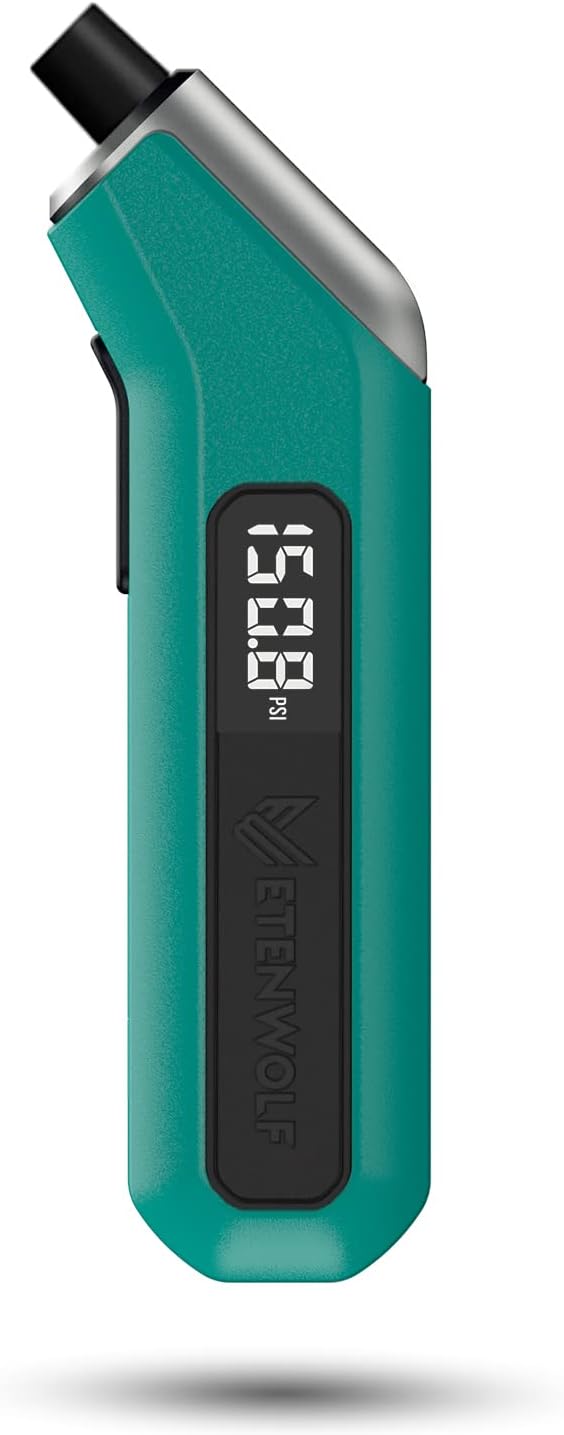
Before a long drive in your Toyota Tacoma, spend 10 to 15 minutes checking the tires, spare, and tire-change tools. Focus on cold tire pressure, tread depth, sidewall condition, tire age, and whether the spare is ready to use. A quick check now can prevent poor handling, a roadside delay, or a dangerous tire failure far from home.
Quick Answer
To check Toyota Tacoma tires before a road trip, measure cold tire pressure with an accurate gauge, match it to the driver-side doorjamb label, inspect tread with a penny or tread gauge, check sidewalls for cracks or bulges, read the DOT date code, and confirm the spare tire and jack tools are ready.
Key Takeaways
- Check tire pressure when the tires are cold, meaning the truck has been parked for at least three hours.
- Use the Toyota Tacoma tire pressure listed on the driver-side doorjamb label or in the owner’s manual, not the maximum pressure molded into the tire sidewall.
- Replace or professionally inspect tires with exposed cords, sidewall bulges, deep cuts, severe cracking, or tread at 2/32 inch.
- Do not forget the spare tire. It can lose pressure and age even when it has never touched the road.
At a Glance
| Time Required | 10 to 15 minutes for a basic check; 20 minutes if you also inspect the spare and tools |
| Difficulty | Easy |
| Tools Needed | Accurate tire pressure gauge, tread depth gauge or penny, flashlight, gloves, and portable inflator if available |
| Cost | Usually $0 if you already own the tools; about $10 to $40 for a gauge, tread gauge, and basic inflator accessories |
Check Tire Pressure When the Tires Are Cold
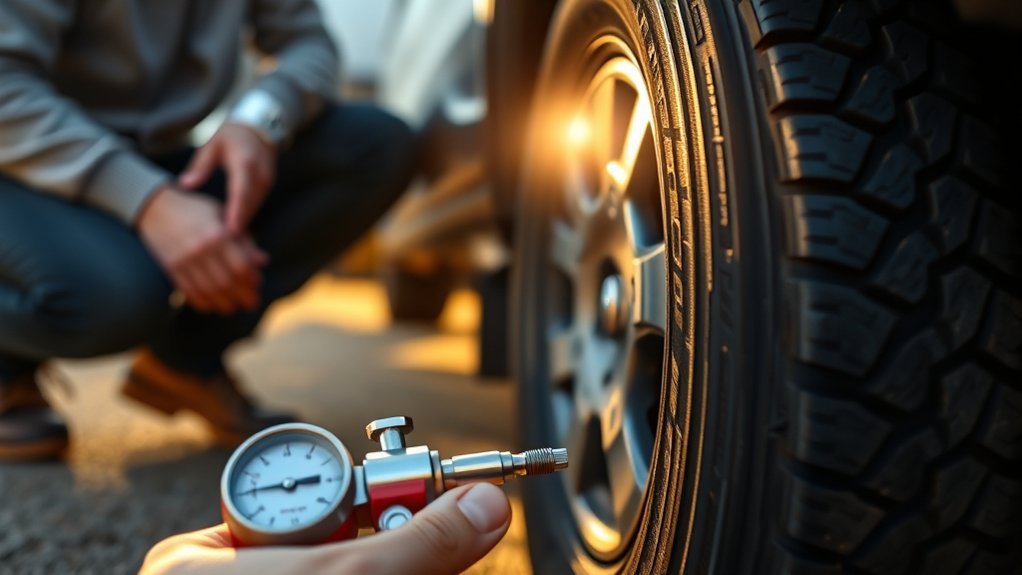
Start with tire pressure because it affects grip, tire wear, fuel use, and heat buildup. For the most accurate reading, check the pressure when your Tacoma has been parked for at least three hours. This is called a cold tire pressure reading.
Find the recommended pressure on the Tire and Loading Information Label on the driver-side doorjamb, or confirm it in your Toyota owner’s manual. Do not use the maximum PSI printed on the tire sidewall as your normal road-trip setting. That sidewall number is a tire limit, not the Tacoma’s recommended cold inflation pressure.
Remove the valve cap, press the gauge straight onto the valve stem, and read the pressure. If it is low, add air in small amounts, then recheck. If it is high, release air slowly until it matches the doorjamb label. Repeat this for all four tires and the spare.
Pro Tip: Keep a small tire pressure gauge in the Tacoma instead of relying only on gas-station gauges. A digital gauge is easy to read, but any accurate gauge is better than guessing by sight.
If the Tire Pressure Monitoring System light is on, check the pressure with a gauge as soon as it is safe. TPMS is helpful, but it does not replace a regular manual pressure check. A tire can also lose pressure from a nail, damaged valve stem, leaking bead, or a hard pothole impact.
Inspect Tread Depth and Wear Pattern
Next, inspect tread depth. Tread channels move water away from the contact patch, which helps your Tacoma stay stable in rain. Tires are not safe once the tread is worn down to 2/32 inch, and a long road trip is not the time to test the limit.
Use the penny test if you do not have a tread depth gauge. Place a penny into the tread with Lincoln’s head facing down. If you can see the top of Lincoln’s head, the tread is too shallow and the tire should be replaced. A tread depth gauge is more precise and usually costs only a few dollars.
Check the tread in several places across each tire, not just one spot. Look for these warning signs:
- More wear on one edge, which may point to alignment trouble.
- Center tread worn faster than the shoulders, which can point to overinflation.
- Both shoulders worn faster than the center, which can point to underinflation.
- Cupped or scalloped tread, which may point to worn suspension parts or balance issues.
- Uneven wear between front and rear tires, which may mean rotation is overdue.
If your Tacoma pulls to one side, vibrates at highway speed, or has uneven tire wear, schedule a tire inspection before the trip. Tire rotation, balance, and alignment can help your tires last longer and make the truck feel steadier on the highway.
Identify Sidewall Damage and Wear
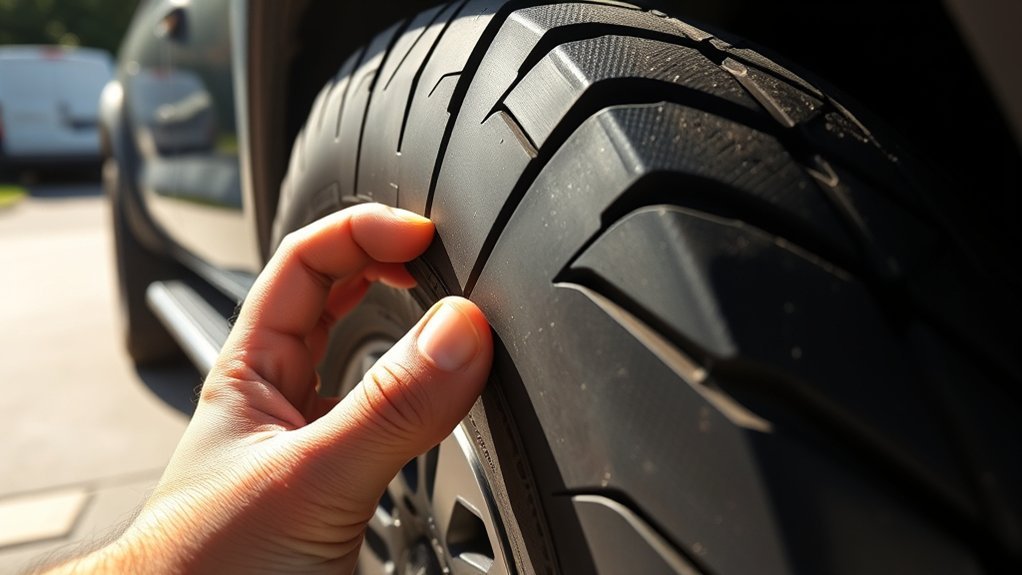
Sidewall damage is serious because the sidewall flexes constantly while you drive. Walk around the Tacoma and inspect both sides of each tire where visible. Use a flashlight if the truck is parked in a garage or shaded area.
Look for cracks, cuts, gouges, bubbles, bulges, exposed cords, or areas that feel soft compared with the rest of the tire. A sidewall bulge can mean internal tire damage, even if the tread still looks good. Also check for nails, screws, stones lodged in grooves, and damage near the bead where the tire meets the wheel.
Warning: Do not start a road trip on a tire with a sidewall bulge, exposed cords, deep sidewall cut, severe cracking, or repeated pressure loss. Replace it or have it inspected by a qualified tire technician first.
If you recently drove off-road, hit a curb, or crossed rough construction zones, inspect the sidewalls even more closely. Tacoma tires can take abuse, but sharp rocks and curb impacts can still damage the tire structure.
Check Tire Age by DOT Date Code
Tread depth is not the only factor that matters. Tires age as rubber and internal materials change over time. A tire can look acceptable and still be weaker because of age, heat, sunlight, storage conditions, or long periods of sitting.
Find the DOT Tire Identification Number on the sidewall. The last four digits show the week and year the tire was made. For example, a code ending in 2521 means the tire was made in the 25th week of 2021. You may need to check both sides of the tire because the full code is not always visible on the outward-facing side.
For road-trip planning, treat six years as a serious inspection point, especially if the truck sits often, lives in a hot climate, or has tires with visible cracking. Some vehicle and tire manufacturers recommend replacement at six to 10 years regardless of treadwear, so follow the tire maker’s age limit and your Tacoma owner’s manual guidance. Do not use an old tire just because it still has tread.
Before a long highway trip, tire age, tread depth, sidewall condition, and pressure should all pass inspection. One good-looking number does not cancel out a serious problem in another area.
Inspect Your Spare Tire and Tire-Change Tools
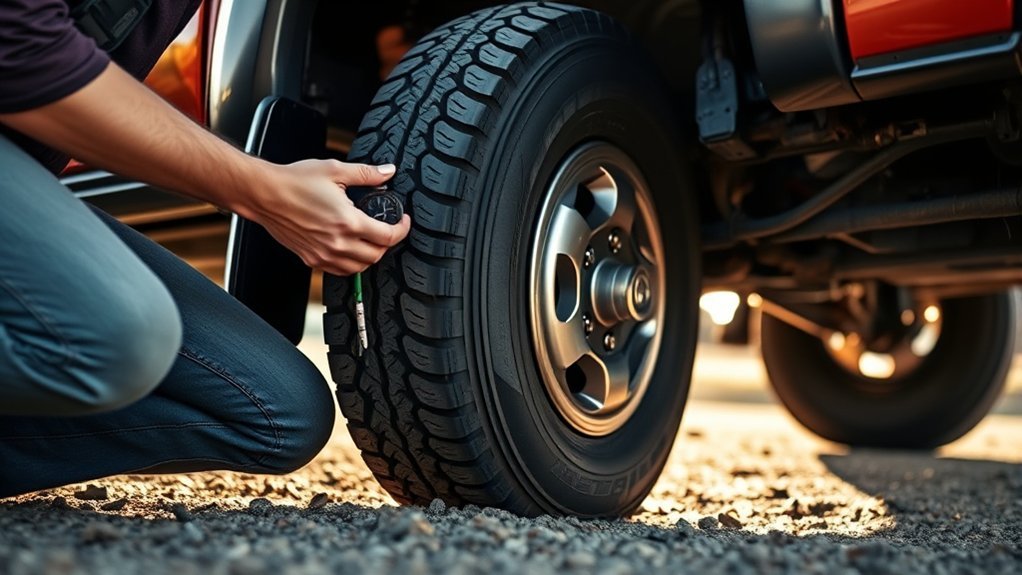
A spare tire is only useful if it has enough air, is not too old, and can be accessed when you need it. Many Tacoma models carry the spare under the bed, so confirm you know how to lower it with the supplied tool kit before leaving home.
[Products Worth Considering]
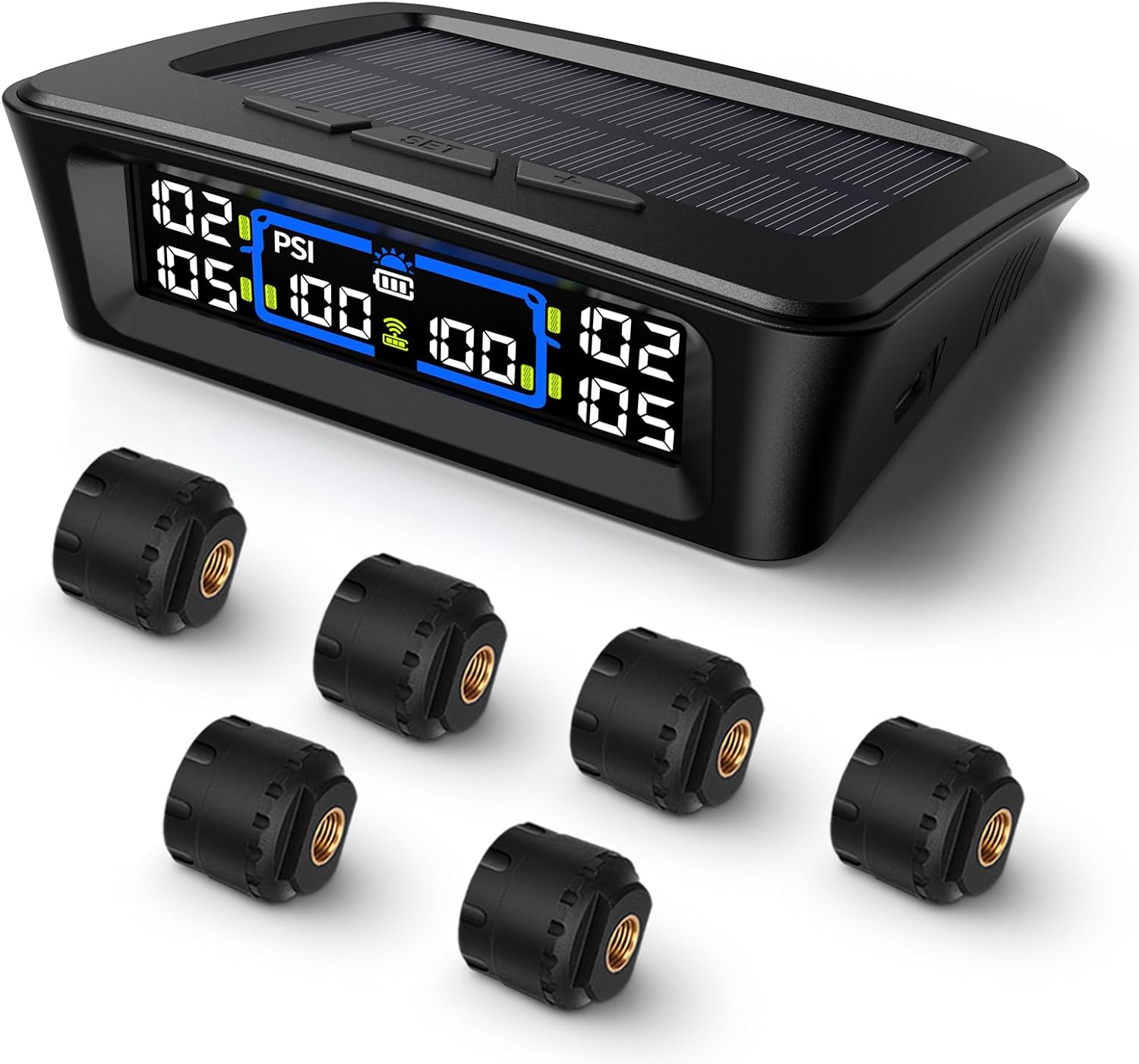
The Tymate TM12 RV TPMS delivers real-time tire pressure and temperature monitoring with a stable 433Hz display for safer long-distance driving. It supports simultaneous monitoring across vehicle and trailer zones, includes six alarm modes for pressure, temperature, leakage, battery, and signal loss, and features easy DIY installation with auto calibration. Power is supplied via USB-C charging or solar recharging, with a wide 0–144 PSI range and up to 50 ft signal coverage for RVs and towable trailers.

The TYAMATE TM8 solar-powered wireless TPMS delivers real-time tire pressure and temperature monitoring with six alarm modes for safer driving. A vibrant color LCD display shows readings clearly while windshield mounting keeps it hands-free and easy to read. With a wide 0–87 PSI range, strong 433.92 MHz signal transmission, and quick sensor pairing, it’s ideal for RV, sedan, SUV, MPV, and truck use.

This roadside assistance kit helps drivers and passengers in urgent situations after an accident or breakdown, providing practical support while waiting for help. It includes a lightweight, compact tire inflator for fast inflation of standard vehicle tires, plus reinforced jumper cable protection for safer handling. Ideal for winter weather, road trips, camping, and travel, with everything stowed neatly in a trunk bag.
Check Spare Tire Inflation
Check the spare with the same pressure gauge you use on the other tires. Use the pressure listed on the spare tire, doorjamb label, or owner’s manual. Do not assume the spare is ready because it has never been used. Spares can lose air slowly and can age while stored under the truck.
Inspect Spare Tire Condition
Look for cracks, bulges, cuts, exposed cords, dry rot, or uneven wear. Read the DOT date code on the spare as well. If the spare is old, cracked, flat, or damaged, replace it before the trip instead of hoping you will not need it.
Confirm Jack and Lug Tools
Make sure the jack, lug wrench, spare-tire lowering tool, wheel lock key if equipped, and owner’s manual are in the truck. If you recently bought the Tacoma used, verify these items now. Missing tools can turn a simple flat tire into a tow call.
Note: If your spare is a temporary-use tire, follow the speed and distance limits printed on the tire and in the owner’s manual. A spare is for emergencies, not normal long-distance driving.
Adjust for Heavy Loads, Towing, and Off-Road Travel
A Tacoma road trip often means cargo, camping gear, bikes, tools, or a trailer. Extra weight makes tire condition even more important. Before leaving, check the driver-side label for load limits, confirm your tire size and load rating, and make sure the tires match the truck’s intended use.
If you tow or carry a heavy load, follow the pressure and loading guidance in your Toyota owner’s manual and on the doorjamb label. Do not exceed the tire load rating or the truck’s payload rating. If you air down for off-road driving, air back up to the correct road pressure before returning to highway speeds.
Build a Road-Trip Tire Emergency Kit
A good emergency kit saves time when a tire problem happens away from home. For a Tacoma road trip, pack these tire-related items:
- Accurate tire pressure gauge
- Portable 12-volt tire inflator or compressor
- Flashlight or headlamp with extra batteries
- Work gloves
- Reflective triangles or road flares
- Wheel chocks
- Wood board for stabilizing the jack on soft ground
- Lug wrench and factory jack tools
- Valve caps and a valve-core tool
- Phone charger and power bank
- Roadside-assistance information
A tire plug kit can help with some small tread punctures, but it is not a fix for sidewall damage, large cuts, shoulder punctures, or a tire driven flat. When in doubt, install the spare safely or call roadside assistance.
[Products Worth Considering]

The Dr.Roc spare tire tool kit helps you release, lower, or raise your spare tire with reliable extension tools and a lug nut wrench. It is made from rustproof automotive-grade steel and includes an organized carry case for convenient storage. Designed for compatibility with select GM models from the late 1990s through 2019, it uses upgraded extension components to install and remove spare tires with less hassle.

Monitor tire tread wear with a smart, color-coded depth gauge that shows clear condition ranges at a glance. The bar is range marked for fast, easy readings, helping you maintain safer traction and performance. Each gauge is portable with a pocket clip, and the set includes 20 units for daily use and sharing.

These aluminum alloy tire valve stem caps with an O-ring seal help protect valve stems from corrosion while adding a clean, stylish look to your vehicle. The universal fit works across cars, trucks, motorcycles, bicycles, and more, making them an easy upgrade for everyday driving and off-road use. Installation is quick, and the included four-pack keeps all your tires dressed and protected.
When to Get a Tire Shop Involved Before You Leave
Some tire problems should be handled before the road trip starts. Visit a tire shop or Toyota service center if you notice any of these issues:
- One tire keeps losing pressure after you refill it.
- The TPMS light stays on or flashes after pressures are corrected.
- The truck shakes, pulls, wanders, or feels unstable at highway speed.
- Tread wear is uneven across the tire or uneven between tires.
- A tire has a sidewall bulge, exposed cords, deep cut, or severe cracking.
- The spare tire is old, flat, damaged, or impossible to access.
- You are unsure whether the tires match your Tacoma’s load, towing, or terrain needs.
Also check whether any tire has an open recall. Tires can be recalled just like vehicles, and the DOT Tire Identification Number can help identify affected tires through NHTSA recall tools.
[Products Worth Considering]

Milton S-921 pencil tire pressure gauge helps you maintain optimal tire pressure for passenger cars with accurate readings in PSI and kPa. It features a built-in deflator valve for convenient pressure adjustments, plus a single chuck head and nylon indicator bar for easy use on the go. Built from durable plated brass and designed for reliable performance, it’s a practical road trip and cold-weather maintenance tool.

Measure tire tread depth quickly and accurately with this LUMITECO dial gauge that reads in 1/32" increments up to 14/32". The color-coded green/yellow/red zones make it easy to judge tire wear and know when replacement is needed. A rugged, compact design with a protective pouch helps keep the gauge ready for use on cars, trucks, motorcycles, and more.
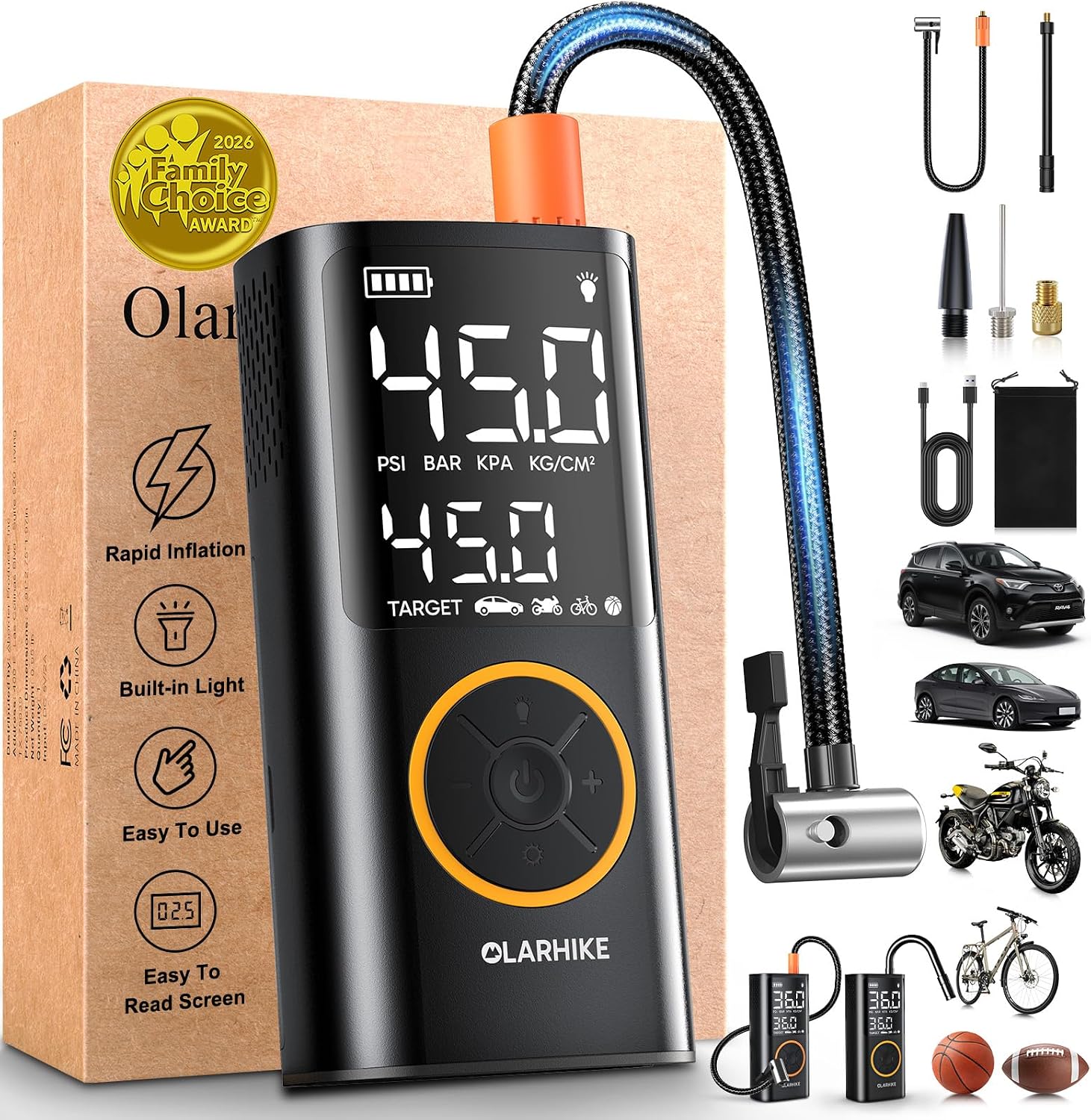
The OlarHike portable tire inflator delivers fast, reliable air for cars, bikes, and motorcycles with an easy-to-read digital gauge and LED light. It features an auto shutoff that stops inflation at your preset pressure to help prevent over-inflation, plus dual hose support for different valve types and uses. A built-in power bank function with USB output keeps you prepared during roadside or outdoor emergencies.
Toyota Tacoma Road-Trip Tire Checklist
Use this quick checklist the day before you leave:
- Park the Tacoma for at least three hours so the tires are cold.
- Check the doorjamb label or owner’s manual for the correct cold PSI.
- Measure all four tires and adjust pressure as needed.
- Check the spare tire pressure and condition.
- Inspect tread depth with a penny or tread gauge.
- Look for uneven wear, nails, screws, cuts, cracks, bulges, and exposed cords.
- Read the DOT date code on each tire, including the spare.
- Confirm the jack, lug wrench, spare tool, wheel lock key, and emergency gear are in the truck.
- Check pressure again after major temperature changes, heavy loading, or off-road air-downs.
Frequently Asked Questions
How do I check tires before a road trip?
Check tire pressure when the tires are cold, match the pressure to the driver-side doorjamb label, inspect tread depth, look for sidewall cracks or bulges, read the DOT date code, and confirm the spare tire and jack tools are ready.
How do I check tires for pre-trip safety?
Use a pressure gauge, tread depth gauge or penny, and flashlight. Check pressure, tread depth, sidewalls, valve stems, tire age, and the spare. If you find a bulge, exposed cords, deep cut, or repeated pressure loss, fix it before driving.
How often should I replace the tires on my Toyota Tacoma?
Replace Tacoma tires when tread reaches 2/32 inch, when they have serious damage, or when age and condition make them unsafe. Many tire and vehicle manufacturers recommend replacement somewhere between six and 10 years regardless of treadwear, so check the DOT date code and follow the tire maker’s guidance.
What should I inspect before a road trip?
Inspect tire pressure, tread depth, sidewall condition, tire age, valve stems, spare tire pressure, jack tools, and emergency gear. If you are towing or carrying heavy cargo, also confirm load limits and tire pressure guidance in the owner’s manual.
Can I rely on the TPMS light instead of checking tire pressure?
No. TPMS can warn you when a tire is significantly underinflated, but it is not a replacement for checking pressure with a gauge. Check your Tacoma’s tires monthly and before long trips.
Should I check the spare tire before every long trip?
Yes. Check the spare tire’s pressure, tread, sidewalls, and DOT date code before a long trip. A flat, cracked, or old spare may not help when you need it most.
Conclusion
A Toyota Tacoma tire inspection is simple, but it matters. Before your road trip, check cold tire pressure, tread depth, sidewalls, tire age, spare tire condition, and tire-change tools. If any tire has a bulge, exposed cords, severe cracks, unsafe tread, or repeated air loss, fix it before you leave. A few minutes in the driveway can save hours on the roadside and help keep the trip safer.
Sources
- NHTSA TireWise — tire pressure, cold-pressure checks, tread depth, TPMS limits, tire aging, and spare tire guidance
- Toyota Manuals and Warranties — official Toyota owner’s manual access for model-specific tire and maintenance information
- Toyota Tire Center — Toyota tire safety and performance information
- NHTSA Recalls — vehicle and tire recall lookup support