
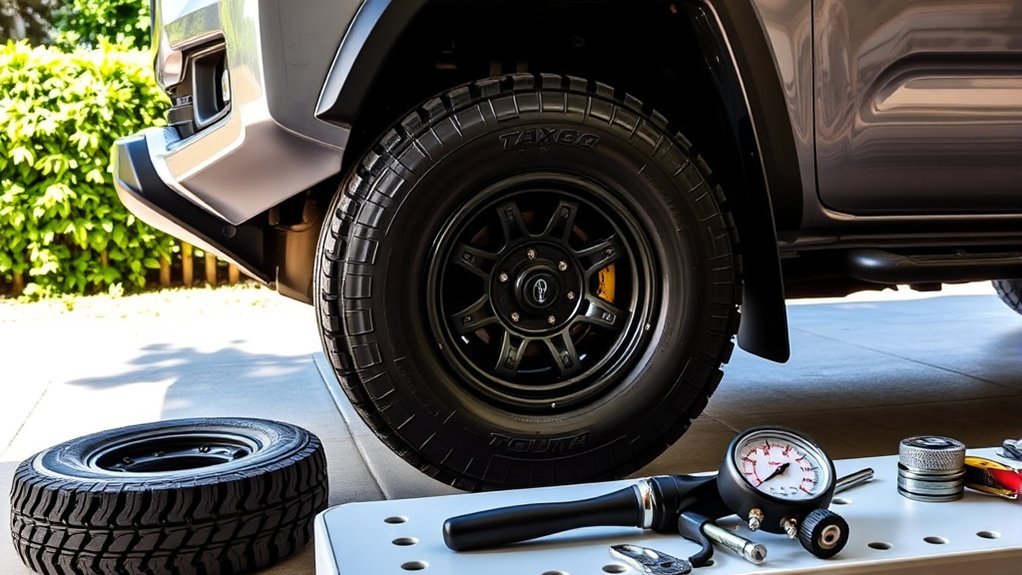
Keeping your Toyota Tacoma’s tires in good shape helps your truck steer, stop, tow, and handle rough roads the way it should. The basics are simple: check pressure every month, inspect tread and sidewalls often, rotate on the schedule in your Tacoma owner’s manual, and replace tires before wear, age, or damage puts traction at risk.
Quick Answer
For most Toyota Tacoma owners, tire maintenance means checking cold tire pressure monthly, inspecting tread depth and sidewall damage, rotating tires about every 5,000 to 8,000 miles if your owner’s manual recommends it, and replacing tires at 2/32 inch of tread or sooner if they are damaged, aging, or unsafe for your driving conditions.
Key Takeaways
- Check Tacoma tire pressure at least once a month when the tires are cold, including the spare if your truck has one.
- Use the PSI on the driver-side Tire and Loading Information Label or in your owner’s manual, not the maximum PSI printed on the tire sidewall.
- Replace tires when tread reaches 2/32 inch, or earlier if you tow, drive in heavy rain or snow, go off-road, or see damage.
- Rotate tires on the schedule and pattern listed for your Tacoma model year, tire type, drivetrain, and spare-tire setup.
- Schedule an alignment when the truck pulls, the steering wheel sits crooked, you hit a curb or pothole, or the tires show uneven wear.
At a Glance
| Time Required | 10 to 20 minutes for a monthly pressure, tread, and damage check; longer if tires need rotation, balancing, or alignment. |
| Difficulty | Easy for pressure and tread checks; moderate to advanced for DIY rotation; professional service recommended for alignment. |
| Tools Needed | Tire pressure gauge, tread depth gauge or penny, flashlight, owner’s manual, and a torque wrench, jack, jack stands, and wheel chocks if rotating tires yourself. |
| Cost | $0 to $20 for basic checks if you already have a gauge; shop pricing varies for rotation, balancing, alignment, and replacement tires. |
Why Tire Maintenance for Your Toyota Tacoma Matters
Your Tacoma’s tires carry the truck, absorb road impacts, support payload, and provide the grip you rely on when braking, cornering, towing, or driving off pavement. Poor tire maintenance can lead to uneven wear, weak traction, vibration, poor fuel economy, overheating, blowouts, or damaged tire sidewalls.
The National Highway Traffic Safety Administration recommends regular tire pressure checks, tread inspections, rotation when advised by the vehicle manufacturer, balancing, and alignment to help protect tire life and vehicle safety.
NHTSA reported 511 traffic fatalities in tire-related crashes in 2024, which is a strong reminder that tire care is a safety task, not just a maintenance chore.
For a Tacoma, tire care matters even more if you tow, haul, drive gravel roads, air down for trails, or use larger all-terrain tires. Extra load and rough surfaces create heat and stress, so small tire problems can become expensive or dangerous faster.
Toyota Tacoma Tire Maintenance Schedule
Use your Tacoma’s official Toyota owner’s manual and warranty maintenance guide as the final authority for your model year, drivetrain, trim, tire size, and spare-tire setup. As a practical routine, use this schedule:
- Every month: Check cold tire pressure, tread depth, sidewall condition, valve stems, and the spare tire if equipped.
- Before long trips, towing, or trail driving: Recheck pressure, look for nails or cuts, and confirm that tires are rated for the load.
- At oil changes or about every 5,000 to 8,000 miles if recommended: Rotate the tires using the pattern in your manual.
- When vibration appears: Have tire balance checked.
- When the truck pulls, the steering wheel is off-center, or tread wear is uneven: Have the alignment inspected.
- When tread reaches 2/32 inch, damage appears, or tires age out: Replace the tires.
Note: Tire Pressure Monitoring Systems are helpful, but they are not a replacement for a monthly gauge check. NHTSA notes that TPMS warnings usually appear only after a tire is already significantly underinflated.
When Should You Replace Your Toyota Tacoma Tires?
Replace your Tacoma tires when they are worn, damaged, aging, or no longer suited to the way you drive. Do not rely on mileage alone. A highway tire, mud-terrain tire, winter tire, and heavy-duty all-terrain tire can all wear at different rates.
Use these replacement signs:
- Tread depth is 2/32 inch: NHTSA says tires are not safe and should be replaced when tread is worn down to 2/32 inch.
- The penny test fails: Place a penny into the tread with Lincoln’s head upside down and facing you. If you can see the top of Lincoln’s head, replace the tire.
- Sidewall damage appears: Replace or have the tire inspected right away if you see bulges, exposed cords, deep cuts, cracking, or impact bubbles.
- Wear is uneven: Feathering, cupping, shoulder wear, or one tire wearing faster than the rest can point to pressure, balance, alignment, or suspension problems.
- The tire is losing air repeatedly: A slow leak may come from a puncture, valve stem, bead seal, cracked wheel, or damaged tire.
- The tire is old: NHTSA says some vehicle and tire makers recommend replacing tires that are six to 10 years old, even if tread remains.
If you tow, drive in heavy rain, travel in snow, or spend time off-road, do not wait for the absolute minimum tread depth. Extra tread helps move water, mud, gravel, and snow away from the contact patch.
[Products Worth Considering]

These universal tire valve stem caps help protect valve cores from dust, debris, and moisture while helping maintain stable tire pressure. The corrosion-resistant metal construction and sealed design provide reliable protection in road grime, mud, and winter conditions. Twist-on installation makes them quick to fit on cars, SUVs, trucks, and motorcycles.

These aluminum alloy tire valve stem caps with an O-ring seal help protect valve stems from corrosion while adding a clean, stylish look to your vehicle. The universal fit works across cars, trucks, motorcycles, bicycles, and more, making them an easy upgrade for everyday driving and off-road use. Installation is quick, and the included four-pack keeps all your tires dressed and protected.

Monitor tire tread wear with a smart, color-coded depth gauge that shows clear condition ranges at a glance. The bar is range marked for fast, easy readings, helping you maintain safer traction and performance. Each gauge is portable with a pocket clip, and the set includes 20 units for daily use and sharing.
Rotate Your Toyota Tacoma Tires Regularly
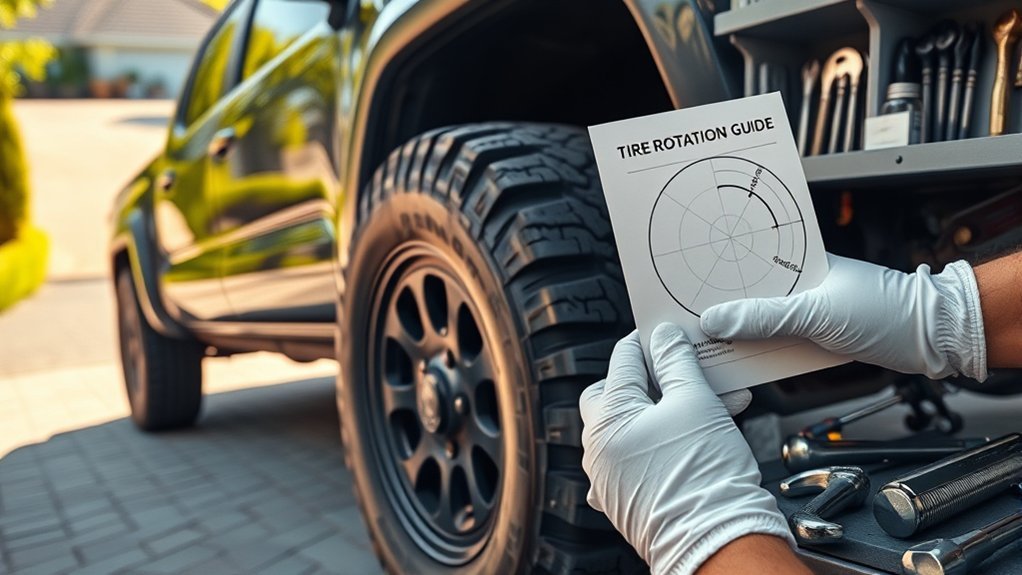
Tire rotation helps spread wear more evenly across your Tacoma’s tires. NHTSA recommends checking your owner’s manual for the right rotation interval and pattern, and says that when rotation is recommended by the manufacturer, 5,000 to 8,000 miles is a common range.
Your Tacoma’s correct rotation pattern depends on tire type and setup:
- Same-size, non-directional tires: Many trucks use a front-to-rear and side-to-side pattern, but confirm the pattern in your manual.
- Directional tires: These usually stay on the same side unless they are dismounted from the wheels.
- Different front and rear tire sizes: Some setups cannot be rotated normally.
- Full-size matching spare: Some Tacoma setups may allow a five-tire rotation, but only if the spare matches the road tires in size, type, load rating, and condition.
Warning: If you rotate tires yourself, use the correct jack points, wheel chocks, jack stands, and lug nut torque from your Tacoma manual. Never work under a truck supported only by a jack.
After rotation, drive a short distance and listen for vibration, pulling, or rubbing. Recheck lug nut torque if your manual or wheel manufacturer calls for it.
How to Check Your Toyota Tacoma Tires’ Pressure and Tread Depth
Pressure and tread checks are the fastest way to catch tire problems before they turn into poor handling, poor fuel economy, or a roadside failure.
Check Cold Tire Pressure
- Park your Tacoma for at least three hours, or check pressure before driving more than a short distance.
- Find the recommended PSI on the driver-side Tire and Loading Information Label or in your owner’s manual.
- Remove the valve cap and press a quality tire pressure gauge firmly onto the valve stem.
- Add air if the reading is low, or release a small amount if it is high.
- Check all four tires and the spare if your Tacoma has one.
- Reinstall valve caps to help keep dirt and moisture out of the valve stems.
Do not use the maximum PSI printed on the tire sidewall as your target pressure. That number is the tire’s maximum cold inflation pressure, not Toyota’s recommended pressure for your truck.
Proper pressure also helps fuel economy. FuelEconomy.gov says properly inflated tires can improve gas mileage by 0.6% on average and up to 3% in some cases.
Inspect Tread Depth
A tread depth gauge is the most accurate tool, but the penny test works for a quick check. Insert a penny into several tread grooves with Lincoln’s head upside down and facing you. If you can see the top of Lincoln’s head, the tire is at or near the replacement point.
Check more than one spot on each tire. A tire can look fine in the center but be worn on one shoulder because of low pressure, overloaded driving, worn suspension parts, or poor alignment.
Look for Damage and Age
Use a flashlight and inspect the tread blocks, sidewalls, valve stems, and inner shoulder of each tire. Look for nails, screws, missing chunks, cracks, bulges, cords, or rubbing marks. Also check the tire’s DOT Tire Identification Number. The last four digits show the week and year the tire was made.
Pro Tip: Keep a simple tire log in your phone. Record PSI, tread depth, mileage, rotation date, and any uneven wear. This makes it easier to spot a slow leak or alignment problem early.
Why You Need Regular Tire Alignments for Your Toyota Tacoma
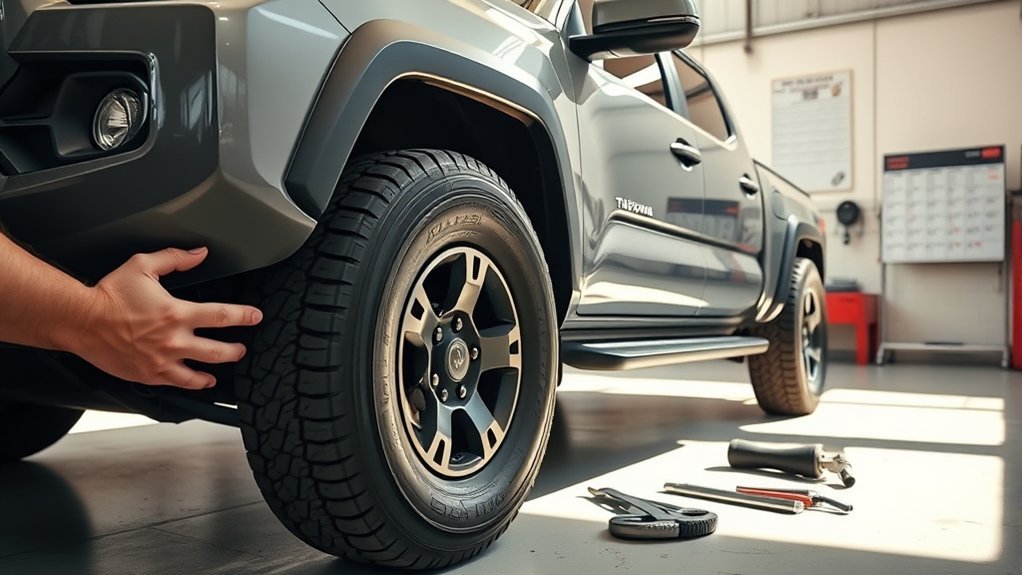
A wheel alignment sets the tire angles so the tires contact the road correctly. Good alignment helps your Tacoma track straight, reduces uneven tire wear, and supports safe handling.
You do not need to treat alignment as the same 5,000 to 8,000-mile routine as tire rotation. Instead, schedule an alignment check when you notice these signs:
- Your Tacoma pulls left or right on a straight, level road.
- The steering wheel is crooked when driving straight.
- One tire shoulder wears faster than the other.
- The tread looks feathered, chopped, or cupped.
- You hit a curb, pothole, rock, or trail obstacle hard.
- You install new tires, suspension parts, a lift kit, leveling kit, or new wheels.
Balancing and alignment are different services. Balancing corrects weight differences in the tire and wheel assembly and helps stop vibration. Alignment corrects wheel angles and helps prevent pulling and uneven wear. Your Tacoma may need one, the other, or both.
[Products Worth Considering]

Measure tire tread depth quickly and accurately with this LUMITECO dial gauge that reads in 1/32" increments up to 14/32". The color-coded green/yellow/red zones make it easy to judge tire wear and know when replacement is needed. A rugged, compact design with a protective pouch helps keep the gauge ready for use on cars, trucks, motorcycles, and more.

Accurately measure tire tread depth with a calibrated gauge marked from 0 to 1 inch in 1/32 inch increments. The color-coded bar helps you quickly identify tread condition ranges, supporting safe driving for trucks, motorcycles, automobiles, and passenger vehicles.

The Trivd Frol 1/2" air impact wrench delivers high performance torque up to 1500 ft-lbs with a twin hammer impact mechanism for strong, balanced blows. It features an ergonomic grip, compact lightweight design, and quick-stop control with 3 forward speeds up to 8000 RPM plus a reverse speed. Built for demanding automotive repair and tire shop work, the rear exhaust helps keep debris away from the surface.
Choosing the Right Tires for Your Tacoma
The right Tacoma tires depend on your model year, trim, wheel size, load needs, climate, and driving style. A commuter Tacoma, a towing setup, and a trail-focused TRD Off-Road do not need the same tire.
[Products Worth Considering]

Upgrade your Toyota tire setup with these corrosion-resistant, leak-proof valve stem caps designed to help protect the valve core from water, snow, and road grime. The caps feature a snug rubber seal and durable copper alloy construction to resist rust and oxidation while maintaining stable tire pressure. Ideal for replacing worn original caps and keeping your wheels looking clean and stylish.

The SAFELIFE dial tire tread depth gauge measures tread depth in 1/32 inch increments with clear, easy-to-read 2-inch dial face. Color zones using a traffic light system help you quickly judge whether tread is low, marginal, or ample for safer driving. Built with a durable zinc cast body and a metal detect probe for precise, comfortable use across cars, motorcycles, trucks, and buses.

Keep your tires properly inflated with this analog VONDIOR tire pressure gauge, designed for fast, easy readings without batteries. The swiveling, two-axis hose and large glow dial help you measure at any tire angle with instant visibility. Built with a protective rubber shield, it supports durable, low-maintenance use for cars and trucks.
Tire Size Considerations
Always start with the Tire and Loading Information Label on the driver-side door edge or B-pillar. NHTSA says this label, along with the owner’s manual, is where you should confirm the correct tire size and pressure for your truck.
Older Tacoma trims may use sizes such as 245/75R16, 265/70R16, or 265/65R17, while newer fourth-generation Tacoma trims may use larger wheel and tire packages. Toyota’s 2024 Tacoma launch also notes 33-inch Goodyear Territory R/T tires on Trailhunter and TRD Pro models. Because Tacoma sizing varies so much by year and trim, never buy tires by a generic online list alone.
When choosing replacements, check:
- Size: Match the placard or a Toyota-approved alternate size.
- Load rating: Choose tires that can support your Tacoma, passengers, cargo, accessories, and tongue weight when towing.
- Speed rating: Use a rating appropriate for the vehicle and tire type.
- Terrain: Highway tires are quieter, all-terrain tires add trail grip, and mud-terrain tires trade road comfort for off-road bite.
- Clearance: Larger tires can rub, affect speedometer accuracy, reduce fuel economy, and change braking or handling.
Seasonal Tire Options
If you drive your Tacoma in snow, ice, or freezing temperatures, winter tires can be a strong upgrade. NHTSA says winter tires are more effective than all-season tires in deep snow. Summer tires, by contrast, are not designed for freezing temperatures, snow, or ice.
Here is the simple breakdown:
- All-season tires: Good for mixed daily driving in mild climates, but not the best choice for severe snow or deep mud.
- All-terrain tires: Better for gravel, dirt roads, job sites, and light trails, with more road noise than highway tires.
- Winter tires: Best for cold, snow, and ice when seasonal conditions are common.
- Summer tires: Built for warm-weather grip and not suited for freezing conditions.
- Mud-terrain tires: Strong in mud and loose terrain, but often louder and less refined on pavement.
Extra Tire Care for Towing, Hauling, and Off-Road Driving
Tacoma owners often use their trucks harder than a normal commuter vehicle. If you tow, haul, camp, or trail ride, add these checks:
- Before towing: Check cold pressure, inspect tread and sidewalls, and confirm the tires can handle the load.
- After towing: Look for heat damage, cuts, bulges, or uneven wear.
- Before off-road driving: Inspect for existing sidewall cracks or low tread that could fail on rocks or ruts.
- After airing down: Air back up before highway speeds. Driving fast on underinflated tires can create heat and damage.
- After trail driving: Check the inner sidewalls, bead area, and tread grooves for cuts, stones, nails, or missing chunks.
If you are unsure which tire fits your truck, the Toyota Tire Center or a qualified tire shop can match tires to your Tacoma’s model year, trim, wheel size, and driving needs.
Frequently Asked Questions
How often should I replace the tires on my Toyota Tacoma?
Replace Tacoma tires when tread reaches 2/32 inch, when damage appears, when the tire can no longer hold pressure, or when age becomes a concern. Some tires may last many miles, while others wear faster because of towing, off-road use, aggressive driving, poor alignment, or rough roads.
How often should I rotate Toyota Tacoma tires?
Follow the interval in your Tacoma owner’s manual. If Toyota recommends rotation for your setup, a common range is about every 5,000 to 8,000 miles, or sooner if uneven wear appears. Directional tires, mismatched sizes, and some spare-tire setups need special rotation patterns.
What tire pressure should I use for my Tacoma?
Use the PSI on the driver-side Tire and Loading Information Label or in your owner’s manual. Check pressure when the tires are cold. Do not use the maximum PSI printed on the tire sidewall as your normal driving pressure.
Do I need an alignment every time I rotate my Tacoma tires?
No. Rotation and alignment are different services. Rotate tires on the schedule in your manual. Get an alignment checked when your Tacoma pulls, the steering wheel is off-center, the tires wear unevenly, or after a hard curb, pothole, trail impact, tire replacement, lift, or suspension repair.
Are all-terrain tires good for a Toyota Tacoma?
All-terrain tires are a good fit if you split your driving between pavement, gravel, dirt, and light trails. They usually add traction and durability off-road, but they can be louder and less efficient than highway tires. For deep snow, dedicated winter tires are usually the safer seasonal choice.
Should I replace all four Tacoma tires at the same time?
It is often best to replace tires in matching sets, especially on 4WD models, so tread depth, size, and traction stay consistent. If you replace only two, ask a qualified tire technician where they should go and confirm that the remaining tires are safe, similar in wear, and compatible.
Conclusion
Good Toyota Tacoma tire maintenance is simple, but it pays off every time you drive. Check cold pressure monthly, inspect tread and sidewalls, rotate on the schedule in your owner’s manual, and treat pulling, vibration, or uneven wear as warning signs. Proper inflation alone can help tires last longer and improve fuel economy, while timely rotation, balancing, alignment, and replacement help keep your Tacoma safer on pavement, job sites, trails, and towing trips.
Sources
- NHTSA TireWise Tire Safety Ratings and Awareness — supports tire pressure checks, tread depth, penny test, TPMS limitations, tire age, tire size labels, rotation, balance, and alignment guidance.
- FuelEconomy.gov: Keeping Your Vehicle in Shape — supports the fuel-economy benefits of proper tire inflation and the warning not to use sidewall maximum pressure as the target PSI.
- Toyota Manuals and Warranties — supports using the official Tacoma owner’s manual and maintenance guide for model-specific tire rotation, pressure, and service guidance.
- Toyota USA Newsroom: 2024 Toyota Tacoma — supports current-generation Tacoma trim and tire-package context, including TRD Pro and Trailhunter details.
- Toyota Tire Center — supports Toyota-specific tire fitment and dealer tire service context.
