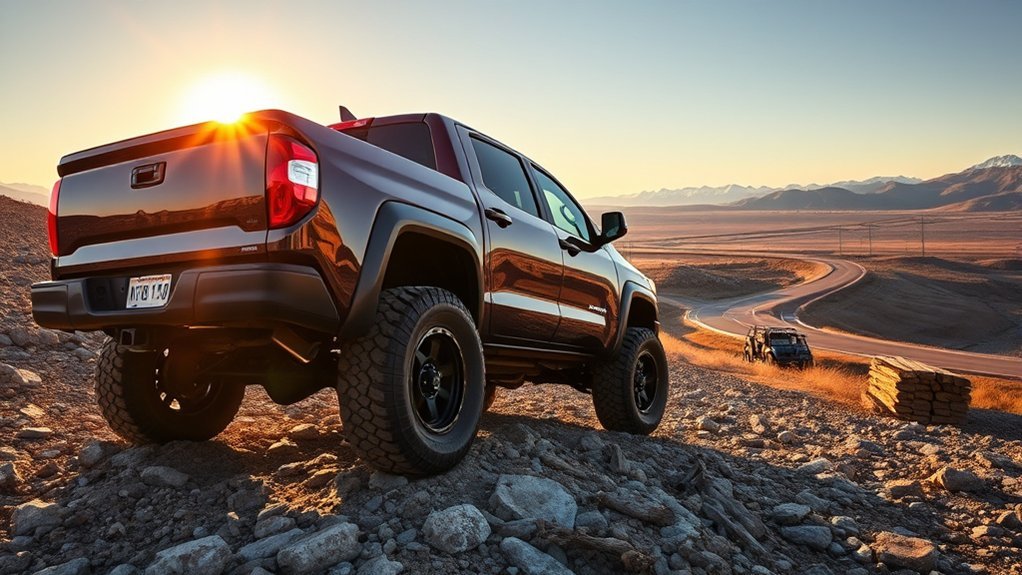
Choosing LT tires for a Toyota Tundra is not just about buying a tougher-looking tire. The right choice depends on how you use the truck, how much weight you carry, how often you tow, the roads you drive, and the load rating printed on the tire sidewall. LT tires can be a smart upgrade for towing, hauling, job-site use, and rough trails, but they are not automatically the best choice for every Tundra owner.
Quick Answer
You need LT tires on a Toyota Tundra if you regularly tow heavy trailers, carry near your truck’s payload limit, drive rocky or rough roads, or need stronger sidewalls. If your Tundra is mostly unloaded and used on pavement, P-rated or standard-load tires usually ride smoother, cost less, and may deliver better fuel economy.
Key Takeaways
- LT tires are best for Tundras that tow, haul, or spend real time on rough roads.
- P-rated tires are often better for daily driving because they are usually lighter, quieter, smoother, and less expensive.
- LT tires do not increase your Toyota Tundra’s legal payload, GVWR, GAWR, or towing capacity.
- Always match the tire’s size, load index, speed rating, and pressure requirements to your truck’s door placard, owner’s manual, and actual use.
Understanding LT Tires vs. P-Rated Tires
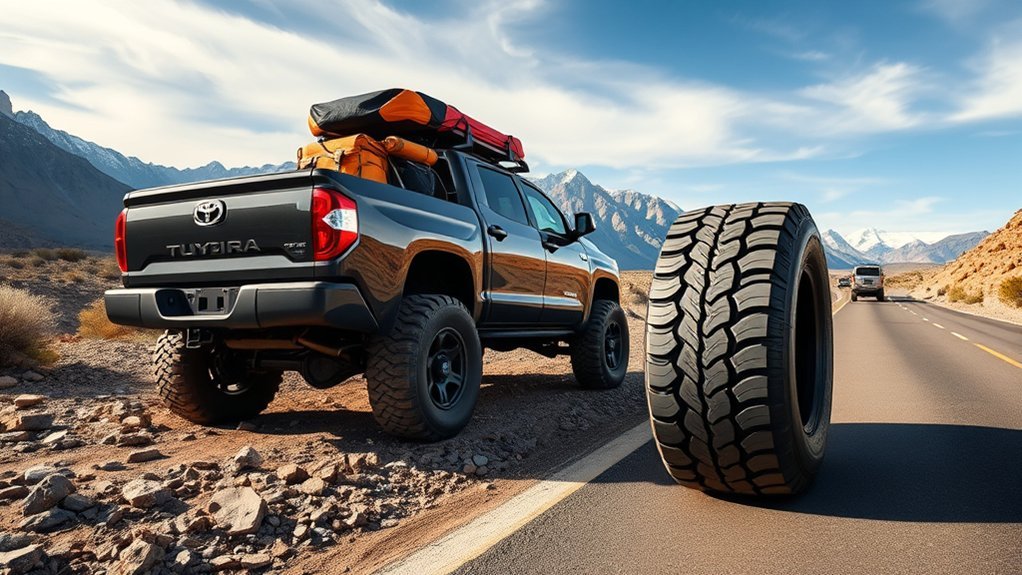
LT means Light Truck. These tires are built for trucks, vans, and SUVs that may carry heavier loads or work in tougher conditions. Compared with many P-rated passenger tires, LT tires usually have stronger sidewalls, higher inflation-pressure capability, and load ratings suited for towing, hauling, and rougher surfaces.
P-rated tires, also called passenger-rated tires, are often used on trucks that spend most of their time unloaded on pavement. They usually ride softer because their sidewalls are more flexible. That can make them more comfortable for commuting, school runs, highway driving, and light weekend use.
The key is not simply “LT is better” or “P-rated is worse.” The correct tire is the one that matches your Tundra’s factory requirements, load needs, and driving conditions. Toyota’s current Tundra specs list up to 12,000 pounds of max towing and up to 1,850 pounds of max payload for properly equipped 2026 models, but your exact truck may be rated lower depending on year, trim, cab, bed, drivetrain, options, passengers, cargo, and trailer setup.
| Feature | P-Rated Tire | LT Tire |
|---|---|---|
| Best use | Daily driving, light hauling, smoother pavement use | Towing, hauling, work use, rough roads, off-road driving |
| Ride feel | Softer and more forgiving | Firmer, especially on larger wheels |
| Sidewall strength | Usually lighter and more flexible | Usually stronger and more resistant to flex and damage |
| Cost | Often lower | Often higher |
| Fuel economy | Usually better because the tire is often lighter | May drop slightly due to extra weight and rolling resistance |
How Much Weight Can Your Tundra Handle?
Your Tundra’s real weight limit is not decided by the tire alone. It is controlled by the vehicle’s ratings, including payload capacity, gross vehicle weight rating, axle ratings, towing capacity, tongue weight, and the tire information placard on the driver-side door jamb.
Warning: Installing LT tires does not increase your Toyota Tundra’s payload rating, GVWR, GAWR, or towing capacity. Stronger tires can improve stability and durability within the truck’s rated limits, but they do not make an overloaded truck safe or legal.
Towing Capacity Limits
Tundra towing capacity changes by model year and configuration. A current 2026 Tundra can be rated as high as 12,000 pounds when properly equipped, according to Toyota, but many individual trucks are rated lower. Before choosing tires for towing, check your owner’s manual, door placard, hitch rating, trailer weight, loaded tongue weight, and payload left after passengers and cargo are inside the truck.
LT tires make the most sense when you tow often, tow near the upper end of your truck’s rating, or feel excess squirm from the rear tires while the trailer is attached. Their stiffer construction can reduce sidewall flex, which helps the truck feel more stable during lane changes, braking, cornering, and crosswinds.
Payload Capacity Considerations
Payload includes passengers, tools, cargo, aftermarket accessories, the trailer’s tongue weight, and anything else added to the truck. Toyota lists current 2026 Tundra payload as high as 1,850 pounds on properly equipped models, but the number on your door placard is the number that matters for your truck.
If your Tundra often carries heavy bed loads, a camper shell, tools, recovery gear, or a trailer with significant tongue weight, LT tires may provide better support and heat resistance. If the truck is usually empty, the firmer ride may not be worth the trade-off.
Tire Load Ratings
Do not choose tires by the words “10-ply” or “12-ply” alone. Modern ply ratings are category labels, not a literal count of fabric layers. What matters most is the tire’s exact load index, load range, size, speed rating, and the pressure required to carry the load.
For example, a Load Range E LT tire is often called “10-ply rated,” while a Load Range F tire may be called “12-ply rated.” That does not automatically mean the F-rated tire is the best choice for every Tundra. A heavier-duty tire can ride harsher, weigh more, cost more, and require different pressure to work correctly. Match the tire to the truck, trailer, and real load.
When LT Tires Make Sense on a Tundra
LT tires are worth considering if your Tundra is used like a truck most of the time. They are especially useful when the tire needs to manage heat, sidewall stress, heavy weight, and rough surfaces.
- Frequent towing: LT tires can improve stability when pulling campers, boats, utility trailers, and work trailers.
- Heavy payloads: They are better suited for trucks that regularly carry tools, equipment, firewood, overlanding gear, or tongue weight from a trailer.
- Rough work roads: Stronger sidewalls help on gravel, construction sites, ranch roads, and pothole-heavy routes.
- Off-road use: LT all-terrain and mud-terrain tires can resist cuts and punctures better than many passenger-rated tires.
- Heat control under load: A correctly inflated LT tire can handle heavy-duty use with less sidewall flex than a softer passenger tire.
[Products Worth Considering]

These aluminum alloy tire valve stem caps with an O-ring seal help protect valve stems from corrosion while adding a clean, stylish look to your vehicle. The universal fit works across cars, trucks, motorcycles, bicycles, and more, making them an easy upgrade for everyday driving and off-road use. Installation is quick, and the included four-pack keeps all your tires dressed and protected.

These universal tire valve stem caps help protect valve cores from dust, debris, and moisture while helping maintain stable tire pressure. The corrosion-resistant metal construction and sealed design provide reliable protection in road grime, mud, and winter conditions. Twist-on installation makes them quick to fit on cars, SUVs, trucks, and motorcycles.

Keep your tires properly inflated with this analog VONDIOR tire pressure gauge, designed for fast, easy readings without batteries. The swiveling, two-axis hose and large glow dial help you measure at any tire angle with instant visibility. Built with a protective rubber shield, it supports durable, low-maintenance use for cars and trucks.
When P-Rated Tires Are the Better Choice
P-rated or standard-load tires still make sense for many Toyota Tundra owners. If you rarely tow, rarely haul heavy cargo, and mostly drive on paved roads, you may prefer the smoother ride and lower cost of a lighter tire.
- Daily commuting: P-rated tires usually feel more comfortable over small bumps and broken pavement.
- Better fuel economy: A lighter tire can help reduce rolling resistance and rotational weight.
- Lower road noise: Many highway-focused P-rated tires are quieter than aggressive LT all-terrain tires.
- Lower replacement cost: P-rated tires are often less expensive than comparable LT tires.
- Unloaded ride comfort: A stiff LT tire may feel harsh when the truck bed is empty.
Note: If your Tundra came from the factory with P-rated tires and you do not tow or haul often, switching to LT tires may solve a problem you do not actually have.
[Products Worth Considering]

Upgrade your ride with a 2-pack set of 26x1.95 folding mountain bike tires built for dependable traction on mud, rocks, and trail surfaces. A reinforced puncture-resistant layer helps protect against sharp debris, while included butyl inner tubes provide strong sealing and shock absorption. Ready for fast swaps with included tire levers and universal sizing for most bikes.
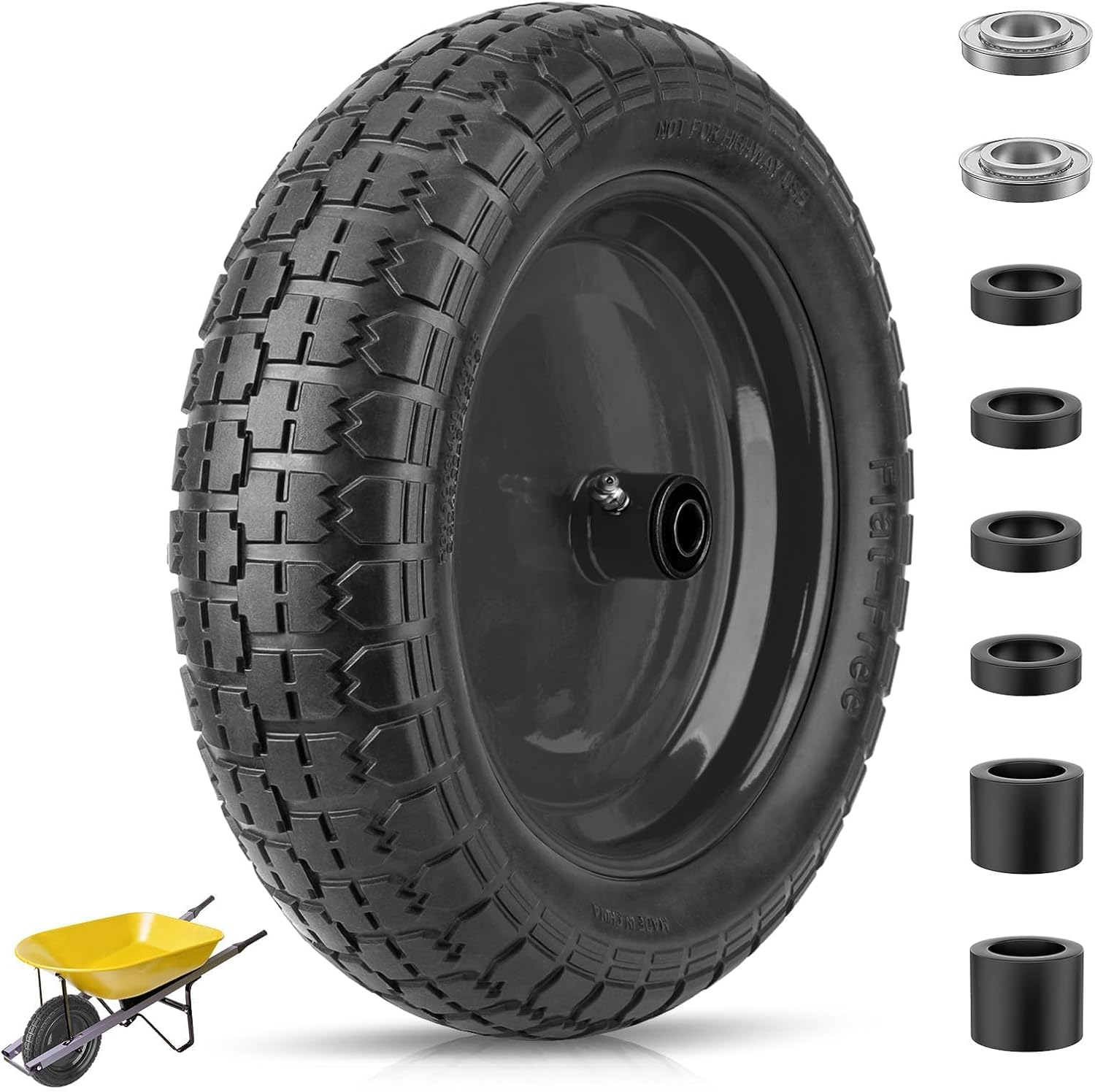
This flat-free TICONN wheelbarrow tire features durable polyurethane foam construction that never needs inflation, helping prevent punctures and reducing maintenance on rough outdoor terrain. With a 300 lb max load capacity and stable steel rim design, it supports safer transport for yard work and hauling tasks. An adapter kit with ball bearings and nylon spacers is included for easier fit and customization across common wheelbarrow and cart axle setups.

The 22800 wheel stud installer makes replacing wheel studs quick and secure, saving time and effort during tire service. It uses a ratchet or impact wrench to pull new studs firmly into place, helping when existing studs are too long. Compatible with most automotive wheels and light-duty truck wheel studs, it’s designed for easy, tool-assisted installation.
How Towing Affects Tire Selection
Towing adds more than trailer weight. It adds tongue weight to the truck, increases heat in the tires, changes braking behavior, and puts more stress on the rear axle. That is why tire selection matters so much when your Tundra is used for campers, boats, car haulers, and work trailers.
When you tow, look for tires that meet or exceed the load rating required for your truck and trailer setup. Pay attention to the tire’s maximum load, required cold inflation pressure, and speed rating. A tire that is overloaded, underinflated, or mismatched to the truck can overheat and fail.
LT tires can help because their stronger construction reduces sidewall flex under load. That usually makes the truck feel more planted. You may notice less sway, less squirm, and better confidence during highway towing. The trade-off is that LT tires often add weight and can reduce ride comfort when you are not towing.
Pro Tip: Before towing, check the tire sidewall, door placard, trailer tongue weight, and owner’s manual. The weakest rating in the chain is the limit, even if the tires appear stronger than the original set.
Off-Roading Needs: Why LT Tires Shine
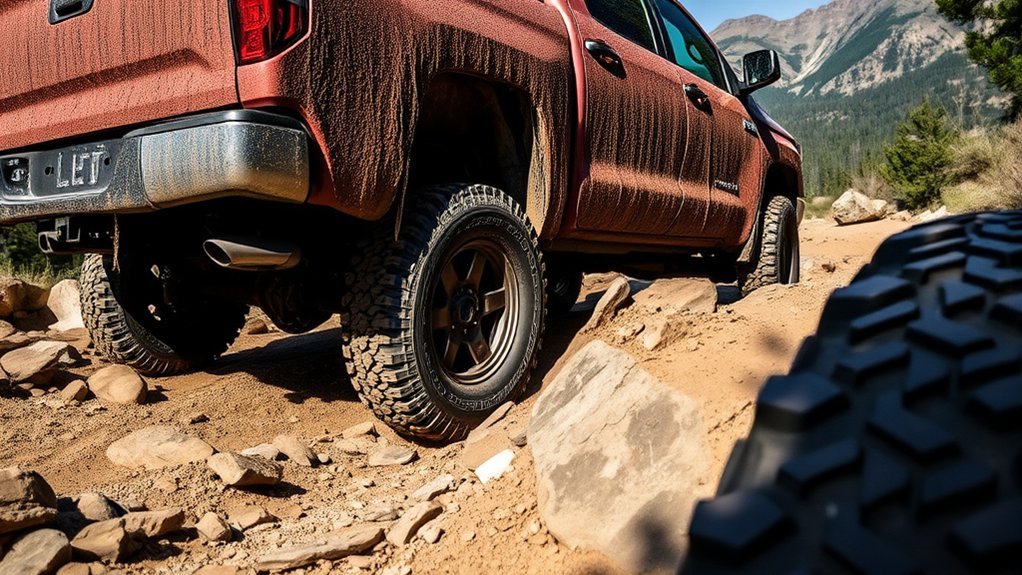
Off-road driving is one of the strongest reasons to choose LT tires for a Tundra. Rocks, roots, ruts, sharp gravel, mud, and washboard roads can punish a lighter passenger-rated tire. A good LT all-terrain tire gives you stronger sidewalls, deeper tread, and better resistance to cuts and punctures.
- Stronger sidewalls: LT tires can better resist flex, bruising, and damage on uneven terrain.
- Deeper tread options: Many LT all-terrain and mud-terrain tires have more aggressive tread blocks for dirt, gravel, and mud.
- Better loaded trail performance: They work well when the truck carries camping gear, recovery tools, rooftop tents, or towing equipment.
- More confidence on rough roads: They are better suited to repeated impacts from rocks, potholes, and washboard surfaces.
If snow is part of your use case, do not assume every LT all-terrain tire is a winter tire. Look for the three-peak mountain snowflake symbol if you need verified severe-snow performance. For icy roads, a dedicated winter tire can still outperform many all-terrain tires.
[Products Worth Considering]

This tire inflator with pressure gauge delivers long-lasting performance with a durable rubber-protected gauge and sturdy build. The longer hose and 360 swivel air chuck help you seal the valve securely and keep your hands free while measuring, inflating, or deflating. It’s battery-free for reliable use and provides ±2 PSI accuracy in the mid-range for most typical tires, with universal compatibility for 1/4 NPT compressor outputs.

The Trivd Frol 1/2" air impact wrench delivers high performance torque up to 1500 ft-lbs with a twin hammer impact mechanism for strong, balanced blows. It features an ergonomic grip, compact lightweight design, and quick-stop control with 3 forward speeds up to 8000 RPM plus a reverse speed. Built for demanding automotive repair and tire shop work, the rear exhaust helps keep debris away from the surface.

Secure your vehicle during transport with this 4-pack of heavy-duty tire tie down straps designed for trailers and hauling. The ratchet system with flat hooks and D-rings helps you tension the straps quickly, while the wheel-friendly design protects tires. With high break strength and corrosion-resistant hardware, these straps provide reliable, confidence-inspiring tie-down security for cars, trucks, and UTVs.
Comparing Ride Quality Between LT and P-Rated Tires
The biggest complaint after switching to LT tires is ride firmness. LT tires usually have heavier construction and stiffer sidewalls, so they can feel harsher over expansion joints, potholes, and rough pavement. This is more noticeable on 20-inch and larger wheels because shorter sidewalls leave less rubber to absorb impact.
| Tire Type | Ride Comfort | Best Fit |
|---|---|---|
| P-Rated Highway Tire | Softest and quietest in most daily driving | Unloaded commuting and light-duty use |
| LT All-Terrain Tire | Firmer, with more road feel and possible tread noise | Towing, hauling, gravel, trails, and mixed use |
| LT Mud-Terrain Tire | Firmest and usually loudest | Mud, rocks, trail work, and aggressive off-road use |
Some Tundra owners accept the firmer ride because they want the towing stability and sidewall protection. Others switch back to a lighter tire because they value comfort more than heavy-duty strength. Your best choice depends on the job your truck actually does.
LT vs. P-Rated Tires: Cost Breakdown
LT tires often cost more than P-rated tires in the same size. They may also weigh more, which can affect fuel economy, acceleration feel, braking feel, and suspension response. The cost may still be worth it if the tire prevents damage, improves towing stability, or handles rough roads better.
| Cost Factor | What to Expect |
|---|---|
| Purchase price | LT tires usually cost more because of heavier construction and higher-duty ratings. |
| Fuel economy | A heavier LT tire may reduce MPG, especially if it has aggressive tread. |
| Tread life | Durability can be better under heavy use, but tread life depends on alignment, rotation, pressure, compound, and driving style. |
| Comfort | The truck may feel firmer when unloaded, especially on larger wheels. |
| Value | Worth it for frequent towing, hauling, and off-road use; less valuable for light-duty commuting. |
Tire Pressure, Load Index, and Sidewall Checks
Tire pressure is where many LT tire swaps go wrong. You should not inflate or deflate an LT tire based only on how the ride feels. Use the Toyota tire placard, owner’s manual, and the tire manufacturer’s load-inflation data to find a safe cold pressure for your exact tire and load.
When reading the sidewall, check these items before buying:
- Size: The tire must fit the wheel, suspension, and body without rubbing.
- Load index: This number tells you how much weight the tire can carry at the proper pressure.
- Load range: This is the tire’s strength category, such as C, D, E, or F.
- Speed rating: The tire must meet your driving needs and vehicle requirements.
- Maximum pressure: This is not always the pressure you should run every day.
- Date code: Avoid old tires, even if the tread looks new.
The National Highway Traffic Safety Administration recommends using the vehicle’s tire information placard and keeping tires properly inflated for safety. If you are unsure how to set pressure after moving from P-rated tires to LT tires, ask a qualified tire shop to calculate the correct pressure using the tire maker’s load-inflation table.
User Experiences: Real-World Insights on Tire Choices
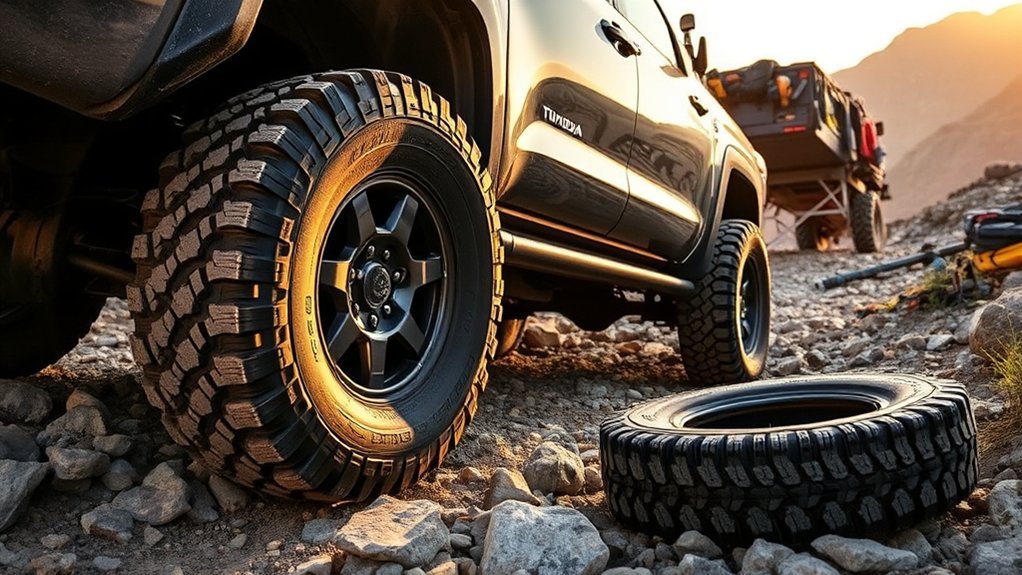
Many Tundra owners who tow or drive off-road like the move to LT tires because the truck feels more stable and controlled. The stronger sidewalls can reduce the soft, wandering feeling that sometimes appears when a trailer is attached or the bed is loaded.
Other owners are less impressed when the truck is mostly used empty. They may notice a firmer ride, more road noise, higher replacement cost, and a small fuel-economy drop. That does not mean LT tires are bad. It means they are built for a different priority.
If your Tundra is a daily driver first and a tow vehicle only once or twice a year, a high-quality P-rated or standard-load highway tire may be the better match. If your Tundra regularly pulls a camper, carries tools, runs forest roads, or sees rocky trails, LT tires are usually easier to justify.
Frequently Asked Questions
Do I need LT tires on a Toyota Tundra?
You need LT tires if your Tundra regularly tows heavy trailers, carries heavy payloads, drives rough work roads, or goes off-road. If the truck is mostly unloaded and driven on pavement, P-rated or standard-load tires may be more comfortable and cost-effective.
What are the disadvantages of LT tires?
LT tires can ride firmer, cost more, weigh more, create more road noise, and reduce fuel economy compared with many P-rated tires. These trade-offs are usually worth it for towing, hauling, and rough terrain, but they may be unnecessary for light daily driving.
What is better for towing: 10-ply or 12-ply tires?
Do not choose by ply rating alone. A 10-ply-rated Load Range E tire is enough for many Tundra towing setups when the size, load index, and pressure match the truck. A 12-ply-rated Load Range F tire may help in heavier-duty use, but it can ride harsher and may be overkill for many owners.
What are the best tires to put on a Toyota Tundra?
The best tire depends on use. Choose a highway tire for comfort and quiet pavement driving, an all-terrain tire for mixed towing and gravel use, and a more aggressive LT all-terrain or mud-terrain tire for rough trails. Always match the tire size, load rating, and speed rating to your truck’s requirements.
Can LT tires increase my Tundra’s towing capacity?
No. LT tires can improve stability and durability within the truck’s rated limits, but they do not raise Toyota’s official towing capacity, payload rating, GVWR, or axle ratings. Your legal and safe limits still come from the truck’s ratings and equipment.
What tire pressure should I run with LT tires on a Tundra?
Use the Toyota tire placard, owner’s manual, and tire manufacturer’s load-inflation data. Do not lower pressure for comfort while towing or hauling unless the pressure still supports the load safely. When in doubt, have a qualified tire shop calculate the correct cold pressure for your tire and load.
Conclusion
LT tires are a smart upgrade for a Toyota Tundra that tows, hauls, works on rough roads, or spends real time off-road. They can improve stability, sidewall strength, and durability when the truck is loaded. But they are not automatically the best choice for every owner. If your Tundra is mostly a comfortable daily driver, P-rated or standard-load tires may be the better fit. The safest approach is simple: match the tire to your truck’s door placard, owner’s manual, load needs, and real driving conditions.
Sources
- Toyota Tundra official specs — current Tundra towing, payload, engine, and model information.
- Toyota USA Newsroom: 2026 Toyota Tundra — 2026 Tundra updates, towing capacity, fuel tank, and towing equipment context.
- Toyota Owner’s Manuals — official owner’s manual source for tire, towing, payload, and placard guidance.
- NHTSA Tire Safety — tire pressure, tire loading, inspection, and safety guidance.
- U.S. Tire Manufacturers Association Tire Safety — general tire safety, inflation, inspection, and maintenance guidance.