For a Toyota Tundra seasonal tire swap, use sustained temperature and road conditions rather than the calendar alone. Install winter tires when average daily temperatures consistently approach or fall below 45°F (7°C). Switch back to summer tires once temperatures stay above about 45°F and snow or ice is unlikely. Use four matching tires and verify model-year fitment and load capacity. Follow the driver-door cold-pressure label, use the correct Toyota wheel-nut torque for your wheel setup, and complete the model-year TPMS procedure if equipped. This guide covers timing, a safe swap of complete mounted wheel assemblies, and correct off-season storage.
Last updated: August 18, 2026. Reviewed against Toyota, NHTSA, USTMA, and current tire-manufacturer guidance.
Quick Answer
For a Toyota Tundra, install winter tires when average daily temperatures stay near or below 45°F (7°C), and return to summer tires when temperatures remain above that level and snow or ice is unlikely. Use four matching tires, follow the door-jamb pressure label and the Toyota torque specification for your model year and wheel setup, and complete the TPMS procedure if your truck is equipped with the system.
Key Takeaways
- Treat 45°F as a practical switching guideline, not a promise of traction or a substitute for checking the forecast.
- Use four matching seasonal tires so the front and rear axles have balanced grip.
- Use the cold pressure on the driver-door tire label and the Toyota wheel-nut torque specified for your exact model year and wheel setup.
- A DIY seasonal change should involve complete mounted wheel-and-tire assemblies, not mounting bare truck tires with hand levers.
- Check tire size, load index, speed rating, tread condition, towing or payload needs, and TPMS compatibility if equipped before installation.
At a Glance
| Time Required | Varies by equipment and experience; allow enough time to lift, support, inspect, and torque each wheel without rushing |
| Difficulty | Moderate; the Tundra is heavy and must be lifted only at the approved points |
| Tools Needed | Wheel chocks, correctly rated floor jack, jack stands, lug socket, breaker bar, torque wrench, tire gauge, gloves, and a soft brush |
| Cost | No labor charge if you already own the tools and a mounted wheel set; professional pricing depends on whether tires must be mounted, balanced, or programmed |
Why Seasonal Tires Matter on a Toyota Tundra
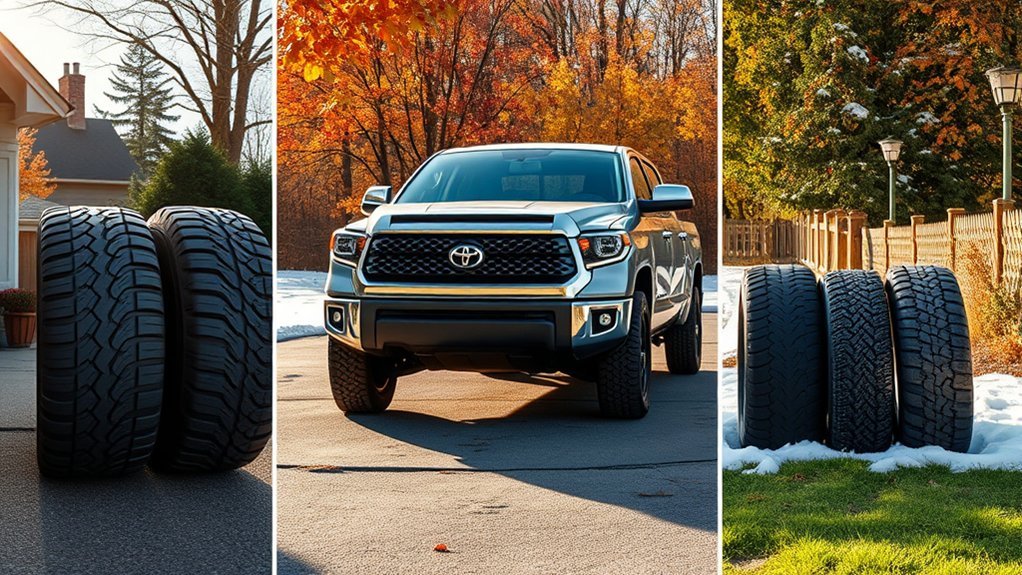
Tires are the only parts of your Tundra that contact the road. Four-wheel drive can help the truck move forward on a slippery surface, but it does not create extra tire grip for braking or cornering. Tire compound, tread design, inflation, condition, and driver input still determine how much traction is available.
Winter tires use compounds and tread patterns intended to remain effective in cold conditions. Summer tires are designed for responsive wet and dry performance in warmer weather but should not be used on snow or ice. All-season and all-weather tires cover a broader range of conditions, although they make different compromises.
The goal of a seasonal swap is not simply to install a more aggressive tread. It is to match the tire’s operating range to the temperatures and road conditions you expect while preserving even handling at all four corners of the truck.
When Should You Switch Your Tundra’s Tires?
When Should You Install Winter Tires?
Consider installing winter tires when average daily temperatures consistently approach or fall below 45°F (7°C). Do not wait only for the first major snowstorm. Cold dry pavement, frost, freezing rain, slush, and rapidly changing temperatures can all arrive before deep snow.
Michelin recommends the 45°F (7°C) threshold as a practical seasonal switching guideline rather than a legal boundary. A single cool night does not necessarily require an immediate change, just as two warm afternoons do not mean winter is over. Look at the trend in daytime and overnight temperatures and schedule the change before sustained cold weather arrives.
Choose four winter tires with the correct size and load capacity for your truck. The Three-Peak Mountain Snowflake (3PMSF) marking identifies passenger and light-truck tires that meet the industry performance criteria for use in severe snow conditions. An M+S marking alone does not provide the same severe-snow certification.
When Should You Switch Back to Summer Tires?
Return to summer tires when temperatures consistently remain above about 45°F, including overnight, and snow, ice, and hard freezes are no longer likely. Early or mid-spring may be appropriate in some regions, while mountain and northern climates may require a later change.
Do not install summer tires merely because the roads are dry. Their compounds can stiffen in cold weather, and their tread patterns are not designed for snow or ice. Check the extended forecast and consider where you drive, especially if your route crosses higher elevations.
Should You Use All-Season, All-Weather, or Dedicated Seasonal Tires?
| Tire Type | Best Use | Main Limitation |
|---|---|---|
| Summer | Warm wet and dry roads where snow and freezing conditions are not expected | Not suitable for snow, ice, or sustained cold |
| All-season | Moderate climates, rain, and occasional light winter conditions | Usually less capable than dedicated winter tires in deep snow, ice, or severe cold |
| All-weather | Year-round use where meaningful winter traction is needed without two separate sets | Still a compromise compared with specialized summer and winter tires; verify the 3PMSF marking |
| Winter | Sustained cold, snow, slush, freezing rain, and icy roads | Faster wear and softer handling when used through warm weather |
Tundra decision rule: Choose dedicated winter tires if you routinely drive in sustained cold, snow, slush, freezing rain, or ice. Consider 3PMSF all-weather tires when winters are moderate and you want one year-round set. Keep summer tires for warm-weather use only. Whichever category you choose, the tire still must meet the Tundra’s size, load, wheel-fitment, and towing or payload requirements.
Note: Four-wheel drive does not remove the need for suitable tires. It can improve acceleration in low-traction conditions, but braking and cornering still depend on the grip available at all four tires.
What Should You Check Before a Tundra Seasonal Tire Swap?
Toyota Tundra specifications vary by model year, trim, wheel package, and tire option. Before buying or installing a second set, check the tire-and-loading information label inside the driver-door area and the Toyota owner’s manual for your exact model year. For a secondary fitment cross-check, see the Toyota Tundra tire-size reference by year and trim, then treat the truck’s placard and Toyota manual as the final authority.
Confirm all of the following:
- Tire size: Use the original size or another size specifically approved for the vehicle and wheel.
- Load index and capacity: The replacement tire must support at least the load required by Toyota. This is especially important when towing, carrying a slide-in load, or regularly using the truck near its payload limit.
- Speed rating: Follow the vehicle and tire manufacturer’s requirements.
- Wheel diameter, width, offset, and clearance: A tire that fits the wheel diameter may still contact suspension, steering, or body components if other dimensions are wrong.
- Four matching tires: Use the same seasonal category, size, construction, and similar tread condition at all four positions. If winter-tire tread is worn enough to compromise snow performance, replace the set before relying on it for winter service.
- TPMS equipment: If your Tundra is equipped with TPMS, a second wheel set needs compatible tire-pressure transmitters and whatever registration, initialization, or wheel-set selection your model year requires for normal monitoring.
- Cold inflation pressure: Use the vehicle’s tire label, not the maximum pressure molded on the tire sidewall. NHTSA TireWise gives the same guidance and recommends checking pressure when the tires are cold.
The U.S. Tire Manufacturers Association’s replacement guidance advises matching the vehicle manufacturer’s size, load index, speed rating, and load-carrying requirements. Do not choose a lower-capacity tire simply because it physically fits the wheel.
[Products Worth Considering]

These universal tire valve stem caps help protect valve cores from dust, debris, and moisture while helping maintain stable tire pressure. The corrosion-resistant metal construction and sealed design provide reliable protection in road grime, mud, and winter conditions. Twist-on installation makes them quick to fit on cars, SUVs, trucks, and motorcycles.

Steelman white tire marking crayons provide high-contrast, semi-permanent marks for repairing and inspecting tires and equipment. They write on wet or dry, smooth or coarse surfaces including rubber, metal, glass, and wood, making them ideal for puncture location and damage outlining. The lead- and zinc-free crayons resist weather and fading yet wipe away when you no longer need the marks.

Monitor tire tread wear with a smart, color-coded depth gauge that shows clear condition ranges at a glance. The bar is range marked for fast, easy readings, helping you maintain safer traction and performance. Each gauge is portable with a pocket clip, and the set includes 20 units for daily use and sharing.
How Do You Perform a Toyota Tundra Seasonal Tire Swap Safely?
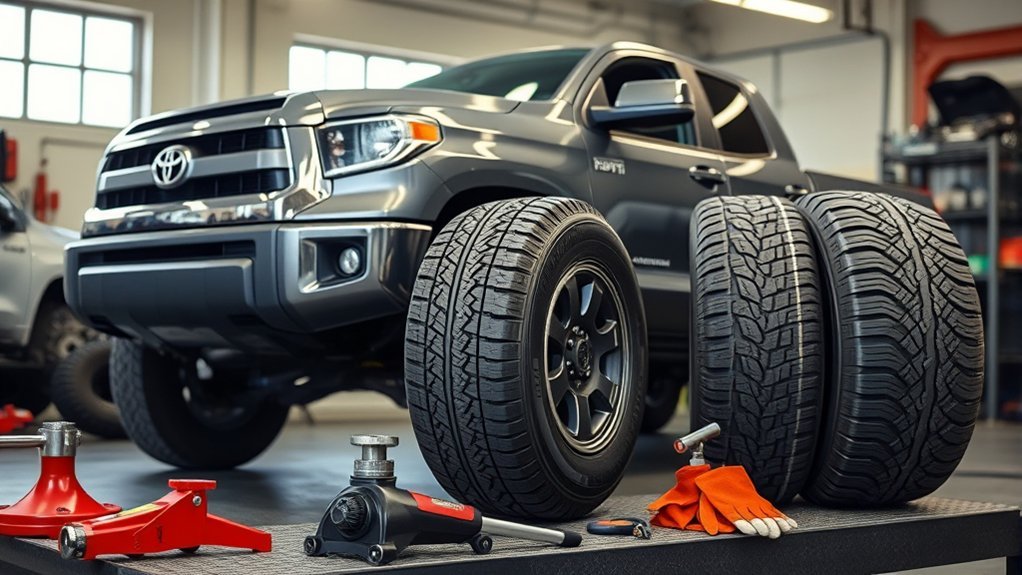
The following procedure is for changing complete wheel-and-tire assemblies that have already been professionally mounted and balanced. It is not a procedure for removing a tire from its wheel.
Warning: A Toyota Tundra is a heavy vehicle. Work only on a hard, level surface; use a jack and jack stands rated for the truck; follow the exact lift points in the model-year owner’s manual; and never place any part of your body beneath a vehicle supported only by a jack. Have a qualified shop perform the work if you lack the correct equipment or experience.
[Products Worth Considering]

The Kurgo Seasonal Tire Tote helps protect your car interior, clothes, and garage from tire grime, brake dust, and residue during seasonal tire changes. Its universal design fits most passenger tires between 22" and 31" in diameter, making storage and transport simpler with less mess. Built for rugged, repeated use, it’s machine washable for easy care and comes with a lifetime warranty.

This 1/2-inch drive breaker bar delivers powerful leverage for loosening and tightening stubborn lug nuts and automotive fasteners. The 180-degree flex head helps you reach tight spaces at the angle you need, making tire and brake jobs easier. A spring-loaded ball detent design holds 1/2-inch sockets securely while the chrome-moly head provides durable strength for everyday use.

The Trivd Frol 1/2" air impact wrench delivers high performance torque up to 1500 ft-lbs with a twin hammer impact mechanism for strong, balanced blows. It features an ergonomic grip, compact lightweight design, and quick-stop control with 3 forward speeds up to 8000 RPM plus a reverse speed. Built for demanding automotive repair and tire shop work, the rear exhaust helps keep debris away from the surface.
What Tools Do You Need for a Mounted Wheel Change?
- Wheel chocks.
- A properly rated floor jack.
- Properly rated jack stands.
- Correct lug-nut socket and breaker bar.
- Calibrated torque wrench with enough range for the specified torque.
- Accurate tire-pressure gauge and suitable inflator.
- Gloves, eye protection, and a soft brush or cloth.
- Chalk, tape, or tire-position tags for recording each wheel’s location.
Do not use hand tire levers to mount or demount Tundra tires. Bare-tire work requires a tire-changing machine, correct bead lubricant, wheel protection, TPMS care, and balancing equipment.
Step-by-Step Seasonal Wheel Swap
- Verify the wheel set. Confirm size, load rating, tread condition, rotation direction, inside/outside markings, and TPMS compatibility before lifting the truck.
- Park safely. Choose a hard, level surface. Shift into Park, apply the parking brake, turn off the engine, remove the key or keep the smart key away from the truck, and keep passengers outside.
- Chock the wheels. Secure the wheels that will remain on the ground so the truck cannot roll.
- Loosen the lug nuts slightly. Break each nut loose while the tire is still touching the ground. Do not remove the nuts yet.
- Lift at the approved point. Follow the exact jack-point instructions in the Toyota manual. Position a jack stand at an approved support point before removing the wheel.
- Remove and inspect the wheel. Remove the lug nuts and wheel. Check the studs, nuts, wheel mounting surface, tire tread, sidewall, and inner shoulder for damage or abnormal wear.
- Clean the mounting surfaces. Remove loose dirt and corrosion with a suitable soft brush. Do not apply lubricant or anti-seize to the studs, nuts, or wheel seats unless Toyota specifically instructs it for that application.
- Install the seasonal wheel. Seat the wheel fully against the hub. Start every lug nut by hand to avoid cross-threading, then snug the nuts in a crisscross pattern.
- Lower and torque correctly. Lower the truck until the tire contacts the ground without carrying the truck’s full weight. Tighten the nuts in a crisscross pattern to the exact Toyota specification for that model year and wheel setup using a torque wrench. If you need more detail on sequence and wheel-specific values, use the Toyota Tundra lug-nut torque guide and confirm the final specification against your Toyota manual.
- Repeat and verify. Complete the remaining wheels, remove all tools and chocks, then check cold pressure against the driver-door label. Confirm that every valve cap is installed.
- Check system operation. Follow the owner’s-manual procedure for TPMS initialization, transmitter registration, wheel-position learning, or selecting a registered second wheel set.
- Road-check the truck. Drive cautiously at first. Stop and inspect the installation if you notice vibration, pulling, rubbing, unusual noise, a loose feeling, or a warning light.
Pro Tip: Mark each removed wheel by its previous position, such as LF, RF, LR, and RR. This record makes abnormal wear easier to track and helps you choose the correct pattern next time; see the tire rotation patterns guide, then follow Toyota’s pattern for your exact truck and tire setup.
How Do You Handle TPMS After a Seasonal Swap?
Do not assume every Tundra uses the same TPMS procedure. Depending on model year and equipment, the truck may require one or more of these actions:
- Installing compatible pressure-warning valves and transmitters in the second wheel set.
- Registering new transmitter ID codes.
- Selecting between two previously registered wheel sets.
- Initializing the system after changing pressure, tire size, wheel position, or wheel set.
- Driving under the conditions specified in the manual while the system learns wheel positions or transmitter IDs.
If the warning light flashes before staying on, displays missing pressure values, or does not clear after the specified procedure, consult the exact Toyota manual or a qualified technician. TPMS is a warning system, not a replacement for checking all tires with a gauge.
When Is Professional Tire Service the Better Choice?
Use a qualified tire shop when:
- The seasonal tires are not already mounted on wheels.
- The truck has aftermarket wheels, spacers, nonstandard tire sizes, or uncertain fitment.
- New TPMS transmitters must be installed or troubleshooting is needed.
- A tire has a bulge, exposed cord, deep cut, puncture, bead damage, or unexplained air loss.
- The truck pulls, the steering wheel is off-center, or the tires show irregular wear.
- You do not have a level work area, approved lift equipment, or a suitable torque wrench.
Newly mounted tires should be balanced. A previously balanced seasonal wheel set does not automatically need rebalancing at every change, but vibration, lost wheel weights, repairs, or uneven wear justify a balance check. Alignment should be inspected when the truck pulls, the steering position changes, the vehicle has struck a pothole or curb, or wear patterns suggest an alignment problem.
How Should You Store and Maintain the Off-Season Set?
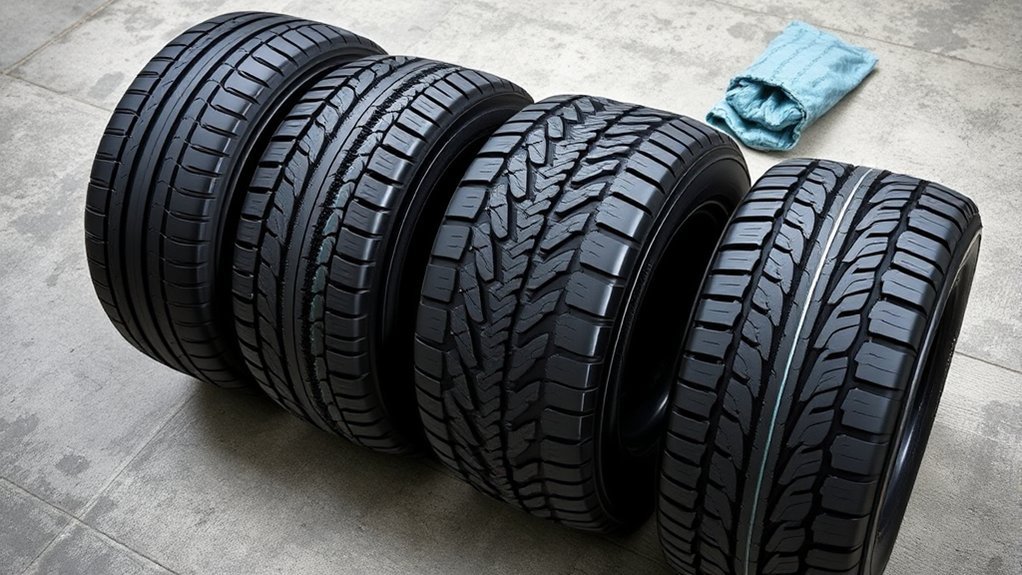
Correct storage helps protect the rubber, tread, wheels, and TPMS components while the tires are off the truck. If you need a dedicated garage setup, the Toyota Tundra tire-rack and seasonal storage guide covers rack and floor-space options in more detail.
[Products Worth Considering]

Malco tire mounting and demounting lubricant is a ready-to-use tire lube formulated to reduce friction during tire installation for passenger cars, light trucks, farm tires, and heavy-duty equipment. It provides rust-inhibiting protection to help reduce corrosion on rims and wheels, and helps support proper tire bead seating during inflation to reduce air leakage. The silicone-free, soap-free formula is whitewall safe to help prevent discoloration on whitewall tires and sensitive sidewall markings.

These aluminum alloy tire valve stem caps with an O-ring seal help protect valve stems from corrosion while adding a clean, stylish look to your vehicle. The universal fit works across cars, trucks, motorcycles, bicycles, and more, making them an easy upgrade for everyday driving and off-road use. Installation is quick, and the included four-pack keeps all your tires dressed and protected.

The 22800 wheel stud installer makes replacing wheel studs quick and secure, saving time and effort during tire service. It uses a ratchet or impact wrench to pull new studs firmly into place, helping when existing studs are too long. Compatible with most automotive wheels and light-duty truck wheel studs, it’s designed for easy, tool-assisted installation.
Clean and Inspect Before Storage
- Wash away road salt, mud, brake dust, and debris with mild soap and water.
- Allow the tires and wheels to dry completely.
- Inspect the tread and both sidewalls for cuts, cracks, bulges, punctures, exposed material, embedded objects, and uneven wear.
- Record tread depth and each wheel’s former position.
- Check the tire identification number and age. Have an older or questionable tire assessed by a tire professional rather than judging it by tread depth alone.
- Place each tire in a clean tire bag or fitted cover after it is dry.
How Should Mounted and Unmounted Tires Be Stored?
- Tires mounted on wheels: They may be stacked horizontally or suspended using a suitable wheel-storage system that does not damage the assembly.
- Tires without wheels: Store them upright. Turn them periodically during long storage so one area does not carry the load continuously.
Store either type indoors in a cool, clean, dry, well-ventilated location away from sunlight, heaters, hot pipes, moisture, gasoline, oil, solvents, and equipment that can generate ozone, such as some electric motors, welders, and battery chargers.
Before reinstalling the set, inspect it again. Correct the pressure when the tires are cold, verify that no valve or wheel damage occurred during storage, and have questionable wear or damage evaluated professionally.
What Seasonal Tire-Swap Mistakes Should You Avoid?
- Changing by date alone: Use sustained temperatures and forecast conditions rather than assuming a specific month is always correct.
- Mixing seasonal tire types: Two summer tires and two all-season or winter tires can create an unstable front-to-rear grip imbalance.
- Using only two winter tires: Four matching winter tires provide more balanced acceleration, braking, and cornering behavior.
- Using sidewall maximum pressure: The sidewall figure is not the normal vehicle pressure. Use the cold pressure on the Tundra’s tire label.
- Guessing the lug torque: Use the exact Toyota specification for the truck’s model year and wheel equipment.
- Skipping the inner-tread inspection: Damage and uneven wear may be more visible while the wheel is removed.
- Ignoring load requirements: A tire suitable for light commuting may not meet the truck’s payload or towing demands.
- Assuming every swap needs alignment: Inspect alignment when symptoms or wear patterns call for it instead of treating it as an automatic seasonal step.
- Ignoring TPMS setup: Confirm that the installed wheel set is registered or selected according to the owner’s manual.
- Storing dirty or damp tires: Clean and dry each assembly before covering and storing it.
Frequently Asked Questions
Is October too early for winter tires?
Not necessarily. October can be appropriate where average temperatures consistently approach or fall below 45°F and frost, snow, or ice is becoming likely. In a warmer region, installing them that early may cause unnecessary warm-weather wear. Use local daytime and overnight forecasts instead of the month alone.
Can I use two all-season tires and two summer tires?
Do not create a seasonal mismatch between the axles. Different compounds and tread designs can produce unequal grip during braking and cornering. Use four matching tires that meet Toyota’s size, load, and speed requirements.
What temperature should I switch from summer to winter tires?
A common guideline is to switch when average daily temperatures consistently approach or fall below 45°F (7°C). Make the change sooner if snow, ice, or freezing rain is forecast, and do not use summer tires in winter conditions.
What tire pressure should I use after the swap?
Use the recommended cold inflation pressure on the tire-and-loading label inside the driver-door area. Do not use a generic pressure range or inflate to the maximum pressure molded on the tire sidewall. Check the pressure before driving or after the truck has been parked long enough for the tires to cool.
Do I need to reprogram TPMS every season?
It depends on the Tundra’s model year and whether the second wheel set and its transmitters are already registered. Some systems support two stored sets, while others require ID registration, initialization, or wheel-position learning. Follow the exact procedure in your owner’s manual.
Can I mount the seasonal tires myself with tire levers?
A home mechanic with suitable equipment may change complete mounted wheel assemblies. Mounting or demounting bare Tundra tires should be handled by a qualified tire shop because it requires specialized machinery, balancing, correct bead procedures, and protection of the wheel and TPMS sensor.
Do I need an alignment every time I swap seasonal tires?
No. A seasonal wheel swap by itself does not automatically require an alignment. Have alignment checked when the truck pulls, the steering wheel is off-center, the tires show irregular wear, or the truck has had a hard curb or pothole impact.
Conclusion
A safe Toyota Tundra seasonal tire swap starts with the weather trend, but it also requires correct fitment, balanced grip at all four wheels, model-year-specific pressure and torque information, and careful lifting procedures. Switch before sustained cold or warm conditions arrive, inspect every tire while it is off the truck, complete the proper TPMS procedure if equipped, and store the unused set clean, dry, and protected. When tires must be mounted, fitment is uncertain, or the truck shows vibration or abnormal wear, use a qualified tire professional.
Sources
- Toyota Manuals and Warranties — model-year-specific lift points, wheel torque, tire pressure, tire rotation, and TPMS procedures
- NHTSA TireWise — tire selection, cold inflation pressure, size, balancing, alignment, inspection, and rotation guidance
- NHTSA Winter Driving Tips — cold-pressure checks, tire inspection, tread condition, and winter preparation
- Michelin Summer, Winter, and All-Season Tire Guide — seasonal tire differences, the 45°F guideline, four-tire use, and winter markings
- Michelin Tire Storage and Pre-Trip Guidance — cleaning, covering, storage environment, and mounted-versus-unmounted storage positions
- U.S. Tire Manufacturers Association: Replacing Tires — replacement size, load index, speed rating, load capacity, and matched-tire guidance
- USTMA Severe-Snow Tire Definition — 3PMSF severe-snow performance criteria for passenger and light-truck tires